
 rifanmuazin
The digital landscape in 2026 is characterized by a stark divide between organizations that rely on intuition and a high-performing elite that leverages structured experimentation to drive growth. Despite the proliferation of digital transformation initiatives over the last decade, recent industry data reveals that less than 0.2% of all active websites globally currently engage in any form of A/B testing or structured experimentation. While the total number of active websites is estimated to be between 1.1 and 1.2 billion, only approximately 2.2 million sites utilize recognized experimentation platforms. This suggests that the vast majority of the internet remains unoptimized, presenting a massive competitive advantage for the small fraction of companies that have integrated Conversion Rate Optimization (CRO) into their core operations.

The Widening Gap in Digital Adoption
Adoption rates for experimentation tools are heavily correlated with traffic volume and market capitalization. According to data from technology tracker BuiltWith, 32% of the world’s top 10,000 largest websites by traffic now utilize A/B testing or personalization platforms. This adoption rate drops significantly as traffic tiers decrease, with only 20.95% of the top 100,000 sites and 11.5% of the top one million sites running structured tests. Analysts note that these figures likely underrepresent the true scale of testing at the enterprise level, as many large-scale organizations have transitioned from client-side tools to proprietary server-side or custom-built experimentation frameworks that are harder for external trackers to detect.
Industry-specific data from 2025 and 2026 indicates that the most aggressive experimenters are concentrated in Retail and E-commerce (27%), Technology and SaaS (23%), and Finance and Insurance (13%). These sectors are traditionally metric-heavy, with business models that are highly sensitive to fluctuations in Average Order Value (AOV), Lifetime Value (LTV), and Monthly Recurring Revenue (MRR). In these high-stakes environments, data analysis is not merely a marketing function but a fundamental pillar of corporate strategy.

The Evolution of Experimentation Maturity (2021–2026)
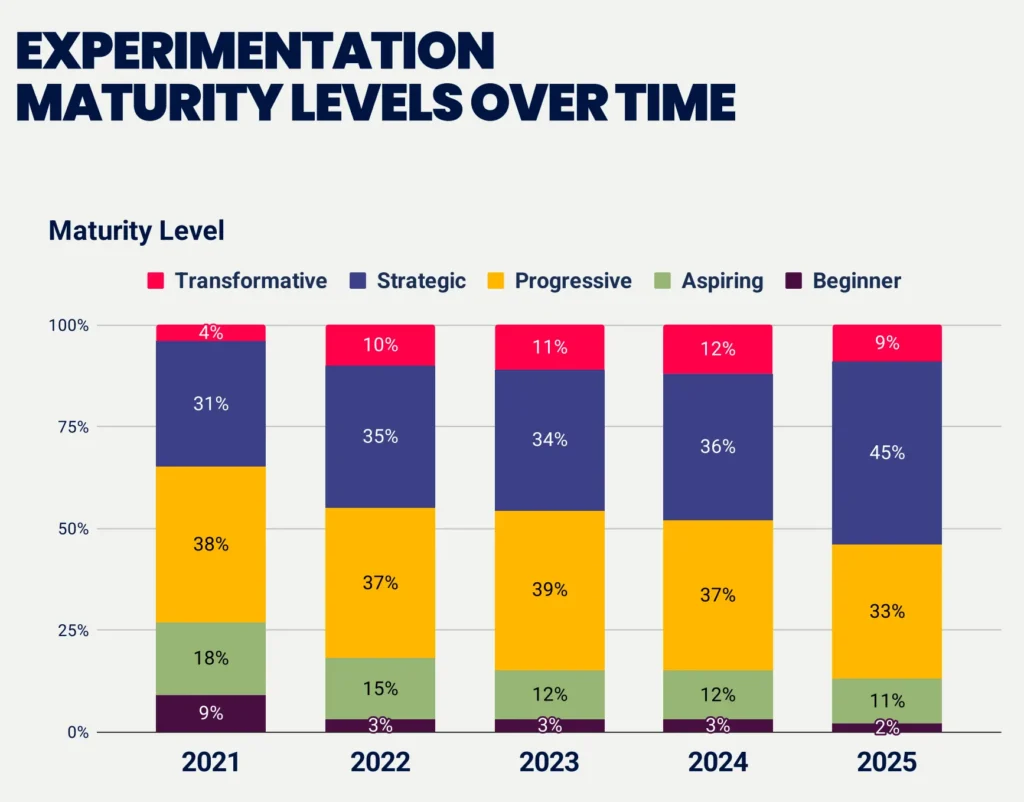
The sophistication of experimentation programs has seen a measurable shift over the last five years. In 2021, only 35% of companies were categorized as operating at "strategic" or "transformative" levels of experimentation maturity. By 2025, that figure rose to 54%, according to the Experimentation Maturity Program Report by Speero. This upward trend suggests that the industry is professionalizing rapidly. The "progressive middle" has shrunk from 38% to 33%, and the number of absolute beginners has plummeted from 9% to just 2%.
However, reaching the "transformative" tier remains an elusive goal for most. Only 10% of companies have achieved this status, which is defined by high-level executive sponsorship, seamless cross-team collaboration, and a culture where every product decision is validated through data. For the remaining 90%, significant bottlenecks remain. Approximately 33% of companies at the beginner level have been testing for less than a year, and a staggering 67% of these organizations do not track how long they have been experimenting, indicating a lack of formalization and institutional memory.
Technical Methodologies and Statistical Rigor
In terms of testing methodology, A/B testing remains the dominant framework, accounting for 67.6% of all digital experiments conducted in 2026. Split URL testing, often used for major architectural changes or completely new page layouts, holds a 16.9% share. Personalization initiatives represent 4.6% of experiments, while Multivariate Testing (MVT) remains a niche practice at less than 1%, largely due to the immense traffic requirements needed to reach statistical significance across multiple variables.
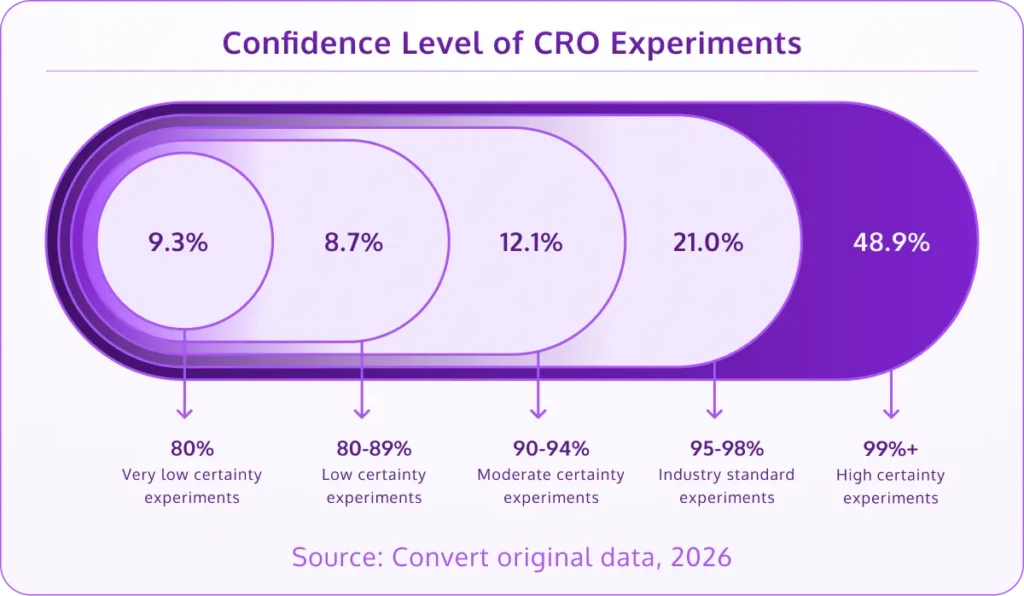
Statistical rigor has become a priority for modern CRO practitioners. Data from Convert shows that 70% of teams now run their experiments to at least 95% statistical confidence, with nearly half (49%) pushing for 99% or higher to ensure the validity of their findings. Conversely, about 18% of tests are concluded with less than 90% confidence, which analysts suggest may be acceptable for "directional" insights but risky for major infrastructure changes.
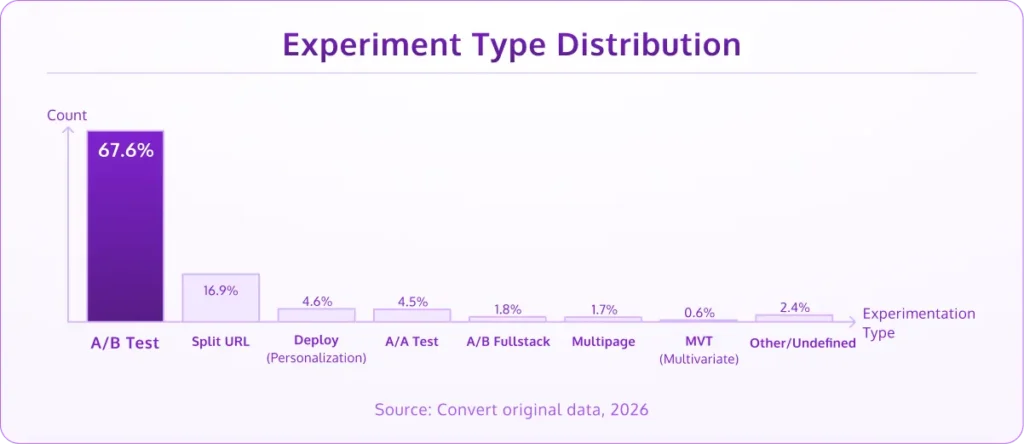
A/A testing, the practice of running two identical versions of a page against each other to ensure the testing tool is calibrated correctly, accounts for 4.5% of all experiments. This is considered a hallmark of a mature program, as it helps identify "flicker" issues, tracking discrepancies, or data silos before high-stakes tests are launched.
The Reality of "Lifts" and Twyman’s Law
The distribution of test results provides a sobering reality check against the "overnight success" narratives often found in marketing materials. Approximately 60% of completed A/B tests deliver a lift of less than 20%, and 84% result in a lift of less than 50%. Most successful CRO programs are built on the principle of compounding small gains—single-digit improvements that, when stacked over dozens of experiments, lead to transformative revenue growth.
Interestingly, 7.8% of tests show an improvement of 100% or more. While these are celebrated as "home runs," they are often scrutinized under Twyman’s Law: the principle that any statistic that appears interesting or different is usually wrong. In these cases, mature teams prioritize re-testing and segment analysis to ensure the result wasn’t caused by a data anomaly, a tracking error, or a temporary "novelty effect" where users respond to change simply because it is new.
Organizational Challenges and the "Recognition Gap"
Despite the technical advancements, organizational culture remains the greatest barrier to scaling experimentation. A significant 58% of companies operate without a clear prioritization framework, such as the PXL, ICE (Impact, Confidence, Ease), or PIE (Potential, Importance, Ease) models. Without these frameworks, teams often succumb to the "HiPPO" effect—the Highest Paid Person’s Opinion—leading to the testing of low-impact ideas.
There is also a notable "recognition gap" within corporate structures. While 63% of employees report that their company culture encourages testing, only 47% feel their experimentation efforts are actually recognized by leadership. This 16-point discrepancy highlights a disconnect between the tactical execution of tests and the strategic valuation of those tests by upper management. Furthermore, only 26% of companies have a senior management sponsor who is actively accountable for the growth and quality of the experimentation program.
The Agency Ecosystem and the AI Revolution
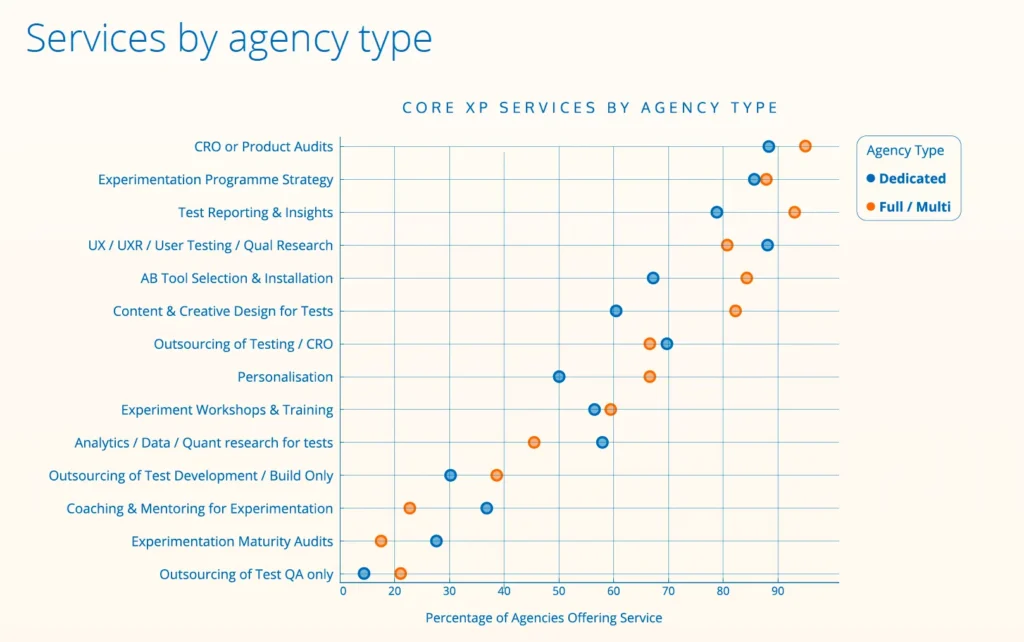
The agency landscape is undergoing a radical transformation. Of the 237 specialized experimentation agencies identified globally, 55% focus exclusively on CRO and experimentation, while 43% are multi-service firms. The ecosystem is dominated by small, highly experienced teams; 90% of these agencies have been in operation for over five years, yet over half employ fewer than five people.

The most significant shift in agency operations is the integration of Artificial Intelligence. Approximately 76% of agencies report that AI is now a core component of their workflow, used for research, hypothesis generation, coding variants, and automated reporting. This adoption is even higher among newer, smaller agencies (81%).
As AI automates the tactical execution of testing, agencies are shifting their value proposition "upstream." Approximately 60% of agencies report that their primary stakeholders are shifting from marketing departments to product teams. This move toward "product-led experimentation" changes the scope of work from simple landing page optimization to deep-funnel feature testing and business-level outcome design.
Tactical Insights: Form Fields, UGC, and Personalization
On a tactical level, research continues to support specific high-impact interventions. The Baymard Institute reports that the average checkout flow still utilizes 11.3 form fields, despite evidence suggesting that most flows only require eight. Reducing form friction remains one of the most reliable methods for increasing conversion rates, as every unnecessary field increases the cognitive load on the user.
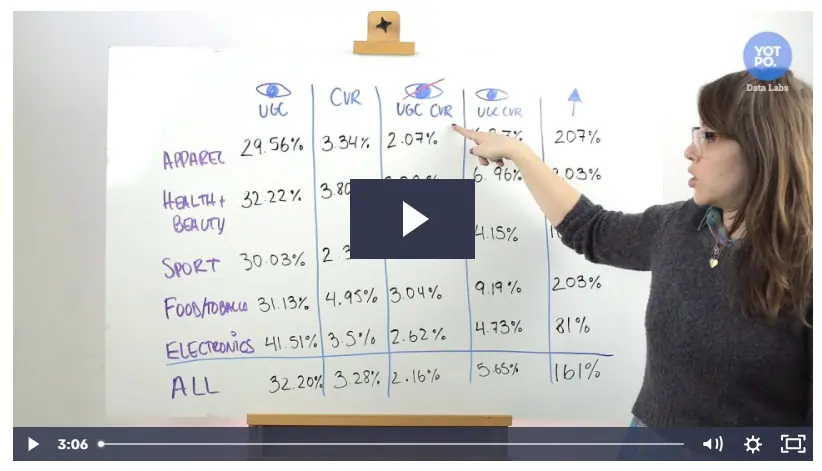
User-Generated Content (UGC) also remains a powerful lever. Studies from Yotpo involving over 200,000 stores indicate that the presence of UGC can increase conversion rates by as much as 161%. Similarly, effective personalization is no longer a luxury but a consumer expectation. McKinsey data shows that companies excelling at personalization can see revenue lifts of 5% to 15% and a 10% to 30% improvement in marketing ROI. With 71% of consumers expecting personalized interactions, the cost of "one-size-fits-all" marketing is becoming increasingly high.

Conclusion and Future Outlook
The data from 2026 suggests that experimentation is moving out of its "early adopter" phase for large enterprises but remains a vastly underutilized tool for the broader web. The transition from marketing-led testing to product-led experimentation, combined with the integration of AI, is creating a new standard for digital excellence.
As the industry matures, the focus is shifting away from "finding winners" and toward "building systems." The most successful organizations are those that have moved beyond the occasional A/B test to create a centralized knowledge base (currently utilized by 50% of teams) and a formalized process for Quality Assurance (still ignored by 52% of businesses). In an increasingly competitive digital economy, the ability to learn faster than the competition through structured experimentation has become the ultimate strategic moat.








