rifanmuazin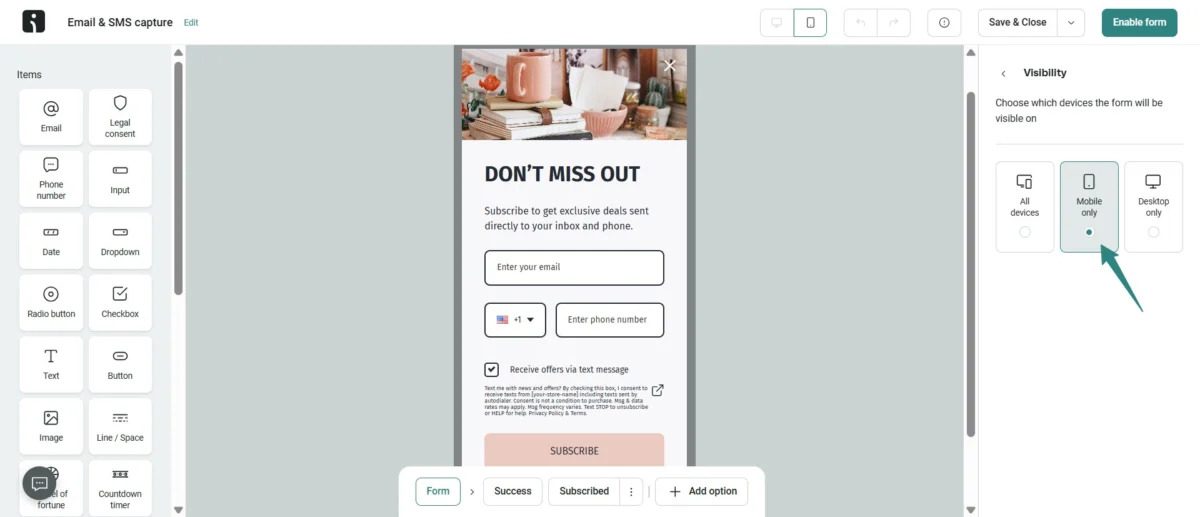
E-commerce merchants, according to Omnisend’s 2025 data, are poised to generate an impressive return on investment (ROI) of $79 for every dollar spent on email marketing. Achieving such remarkable returns necessitates a robust and strategic approach to email capture, the fundamental process of collecting visitors’ email addresses through various digital touchpoints such as signup forms, popups, landing pages, and compelling incentives. This practice is not merely about accumulating contact information; it’s about transforming transient website visitors into engaged subscribers, a critical step in cultivating a loyal customer base that consistently drives revenue for online stores.
The contemporary digital landscape, characterized by ever-evolving social media algorithms and escalating costs of paid advertising, has underscored the irreplaceable value of email as a direct, owned marketing channel. Unlike platforms where reach is dictated by external factors, email offers a reliable and cost-effective means to communicate directly with shoppers, fostering relationships that transcend fleeting digital trends. This guide delves into the essence of email capture, exploring the best tools, high-converting examples, and seven proven best practices designed to empower e-commerce businesses to optimize their subscriber acquisition strategies.
Defining Email Capture: Beyond Basic Sign-Ups
Email capture, at its core, is the consensual collection of email addresses from potential customers or website visitors. This process is facilitated through a variety of strategically placed digital elements on a website, including dedicated signup forms, dynamic popups, subtle teasers, full-page landing pages, or persistent floating bars. For e-commerce brands, the effectiveness of email capture is often amplified by offering “lead magnets”—valuable incentives such as exclusive discounts, free shipping offers, early access to new product launches, or valuable content like guides. These inducements create a clear value exchange, encouraging shoppers to willingly share their contact information.
The strategic implementation of email capture is a cornerstone for building a robust email list from the ground up. Once a prospect’s email address is obtained with consent, it unlocks a direct marketing channel for ongoing communications, sales promotions, and relationship nurturing. This direct line of communication offers unparalleled advantages, particularly in an environment where reliance on third-party platforms for customer reach is becoming increasingly precarious and expensive.
Email Capture vs. Email Harvesting: A Crucial Distinction
It is imperative to distinguish legitimate email capture from the illicit practice of email harvesting. In email capture, individuals explicitly and willingly provide their email addresses, typically in exchange for a perceived benefit or to stay informed by a brand. This consent-based approach builds trust and ensures compliance with privacy regulations.
Email harvesting, conversely, involves surreptitiously collecting email addresses from the internet without consent, often through automated scraping tools or the purchase of dubious contact lists. This unethical and illegal practice carries severe consequences, including significant damage to email deliverability rates, erosion of customer trust, and hefty penalties for violating data privacy laws. Regulations like the General Data Protection Regulation (GDPR) in Europe and the California Consumer Privacy Act (CCPA) mandate explicit consent for data collection and marketing communications. A 2026 study by Litmus highlighted that GDPR fines alone could cost a brand up to 4% of its annual global revenue, underscoring the critical importance of adhering to proper consent protocols during email capture.
The Arsenal of Email Capture Forms
Various types of email capture forms serve distinct purposes and are deployed at different stages of the customer journey, each with its own set of advantages and considerations.
Popup / Modal Forms
Popup forms are perhaps the most recognizable email capture mechanism, appearing dynamically over a store’s content. They are highly effective for immediate engagement, often used for welcome discounts, seasonal promotions, or cart-saving incentives. For instance, a Shopify popup offering a 15% discount can significantly convert first-time visitors into subscribers. While their visibility ensures high attention, poorly timed or overly aggressive popups can disrupt the browsing experience, leading to visitor frustration and premature exits.
Embedded Forms
Embedded forms are seamlessly integrated within the static content of website pages, found in blog posts, website footers, product descriptions, or checkout flows. Their non-intrusive nature makes them suitable for general newsletter signups or access to educational content. However, their discreet placement means they might be overlooked by casual visitors who scroll past them without active engagement.
Floating Bars
Also known as sticky bars, floating bars remain fixed at the top or bottom of the screen as a user navigates the website. They offer persistent visibility without obstructing content, making them ideal for promoting flash sales, free shipping thresholds, or limited-time offers. The primary limitation of floating bars is their confined space, which restricts the amount of detailed copy or imagery that can be displayed.
Dedicated Landing Pages (Email Capture Pages)
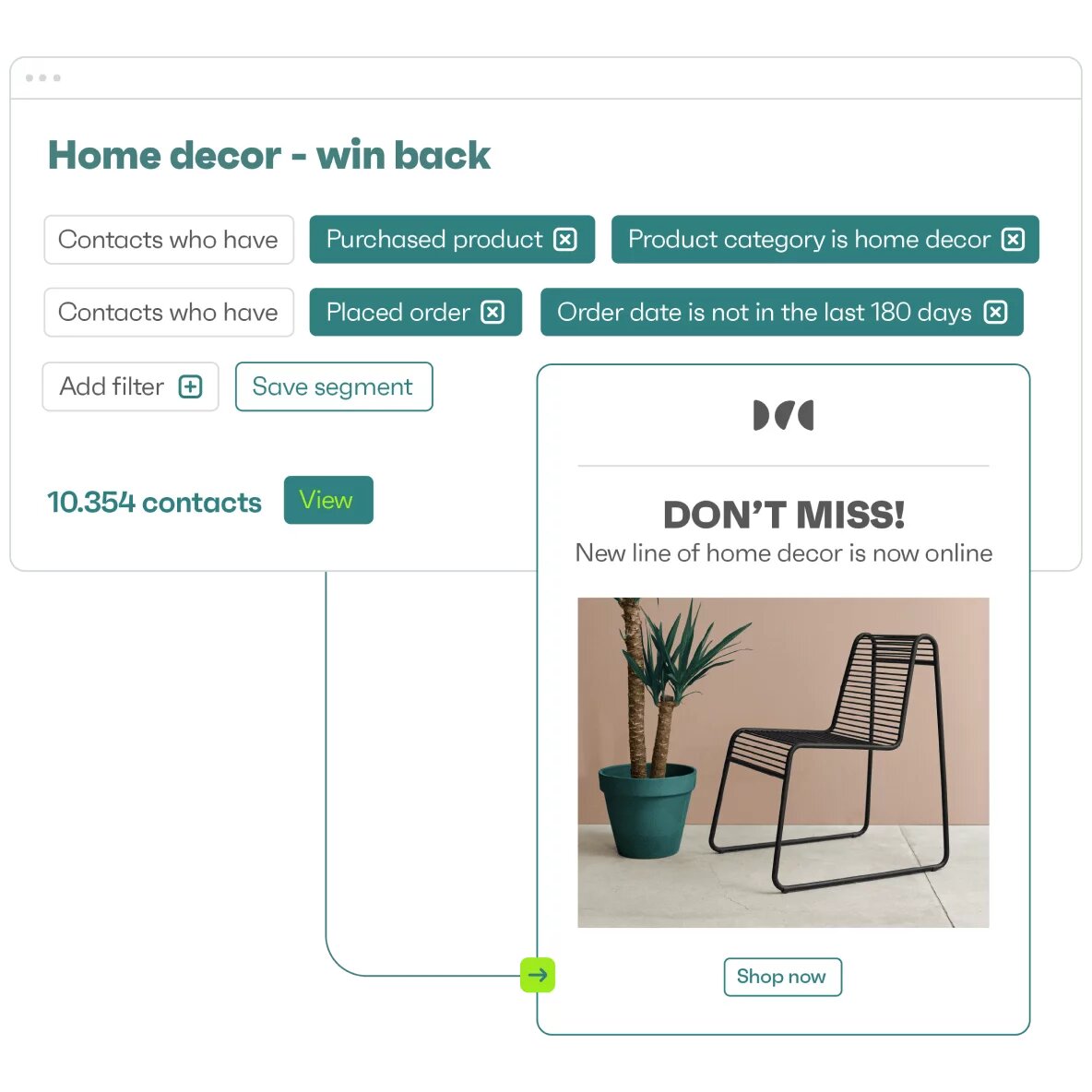
Landing pages are standalone web pages meticulously designed with a singular focus: to capture subscriber information. These pages are typically used as destinations for paid advertising campaigns, social media promotions, or specific giveaway participants, where the traffic is already highly motivated. Unlike other form types, landing pages do not rely on organic website traffic; instead, visitors are actively driven to them through external links or advertisements.
Teasers
Teasers are compact tabs or icons, usually positioned in a corner of the screen, that expand into a full email capture form upon user interaction. They are excellent for promoting VIP clubs, exclusive discounts, or early access campaigns, offering visitors more control over their browsing experience and minimizing interruptions. However, their initial minimized state means they are less immediately visible than full popups.
Leading e-commerce marketing platforms like Omnisend natively support all these form types, providing intuitive builders to create and A/B test various designs for optimal performance.
Leveraging Technology: A Look at Leading Email Capture Platforms (2026)
The effectiveness of an email capture strategy is heavily reliant on the underlying technology. A robust email capture software should offer not just form creation but also advanced targeting, segmentation, and automation capabilities. Here’s a comparative overview of top platforms:
| Tool | Best for | Starting Price | Free Plan | E-commerce Fit |
|---|---|---|---|---|
| Omnisend | Built-in email capture forms, popups, landing pages, segmentation, and omnichannel automation | $16/month | Yes | Excellent: Deeply connects with Shopify, WooCommerce, and BigCommerce stores |
| OptinMonster | Advanced targeting, exit-intent technology, and onsite retargeting | $21/month | No | Good: Integrates with Shopify, WooCommerce, and Magento |
| Wisepops | High-end popup personalization, multi-step popups, and onsite engagement | $99/month | No | Good: Great for brands using Shopify and BigCommerce |
| Popupsmart | Lightweight no-code AI popup builder and basic email signup forms | $39/month | Yes | Average: Lacks deep e-commerce data and integrations |
| Hellobar | Simple popups and inline signup forms | $39/month | No | Average: Quick to set up, but only syncs with BigCommerce |
For nascent e-commerce businesses or those just beginning their list-building journey, platforms like Hello Bar or Popupsmart offer user-friendly, cost-effective solutions. As businesses scale, mid-sized e-commerce brands often find Omnisend to be a compelling choice due to its comprehensive suite of features that seamlessly integrate signup forms with advanced email segmentation, automation workflows, and deep e-commerce platform integrations. Larger enterprises with dedicated marketing teams might leverage the sophisticated targeting capabilities of OptinMonster or the high-end personalization offered by Wisepops for highly optimized, granular campaigns. However, for a balanced, all-in-one solution that caters to businesses across the spectrum, Omnisend consistently stands out.
Mastering the Art of Email Capture: Seven Proven Strategies for E-commerce
Effective email capture transcends mere form placement; it hinges on a strategic blend of compelling value propositions and intelligent timing. The most common pitfall for e-commerce brands is either premature form display or failing to provide a clear, enticing reason for subscription. The following best practices are designed to optimize conversion rates while ensuring a frictionless user experience.
1. Compelling Value Exchange with Lead Magnets
A critical element of successful email capture is offering a clear and tangible incentive for visitors to share their email addresses. The generic “Join our newsletter” call-to-action is largely ineffective in today’s saturated market. Instead, the focus should be on a compelling lead magnet that offers undeniable value. For e-commerce stores, the most effective lead magnets include:
- Percentage-based discounts: Such as 10% or 15% off the first purchase.
- Fixed-amount discounts: Like $5 or $10 off.
- Free shipping: A highly coveted perk that can significantly reduce cart abandonment.
- Early access: To new product collections, sales, or exclusive content.
- Giveaway entries: Offering a chance to win products or gift cards.
- Exclusive content: Such as style guides, trend reports, or behind-the-scenes glimpses.
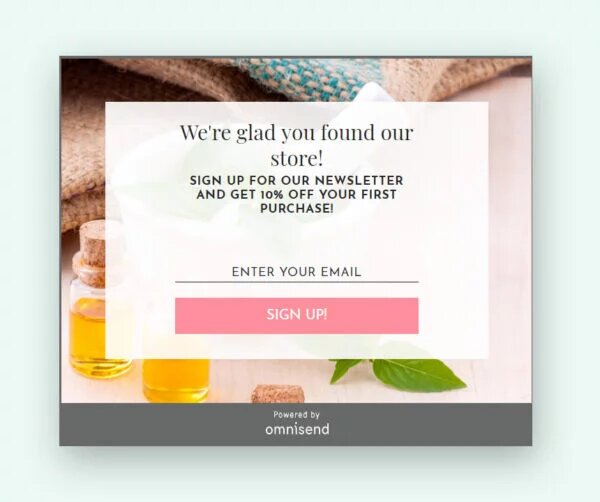
Island Olive Oil exemplifies this strategy with a simple Omnisend-powered popup that offers a 10% discount on the first order. This direct, value-driven approach resonates strongly with potential customers, as they immediately understand the benefit of subscribing. Omnisend’s data reinforces this, showing that popups incorporating a discount achieved a 2.4% conversion rate, notably higher than the 1.7% for those without.
2. Precision Timing and Behavioral Triggers
The timing of an email capture form is as crucial as its content. Presenting a popup immediately upon page load can be disruptive and lead to quick dismissal. Allowing visitors a brief period to browse and engage with the site content—typically 6 to 10 seconds, which Omnisend data suggests yields a 2.4% conversion rate—allows for interest to build before an offer is presented.
Beyond time-based triggers, behavior-based triggers enhance relevance and reduce intrusion:
- Scroll depth: Activating a popup once a user scrolls a certain percentage down a page, indicating engagement.
- Time on page: Triggering a form after a visitor has spent a specific duration on a page, suggesting interest.
- Specific page visits: Displaying tailored offers when a user lands on a product page or category, indicating intent.
- Exit-intent: A crucial last-ditch effort to capture abandoning visitors (discussed in detail below).
3. Hyper-Personalization Through Segmentation
Segmenting website visitors based on their behavior, demographics, and purchase history allows for the delivery of highly relevant and personalized email capture forms and incentives. This approach moves beyond a one-size-fits-all strategy, significantly boosting conversion rates by aligning offers with the individual shopper’s stage in their buying journey.
Examples of segmentation strategies include:
- New visitors: Offering a general welcome discount.
- Returning visitors: Presenting an exclusive loyalty perk or a reminder of previously viewed items.
- High-value customers: Inviting them to a VIP club with exclusive benefits.
- Abandoned cart users: Displaying an exit-intent popup with a specific discount or free shipping to recover the sale.
Omnisend’s advanced targeting capabilities enable e-commerce brands to create granular segments, ensuring that each email capture campaign is precisely tailored for maximum impact and improved follow-up email marketing campaigns.
4. Streamlined Forms: The Less-Is-More Approach
In email capture, minimizing friction is paramount. Requesting only essential information, typically just an email address, significantly improves signup rates. Each additional field, such as a first name, last name, or phone number, introduces more effort for the user and increases the likelihood of abandonment. A 2025 Omnisend study found that single-field forms achieved a 2.1% signup rate, while forms requiring five or more details saw a drop to just 1.4%.
Many successful campaigns, like Organic Aromas’ Omnisend-created popup which achieved a 6.8% conversion rate, leverage a single-field form combined with a strong, clear Call-to-Action (CTA). This approach prioritizes speed and ease of subscription, demonstrating the direct correlation between simplicity and conversion.
5. Mobile-First Design and SEO Safeguards
With mobile devices accounting for 57.27% of all website traffic in 2026 (Statista), optimizing email capture forms for smaller screens is non-negotiable. Forms that are difficult to close, excessively large, or block content on mobile devices lead to user frustration and high bounce rates. Furthermore, Google penalizes intrusive mobile popups that negatively impact user experience, potentially leading to lower search engine rankings and reduced visibility.
To ensure optimal mobile performance and safeguard SEO rankings:
- Utilize responsive design: Forms should automatically adapt to different screen sizes.
- Employ smaller, less intrusive forms: Consider bottom sheets or subtle banners for mobile.
- Ensure easy closing mechanisms: A clearly visible “X” button is essential.
- Prioritize critical information: Keep fields minimal and legible.
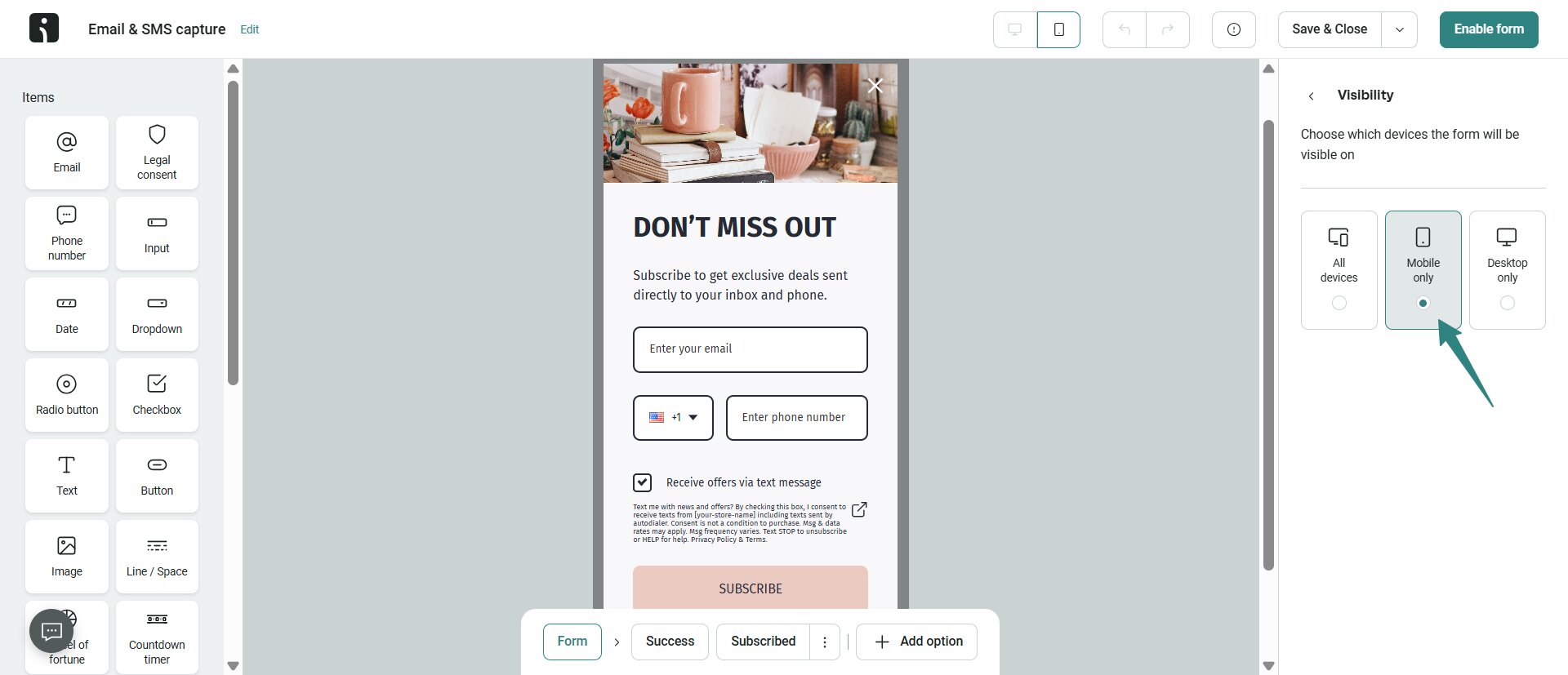
Vape Superstore’s success with Omnisend’s mobile-friendly, multi-step email and SMS capture forms, which saw mobile signup rates jump from 18% to 32%, highlights the tangible benefits of a mobile-first approach.
6. Continuous Optimization Through A/B Testing
A/B testing is crucial for refining email capture strategies. By systematically experimenting with different elements of a form, such as headlines, offers, CTA button text, imagery, and timing rules, businesses can identify what resonates most effectively with their audience. Even minor adjustments can yield significant improvements in signup rates.
Key elements to A/B test include:
- Headlines and body copy: Testing different value propositions and messaging.
- Lead magnet offers: Comparing the effectiveness of various discounts or incentives.
- CTA button text and color: Optimizing for clarity and click-through.
- Imagery and design: Assessing visual appeal and brand alignment.
- Timing and trigger rules: Fine-tuning when and how forms appear.
B-Wear Sportswear’s experience, where a switch to a 20% discount and optimized welcome sequence via Omnisend resulted in a 66% conversion rate, underscores the power of data-driven optimization.
7. The Power of the “Last Chance”: Exit-Intent Strategies
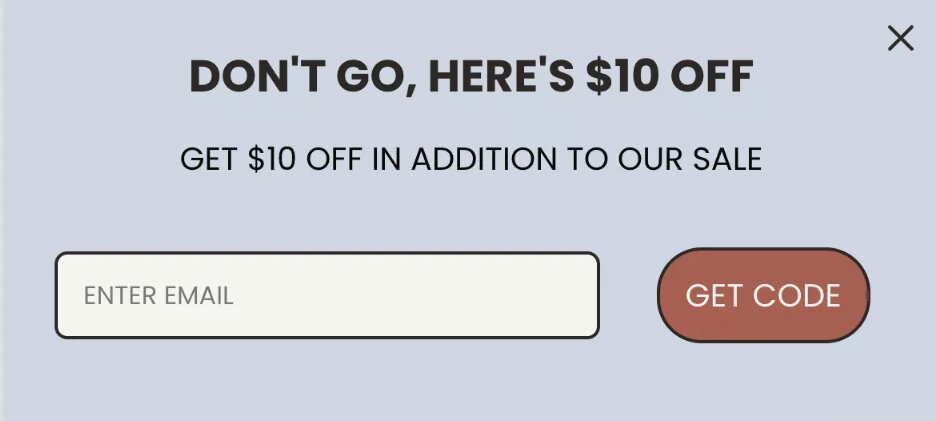
Exit-intent popups are a powerful “last-chance” mechanism, appearing when a visitor signals an intention to leave the website (e.g., by moving their cursor towards the browser’s close button). These forms provide a final opportunity to capture an email address before the shopper departs completely. Because they activate at the point of exit, they are generally perceived as less intrusive than immediate popups, making them a favored tactic among e-commerce store owners for recovering potentially lost visitors.
Effective last-chance offers for exit-intent popups include:
- Exclusive one-time discounts: To create a sense of urgency.
- Free shipping on the current cart: Directly addressing a common abandonment reason.
- A reminder of items in their cart: Coupled with an incentive to complete the purchase.
- Invitation to a personalized product recommendation quiz: To re-engage.
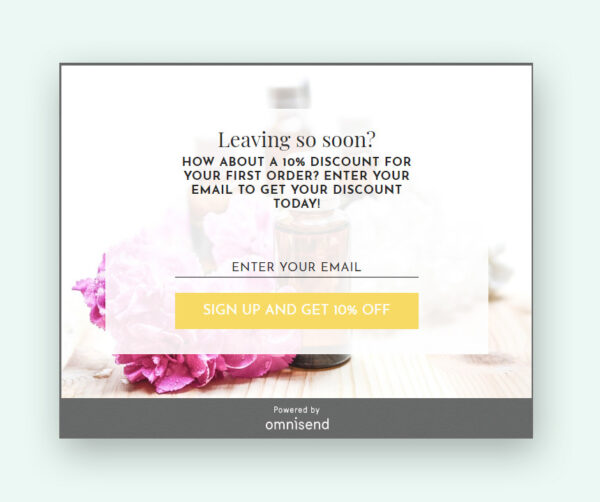
Organic Aromas leveraged an Omnisend exit-intent popup with a 10% discount on the first purchase, resulting in a remarkable 150% increase in email signups, demonstrating its efficacy in converting abandoning visitors.
Real-World Impact: High-Converting Email Capture Examples
High-converting e-commerce popups consistently combine a strong offer, mobile-friendly design, minimal fields, and precise timing, making the value proposition immediately clear and focusing on a single, compelling action.
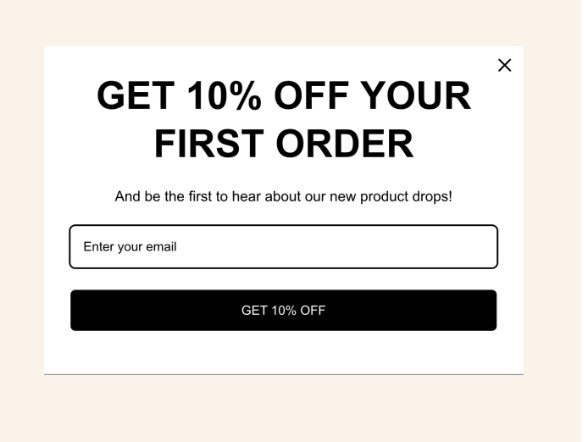
Welcome Discount Popup
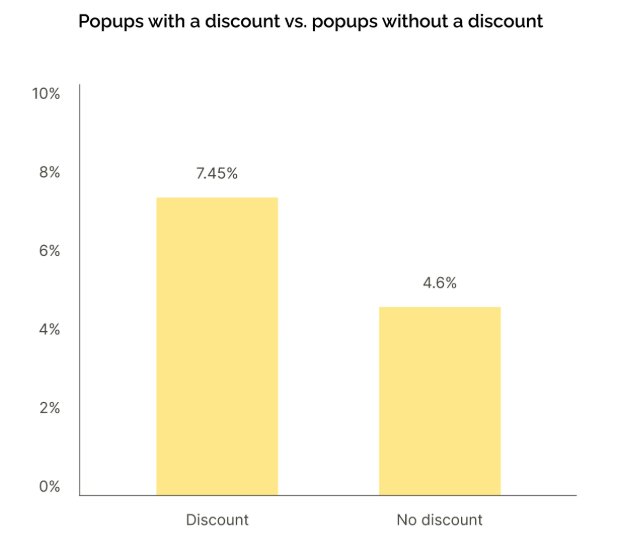
A welcome discount popup engages new visitors by offering an incentive for their email address. A 2026 Wisepops report indicated that email capture popups with discounts achieved a 7.45% conversion rate, significantly higher than the 4.6% for those without discounts. Common offers include percentage or fixed-amount discounts, free shipping, or a small gift with purchase.
Exit-Intent Popup
Deployed when a shopper is about to leave, exit-intent popups aim to recapture attention and reduce bounce rates. While Wisepops’ 2025 data showed a 3.94% conversion rate for exit-intent popups, they are invaluable for recovering up to 10% of abandoning visitors. These campaigns thrive on urgency-focused offers such as limited-time discounts or free shipping.
Spin-to-Win / Wheel of Fortune Popup
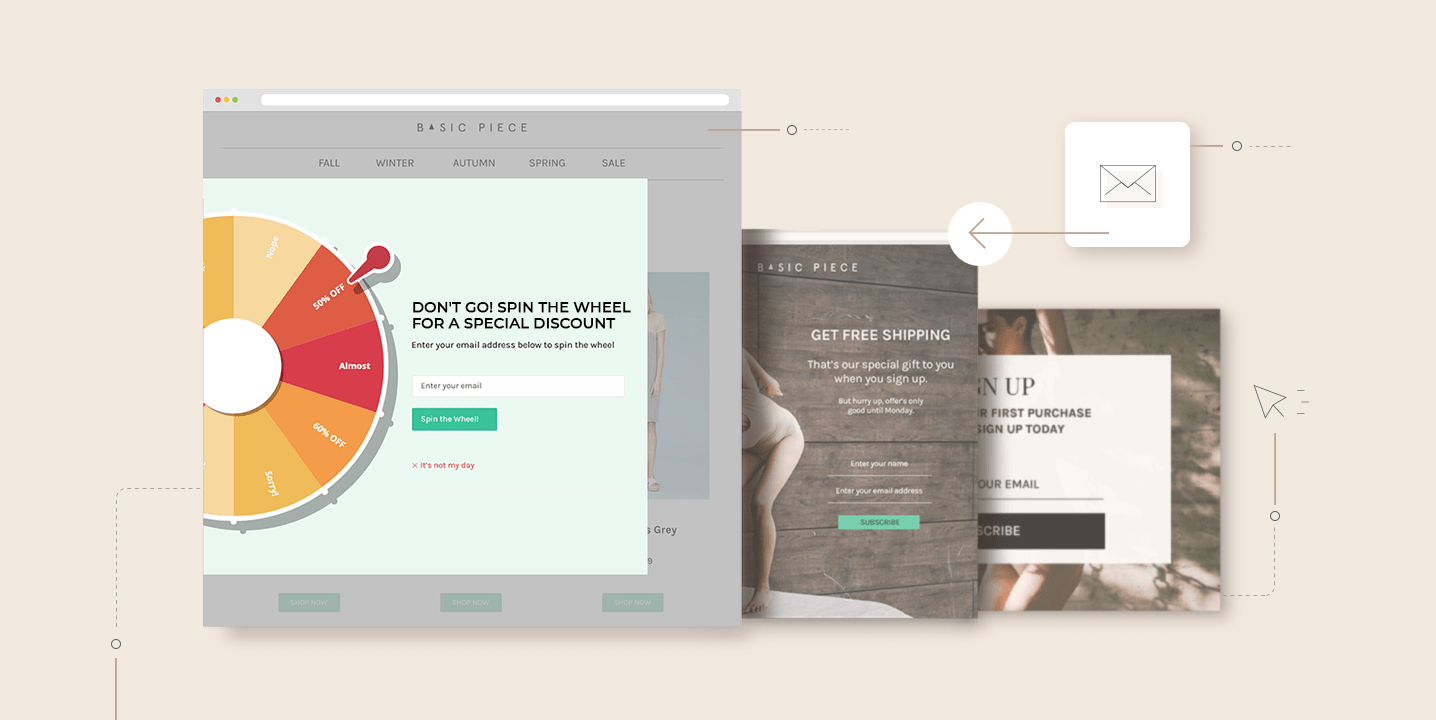
Gamified popups transform email capture into an interactive experience. Instead of a static form, visitors spin a virtual wheel to win prizes, leveraging the excitement of chance. Omnisend data from 2025 revealed that Wheel of Fortune popups boasted a 3.5% conversion rate, outperforming standard forms at 2%. These are particularly effective for holiday promotions or new product launches, offering prizes like percentage discounts, free products, or gift cards.
SMS + Email Double Opt-in Popup
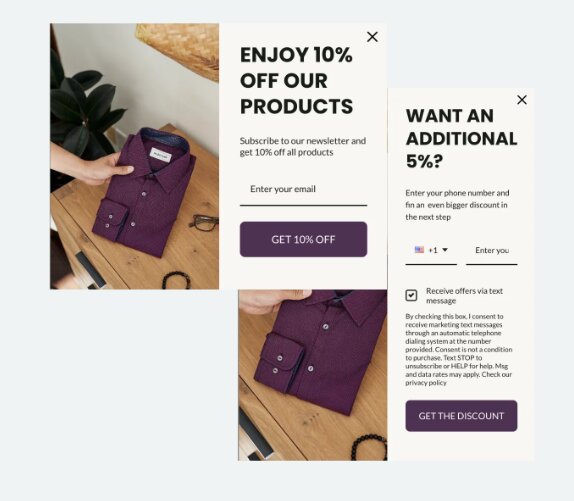
This multi-step approach collects both an email address and a phone number, expanding a brand’s omnichannel marketing capabilities. The strategy often involves asking for an email first, then a phone number on a subsequent screen. Omnisend statistics from 2025 indicated that multi-step popups achieved a 2.3% conversion rate, slightly higher than single-step popups at 2%, especially when stronger, tiered incentives are offered (e.g., 10% off for email, an additional 5% for SMS).
Teaser Form
Teasers provide a non-intrusive way to keep promotions visible. They remain minimized until clicked, making them ideal for mobile devices where screen real estate is limited. Wisepops’ 2026 data showed that popups positioned on the top-left side converted better (6.8%) than those on the top-right (6.57%), suggesting subtle placement can influence engagement.
Strategic Outlook: The Future of Email Capture in E-commerce
The landscape of email capture is continually evolving, driven by advancements in technology and shifting consumer expectations. The future points towards even greater sophistication in personalization, integration, and ethical data handling.
Integration with Broader Marketing Ecosystems: Email capture will become even more deeply integrated with comprehensive customer relationship management (CRM) systems and omnichannel marketing platforms. This ensures that subscriber data flows seamlessly across email, SMS, push notifications, and even social media, enabling highly coordinated and consistent customer journeys.
Ethical Data Collection and Consumer Trust: As privacy regulations continue to tighten globally, the emphasis on explicit consent, transparency, and data security will intensify. Brands that prioritize ethical data collection and clearly articulate their privacy policies will build stronger trust with consumers, leading to higher-quality subscriber lists and improved long-term engagement. Double opt-in mechanisms will become standard practice, further solidifying consent.
AI-Driven Personalization and Predictive Analytics: Artificial intelligence (AI) and machine learning will play an increasingly pivotal role in optimizing email capture. AI algorithms will analyze vast datasets to predict optimal timing, personalize lead magnet offers, and even dynamically generate form content based on individual visitor behavior and preferences. Predictive analytics will help identify high-value visitors, allowing for hyper-targeted capture strategies.
The Enduring Value of a Direct Customer Channel: Despite the emergence of new communication technologies, email’s role as a direct, owned marketing channel remains unparalleled. It provides a stable, cost-effective, and highly measurable means of communication that is immune to external platform changes. This enduring value makes robust email capture strategies not just a competitive advantage but a fundamental necessity for sustainable e-commerce growth.
In conclusion, email capture is far more than a technical process; it is a strategic imperative for any e-commerce business seeking sustainable growth, enhanced customer relationships, and a resilient marketing infrastructure in the ever-changing digital economy. By adopting best practices, leveraging advanced tools, and prioritizing ethical considerations, online retailers can transform casual browsers into loyal, long-term customers, unlocking significant ROI and fostering a thriving digital presence.