The world of bulk email sending is undergoing a significant transformation, driven by new authentication requirements from industry giants Google and Microsoft, alongside an increasing emphasis on deliverability and strategic engagement over sheer volume. Businesses leveraging email for marketing, transactional communications, and customer relationship management are now compelled to adopt sophisticated platforms that manage technical intricacies like authentication, IP reputation, and bounce processing, ensuring campaigns land in the inbox rather than the spam folder. This article provides an in-depth analysis of the modern bulk email service landscape, reviewing leading providers, compliance necessities, and strategic considerations for 2026 and beyond.

The Pivotal Shift in Email Deliverability Standards
Historically, sending large volumes of email was often perceived as a straightforward technical task, with many businesses focusing primarily on cost-per-send. However, the digital communication ecosystem has matured, and the imperative for robust email deliverability has never been higher. The distinction between merely "delivering" an email to a recipient’s server and ensuring its "deliverability" into the primary inbox has become paramount. A high delivery rate means a message reached the receiving server, but low deliverability indicates it frequently ended up in spam. This distinction is critical; even providers with high delivery rates can struggle with deliverability if emails consistently hit spam folders, costing businesses potential revenue and damaging sender reputation. Rebuilding a compromised sender reputation is a resource-intensive and time-consuming endeavor, making the initial choice of a bulk email sender far more critical than just its price point.
A significant catalyst for this shift arrived with Google’s announcement of new authentication requirements in 2024, followed by Microsoft’s similar mandates for 2025. These policies target high-volume senders—defined by Google as those sending over 5,000 messages daily to personal Gmail accounts—requiring stringent email authentication protocols and proactive complaint-rate monitoring. These changes fundamentally redefine what constitutes a "good" bulk email sender, pushing platforms to offer not just high send limits but also advanced automation, segmentation capabilities, and e-commerce features. Modern tools are now expected to facilitate direct product integration into emails, reflecting a broader trend towards highly personalized and conversion-focused email marketing.
Decoding the Technology: Components of a Modern Bulk Email Service

At its core, a bulk email service provider (often interchangeably called a mass email service or bulk email software) is a platform designed to send vast quantities of email on behalf of businesses, abstracting away the complex technical requirements. Key components include:
- Simple Mail Transfer Protocol (SMTP) Relay: This is the foundational service ensuring email transmission from the sender’s mail server to the recipient’s. Its reliability directly impacts delivery rates.
- IP Management (Shared vs. Dedicated):
- Shared IP: An IP address used by multiple senders. It requires no warm-up but carries the risk of other users’ poor sending practices affecting one’s own sender reputation.
- Dedicated IP: An IP address exclusively used by a single sender. This offers full control over sender reputation but requires a warm-up period and ongoing maintenance.
- Sender Policy Framework (SPF): A critical authentication framework that lists which servers are authorized to send email for a specific domain, preventing spoofed emails.
- DomainKeys Identified Mail (DKIM): A security standard that adds a digital signature to emails, confirming authenticity and ensuring the message hasn’t been tampered with in transit.
- Domain-based Message Authentication, Reporting and Conformance (DMARC): A protocol that instructs recipient mail servers on how to handle emails that fail SPF or DKIM checks (e.g., quarantine, reject) and provides senders with reports on authentication failures.
Beyond these technical underpinnings, modern bulk email platforms also handle essential backend processes such as bounce processing, unsubscribe management, and continuous monitoring of sender reputation to ensure optimal inbox placement.

Categorizing Bulk Email Service Providers
Bulk email services typically fall into three main categories, each tailored to different organizational needs:

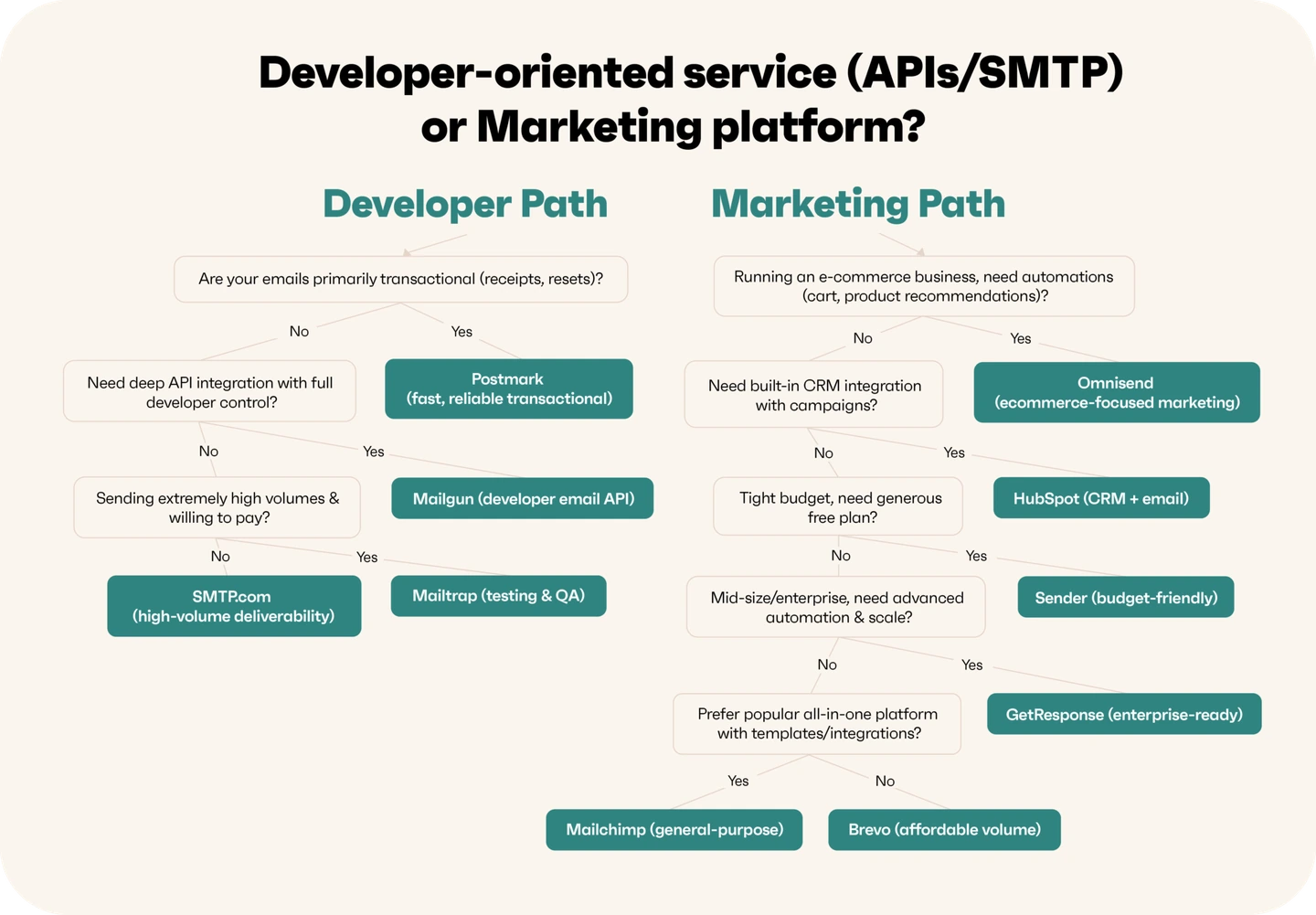
- Marketing Platforms: These are designed for comprehensive marketing campaigns, offering features like audience segmentation, visual email builders, automation workflows triggered by customer lifecycle events, and detailed analytics. Examples include Omnisend, Sender.net, Brevo, Mailchimp, and GetResponse.
- Email APIs and Relays: Primarily focused on supporting transactional and programmatic email sending, such as password reset requests, order confirmations, or shipping notifications. These are often developer-centric, offering robust APIs for integration. Mailgun, Postmark, SMTP.com, and Mailtrap are prominent examples.
- CRM-Led Suites: These platforms integrate email sending deeply with customer relationship management (CRM) databases, allowing sales and marketing teams to tie campaigns directly to specific deal or contact details within a unified system. HubSpot is a prime example.
The choice between these categories hinges on the primary users and objectives. An e-commerce marketing team might prioritize a marketing platform with visual builders and segmentation, while a large enterprise with a strong sales force might opt for a CRM-integrated solution. Furthermore, a distinction exists between hosted platforms (online solutions with managed infrastructure) and desktop bulk email software (local installations requiring user-provided SMTP accounts). While desktop software offers greater control and avoids subscription fees, it shifts the responsibility for deliverability, maintenance, and compliance entirely to the user, a significant trade-off compared to the managed services of hosted platforms.
It’s also essential to differentiate between bulk, transactional, and graymail. Bulk emails are large batches sent to opted-in lists (e.g., newsletters, promotions). Transactional emails are triggered by user actions (e.g., order confirmations). Graymail occupies a middle ground, sent to opted-in lists of inactive or infrequent recipients. Many API-focused providers now offer both transactional and bulk sending capabilities, recognizing the diverse needs of businesses.
Navigating the New Regulatory Environment (2024-2026 Timeline)
The regulatory landscape for bulk email is becoming increasingly stringent, with major implications for all senders. The 2024 Gmail and 2025 Microsoft authentication requirements are at the forefront of this evolution.
Key Requirements from Google and Microsoft:
- SPF, DKIM, and DMARC: High-volume senders must implement all three authentication protocols on their sending domains. Google specifically mandates a valid DMARC record, with
p=noneas the minimum, thoughp=quarantineis recommended for stronger operational control. - One-Click Unsubscribe: For marketing and subscription emails, a one-click
List-Unsubscribemechanism (specifically RFC 8058 compliantList-UnsubscribeandList-Unsubscribe-Postheaders) is required, ensuring swift processing of unsubscribe requests. - Spam Rate Monitoring: Senders must keep their spam rate, as reported in Google Postmaster Tools, below 0.30%, with a recommended threshold of under 0.10%. Exceeding 0.30% risks delivery to Gmail accounts.
Shared Responsibilities: While bulk email service providers handle much of the technical heavy lifting—publishing and rotating DKIM keys, processing bounces, and honoring List-Unsubscribe headers—the sender remains responsible for publishing SPF and DMARC records, maintaining a clean email list, and actively monitoring spam rates via tools like Google Postmaster Tools.

Beyond these specific platform requirements, senders must also adhere to broader international email laws:
- CAN-SPAM Act (USA): An opt-out law requiring accurate headers, non-deceptive subject lines, clear identification as an advertisement, a valid physical address, and a functional unsubscribe mechanism. Penalties can reach up to $53,088 per email.
- GDPR (EU): An opt-in law requiring explicit consent for data processing, transparent data handling, a clear right to withdraw consent, and robust data protection measures. Fines can be up to €20 million or 4% of global revenue.
- CASL (Canada): Requires implied or explicit consent, clear identification of the sender, and an unsubscribe mechanism. Penalties can reach C$10 million per violation.
- PECR (UK): Governs electronic communications, largely aligning with GDPR rules, with fines under UK law.
Best practices for compliance include obtaining explicit consent, providing clear unsubscribe options, maintaining accurate sender information, ensuring transparent privacy policies, and regularly auditing email lists for inactive or unengaged contacts.
Comprehensive Review: Top Bulk Email Service Providers for 2026
A thorough review of 10 leading bulk email service providers for 2026 reveals a diverse ecosystem, each excelling in particular use cases. The evaluation considered monthly sending limits, free plan availability, automation depth, segmentation options, e-commerce integrations, deliverability controls, and overall usability. (Data collected in September 2026; G2 and Capterra ratings based on varying review numbers).

| Service | Key Features | Free Plan Limits | Best For | Reviews Rating | Dedicated IP | Support |
|---|---|---|---|---|---|---|
| Omnisend | E-commerce automations, segmentation, product recs, sales attribution, email+SMS+web push | 250 contacts, 500 emails/month, Omnisend branding | E-commerce | G2: 4.6/5 Capterra: 4.7/5 | Yes | 24/7 live chat + email (all plans) |
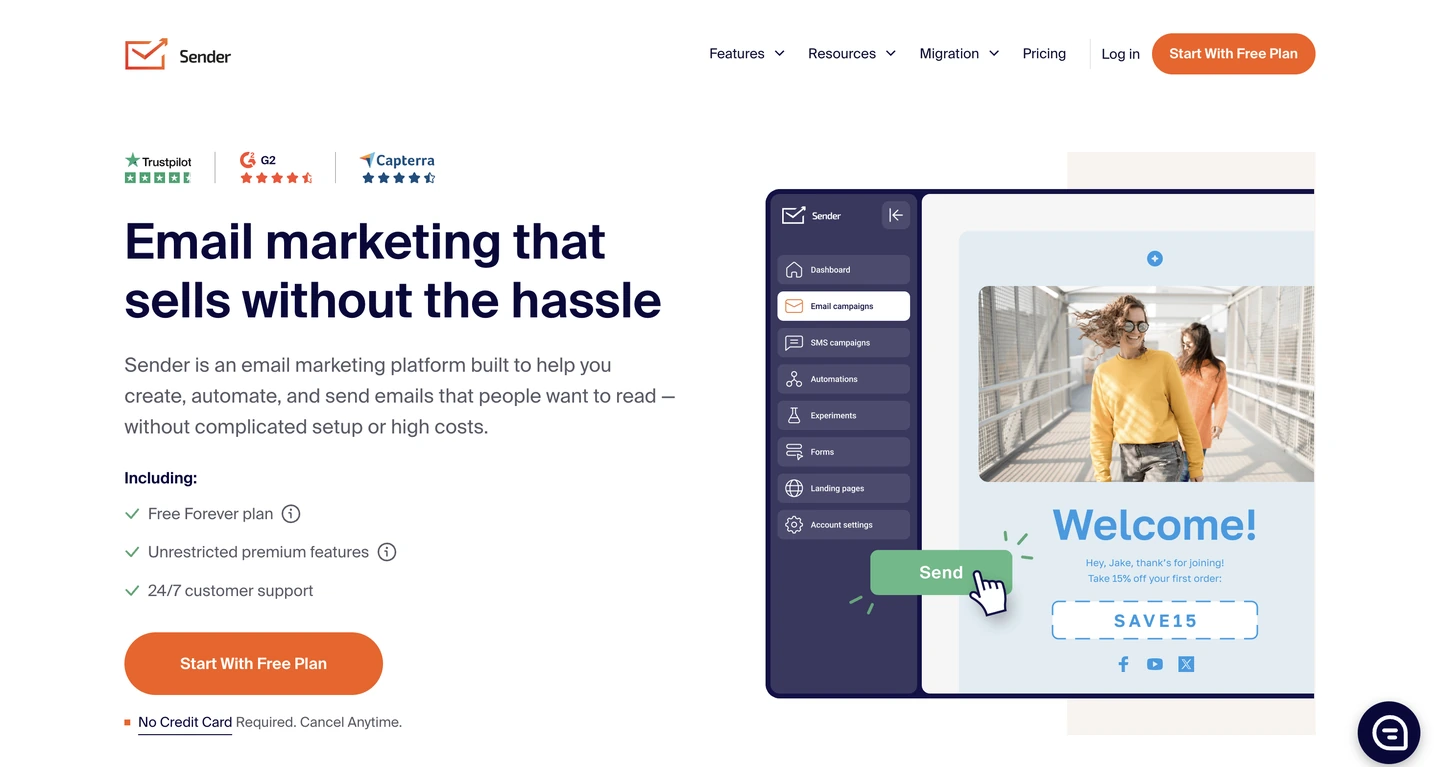
| Sender.net | Drag-and-drop builder, automations, forms/pop-ups, templates, reporting | 2,500 subscribers, 15,000 emails/month | Small businesses | G2: 4.7/5 Capterra: 4.7/5 | Yes | 24/7 chat (all plans) + phone (Enterprise) |
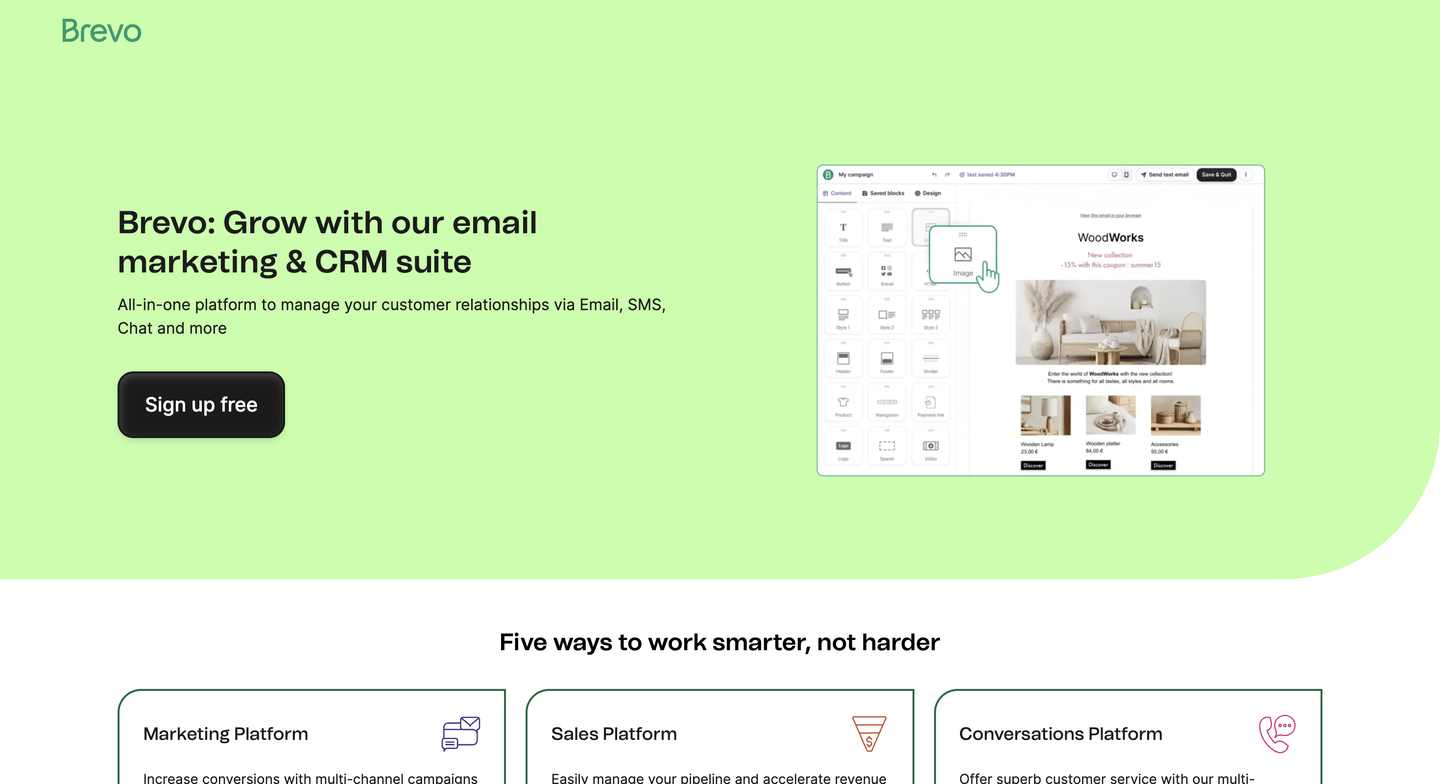
| Brevo | Email + SMS, CRM, automation, AI tools, volume-based pricing | 300 emails/day (free) + Brevo branding | Budget-friendly marketing suite | G2: 4.5/5 Capterra: 4.6/5 | Yes | Email on free; chat/phone on paid |
| Mailchimp | Templates, campaigns, A/B testing, analytics, broad integrations | 250 contacts, 500 emails/month (250/day), Mailchimp branding | General-purpose email marketing | G2: 4.3/5 Capterra: 4.5/5 | Yes | 24/7 chat+email on paid; limited free |
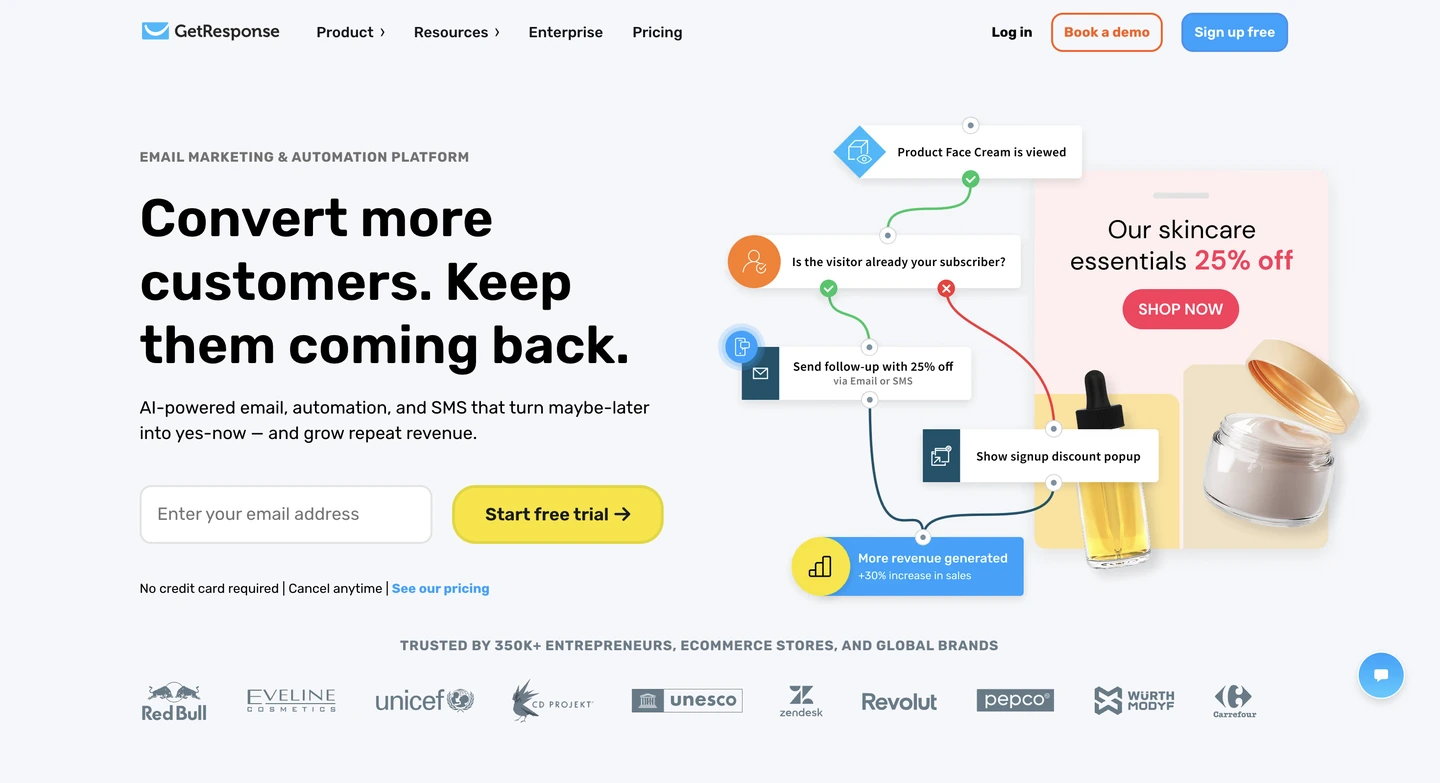
| GetResponse | Email marketing, landing pages, segmentation, basic analytics | 500 contacts, 2,500 newsletters/month, 1 landing page | All-in-one marketing, including pages/webinars | G2: 4.3/5 Capterra: 4.2/5 | Yes | 24/7 chat support (all plans) |
| HubSpot | CRM-first marketing, email tools, forms/pages, automation (higher tiers) | 2,000 marketing emails/month, 1,000 marketing contacts, no reporting | CRM-led teams | G2: 4.4/5 Capterra: 4.6/5 | Yes | Email and in-chat support (paid plans) |
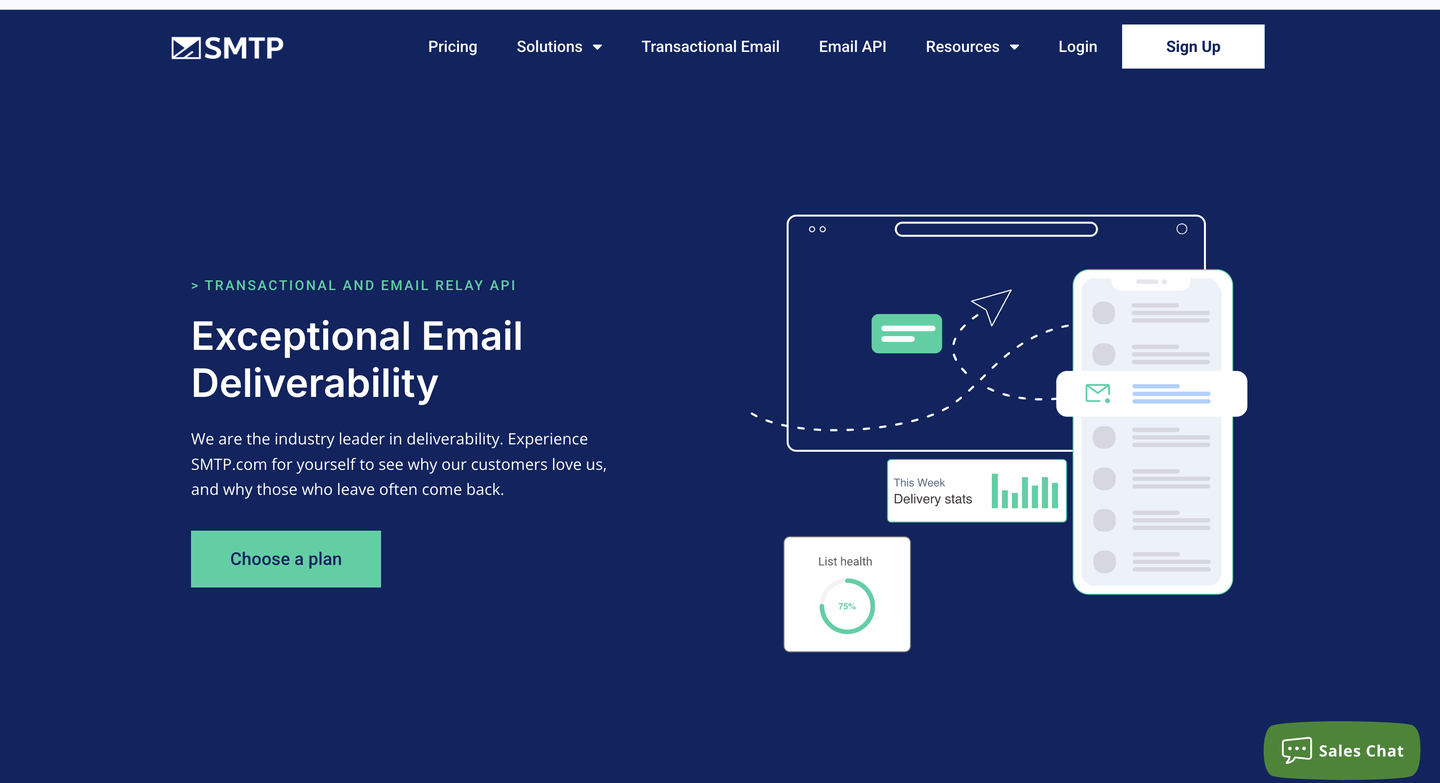
| SMTP.com | SMTP relay for bulk delivery, analytics, deliverability focus | No free plan | High-volume senders | G2: 3.3/5 Capterra: 3.5/5 | Yes | Support included (vendor-led) |
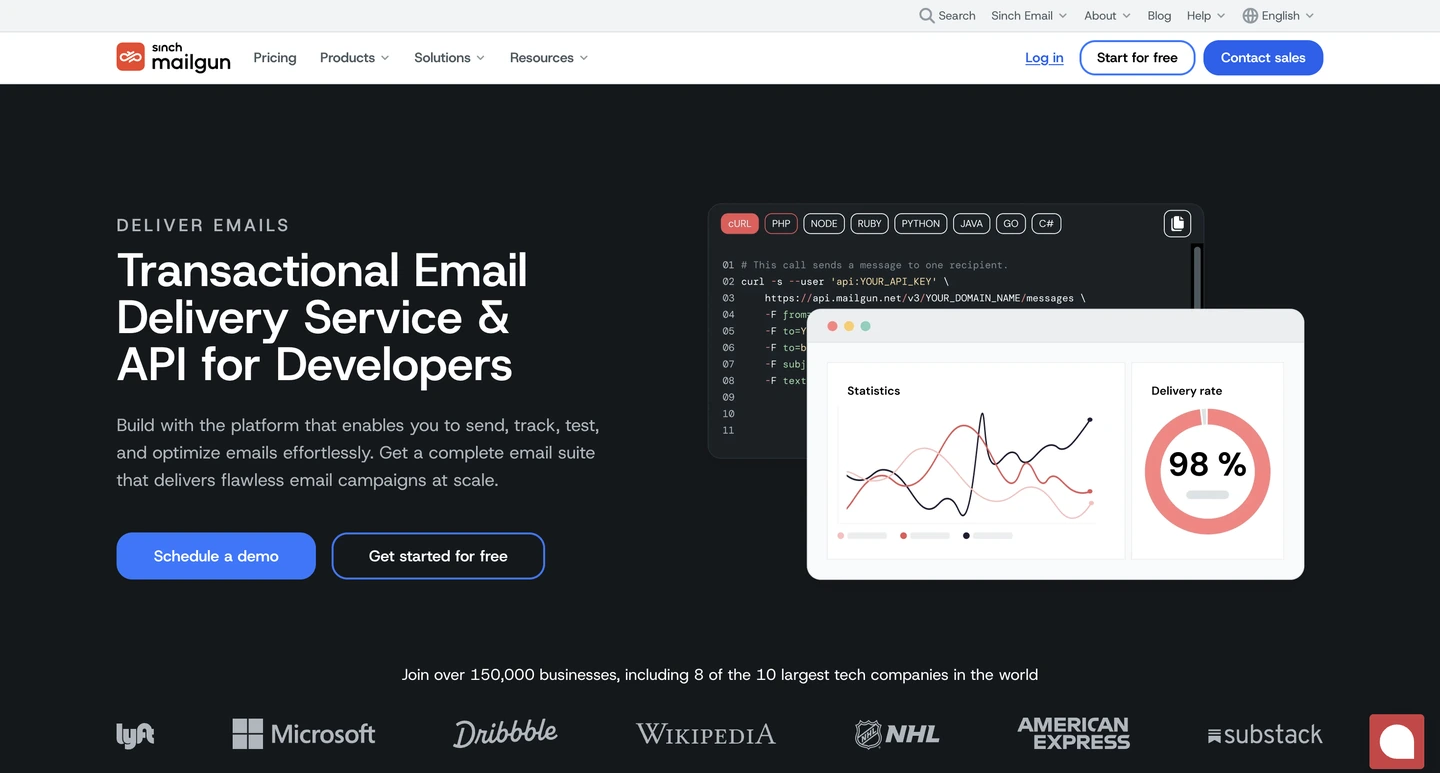
| Mailgun | Email API/SMTP, logs/analytics, validation tools | 100 emails/day, email APIs, email analytics | Developers | G2: 4.2/5 Capterra: 4.3/5 | Yes | Ticket support; chat/phone on top tiers |
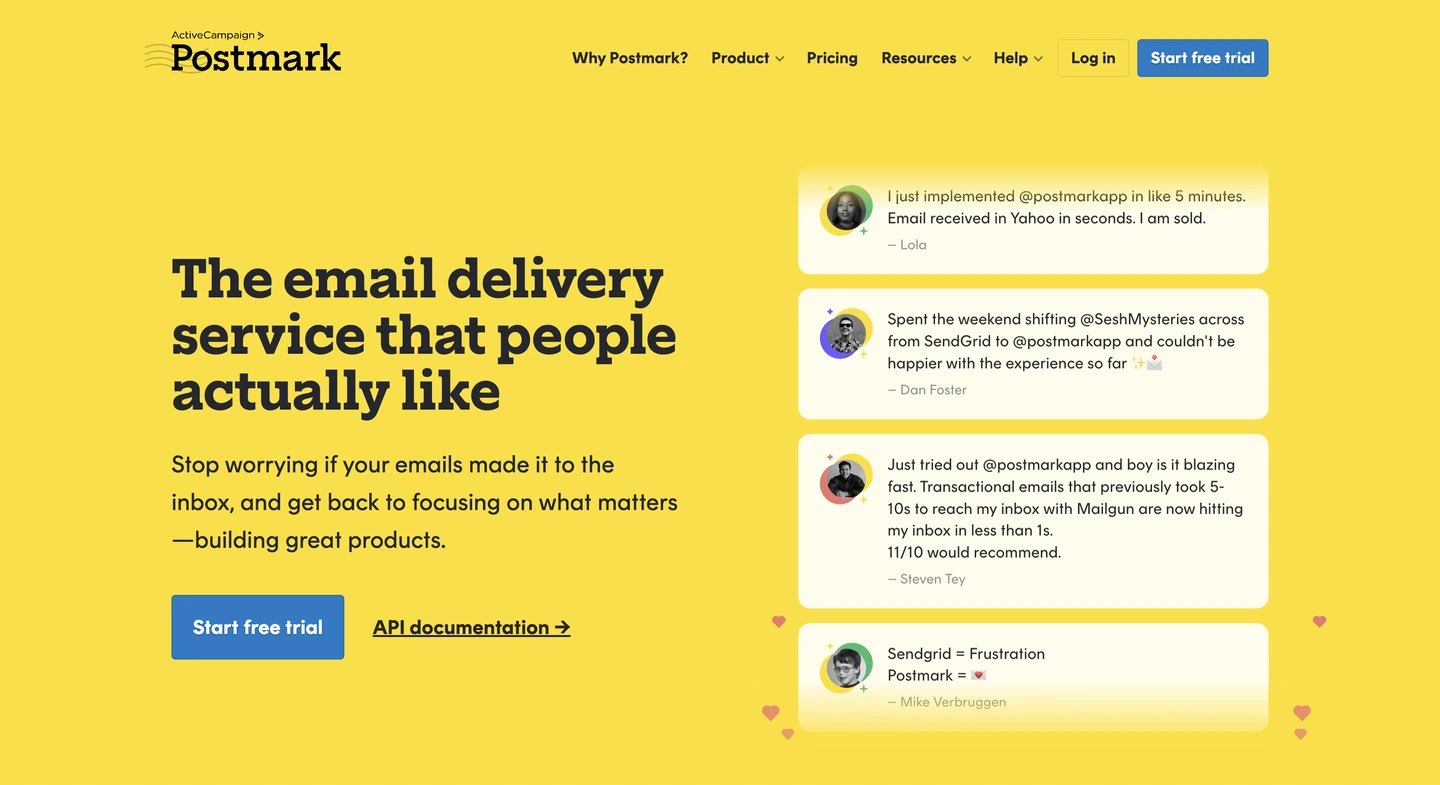
| Postmark | Transactional email delivery, templates, message streams | 100 emails/month | Product developers (transactional) | G2: 4.6/5 Capterra: 4.7/5 | Yes | Business-hours email + live chat |
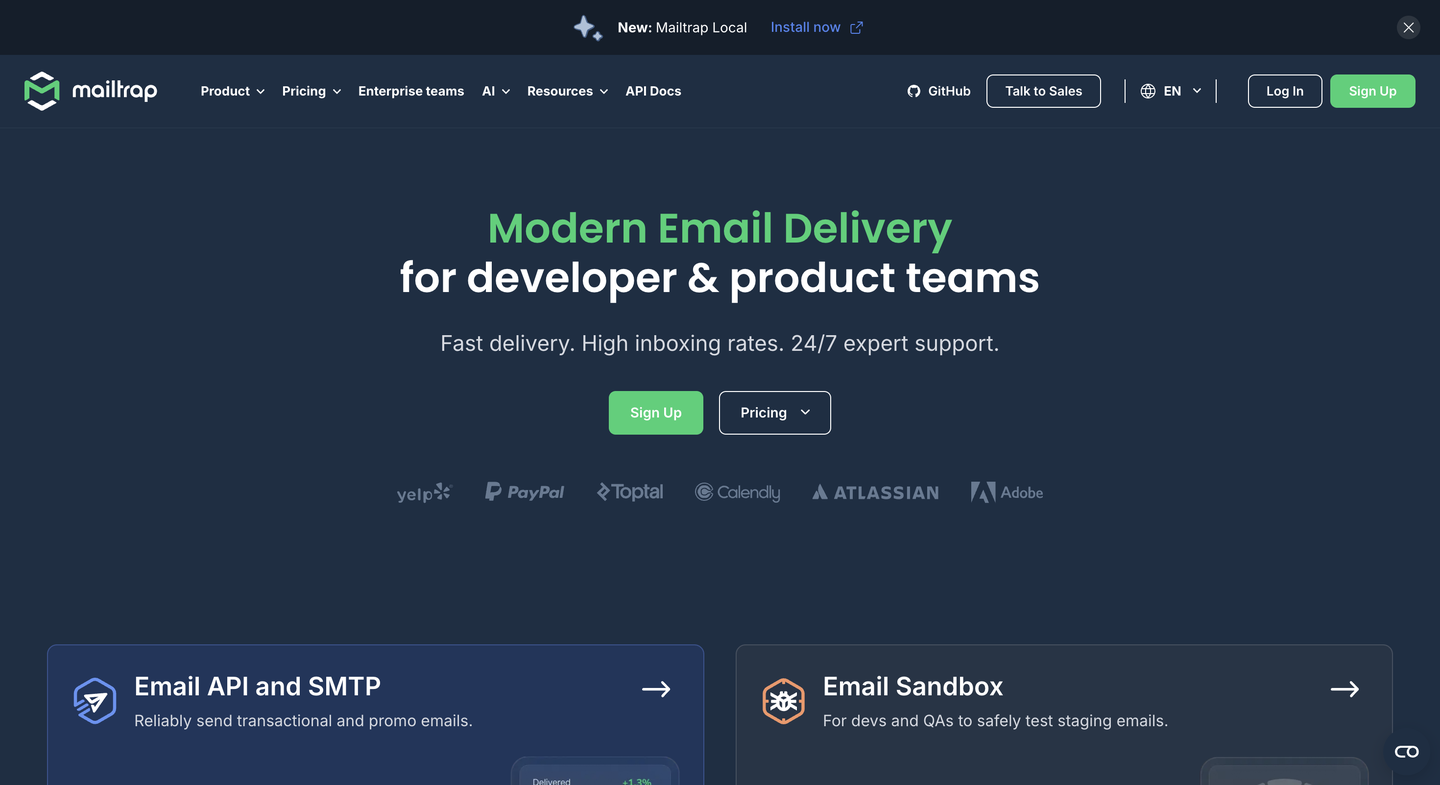
| Mailtrap | Email API/SMTP + bulk sending, sandbox testing, analytics, warm-up tools | 4,000 emails/month, 150/day, 1 user | Testing + deliverability workflows | G2: 4.8/5 Capterra: 4.8/5 | Yes | 24/7 support messaging (paid) |
Marketing-Focused Platforms:
- Omnisend: A premier choice for e-commerce brands, Omnisend excels in integrating email with SMS and web push notifications. It offers pre-built automations for welcome series, abandoned carts, and browse abandonment, along with robust audience segmentation and sales reporting directly tied to campaign performance. Its drag-and-drop editor supports dynamic product blocks, making it ideal for stores needing revenue attribution. Customers frequently praise its intuitive UI and responsive 24/7 support.
- Sender.net: Stands out for its generous free plan, allowing 15,000 emails per month to 2,500 contacts without a daily cap. This makes it highly appealing for small businesses or those testing the waters before committing to a paid service. It offers e-commerce reporting via Shopify and WooCommerce plugins, tracking order revenue and email-to-sale attribution.
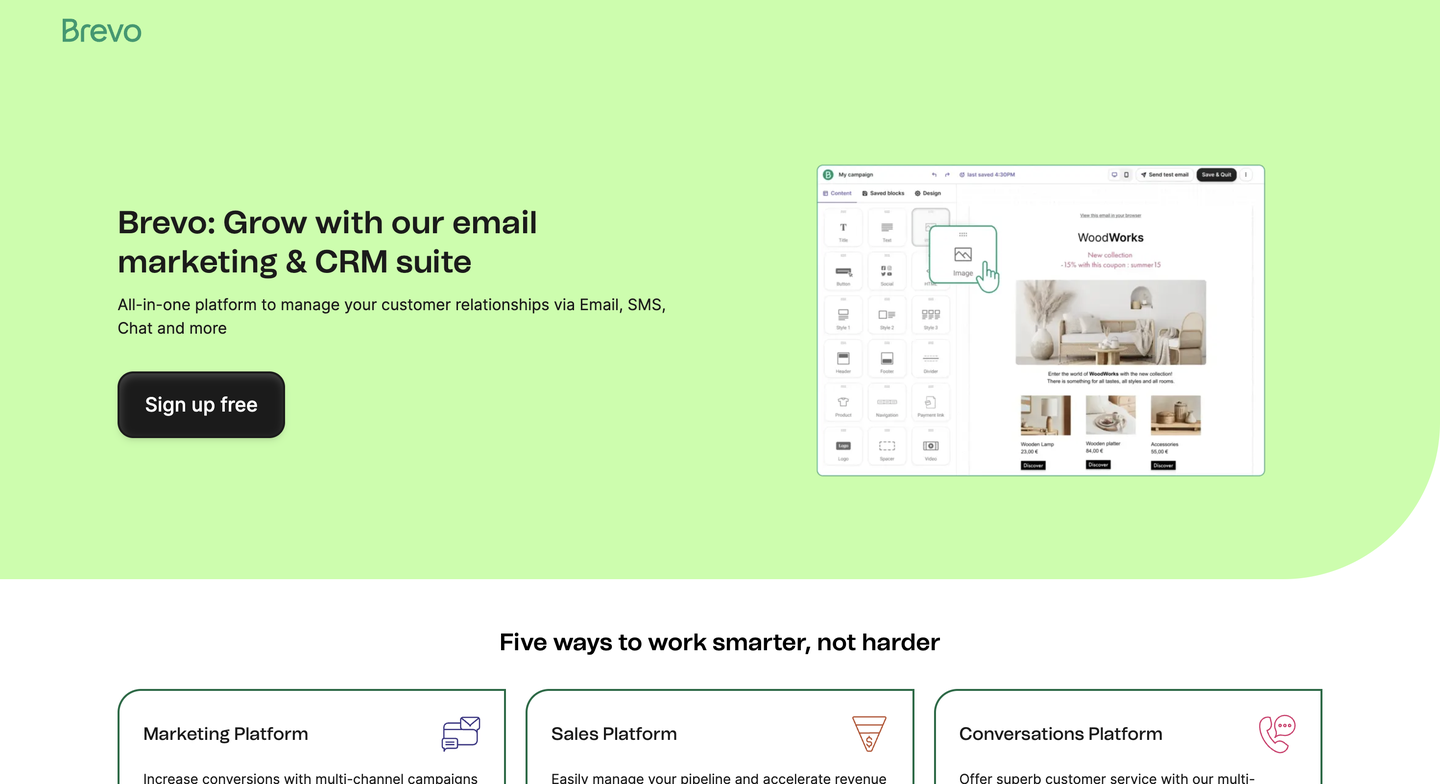
- Brevo (formerly Sendinblue): Differentiates itself with volume-based pricing, benefiting brands with large databases but infrequent sending schedules. It unifies email, SMS, and CRM functionalities, offering AI-assisted content tools on higher tiers. Brevo supports e-commerce integrations with Shopify and WooCommerce, enabling product blocks and order-level attribution, although setup can be more manual.
- Mailchimp: A long-standing player, Mailchimp is often favored by teams already familiar with its extensive design template library and broad third-party integrations. While not e-commerce-first, it offers store-triggered journeys on paid plans and is well-suited for general newsletters across mixed lists, emphasizing template range over deep behavioral automation by default.
- GetResponse: An all-in-one marketing solution, GetResponse uniquely bundles webinar hosting and a landing page builder with email sending. It appeals to marketing teams running full lead-generation funnels, offering AI-assisted content tools, automation workflows, and robust e-commerce features including AI product recommendations.
CRM-Led Suites:
- HubSpot: Best for sales-led teams already embedded in the HubSpot CRM ecosystem. It integrates email marketing directly with contact and deal records, enabling segmentation based on CRM properties and offering deal-level revenue attribution. Its primary strength lies in providing a unified view of sales and marketing activities.
Email APIs and Relays (Developer-Focused):
- SMTP.com: A delivery-focused SMTP relay service for high-volume senders, prioritizing infrastructure and inbox placement at scale. It offers dedicated IPs from its starter tier and real-time delivery visibility. It lacks campaign-building features but is robust for transactional and programmatic sending.
- Mailgun: Designed for developers, Mailgun is an email API for triggering transactional emails (order confirmations, password resets) from application code. It offers automated IP warm-up, email validation, detailed event logs, and webhooks, providing direct control over the sending layer.
- Postmark: Specializes in fast and reliable transactional email delivery, separating transactional and bulk emails into distinct message streams to protect deliverability. It’s not built for marketing automation but is highly valued by product teams where transactional messages are mission-critical.
- Mailtrap: Originally an email testing environment, Mailtrap now offers Email API/SMTP plans for production sending, making it ideal for teams requiring both robust testing and reliable sending under one roof. It provides separate bulk and transactional streams and automated IP warm-up.
Strategic Selection: Beyond Volume
Choosing the right bulk email sender requires a nuanced approach that extends beyond merely comparing send limits and pricing.
- Compare Sending Limits and Pricing Structure: Evaluate not just the raw numbers but also how pricing scales (contact-based vs. volume-based) and whether essential features are gated behind higher tiers. A seemingly generous free plan might restrict critical automation or segmentation capabilities.
- Don’t Over-rely on Quoted Deliverability Rates: While providers advertise high deliverability, actual inbox placement depends more on your sending behavior—domain reputation, authentication (SPF/DKIM/DMARC implementation), list quality, engagement, and content relevance. Deliverability benchmarks help rule out weak infrastructure, but strategic sender practices are paramount.
- Think Beyond Sending in Bulk: Modern email marketing is about strategic engagement. A robust platform should simplify building visually appealing emails, personalizing content, segmenting audiences effectively, and automating follow-ups. E-commerce brands should prioritize store integrations and ready-to-use automations like abandoned cart flows, which often yield higher revenue than generic newsletters. Technical users will prioritize APIs, dedicated IP options, and separate sending streams.
- Prioritize Actionable Reporting: Focus on reports that directly inform future sends: revenue-per-campaign, product-level click data, and unsubscribe trends by segment. These metrics transform bulk sending from a "spray and pray" tactic into an optimized system, allowing for data-driven adjustments to strategy.
Implementing a Successful Bulk Email Strategy in 6 Steps
For businesses to effectively leverage bulk email, a structured approach is essential:
- Select a Reputable Provider: Choose a service that aligns with your business needs, volume, and compliance requirements.
- Authenticate Your Domain: Implement SPF, DKIM, and DMARC records to establish sender credibility and comply with new regulations.
- Clean and Segment Your List: Regularly remove unengaged or invalid contacts. Segment your audience based on demographics, behavior, and preferences for targeted messaging.
- Warm Up Your IP (if dedicated): Gradually increase sending volume from a new dedicated IP to build a positive sender reputation.
- Craft Engaging Content: Design relevant, personalized emails with clear calls to action. A/B test subject lines, content, and send times.
- Monitor and Optimize: Continuously track key metrics (open rates, click-through rates, conversions, spam complaints) and adjust your strategy based on performance. Use tools like Google Postmaster Tools for health checks.
Free Options and Their Value
Several providers offer free bulk email services, though with varying limits and feature sets. Sender.net provides one of the most generous free allowances (15,000 emails/month to 2,500 contacts), making it suitable for businesses focused on volume without upfront costs. Omnisend, while offering fewer monthly sends (500 emails/month to 250 contacts), provides robust e-commerce automations (welcome, cart recovery, product recommendations) and performance reporting that directly ties activity to sales, making it ideal for revenue-driven e-commerce brands. Brevo, Mailchimp, GetResponse, HubSpot, Mailgun, and Mailtrap also offer free tiers, each with distinct advantages depending on the user’s priorities.
Conclusion: The Future of Strategic Email Engagement
Mass emailing remains a marketing channel with demonstrably high ROI, as evidenced by the 2026 E-commerce Marketing Report. However, its effectiveness is increasingly contingent on treating it as more than a simple volume game. The confluence of stricter authentication requirements, evolving compliance laws, and the growing demand for personalized customer experiences means businesses must adopt a strategic, data-driven approach to email.
Regardless of the chosen platform, success hinges on fundamental practices: maintaining a clean and engaged list, ensuring full authentication, segmenting audiences for relevance, and leveraging automation for timely and personalized communication. For e-commerce brands, platforms with native store integrations and pre-built automations like Omnisend offer a significant advantage, while technical teams may prioritize the granular control provided by API-driven services. The shift from "sending in bulk" to "strategic engagement" is not merely a best practice but a necessity for sustained success in the contemporary digital landscape.