


Despite the proliferation of new digital communication channels, email marketing continues to stand as a cornerstone for businesses aiming to forge direct and robust connections with their customer base. From disseminating critical product announcements and orchestrating welcoming sequences for new subscribers to delivering engaging newsletters and executing targeted promotional campaigns, email provides an unparalleled direct line to an audience—a channel uniquely owned by the business, free from the whims of algorithm changes inherent in social media platforms. This enduring efficacy is not merely anecdotal; empirical data consistently underscores its vital role. Mailjet’s comprehensive email engagement report, for instance, revealed in its 2024 findings that a significant 75.4% of consumers across key markets including the U.S., UK, France, Germany, and Spain express a distinct preference for email when receiving promotional messages. Furthermore, 74% favor it for crucial transactional communications, such as order confirmations or password resets, over all other available channels. These statistics powerfully affirm email’s sustained relevance and its unparalleled capacity for direct, impactful communication.
However, the sheer volume of email marketing platforms available today presents a considerable challenge for businesses. The market is saturated with options, each designed with varying target users and feature sets in mind. Some platforms are meticulously crafted to serve the agile needs of burgeoning startups, offering streamlined functionalities and accessible pricing. In contrast, others are engineered to meet the complex demands of large enterprise teams, providing extensive automation capabilities, sophisticated segmentation, and deep integration ecosystems. This vast array creates a landscape where selecting the most appropriate tool can quickly become an overwhelming endeavor. With years of experience rigorously testing and analyzing marketing technologies, our team has observed the dynamic evolution of these top-tier email platforms. This guide aims to distill this complexity, providing clarity and direction. Whether an entrepreneur operating as a solo founder or a member of an expanding marketing department, this resource is designed to help pinpoint the email tool that precisely aligns with operational workflows and strategic objectives.
The Enduring Power and Evolution of Email Marketing
Email marketing, far from being a relic of the early internet, has consistently adapted and evolved, cementing its position as one of the most reliable and high-ROI digital marketing channels. Its strength lies in its permission-based nature; subscribers actively opt-in, indicating a pre-existing interest in a brand’s offerings. This fundamental principle fosters a higher level of engagement compared to unsolicited advertising. Industry reports frequently cite email marketing as yielding an average return of $36 for every $1 spent, surpassing many other digital marketing efforts.
The evolution of email marketing platforms mirrors the broader technological shifts in digital communication. Early platforms were largely rudimentary, focused primarily on mass mailing lists and basic HTML templates. The late 2000s and early 2010s saw the rise of user-friendly drag-and-drop editors and more robust list management capabilities. The mid-2010s marked a significant turning point with the widespread adoption of marketing automation. This allowed businesses to send highly targeted, personalized emails triggered by specific user actions or predefined schedules, moving beyond the "batch and blast" approach. Today, platforms are integrating artificial intelligence for predictive analytics, hyper-personalization, and even content generation, while also offering omnichannel capabilities to seamlessly blend email with SMS, push notifications, and live chat. Data privacy regulations like GDPR and CCPA have also significantly influenced platform development, compelling providers to offer sophisticated consent management and data security features.
Defining Excellence: What Makes an Email Marketing Platform "Best"?
To navigate the crowded market effectively, a rigorous methodology was applied in compiling this curated list. This involved countless hours dedicated to scrutinizing dozens of email tools, meticulously setting up diverse campaigns, constructing intricate automation workflows, testing a wide array of templates, and thoroughly exploring integration capabilities. It is crucial to state that no financial compensation was received from any of the featured companies for their inclusion; each platform earned its recommendation based solely on extensive, real-world testing and its proven utility across various business use cases.
The modern email marketing landscape extends far beyond merely clicking "send." Contemporary platforms, when chosen judiciously, are equipped to execute sophisticated segmentation, trigger automated responses, and deliver deeply personalized email content. However, a significant portion of the market either overcomplicates functionalities for enterprise-level operations or falls short in providing adequate tools for businesses serious about sustained growth. Therefore, the selection process was refined around five non-negotiable criteria, ensuring that every recommended platform offers a compelling balance of power and practicality:

1. Intuitive User Experience, Regardless of Technical Expertise
A paramount consideration is ease of use. Businesses should not be compelled to enlist external agencies or dedicate extensive time to deciphering complex documentation merely to commence operations. The platforms endorsed here are distinguished by their ability to facilitate effortless list building, campaign creation, and automation setup, all accessible from a clean, logically organized dashboard. Any tool that presented a clunky or confusing interface was rigorously excluded from consideration. The goal is to empower users, not to overwhelm them with unnecessary technical hurdles.
2. Robust and Reliable Built-in Automations
Effective automation is no longer a luxury but a necessity. Whether orchestrating a welcoming email series for new subscribers or a post-purchase follow-up sequence, automations must be straightforward to configure and dependable once deployed. Every platform on this list excels in enabling the seamless automation of customer journeys, eliminating the need for any manual coding. This ensures that critical communications are delivered precisely when they are most impactful, without requiring constant oversight.
3. Seamless Integrations with Existing Technologies
In today’s interconnected business environment, an email platform must harmoniously coexist with a company’s existing technology stack. This includes critical integrations with e-commerce platforms, booking software, CRM systems, and other operational tools. The selected tools boast robust native integrations or, at a minimum, reliable compatibility via platforms like Zapier. This ensures that data flows smoothly across systems, maintaining workflow efficiency and data integrity without manual intervention.
4. Sensible and Transparent Pricing for Small to Mid-Sized Businesses
Financial viability is a key factor, particularly for small businesses and growing teams. The search prioritized platforms offering affordable entry-level plans or flexible pay-as-you-go models, deliberately avoiding expensive long-term commitments or prohibitive minimum volume requirements. The principle here is accessibility: whether managing a modest list of 100 contacts or a substantial database of 10,000, businesses should have the flexibility to start small and incrementally expand their services without encountering unexpected cost escalations.
5. Inherent Scalability for Future Growth
The journey of list growth should not culminate in being confined to an exorbitantly priced enterprise plan. Every platform featured herein is designed to accommodate the expansion of campaigns, subscriber lists, and automation complexity without incurring prohibitive "sticker shock." This list is specifically tailored for businesses seeking a platform that not only meets their immediate requirements but, more importantly, possesses the intrinsic capability to evolve and scale alongside their burgeoning operations, ensuring long-term value and adaptability.
Understanding Email Marketing Platform Pricing Models
For small businesses and marketing teams operating with finite budgets, a thorough understanding of the cost structures associated with various email marketing platforms is as critically important as evaluating their feature sets. While numerous services provide complimentary "free" plans for nascent operations, these often come with inherent limitations that can impede growth as subscriber lists expand and marketing needs become more sophisticated.
When comparing pricing across platforms, it’s essential to consider the following common structures and tiers:
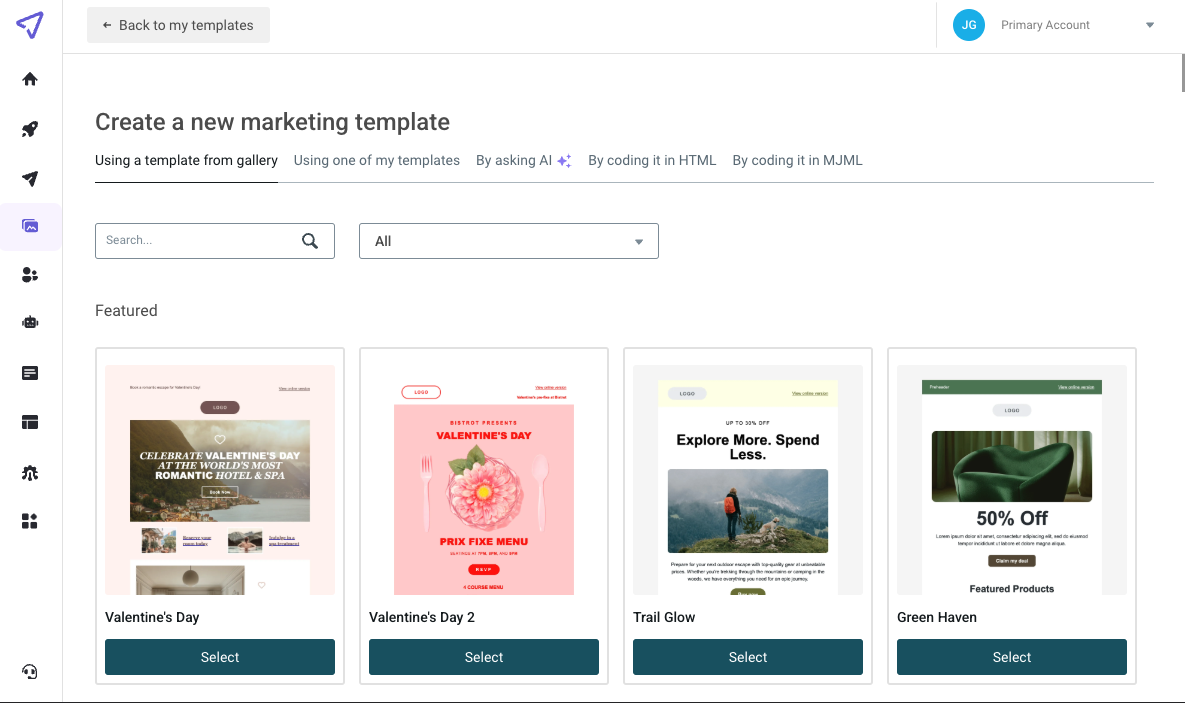
- Free Plans: Typically offer a limited number of contacts and/or emails per month, often with restricted features and branding of the platform in sent emails. Ideal for testing the waters or very small lists.
- Contact-Based Pricing: The most prevalent model, where the monthly fee scales directly with the number of subscribers in your list. Higher contact counts lead to higher monthly costs, regardless of how many emails you send. This can become expensive for large, infrequently emailed lists.
- Send-Based Pricing: Less common but highly beneficial for certain businesses, this model charges based on the total number of emails sent per month, irrespective of list size. This offers predictable costs for businesses with fluctuating list sizes but consistent sending volumes.
- Feature-Based Tiers: Many platforms offer different tiers (e.g., Basic, Standard, Premium) that unlock more advanced features like A/B testing, advanced automation, dedicated support, or CRM integrations, usually at a higher price point.
- Hybrid Models: Some providers combine elements, offering a base price for contacts and then additional costs for exceeding certain email send limits or accessing premium features.
When evaluating the pricing of different email marketing platforms, it’s crucial to strike a balance between current operational needs and long-term strategic objectives. An initially attractive lower-priced plan may prove to be a false economy if the platform lacks the scalability to accommodate business growth, potentially necessitating costly and disruptive migrations to a new provider down the line. Strategic foresight in pricing evaluation is therefore paramount.
Deep Dive into Leading Email Marketing Platforms
Best for Budget-Conscious Teams: Mailjet
Mailjet distinguishes itself by offering a compelling blend of affordability and feature richness. Its platform is notably intuitive, providing a clean interface where users can seamlessly craft and dispatch both marketing and transactional emails, design conversion-focused forms, and launch professional landing pages, all with a minimal learning curve. A significant differentiator for Mailjet, setting it apart from many of its competitors, is its pricing model: it does not base charges on the number of contacts a business maintains. Instead, pricing is tied directly to the volume of emails sent, offering a highly predictable cost structure even as subscriber lists expand. This straightforward UI and transparent pricing make Mailjet an ideal choice for startups and growing teams seeking robust email tools without incurring prohibitive expenses.
Key Features:
- Intuitive drag-and-drop email builder.
- Comprehensive API for transactional emails.
- Real-time analytics and reporting.
- Advanced segmentation capabilities.
- Multi-user collaboration features.
- Dedicated IP options for high-volume senders.
Drawbacks:
- Limited advanced automation compared to some enterprise solutions.
- Template customization might be less extensive than higher-tier platforms.
Pricing:
- Free Plan: Up to 6,000 emails/month (200 emails/day).
- Essential Plan: Starting at $15/month for 15,000 emails, no daily sending limit.
- Premium Plan: Starting at $25/month for 15,000 emails, includes advanced features.
- Custom Enterprise Plans: For high-volume needs, offering dedicated account management and custom features.
Best for Getting Started: Mailchimp
Mailchimp has long been synonymous with entry-level email marketing, and for valid reasons. It is exceptionally beginner-friendly, providing a robust free plan that supports up to 500 contacts, making it an excellent starting point for businesses venturing into email campaigns. The platform simplifies the process of launching initial campaigns with its intuitive interface and extensive template library. However, as marketing strategies mature and demand for more sophisticated functionalities arises, users may encounter limitations, particularly concerning advanced automation workflows and deep customization options.
Key Features:

- User-friendly drag-and-drop email builder.
- Extensive template library.
- Basic marketing automations (welcome series, abandoned cart).
- Integrated landing page builder.
- Basic audience segmentation.
- Reporting and analytics.
Drawbacks:
- Pricing scales quickly with contacts, becoming expensive for larger lists.
- Advanced automation and CRM features are limited in lower tiers.
- Customer support can be less responsive on free/basic plans.
Pricing:
- Free Plan: Up to 500 contacts, 1,000 emails/month.
- Essentials Plan: Starting at $13/month for 500 contacts, includes A/B testing and 24/7 support.
- Standard Plan: Starting at $20/month for 500 contacts, adds advanced automation and segmentation.
Best for Digital Creators: Kit (formerly ConvertKit)
Kit, previously known as ConvertKit, is meticulously engineered to cater to the distinct requirements of digital creators, including bloggers, YouTubers, podcasters, and solo entrepreneurs. Its design ethos centers on facilitating list growth and automating follow-up sequences, even offering substantial capabilities within its free plan. The free version generously accommodates up to 10,000 subscribers, providing a robust foundation for creators to build their audience. However, access to more sophisticated tools, such as multi-sequence automation and advanced sales funnels, necessitates an upgrade to a paid subscription.
Key Features:
- Focus on audience segmentation with tags and custom fields.
- Visual automation builder for complex sequences.
- Integrated landing pages and signup forms.
- Commerce features for selling digital products.
- Simple, text-based email editor for personal feel.
- Subscriber-centric pricing (no duplicate charges for same subscriber on multiple lists).
Drawbacks:
- Email templates are intentionally minimalist, which might not suit brands needing highly visual designs.
- Reporting can be less detailed than some competitors.
Pricing:
- Free Plan: Up to 10,000 subscribers, unlimited landing pages, forms, and email broadcasts.
- Creator Plan: Starting at $29/month for 1,000 subscribers, adds visual automation, migrations, and premium support.
- Creator Pro Plan: Starting at $59/month for 1,000 subscribers, includes newsletter referral system, subscriber scoring, and advanced reporting.
Best for Social-Savvy Brands: Constant Contact
Constant Contact is an excellent choice for businesses looking to synergize their email marketing efforts with a robust social media strategy. Its intuitive drag-and-drop editor simplifies campaign creation, while its email delivery rates consistently demonstrate high reliability. This platform is particularly well-suited for brands with a strong presence on platforms like Facebook and Instagram, offering tools that facilitate seamless integration and cross-promotion. However, it’s worth noting that its more advanced plans may present a considerable investment for smaller teams operating with tighter budgets.
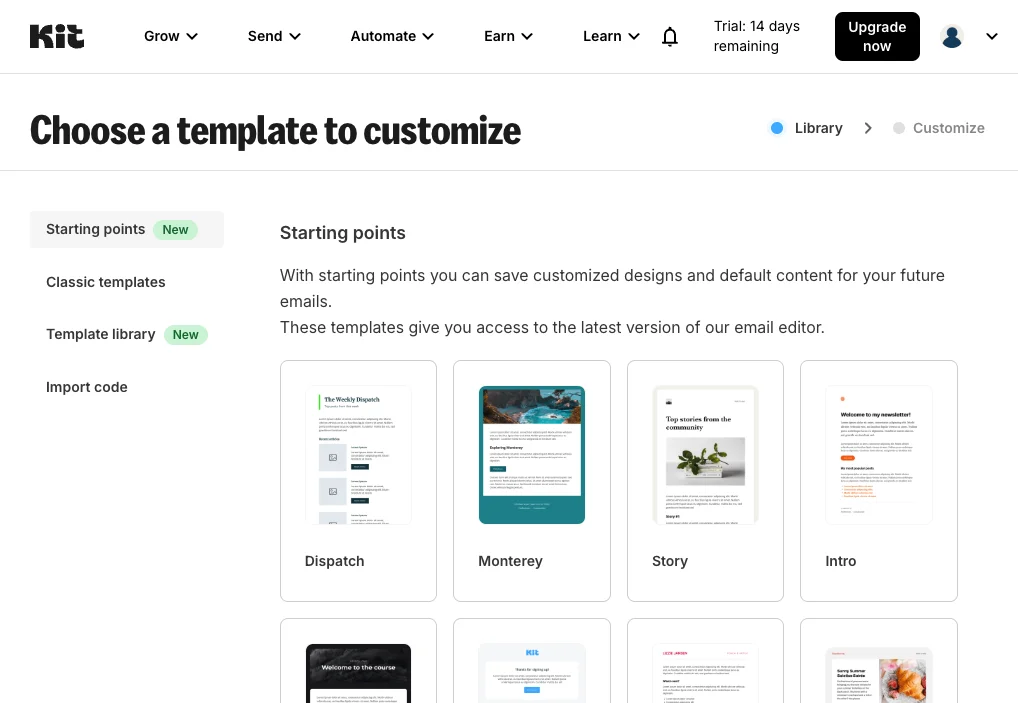
Key Features:
- User-friendly drag-and-drop editor.
- Event management and registration tools.
- Social media integration for posting and ad management.
- Website builder and e-commerce tools.
- Robust image library.
- A/B testing and reporting.
Drawbacks:
- Pricing can become expensive as contact lists grow.
- Automation capabilities are not as sophisticated as dedicated marketing automation platforms.
- User interface can feel a bit dated compared to newer tools.
Pricing:
- Lite Plan: Starting at $12/month for 500 contacts, basic email marketing.
- Standard Plan: Starting at $35/month for 500 contacts, includes advanced automation, A/B testing, and social media tools.
- Premium Plan: Starting at $80/month for 500 contacts, adds advanced e-commerce features and dedicated support.
Best for Long-Standing Reliability: AWeber
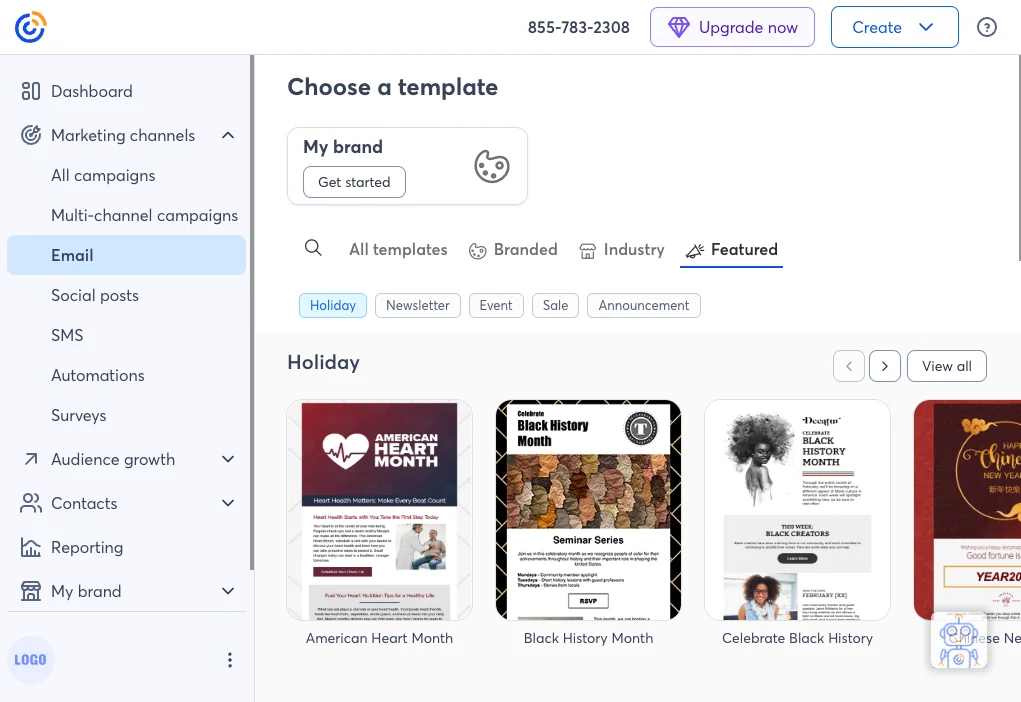
With a distinguished history spanning over two decades, AWeber has cultivated a reputation for long-standing reliability, earning the trust of countless solo entrepreneurs and small business owners. Its platform is celebrated for its ease of use, featuring a comprehensive suite of pre-built templates, robust automation capabilities, and seamless integrations with popular platforms such as Etsy and YouTube. While AWeber may not boast the most cutting-edge or advanced features available in the market today, it masterfully executes the fundamental aspects of email marketing, providing solid analytics and effective testing tools that ensure consistent performance.
Key Features:
- Intuitive drag-and-drop email builder.
- Large library of professional email templates.
- Automated email campaigns and autoresponders.
- Landing page builder.
- Integration with popular platforms (Etsy, PayPal, WordPress).
- A/B testing and detailed analytics.
Drawbacks:
- Interface can feel a bit traditional compared to modern designs.
- Some advanced segmentation features might require workarounds.
- Pricing structure can be less competitive for very large lists.
Pricing:
- Free Plan: Up to 500 subscribers, limited sends.
- Lite Plan: Starting at $14.99/month for 500 subscribers, adds unlimited emails and advanced features.
- Plus Plan: Starting at $29.99/month for 500 subscribers, includes unlimited users, advanced analytics, and sales tracking.
Best for All-in-One Marketing: HubSpot
HubSpot transcends the conventional definition of an email marketing platform; it functions as a comprehensive CRM and marketing suite. This integrated approach allows businesses to centralize contact management, construct sophisticated automated email flows, and meticulously track performance—all from a unified dashboard. The free tier offered by HubSpot is remarkably generous, providing substantial value. However, users seeking to leverage the platform’s more advanced automation features and expansive capabilities should be prepared for a notable increase in subscription costs.
Key Features:
- Integrated CRM for contact management and lead tracking.
- Powerful marketing automation workflows.
- Comprehensive email marketing tools with drag-and-drop builder.
- Landing page and website builder.
- Sales, service, and content management tools.
- Advanced analytics and reporting.
Drawbacks:
- Can be significantly more expensive than standalone email marketing tools, especially for advanced features.
- Steeper learning curve due to the breadth of its functionality.
- Some features might be overkill for small businesses only needing email.
Pricing:
- Free Tools: Includes basic CRM, email marketing (2,000 sends/month), forms, and landing pages.
- Starter Plan: Starting at $20/month, expands marketing, sales, and service features.
- Professional Plan: Starting at $800/month, adds marketing automation, SEO tools, and custom reporting.
Best for Online Stores: Omnisend
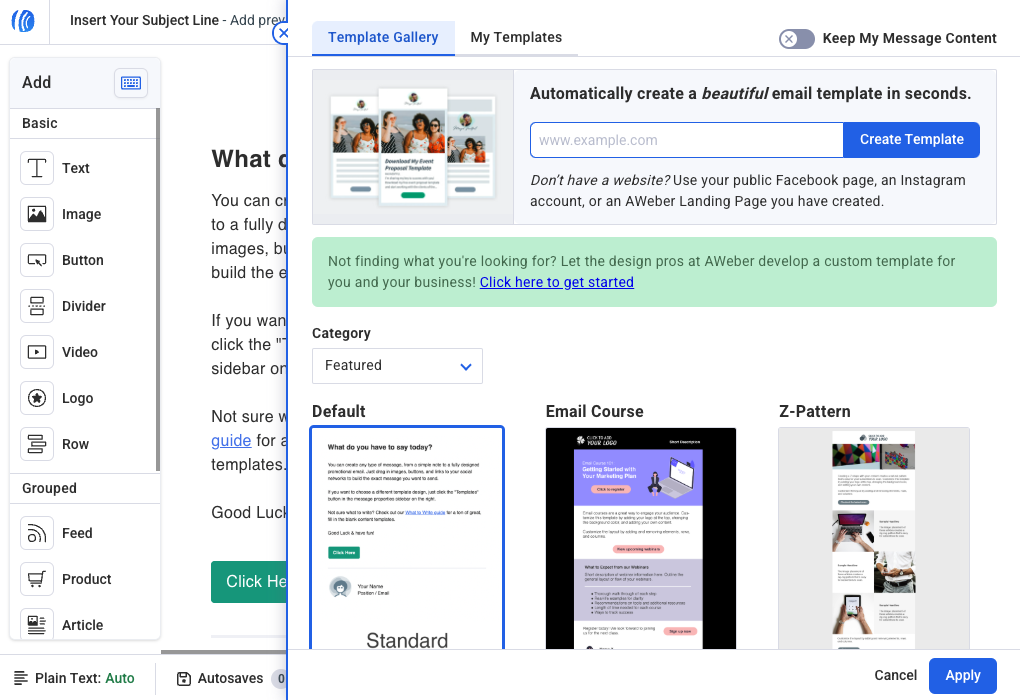
Omnisend is specifically engineered with the unique demands of e-commerce brands in mind. It delivers a robust suite of omnichannel marketing tools, encompassing email, SMS, and push notifications, all available right out of the box, even within its free plan. This comprehensive approach empowers online retailers to engage customers across multiple touchpoints effectively. It’s important to note, however, that while Omnisend is rich in features tailored for e-commerce, it may not consistently offer the highest email deliverability rates or the most visually diverse template options when compared to some dedicated email-only platforms.
Key Features:
- E-commerce specific automation workflows (abandoned cart, product recommendations, welcome series).
- Omnichannel marketing: email, SMS, push notifications, Facebook Messenger.
- Integrated forms and landing pages.
- Advanced segmentation based on purchase behavior.
- Integration with major e-commerce platforms (Shopify, WooCommerce, BigCommerce).
- Sales reporting and conversion tracking.
Drawbacks:
- Email deliverability can sometimes be inconsistent for certain users.
- Template design options, while functional, may lack creative diversity.
- Can be overwhelming for non-e-commerce businesses.
Pricing:
- Free Plan: Up to 500 emails/month, 60 SMS, 500 web push, basic automations.
- Standard Plan: Starting at $16/month, includes unlimited emails, advanced automations, and live chat support.
- Pro Plan: Starting at $59/month, adds unlimited web push, advanced reporting, and dedicated account manager.
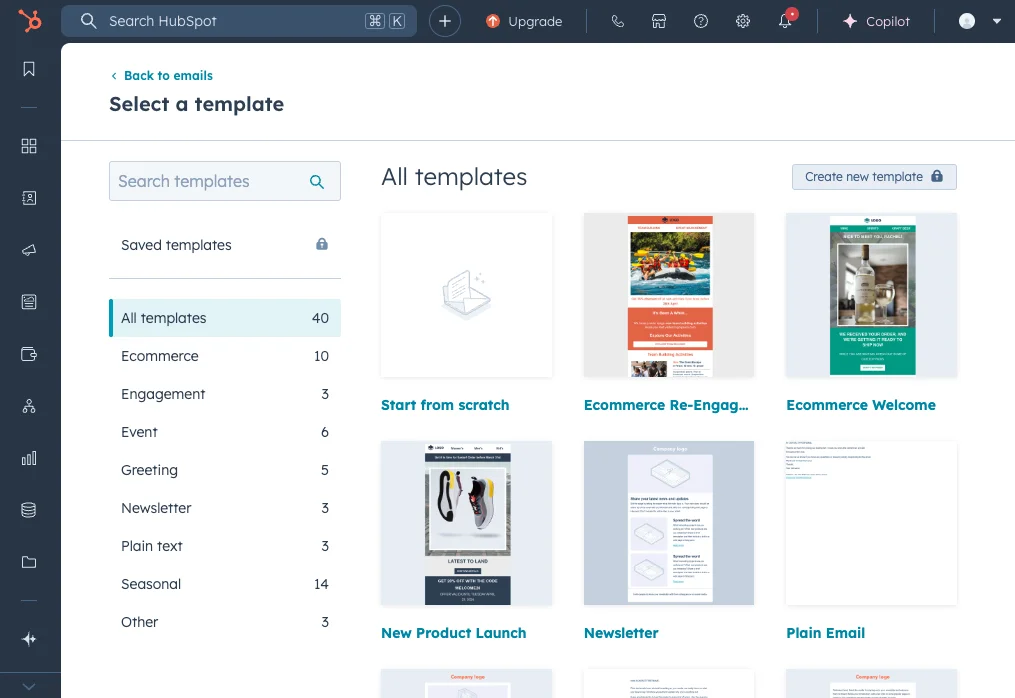
Best for Multi-Channel Campaigns: Brevo (formerly Sendinblue)
Brevo, previously known as Sendinblue, excels at unifying email, SMS, and live chat functionalities within a single, streamlined platform. This makes it an ideal solution for businesses seeking a consolidated approach to their customer communications. The platform boasts a clean and easily navigable user interface, simplifying the management of diverse marketing efforts. However, it is worth noting that access to more in-depth analytics and advanced reporting features is typically restricted to higher-tier plans, which could be a consideration for data-intensive marketing strategies.
Key Features:
- Unified platform for email, SMS, and chat.
- Marketing automation workflows.
- Transactional email capabilities.
- CRM for contact management.
- Landing page and signup form builder.
- A/B testing and basic reporting.
Drawbacks:
- Advanced analytics and detailed reporting are often reserved for higher-tier plans.
- Template variety might be less extensive than some competitors.
- Some users report a steeper learning curve for advanced features.
Pricing:
- Free Plan: Up to 300 emails/day, basic features.
- Starter Plan: Starting at $25/month for 20,000 emails/month, no daily limit.
- Business Plan: Starting at $65/month for 20,000 emails/month, adds marketing automation, A/B testing, and phone support.
Best for Serious Automation: ActiveCampaign
ActiveCampaign is a formidable platform designed for businesses that aspire to move beyond rudimentary email blasts, offering a sophisticated ecosystem for customer engagement. It seamlessly integrates advanced marketing automation with a robust built-in CRM, providing comprehensive control over the entire customer journey. From meticulously crafted workflows and dynamic content personalization to intelligent segmentation, ActiveCampaign is a tool built for depth and precision. However, this power comes with a dual consideration: a steeper learning curve and a higher price tag, reflecting its extensive capabilities.
Key Features:
- Industry-leading marketing automation builder with visual workflows.
- Integrated CRM for sales and customer management.
- Advanced segmentation and personalization capabilities.
- Email deliverability tools and analytics.
- Lead scoring and attribution models.
- Site and event tracking for behavioral automation.
Drawbacks:
- Steeper learning curve due to the depth of features.
- Pricing can quickly become significant, especially with growing contact lists and advanced features.
- Interface can feel overwhelming for beginners.
- Customer support response times can vary depending on the plan.
Pricing:
- Lite Plan: Starting at $29/month for 1,000 contacts, includes email marketing and marketing automation.
- Plus Plan: Starting at $49/month for 1,000 contacts, adds CRM, lead scoring, and deep data integrations.
- Professional Plan: Starting at $149/month for 1,000 contacts, includes predictive sending, attribution, and custom reporting.
- Enterprise Plan: Custom pricing for large businesses with dedicated account management and advanced security.
If deep automations and baked-in sales tools are paramount for your business strategy, ActiveCampaign represents a solid investment. However, be prepared to dedicate both significant effort to mastering its capabilities and a commensurate budget.
Strategic Alignment: Matching Platforms to Business Needs
The optimal email marketing tool is not a universal solution; it is profoundly contingent on the specific identity of a business and its strategic objectives. A nimble small business, for instance, operates with needs distinctly different from those of a large online retailer or a non-profit organization, and the leading platforms are designed to reflect these variances. Understanding these nuances is key to making an informed decision.
Small Businesses
For small businesses, especially those with a lean team or a solo operator, the primary concerns typically revolve around simplicity, affordability, and time-saving functionalities. Platforms that offer intuitive dashboards, readily available and helpful customer support, and automation features that do not necessitate advanced marketing degrees are highly desirable. A significant bonus is a pricing model that scales gracefully with business growth, without spiraling into unmanageable costs.
E-commerce Brands
For online stores, email transcends its role as a mere communication tool, becoming a critical revenue driver. This necessitates advanced features such as sophisticated abandoned cart recovery sequences, intelligent product recommendation engines, and seamless integrations with popular e-commerce platforms like Shopify, WooCommerce, or BigCommerce. The implementation of behavioral triggers and highly personalized automations is crucial for maximizing conversion rates and customer lifetime value.
Nonprofits
Nonprofit organizations operate under stringent budgetary constraints, making email tools that offer discounted pricing or specialized nonprofit plans immensely valuable. Essential features include highly customizable templates to reflect brand identity, robust donor segmentation capabilities, and integrations with fundraising platforms to maintain donor engagement and disseminate vital information efficiently, all without adding undue burden to already stretched teams.
B2B Companies
For businesses operating in the B2B sector, the email strategy is predominantly focused on lead nurturing and guiding prospects through the sales pipeline. This requires platforms that integrate effectively with existing CRM systems, offer advanced lead scoring functionalities, and provide tools tailored for account-based marketing. The more deeply integrated the email platform is with the broader sales and marketing technology stack, the more effective and streamlined the entire process becomes.
Deciding on the Best Email Marketing Platform for You
Choosing the right email marketing service for your business demands a meticulous evaluation of your unique needs, overarching goals, and available resources. By systematically assessing critical factors such as core feature sets, pricing structures and affordability, alignment with specific use cases, potential for integration with existing systems, scalability for future growth, availability of advanced capabilities, and the robustness of analytics and reporting tools, you can effectively narrow down the multitude of options. This methodical approach enables the selection of a platform that will not only support your immediate success but also adapt to your evolving requirements.
Remember, the truly "best" email newsletter service for your business is one that achieves a harmonious equilibrium between comprehensive functionality, intuitive usability, and financial accessibility. Crucially, it must also offer the inherent flexibility to scale and adapt as your business needs and subscriber base expand. As you embark on or refine your email marketing journey, keep the following key takeaways firmly in mind:
- Prioritize Core Needs: Focus on what your business absolutely requires first, then consider advanced features.
- Evaluate Scalability: Ensure the platform can grow with your list and feature demands without becoming prohibitively expensive or complex.
- Test User Experience: Take advantage of free trials to ensure the platform’s interface and workflow align with your team’s comfort level.
- Understand Pricing Models: Be clear on whether you’re paying per contact, per email, or for feature tiers, and how that impacts your budget long-term.
- Check Integration Ecosystem: Confirm compatibility with your existing CRM, e-commerce platform, or other essential tools.
- Assess Deliverability Reputation: A platform’s ability to consistently land emails in inboxes is non-negotiable for campaign success.
- Review Support Options: Reliable customer support can be invaluable, especially for troubleshooting or learning new features.
- Consider Omnichannel Potential: If multi-channel engagement is part of your strategy, prioritize platforms that offer integrated SMS or chat.
- Data Security and Compliance: Verify the platform’s adherence to data privacy regulations relevant to your operating regions (e.g., GDPR, CCPA).
- Analytics and Reporting Depth: Ensure the platform provides the metrics and insights necessary to measure campaign performance and inform future strategies.
By diligently adhering to these guidelines and carefully weighing your options, you can select an email marketing service that will serve as a powerful engine for driving engagement, nurturing invaluable customer relationships, and ultimately achieving your overarching business objectives. With the precisely right platform at your disposal, you will be exceptionally well-equipped to navigate the constantly evolving digital landscape and construct an email marketing strategy that truly distinguishes your brand in the marketplace.
Finding the Right Email Platform for Your Business
Choosing the optimal email marketing tool is not about chasing the most dazzling array of features; rather, it is about identifying the perfect alignment for your specific business context. Your business model, strategic objectives, and budgetary constraints are all integral components of this decision-making process. The encouraging news is that once these core parameters are clearly defined, the task of narrowing down the myriad of options becomes significantly more manageable.
Begin by concentrating on the fundamental necessities:
- Ease of Use: Can your team quickly learn and implement campaigns?
- Automation Capabilities: Can it handle your basic and evolving automated sequences?
- Integration: Will it seamlessly connect with your existing tech stack?
- Pricing Structure: Does it fit your budget now and scale predictably?
- Scalability: Can it support your growth without forcing a costly migration?
Furthermore, a critical aspect of selection involves contemplating your specific use case. Are you operating an online retail store, managing a nonprofit organization, or running a service-based enterprise? Different platforms inherently excel in distinct scenarios, and aligning your chosen tool with your operational realities will prevent future complications and save invaluable time.
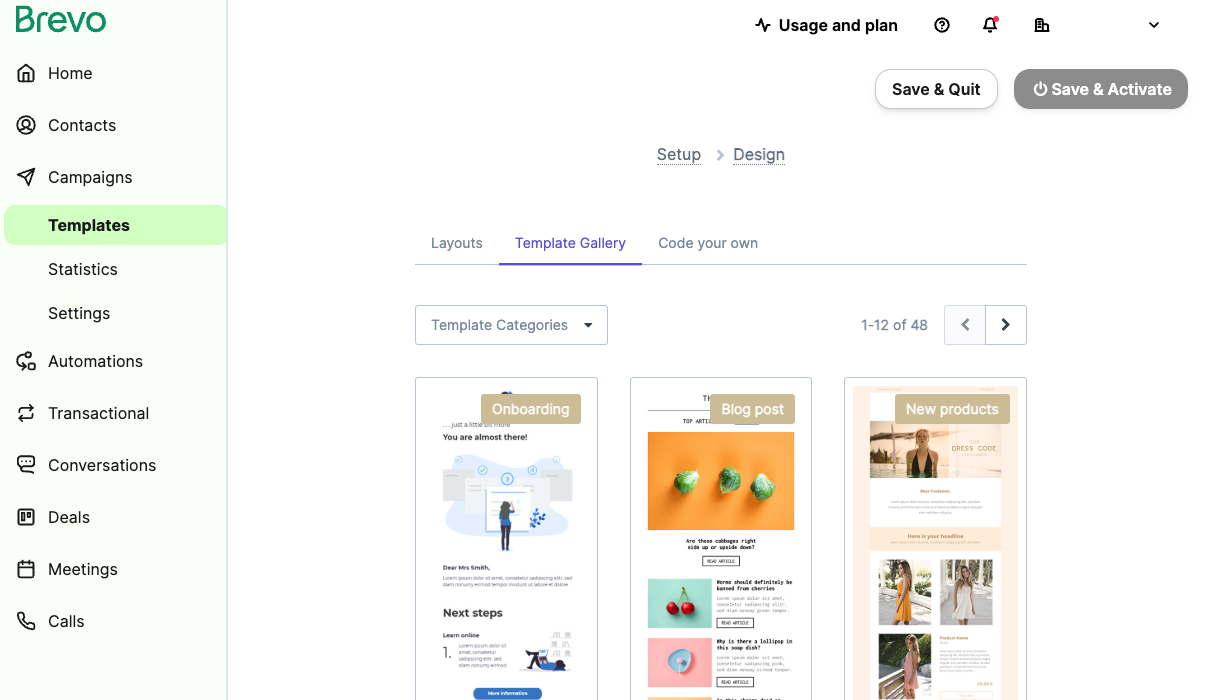
Integration capabilities are also paramount. Your email platform must function harmoniously with your CRM system, e-commerce setup, analytics tools, and any other mission-critical applications you currently depend on. Should your aspirations extend to more advanced functionalities—such as deliverability optimization, hyper-personalized content delivery, or robust compliance support—it is imperative to verify that your chosen platform is architected to provide that level of sophistication and depth.
To comprehensively conclude this guide, here is a concise checklist designed to facilitate your decision-making process:
- Does the platform offer a free trial or a generous free tier for initial testing?
- Is the user interface intuitive and easy for your team to navigate?
- Are the email template options visually appealing and customizable to your brand?
- Can you easily segment your audience based on relevant criteria?
- Does it provide the necessary automation workflows for your customer journeys (e.g., welcome, abandoned cart)?
- Are there robust analytics and reporting tools to track campaign performance?
- Does it integrate natively with your essential third-party applications (CRM, e-commerce, etc.)?
- Is its pricing model transparent, scalable, and sustainable for your budget?
- What is the platform’s reputation for email deliverability?
- Does it offer adequate customer support for your needs (email, chat, phone)?
- Are there features that address specific industry needs (e.g., e-commerce, B2B, creator economy)?
- Is the platform compliant with relevant data privacy regulations (e.g., GDPR, CCPA)?
- Can it handle transactional emails as well as marketing campaigns, if needed?
- Are there options for A/B testing and optimization?
- Does it offer advanced personalization capabilities (dynamic content, predictive sending)?
The correct email platform will not merely assist in sending more effective emails; it will serve as a strategic asset, enabling you to cultivate genuine connections with your audience and catalyze meaningful business growth. Therefore, allocate sufficient time, rigorously test several promising options, and ultimately select the platform that feels purpose-built for the unique trajectory of your business.
Frequently Asked Questions About Choosing an Email Service
For those new to the intricacies of email marketing, or simply seeking to optimize their existing setup, this comprehensive FAQ addresses the most common inquiries regarding email marketing services, their features, pricing models, integration capabilities, and more.
What is an email marketing service, and how does it work?
An email marketing service (EMS), also known as an email service provider (ESP), is a specialized software platform designed to help businesses manage and execute their email campaigns. These tools offer a suite of core features, including intuitive drag-and-drop editors for crafting emails, robust email automation sequences, customizable signup forms, advanced list segmentation capabilities, and detailed performance reports. This comprehensive functionality enables businesses to manage their email campaigns with high efficiency, even without specialized design or development expertise.
How many emails can I send per month?
The volume of emails you can send per month is directly tied to the specifics of your chosen plan type. Some providers offer unlimited email sends on their








