
 rifanmuazin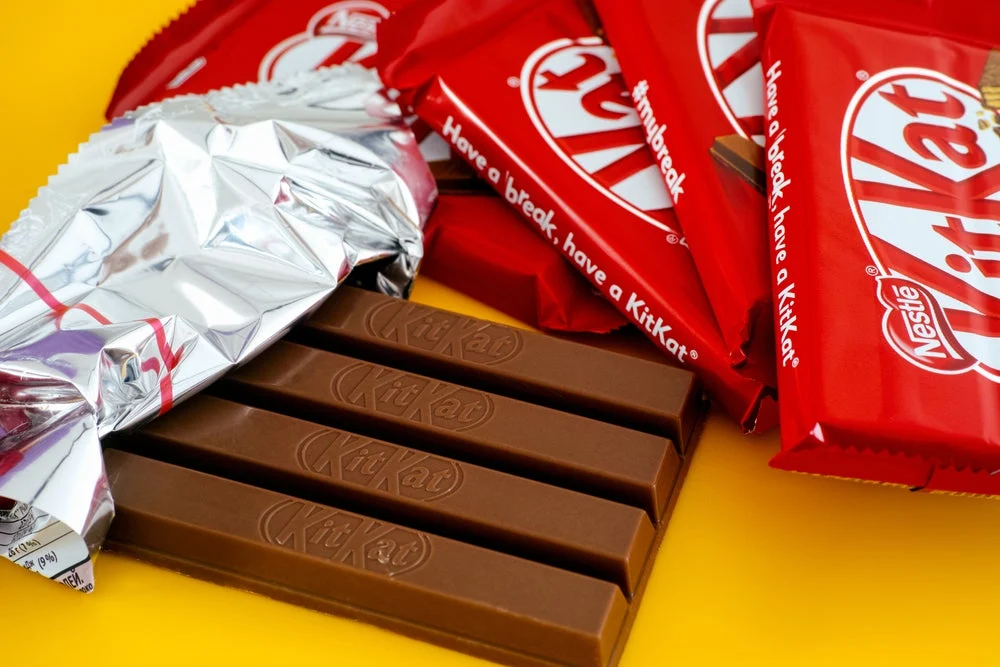
The final week of March and the beginning of April 2026 have provided a masterclass in modern corporate communications, illustrating how brands can navigate logistical crises, government instability, and the rapidly shifting media landscape. From a high-stakes chocolate heist in Europe to an airline’s proactive response to federal gridlock, and culminating in a comprehensive data dump from the world of journalism, the current PR environment is being defined by agility and data-driven strategy. These events highlight a growing trend: the traditional line between crisis management and brand promotion is blurring, as companies find innovative ways to convert operational hurdles into consumer-facing value.
The KitKat Formula 1 Heist: A Study in Brand Agility
The logistical operations of Nestlé faced a significant challenge in late March 2026 when a transport vehicle carrying 12 tons of limited-edition KitKat Formula 1-shaped chocolate bars was intercepted by thieves. The shipment was in transit from an industrial facility in Italy to a distribution hub in Poland when the theft occurred. While a loss of such magnitude—thousands of individual units destined for a high-profile international marketing campaign—would typically be treated as a quiet legal matter, Nestlé chose a path of radical transparency and humor.
The stolen goods were part of KitKat’s global partnership with Formula 1, a multi-year deal aimed at reaching a younger, tech-savvy demographic. The theft of these specific bars, which featured unique racing-themed molding, represented a significant hit to the campaign’s physical inventory. However, KitKat’s communications team quickly pivoted, releasing a statement that complimented the criminals on their "exceptional taste" while simultaneously leaning into the brand’s long-standing "Have a Break" slogan. The brand noted that while they have always encouraged consumers to take a break, these thieves had taken the directive "too literally."
Chronology of the KitKat Response
The timeline of the brand’s reaction turned a potential negative news cycle into a week-long viral event:
- March 26, 2026: The truck is reported missing after failing to arrive at the Polish border.
- March 28, 2026: News of the heist leaks to local media; Nestlé confirms the theft.
- March 29, 2026: KitKat releases its first satirical "official statement," sparking immediate engagement on social media platforms.
- March 30-31, 2026: Secondary brands begin "brandjacking" the story, with Ryanair and Domino’s UK posting speculative content regarding the location of the stolen chocolate.
- April 1, 2026: KitKat launches the "Stolen KitKat Tracker," a digital tool allowing consumers to verify if their purchase was part of the illicit shipment by entering batch codes.
The "Stolen KitKat Tracker" was a particularly bold move, launched on April 1. Despite the date’s association with hoaxes, Nestlé was forced to clarify that the tool was a legitimate consumer resource. By allowing customers to enter the eight-digit batch code found on the back of wrappers, the brand maintained the integrity of its supply chain while keeping the narrative alive in the public consciousness.
Analysis of the "Theft" Strategy
Industry experts suggest that Nestlé’s approach tapped into a specific psychological curiosity regarding crime and mystery. Adam Ritchie, principal at Adam Ritchie Brand Direction and author of Invention in PR, notes that theft provides a "multi-chapter story with characters, motives, and danger." As long as there is no physical harm involved and the financial loss is manageable for a conglomerate of Nestlé’s size, the event can be leveraged as "harmless" drama that captures public imagination far more effectively than a standard advertisement.
This incident also triggered a wave of "brandjacking"—a term used to describe when adjacent brands insert themselves into a trending story to gain earned media. Domino’s UK teased a "KitKat Pizza," and Tampa International Airport’s mascot was seen distributing chocolate. These interactions created a halo effect, where the original crisis became a centerpiece for a broader cultural conversation, demonstrating that in 2026, a brand’s ability to "play well with others" in the digital sandbox is a key metric of PR success.
United Airlines Navigates Government Dysfunction
While KitKat was managing a physical theft, United Airlines was busy addressing a different kind of crisis: the partial government shutdown in the United States. The shutdown, which began in early 2026 due to budgetary stalemates in Congress, led to severe understaffing at Transportation Security Administration (TSA) checkpoints. For travelers, this meant unpredictable wait times and increased anxiety at major transit hubs.
In a move that framed government dysfunction as a customer service opportunity, United Airlines launched a pilot program within its mobile app to track TSA wait times in real-time. The feature, unveiled on April 1, provides estimated wait times for both standard and TSA PreCheck lanes at United’s primary U.S. hubs, including Chicago O’Hare, Denver International, and Newark Liberty.
The Strategic Value of Real-Time Data
The decision to integrate federal security data into a private airline app reflects a shift toward "hyper-transparency" in travel. United CIO Jason Birnbaum emphasized that the launch was a direct response to the Department of Homeland Security (DHS) shutdown. By providing this data, United effectively positioned itself as a partner to the traveler, rather than just a service provider.
The launch was not without its risks. Because it occurred on April 1, it coincided with a viral hoax article from the travel site Upgraded Points, which claimed the TSA was implementing a "Transparent Screening Initiative" requiring all carry-on bags to be clear. The confusion between United’s legitimate technological solution and the satirical hoax highlighted the dangers of launching serious corporate initiatives on April Fools’ Day.

Communication experts point out that United’s "pilot" designation was a calculated move. Julia Brown, Director of Strategy at Kaplow Communications, noted that framing the launch as a test allows the company to manage expectations while gathering critical behavioral data. If travelers engage heavily with the tracker, it provides United with a roadmap for future service expansions that go beyond the flight itself and into the broader airport experience.
The 2026 State of Journalism: AI and the Trust Deficit
While brands are experimenting with humor and real-time utility, the bedrock of the PR industry—media relations—is undergoing a profound transformation. Muck Rack’s State of Journalism 2026 report, which surveyed nearly 900 active journalists, reveals an industry grappling with the dual forces of artificial intelligence and a shifting social media landscape.
The AI Integration and the Rise of Disinformation
The data shows that AI has moved from a novelty to a newsroom staple. As of 2026, 82% of journalists report using at least one AI tool in their daily workflow, an increase from 77% in 2025. While ChatGPT remains the dominant tool (47%), there has been significant growth in the use of Google’s Gemini (22%) and Anthropic’s Claude (12%).
However, this adoption is coupled with deep-seated anxiety. The report found that:
- Concern regarding unchecked AI in the newsroom rose to 26%, up 8 points from the previous year.
- 32% of journalists cite disinformation as the single greatest threat to the profession.
- A lack of funding and the "death of local news" continue to be primary stressors for 32% of respondents.
The Pitching Paradox
For PR professionals, the report offers a "cheat sheet" for success in an era of inbox fatigue. Despite the proliferation of digital communication, the "pitch" remains the primary bridge between brands and reporters. However, the requirements for a successful pitch have tightened. The data indicates that journalists are increasingly hostile toward irrelevant outreach.
A critical takeaway for communicators is the "social media shift." Only 21% of journalists now consider social media very important to their actual reporting work, a staggering 12-point drop since 2024. While reporters still use platforms like X (formerly Twitter) and TikTok for content promotion, they are retreating to more curated and professional environments for source-finding. LinkedIn has emerged as the most trusted platform, with a 58% trust rating among journalists, while TikTok’s distrust rating has climbed to 61%.
Broader Impact and Future Implications
The events of this week suggest that the PR landscape of 2026 is defined by three distinct pillars: humor as a shield, utility as a service, and data as a foundation.
Nestlé’s response to the KitKat heist proves that in a high-speed digital economy, being "human" and self-deprecating can neutralize the sting of a logistical failure. It also shows that "earned media" is no longer just about a press release; it is about creating a narrative that other brands want to join.
United Airlines’ TSA tracker demonstrates that brands can gain significant loyalty by solving problems that are not technically their fault. By stepping into the gap left by government inefficiency, United has transformed from a mere transportation company into a logistics and information partner.
Finally, the Muck Rack data serves as a reminder that technology like AI cannot replace the fundamental need for human-to-human trust. As journalists become more wary of automated content and social media misinformation, the value of a well-researched, human-written pitch delivered via a trusted platform like LinkedIn has never been higher.
As the industry moves forward, the successful PR practitioner will be one who can navigate these complexities—using AI to enhance precision, using humor to build community, and using real-time data to solve the customer’s most pressing pain points. The "break" KitKat took, the "tracker" United built, and the "trust" journalists are seeking are all facets of the same evolving diamond: a PR industry that is more integrated, more transparent, and more essential to corporate strategy than ever before.










