
 rifanmuazin
The field of digital growth marketing is undergoing a fundamental shift from tactical experimentation to a holistic revenue-centric model, as highlighted in the latest installment of the CRO Perspectives series. In its 23rd edition, the series features Carlos Neto, a prominent B2B growth strategist based in Brazil, who currently serves as a Growth Specialist at Benner. Neto, whose expertise bridges the gap between paid media, conversion rate optimization (CRO), and revenue operations (RevOps), challenges the traditional boundaries of marketing by advocating for an experimentation framework that extends far beyond the initial lead capture.
The interview surfaces at a critical time for the B2B sector. As customer acquisition costs (CAC) continue to rise globally, companies are increasingly moving away from “growth at all costs” toward a model of “efficient growth.” Neto’s approach emphasizes that the true value of experimentation lies not in isolated “wins” on a landing page, but in the systematic reduction of friction across the entire buyer journey—from the first ad impression to final contract signing and product onboarding.
The Triangulation of Friction: A Three-Signal Model
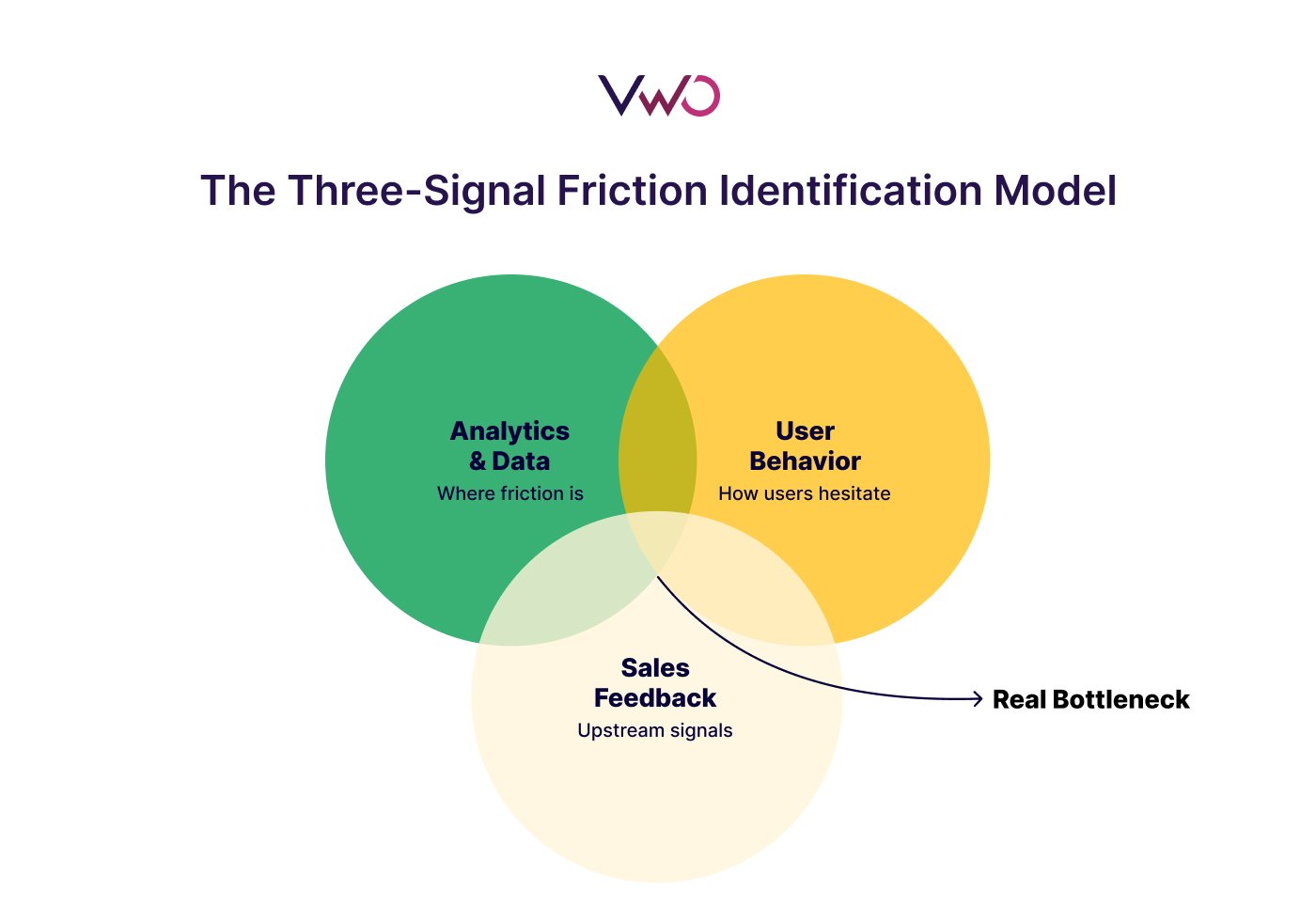
A central pillar of Neto’s methodology is his “Three-Signal Friction Identification Model.” According to Neto, identifying bottlenecks in a B2B funnel requires more than just looking at Google Analytics or heatmaps in isolation. He argues that growth teams must triangulate insights from three distinct sources: hard data, user behavior, and sales feedback.

On the analytics front, Neto advocates for an account-level view rather than a purely individual user view. This is essential in B2B contexts where decision-making involves multiple stakeholders—often between six and ten individuals in a typical enterprise purchase. By analyzing conversion by stage and the time elapsed between those stages, teams can pinpoint where the momentum of a deal stalls.
However, Neto notes that data only reveals where the problem exists, not why. To solve the “why,” he utilizes behavioral tools such as session recordings and navigation analysis to identify user hesitation. This is then cross-referenced with qualitative feedback from the sales team. Recurring objections or low “show rates” for demos are often symptoms of an upstream failure in how value was communicated during the initial acquisition phase. This layered investigation ensures that experimentation is targeted at real business obstacles rather than statistical noise.
Integration of Paid Media and On-Site Optimization
One of the most significant inefficiencies in modern marketing departments is the siloing of paid media teams and CRO teams. Neto posits that these should be viewed as a single, interconnected system. He asserts that CRO does not begin on the landing page; it begins the moment a prospect encounters an advertisement.
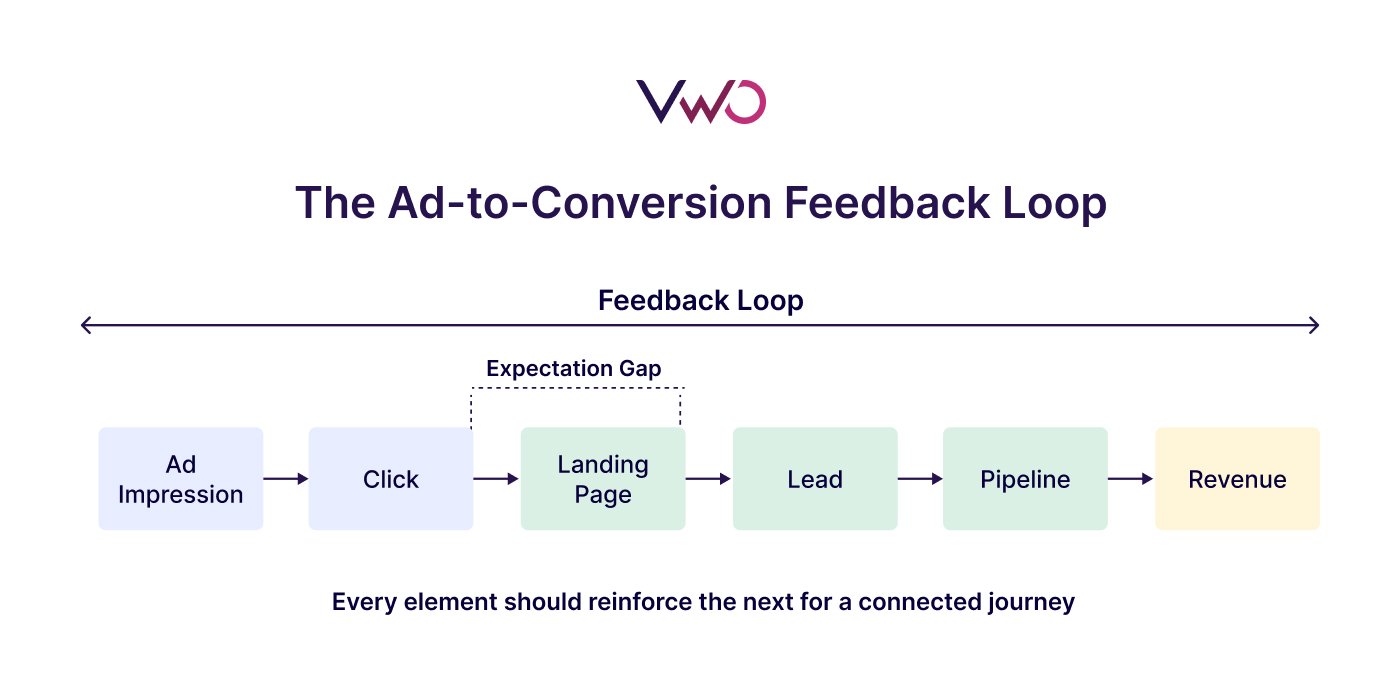
To achieve this, Neto insists on full traceability through UTM parameters and CRM integrations. This allows a direct link between a specific traffic source and the eventual pipeline outcome. In this model, ad campaigns serve as a “hypothesis engine.” For instance, if a campaign shows high click-through rates (CTR) but high bounce rates on the landing page, it indicates an “expectation gap”—the ad promised something the website failed to deliver. Conversely, strong on-site engagement paired with poor ad performance suggests a targeting or creative issue.

By treating the ad and the landing page as a continuous experience, growth teams can create a feedback loop where site behavior informs creative decisions and ad performance shapes page architecture. This alignment is designed to increase revenue predictability, a key metric for B2B organizations facing long and complex sales cycles.
Moving Beyond the Lead: The Post-Conversion Frontier
Perhaps the most provocative aspect of Neto’s strategy is his refusal to stop experimenting once a lead is generated. In many organizations, the “hand-off” from marketing to sales marks the end of marketing’s accountability. Neto argues that this boundary is artificial and detrimental to revenue.
“Stop thinking about post-conversion as sales territory,” Neto stated during the interview. He pointed out that often, the bottleneck isn’t the volume of leads, but the conversion of those leads into meetings. Factors such as response time, the wording of the first outreach message, and the cadence of follow-ups are all variables that can be tested and optimized.
Neto also highlighted the importance of “trial activation” in SaaS environments. Getting a user to their first “aha moment” is an onboarding challenge that requires the same rigorous experimentation as a landing page. By adjusting communication sequences and simplifying setup processes, companies can see a compounding effect on revenue that simple top-of-funnel spending cannot replicate.
Addressing the Structural Challenges of B2B Testing
Neto identified three structural problems that frequently hinder B2B experimentation programs:
- The Time Mismatch: Unlike B2C e-commerce, where a test might show results in days, B2B signals (such as closed revenue) can take months to surface. Optimizing solely for top-of-funnel metrics can lead a company in the wrong direction if those leads do not eventually convert to high-quality pipeline.
- The Efficiency Trap: Metrics like Cost Per Lead (CPL) can improve while the actual quality of the pipeline deteriorates. Without a hard connection to CRM outcomes, teams may scale campaigns that look good on a marketing dashboard but fail to impact the bottom line.
- The Dependency Problem: Test results are often influenced by external variables like sales follow-up consistency. If these variables aren’t standardized, isolating the impact of a marketing experiment becomes nearly impossible.
To counter these issues, Neto suggests making the CRM the center of prioritization. When the target of optimization is pipeline progression rather than lead volume, the entire decision-making process shifts toward long-term value.
Metric Architecture and Strategic Alignment
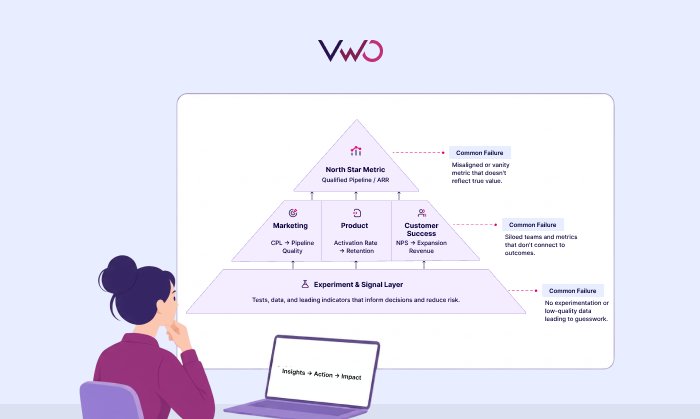
For a company to move from ad-hoc testing to a repeatable system, Neto emphasizes the need for a “Layered Metrics Architecture.” While a “North Star” metric—such as Qualified Pipeline or Recurring Revenue—is necessary for strategic alignment, it must be supported by operational metrics that are explicitly mapped to it.
Neto warns against the common mistake of having fragmented KPIs where marketing, product, and customer success teams optimize their own numbers in a vacuum. A mature experimentation system ensures that a decision made to improve activation rates in the product department is evaluated for its downstream effect on customer retention and expansion revenue.
The Role of Artificial Intelligence: Velocity vs. Judgment
As AI becomes ubiquitous in marketing technology, Neto provides a grounded perspective on its application in CRO. He views AI as a tool for “execution velocity”—useful for generating copy variations, analyzing large datasets for patterns, and formulating initial hypotheses.
However, he maintains that human judgment must remain the final arbiter. AI lacks the deep business context required to understand why a specific customer segment behaves a certain way or how a test result aligns with a company’s broader strategic goals. “AI owns execution velocity, humans own judgment,” Neto remarked. He cautioned against measuring success by the volume of tests run, noting that more tests do not necessarily equate to more learning if the hypotheses behind them are weak.
Broader Impact and Industry Implications
The insights provided by Carlos Neto reflect a broader trend in the tech industry toward “Revenue Operations” (RevOps), where the barriers between marketing, sales, and customer success are dismantled in favor of a unified revenue engine. By extending CRO into the sales and onboarding stages, growth practitioners are repositioning themselves as strategic business partners rather than just “traffic drivers.”
Industry analysts suggest that companies adopting this full-funnel experimentation model are better positioned to weather economic volatility. By focusing on “perception assets”—such as brand credibility and buyer trust—and systematically reducing uncertainty in the buyer’s decision process, these organizations build a competitive advantage that is difficult for rivals to replicate through advertising spend alone.
Neto’s final takeaway for growth teams is a call for rigorous documentation. A centralized repository of hypotheses, results, and—most importantly—the “why” behind every outcome, becomes a compounding institutional asset. This reduces the cost of onboarding and prevents the common pitfall of re-testing ideas that have already failed, ultimately accelerating the company’s ability to make informed growth decisions.
As B2B cycles become increasingly complex, the shift toward a decision-making infrastructure based on experimentation, as outlined by Neto, may soon become the standard for any organization seeking sustainable, predictable revenue growth in a digital-first economy.








