

The evolution of digital commerce has turned A/B testing into a cornerstone of corporate decision-making, yet a growing body of evidence suggests that an over-reliance on this single methodology is stifling long-term growth and masking deeper systemic issues within user experiences. What often begins as a strategic effort to eliminate guesswork frequently devolves into a "default" setting where teams prioritize minor UI tweaks over substantive product innovation. While A/B testing remains a vital tool for validating specific, narrow hypotheses, the industry is reaching a tipping point where the limitations of the method—ranging from statistical insignificance to a failure to address the "why" behind user behavior—are becoming impossible to ignore.
The Historical Normalization of the A/B Default
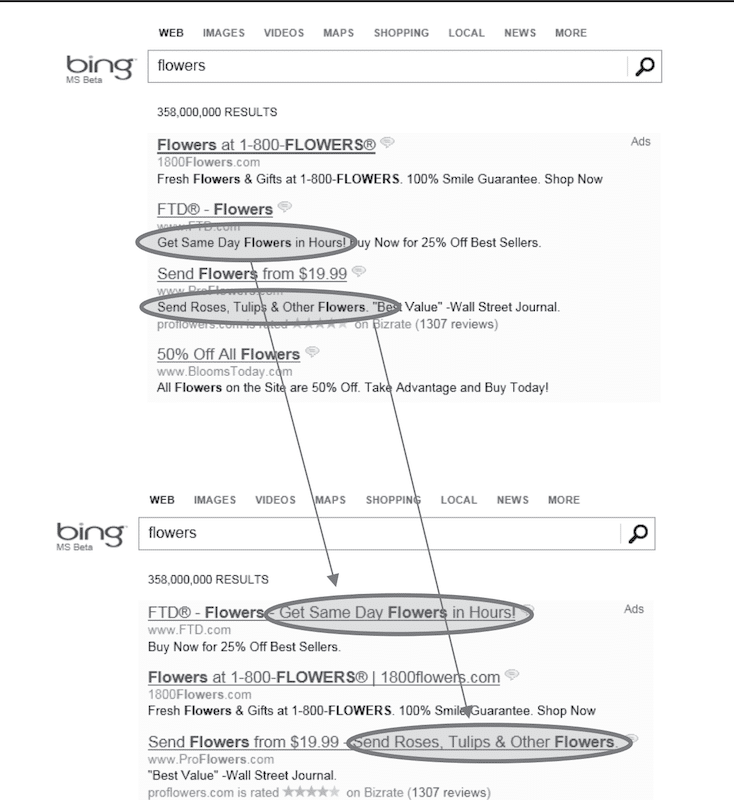
The transition of A/B testing from a specialized statistical tool to a ubiquitous marketing requirement was catalyzed by the success of Silicon Valley giants. One of the most cited benchmarks in the industry involves Microsoft’s Bing team, which famously merged two ad title lines into a single, longer headline. This seemingly minor adjustment resulted in a 12% increase in revenue, amounting to more than $100 million in additional annual income. Such high-profile successes created a cultural blueprint for digital teams: if a headline change could generate nine figures, then every element of a website deserved its own controlled experiment.
Today, Microsoft conducts over 20,000 controlled experiments annually across its search platform. This scale has been democratized by experimentation platforms like FigPii, Optimizely, and VWO, which have lowered the barrier to entry. However, this accessibility has come with a trade-off. Industry data reveals that 77% of all digital experiments are simple A/B tests—comparisons between two variants—rather than more complex multivariate or multi-treatment designs. The simplicity of the "pick a goal, launch a variant" workflow has shifted the focus from deep research to a high-volume, low-impact testing cycle.
The Statistical Trap: Power, Traffic, and False Positives
A primary challenge facing the modern e-commerce landscape is the lack of statistical power necessary to run reliable A/B tests. For a test to be valid, it requires a sufficient volume of visitors and conversions to distinguish between a genuine performance lift and mere statistical noise.
For many mid-market e-commerce brands, the math simply does not support a high-frequency testing model. To detect a modest 1% or 2% lift with high confidence, a site often needs hundreds of thousands of visitors per variant. Even brands recording one to two million sessions per month may find themselves forced to run tests for six to twelve weeks to reach significance. This delay creates three common failure modes in corporate environments:
- Premature Termination: Teams end tests early when they see a "winning" trend, leading to false positives.
- The Sunk Cost Fallacy: Organizations continue to run inconclusive tests for months, wasting resources on minor optimizations while ignoring major architectural flaws.
- Under-powered Testing: Teams attempt to measure changes that are too small for their traffic levels to ever validate, resulting in a "flat" testing roadmap that yields no actionable insights.
The "What" vs. "Why" Dilemma: Analyzing the Survivorship Bias
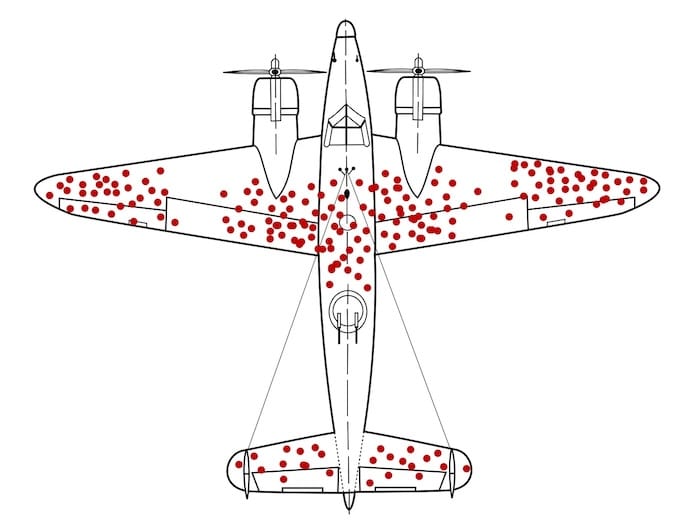
Perhaps the most significant limitation of A/B testing is its inability to explain human motivation. A test can confirm that Variant B outperformed Variant A, but it cannot explain the cognitive process of the user. This creates a data blind spot analogous to the "survivorship bias" observed by statistician Abraham Wald during World War II. When analyzing returning aircraft, the military initially sought to reinforce areas riddled with bullet holes. Wald pointed out that they were only seeing the planes that survived; the planes hit in the engines never returned to be measured.
In the context of Conversion Rate Optimization (CRO), A/B tests focus exclusively on the "survivors"—the users who successfully navigated the funnel. They offer little to no data on the "downed planes"—the users who abandoned the site due to slow load times, confusing navigation, or a lack of trust. By focusing only on the visible data of converters, teams risk "optimizing the bullet holes," making incremental improvements to a fundamentally broken experience while the real vulnerabilities remain unaddressed.
The Short-Termism of Click-Based Metrics
Data from experimentation platforms indicates that over 90% of experiments focus on just five primary metrics: CTA clicks, revenue, checkout completion, registration, and add-to-cart actions. CTA clicks alone account for 34.8% of all primary metrics tracked in digital experiments.
However, high-maturity teams have begun to recognize that short-term "wins" in these categories can actively harm long-term business health. For instance, a "dark pattern" or a misleadingly aggressive "Add to Cart" button might increase immediate clicks but lead to higher cart abandonment rates, increased customer support tickets, and a decrease in Customer Lifetime Value (LTV).
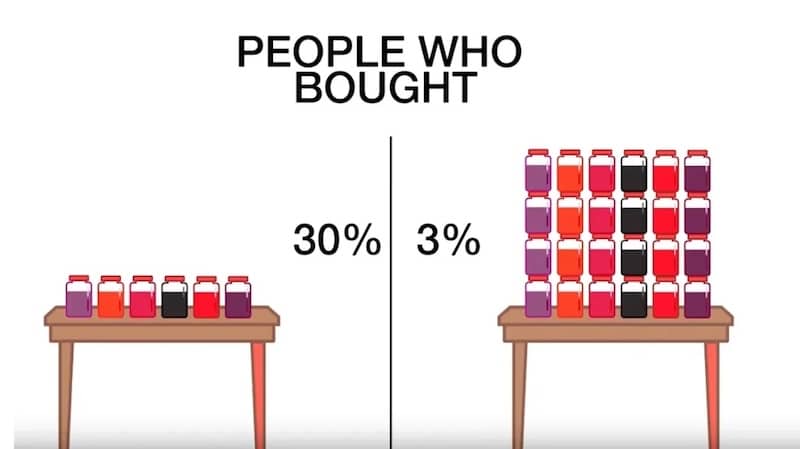
A classic example of this is the "Jam Experiment" in behavioral economics, which demonstrated that while 24 choices of jam might attract more initial engagement, only 3% of users actually made a purchase compared to 30% when only six options were presented. Many A/B tests today optimize for the "engagement" of the 24 options without realizing they are depressing the final "conversion" of the sale.
The Framework of High-Maturity Experimentation
Organizations that have successfully moved beyond the A/B testing plateau typically adopt a more diverse and rigorous toolkit. This shift involves moving from "testing things" to "solving buyer problems."
1. Diversified Experimental Design
Mature teams match the experiment to the business question rather than forcing every problem into a binary split. This includes:
- Sequential Tests: Used for long-term retention tracking where a standard split is insufficient.
- Holdout Groups: Isolating a small percentage of users from all changes for six to twelve months to measure the cumulative impact of an entire optimization program.
- Quasi-Experiments: Utilizing geographical or market-based splits when technical limitations prevent clean user-level randomization.
- Switchback Tests: Common in marketplace dynamics (like Uber or DoorDash), where variants are toggled over time to account for supply and demand interactions.
2. Evidence-Led Hypotheses
Instead of pulling ideas from a backlog of opinions, high-maturity teams ground their experiments in qualitative research. This involves a four-part hypothesis structure:
- Observation: "Because support tickets show users are confused about delivery dates…"
- Problem Statement: "…we believe uncertainty is reducing checkout completion…"
- Solution: "…so we will display estimated arrival dates on the product page…"
- Expected Outcome: "…and we expect a 3% increase in checkout completion for mobile users."
3. Testing High-Leverage Levers
The most successful experimentation programs move away from "polishing the button" and toward testing fundamental buying triggers. This includes price elasticity, value proposition clarity, and information architecture. The Bing case study remains relevant not because it was a UI change, but because it improved the "core decision moment"—the moment a user decides a search result is relevant to their intent.
Broader Impact and Industry Implications
The shift toward experimentation maturity reflects a broader trend in the digital economy: the move from "growth at any cost" to "sustainable profitability." As acquisition costs (CAC) continue to rise across platforms like Meta and Google, the efficiency of the on-site experience has become a matter of survival rather than just optimization.
Experts in the field suggest that the future of CRO lies in the integration of data science with behavioral psychology. "The era of guessing and checking is over," notes one industry analyst. "The companies that win in the next decade will be those that use A/B testing as a validation step for deep, research-backed product changes, rather than a substitute for strategy."
For the modern enterprise, the path forward is clear: A/B testing is a high-precision instrument that requires a stable foundation of user research, statistical literacy, and a long-term perspective on business value. Without these elements, companies are simply "polishing a sinking ship," achieving small wins while the broader opportunity for growth drifts out of reach. Organizations must audit their testing pipelines not for volume, but for the quality of the questions being asked and the depth of the insights being gained.







