Employee advocacy, the strategic mobilization of a company’s workforce to promote its brand, products, and culture through their personal social media channels, has emerged as a cornerstone of modern digital marketing and talent acquisition. This practice, which can manifest as employees resharing official company content or articulating their unique perspectives on their work environment, offerings, and organizational values, represents a profound shift in how brands build credibility and extend their digital footprint. While platforms like LinkedIn, with its staggering one billion members, serve as primary arenas for such activities, employee advocacy also thrives across X (formerly Twitter), TikTok, Instagram, and specialized industry Slack communities, fostering a multifaceted digital presence.
The Evolution and Mechanism of Employee Advocacy

The concept of employees speaking positively about their workplace is not new, tracing its roots to traditional word-of-mouth referrals. However, the digital age has amplified this phenomenon, transforming it into a measurable and highly impactful strategic initiative. Modern employee advocacy can arise organically from genuine employee enthusiasm or be meticulously structured through formal programs. These structured initiatives often equip employees with curated content, clear guidelines, and user-friendly platforms designed to streamline the sharing process. Such programs are crucial for maintaining consistency and ensuring that shared messages align with broader brand objectives.
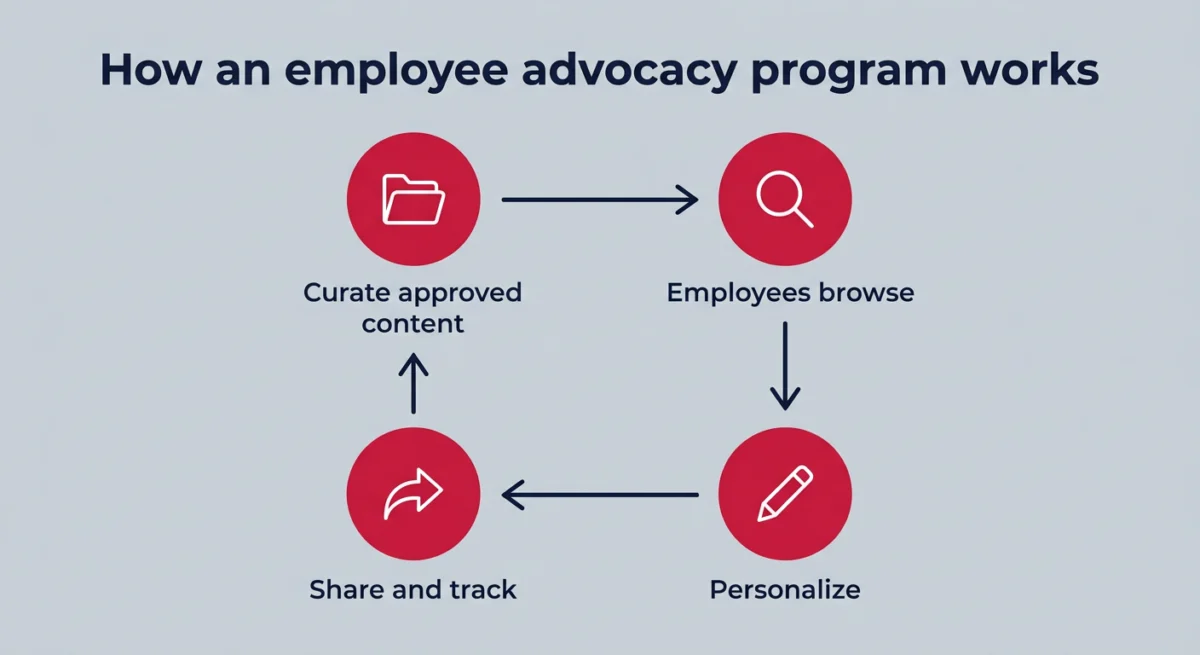
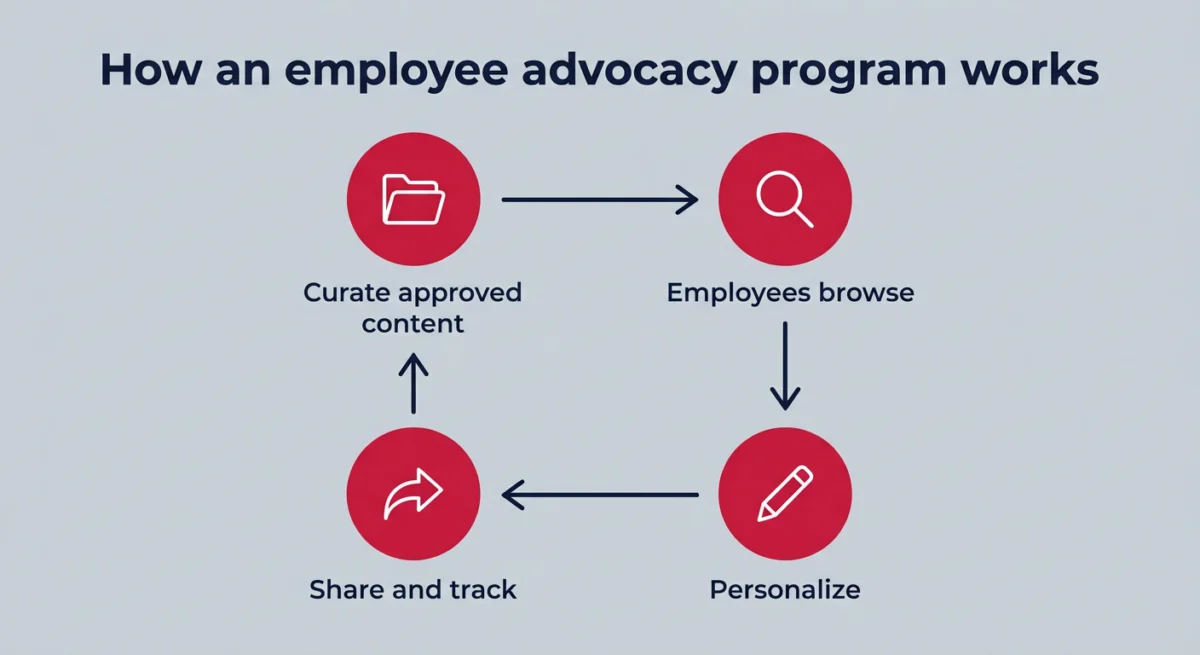
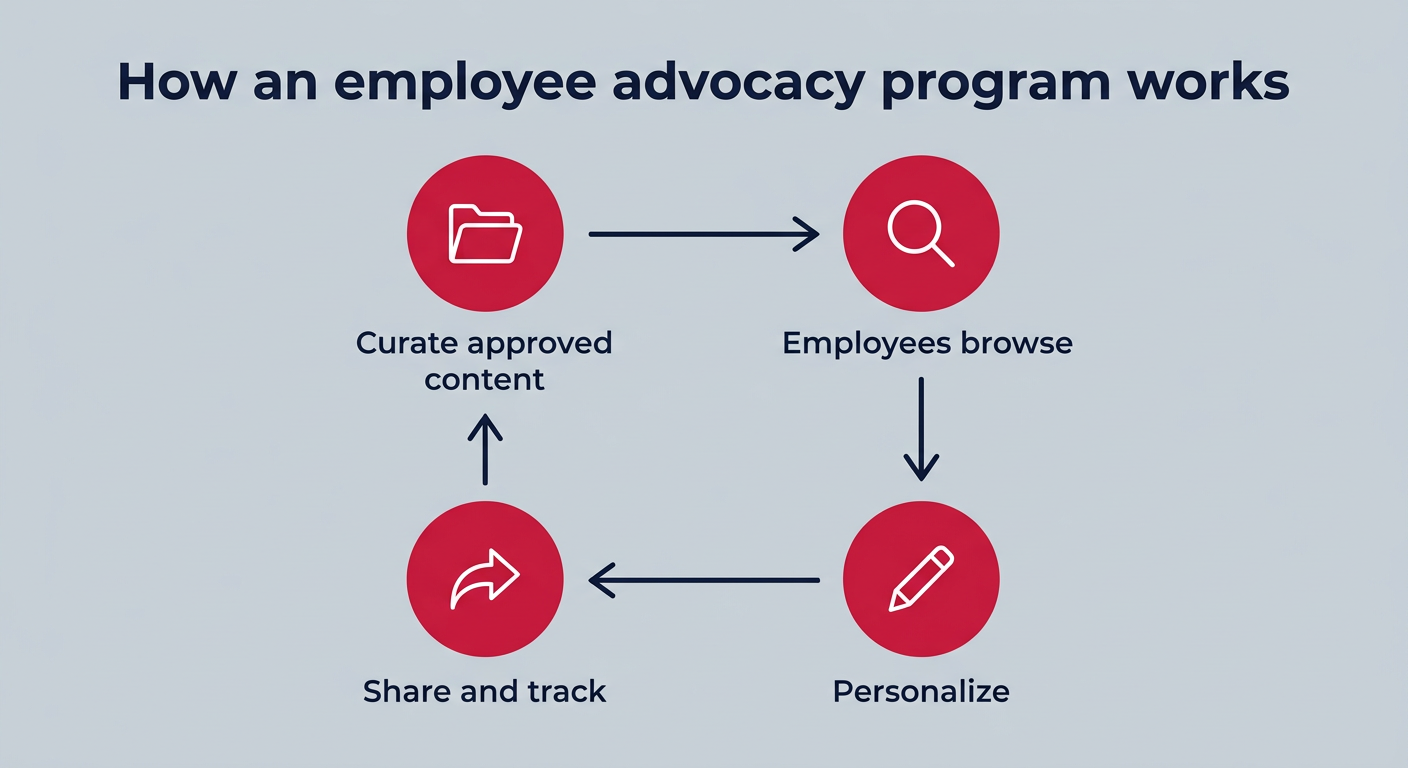
A typical employee advocacy program operates on a cyclical model. Centralized social media or communications teams curate a repository of approved content—ranging from blog posts and product updates to event highlights and company news. Employees then access this content, personalize it with their unique insights or commentary, and disseminate it across their professional networks. Dedicated platforms facilitate this distribution and provide robust tracking capabilities, eliminating the need for manual link sharing or screenshot collection and allowing for efficient program management and performance analysis.
Distinguishing Employee Advocacy from Related Concepts

To fully appreciate its unique value, employee advocacy must be differentiated from closely related marketing strategies: influencer marketing and brand advocacy.
-
Employee Advocacy vs. Influencer Marketing: The fundamental distinction lies in the source and motivation of the promotion. Employee advocacy leverages internal staff who voluntarily share brand messages, driven by genuine connection, pride, or professional development. In contrast, influencer marketing involves partnerships with external creators, typically compensated, to endorse products or services to their established audiences. While both strategies aim to amplify brand messaging, employee advocacy offers an unparalleled level of authenticity and trust, as the promoters are intrinsically linked to the brand they represent.
-
Employee Advocacy vs. Brand Advocacy: This distinction centers on who is advocating. Employee advocacy originates from a company’s internal team members, including staff and leadership. Brand advocacy, conversely, comes from external supporters such as customers, clients, or devoted fans who promote the brand based on their positive experiences. While both forms are valuable, employee advocacy provides greater consistency and control over messaging, offering a more predictable and sustained amplification channel. Employee advocates typically discuss company news, culture, events, job openings, and internal achievements, often motivated by company pride or professional visibility. Brand advocates, on the other hand, focus on recommendations, reviews, and use cases, driven by positive experiences or loyalty. The main value of employee advocacy lies in humanizing the company, expanding reach, building credibility, and aiding recruitment, whereas brand advocacy primarily offers social proof that drives referrals and purchases.
The Unrivaled Efficacy of Employee Voices
The effectiveness of employee advocacy surpasses traditional brand channels primarily because audiences inherently trust individuals more than corporate logos. This phenomenon is supported by compelling data: the Edelman Trust Barometer consistently reports that employees are among the most trusted spokespeople for a company, with a significant percentage of the public placing higher trust in them than in CEOs or government officials. A recent study further revealed that 60% of consumers trust what a creator says about a brand more than what the brand says about itself.
This heightened trust translates directly into greater impact. When employees share content, it resonates as a genuine endorsement rather than a marketing pitch. Social media algorithms, designed to prioritize authentic human interaction, often amplify posts from personal profiles over those from brand pages. This algorithmic advantage means employee-shared content frequently achieves a significantly broader organic reach, making the brand harder to ignore in increasingly crowded digital feeds.
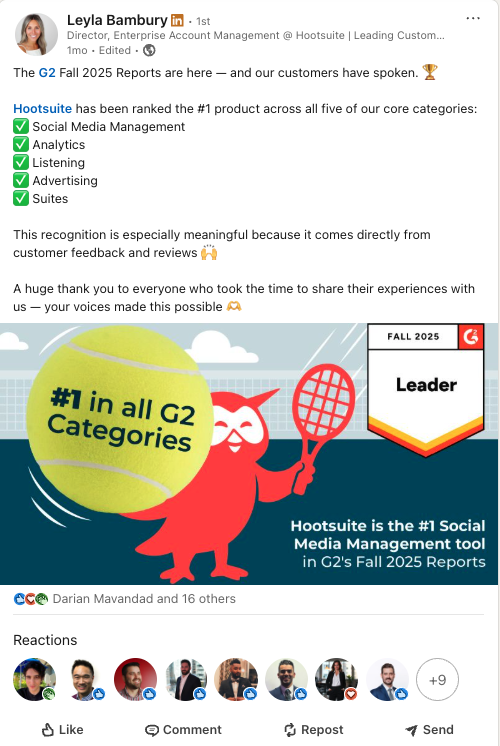
Hootsuite, a leader in social media management, provides a compelling case study from its own advocacy program, Parliament. Their internal data demonstrates robust engagement: 40-50% of Hootsuite employees are active advocates, averaging 1.2 posts per week. These efforts yield an average reach of 21,920 per post, with top-performing content reaching over 200,000 individuals and garnering more than 100 shares. These figures underscore the substantial amplification potential inherent in a well-executed employee advocacy program.
Multifaceted Benefits for Organizations
The benefits of employee advocacy are extensive, creating a cumulative positive impact across marketing, human resources, and internal culture.
-
Increased Reach and Brand Visibility: Employees introduce the brand to entirely new audiences that company-owned channels might not otherwise access. Critically, employee networks are, on average, ten times larger than their company’s follower base. This exponential reach transforms each employee into a powerful brand amplifier. For instance, IT solutions provider Carahsoft witnessed over 8,700 new website visits and up to 35% of event registrations directly from employee-shared content after implementing their advocacy program.
-
Enhanced Credibility and Trust: The authenticity of an employee’s voice inherently builds more trust than polished corporate messaging. When an employee shares genuine insights or relatable experiences, it fosters a real conversation, devoid of overt marketing undertones. Athletico Physical Therapy exemplified this by empowering its therapists and trainers to share their stories, resulting in a 40% increase in reach and stronger community connections.
-
Improved Talent Attraction and Employer Branding: Employee advocacy provides prospective hires with an authentic, unfiltered glimpse into a company’s culture, extending far beyond the curated narrative of a careers page. Companies with socially engaged employees are 58% more likely to attract top talent. When employees share their personal growth, team dynamics, and daily experiences, it creates a relatable and aspirational image for potential candidates. Healthcare giant DaVita leveraged this, increasing LinkedIn career page traffic by 136% and job applications from social media by 27% year-over-year.
-
Strengthened Company Culture: When employees feel empowered and proud to share their work, they naturally become culture ambassadors. This fosters a sense of pride, connection, and belonging within the organization, visibly showcasing its values in action. The act of sharing itself reinforces employee investment, creating a positive feedback loop that continually strengthens the very culture being promoted.
Tangible Advantages for Employees
Employee advocacy is a symbiotic relationship, offering significant professional development and networking opportunities for participating employees.
- Enhanced Professional Presence: Regularly sharing industry insights and company news positions employees as thought leaders and subject matter experts within their respective fields.
- Expanded Professional Network: Increased visibility leads to more connections and engagement, broadening an employee’s professional circle and opening doors to new opportunities.
- Career Advancement: A strong online presence, showcasing expertise and engagement, can enhance an employee’s reputation, making them more attractive for internal promotions or external career moves.
- Personal Brand Building: Advocacy allows employees to cultivate their unique professional voice and brand, distinct yet complementary to their employer’s.
- Increased Influence: As employees gain recognition for their insights, their influence grows, benefiting both their personal standing and the company’s message.
When employees perceive advocacy as a mutually beneficial endeavor, participation shifts from a perceived obligation to a strategic career move.
Establishing a Successful Employee Advocacy Program: A Step-by-Step Approach
Launching an effective employee advocacy program requires careful planning and a phased implementation.
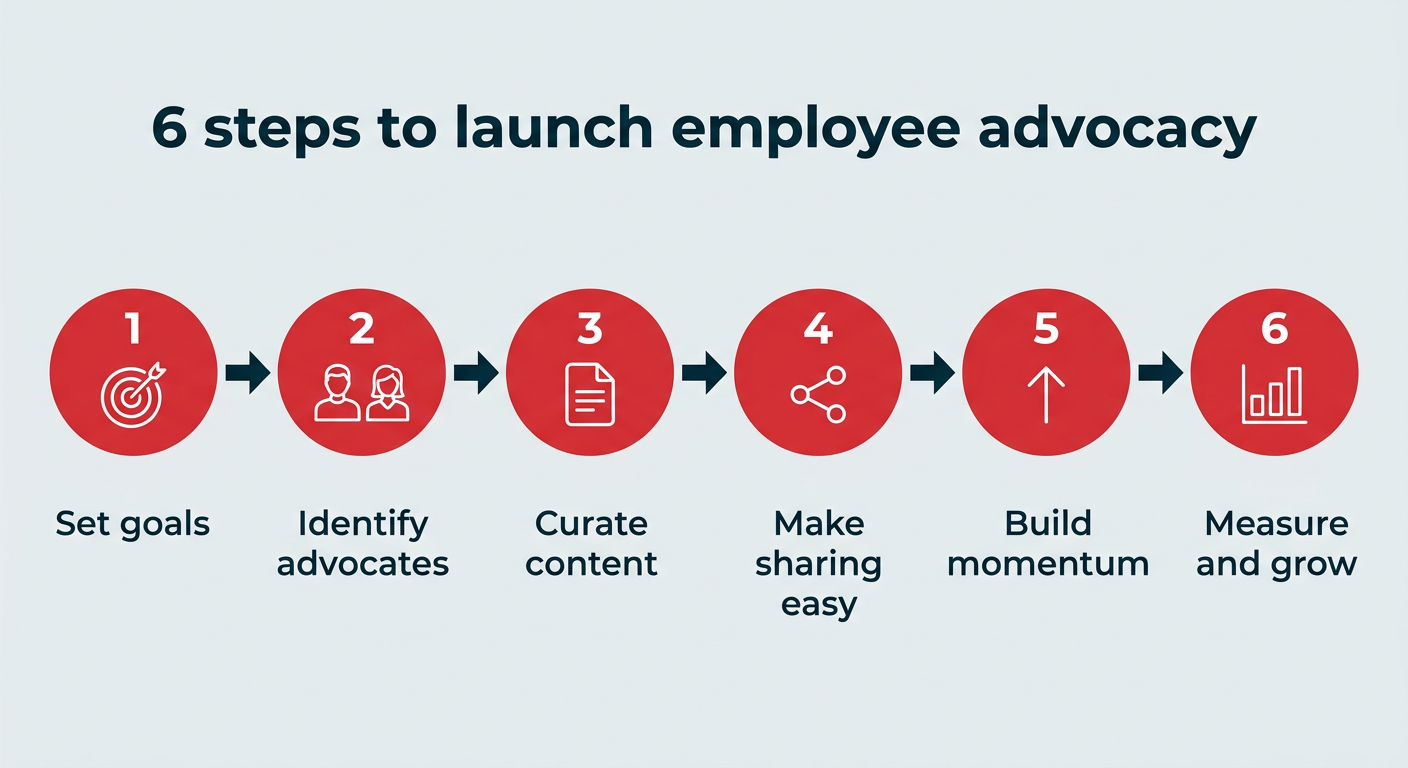
- Secure Leadership Buy-In: Early endorsement from senior leadership is paramount. It signals that employee advocacy is a strategic priority, not merely an optional initiative, providing the necessary resources and organizational support.
- Define Clear Goals: Establish specific, measurable, achievable, relevant, and time-bound (SMART) objectives. Whether the aim is to boost brand awareness, drive lead generation, attract talent, or enhance engagement, clear goals will dictate content strategy, success metrics, and integration within the broader social media framework.
- Identify Natural Advocates: Begin by recruiting employees who already demonstrate a positive online presence and genuine enthusiasm for the company. These early adopters will serve as champions, shaping the program, testing strategies, and inspiring their peers to join.
- Curate Engaging Content: Move beyond dry corporate announcements. Focus on content that employees are genuinely proud to share—behind-the-scenes glimpses, team achievements, employee spotlights, and authentic stories. Content that humanizes the brand consistently outperforms overly polished press releases. Providing a mix of company news, industry insights, and third-party content ensures balance and broad appeal.
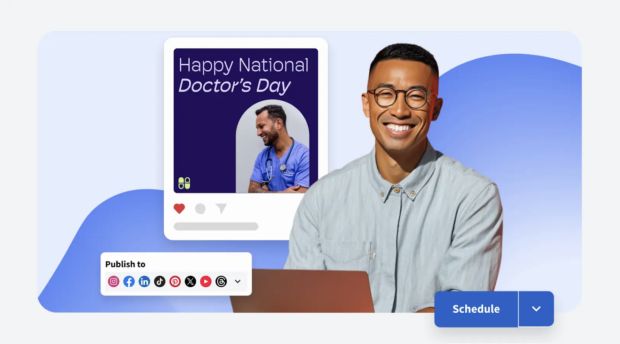
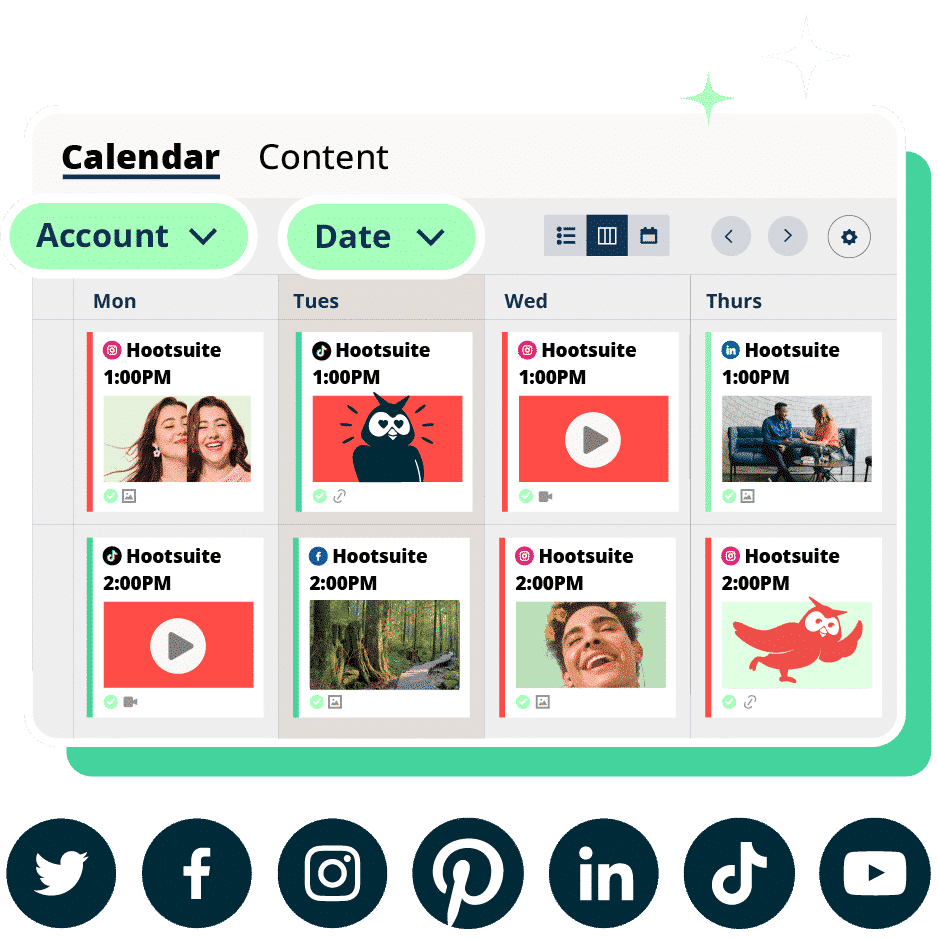
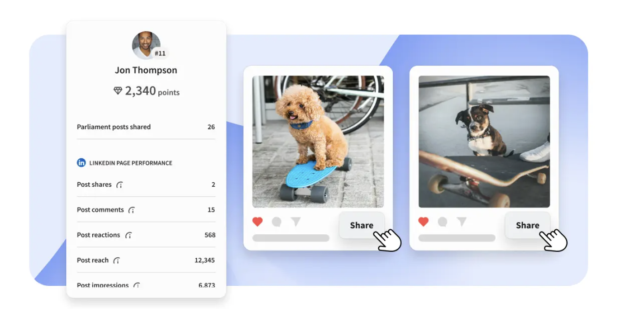
- Simplify the Sharing Process: Ease of participation is critical. An employee advocacy platform, such as Hootsuite’s Parliament, streamlines this by centralizing pre-approved content, visuals, and links, enabling employees to personalize and share posts to their networks within seconds. Integration with daily communication tools like Slack and Microsoft Teams further embeds advocacy into routine workflows.
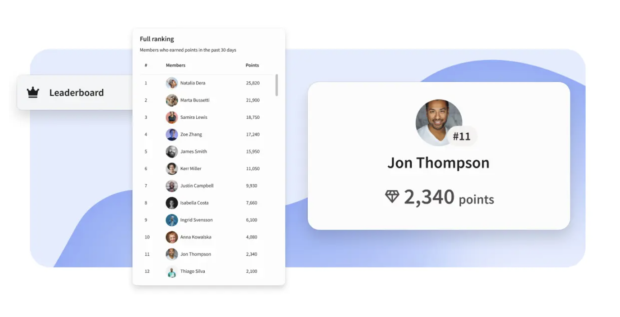
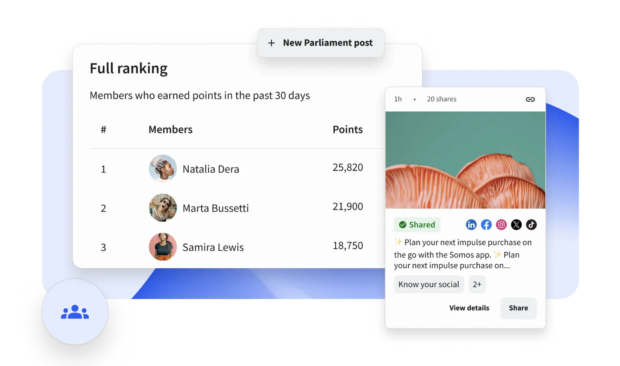
- Build and Maintain Momentum: Initiate the program with a kickoff session or a quick demo to onboard employees. Encourage widespread participation in the initial weeks to generate buzz. Utilize platform features like leaderboards to recognize top advocates and foster friendly competition, potentially offering incentives or prizes for high engagement.
- Measure, Analyze, and Iterate: Continuous tracking of participation rates, content performance, and key metrics is essential. Analyze what resonates most with audiences and identify areas for improvement. Platforms that integrate advocacy analytics with overall social media reporting provide a holistic view of performance and ROI.
Overcoming Challenges and Ensuring Compliance
While the benefits are significant, employee advocacy programs face common hurdles: low participation, content fatigue, scalability issues, compliance risks, and demonstrating ROI. These can be mitigated by:
- Integrating into Routines: Making sharing a natural part of an employee’s workday.
- Diversifying Content: Offering a rich mix of content types and sources to maintain interest.
- Leveraging Technology: Using advocacy platforms to simplify sharing and tracking.
- Clear Guidelines and Governance: Providing explicit social media policies that outline do’s and don’ts. In regulated industries, robust governance layers with documented approval paths, role-based permissions, and audit trails (like Hootsuite Social OS’s Vigil) are crucial to manage legal risks.
- Ongoing Support: Offering resources like workshops, content calendars, and design templates to empower employees in their content creation.
The Impact of AI on Employee Advocacy in 2026
Artificial intelligence is increasingly refining the operational aspects of employee advocacy, making programs more efficient and accessible. AI-powered insights can identify the most relevant content for specific teams or regions, eliminating manual curation efforts. Furthermore, AI tools can assist employees in drafting conversational and personalized posts, significantly reducing the common barrier of "not knowing what to say." As an orchestration layer, AI platforms like Hootsuite Social OS’s Wisdom provide contextual intelligence on content resonance and coordinate sharing efforts across various programs, thereby removing friction and facilitating scalable growth.
Measuring Success and Quantifying ROI
Measuring the success of an employee advocacy program directly ties back to its initial goals. Key Performance Indicators (KPIs) typically fall into four categories:
- Participation Metrics: Active users, participation rate, number of shares per employee, and content engagement rate.
- Engagement Metrics: Reach, impressions, clicks, comments, likes, and shares on employee posts.
- Recruitment Metrics: Referral applications, quality of candidates, time-to-hire, and career page traffic.
- Culture Metrics: Employee satisfaction, retention rates, and perceived internal communication effectiveness.
The Return on Investment (ROI) of employee advocacy is realized through increased brand reach, stronger trust, and significant earned media value. Tracking this ROI involves monitoring metrics such as web traffic and conversions originating from employee-shared content, recruitment successes like referrals and hires, and the engagement lift compared to branded posts. Tools like the Hootsuite Employee Advocacy ROI Calculator can quantify the monetary value of these efforts, demonstrating the financial benefits to leadership. Platforms like Parliament by Hootsuite provide real-time performance tracking, including earned media value comparisons against paid campaigns, offering comprehensive insights without extensive data compilation.
In conclusion, employee advocacy represents a powerful and evolving strategy that transforms a company’s greatest asset—its people—into its most credible and far-reaching brand ambassadors. By fostering authenticity, leveraging individual networks, and integrating smart technology, organizations can unlock unprecedented levels of brand visibility, build enduring trust, and attract top talent in an increasingly competitive digital landscape.