

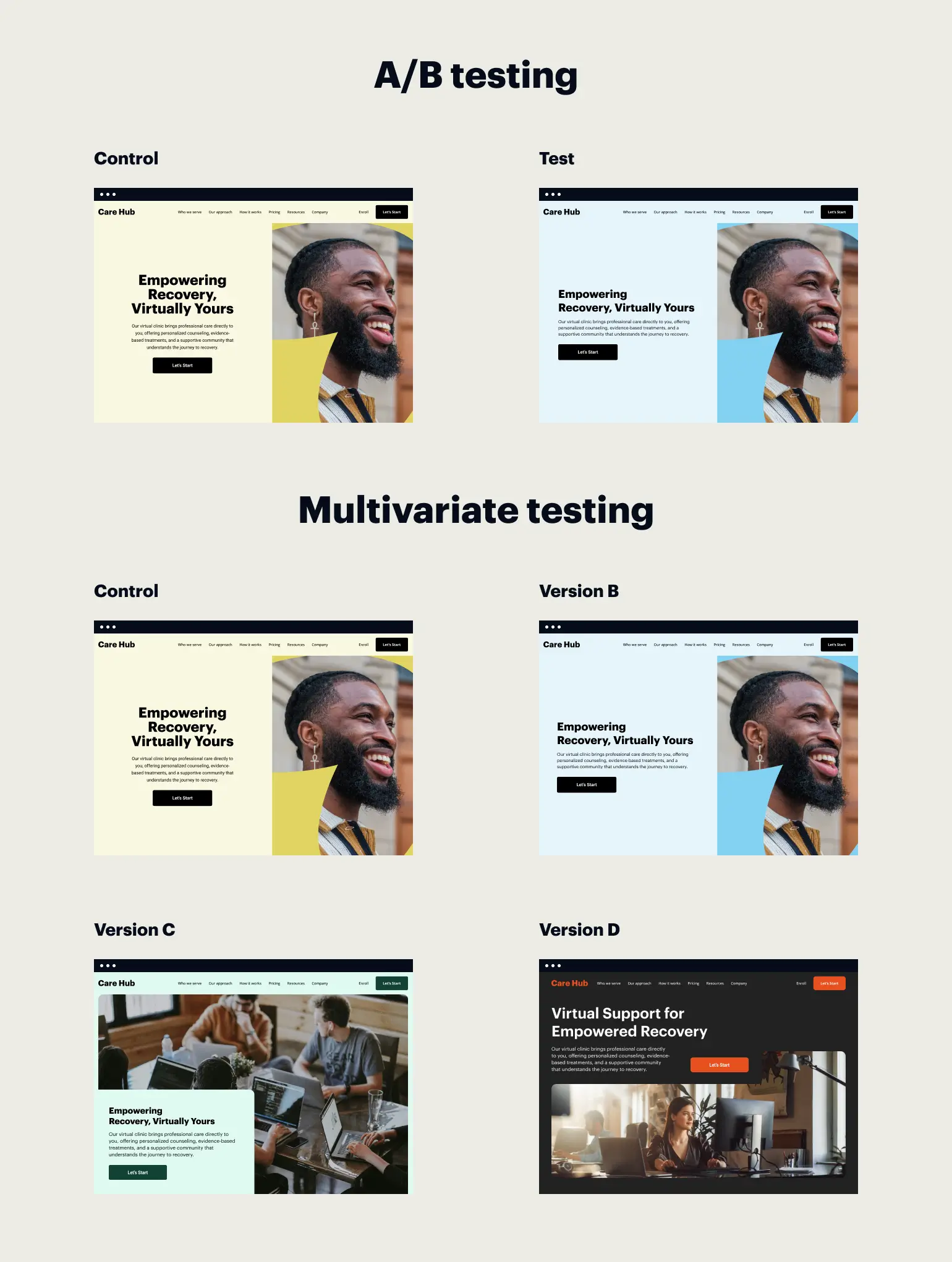
In the contemporary digital landscape, the success of a marketing campaign is no longer dictated by creative intuition alone but by the rigorous application of data-driven experimentation. As brands compete for diminishing consumer attention spans, the ability to refine user experiences through scientific testing has become a cornerstone of Conversion Rate Optimization (CRO). Two primary methodologies dominate this field: A/B testing and Multivariate Testing (MVT). While both serve the ultimate goal of enhancing performance, they differ significantly in their complexity, resource requirements, and the depth of insights they provide regarding user behavior.

The Evolution of Digital Experimentation
The transition from traditional marketing to digital-first strategies brought about a fundamental shift in how businesses interact with their audiences. In the early days of web development, changes to a website were often permanent and based on the subjective preferences of designers or executives. However, the rise of web analytics in the late 1990s and early 2000s introduced the concept of split testing, where two versions of a page could be compared in real-time.
As traffic volumes grew and consumer behavior became more nuanced, the industry moved beyond simple A/B comparisons. Marketers realized that a single element, such as a headline, does not exist in a vacuum; its effectiveness is often tied to the image next to it or the color of the button below it. This realization led to the adoption of Multivariate Testing, a more sophisticated approach designed to measure the "interaction effects" between multiple variables on a single page.
Defining Multivariate Testing: Goals and Mechanics
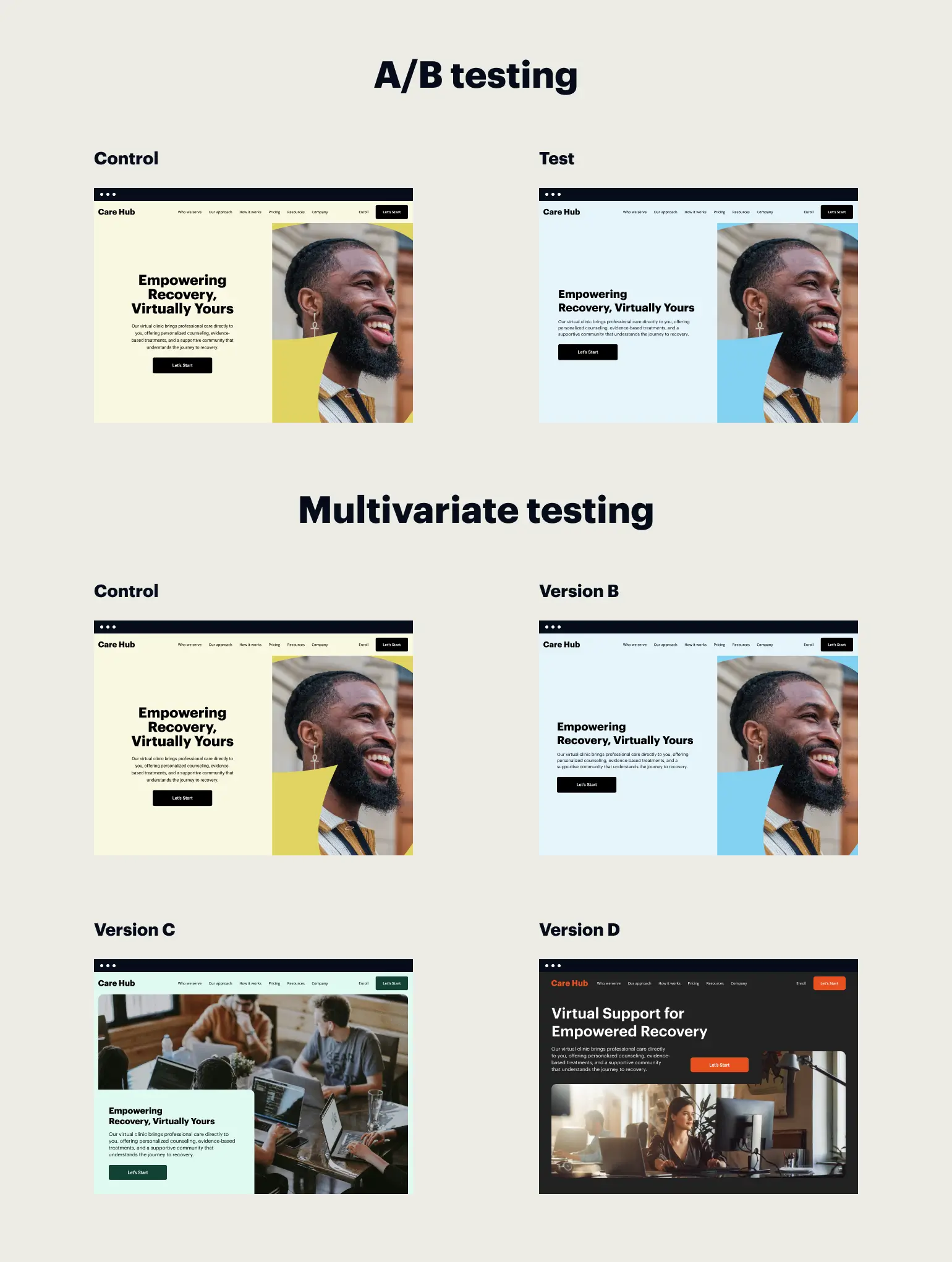
Multivariate testing is an advanced optimization technique that involves testing multiple variables simultaneously to understand how they interact and influence user actions. Unlike a standard A/B test, which might only compare two different headlines, an MVT experiment might test three different headlines, two different hero images, and two different call-to-action (CTA) button colors all at once.
The primary goal of MVT is to identify the most effective combination of elements that maximizes a specific KPI, such as click-through rate (CTR) or conversion rate. By systematically modifying these variables, marketers can move beyond knowing what worked to understanding why specific combinations resonate with users. Common elements subjected to MVT include:
- Headlines and sub-headers
- Hero images and background graphics
- Lead capture forms and field lengths
- CTA button text, color, and placement
- Navigation menu structures
- Social proof elements like testimonials or trust badges
The Mathematical Framework of MVT
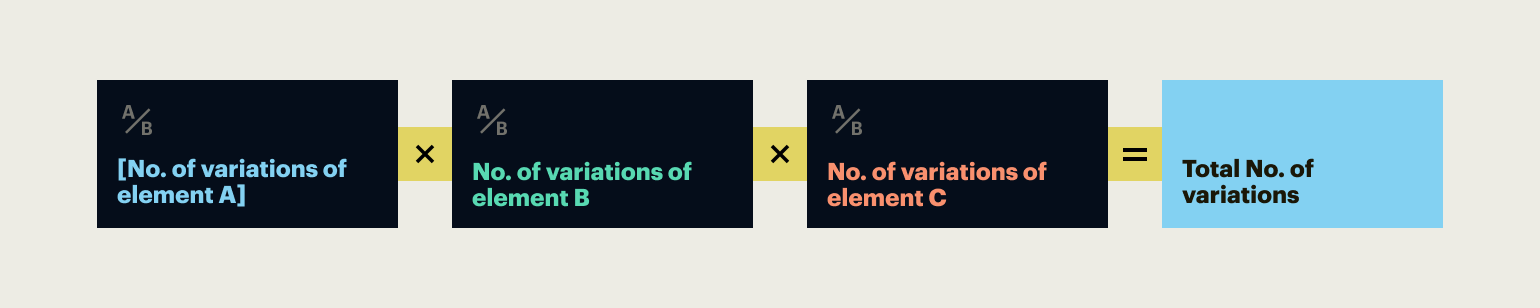
The complexity of a multivariate test is determined by the number of variables and the number of variations for each variable. To determine the total number of page versions required for a full factorial MVT, marketers use a simple multiplication formula. For instance, if a marketer decides to test:
- Three headline options
- Two image options
- Two CTA button colors
The formula is $3 times 2 times 2$, resulting in 12 distinct combinations. Each of these 12 versions must receive enough traffic to reach statistical significance, which explains why MVT is generally reserved for high-traffic websites.

Comparative Analysis: MVT versus A/B Testing
While the objective of both methodologies is performance enhancement, they are rooted in different principles and offer distinct strategic advantages.
A/B Testing: The Scalpel
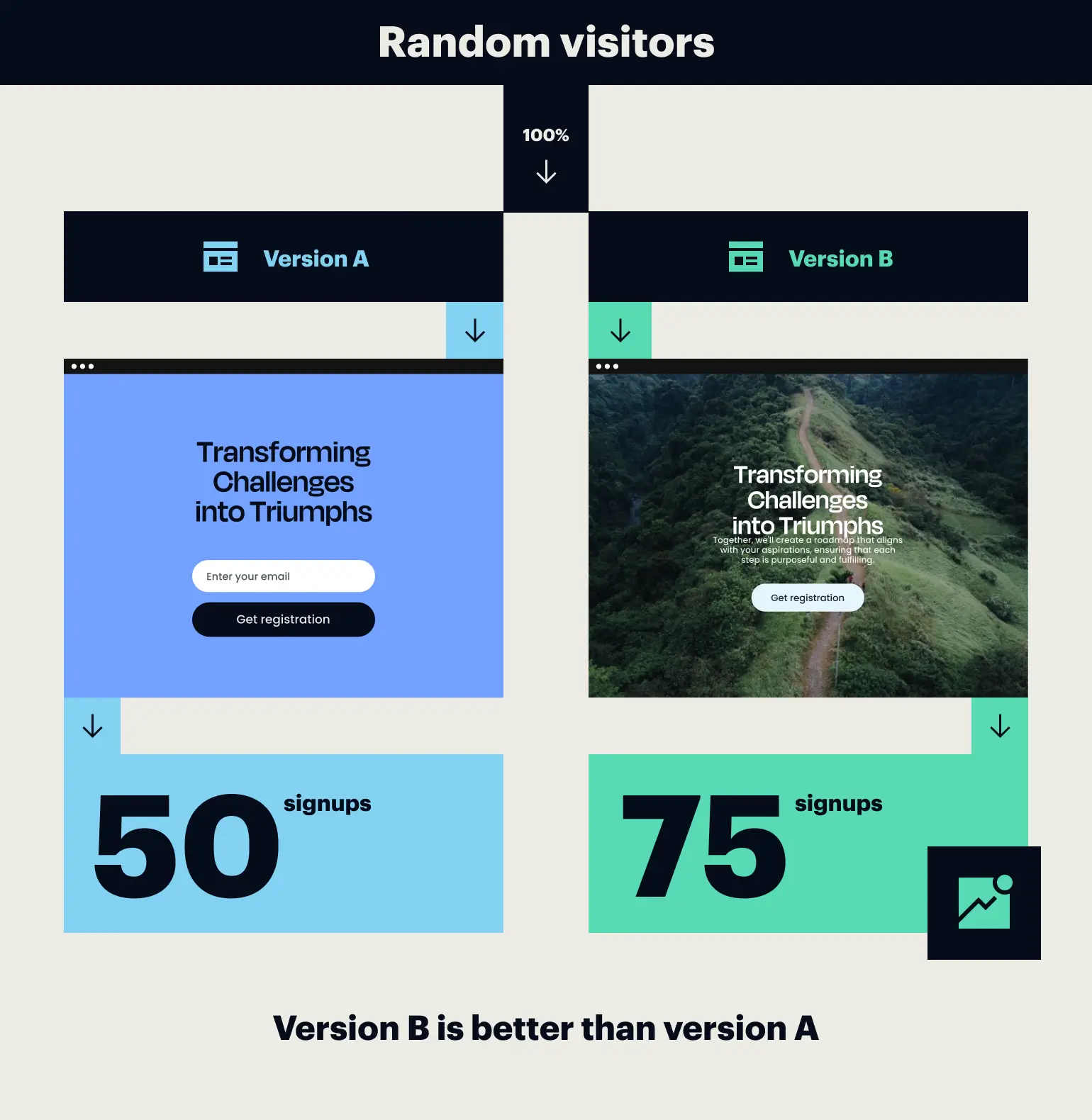
A/B testing, or split testing, compares two versions of a single element (Variant A and Variant B). It is highly effective for making "big swing" decisions or validating radical changes to a page layout. Because it only involves two versions, it requires significantly less traffic and time to produce actionable results. It is the preferred method for websites with moderate traffic or when a marketer needs to make a quick, data-backed decision.
Multivariate Testing: The MRI
MVT provides a granular view of how different page components work in harmony. It is less about "radical change" and more about "fine-tuning." It allows marketers to see if a specific headline works better with Image A than Image B. However, this precision comes at a cost: high resource intensiveness, slower testing speeds, and the need for a massive sample size to ensure that the results are not due to random chance.
| Aspect | Multivariate Testing | A/B Testing |
|---|---|---|
| Complexity | High | Low |
| Testing Speed | Slower | Faster |
| Interaction Effects | Identifies them | Ignores them |
| Resource Demand | Higher | Lower |
| Traffic Requirement | Large sample size | Smaller sample size |
| Insight Depth | Comprehensive | Targeted |
| Risk of Interference | Higher | Lower |
Real-World Applications and Case Studies
The efficacy of these testing methods is best illustrated through industry examples where data-driven changes led to substantial revenue growth.

AliveCor: Enhancing Product Visibility
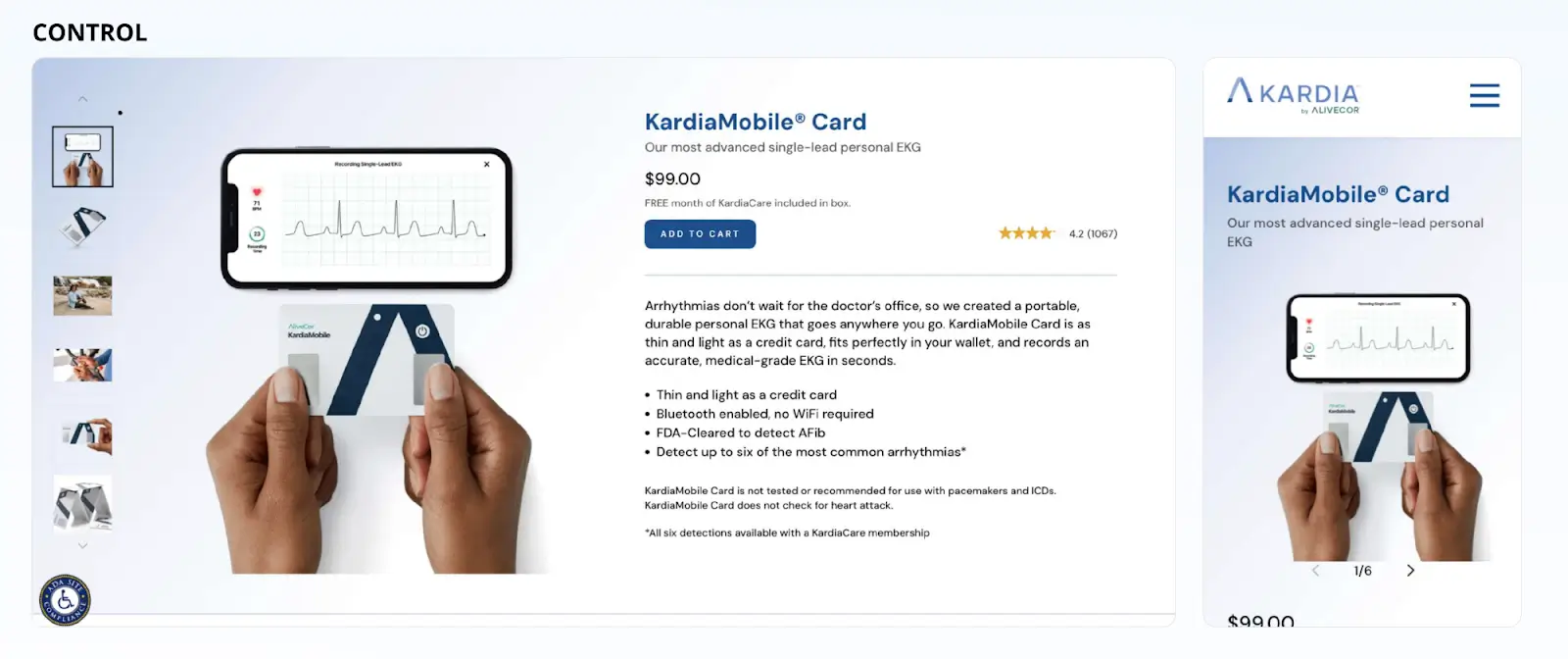
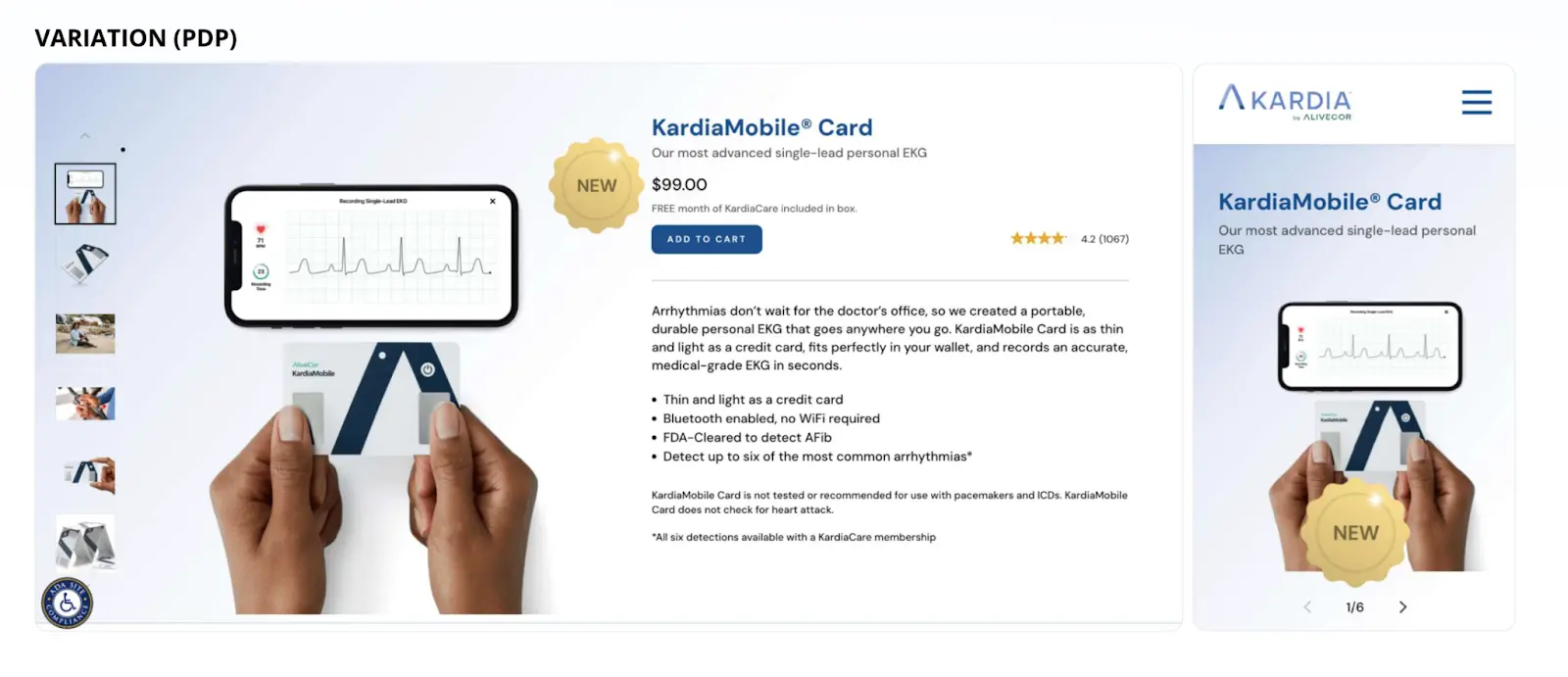
AliveCor, a medical device company, sought to launch its new KardiaMobile Card without cannibalizing the sales of its existing product line. The team hypothesized that users would interact more with highlighted elements. They conducted a test adding a "New" badge to the product detail page and the title listing. By testing the badge size and placement across mobile and desktop, they observed a 25.17% increase in conversion rates and a 29.58% increase in revenue per user. This case demonstrates how even small visual cues, when validated through testing, can have a massive impact on the bottom line.
Groove: The Power of Narrative Overhaul
Groove, a customer support platform, struggled with a low landing page conversion rate of 2.3%. Instead of testing minor elements, they opted for a "copy-first" redesign of their entire page. They tested various narratives, moving from feature-heavy descriptions to benefit-driven storytelling. By revamping the layout and testing different headline combinations, they successfully boosted their conversion rate to 4.3%, nearly doubling their lead generation efficiency.

Strategic Challenges: The Traffic Barrier
The most significant limitation of multivariate testing is the "traffic requirement." In any scientific experiment, the results must be statistically significant to be valid. In A/B testing, if you have 1,000 visitors, you can send 500 to Version A and 500 to Version B. In a 12-combination MVT, those same 1,000 visitors would be split into groups of roughly 83 people. Such a small sample size rarely yields a high enough confidence level to justify making permanent changes to a website.
Consequently, MVT is most effectively deployed by enterprise-level organizations with millions of monthly visitors. For smaller businesses, a series of sequential A/B tests—testing the headline first, then the image, then the button—often yields similar results with much lower risk.
Implementing Experiments with Modern Platforms
Technology has democratized access to these testing methodologies. Platforms like Instapage provide integrated suites that allow marketers to build, deploy, and analyze experiments without deep coding knowledge.
To initiate a successful experiment, industry experts recommend a structured five-step process:

- Hypothesis Formation: Define what you believe will happen (e.g., "Changing the CTA to ‘Get Started’ will increase clicks by 10%").
- Variable Selection: Choose the specific elements (MVT) or the single element (A/B) to be modified.
- Experience Creation: Use a builder to create the variations and set the traffic split.
- Duration and Monitoring: Run the test until it reaches a statistical confidence level (usually 95% or higher).
- Analysis and Implementation: Review the winning variation and deploy it as the new "control" version.
Broader Impact and Industry Implications
The shift toward constant experimentation has profound implications for the future of digital commerce. We are moving toward an era of "hyper-personalization," where MVT and AI-driven testing allow websites to adapt in real-time to individual user preferences.
Industry analysts suggest that companies that prioritize a "culture of testing" outperform their competitors by significant margins. By removing guesswork from the design process, organizations reduce the risk of costly failed launches and ensure that every pixel on their website contributes to a specific business goal. Furthermore, the insights gained from MVT often inform broader brand strategies, revealing what messaging resonates most deeply with different audience segments.
Ultimately, whether a marketer chooses the simplicity of A/B testing or the depth of a multivariate approach, the core principle remains the same: the user’s behavior is the only objective measure of a design’s success. As tools continue to evolve, the barrier to entry for these sophisticated experiments will continue to fall, making data-driven optimization an mandatory standard for any business operating in the digital sphere. Organizations that fail to embrace these methodologies risk falling behind in an increasingly competitive and analytical marketplace.







