Pevita Pearce
The digital analytics landscape is undergoing a period of significant consolidation and strategic shifts, most notably marked by the late 2023 acquisition of Heap by the French experience analytics giant Contentsquare. As organizations grapple with the implications of this merger, many product managers, digital marketers, and UX designers are re-evaluating their tech stacks to determine if Heap remains the optimal solution for their needs. While Heap’s pioneering "autocapture" technology remains a formidable asset for retroactive data analysis, a combination of pricing volatility, roadmap uncertainty, and the inherent "noise" of uncapped data collection has driven a surge in interest for specialized alternatives. Industry data suggests that the move toward more predictable, event-based tracking or visual-first experience tools is accelerating as teams seek to balance deep product insights with operational efficiency.
The Strategic Shift: Contentsquare’s Acquisition of Heap
The acquisition of Heap, completed in December 2023, represented Contentsquare’s largest strategic investment to date. This move followed the 2021 purchase of Hotjar, signaling Contentsquare’s ambition to build a comprehensive "Experience Intelligence" ecosystem. While the parent company has assured existing users that Heap accounts will remain functional, the long-term roadmap involves folding Heap’s capabilities into Contentsquare’s broader Product Analytics suite.
For many enterprise users, this transition introduces a layer of vendor risk. Contentsquare’s core competency has historically been in experience analytics—heatmaps, session replays, and journey mapping—rather than the rigorous feature flagging and experimentation tools that modern product teams prioritize. This shift in focus has led organizations to look toward independent platforms that offer specialized features without the overhead of a massive, multi-tool enterprise suite.
The Economic Reality of Heap’s Pricing Model
A primary driver for the migration away from Heap is the unpredictability of its session-based pricing. Unlike tools that bill based on monthly active users (MAU) or specific tracked events, Heap’s costs scale directly with traffic volume. According to 2024 data from SaaS procurement platform Vendr, the median annual contract for Heap stands at approximately $41,000, with some enterprise deals exceeding $150,000.
The financial friction is exacerbated by the fact that core visual tools, such as heatmaps and session replays, are often excluded from the entry-level Growth plans. On higher-tier Pro and Premier plans, these features frequently require additional paid add-ons. For teams that primarily need to visualize user behavior rather than perform complex data science on retroactive events, the cost-to-value ratio can become skewed. Furthermore, Heap’s policy of restricting data access if a session limit is exceeded creates operational bottlenecks that can halt product development cycles until a contract upgrade is negotiated.

Technical Overhead and the "Noise" of Autocapture
While Heap’s autocapture—the ability to record every interaction without manual tagging—is its most famous feature, it is also a double-edged sword. In a professional environment, "tracking everything" often results in an overwhelming volume of irrelevant data. Mature product teams frequently report that they spend a disproportionate amount of time cleaning, labeling, and managing thousands of auto-captured events that have no strategic value.
This "data debt" can lead to performance issues and confusion among stakeholders. Consequently, many organizations are pivoting back to "deliberate tracking" models. By choosing tools that require intentional event definition, teams ensure that the data they collect is high-integrity, actionable, and aligned with specific business KPIs.
Top Alternatives for Marketing and Design: Crazy Egg
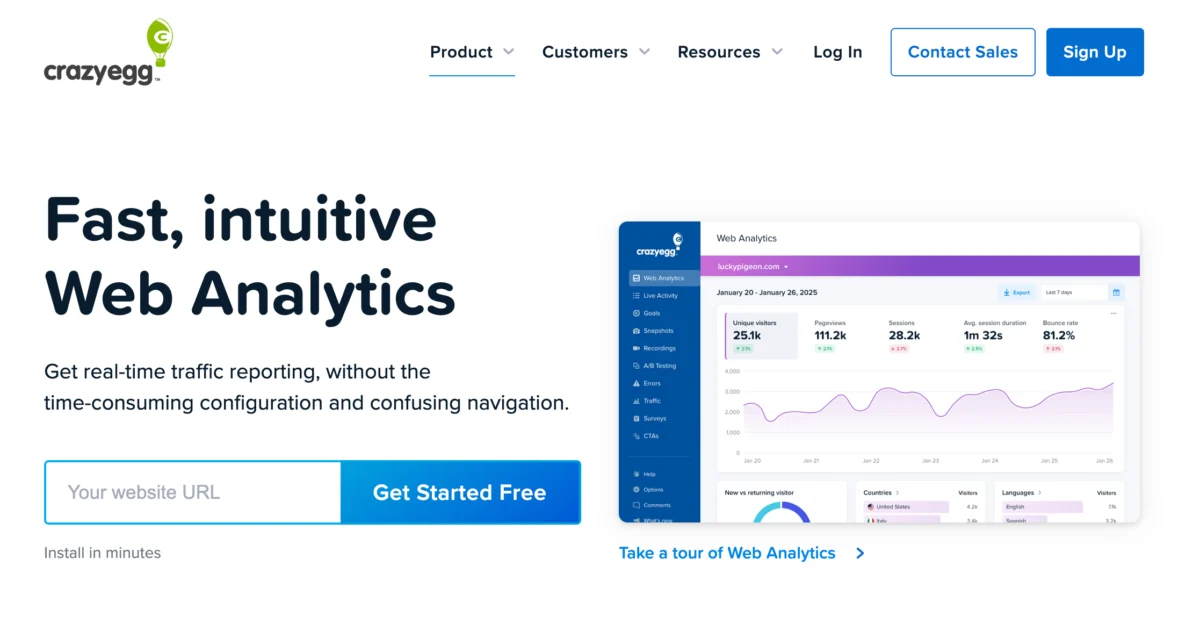
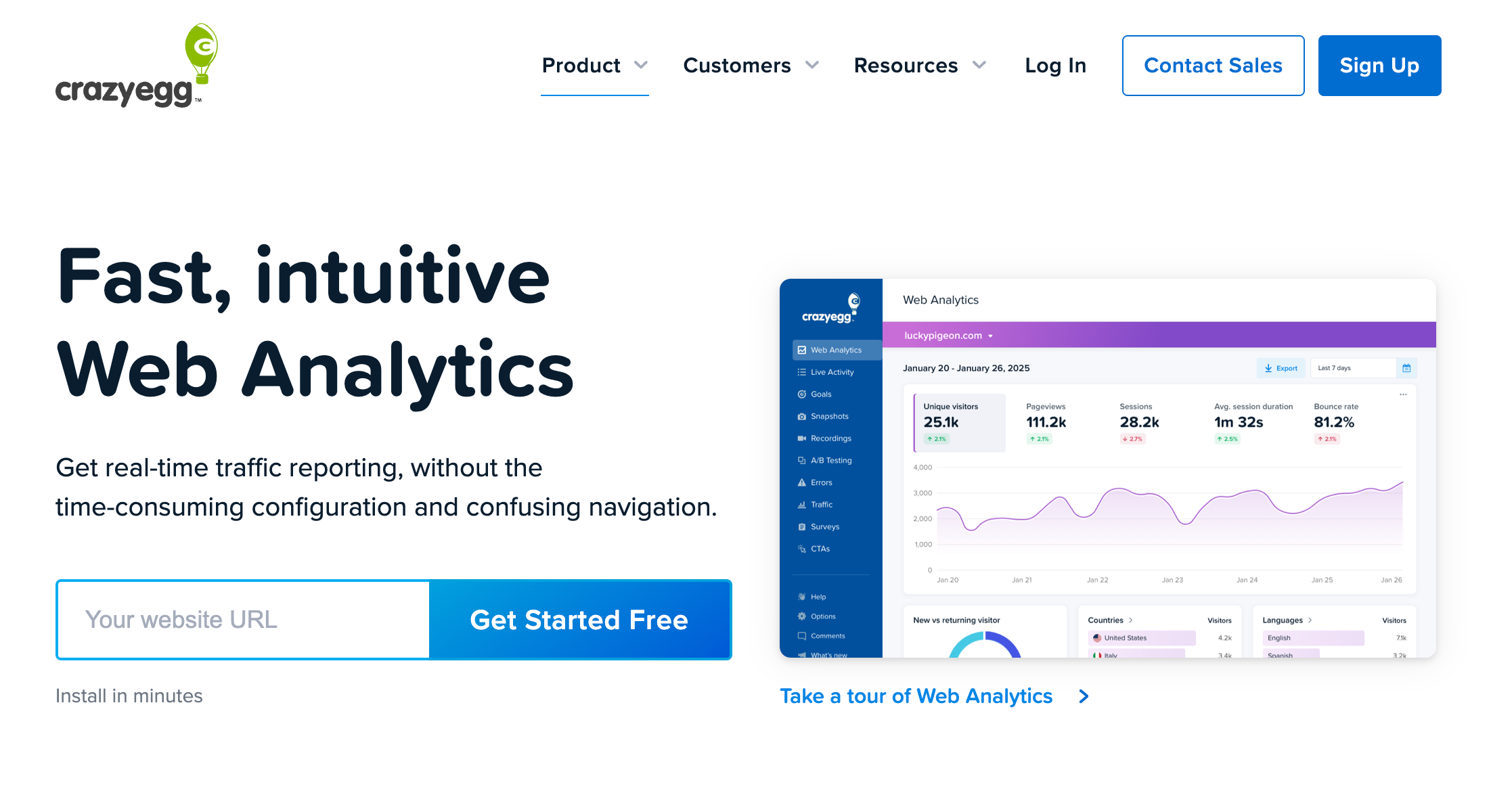
For marketing departments and web designers whose primary goal is conversion rate optimization (CRO), Crazy Egg has emerged as a high-value alternative to Heap. While Heap focuses on the technical "what" of user behavior, Crazy Egg excels at the visual "how."

Core Capabilities and Advantages
Crazy Egg’s strength lies in its simplicity and visual depth. It offers five distinct types of maps: heatmaps (clicks), scroll maps (depth), confetti maps (referral segments), overlay maps, and list maps. Unlike Heap, where visual tools are an enterprise add-on, Crazy Egg includes these features along with session recordings and built-in A/B testing starting at $29 per month.
Strategic Fit
Crazy Egg is most effective for teams that need to identify "friction points" on landing pages or e-commerce sites. It allows designers to see mouse movements and click patterns in real-time, providing immediate feedback on layout changes. However, it lacks the deep mobile app analytics and complex funnel logic required by heavy-duty product engineering teams.
The Standard for Product Teams: Mixpanel
Mixpanel remains the most direct competitor to Heap for organizations that prioritize product-led growth. While Heap focuses on retroactive autocapture, Mixpanel is built on a foundation of deliberate, event-based tracking that offers superior data clarity.

Data Precision and Analysis
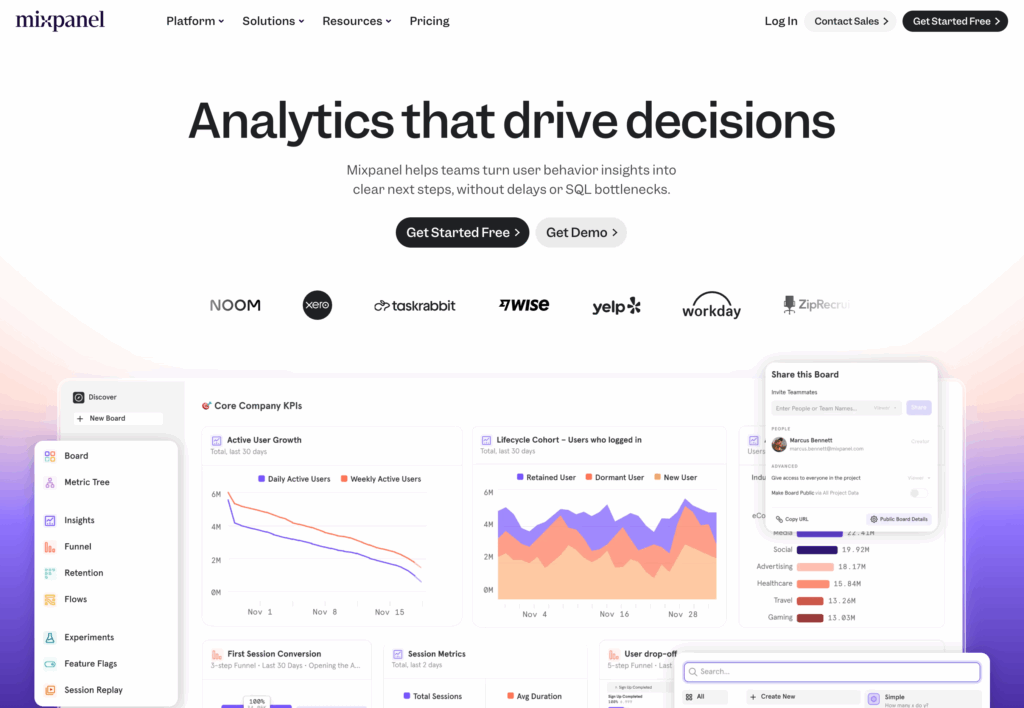
Mixpanel’s suite is designed for deep dives into user retention, cohort analysis, and multi-step funnels. Its real-time reporting is widely considered the industry standard for speed and accuracy. By forcing teams to define events at the point of implementation, Mixpanel ensures that the resulting dashboards are clean and directly tied to user milestones.
Pricing and Accessibility
In a bid to capture the startup market, Mixpanel offers a generous free tier of up to 1 million events per month. This contrasts sharply with Heap’s session-based limit, which can be exhausted quickly by high-traffic, low-engagement sites. For established companies, Mixpanel’s pricing is more predictable, as it scales with data usage rather than total visitor sessions.
Enterprise Experience and Onboarding: Pendo
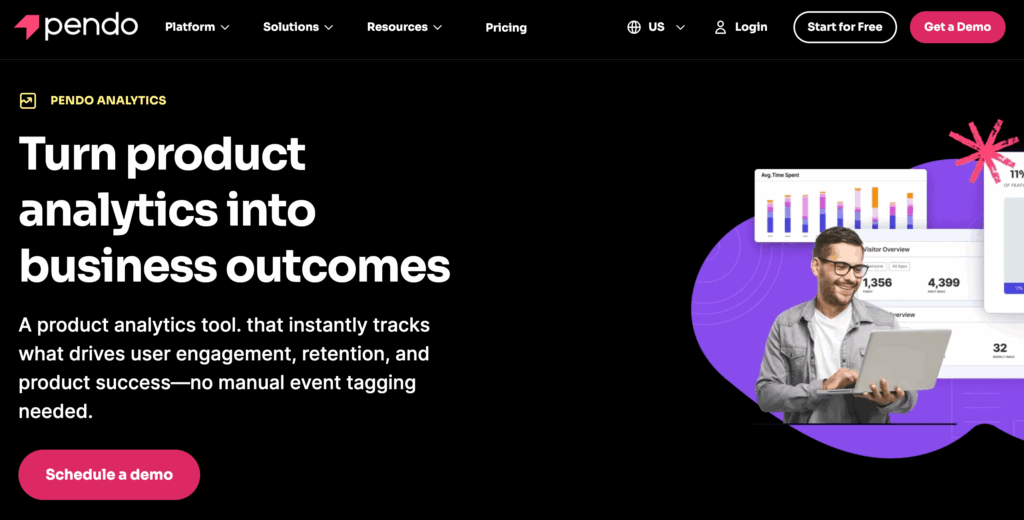
Pendo occupies a unique space in the market by combining robust analytics with active in-app engagement tools. For enterprise SaaS companies, Pendo is often the preferred choice because it doesn’t just track behavior—it attempts to influence it.
Integration of Guides and Feedback
The "Pendo experience" includes in-app walkthroughs, tooltips, and onboarding guides that can be triggered based on the analytics data collected. This creates a closed-loop system where a product team can identify a feature with low adoption and immediately deploy a guide to help users discover it.
Market Position
Pendo is a comprehensive enterprise solution, and its pricing reflects that status. It is designed for large organizations that need to manage digital adoption across multiple platforms, including internal employee-facing software. While it offers session replays and heatmaps, its true value lies in its ability to drive "feature parity" and user proficiency through its guidance layer.
Advanced Behavioral Insights: Fullstory
Fullstory is frequently cited as the premium option for teams that require the highest fidelity in session reconstruction. While it shares some visual features with Crazy Egg, Fullstory is a much more technical platform aimed at "Digital Experience Intelligence" (DXI).
Frustration Detection and Technical Debugging
Fullstory’s standout feature is its ability to automatically detect "Rage Clicks," "Dead Clicks," and "Thrashed Cursors." These signals allow UX teams to find bugs or design flaws that are costing the company revenue without having to watch thousands of hours of random replays. It also provides deep technical logs, making it a favorite for engineering teams who need to reproduce obscure client-side bugs.
Considerations
Fullstory is an enterprise-grade tool with a price point to match. It is best suited for high-volume e-commerce or complex SaaS applications where even a minor UX friction point can result in significant financial loss.
Comparative Analysis: Choosing the Right Path
The decision to migrate from Heap depends largely on the organizational structure and the specific questions the team needs to answer.
- For the Budget-Conscious Marketer: Crazy Egg offers the most straightforward path to visualizing website performance and running A/B tests without the five-figure price tag of an enterprise contract.
- For the Data-Driven Product Manager: Mixpanel provides a cleaner, more reliable environment for tracking user journeys and retention metrics, particularly for mobile applications.
- For the Enterprise Experience Lead: Pendo offers a "all-in-one" suite that combines behavioral data with the ability to intervene in the user journey through in-app messaging.
- For the UX Researcher and Engineer: Fullstory provides the most granular look at user frustration and technical errors, facilitating rapid debugging and high-end experience optimization.
The Future of Behavioral Analytics
As the industry moves deeper into 2024, the "capture everything" philosophy pioneered by Heap is being tempered by the realities of data privacy regulations (GDPR/CCPA) and the need for data governance. The market is trending toward tools that offer "Actionable Intelligence"—not just more data, but better data.
The consolidation of Heap into Contentsquare signifies a maturation of the market where standalone analytics tools are being absorbed into larger "Digital Experience" platforms. For users, this means that while the options for specialized, agile tools remain plentiful, the era of the "all-you-can-eat" autocapture model may be giving way to a more disciplined, ROI-focused approach to digital intelligence. Whether a team chooses the visual simplicity of Crazy Egg or the analytical depth of Mixpanel, the goal remains the same: transforming raw user behavior into a roadmap for product excellence.

 Nana

 Neng Nana