As the artificial intelligence landscape shifts from simple large language model interactions to complex autonomous agents, a significant technical divide has emerged among developers regarding the most effective architectural frameworks. The industry, which previously focused heavily on prompt engineering, is now grappling with a more fundamental structural challenge: the distinction between agent harness engineering, loop engineering, and graph engineering. While these terms are frequently used interchangeably in technical discourse, industry experts and recent empirical data suggest that conflating them leads to significant cost overruns and system instabilities when agents move from sandbox environments to production-grade APIs.
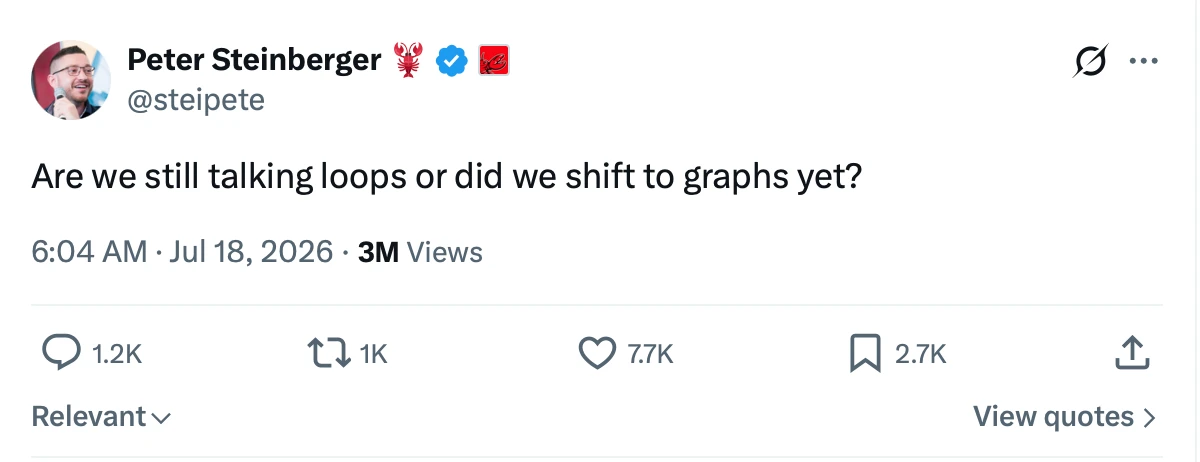
The confusion reached a fever pitch in July 2026, following a series of high-profile debates on social media platforms and technical forums. Peter Steinberger, a prominent figure in the AI development community, catalyzed the conversation by questioning the efficacy of complex graph structures when the underlying execution environment—the harness—remained brittle. This debate underscored a growing realization within the field: an unprocessed model, no matter how sophisticated, is inherently incapable of interacting with a file system, retaining state across sessions, or recovering from hardware failures without a robust external architecture.
The Evolution of Agentic Systems: A Brief Chronology
To understand the current state of agent engineering, one must look at the rapid evolution of the field over the last few years. In 2023, the focus was primarily on "Zero-Shot" and "Few-Shot" prompting, where the model’s output was the final product. By 2024, the rise of frameworks like LangChain and AutoGPT introduced the concept of basic tool-use, where models could call external functions.
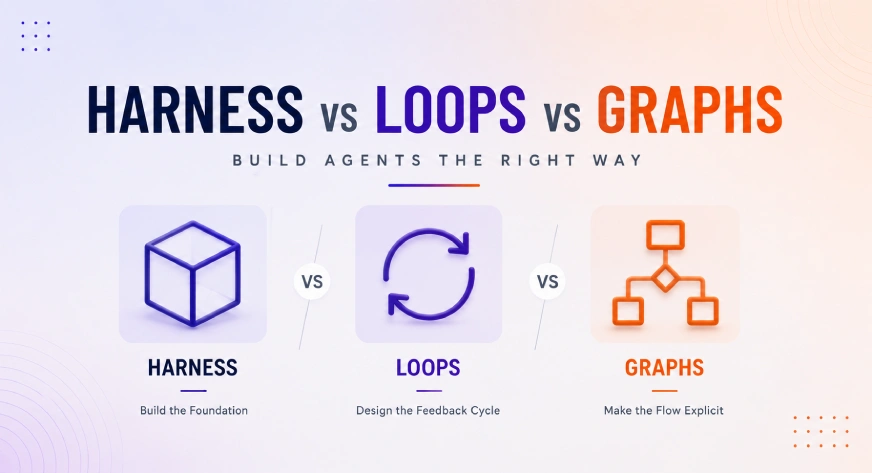
However, by early 2025, developers realized that simple tool-calling was insufficient for long-running tasks. This led to the "Agentic Era," characterized by the development of sophisticated feedback loops. In June 2026, Boris Cherny, Head of Claude Code at Anthropic, signaled a paradigm shift during an industry summit, stating that he no longer prompted models in the traditional sense, but rather "activated loops" that managed the prompting process autonomously. This evolution has culminated in the current three-layer stack: the Harness (the foundation), the Loop (the feedback mechanism), and the Graph (the control flow).
Agent Harness Engineering: The Foundation Layer
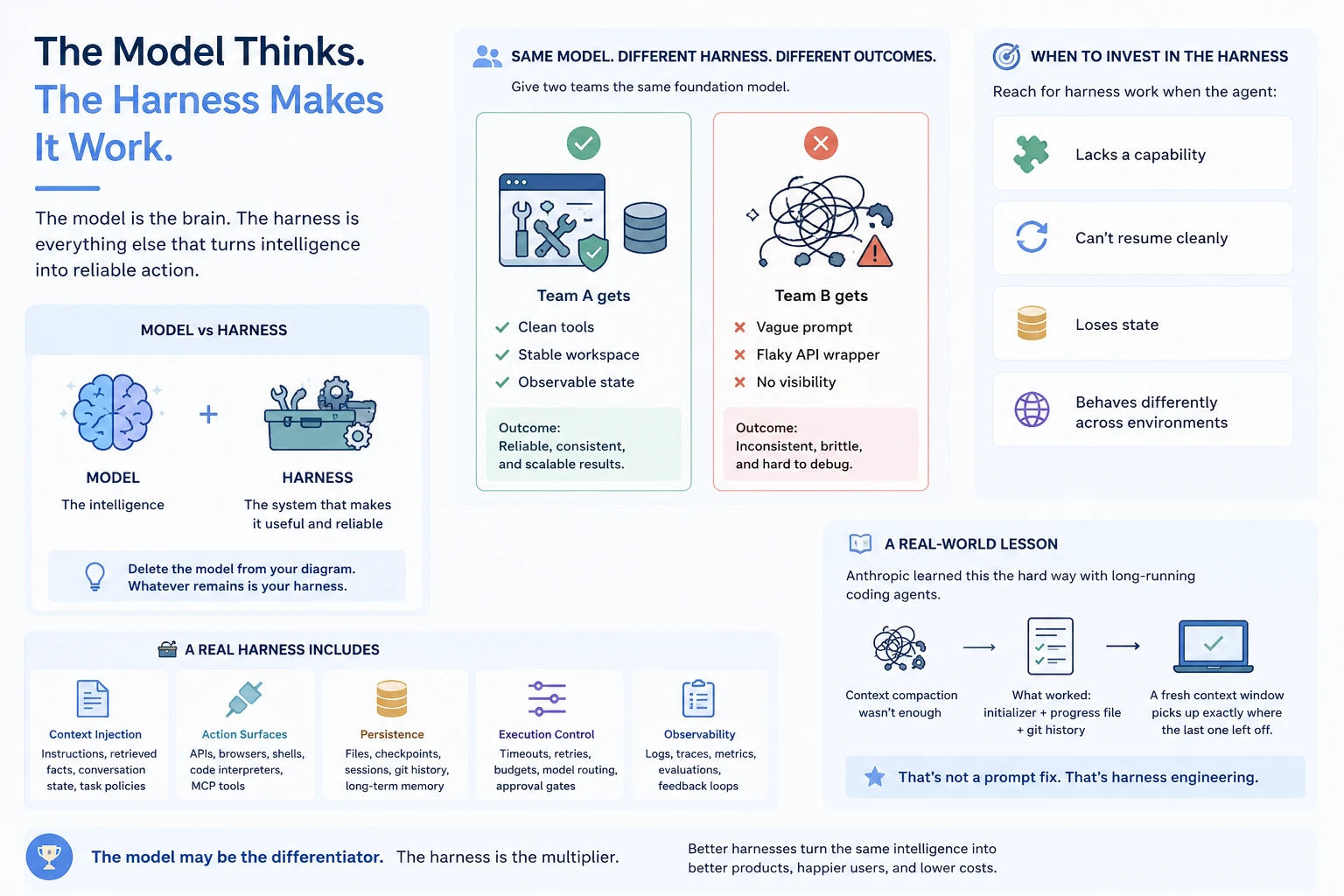
The agent harness represents the totality of the environment surrounding the AI model. If the model is the brain, the harness constitutes the nervous system, the limbs, and the sensory organs. It includes the code, configuration, and execution logic that allow a model to interact with the physical and digital world.
Technically, a harness consists of several critical components:
- Tooling and API Wrappers: Clean, documented interfaces that the model can invoke.
- Storage and Memory: Mechanisms for short-term context management and long-term state persistence.
- Middleware: Logic that handles authentication, rate limiting, and data transformation.
- Logging and Observability: Systems that record every action for debugging and auditing.
- Retry Logic: Deterministic processes that handle network timeouts or minor API glitches without model intervention.
Industry data suggests that the majority of agent failures in enterprise settings are not due to "hallucinations" in the model, but rather failures in the harness. For instance, if an agent is tasked with refactoring a codebase but cannot maintain a consistent view of the file system after a connection drop, the task fails regardless of the model’s reasoning capabilities. Anthropic’s development of long-running coding agents highlighted this; they found that merely "compacting" context was insufficient. A successful system requires a full-harness solution, including progress files and git history integration, allowing the agent to resume work seamlessly.
Loop Engineering: The Feedback and Verification Cycle
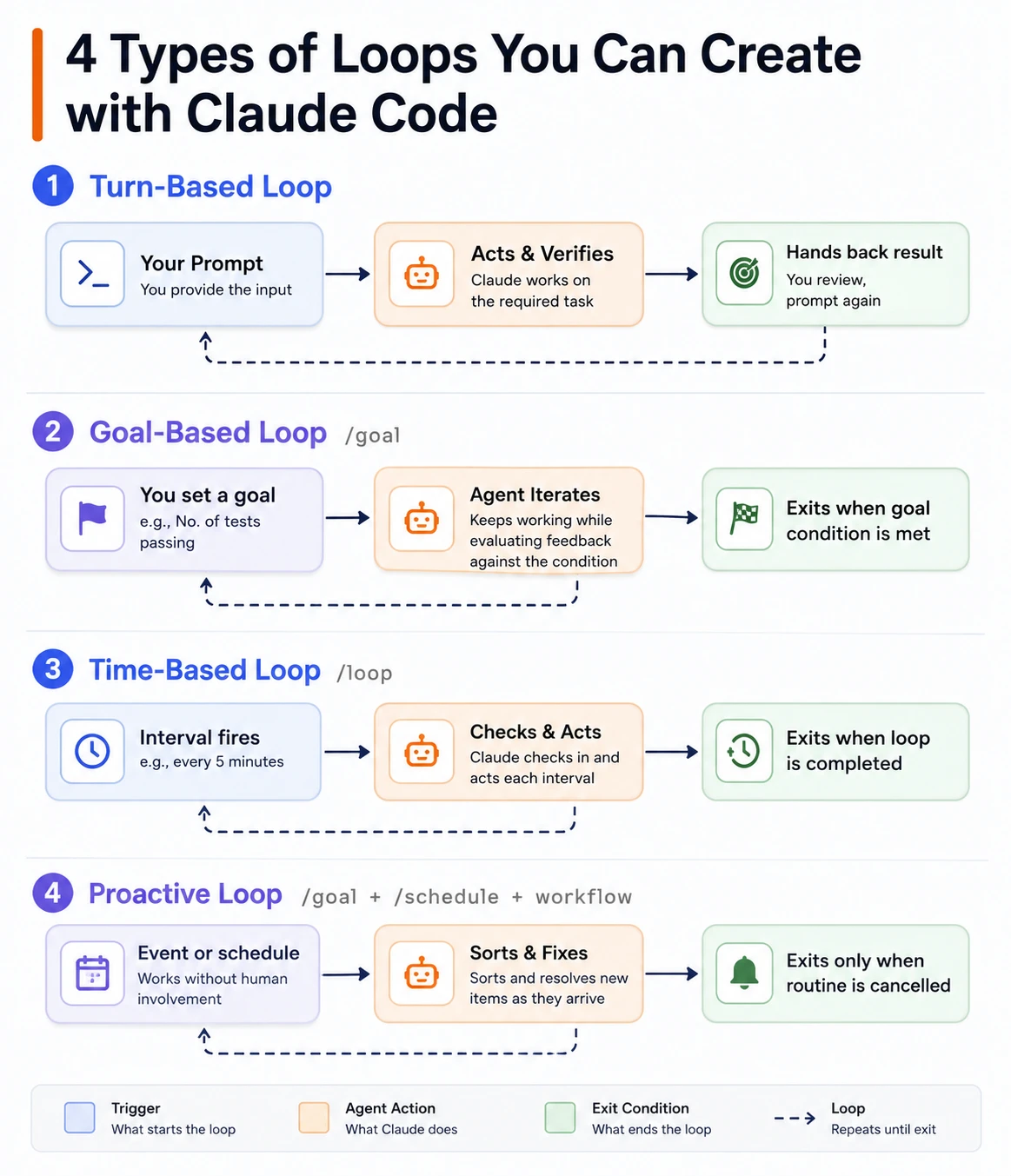
Loop engineering is the intentional design of recurring cycles to ensure task accuracy and completion. While many tools have basic loops built-in, "loop engineering" as a discipline focuses on creating deterministic verification steps. The goal is to move away from the "hope-based" approach—where a developer hopes the model gets it right—to a "verification-based" approach.
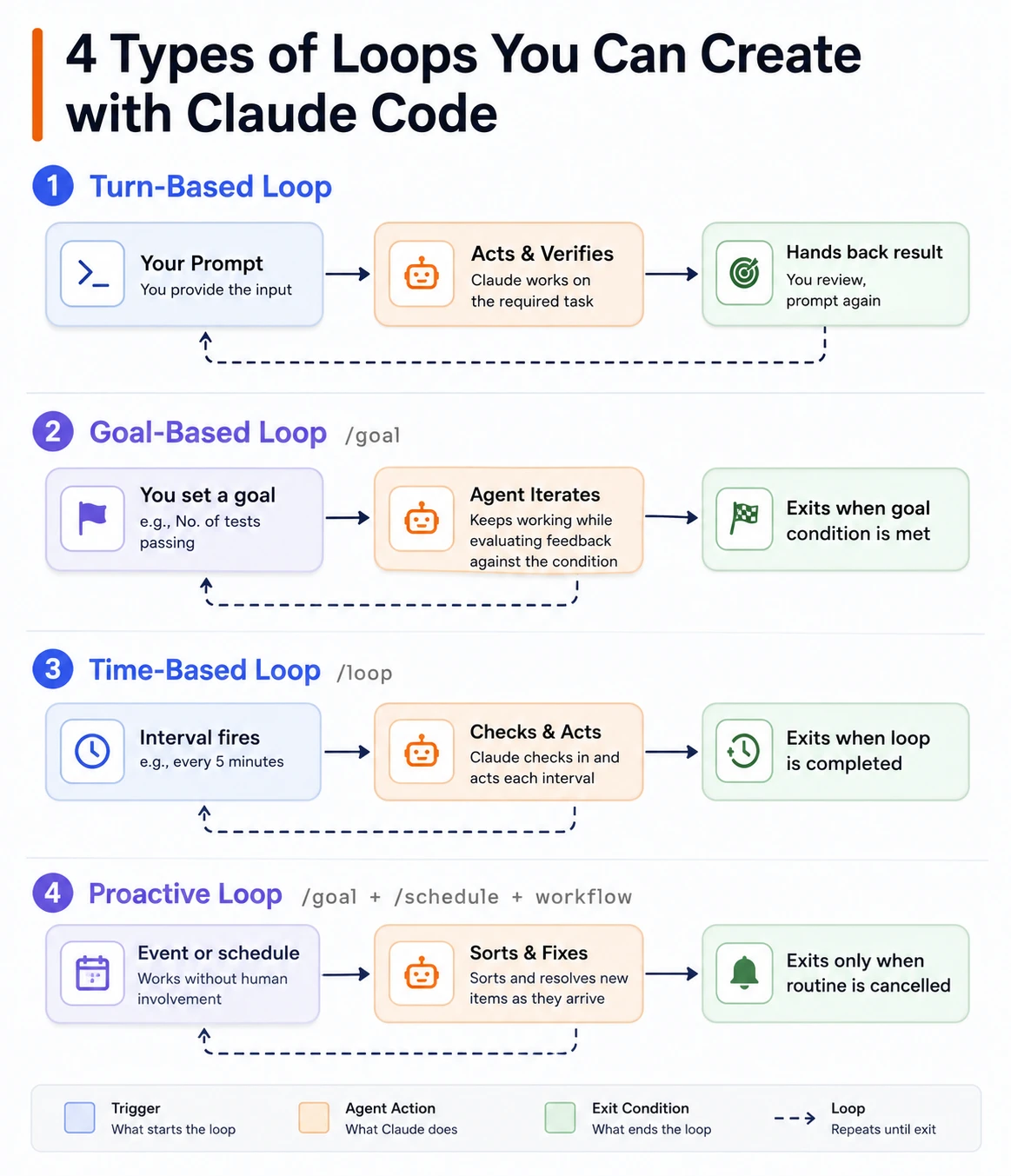
Expert analysis categorizes agentic loops into four primary archetypes:
- Goal-Driven Loops: The agent continues to iterate until a specific objective is met.
- Schema-Driven Loops: The agent must produce output that conforms to a strict data structure (e.g., JSON or SQL).
- Schedule-Driven Loops: The agent performs tasks at set intervals, such as daily reports or hourly system checks.
- Human-in-the-Loop (HITL): The agent executes until it reaches a confidence threshold or a specific "break point" where human intervention is required.
The implementation of a "Loop Verifier" is now standard practice. Instead of asking the model if its code is correct, the loop executes the code against a test suite. If the tests fail, the feedback is fed back into the model for a second attempt. This creates a self-healing system where the model is not judged on its first guess, but on its ability to correct itself based on deterministic feedback.
Graph Engineering: Explicit Control Flow and Parallelization
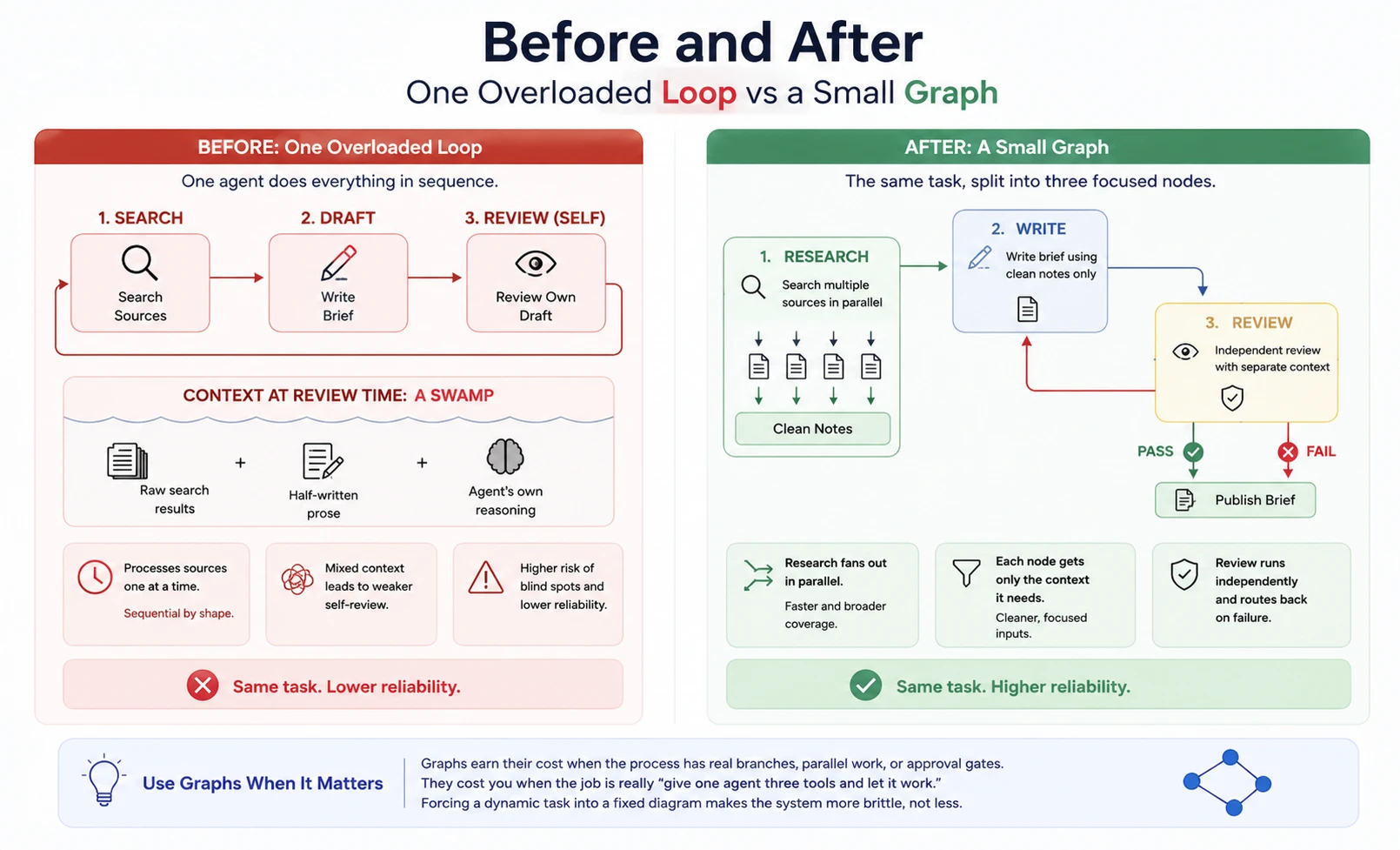
As tasks grow in complexity, single-loop systems become unwieldy. This is where graph engineering becomes essential. Graph engineering is not about what the agent does at a single step, but rather the "rules of engagement" for how information flows between different specialized nodes.
In a graph-based architecture, each node can be seen as a mini-agent with its own specific harness and loop. For example, a research-and-report graph might include a "Researcher Node" that runs parallel searches, a "Writer Node" that synthesizes findings, and a "Reviewer Node" that checks for accuracy.
The primary advantage of graph engineering is the "Fresh Context" principle. By separating the "Writer" from the "Reviewer" into different nodes, the reviewer is not biased by the writer’s "train of thought." The reviewer sees only the final draft and the original requirements, providing a more objective critique. This modularity also allows for parallel execution, significantly reducing the time required for complex workflows.
Empirical Analysis: The Three-Layer Performance Test
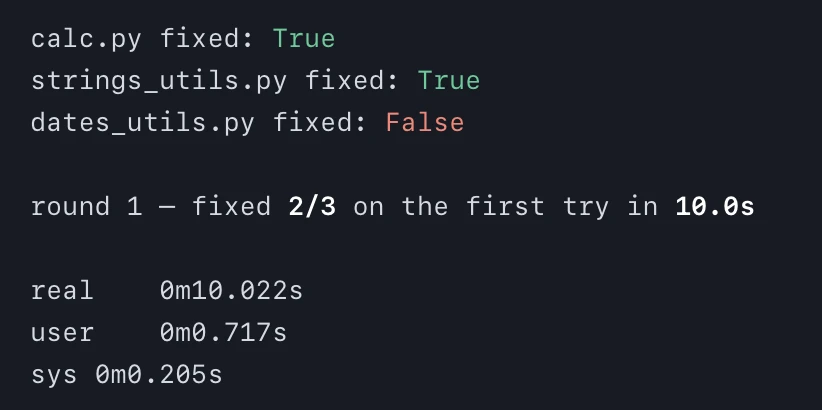
To quantify the impact of each engineering layer, researchers recently conducted a benchmark study using a "broken mini-repo" consisting of three Python files with intentional bugs: an integer division error in a calculator, a string formatting error in a utility script, and an "off-by-one" error in a date function. The task was to fix all three bugs using three different architectural approaches.
Round 1: Harness Only
In this phase, the agent was given access to the files and a test runner but was permitted only one attempt per file.
- Result: The agent fixed 2 out of 3 bugs. It failed the "off-by-one" error because its first attempt was incorrect, and the architecture provided no way to retry.
- Takeaway: The harness made the work possible but could not guarantee accuracy.
Round 2: Loop Engineering
The agent was permitted up to five attempts per file, with the output of failed tests being fed back into the model.
- Result: All 3 bugs were fixed. However, the total execution time increased by approximately 35% due to the iterative calls.
- Takeaway: Loop engineering achieved 100% accuracy at the cost of increased latency and API consumption.
Round 3: Graph Engineering
The tasks were distributed across parallel nodes, with a final "Reviewer Node" verifying the entire suite.

- Result: All 3 bugs were fixed. Because the files were processed simultaneously in parallel nodes, the total wall-clock time was reduced by 50% compared to the sequential loop approach.
- Takeaway: Graph engineering optimized for time and provided a final layer of independent verification without sacrificing the accuracy gained from loops.
Industry Implications and Future Outlook
The distinction between these three layers is more than academic; it has profound implications for the cost and reliability of AI deployments. As organizations move toward "Agentic Workflows," the demand for specialized engineers who understand the interplay between environment, feedback, and flow is skyrocketing.
Market analysts suggest that by 2027, the "AI Architect" role will bifurcate. Harness engineers will focus on the low-level systems integration and reliability, while graph engineers will design high-level logic and multi-agent orchestration. This maturation of the stack mirrors the development of traditional web architecture, which moved from simple scripts to complex, multi-tiered microservices.
Furthermore, the rise of "deterministic verification" within loops is expected to reduce the insurance and liability concerns associated with autonomous agents. When an agent’s output is verified by a hard-coded test suite before it is ever deployed to a production database, the risk of catastrophic failure is significantly mitigated.
In conclusion, the successful deployment of AI agents requires a holistic approach that respects the hierarchy of needs: first, a stable harness to interact with the world; second, an iterative loop to ensure accuracy; and third, a structured graph to manage complexity and scale. Developers who overlook the harness in favor of complex graphs often find themselves building "castles on sand," where the most sophisticated logic fails because of a simple lack of state persistence or a poorly wrapped API. As the July 2026 debates proved, the future of AI is not just in the model, but in the engineering that surrounds it.