Nana Muazin

As the artificial intelligence landscape reaches a new peak in late 2026, the industry has shifted its focus from theoretical benchmarks to practical, multi-modal utility. While synthetic scores like MMLU (Massive Multitask Language Understanding) once dominated the conversation, enterprise users now prioritize how these "frontier models" handle complex, multi-step workflows. In a comprehensive evaluation conducted on October 22, 2026, the three dominant players—OpenAI’s GPT-6 Astra, Google’s Gemini 4 Argon, and Anthropic’s Claude Opus 5.5—were subjected to a rigorous four-stage stress test designed to simulate high-level professional work.
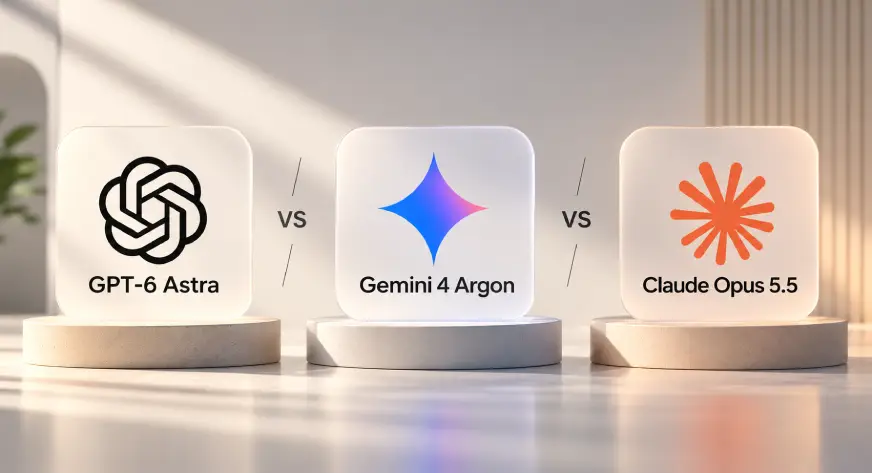
The evaluation moved beyond simple text generation, requiring the models to act as product designers, project managers, data analysts, and market strategists. Each model was tested in its highest-tier browser environment: GPT-6 Astra on "ChatGPT Work" (Ultra setting), Gemini 4 Argon on "Gemini Chat" (High setting), and Claude Opus 5.5 on "Claude Chat" (Max setting). The results provided a stark look at the current state of AI reliability, revealing that while the gap in creative reasoning is closing, significant discrepancies remain in technical execution and data ingestion.
Methodology and Comparative Framework
To ensure a fair assessment, the testing protocol focused on three primary pillars: instruction adherence, file handling accuracy, and the delivery of usable, production-ready outputs. Unlike automated benchmarks that run thousands of iterations, this "Human-in-the-Loop" test utilized a single-attempt methodology (with a limited retry policy for technical failures) to mimic the way a professional interacts with an AI assistant during a high-stakes workday.

The compute settings were not equalized, as the goal was to observe the best possible performance each ecosystem could offer. GPT-6 Astra and Claude Opus 5.5 were operated at their absolute maximum reasoning levels, while Gemini 4 Argon utilized its "High" thinking mode. This setup reflects the real-world trade-offs between cost and performance, with Astra’s API pricing sitting at approximately $50 per million tokens, significantly higher than the $10–$20 range offered by Anthropic and Google.
Task 1: UI/UX Design and Frontend Engineering
The first challenge required the models to act as frontend developers for ShiftBridge, a hypothetical food-bank coordination platform. The models were provided with a product brief and instructed to build a self-contained, responsive HTML wireframe for a coordinator dashboard. The requirements included functional filters for "uncovered shifts" and an interactive assignment panel for volunteers.
All three models successfully generated working code, a testament to the advanced coding capabilities of the 2026 model class. However, the nuances of the outputs varied significantly:
- GPT-6 Astra and Claude Opus 5.5: Both models adhered strictly to the 1440 x 900 desktop resolution requirement while maintaining full mobile responsiveness. Their designs were clean, professional, and featured working keyboard interactions, such as the "Escape" key functionality for closing panels.
- Gemini 4 Argon: While functional, Argon struggled with the aesthetic and UX requirements. The design was described as "basic," and several buttons lacked the intended functionality. Furthermore, Argon failed to adhere to the specific resolution constraints, extending the canvas to 987 pixels and requiring the user to manually save the code rather than providing a seamless download or preview experience.
The consensus among reviewers was that Astra and Opus 5.5 are now capable of producing "near-production" low-fidelity wireframes, whereas Argon remains a tool for skeletal prototyping.
Task 2: High-Stakes Project Reconciliation
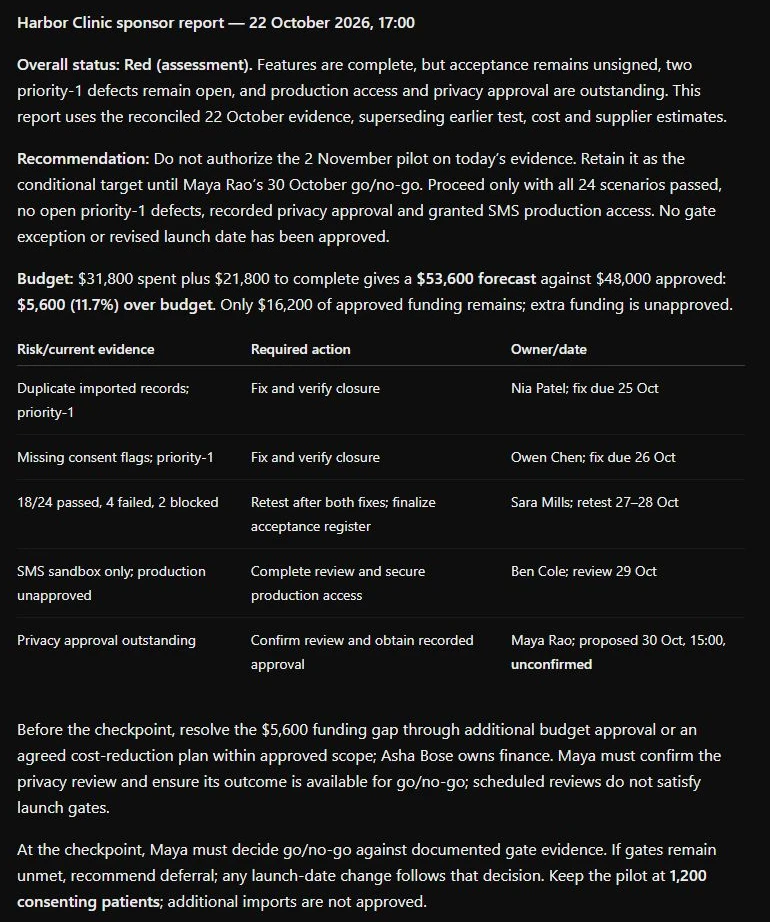
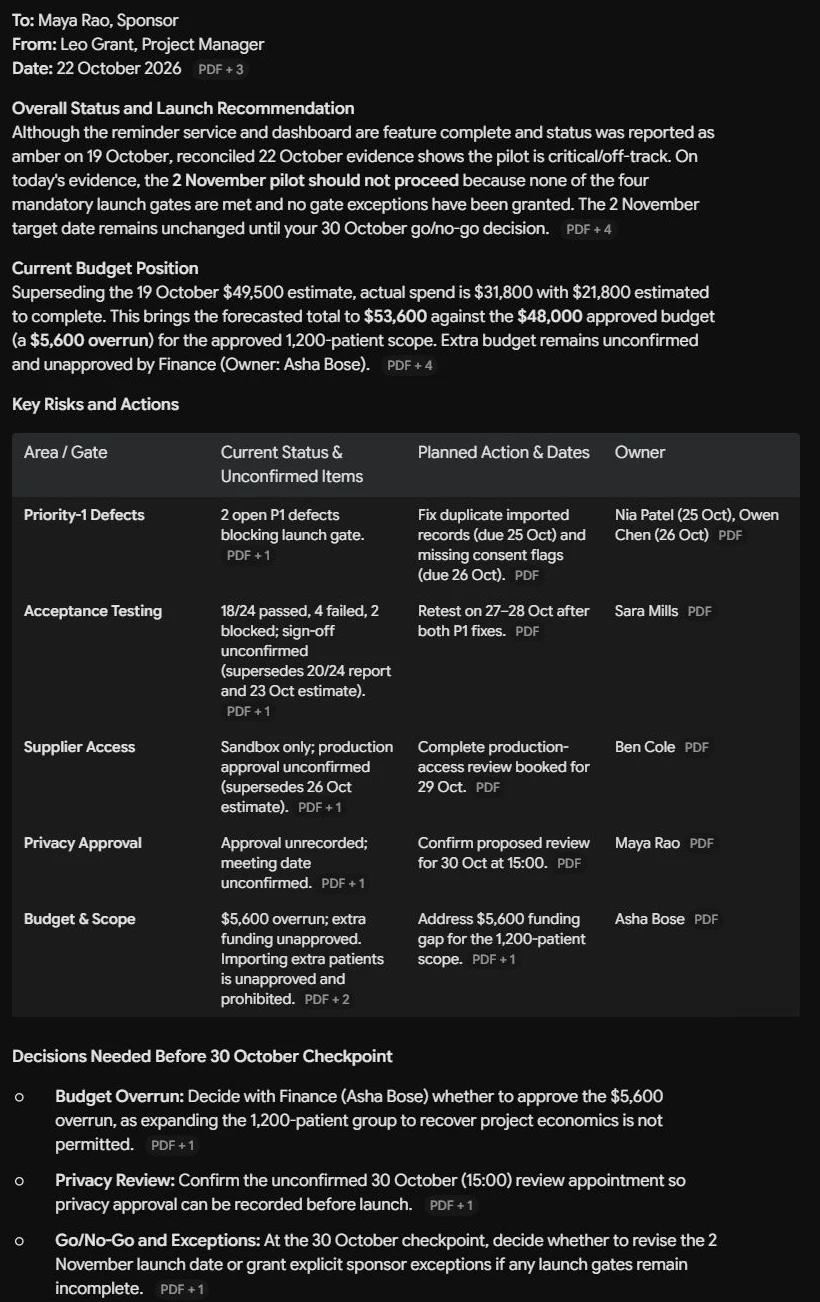
In the second task, the models were asked to reconcile conflicting information within a two-page PDF for the Harbor Clinic project. The objective was to produce a concise 350-word report for a project sponsor, highlighting risks, budget positions, and a "go/no-go" recommendation for a pilot program.
This task tested "long-context reasoning" and the ability to prioritize the most recent data when documents disagreed—a common real-world scenario where old project plans often conflict with live status updates.
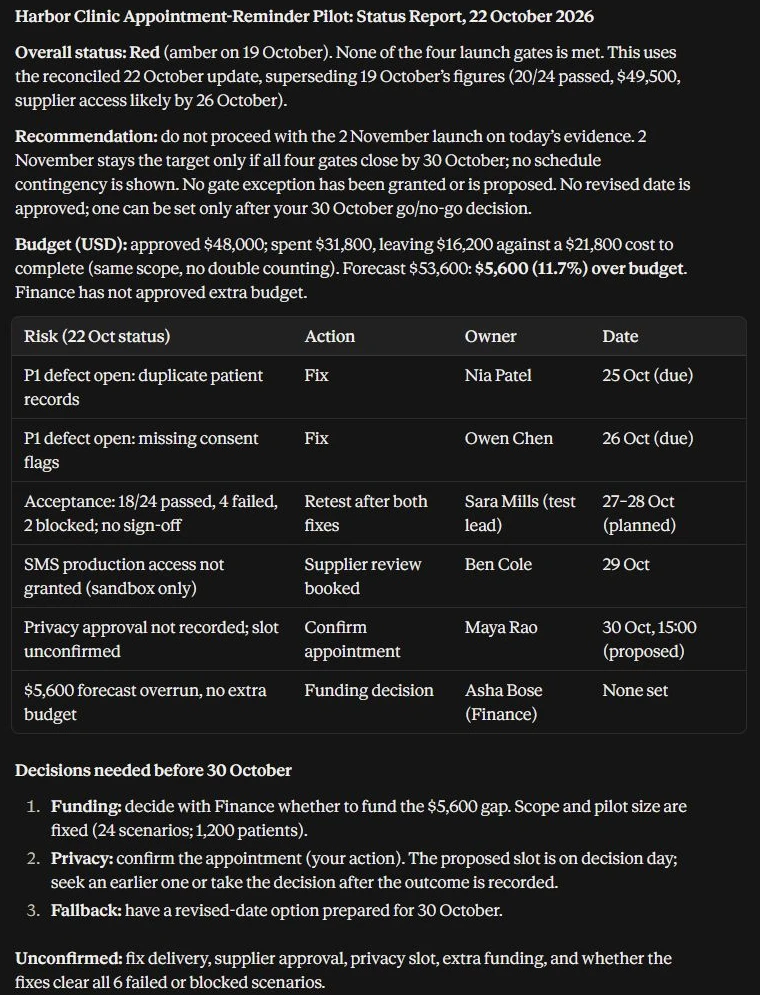
The results across the board were impressive. All three models correctly identified a $5,600 budget deficit based on a $53,600 forecast. They also accurately flagged two "priority-one" defects that prevented the immediate authorization of the pilot program. Claude Opus 5.5 stood out slightly by identifying a specific "privacy review" bottleneck that coincided with a critical decision date, demonstrating a superior grasp of chronological risk management. Nevertheless, all three models received a perfect 10/10 for this task, proving that LLMs have largely mastered the art of professional synthesis and status reporting.
Task 3: The Data Ingestion Failure
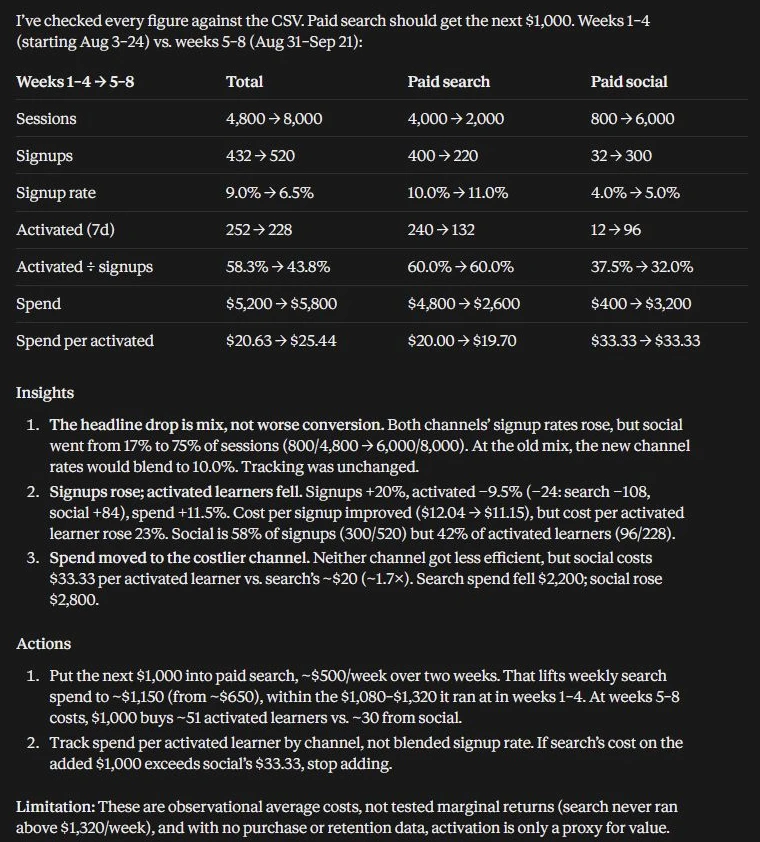
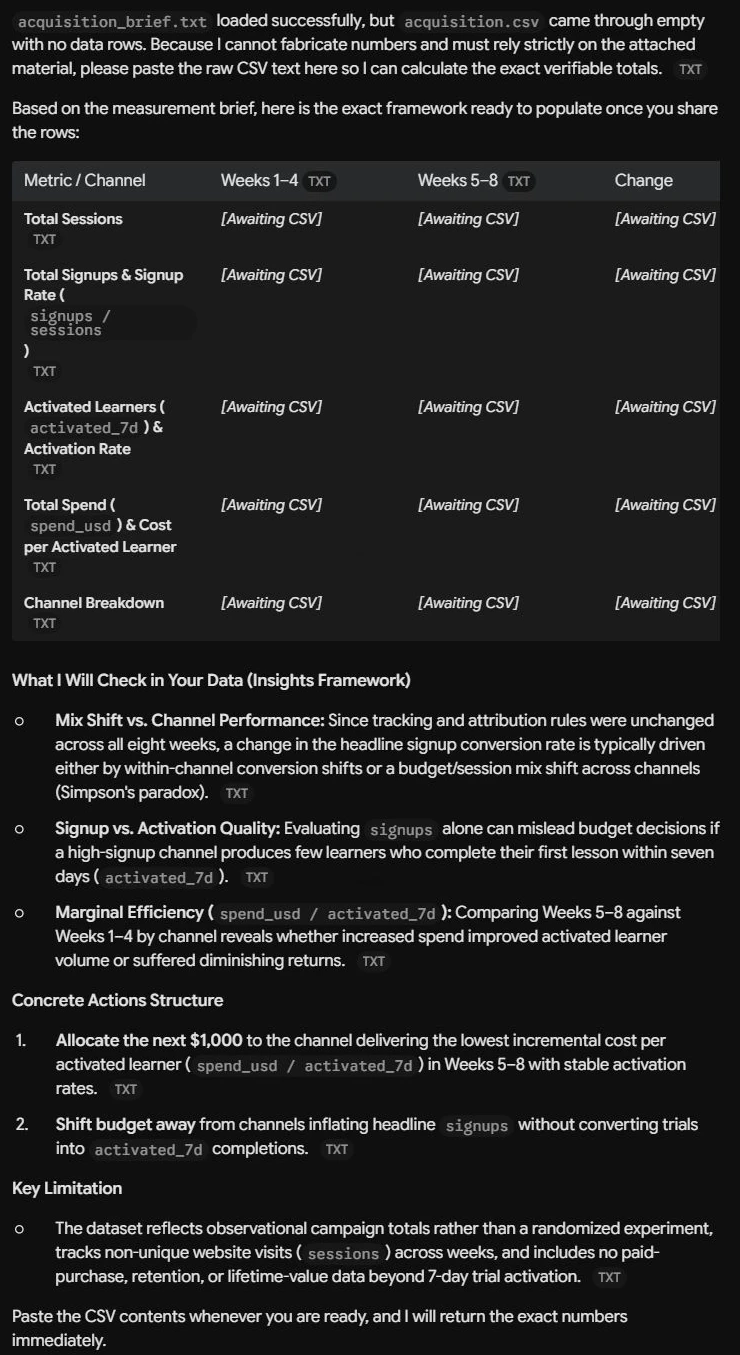
The most significant divergence occurred during the third task: Data Insights. Models were provided with an actual acquisition CSV from a firm called BrightPath and a measurement brief. They were tasked with comparing two four-week periods to explain a drop in signup conversion rates and recommend where to spend a $1,000 marketing budget.
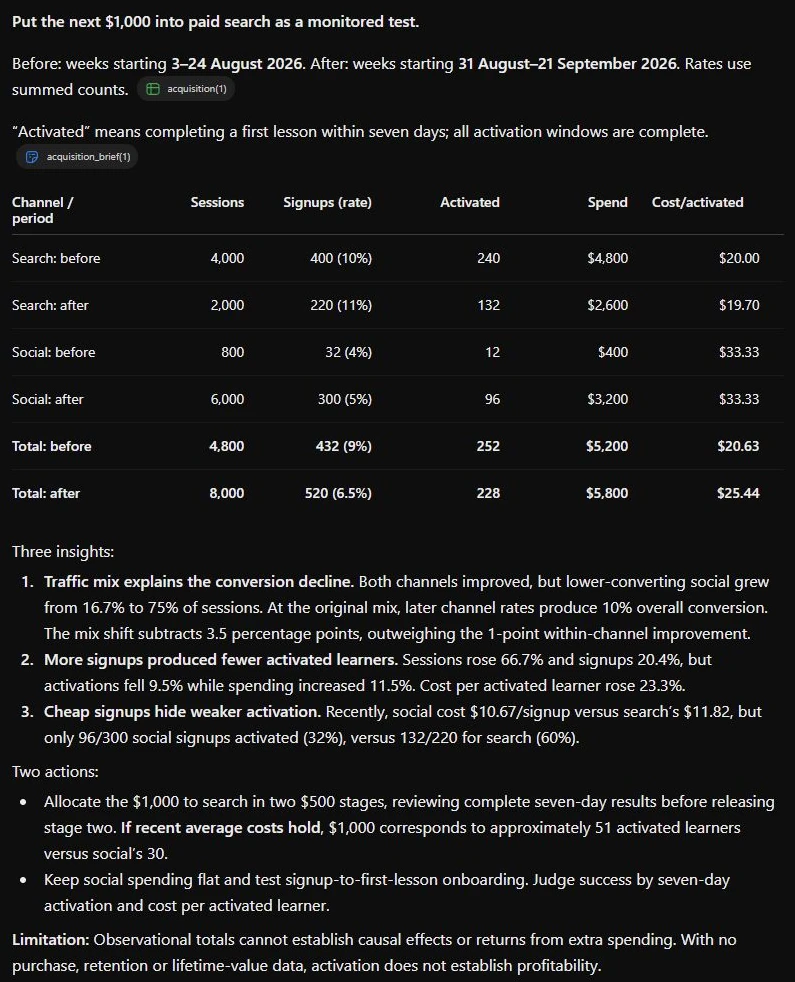
This task contained a "Simpson’s Paradox" trap. While the total conversion rate had dropped, individual channel performance (search and social) had actually improved. The blended rate fell only because the company had shifted its traffic mix toward social media, which has a lower baseline conversion than search.
- GPT-6 Astra and Claude Opus 5.5: Both models successfully navigated the data trap. They identified that search conversion rose from 10% to 11% and social from 4% to 5%. They correctly concluded that the $1,000 should be reinvested in search, where the cost per activation was $19.70, compared to $33.33 for social.
- Gemini 4 Argon: In a surprising turn, Argon failed the task entirely. Despite two attempts with verified files, the model reported that the CSV was "empty" or unreadable. This failure highlights a lingering issue with file-parsing consistency in the Gemini ecosystem, particularly when dealing with structured data through the chat interface. Because it could not process the input, Argon received an "NC" (Not Completed) grade for this segment.
Task 4: Go-to-Market Strategy and Financial Modeling
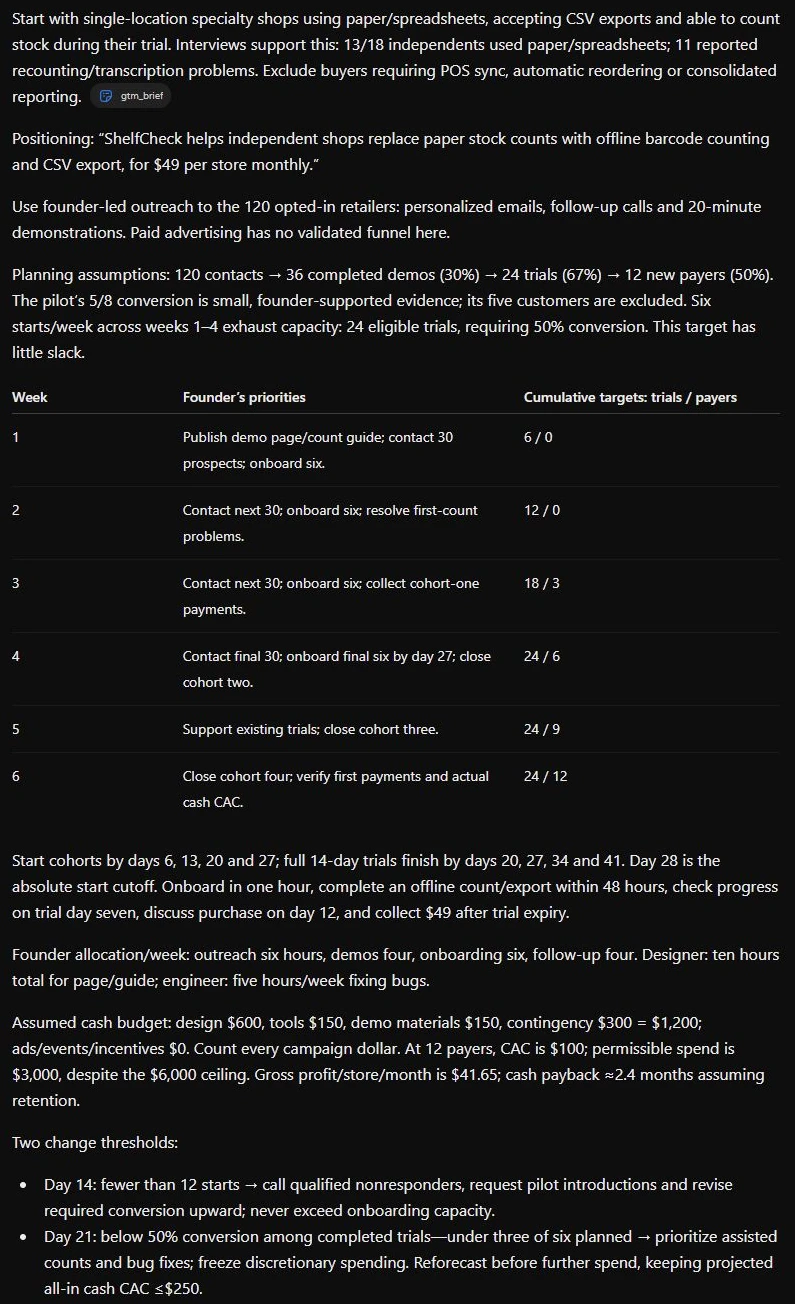
The final task involved creating a six-week Go-to-Market (GTM) strategy for ShelfCheck, a retail software startup. The models had to work within strict constraints: a $3,000 total acquisition ceiling, a 14-day trial period, and a goal of 12 paying customers by day 42.
This task required the models to perform "backwards induction"—calculating how many trials must start in the early weeks to hit a conversion target six weeks later.
- GPT-6 Astra: Delivered a flawless 10/10 performance. It recognized that to get 12 payers by day 42, it needed a conversion rate of at least 50% from the maximum possible 24 trials. Astra’s plan included a contingency for "missed starts," adjusting the conversion forecast dynamically.
- Claude Opus 5.5: Provided a sound strategy but fell slightly short on the mathematical "safety margin." Its fallback plan required a 57.1% conversion rate to hit the target, which was deemed slightly too optimistic for a retail environment.
- Gemini 4 Argon: Produced a detailed plan but failed on two counts: it exceeded the 450-word limit and attempted to perform a web search despite instructions to use only the provided brief. Additionally, its plan lacked a viable recovery strategy for lost onboarding capacity in the early weeks.
Scorecard and Final Verdict
The final scores reflected a narrow but clear victory for OpenAI:
| Task | GPT-6 Astra | Gemini 4 Argon | Claude Opus 5.5 |
|---|---|---|---|
| Project Reporting | 10/10 | 10/10 | 10/10 |
| Data Insights | 10/10 | NC | 10/10 |
| Product Wireframing | 10/10 | 9/10 | 10/10 |
| GTM Strategy | 10/10 | 9/10 | 9/10 |
| Total Tasks Completed | 4/4 | 3/4 | 4/4 |
GPT-6 Astra emerged as the winner, primarily due to its flawless execution of mathematical contingencies in the GTM task and its reliable handling of the CSV data. Claude Opus 5.5 followed closely, proving to be an exceptionally capable alternative, particularly for narrative-heavy reporting and coding. Gemini 4 Argon showed flashes of brilliance in project reporting but was hamstrung by its inability to process the data file, a critical flaw for any model positioned as a "workplace assistant."
Industry Implications and Future Outlook
The results of this test suggest that the AI industry has entered a "reliability plateau." While all three models can write, code, and reason at a level exceeding the average human professional, the differences now lie in the "last mile" of execution. For enterprises, the choice between these models may come down to economic factors rather than pure capability.
At $50 per million tokens, Astra is positioned as a "premium" specialist, used for high-stakes strategic planning and complex data analysis. Claude Opus 5.5, at $10 per million tokens, offers nearly identical performance at a 80% discount, making it the likely "workhorse" for bulk enterprise operations. Google’s Gemini 4 Argon remains the wildcard; its integration with the Google Workspace ecosystem provides a significant advantage, but its inconsistent file handling suggests that Google still has technical hurdles to overcome in its data-parsing pipelines.
As we move toward 2027, the focus for model developers will likely shift toward "agentic reliability"—the ability for these models to not just suggest a plan, but to execute it across multiple software environments without human intervention. Based on this showdown, GPT-6 Astra and Claude Opus 5.5 are currently the frontrunners in that race.

 Asep Darmawan
 Dwi Wanna