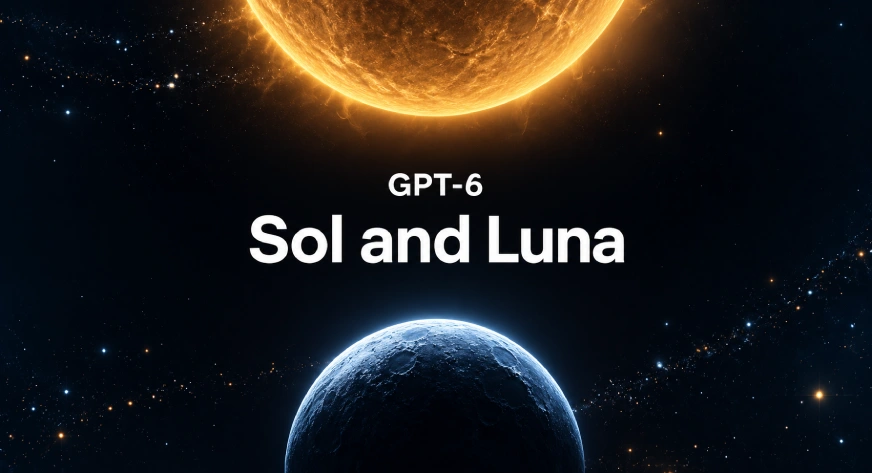
OpenAI has officially announced the release of GPT-6 Sol and GPT-6 Luna, two new artificial intelligence models designed to bring the advanced capabilities of the company’s flagship GPT-6 Astra architecture to a broader range of commercial and developer applications. By leveraging architectural efficiencies and improved inference methods, OpenAI is implementing a 50% reduction in API pricing compared to the previous GPT-5.6 iterations, signaling a strategic shift toward making high-reasoning AI economically viable for high-volume enterprise use. While GPT-6 Astra remains the organization’s most powerful model, Sol and Luna are positioned as high-efficiency alternatives that prioritize speed and cost-effectiveness without sacrificing the sophisticated factuality, coding proficiency, and agentic behavior characteristic of the GPT-6 generation.
The introduction of these models marks a pivotal moment in the AI industry’s evolution, transitioning from a race for raw intelligence to a competition over "intelligence per dollar." As developers increasingly shift toward building autonomous agents that require constant, iterative communication with a language model, the cost of API tokens has become a primary bottleneck for innovation. OpenAI’s latest move directly addresses these financial constraints, offering a mid-tier solution in Sol for complex professional workflows and a budget-tier solution in Luna for massive-scale data processing and simple automated tasks.
The Evolution of the GPT-6 Ecosystem
The release of Sol and Luna follows the highly publicized launch of GPT-6 Astra earlier this year. Astra set a new benchmark for frontier models, particularly in the realms of multi-step reasoning and "computer use"—the ability of an AI to navigate software interfaces like a human user. However, the high computational cost of Astra made it prohibitive for many startups and enterprise-level background processes.
To bridge this gap, OpenAI engineers utilized "distillation" and "pruning" techniques similar to those used for Astra to create Sol and Luna. These models inherit the core logic and communication style of the flagship model but are optimized for faster response times. The architectural lineage ensures that even the lower-cost models benefit from the massive datasets and refined reinforcement learning from human feedback (RLHF) protocols that define the sixth generation of OpenAI’s technology.
Technical Innovations: Prompt Caching and Inference Optimization
A cornerstone of the GPT-6 Sol and Luna release is the introduction of advanced prompt caching mechanisms. In the context of AI agents, which often feed the same large blocks of documentation or conversation history back into the model to maintain context, redundant processing has historically led to high latency and costs. OpenAI has refined its infrastructure to allow for higher cache hit rates by default.
Developers utilizing the new models will receive a 90% discount on cached input tokens. This is supported by a new suite of diagnostic tools, including a dedicated dashboard that tracks caching efficiency and identifies "missed" opportunities where a prompt could have been cached but was not. Notably, OpenAI has decoupled reasoning effort settings and tool-calling functions from the cache, meaning that changing a model’s parameters mid-conversation no longer necessitates a full reprocessing of the prompt. Early data from GitHub indicates that these improvements have already reduced the volume of fresh tokens requiring processing by over 50% across billions of Copilot requests, representing a massive leap in operational efficiency.
Comparative Analysis of API Pricing
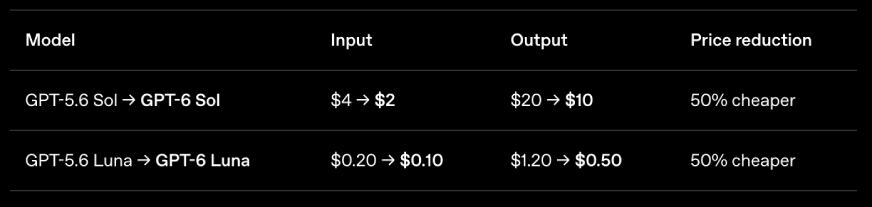
The financial implications of this release are substantial for the developer ecosystem. The following data highlights the shift from the GPT-5.6 era to the GPT-6 era:
- GPT-6 Sol: Positioned as the "workhorse" model, Sol is designed for technical tasks and professional content creation. Its pricing reflects a 50% reduction in input and output costs compared to GPT-5.6 Sol, allowing for more frequent iterations in development environments.
- GPT-6 Luna: As the entry-level model, Luna’s price drop is even more pronounced in its output tokens. Moving from $1.20 to $0.50 per million tokens represents a 58% decrease. OpenAI credits these savings to proprietary breakthroughs in hardware utilization and model quantization.
This aggressive pricing strategy is widely viewed as a response to the rising competition from Anthropic’s Claude 5 series and various open-source alternatives. By slashing prices while simultaneously improving model intelligence, OpenAI is attempting to consolidate its hold on the enterprise market, where reliability and cost-predictability are paramount.
Performance Benchmarks and Reliability
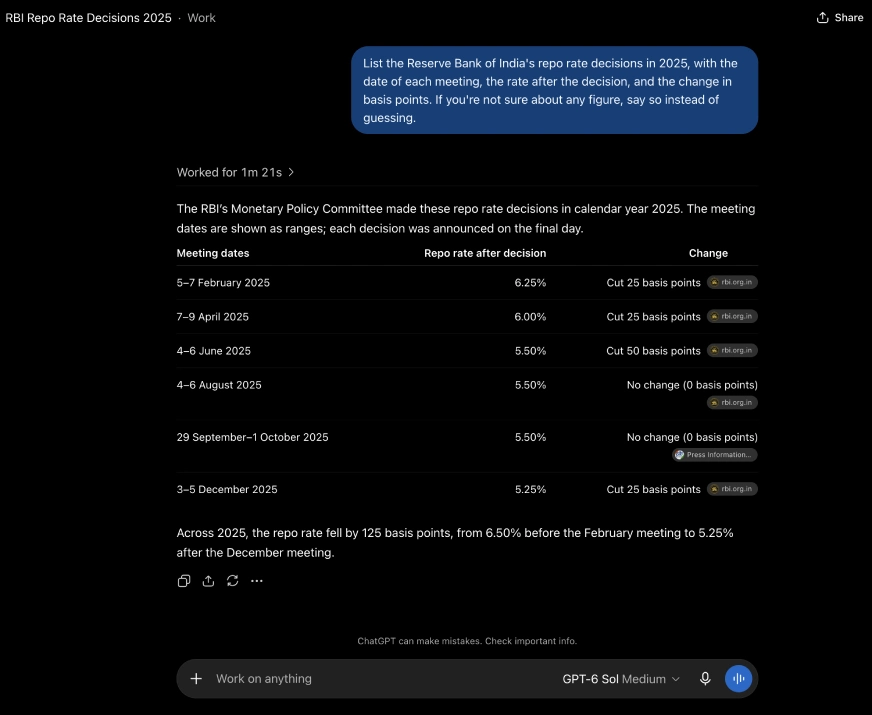
OpenAI’s internal testing suggests that the GPT-6 Sol and Luna models punch well above their weight class. On the "AutomationBench" metric, which evaluates an AI’s ability to handle multi-step business workflows, GPT-6 Sol (at high reasoning effort) achieved a score of 33.2%. For comparison, the much larger and more expensive Claude Opus 5 reached 26.9%. Perhaps most impressively, Sol achieved this while costing approximately 9% of the price per task compared to Opus 5.
In software engineering benchmarks such as DeepSWE v1.1, GPT-6 Sol scored 68.8%, placing it within a single percentage point of Claude Fable 5, yet at an 80% lower cost. Even the budget-tier Luna model showed remarkable resilience, matching the performance of previous-generation flagship models in coding and professional workflows when given additional reasoning time.
Beyond raw scores, the GPT-6 generation focuses heavily on "factuality." Internal audits show that GPT-6 Sol makes roughly 50% fewer factual errors than its predecessor. This reduction in "hallucinations" is attributed to better integration of live-browsing tools and a more cautious internal verification process. In practical tests, the model demonstrated an ability to recognize when information was missing and used real-time search to verify data rather than relying on stale training data.
Hands-On Evaluation: Real-World Utility
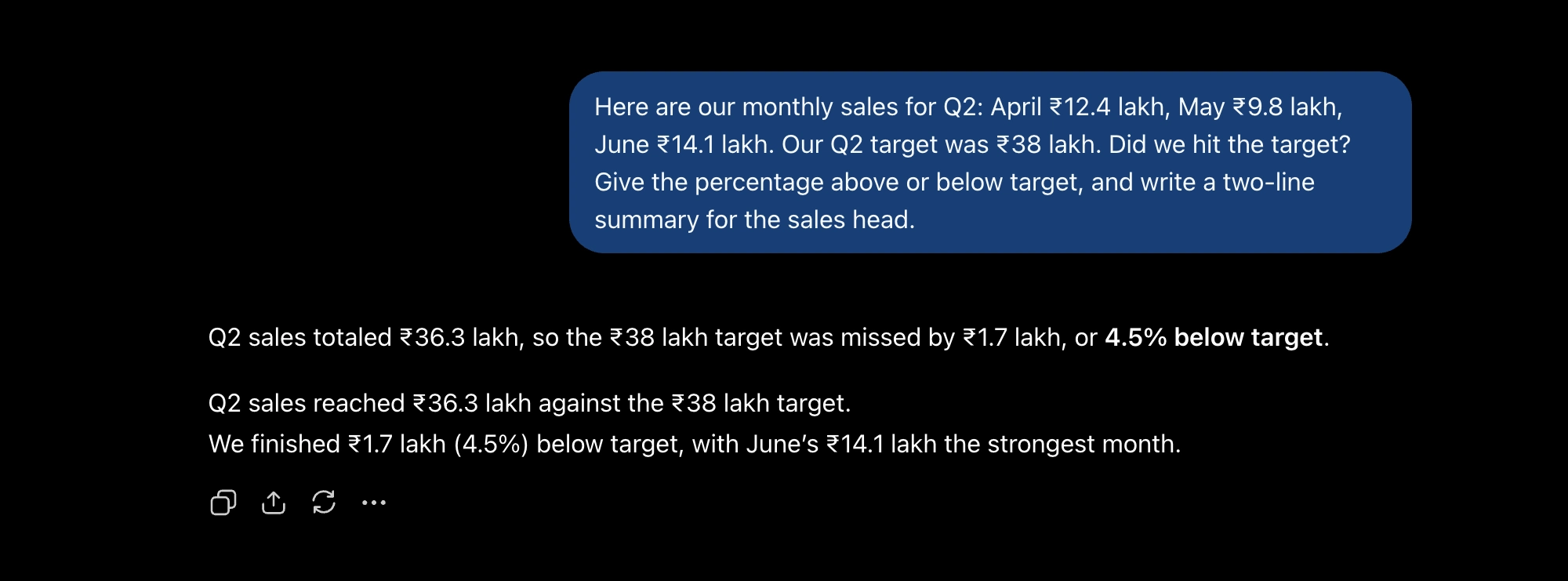
Preliminary hands-on testing of the models confirms OpenAI’s claims regarding communication style and accuracy. One of the most notable changes in the GPT-6 Sol and Luna models is a shift toward "clarity and brevity." The models are programmed to use less jargon and provide shorter, more direct answers, particularly in technical contexts.
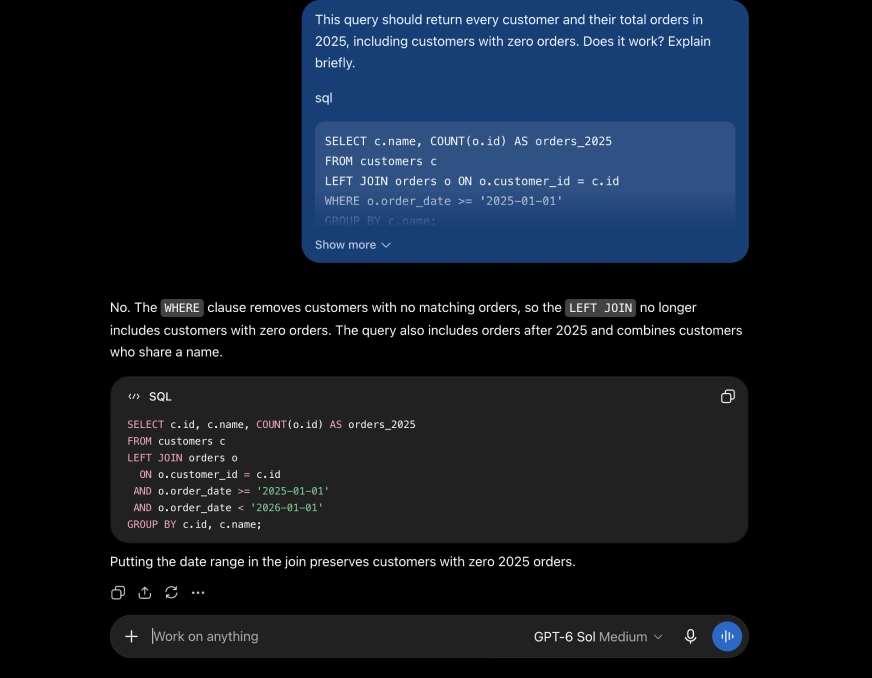
In a SQL debugging test, GPT-6 Sol successfully identified complex errors that often trip up mid-tier models, such as the accidental conversion of a LEFT JOIN into an inner join due to WHERE clause placement. Furthermore, the model identified secondary bugs that were not explicitly mentioned in the prompt, such as improper grouping of customer data that could lead to merged results.
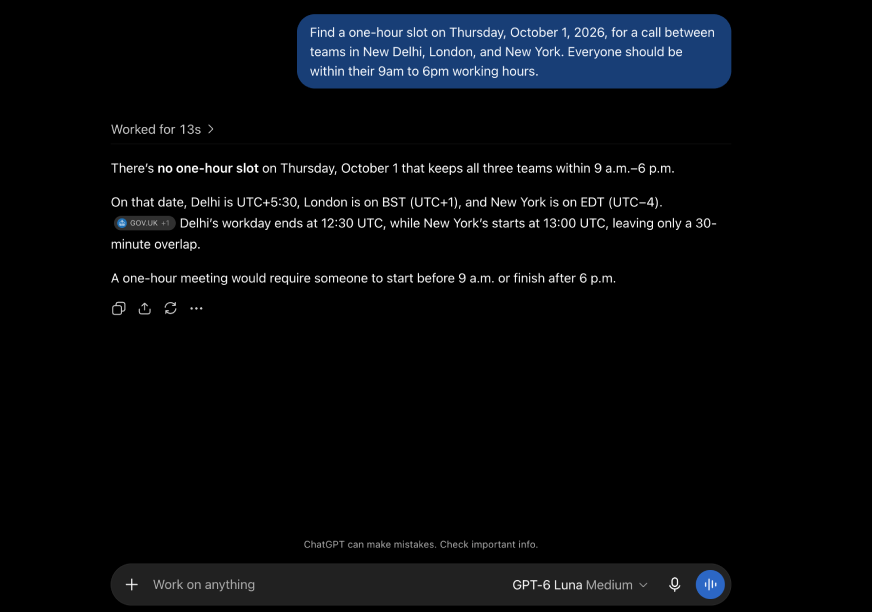
GPT-6 Luna, despite being the "budget" option, showed sophisticated reasoning in logistics and scheduling. When tasked with finding a meeting time across three vastly different time zones (New Delhi, London, and New York) within standard working hours, the model correctly identified that no such one-hour window existed. It accurately accounted for British Summer Time (BST) and provided a precise calculation of the time gap, demonstrating a level of "world knowledge" that was previously reserved for the most expensive frontier models.
Chronology of OpenAI’s Model Rollouts (2025–2026)
The release of Sol and Luna is part of an accelerated deployment schedule maintained by OpenAI over the last 18 months:
- July 2025: Launch of GPT-5.6 Sol, Terra, and Luna, establishing the three-tier model system.
- January 2026: Introduction of the "Reasoning Effort" toggle, allowing users to trade speed for deeper computation.
- June 2026: Release of GPT-6 Astra, the first model to feature native "computer use" and advanced agentic capabilities.
- September 2026: GPT-6 Sol and Luna are released, replacing the 5.6 versions and implementing the 50% price cut across the API.
Industry Implications and Market Reaction
The AI industry has reacted with a mix of optimism and caution. Analysts suggest that the 50% price cut will put immense pressure on other AI providers to lower their margins. "OpenAI is making it very difficult for competitors to justify high premiums for ‘frontier’ intelligence," said one industry observer. "When a mid-tier model like Sol can match the performance of a competitor’s top-tier model at a tenth of the cost, the economic argument for switching becomes undeniable."
However, some experts warn that the benchmarks provided by OpenAI should be scrutinized. Many of the comparisons were made against Claude Opus 5, which was recently succeeded by the 5.5 version. The rapid pace of releases means that "leadership" on any given benchmark is often fleeting.
For the broader enterprise sector, the implications are clear: the cost of implementing AI at scale is plummeting. Companies that previously hesitated to deploy AI agents due to token costs are now likely to move forward with full-scale automation. The improved caching and diagnostic tools also suggest that the next phase of AI development will focus heavily on "agentic infrastructure"—the tools and systems that allow AI to work autonomously in the background of business operations.
Conclusion: The New Standard for Efficiency
GPT-6 Sol and Luna represent a maturation of the AI market. By focusing on affordability, factuality, and developer-friendly features like prompt caching, OpenAI is moving beyond the "wow factor" of AI and into the realm of essential utility. While Astra remains the pinnacle of what the company can achieve, Sol and Luna are the tools that will likely power the majority of AI-driven applications in the coming year. As the cost of intelligence continues to fall, the focus for businesses will shift from if they should use AI to how they can most effectively integrate these increasingly affordable and reliable models into their daily workflows.