Layla Zulfa
A senior vice president of demand generation, faced with the Tuesday night task of evaluating new software, found herself increasingly frustrated. After approximately 40 minutes of navigating vendor websites, she had enlisted an AI assistant to help streamline her research, instructing it to compile a shortlist and analyze three vendor sites anonymously. However, the fourth site’s immediate demand for her phone number triggered an abrupt exit, a common and understandable reaction that leaves no digital footprint in typical sales funnels. The following morning, this same executive entered her routine pipeline review meeting. Her team presented Marketing Qualified Lead (MQL) volume figures to leadership, yet the sales team reported working only a fraction of these leads, and a palpable skepticism hung in the air, with few attendees truly believing the numbers on the slide. This scenario, illustrating a disconnect between marketing efforts and sales outcomes, is emblematic of the findings in a recent comprehensive study.
A joint research initiative by Heinz Marketing and Docket surveyed 192 professionals across marketing, demand generation, and Revenue Operations (RevOps). The study, titled "The MQL Trust Gap: Why Inbound Is Breaking at Every Handoff," delved into how these practitioners approach software acquisition personally and how their organizations manage inbound demand. The significant divergence between these two perspectives formed the crux of the study’s revelations. The research highlights that the inbound demand process, traditionally conceptualized as a series of three critical handoffs—from buyers to marketing, from marketing to sales, and from sales back to the buyer—is experiencing significant leakage at each stage. Crucially, the MQL metric, intended to bridge these transitions, is trusted by a remarkably small percentage of those responsible for its reporting.
The study’s findings underscore a systemic breakdown in the inbound lead generation and nurturing process, impacting buyer engagement, marketing-to-sales alignment, and the effectiveness of sales follow-up. This breakdown not only leads to wasted resources and missed opportunities but also erodes trust across departments and within the broader revenue generation ecosystem.
Handoff 1: Buyers Are Opting Out at the Form
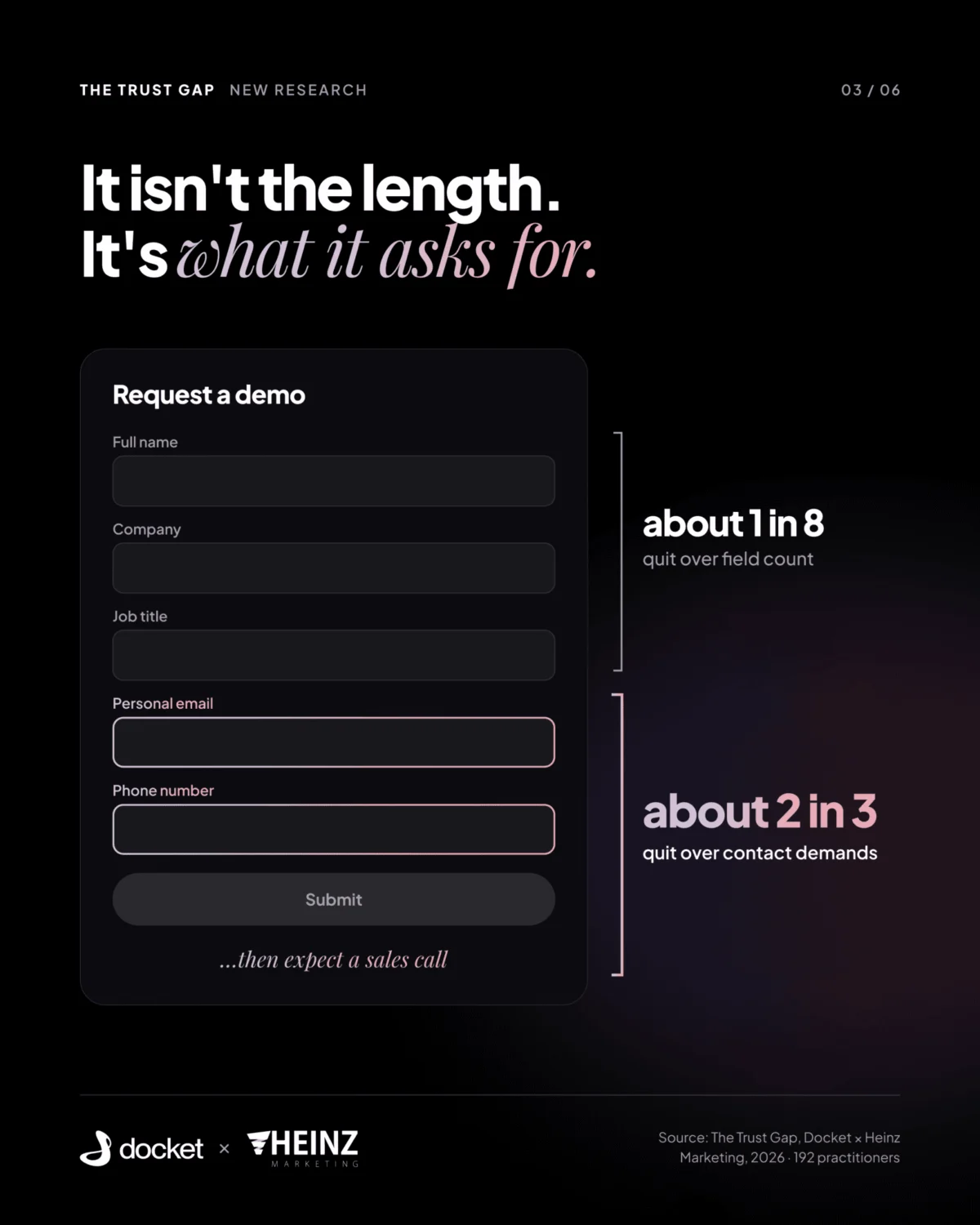
The initial stage of the inbound funnel, where potential buyers interact with a company’s website and marketing materials, is experiencing its first major point of friction. Over 80% of the surveyed respondents admitted to abandoning a vendor form within the past 90 days, with a significant portion doing so multiple times. The primary driver for these form abandonments, accounting for roughly two-thirds of the total, is the demand for contact information. This includes requests for phone numbers, personal email addresses, and the expectation of immediate sales outreach that many buyers wish to avoid. Field count, the sheer number of fields required on a form, was a contributing factor in about one in eight instances. Even simplifying a form from nine fields to five often fails to address the core issue if the intrusive contact information requirements remain.

This widespread form abandonment represents a loss of valuable engagement data. Buyers who are unwilling to share their information leave no trace in any system, making it impossible to understand their interest or intent. Furthermore, even among those who do complete forms, the quality of leads is often questionable. Nearly a third of respondents reported that a quarter or more of their form fills in the previous quarter were deemed "junk" leads. This indicates a significant portion of submitted data is either inaccurate or from individuals not genuinely interested in a sales conversation. In a candid admission during a related webinar, Matt Heinz, President of Heinz Marketing, noted that when faced with a mandatory email field, he might intentionally provide a misspelled name, such as "Mattt" instead of "Matt," as a subtle protest against overly aggressive data collection practices.
The study also examined the role of chatbots in bridging this gap. However, the results were largely disappointing. Two-thirds of buyers who engaged with a chatbot in the past 90 days reported giving up without achieving their objective. This suggests that while there is an appetite for immediate interaction, current chatbot implementations are often failing to provide the necessary value or facilitate meaningful progress. Only a mere 2% of respondents indicated a preference for browsing a vendor site without any conversational assistance, highlighting the continued demand for human interaction, albeit on the buyer’s terms.
Handoff 2: Marketing Sends a Number Nobody Believes
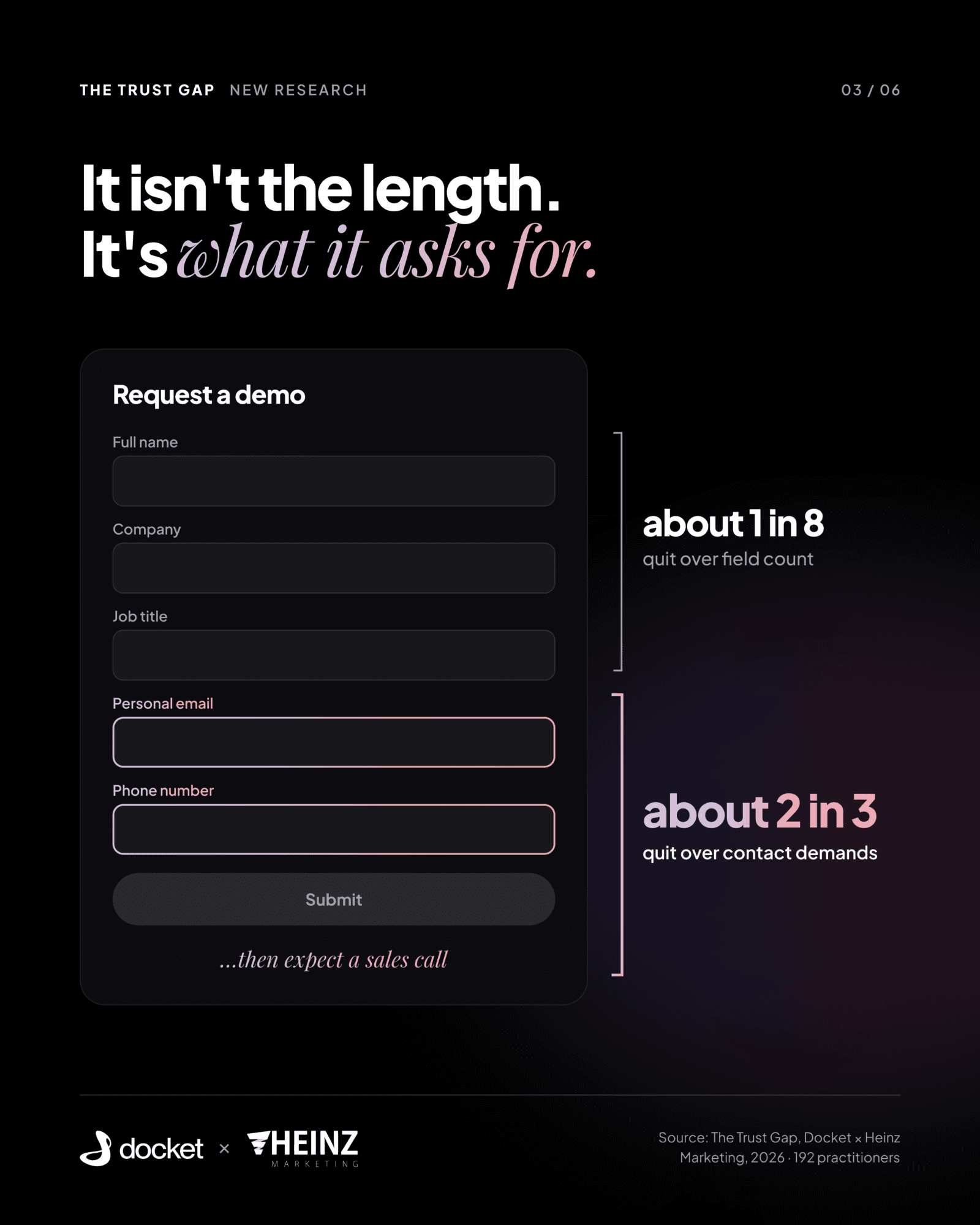
The disconnect continues into the second critical handoff: the transition from marketing-generated leads to the sales team. The study revealed a profound lack of confidence in the MQL metric itself. Nearly nine out of ten respondents report MQL volume to their leadership. However, among this vast majority, only a scant 7% express certainty that the MQL number accurately predicts future pipeline. The remainder describe themselves as only "slightly confident" at best.
This pervasive doubt is mirrored in sales team behavior. At a staggering 78% of organizations, sales representatives reject more than half of the MQLs forwarded by marketing. This high rejection rate suggests a significant misalignment between what marketing defines as qualified and what sales considers actionable. The study’s data further indicates a strong desire for change: roughly two-thirds of respondents indicated they would redefine or eliminate the MQL metric entirely if they were rebuilding their reporting systems from scratch.
Lauren McHugh, Head of Marketing at Docket, offered a pragmatic, albeit concerning, explanation for the MQL’s continued prevalence despite its perceived shortcomings. She stated during a webinar that "it’s easier to keep producing a number you don’t fully trust than to be the person who replaces it." This sentiment points to the significant organizational inertia and the substantial effort required to realign reporting structures and definitions across departments. Such a change, she noted, often takes more than a quarter to achieve consensus and implement effectively. The implication is that the MQL, despite its flaws, persists due to the complexity and time investment required for its reform.

Handoff 3: Follow-Up Rarely Lands
The third and final handoff, the crucial interaction between sales and the potential buyer after initial engagement, is also proving to be a weak link in the inbound process. When asked about their own experiences as buyers interacting with vendor follow-up, fewer than one in five respondents reported receiving a follow-up that was both prompt and relevant. The majority experienced generic sequences, slow responses, or no follow-up at all. This is particularly telling, as these are marketing and RevOps professionals describing systems that are often very similar to the ones they themselves manage.
Speed, while a factor, is not the sole determinant of success. Even in organizations where the first human contact is made within an hour, buyers frequently describe the experience as generic. This suggests that while automation can expedite initial outreach, it often lacks the personalization and contextual understanding needed to resonate with prospects. McHugh elaborated on this, identifying "context" as the more significant gap. Sales representatives often lack insight into what a buyer specifically viewed on the website or what aspects of the product or service captured their interest. Consequently, follow-up efforts tend to default to templated messages, failing to address the individual’s unique needs or stage in the buying journey.
The timing of follow-up also plays a subtler, yet important, role. The study found that in organizations employing sales agents, a notable portion—over half—report that a quarter or more of agent-booked meetings occur outside of standard business hours. This phenomenon could indicate a disconnect in scheduling preferences or a reliance on after-hours outreach to connect with busy prospects, further complicating the effectiveness of traditional follow-up strategies.
AI Is Arriving Faster Than the Ability to Measure It
The rapid integration of Artificial Intelligence (AI) into sales and marketing workflows presents both opportunities and new challenges for measurement. The study found that a substantial 70% of respondents are currently piloting, deploying, or scaling AI agents, primarily for tasks such as visitor qualification and running discovery calls. Interestingly, leadership skepticism was rarely cited as a primary barrier to AI adoption; fewer than 4% of respondents identified it as the biggest impediment. Instead, integration with existing technology stacks, or "stack connectivity," emerged as a more significant hurdle, with 47% of teams that have deployed AI citing it as a challenge, compared to only 13% of those still in the research phase.
However, the ability to accurately measure the impact and ROI of AI initiatives lags considerably. Approximately only one in ten organizations utilizing AI agents derive their results from dedicated dashboards or CRM reports. A significant half of these organizations resort to manual calculations to assess performance. When respondents compared the sales acceptance rate of meetings booked by AI agents against the acceptance rate of their own MQLs, a striking 40% reported that AI-booked meetings performed below their MQL baseline. This comparison warrants caution, as the two metrics do not share a common denominator. Nevertheless, it highlights a critical trend: the newest component of the inbound system is being evaluated against its least trusted established measure. This disparity suggests a need for new, more robust measurement frameworks tailored to the unique capabilities and outcomes of AI-driven lead generation.
What Any New Lead Source Has to Prove
The pervasive lack of trust in the MQL metric necessitates a re-evaluation of what constitutes a truly actionable lead. If the MQL cannot serve as a reliable benchmark, the study suggests alternative criteria for evaluating lead quality. Respondents indicated that elements such as the timeline of engagement, the presence of an explicit next step, the buyer’s role within their organization, and their current technology stack would make a "conversation-qualified lead" (CQL) more actionable than a simple form submission. The full transcript of a buyer’s interaction, while informative, ranked last in terms of immediate actionability, with only about one in five respondents finding it most valuable. This aligns with anecdotal evidence from a webinar attendee who noted that a concise summary of key discussion points is far more beneficial for Business Development Representatives (BDRs) than an exhaustive transcript.
From a leadership perspective, the focus shifts towards downstream evidence of success. Metrics such as pipeline conversion rates, win rates, and speed to meeting are paramount. However, relying solely on direct testimony from sales representatives proves to be a less persuasive approach, convincing fewer than one in five stakeholders. Docket has coined the term "Agent Qualified Lead" (AQL) to describe leads that meet these higher standards of qualification. The report outlines four key requirements that can be applied not only to leads generated by AI agents but also to those originating from forms or any other inbound source, providing a more rigorous and trustworthy framework for lead evaluation.
Four Places to Start This Quarter
Addressing the "MQL Trust Gap" does not necessarily require immediate investment in new technologies. The study proposes four actionable strategies that can be implemented independently and can yield significant improvements within the current quarter:
- Re-evaluate Form Strategy: Instead of simply reducing field counts, focus on eliminating or deferring the collection of sensitive contact information like phone numbers. Prioritize capturing intent and interest signals over immediate personal data. Consider progressive profiling, where information is gathered incrementally over time as the buyer progresses through the funnel.
- Enhance Sales Enablement with Context: Equip sales teams with richer contextual data about prospect interactions. This includes insights into the specific content consumed, website pages visited, and any previous engagement with marketing materials or AI tools. This context allows for more personalized and relevant follow-up conversations.
- Redefine Lead Scoring and Qualification: Move beyond simple demographic or firmographic scoring. Incorporate behavioral data, engagement patterns, and explicit signals of buying intent. Develop a tiered qualification system that clearly defines what constitutes a "sales-accepted lead" (SAL) and a "sales-qualified lead" (SQL), ensuring alignment between marketing and sales definitions.
- Invest in Measurement Frameworks: Develop new metrics and reporting mechanisms that accurately capture the performance of all lead sources, including AI. This may involve integrating data from various platforms, implementing more sophisticated analytics tools, or adopting manual reporting processes with clear methodologies until automated solutions are viable. Focus on measuring outcomes that leadership values, such as pipeline influence and conversion rates.
The report also features an eight-question "Inbound Trust Assessment" designed to be completed in a single team meeting. Matt Heinz recommends that multiple team members take the assessment individually and then compare their responses to identify areas of disagreement and potential blind spots. He notes that teams scoring in the lower half of the assessment are not alone, as the majority of the market currently resides in this range, highlighting the widespread nature of the trust gap.
Back to Tuesday Night
The experience of the VP of demand generation on that Tuesday evening is not indicative of a deliberately difficult buyer. She, like many others, would readily engage with a vendor’s website if it prioritized answering her questions before demanding personal information. The organizations that will ultimately succeed in closing this trust gap are likely to be those that can transparently demonstrate the tangible outcomes and value generated at each stage of the buyer’s journey, from initial contact to final purchase.
The comprehensive report, "The MQL Trust Gap: Why Inbound Is Breaking at Every Handoff," offers a deeper dive into each of these handoffs and includes the full assessment tool. For organizations looking to proactively address breakdowns in their marketing operations, Heinz Marketing offers a free marketing orchestration self-audit. Those who wish to discuss their audit results and explore strategies for improvement are encouraged to reach out. The findings of this study serve as a critical reminder that in today’s B2B landscape, trust and transparency are not just desirable attributes but essential components for building a truly effective and reliable inbound demand generation engine.


 Nila Kartika Wati

 Asep Darmawan