
 rifanmuazin
In the rapidly evolving landscape of digital commerce, organizations are increasingly turning to Conversion Rate Optimization (CRO) as a primary lever for growth. However, a significant gap remains between the execution of experiments and the retention of institutional knowledge. Vinayak Purshan, Associate Marketing Director at Cashfree Payments, recently addressed this critical inefficiency during an appearance on the VWO Podcast. Purshan argued that while many digital teams are proficient at running A/B tests, only a fraction successfully capture the full strategic value of those experiments. Without a rigorous documentation system, insights are often relegated to ephemeral Slack threads, disorganized spreadsheets, or forgotten email chains. This "knowledge leak" forces teams to reinvent the wheel every few months, leading to stagnant growth and wasted resources.
To combat this, Purshan outlined a comprehensive five-step framework utilized by Cashfree Payments—a leader in India’s fintech sector—to ensure that every experiment, whether a success or a failure, contributes to a compounding library of organizational intelligence. This approach is particularly vital in the fintech industry, where the stakes involve high-security thresholds, regulatory compliance, and a constant need for consumer trust.
The Problem of Isolated Experimentation
The standard trajectory for many marketing and product teams involves identifying a friction point, running a test, and then moving immediately to the next task once a result is reached. Purshan identifies this as a "transactional" approach to experimentation. When the context behind a test is lost, the organization loses the ability to understand the psychological drivers of their users.
The cost of this lost data is substantial. Industry benchmarks suggest that only about 10% to 25% of all experiments yield a statistically significant "winning" result. If a team only values the winners and ignores the documentation of the "losers," they are essentially discarding 75% to 90% of their work. In a professionalized environment like Cashfree Payments, which services over 800,000 businesses, the objective is to transform every data point into a strategic asset.

Step 1: Comprehensive Documentation and Contextual Analysis
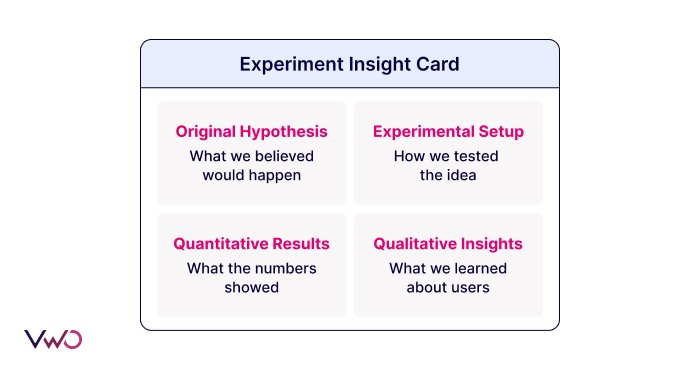
The foundation of the Cashfree framework is the mandate that every experiment must be recorded with full context. This goes beyond recording the "before and after" metrics. Purshan emphasizes that documentation must include four critical pillars: the original hypothesis, the specific data points that prompted the test, the qualitative and quantitative results, and—most importantly—the secondary learnings.
At Cashfree, this standard applies to every modification, from minor copy adjustments on a call-to-action button to complete overhauls of the checkout flow. By documenting the "why" behind a hypothesis, the team creates a trail of logic. If a test fails, future team members can analyze whether the failure was due to a flawed hypothesis or a poor execution of the variant. This level of detail prevents the recurrence of failed strategies and allows for the refinement of successful ones across different segments of the business.
Step 2: Implementing Structured Knowledge-Sharing Rituals
Documentation is only effective if it is accessible and discussed. To prevent insights from being siloed within the marketing department, Cashfree has instituted monthly all-hands marketing meetings focused specifically on experimentation. These sessions are designed to function as "learning labs."
The structure of these rituals is intentional. Rather than focusing solely on "wins," the team celebrates "failed" experiments with equal vigor. This creates a culture of psychological safety, where team members feel empowered to take calculated risks. The format of these meetings typically involves a presentation of the test, a breakdown of the unexpected behaviors observed in users, and a collaborative brainstorming session on how these insights can be applied to other ongoing projects.
This collaborative approach is supported by technological infrastructure. For example, platforms like VWO allow for the creation of sub-accounts and workspaces. This enables different departments—such as Product, Marketing, and Customer Success—to maintain autonomy over their specific tests while remaining connected to a centralized repository of results. This transparency ensures that the product team isn’t building features that the marketing team has already proven to be ineffective through messaging tests.
Step 3: Cross-Functional Insight Distribution
One of the most innovative aspects of Purshan’s framework is the intentional "leaking" of marketing insights into other departments. In many organizations, CRO is viewed as a narrow marketing function aimed at lowering the Cost of Customer Acquisition (CAC). At Cashfree, it is viewed as a source of market intelligence.
Purshan noted that digital marketing experiments often reveal which Unique Selling Propositions (USPs) actually resonate with the target audience. For instance, a series of A/B tests on a landing page might reveal that prospective clients are more concerned with "speed of settlement" than "security certifications." While both are important, the preference for speed is a vital insight for the Product Management team, who can then prioritize backend optimizations for faster settlements. Similarly, the Sales team can use this information to lead their pitches with the most effective messaging. This creates a feedback loop where experimentation informs the product roadmap and sales strategy, multiplying the ROI of a single web test.
Step 4: Developing Seasonal and Thematic Reference Libraries
The fintech sector, much like the retail and e-commerce sectors, is highly cyclical. In India, demand peaks during festive seasons like Diwali, while financial cycles are impacted by tax deadlines and fiscal year endings. Purshan argues that teams often fail because they treat every seasonal campaign as a brand-new challenge.
Cashfree addresses this by maintaining reference libraries that organize past experiments by theme, audience segment, and objective. When preparing for a festive season campaign, a marketing manager can consult the "Festive Library" to see what worked three years ago versus last year.
For example, if a library shows that compliance-focused messaging significantly outperformed discount-focused messaging during the previous tax season, the team can start their new campaign from a position of strength. They don’t need to test those two categories against each other again; instead, they can test two different versions of compliance messaging. This allows for "compounding knowledge," where the baseline of performance is constantly rising.
Step 5: Fostering a Learning-First Cultural Mindset
The final step in the framework is perhaps the most difficult to implement: a total cultural shift toward "learning-first" experimentation. This mindset shifts the focus from "being right" to "getting it right."
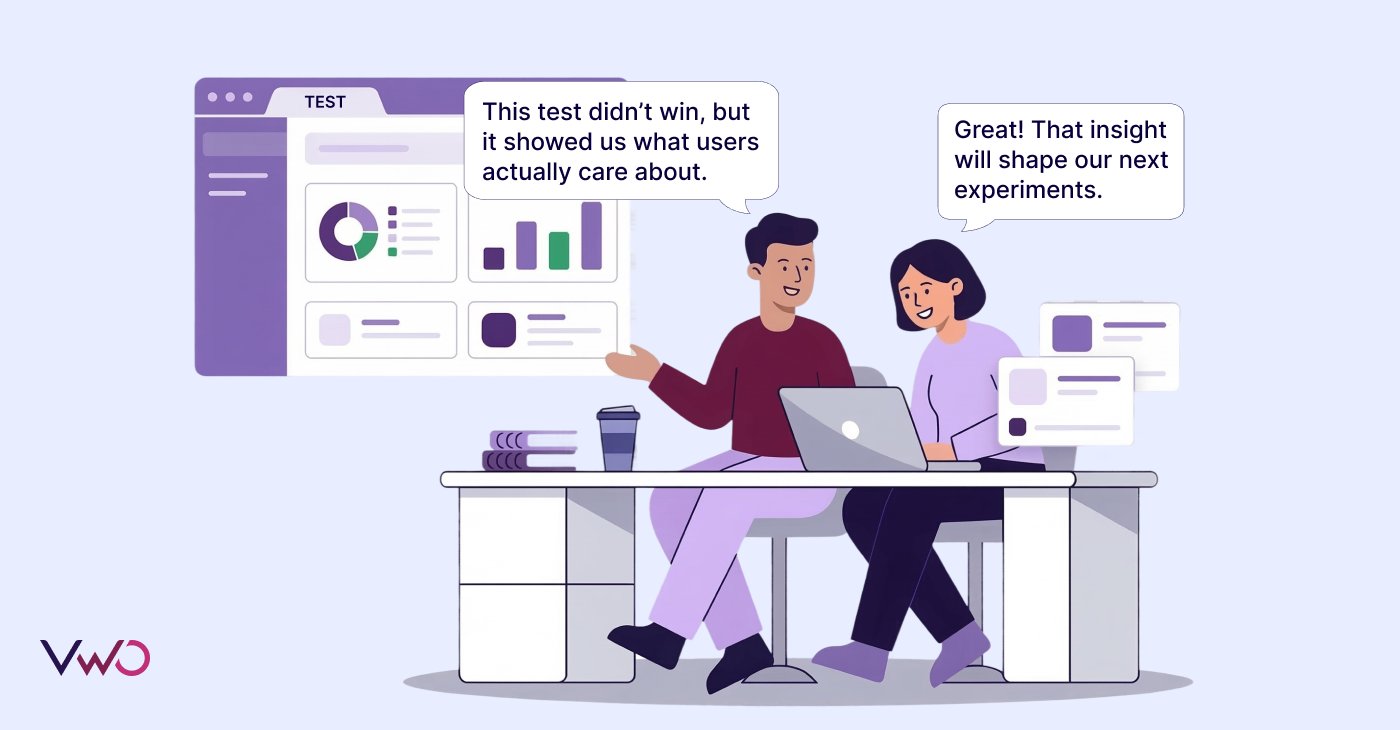
In a learning-first culture, a "losing" test is not a waste of money; it is a paid lesson in user behavior. Purshan highlights that people cannot always learn from their own mistakes because they may not have the opportunity to make them all. By sharing and documenting failures, the entire organization learns from the mistakes of a few, significantly reducing the total volume of errors over time. This philosophy aligns with the "fail-forward" mentality prevalent in Silicon Valley, but applies it with the rigor required for the financial services industry.
Broader Impact and Industry Implications
The implementation of such a framework has significant implications for the broader tech industry. As digital markets become more saturated, the cost of media buying continues to rise. Organizations can no longer afford to ignore the conversion side of the equation.
Furthermore, the rise of Artificial Intelligence and automated testing tools means that the volume of experiments a team can run is increasing. However, AI cannot yet provide the strategic "why" or the cross-departmental context that a human-led documentation framework offers. Purshan’s 5-step framework serves as a necessary human layer of governance over the technical process of testing.
By adopting these practices, companies move away from "gut-feeling" decision-making and toward a data-driven strategy that survives employee turnover. In many firms, when a senior growth lead leaves, their knowledge leaves with them. With the Cashfree framework, the knowledge remains in the library, ensuring that the company’s growth trajectory remains uninterrupted.

Conclusion: The Future of CRO at Scale
The insights shared by Vinayak Purshan on the VWO Podcast reflect a maturing of the CRO discipline. It is no longer just about changing button colors; it is about building a systematic engine for organizational learning. For fintech companies like Cashfree Payments, where precision and trust are paramount, this framework provides a competitive edge by ensuring that the company understands its customers better than the competition.
As organizations look to 2025 and beyond, the ability to document, share, and reuse insights will likely become the primary differentiator between companies that merely survive and those that dominate their respective markets. The framework provided by Purshan offers a clear, actionable roadmap for any team looking to transform their experimentation program into a powerhouse of strategic growth.








