rifanmuazin
Temu, the global e-commerce powerhouse, is actively redefining online selling for businesses through its innovative Local Seller Program. This initiative, designed to foster growth and simplify market entry, empowers eligible local businesses to not only serve their immediate customer base but also to expand their reach into nearby and regional markets. With a focus on streamlined operations, accessible onboarding, and leveraging Temu’s extensive platform traffic, the program is emerging as a significant catalyst for e-commerce expansion, particularly for small and medium-sized enterprises (SMEs).
Program Genesis and Evolution: From Local Focus to Regional Ambitions
Launched in early 2024, Temu’s Local Seller Program was initially conceived with a clear objective: to provide a robust platform for local businesses to connect with consumers within their own geographical markets. This foundational principle was driven by the understanding that many smaller enterprises face significant hurdles in establishing an online presence, including high upfront costs, complex technical requirements, and the challenge of attracting initial customer traffic. By offering a solution that encompasses local warehousing and delivery, Temu aimed to lower these barriers and democratize e-commerce access.
The program’s success and strategic vision have since evolved. Recognizing the immense potential for further growth and the interconnectedness of regional economies, Temu has begun to expand the program’s scope. Eligible sellers are now increasingly being granted access to neighboring and broader regional markets, a development that significantly amplifies sales opportunities and growth potential without necessitating the costly and time-consuming process of rebuilding operations in each new market independently. This phased expansion signifies Temu’s commitment to fostering a more dynamic and integrated e-commerce ecosystem.
Unlocking Regional Markets: A New Era of Cross-Border Selling
A key feature of the evolving Local Seller Program is its capacity to facilitate cross-border selling within defined regional blocs. This capability is particularly transformative for businesses operating within large economic unions. For instance, within the European Union, eligible sellers are no longer confined to their home country. A business based in Germany, for example, can now seamlessly list and sell its products in Belgium, even if it doesn’t maintain a local warehouse there. This is achieved through a combination of Temu-supported logistics providers and the flexibility for sellers to utilize their own logistical arrangements.
The expansion into adjacent international markets further underscores this ambitious reach. Since early 2026, sellers in key European nations such as Germany, Italy, the Netherlands, Portugal, Spain, Romania, Belgium, Poland, and France have gained the ability to sell into the United Kingdom, Iceland, and Switzerland. Simultaneously, in North America, US-based sellers have been able to extend their reach to Canada since December 2025. This strategic expansion offers businesses unprecedented opportunities to scale their operations and tap into new customer segments without the traditional complexities associated with international market entry. The benefit for sellers is a significantly broader market presence, leading to potential increases in sales volume and customer acquisition, all while optimizing the utilization of their existing operational capabilities.

Accelerating Business Growth: The Temu Advantage
Temu’s Local Seller Program is meticulously designed to act as a powerful engine for business growth. It simplifies the initial steps of online selling, offering a cost-free onboarding process and a user-friendly setup. The platform’s inherent discovery-based model, which prioritizes product visibility and customer engagement, provides sellers with immediate access to a vast and active customer base.
The efficiency of the onboarding process is a notable differentiator. Seller applications typically take approximately 10 minutes to complete. Approvals can be issued within a single business day, and many sellers go live on the platform within 72 hours. Crucially, approximately half of all new sellers make their first sale within just 20 days of listing their products. This rapid path to revenue generation is a significant advantage, especially for smaller businesses that often operate with tighter cash flows.
Anecdotal evidence from sellers who have joined the program consistently points to tangible growth outcomes. Many report reaching entirely new customer segments, expanding their market reach beyond previous limitations, and successfully creating new revenue streams. These newfound revenues are frequently reinvested into core business functions, including local hiring, warehouse expansion, and enhancements to customer support services, creating a virtuous cycle of growth and operational improvement.
A Boon for Small and Medium-Sized Businesses
The Temu Local Seller Program is particularly well-suited for small and medium-sized businesses (SMEs) seeking to navigate the competitive e-commerce landscape. These businesses often grapple with substantial upfront investment requirements, the intricacies of digital infrastructure, and significant barriers to customer acquisition. Temu’s program directly addresses these challenges by offering:
- No-Cost Onboarding: Eliminates a major financial barrier to entry.
- Easy Setup: A simplified process reduces the need for extensive technical expertise.
- Built-in Tools: Provides essential functionalities for managing an online store.
- Access to a Large Audience: The platform’s discovery model connects sellers with a ready customer base.
Instead of requiring sellers to build their entire e-commerce infrastructure from scratch, Temu acts as a facilitator, connecting them with crucial elements like platform traffic, logistical support, and third-party service providers. This partnership approach democratizes access to e-commerce, offering a viable pathway for smaller merchants to achieve significant online growth.
Comprehensive Market Coverage and Product Diversity
Temu’s Local Seller Program currently boasts an extensive global footprint, offering sellers access to a diverse range of markets. As of the latest available information, the program is active in:
- North America: United States, Mexico, Canada
- Europe: United Kingdom, Germany, France, Italy, the Netherlands, Spain, Belgium, Austria, Poland, Czech Republic, Hungary, Romania, Sweden, Portugal, Greece, Denmark, Finland, Bulgaria, Slovakia, Slovenia, Ireland, Lithuania, Croatia, Estonia, Switzerland, Norway
- Asia: Japan, Republic of Korea
- Oceania: Australia
- South America: Brazil
- Middle East: United Arab Emirates
- Other: Türkiye, Cyprus
Businesses interested in participating can initiate the registration process through the Temu Seller Center.
The program supports a vast array of product categories, spanning over 700 distinct classifications. This includes popular sectors such as apparel, consumer electronics and gadgets, and everyday household essentials. Temu actively cultivates a diverse merchant base, encompassing everything from family-run brands and traditional manufacturers to wholesale distributors and large-scale multinational retailers, fostering a rich and varied marketplace.
Navigating the Onboarding Process: A Step-by-Step Guide
Getting started as a seller on Temu is designed to be a straightforward, four-step process:
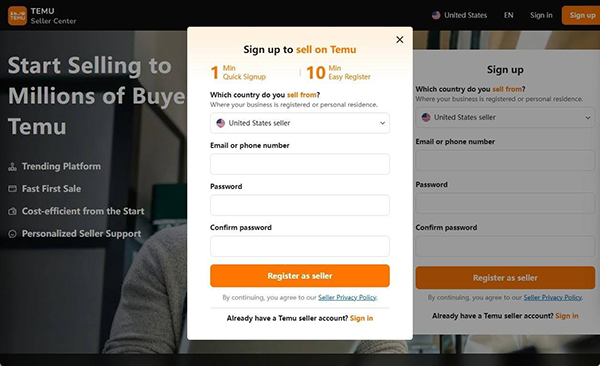
Step 1: Creating a Seller Account
The initial step involves visiting the Temu Seller Center and clicking on the "Sign up" option. Prospective sellers will need to provide an email address or phone number and create a secure password, adhering to a minimum of eight characters that includes a combination of letters, numbers, and symbols. Following registration, click "Register as seller" to proceed.
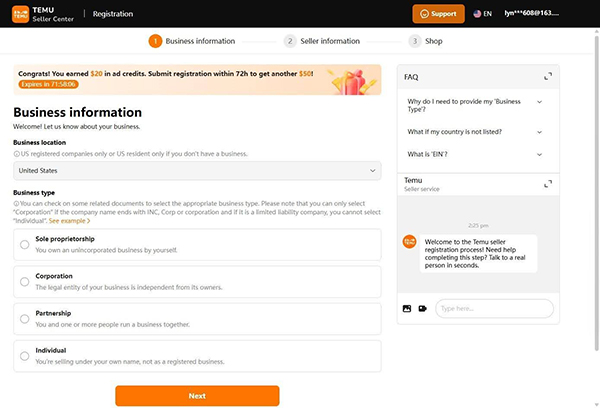
Step 2: Business Information Submission
Upon account creation, users are directed to the Business Information page. Here, they must select their business location and then choose the business type that accurately reflects their operational structure. Options typically include Sole Proprietorship, Corporation, Partnership, or Individual.
Step 3: Business Registration Details
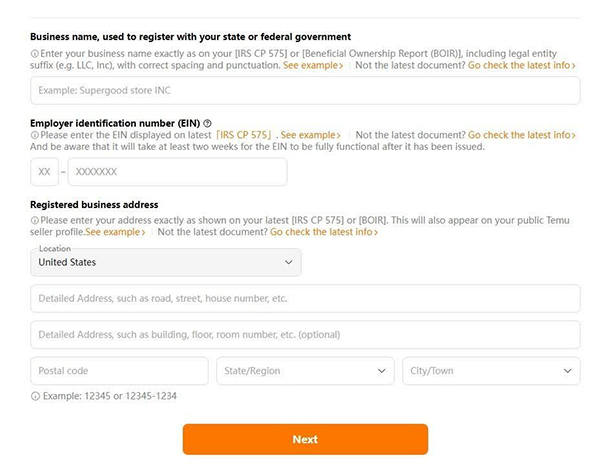
For businesses structured as Sole Proprietorships, Corporations, or Partnerships, this step requires entering official business registration details. This usually includes the registered business name (exactly as it appears on official documents like IRS CP 575 or Beneficial Ownership Report), the Employer Identification Number (EIN) as provided by the IRS, and the registered business address. Accuracy and adherence to the official documentation are paramount.
Step 4: Seller Verification and Shop Setup
The final stage involves seller verification and completing the shop setup. This requires verifying the business representative’s identity. Sellers will select the issuing country/region of their identification and the type of ID. An ID photo upload is then required, facilitated by Jumio, a leading identity verification provider known for its fraud detection capabilities. Both live photo capture and device uploads are supported.
ID Photo Upload Requirements:
Sellers must ensure their ID photos are clear, legible, and show all four corners of the document. Specific requirements may include:
- A clear, high-resolution image of a valid government-issued photo ID.
- The full document must be visible, without any cropping or distortion.
- The image should be well-lit and free from glare.
- The provided ID must be current and not expired.
Following the ID upload, sellers will enter the business representative’s details precisely as they appear on the document, including legal name, ID number, expiry date, citizenship, place of birth, and date of birth. Representative address information, which can be a business or non-business address, will also be collected. Once these steps are completed, sellers can finalize their shop setup and prepare to list their products. For further guidance, the Temu Seller Academy offers comprehensive resources.
Robust Support Systems for Sellers
Temu provides a multi-faceted support ecosystem designed to empower sellers and streamline their operations. This support includes:
- Dedicated Seller Support: Timely assistance from dedicated teams to address queries and resolve issues.
- Platform Traffic: Access to Temu’s extensive customer base and high-volume traffic.
- Customer Engagement Features: Tools to facilitate direct interaction with customers.
- ERP Integrations: Seamless integration with Enterprise Resource Planning systems for efficient management.
- Logistics and Payment Partnerships: Collaboration with leading providers to ensure smooth fulfillment and transaction processes.
These resources collectively aim to help sellers optimize their operations, manage orders efficiently, and achieve growth without the burden of building every capability independently.
Integrated Logistics and Payment Solutions
Temu’s commitment to a seamless seller experience is evident in its robust logistics and payment infrastructure. The platform partners with major logistics providers such as USPS, UPS, and DHL, ensuring reliable delivery services. In Europe, this partnership extends to over 150 logistics providers and strategic alliances with more than 10 national postal service operators.
For payment processing, Temu integrates with widely used options including Google Pay, Apple Pay, PayPal, and Visa. Furthermore, the platform collaborates with leading ERP and fulfillment providers like Rithum, ShipBob, ShipStation, and Linnworks, which are instrumental in streamlining order management and overall seller operations. This comprehensive network ensures that sellers can manage their businesses efficiently and reach customers effectively.
Demonstrable Success: Real-World Seller Stories
The efficacy of Temu’s Local Seller Program is best illustrated through the success stories of businesses that have leveraged its platform. These examples span diverse industries and geographical regions, highlighting the program’s broad applicability and impact.
United States Success Stories:
- Shop Succulents: This California-based live plant seller experienced remarkable growth after joining Temu in February 2025. Within its first four months, it generated approximately 3,500 sales, nearly matching its sales on another platform over the preceding decade. By April 2026, cumulative sales on Temu surpassed 11,000 orders, a significant achievement for a business dealing with the complexities of shipping perishable goods.
- PopMarket: An Alliance Entertainment subsidiary specializing in collectibles and entertainment, PopMarket identified Temu as its fastest-growing digital marketplace in over ten years. Since late 2024, it has sold over 450,000 items in its first eight months on the platform.
- Grumpy Butcher: This New York-based premium frozen steak seller saw over 12% of its online sales attributed to Temu within just five weeks of onboarding.
- Patch Party Club: An Illinois-based family-run patch maker achieved over 300 patch sales within three weeks of joining, with approximately 90% of these sales coming from new customers.
- Lay It Flat Bookshop: This North Carolina independent bookseller sold more than 100,000 units within months of listing its products.
European Success Stories:
- Mcslots: A UK-based family toy retailer experienced a significant uplift in sales after listing a portion of its inventory on Temu in 2025. Within 48 hours, orders began to arrive, and three months later, daily orders increased by over 40%, with Temu contributing half of its total sales.
- Ubedia: This France-based startup, founded by two young entrepreneurs, launched its ube powder business and joined Temu in September 2025. In its first three months, it sold over 1,300 units, providing the founders with the traction and cash flow to transition to full-time entrepreneurship. This success is particularly notable for a niche food startup where early market visibility can be challenging.
- AMF Creation: A German tablecloth manufacturer successfully expanded its reach across the EU by utilizing the Temu platform.
- Fruta de Toro: This Spain-based traditional fruit producer established its direct-to-consumer online presence through Temu.
These diverse examples underscore the program’s ability to drive substantial revenue growth and market expansion for businesses of varying sizes and product types.
Differentiating Factors: Temu’s Unique Marketplace Approach
Temu’s Local Seller Program distinguishes itself from many other established marketplaces through its emphasis on a discovery-based sales model and greater seller flexibility. While some platforms can be dominated by a few large players, making it challenging for smaller sellers to gain visibility, Temu’s approach aims to broaden participation.
The program empowers sellers to choose their preferred logistics and service providers, offering a level of operational control that is often limited on other platforms. This third-party partnership model is designed to democratize access to e-commerce, ensuring that advantages are not concentrated among a select few. For merchants, this translates into enhanced control over their business operations, order fulfillment strategies, and scaling efforts, ultimately fostering a more equitable and sustainable e-commerce environment.