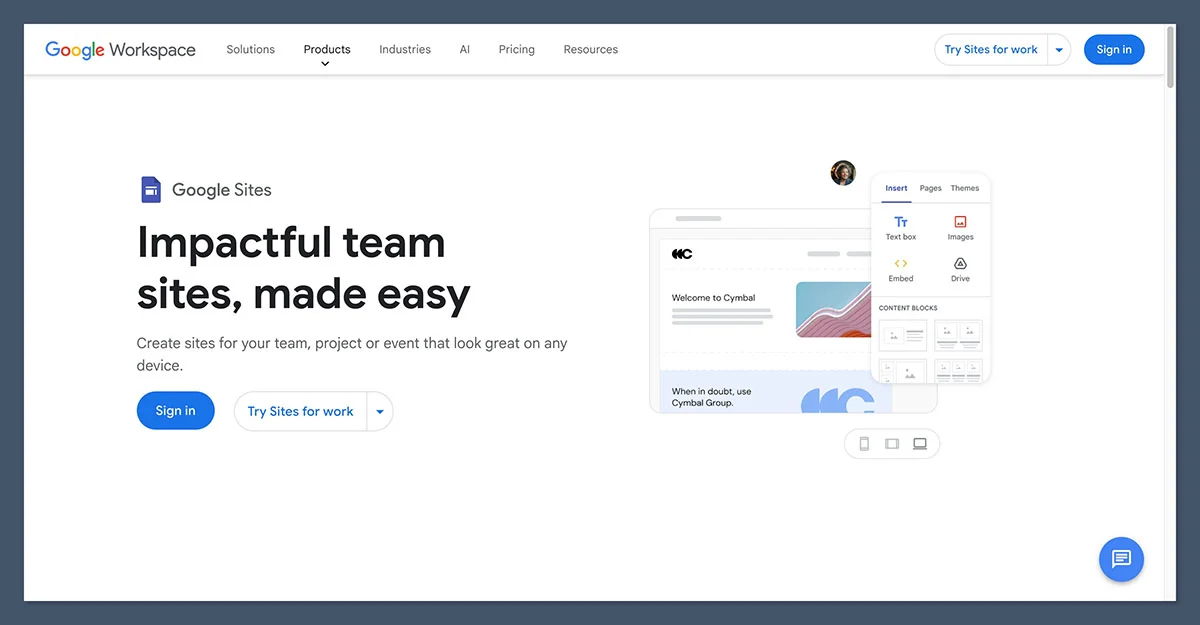
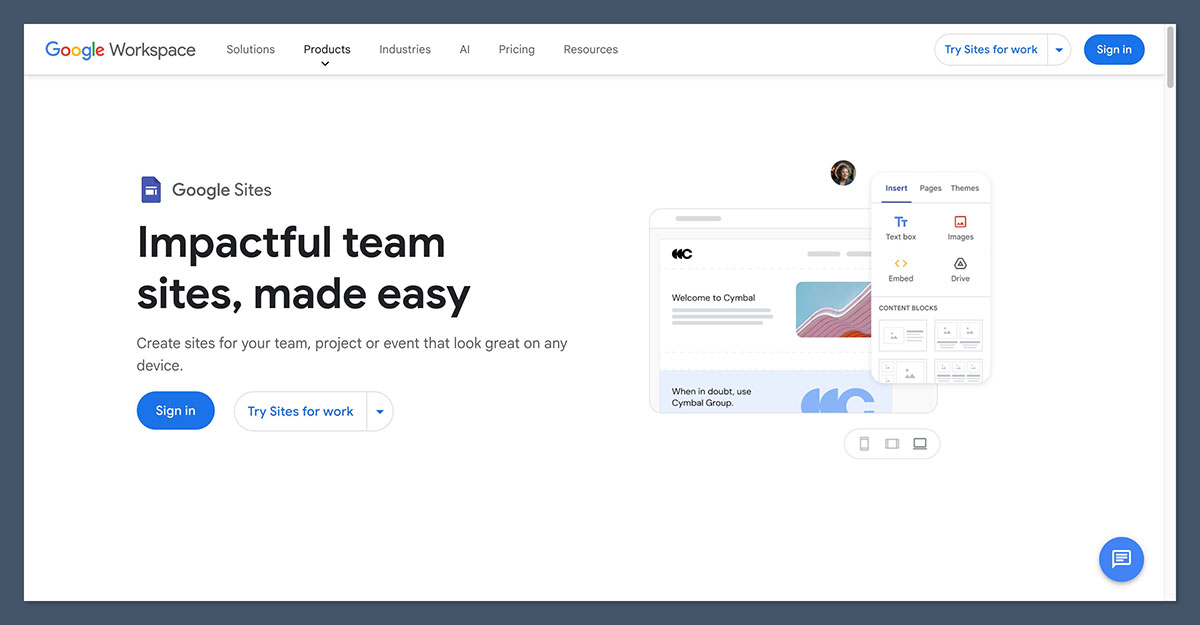
The digital landscape offers a myriad of tools for individuals and businesses looking to establish an online presence. Among the most frequently discussed are website builders, with Shopify and Google Sites often appearing in discussions. However, a thorough examination reveals a stark divergence in their core functionalities and intended use cases. While both platforms facilitate website creation, their strengths lie in entirely different domains. Shopify unequivocally emerges as the superior choice for e-commerce ventures, offering a robust suite of tools specifically designed for online selling. Conversely, Google Sites serves as a free, albeit basic, solution for informational websites where an integrated sales channel is not a requirement.
This comparative analysis delves into the key differences between Shopify and Google Sites, scrutinizing aspects such as pricing, sales features, design capabilities, search engine optimization (SEO) potential, and customer support. It aims to provide a clear understanding of why Shopify dominates the e-commerce sector while also identifying the niche scenarios where Google Sites can be a pragmatic and cost-effective solution.
Key Takeaways
- E-commerce Powerhouse vs. Basic Informational Tool: Shopify is engineered for online sales, providing comprehensive e-commerce features. Google Sites is a free, simple builder for static websites, lacking any native sales functionality.
- Pricing Disparity with Functionality: While Google Sites is free, its lack of e-commerce capabilities means any revenue generation requires external integrations, often pointing back to platforms like Shopify. Shopify’s tiered pricing reflects its extensive feature set for online businesses.
- Feature Set for Online Sales: Shopify offers native product catalogs, secure checkout, payment processing, inventory management, and abandoned cart recovery. Google Sites cannot perform these functions, relying on workarounds like embedding external buy buttons.
- Design and Customization: Shopify provides professional themes and extensive customization options, including code access, enabling unique brand storefronts. Google Sites offers limited, basic templates with minimal design flexibility.
- Marketing and SEO Capabilities: Shopify is equipped with tools for SEO, social selling, and email marketing. Google Sites offers only rudimentary SEO features and lacks dedicated marketing functionalities.
- Support and Scalability: Shopify offers 24/7 customer support and a vast app store for scalability. Google Sites relies on community forums and help documentation for support, with limited extensibility.
Quick Comparison: Shopify vs. Google Sites
| Aspect | Shopify | Google Sites |
|---|---|---|
| Core Purpose | Full e-commerce platform for selling products and services | Simple site builder for informational and internal sites |
| Pricing | $29 to $299/month (billed annually) | Free; custom domain via Google Workspace from $7/user/month |
| E-commerce | Native catalog, cart, checkout, payments, inventory | None; external embeds or links only |
| Apps & Integrations | 12,000+ apps, multichannel selling via Google, YouTube, and social | Google Workspace embeds only (Docs, Sheets, Forms, Calendar) |
| Design | Professional theme store, code access via Liquid, HTML, and CSS | A handful of basic templates, limited customization |
| SEO | Editable meta tags, blogging, structured data, app support | Basic meta settings, weak blogging, no schema control |
| Support | 24/7 live chat plus extensive documentation | Help docs and community forums only |
| Best For | Online stores, DTC brands, multichannel sellers | Intranets, classrooms, project hubs, basic info sites |
1. Best for Pricing: Google Sites
When evaluating purely on initial cost, Google Sites stands out as the undisputed champion. The platform and its hosting are entirely free, accessible to anyone with a Google account, and involve no tiered plans or transaction fees. This zero-cost entry point makes it an attractive option for individuals or organizations with extremely limited budgets.
However, the "free" aspect comes with a significant caveat: the absence of any built-in e-commerce functionality. To achieve a professional online presence with a custom domain and integrated business tools, users typically incur additional costs. A custom domain name can range from $10 to $20 annually. For enhanced features like professional email addresses and administrative controls, a Google Workspace subscription is necessary, starting at $7 per user per month for the Business Starter plan when billed annually.
Shopify, in contrast, operates on a subscription model designed to support online businesses. Its core plans range from $29 to $299 per month when billed annually, offering a progressively more feature-rich experience. Beyond these core plans, Shopify also provides a $5 per month "Starter" plan, ideal for individuals looking to sell via social media links and marketplaces. For large enterprises, Shopify Plus offers comprehensive solutions starting at approximately $2,300 per month. New users can leverage a three-day free trial, and an introductory offer provides the first three months for just $1 per month on annual plans.
While Google Sites is undeniably the cheaper option, this comparison highlights a fundamental difference in purpose. Google Sites offers a free platform for displaying information, whereas Shopify’s recurring fees are an investment in the infrastructure required to conduct online sales, manage inventory, and process payments—features entirely absent from Google Sites.
The Winner: Google Sites is free, but you get what you pay for. Google Sites wins purely on cost, offering free builder and hosting. However, Shopify’s monthly fees are an investment in essential e-commerce functionalities that Google Sites cannot replicate, regardless of price.
2. Best for Selling Online: Shopify
This is the decisive category that clearly delineates the capabilities of the two platforms. Shopify is a comprehensive, purpose-built e-commerce platform, while Google Sites possesses no native functionality for online sales.
Sales Features
Shopify offers a robust suite of tools essential for online retail. This includes full catalog management with support for product variants, real-time inventory tracking across multiple locations, the ability to sell digital products, and recurring subscription options. Features like discount codes and abandoned cart recovery are standard across its core plans, actively helping businesses recoup lost sales. Furthermore, Shopify Magic, an integrated AI tool, can generate compelling product descriptions and marketing copy directly within the dashboard, streamlining content creation.
Google Sites, on the other hand, offers none of these e-commerce specific features. There is no built-in shopping cart, checkout process, or product catalog management. During testing, the closest approximation to an online store on Google Sites involved creating product pages with images and descriptive text, then linking out to external payment gateways or embedding third-party buy buttons. Ironically, a common workaround involves embedding Shopify’s own buy buttons into Google Sites pages, underscoring Shopify’s role as the actual e-commerce engine.
Payment Options
Shopify integrates with over 100 payment providers, including popular options like PayPal, Apple Pay, and Google Pay. It also offers Shopify Payments, its own native gateway, which provides competitive online card processing rates starting at 2.9% + 30¢ on the Basic plan, with rates decreasing for higher tiers. Using Shopify Payments also eliminates the additional transaction fees that Shopify imposes when third-party payment gateways are utilized.
Google Sites has no payment processing capabilities whatsoever. Any financial transaction must occur entirely on a separate platform.
App Market
Shopify boasts an expansive app store featuring over 12,000 third-party integrations. These apps cover a vast spectrum of functionalities, from dropshipping and print-on-demand services to upsell tools, customer review widgets, and shipping automation solutions. While some premium apps come with their own monthly fees, the breadth of available functionality allows businesses to highly customize and scale their operations.
Google Sites lacks an app marketplace. Its extensibility is primarily limited to embedding content from Google Workspace applications such as Docs, Sheets, Forms, and Calendar, along with the occasional integration of third-party widgets via embed codes.
The Winner: Shopify is the only real e-commerce option here. Shopify provides a complete e-commerce ecosystem with native catalog and checkout capabilities, extensive payment options, and a vast app store. Google Sites can display products, but it cannot facilitate a sale on its own.
3. Best for Marketing and SEO: Shopify
For any online business, visibility is paramount. Customers need to discover products before they can purchase them, making marketing and SEO tools as crucial as sales features.
Marketing Tools
Shopify offers seamless integration with major social platforms like Instagram and TikTok, facilitating direct selling and promotional activities. The official Google & YouTube app is particularly powerful, synchronizing product feeds with Google Merchant Center, enabling Performance Max campaigns, and powering YouTube Shopping experiences. Shopify Email provides a built-in solution for creating and sending marketing campaigns directly from the dashboard. The app store further extends marketing capabilities with a wide array of tools for SMS marketing, customer loyalty programs, and marketing automation.
Google Sites, in contrast, offers virtually no marketing toolkit. It lacks native email marketing capabilities, social selling integrations, or advertising integrations beyond what can be manually configured with external services.
SEO
Shopify provides a solid foundation for search engine optimization. It allows for editable title tags and meta descriptions, generates SEO-friendly URLs, includes a built-in blog for content marketing, and supports structured data through themes and apps. In the current search landscape, particularly with the rise of AI-driven search results, building in-depth, interlinked content around products is essential for gaining visibility. Shopify’s blogging and content management system (CMS) capabilities make this achievable.
Google Sites handles basic SEO requirements, such as ensuring pages are mobile-friendly by default and allowing for simple meta information settings. However, it lacks schema control, its blogging functionality is rudimentary, and design constraints make it difficult to create the topical content hubs that perform well in both traditional and AI-powered search environments. Despite being a Google product, Google Sites pages do not receive any inherent ranking advantage.
The Winner: Shopify has the tools to actually get found. With its native SEO controls, blogging platform, Google Merchant Center integration, and robust multichannel selling capabilities, Shopify empowers businesses to achieve significant online visibility. Google Sites only addresses the most basic SEO requirements.
4. Easiest to Use: Google Sites
Google Sites undeniably excels in user-friendliness, a significant advantage for individuals or small teams with limited technical expertise. Its drag-and-drop interface is intuitive and instantly familiar to anyone who has used Google Docs, allowing for the creation of a presentable page within minutes. The platform requires no complex configuration or hosting management, and its collaborative features mirror the seamless experience of other Google Workspace applications, offering multiple editors and granular sharing controls.
Shopify, while user-friendly for an e-commerce platform, naturally involves a steeper learning curve due to its comprehensive functionality. The onboarding process guides users through a setup checklist covering essential e-commerce aspects like products, payments, shipping, and taxes. The section-based theme editor is straightforward once users familiarize themselves with the interface. However, setting up shipping zones, tax configurations, and integrating apps can demand considerable time and effort, complexities that Google Sites entirely bypasses.
The fundamental difference in ease of use stems from the scope of each platform. Google Sites is simpler because it performs fewer tasks. For users focused solely on creating an information page, this simplicity is a direct benefit. For those aiming to build an online store, the perceived complexity of Shopify is a necessary trade-off for the essential functionality it provides.
The Winner: Google Sites is effortless for simple pages. Google Sites enables users to go from a blank page to a published site in minutes with minimal setup. While Shopify is approachable for an e-commerce platform, it cannot match the sheer simplicity of Google Sites for basic web page creation.
5. Best for Design and Templates: Shopify
The visual presentation of an online store is critical for building brand identity and customer trust. Shopify offers a superior environment for achieving professional and distinctive designs.
Shopify’s theme store provides a diverse selection of professionally designed templates, categorized by industry. These range from free options to premium themes, typically priced between $100 and $500 as a one-time purchase. Each theme is highly customizable through a section-based editor, allowing for significant visual adjustments. For advanced customization, developers can access and modify the underlying code using Liquid, HTML, and CSS to create truly bespoke storefronts.
In contrast, Google Sites offers a limited array of clean, minimalist templates. While these templates present a tidy appearance, their customization options are severely restricted. Users have limited control over layout, typography, and spacing, and there is no comprehensive theming system. As a result, most Google Sites pages tend to share a similar, generic aesthetic. For internal documentation or simple informational pages, this uniformity is acceptable. However, for a brand aiming to cultivate trust and a unique identity with paying customers, this lack of design flexibility represents a significant limitation.
The Winner: Shopify gives your brand a real storefront. Shopify’s extensive theme store and code-level customization empower users to build distinctive and professional online stores that reflect their brand identity. Google Sites, while clean, offers a generic appearance with very little scope for personalization.
6. Best for Support: Shopify
Reliable and accessible customer support is vital, especially for businesses relying on their online presence for revenue. Shopify provides comprehensive support options that far exceed those of Google Sites.
Shopify Support
- 24/7 Live Chat: Immediate assistance is available around the clock via live chat, ensuring prompt resolution of urgent issues.
- Phone Support: Dedicated phone support is also offered, providing another avenue for direct communication.
- Email Support: Comprehensive email support ensures that queries are addressed systematically.
- Extensive Knowledge Base: A vast library of articles, guides, tutorials, and courses covers virtually every aspect of using Shopify.
- Community Forums: Active forums allow users to connect with each other, share advice, and find solutions.
Google Sites Support
- Help Documentation: A collection of help articles is available, offering guidance on basic functionalities.
- Community Forums: Users can seek assistance and share information in Google Sites community forums.
- Limited Direct Support: For free Google Sites users, there is no direct live or phone support available. Support is largely community-driven or based on self-service documentation.
The Winner: Shopify backs its merchants around the clock. Shopify’s commitment to support is evident in its 24/7 live chat, phone, and email options, coupled with an extensive library of educational resources. Free Google Sites users are limited to help documentation and community forums.
When Google Sites Is Actually the Right Choice

It is important to acknowledge that Google Sites was not designed to compete directly with robust e-commerce platforms like Shopify. There are specific scenarios where Google Sites is genuinely the more appropriate and effective tool:
- Internal Company Websites/Intranets: For creating a central hub for internal company information, policies, and resources.
- Classroom Websites: Teachers can use it to share assignments, schedules, and resources with students.
- Project Hubs: Teams can collaborate and share progress updates on specific projects.
- Simple Informational Sites: For individuals or organizations needing a basic online presence to share contact details, services, or event information without the need for online transactions.
In these instances, Google Sites’ free nature, ease of use, and integration with Google Workspace make it an ideal solution. However, the moment the need to sell products or services arises, Google Sites becomes inadequate.
How We Test E-commerce Website Builders
Our evaluations of website builders and e-commerce platforms are conducted through a rigorous and structured research process. We assess each platform across seven key areas, with weightings assigned based on their importance to users:
| Testing Area | Weighting | What We Assess |
|---|---|---|
| Sales Features | 40% | The core e-commerce capabilities of each platform. |
| Website Features | 15% | The quality and breadth of website features, including SEO. |
| Help and Support | 12% | Availability and quality of support channels and resources. |
| Design Functionality | 10% | Template variety and design customization options. |
| User Experience | 10% | Hands-on testing of ease of use and accessibility. |
| Customer Score | 8% | Platform performance within its market and against competitors. |
| Value for Money | 5% | Pricing plans and the overall value provided. |
Our insights and recommendations are based on direct, hands-on experience with both Shopify and Google Sites, ensuring that our assessments are grounded in practical application.
Shopify vs. Google Sites: Our Winner
For any individual or business with the explicit goal of selling online, Shopify is the unequivocal winner. It provides a complete e-commerce ecosystem, featuring native checkout, over 100 payment gateway integrations, a conversion-optimized theme store, and an extensive app marketplace exceeding 12,000 options for enhanced functionality. Google Sites, in its current form, cannot process a single online transaction independently.
However, this comparison is fundamentally about matching the right tool to the specific objective. Google Sites excels as a free, exceptionally easy-to-use builder for internal hubs, educational purposes, and straightforward informational pages. For these specific applications, it is a superior choice to the paid offerings of Shopify. It’s not uncommon for businesses to utilize both platforms concurrently: a Google Sites page for internal documentation or team resources, and a Shopify store for their primary revenue generation.
If the decision hinges on choosing between these two for an online store, the choice is already clear. It is recommended to initiate with Shopify’s free trial and leverage the introductory offer of $1 per month for the first three months on annual plans. Google Sites should be reserved for less commercially oriented projects, such as a team wiki or internal project management.
FAQs
-
Can you sell products on Google Sites?
No, not directly. Google Sites lacks a shopping cart, checkout system, or payment processing capabilities. While you can display products and link to external payment pages or embed third-party buy buttons (including those from Shopify), any actual transaction must occur on a separate platform. -
Is Google Sites really free?
Yes, the builder and hosting are free with any Google account, and sites are hosted under a sites.google.com domain. To use a custom domain with professional email and administrative features, you will need to purchase your own domain and subscribe to a Google Workspace plan, which starts at $7 per user per month with an annual commitment. -
How much does Shopify cost?
Shopify’s primary plans range from $29 to $299 per month when billed annually (or $39 to $399 monthly). A $5 per month "Starter" plan is available for selling via social media and links, and Shopify Plus is offered for enterprise clients starting around $2,300 per month. New merchants opting for annual plans can get their first three months for $1 per month. -
Is Google Sites good for SEO?
Google Sites offers only basic SEO features. Pages are mobile-friendly, and simple meta information can be set. However, it lacks structured data control, has limited blogging capabilities, and does not provide the advanced content and optimization tools necessary for serious SEO efforts. Being a Google product does not confer any ranking advantages. -
Can I embed a Shopify store in Google Sites?
Yes, you can embed Shopify’s Buy Button channel, which generates embed code that can be pasted into a Google Sites page. This allows visitors to make purchases through Shopify’s secure checkout. However, this requires an active Shopify subscription, making it more practical for most businesses to build their entire store directly on Shopify. -
Which is better for a small business: Shopify or Google Sites?
The better choice depends entirely on whether the small business sells products online. If online sales are a component, Shopify is the only viable option between the two. If the business only requires a simple informational presence and has no budget, Google Sites can serve the purpose for free. However, for a more polished and feature-rich website with a modest budget, platforms like Squarespace or GoDaddy might be more suitable.