In an increasingly digitized and interconnected global marketplace, a social media audit has emerged as a cornerstone of effective digital strategy, providing a structured, comprehensive review of an organization’s performance across its various social media platforms. Far more than a mere check-up, this systematic evaluation compiles and analyzes data to identify strengths, pinpoint critical areas for improvement, and chart a clear course for future action, serving as an essential "report card" for a brand’s online presence. Typically orchestrated by social media managers, marketing directors, or specialized agency teams, these audits encompass both organic and paid social efforts, offering invaluable insights for marketing leaders to assess social media return on investment (ROI), refine content strategies, and make astute budget allocations. This analytical rigor is particularly pertinent in an environment where, as a recent Gartner survey revealed, a significant 59% of Chief Marketing Officers (CMOs) contend with insufficient budgets to fully execute their strategic visions, underscoring the imperative for data-driven decisions.

The Evolving Digital Imperative: Why Audits Are Crucial Now
The rapid evolution and proliferation of social media platforms have transformed the digital landscape into a complex ecosystem where businesses must not only maintain a presence but actively engage and derive measurable value. With global social media users projected to reach an astounding 5.75 billion by 2026, the sheer scale and diversity of the audience demand a sophisticated approach to digital engagement. This exponential growth has simultaneously amplified both the opportunities for brand visibility and the challenges of managing a consistent, impactful, and compliant online identity.

For many organizations, social media management began organically, with accounts springing up across departments or regions, often without a centralized strategy. This decentralized approach can lead to fragmented branding, inconsistent messaging, and missed opportunities. A social media audit provides the necessary diagnostic snapshot, a clear picture of the current state, answering critical questions like "what’s working and what isn’t?" This stands in contrast to a social media strategy, which is the forward-looking blueprint for where a brand is headed. The audit informs the strategy, making it an evidence-based, adaptive document rather than a speculative plan. It reviews accounts, performance metrics, brand alignment, and audience engagement at a specific point in time, paving the way for a refined strategy that sets concrete goals, defines content approaches, and guides ongoing execution. Without this foundational audit, a strategy risks being built on assumptions, leading to inefficient resource allocation and diluted impact.
Dissecting Performance: The Seven Pillars of a Comprehensive Audit

Conducting a thorough social media audit involves a systematic, multi-faceted approach to ensure no critical aspect of a brand’s online presence is overlooked. This process transforms disparate data points into actionable intelligence.
-
Account Inventory and Brand Integrity: The initial step involves meticulously cataloging every social media account associated with the brand, regardless of its activity level. This includes established platforms like Facebook, Instagram, LinkedIn, and X (formerly Twitter), as well as newer entrants such as Threads and Bluesky, which many brands have adopted. Beyond existing accounts, it’s crucial to identify potential new platforms that could align with future strategic goals, acknowledging the ever-expanding user base. For larger enterprises, this stage is critical for unearthing "rogue" or unauthorized accounts created by various departments or regional offices. Tracking these ensures brand consistency and mitigates the risk of misinformation or reputational damage. Industry best practices suggest implementing social media monitoring programs post-audit to proactively detect and address any future imposter accounts.

-
Content Efficacy and Audience Resonance: A deep dive into content performance is essential. For each platform, identifying the five top-performing posts provides invaluable insights. The definition of "top-performing" is fluid, depending on specific objectives; while engagement rate is a common starting point, other metrics like link clicks, video views, or conversions may be more relevant. Analyzing these successful posts helps identify recurring patterns in content formats (e.g., short-form video, infographics, long-form text), themes, visual styles, and calls to action that resonate most strongly with the target audience. Conversely, examining underperforming content can reveal areas for refinement or discontinuation. This data-driven approach allows marketers to understand audience preferences and tailor future content creation for maximum impact.
-
Strategic Alignment and Channel Effectiveness: This pillar evaluates how effectively each social channel contributes to overarching marketing and business objectives. Each platform should ideally have a clearly defined mission statement and specific, measurable goals. While some channels may share objectives like driving website traffic or increasing conversions, others might be dedicated solely to customer service or brand awareness. For quantifiable goals, precise metrics are recorded—e.g., the number of website visits from Instagram or sales conversions originating from a Facebook Page. For qualitative goals, supporting evidence such as follower growth, organic reach expansion, or improvements in customer satisfaction (CSAT) scores are tracked. This step clarifies the strategic purpose of each channel and measures its real-world effectiveness. The challenge of tracking conversions from social media, particularly across diverse platforms, often necessitates dedicated tools like Meta Pixel and Conversions API for Meta platforms or Google Analytics for website traffic attribution.
-
Competitive Intelligence and Industry Benchmarking: Understanding internal performance is only half the battle; comparing it against competitors and industry benchmarks provides crucial context. This competitive benchmarking reveals whether a brand’s metrics are leading the pack, merely average, or lagging behind. Tools capable of competitive analysis allow brands to track numerous competitors across various networks, gaining insights into their strengths, weaknesses, top-performing content, and effective hashtags. Furthermore, industry benchmarking tools provide averages for key metrics like follower growth, engagement rate, reach, and sentiment, enabling a brand to position its performance within the broader market context and identify strategic gaps or opportunities.
-
Audience Demographics and Engagement Insights: A granular understanding of the audience on each platform is paramount. This goes beyond basic demographics, delving into psychographics, content preferences, and engagement behaviors. While general platform demographics (e.g., Facebook’s largest audience segment being men aged 25-34) offer a starting point, it’s vital to analyze a brand’s unique audience data. Social listening tools become indispensable here, allowing marketers to monitor conversations, identify key influencers, gauge brand perception, and detect real-time spikes in mentions. This comprehensive audience insight enables the creation of detailed buyer personas, ensuring content is tailored to resonate with specific segments, thereby increasing relevance and engagement.
-
Governance, Compliance, and Risk Mitigation: Often overlooked, this critical step is particularly vital for enterprise-level teams. It involves a rigorous review of accounts for adherence to legal, regulatory, and security standards, safeguarding the brand from potential liabilities. Key areas include verifying account ownership and access protocols, confirming compliance with data privacy regulations (like GDPR or CCPA), ensuring consistent brand messaging and disclaimers, and establishing clear crisis communication plans. For large organizations, implementing a governance layer, such as Hootsuite’s Vigil, helps apply consistent rules and approval workflows across multiple accounts, integrating compliance seamlessly into the audit process and fortifying the brand’s social presence against unforeseen risks.
From Data to Action: Implementing Audit Findings

Upon the completion of a comprehensive social media audit, the gathered insights must be synthesized into actionable strategies. The audit acts as a "reset button," offering a moment to pause, reflect, and pivot. Key post-audit steps include:
- Synthesizing Insights: Consolidate all findings, identifying overarching themes, consistent successes, and persistent challenges across platforms.
- Prioritization: Determine which areas require immediate attention versus those that can be addressed in subsequent cycles.
- Strategic Refinement: Update the social media strategy based on audit insights. This might involve adjusting content pillars, reallocating budgets, or launching new initiatives.
- Action Planning: Translate strategic refinements into concrete action items, assigning clear ownership and deadlines for each task.
- Continuous Improvement: Recognize that an audit is not a one-off event but part of an ongoing cycle. Schedule the next audit to maintain momentum and ensure continuous adaptation.
This cyclical approach ensures that marketing efforts remain dynamic and responsive to an ever-changing digital environment. For instance, if the audit reveals video content consistently outperforms other formats, the strategy should explicitly detail plans to integrate more video—e.g., "Post 3 new Instagram Reels per week" or "Repurpose existing long-form video into 15-second clips." These decisions, while data-driven, are not immutable; successful marketing thrives on continuous testing and experimentation.

Frequency and Scope: Tailoring the Audit Approach
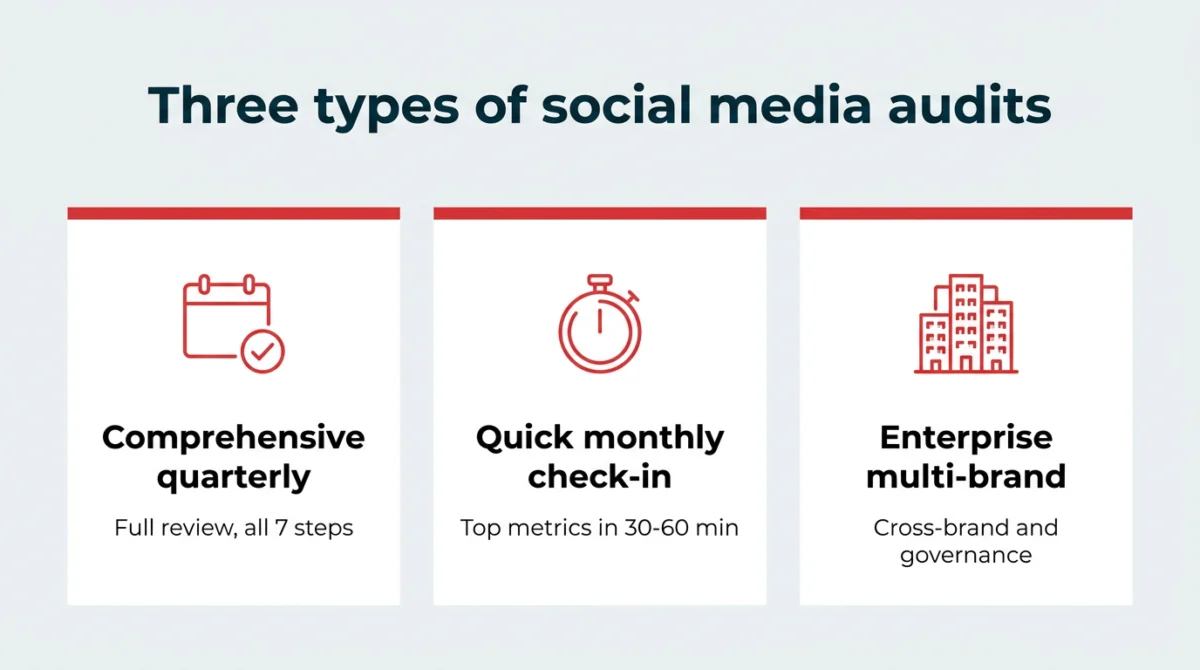
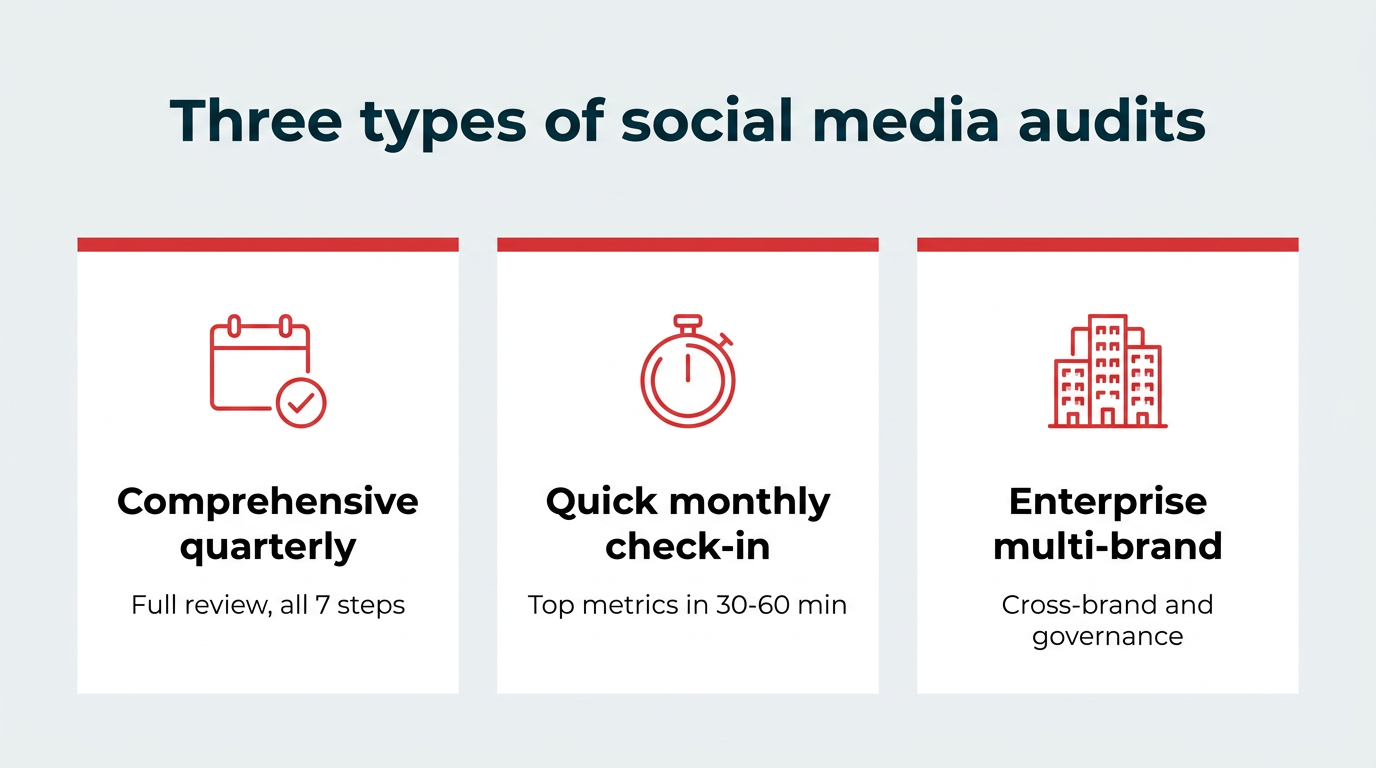
The frequency and depth of a social media audit should align with an organization’s size, campaign velocity, and strategic objectives. Audits are not one-size-fits-all; different approaches cater to varying needs:

- Comprehensive Quarterly Audit: This is the full, seven-step review, typically conducted by a social media manager or a dedicated team over several hours. Its output is a detailed report for leadership, designed to reset priorities, inform budget decisions for the upcoming quarter, and ensure long-term strategic alignment.
- Quick Monthly Check-in: A lighter, more focused review, often taking 30 to 60 minutes. It concentrates on top-line metrics, identifying best and worst-performing posts, and catching any immediate branding inconsistencies. The goal is early trend spotting and proactive problem resolution between more extensive audits.
- Enterprise Multi-Brand Audit: Designed for large organizations managing numerous brands, regional accounts, or business units. This audit emphasizes cross-brand consistency, regional adaptations, and robust governance alongside standard performance and competitive benchmarking. It typically involves coordination across multiple teams and highlights alignment, divergence, and compliance gaps.
Leveraging Technology: Tools for an Efficient Audit
While manual audits using spreadsheets and native platform analytics are feasible, they are often time-consuming and prone to human error, particularly for larger organizations. Specialized social media audit tools significantly streamline the process by consolidating data, automating analysis, and providing richer insights.

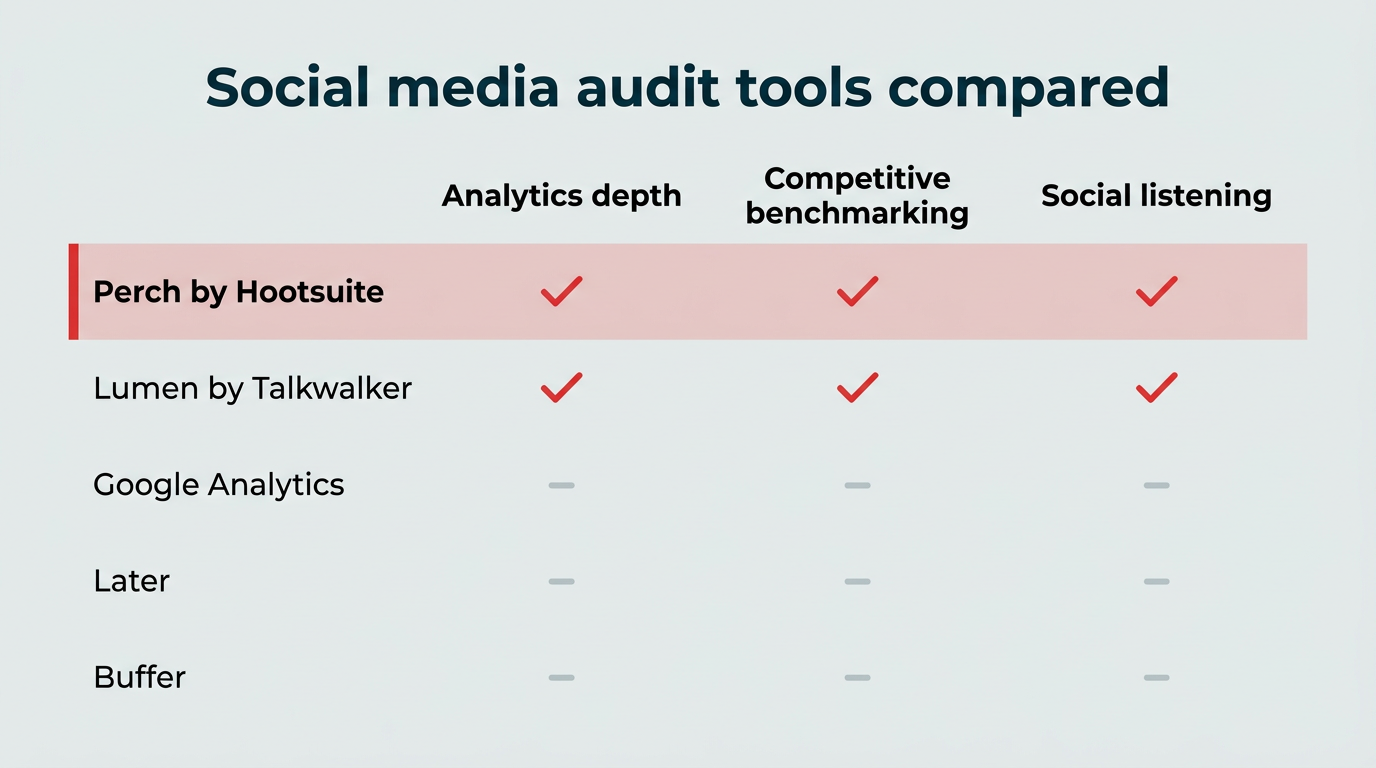
- All-in-One Social Media Management Platforms: Tools like Perch by Hootsuite offer customizable analytics, competitive analysis, industry benchmarking, and social listening capabilities from a single dashboard. They allow users to review growth, engagement, audience behavior, and channel performance in one integrated workflow, greatly reducing the time and effort involved.
- Web Analytics Platforms: Google Analytics, while primarily focused on website performance, is crucial for tracking how social media campaigns drive traffic and conversions to a brand’s website, providing vital data for ROI calculations.
- Advanced Social Listening Tools: Platforms like Lumen (part of the Hootsuite Social OS) specialize in tracking online conversations, monitoring sentiment, identifying trends, and understanding brand perception across various social networks and the broader web. These tools are invaluable for audience insights and crisis management.
- Content Planning and Basic Analytics Tools: Platforms like Later and Buffer offer strong features for content scheduling and provide basic analytics on post-performance and engagement. While useful for content optimization, they typically lack advanced competitive or social listening functionalities.
The emergence of AI tools, such as ChatGPT, can assist with specific audit components, like analyzing content patterns or summarizing performance data. However, they cannot independently pull live analytics or replace the strategic judgment required to interpret findings and formulate actionable plans. AI features integrated into dedicated platforms, like Hootsuite’s Wisdom, are more effective as they operate directly with connected data.
The Broader Impact: Strategic Imperatives for CMOs

For CMOs and marketing leadership, the implications of regular, rigorous social media audits are profound. They foster a data-driven culture, moving marketing decisions from intuition to evidence. This leads to more efficient budget allocation, as resources can be shifted from underperforming channels or content types to those demonstrating clear ROI. Audits also enable agile strategy adaptation, allowing brands to quickly respond to changes in algorithms, audience preferences, or competitive pressures. Critically, they enhance brand protection by ensuring compliance, consistency, and prompt identification of reputational risks. Ultimately, a well-executed social media audit is not merely an operational task; it is a strategic imperative that underpins successful digital engagement, drives measurable business outcomes, and sustains brand vitality in an ever-evolving digital world. The commitment to regular audits ensures that a brand’s social media presence is not just active, but strategically effective and continuously optimized.