

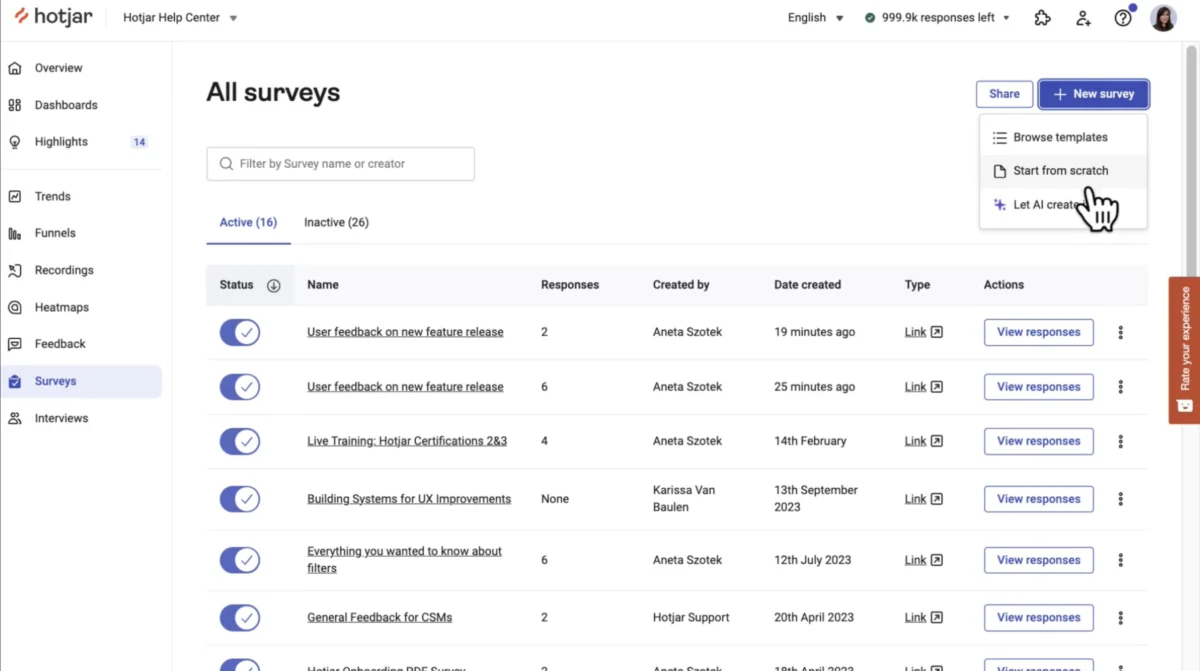
The landscape of digital experience analytics has undergone a significant transformation over the last decade, evolving from basic traffic monitoring to a sophisticated ecosystem of behavioral tracking and qualitative feedback. In this increasingly competitive market, two platforms have emerged as primary contenders for teams seeking to bridge the gap between what users do and why they do it: Pulse, a core component of the VWO AB Tasty optimization suite, and Hotjar, a long-standing leader in behavioral analytics that recently finalized its full integration into the Contentsquare ecosystem. While both platforms offer overlapping features such as on-site surveys and sentiment analysis, their underlying philosophies, technical architectures, and strategic integrations diverge significantly, creating distinct value propositions for different types of product and marketing teams.
The Evolution of User Feedback: From Standalone Tools to Integrated Platforms
To understand the current state of Pulse and Hotjar, one must look at the trajectory of the Conversion Rate Optimization (CRO) and User Experience (UX) industries. Historically, teams were forced to "duct-tape" various tools together—using one for heatmaps, another for surveys, and a third for A/B testing. This fragmentation often led to data silos where the "why" behind a user’s behavior was disconnected from the "what" of their actions.
Pulse was developed by VWO (now part of VWO AB Tasty) specifically to solve this fragmentation. By building a Voice of Customer (VoC) tool directly into an experimentation platform, Pulse allows teams to move seamlessly from identifying a point of friction to launching a corrective experiment. Conversely, Hotjar built its reputation as a democratizing force in the industry, offering accessible heatmaps and session recordings to small and medium-sized businesses. However, its trajectory shifted in 2021 upon its acquisition by Contentsquare, culminating in a full merger in July 2025. This merger represents a move toward enterprise-grade "Experience Analytics," where Hotjar’s ease of use is being combined with Contentsquare’s deep data science capabilities.
Strategic Merger: The Hotjar-Contentsquare Chronology
The transition of Hotjar from a standalone startup to a module within a global enterprise platform is a critical factor for teams making a purchasing decision today. In July 2025, Hotjar officially completed its integration into Contentsquare, marking the end of its existence as an independent entity for new signups. The platform’s features are now reorganized into three distinct paid modules: Experience Analytics (covering heatmaps and recordings), Voice of Customer (covering surveys and feedback widgets), and Product Analytics (focusing on funnels and retention).
This modular approach reflects a broader trend in the SaaS industry toward consolidation. While the merger provides Hotjar users with potential access to enterprise features like Heap’s product analytics, it has also introduced a more complex pricing structure. New users must navigate the Contentsquare ecosystem, which may feel more cumbersome for small teams that originally sought Hotjar for its simplicity. For existing Hotjar loyalists, the merger offers a more robust path toward enterprise-level insights but requires a higher degree of investment to unlock the full "360-degree view" of the customer journey.

Pulse and the VWO AB Tasty Ecosystem: A Unified Loop
While Hotjar has moved toward the "Experience Analytics" category, Pulse remains firmly rooted in the "Experimentation and Optimization" category. Pulse is designed for teams that view feedback not just as a research report, but as the raw material for growth experiments. As part of the VWO AB Tasty platform—which serves over 3,000 businesses globally—Pulse is integrated into a full-stack suite that includes A/B testing, personalization, and server-side experimentation.
The primary advantage of the Pulse architecture is the "experimentation loop." When a user provides feedback via a Pulse micro-survey indicating confusion on a checkout page, that data point can immediately trigger an insight in VWO’s Testing module. This eliminates the manual step of exporting feedback from a survey tool and importing it into a testing tool. For high-velocity product teams, this reduction in "friction-to-action" is a significant competitive advantage.
Technical Capabilities: Survey Deployment and Targeting
The efficacy of a feedback tool is often determined by its ability to reach the right user at the right moment without being intrusive. Pulse and Hotjar approach this through different technical lenses.
Pulse: Native Mobile and Event-Based Precision
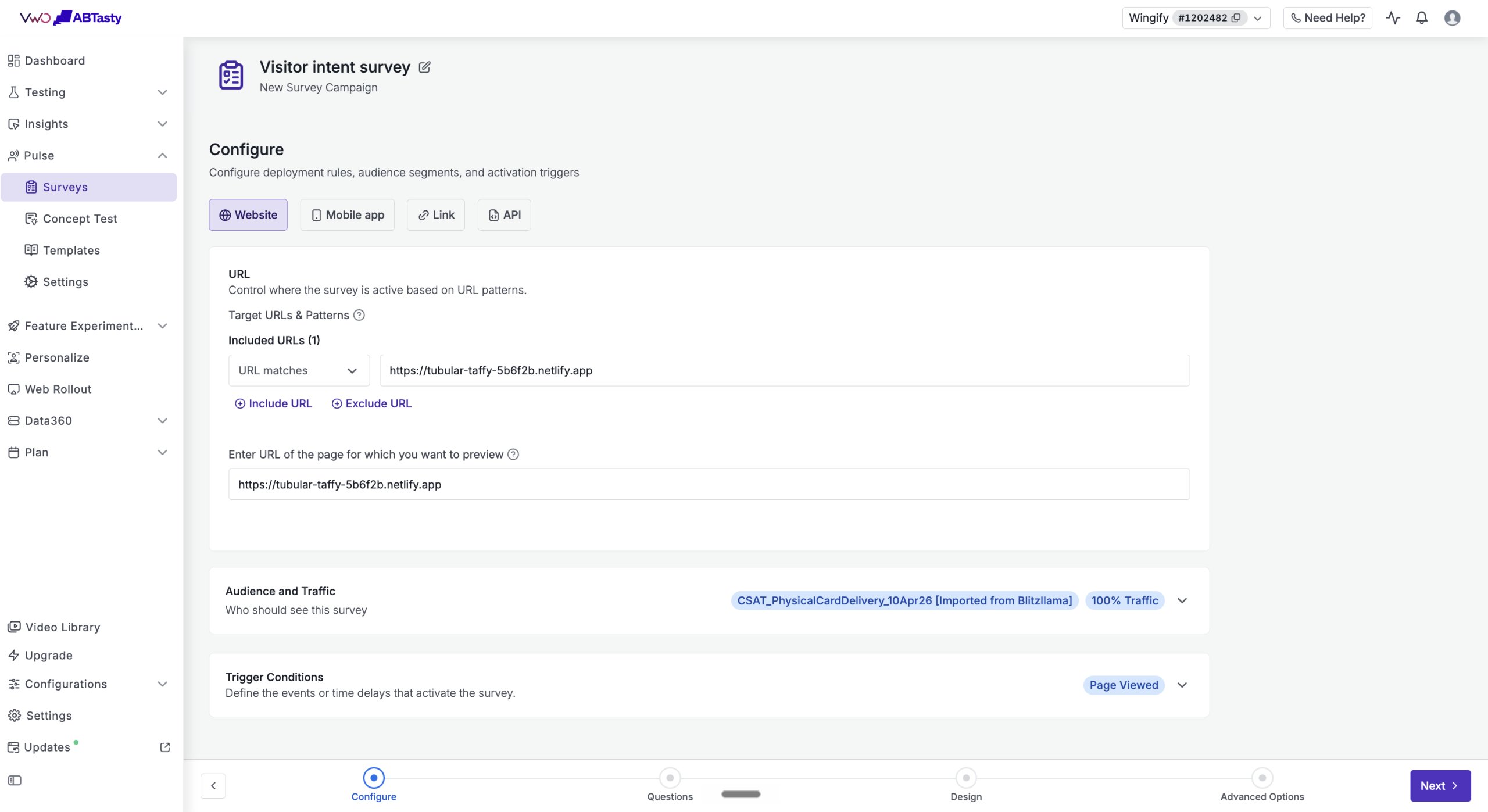
Pulse excels in its support for native mobile applications. It provides dedicated SDKs for iOS, Android, React Native, and Flutter, allowing product managers to trigger surveys based on in-app events or specific screen views. This is a critical distinction for mobile-first companies. Furthermore, Pulse’s targeting is designed to be "no-code," enabling marketing teams to segment users by behavioral attributes—such as those who have visited a specific page three times or those who have spent more than two minutes on a high-intent URL—without developer intervention.
Hotjar: Diverse Formats and Passive Feedback
Hotjar offers a broader variety of web-based survey formats, including popovers, embedded surveys, and full-screen interventions. One of its standout features is the passive "feedback widget," a small tab that sits on the side of a webpage, allowing users to report issues or give praise at any time. While Hotjar supports event-based triggers, its implementation often requires developer setup through its JavaScript Events API, which may pose a hurdle for less technical marketing teams. However, for web-based research, Hotjar’s versatility in survey presentation remains highly regarded.
AI Analysis: Turning Qualitative Data into Quantitative Insight
The "analysis paralysis" caused by thousands of open-ended survey responses is a common challenge for UX researchers. Both Pulse and Hotjar have integrated Artificial Intelligence to automate the processing of qualitative data.

Pulse’s AI focuses heavily on the feedback layer. It automatically categorizes responses into themes and sentiment (positive, neutral, negative), providing actionable summaries that highlight the most pressing user concerns. This allows teams to quickly identify recurring "pain points" without reading every individual submission.
Hotjar’s AI, bolstered by Contentsquare’s technology, takes a wider scope. It provides summaries not just for surveys, but also for session replays and error logs. By automatically tagging sessions where users experienced technical friction and cross-referencing them with negative survey sentiment, Hotjar provides a multi-dimensional view of the user experience. The choice between the two often depends on whether a team needs deep, focused feedback analysis (Pulse) or a broader, automated overview of technical and behavioral friction (Hotjar).
Market Data and Supporting Analysis
Industry data suggests that the demand for integrated feedback tools is rising. According to market research on the Digital Experience Platform (DXP) market, businesses that utilize real-time user feedback in their development cycles see a 15-25% higher conversion rate compared to those relying solely on quantitative data.
Furthermore, the shift toward mobile usage—where mobile traffic now accounts for over 58% of global web traffic—places a premium on tools like Pulse that offer native mobile support. For enterprises, the cost of "user churn" is estimated to be significantly higher than the cost of implementing a VoC platform. Fact-based analysis indicates that while Hotjar’s merger with Contentsquare targets the $10 billion+ experience analytics market, Pulse targets the growing $2 billion+ A/B testing and personalization market. These distinct market focuses dictate the feature sets and integration priorities of each tool.
Chronology of User Research: Moderated vs. Unmoderated Testing
A significant differentiator in the current market is how each tool handles "concept testing" and user interviews.
- Pulse (Unmoderated Concept Testing): Pulse allows teams to run unmoderated concept tests, where real users can provide feedback on designs or prototypes before a single line of code is written. This is aimed at "shifting left"—catching usability issues early in the design phase.
- Hotjar (Moderated Interviews via Engage): Through its "Engage" module, Hotjar offers access to a pool of over 200,000 testers for moderated one-on-one interviews. This is a more traditional UX research approach that allows for deep-dive conversations, making it a preferred choice for research-heavy organizations that prioritize qualitative depth over high-velocity experimentation.
Broader Impact and Final Implications for Selection
The decision between Pulse and Hotjar is ultimately a strategic one that depends on a team’s existing workflow and long-term goals.
Hotjar, as part of Contentsquare, is now an enterprise-ready experience analytics powerhouse. It is the logical choice for organizations that require a holistic view of the digital journey, including heatmaps, session recordings, and moderated user interviews. However, teams must be prepared for a modular pricing model and a platform that is increasingly geared toward large-scale data analysis.
Pulse is the superior choice for teams that operate within an agile, experiment-driven framework. Its native mobile support and seamless integration with the VWO AB Tasty testing suite make it an ideal tool for product managers and CRO specialists who want to turn user feedback into measurable growth. By removing the barriers between "listening" and "optimizing," Pulse provides a streamlined path to product improvement.
In the current economic climate, where efficiency and ROI are paramount, the ability to collect contextual feedback that informs immediate action is no longer a luxury—it is a necessity. Whether a team chooses the broad analytical depth of the Hotjar-Contentsquare ecosystem or the integrated experimentation loop of Pulse, the goal remains the same: to stop guessing and start listening to the voice of the customer.







