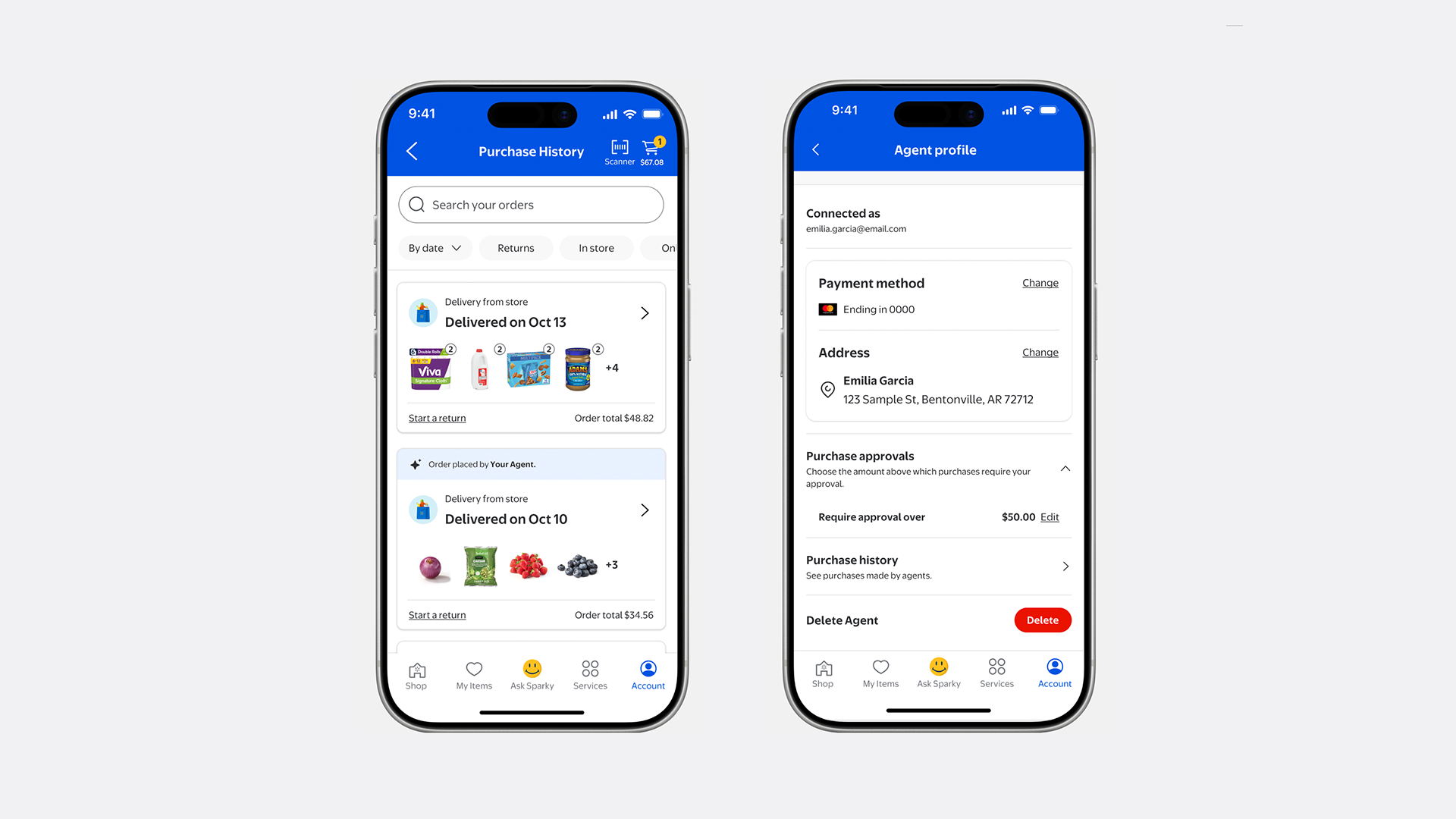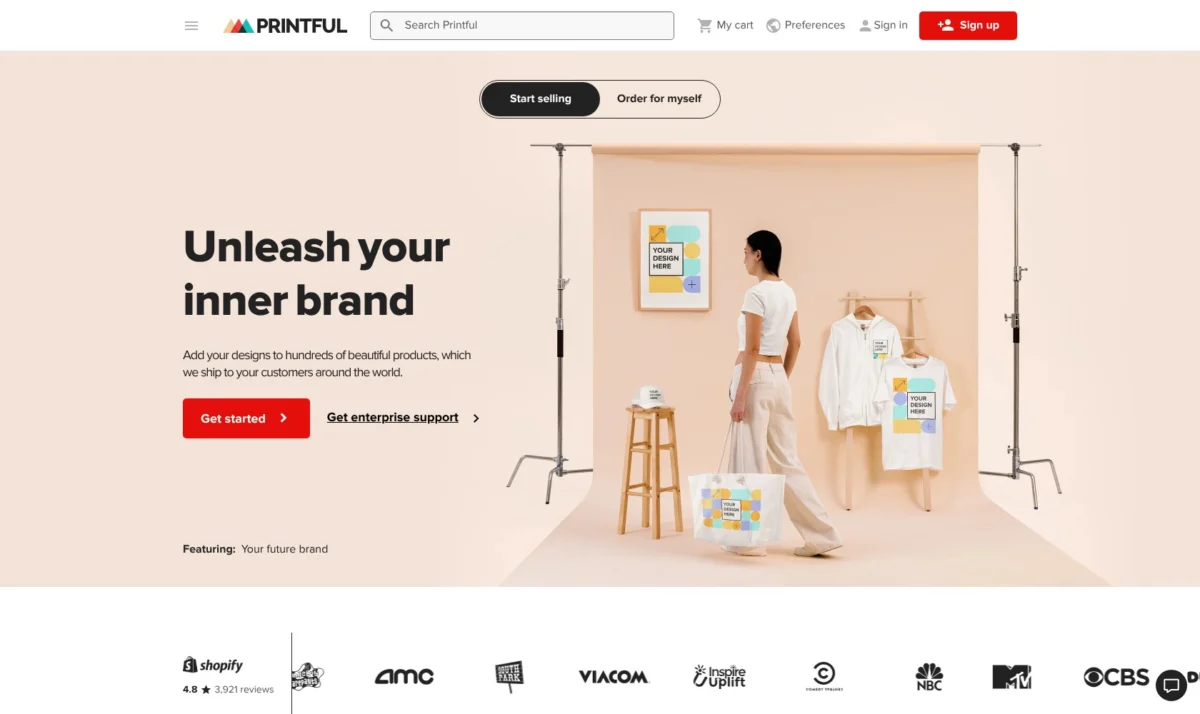
In an era where digital saturation has made generic advertising increasingly ineffective, Instapage has announced the launch of AI Collections, a sophisticated automation suite designed to bridge the gap between personalization strategy and technical execution. The release addresses a long-standing bottleneck in the digital marketing industry: the prohibitive manual labor required to create unique, high-converting landing pages for diverse audience segments. By integrating generative artificial intelligence with a centralized content management architecture, Instapage claims that marketing teams can now deploy personalized campaigns up to three times faster than through traditional manual workflows.
The digital marketing landscape has reached a critical inflection point where personalization is no longer a luxury but a baseline consumer expectation. According to recent industry reports from McKinsey & Company, approximately 71% of consumers expect companies to deliver personalized interactions, and 76% get frustrated when this does not happen. Despite this demand, the execution of large-scale personalization has historically been hindered by the "duplication trap"—the necessity of manually cloning pages, editing copy for individual keywords, and managing disparate assets across hundreds of URLs. AI Collections seeks to eliminate this friction by transforming the landing page from a static file into a dynamic, data-driven template.
The Evolution of the Post-Click Experience
To understand the significance of AI Collections, one must examine the chronology of landing page technology. In the early 2010s, the industry standard was the static landing page, where one design served all traffic sources regardless of intent or demographic. By the mid-2010s, "Dynamic Text Replacement" (DTR) emerged, allowing marketers to swap out specific words—usually keywords—based on the user’s search query. However, DTR was often limited by layout constraints; if a replaced word was too long, it would break the design.
The current decade has seen a shift toward "Post-Click Automation," a category Instapage helped pioneer. This involves aligning the ad copy with the landing page content to ensure a seamless transition for the user. However, even with modern builders, scaling this to accommodate 50 different audience segments remained a logistical nightmare involving complex spreadsheets and hours of repetitive data entry. The introduction of AI Collections marks the next stage in this evolution: AI-orchestrated content generation.
Technical Framework: How AI Collections Operates
At its core, AI Collections functions as a bridge between a master design template and a structured database. The system utilizes three primary technological pillars to accelerate production:
1. Automated AI Placeholders
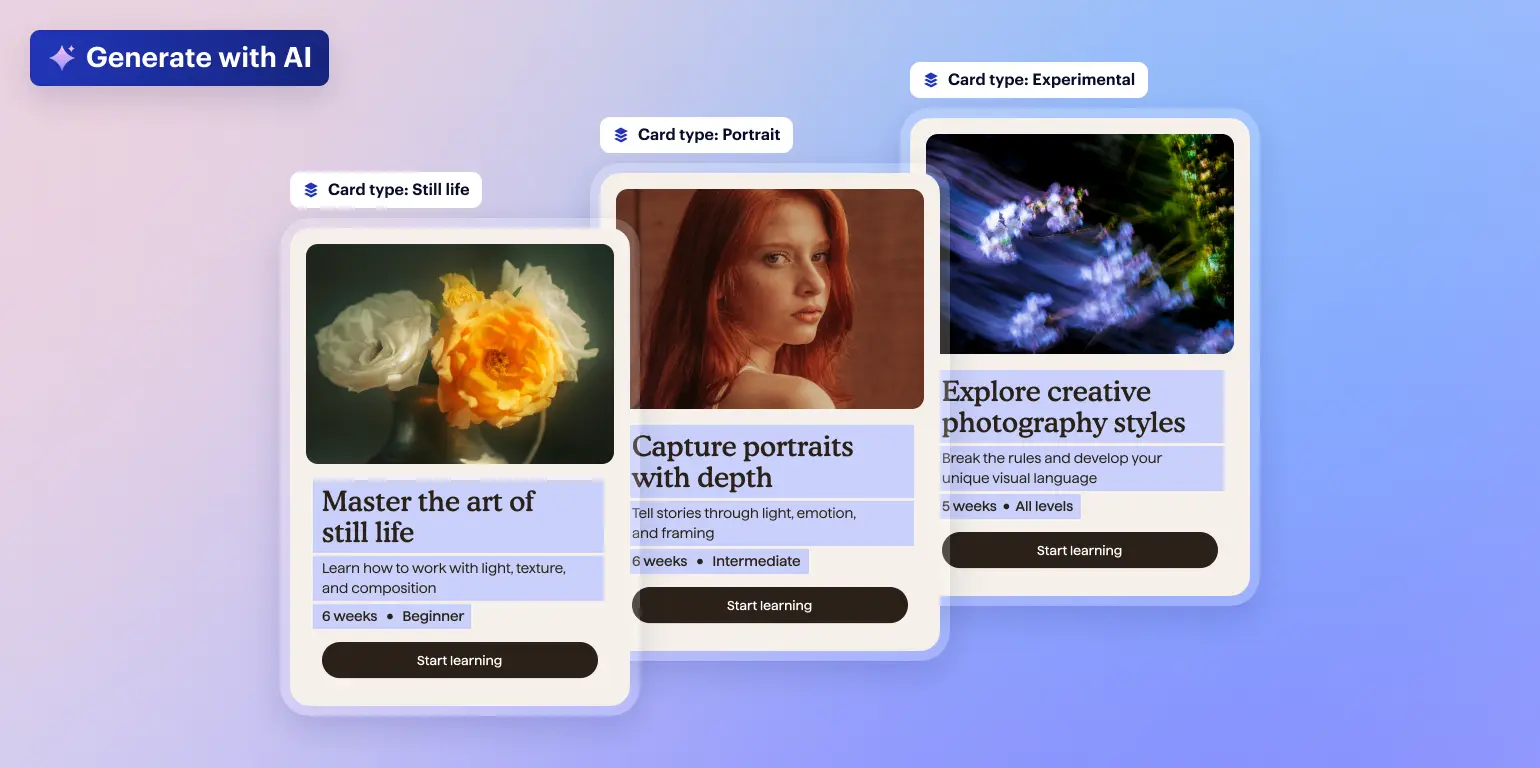
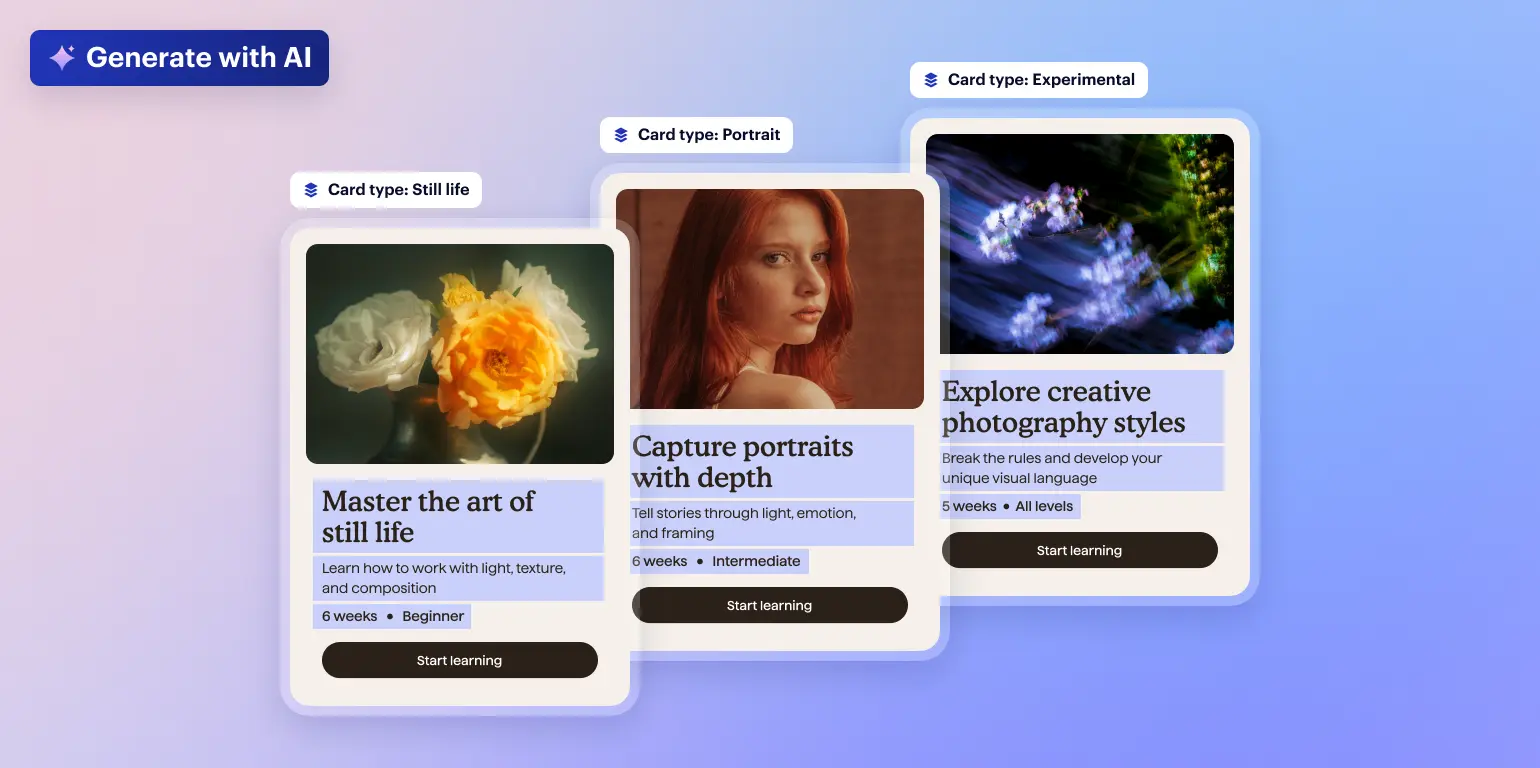
The first hurdle in page personalization is identifying which elements should remain static and which should be dynamic. Traditionally, a designer would have to manually tag every headline, subhead, and image intended for customization. AI Collections utilizes machine learning algorithms to analyze the page layout and automatically suggest "placeholders." These are smart zones where the AI recognizes that a unique value—such as a city name, a specific value proposition, or a localized hero image—should be inserted. This automated analysis removes the need for manual tagging, allowing marketers to move from a single design to a multi-page template in seconds.
2. Centralized Content Tables
Rather than forcing marketers to navigate through dozens of individual page editors, AI Collections introduces a table-based management system. In this interface, each row represents a unique URL or page variant, while each column represents a dynamic placeholder (e.g., Headline, Call to Action, Image URL). This structure mirrors the familiar environment of a spreadsheet but remains natively integrated within the page builder. By updating a single cell in the table, the marketer updates the corresponding page instantly, ensuring version control and consistency across massive campaigns.
3. Generative Content Engines
Perhaps the most transformative aspect of the tool is its ability to populate these tables using generative AI. Instead of hiring copywriters to draft 50 different variations of a landing page for 50 different industries, a marketer can provide a single prompt describing the target audience and the core objective for each row. The AI then generates publish-ready copy tailored to those specific parameters. When combined with Instapage’s "fluid grid blocks," the layout automatically adjusts to accommodate varying text lengths, preventing the design "breakage" that plagued earlier iterations of dynamic content.
Supporting Data: The Economics of Personalization
The business case for AI Collections is rooted in the significant Return on Ad Spend (ROAS) improvements associated with message relevance. Data from the Association of National Advertisers (ANA) suggests that personalized campaigns can deliver five to eight times the ROI on marketing spend and can lift sales by 10% or more.
Furthermore, the internal efficiency gains are substantial. A typical mid-market marketing team might spend 40 hours a month managing a suite of 20 personalized landing pages. By utilizing AI Collections to automate the placeholder identification and content generation phases, that same workload is reduced to approximately 13 hours. This 3x increase in velocity allows teams to test more variables and respond to market trends in real-time, rather than being bogged down by the "maintenance debt" of manual page management.
Industry Implications and Market Reaction
The launch of AI Collections has prompted reactions from across the MarTech sector. Analysts suggest that this move places Instapage in direct competition not just with other landing page builders like Unbounce or Leadpages, but with broader Content Management Systems (CMS) and Digital Experience Platforms (DXP).
"The bottleneck in digital advertising has shifted from media buying to creative production," says Marcus Thorne, a senior analyst in digital workflow automation. "We have highly sophisticated AI tools like Meta’s Advantage+ and Google’s Performance Max that can find the right audience, but if that audience clicks through to a generic page, the conversion fails. Instapage is addressing the ‘last mile’ of the marketing funnel by making the creative as scalable as the media buying."
Marketing agencies have also expressed interest in the tool’s ability to improve client margins. For agencies managing high-volume PPC (Pay-Per-Click) accounts, the ability to generate hundreds of keyword-specific pages without a proportional increase in headcount is a significant competitive advantage. Early beta testers reported that the integration of AI-driven placeholders significantly reduced the "technical fear" among non-technical marketers, enabling brand managers and copywriters to take full control of the deployment process without waiting for developer intervention.
Strategic Considerations for Implementation
While the technology offers significant speed, Instapage emphasizes that the quality of the output remains dependent on the quality of the input. The company recommends that marketing teams provide detailed context in their prompts—including target demographics, specific pain points, and brand voice guidelines—to ensure the AI-generated content aligns with broader strategic goals.
Moreover, the deployment of AI Collections is expected to change how teams approach A/B testing. Instead of testing one or two variables at a time, marketers can now deploy "collections" of pages to different segments and use aggregate data to determine which messaging pillars resonate most across the entire audience.
The Broader Impact on Digital Strategy
The introduction of AI Collections is a symptom of a larger trend: the democratization of high-end marketing capabilities. Features that were once reserved for enterprise companies with massive engineering budgets—such as hyper-localized content and audience-specific landing pages—are now accessible to small and medium-sized businesses.
As AI continues to permeate the marketing stack, the focus is shifting from how to build a page to what that page should say. By automating the mechanical aspects of page duplication and editing, Instapage is betting that marketers will reallocate their saved time toward high-level strategy and creative experimentation.
In conclusion, AI Collections represents more than just a feature update; it is a fundamental shift in the workflow of digital advertising. By solving the execution problem of personalization, Instapage is enabling a future where every click leads to a unique, relevant, and highly optimized experience. As the "Personalization Paradox" is resolved through automation, the industry may finally see the end of the generic landing page, ushering in an era of digital commerce that is as diverse as the audiences it serves.
The new feature set is currently available to Instapage users, with the company offering a 14-day trial to allow teams to benchmark the 3x speed improvements against their current manual processes. As the platform continues to refine its AI models, the integration of video personalization and advanced image generation is expected to be the next frontier in the AI Collections roadmap.


 Asro
Asro
 Dwi Wanna