rifanmuazin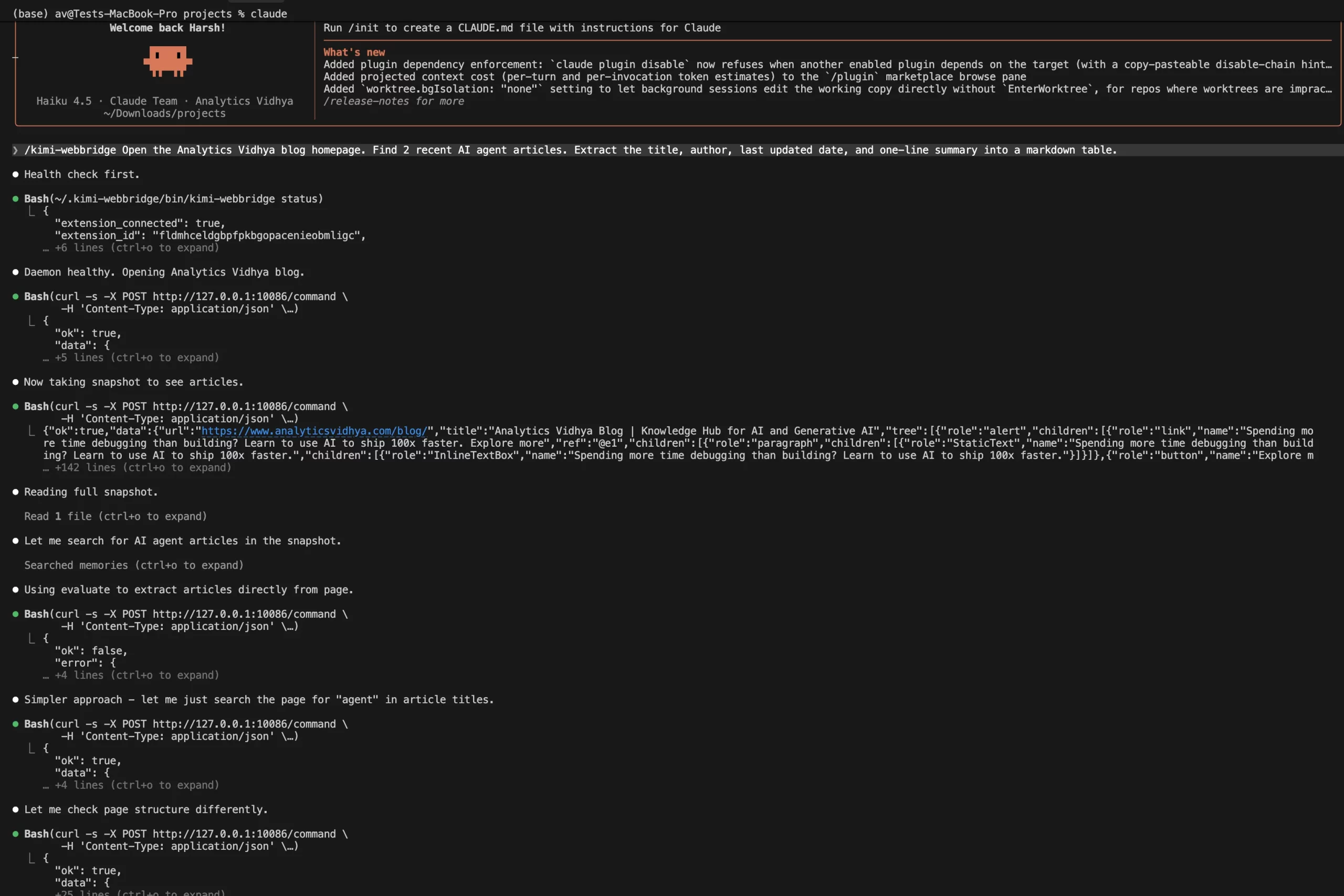
The landscape of artificial intelligence is undergoing a fundamental shift from static conversational models to “agentic” systems capable of executing complex tasks within digital environments. Moonshot AI, a prominent player in the generative AI sector, has introduced Kimi WebBridge, a browser extension designed to empower local AI agents with the ability to interact directly with web browsers like Google Chrome and Microsoft Edge. This development represents a significant milestone in the evolution of Large Action Models (LAMs), moving beyond simple text generation to autonomous web navigation, data extraction, and multi-step workflow execution.
The Emergence of Browser-Based AI Agents
For the past several years, Large Language Models (LLMs) have been primarily confined to chat interfaces, relying on users to copy and paste information between the AI and other applications. Kimi WebBridge breaks this barrier by acting as a sophisticated intermediary, or “bridge,” between a user’s local AI agent—such as Claude Code, Cursor, or Kimi Code—and the live browser environment.
Unlike cloud-based automation tools that spin up remote, headless browsers, Kimi WebBridge operates locally. This distinction is critical for both privacy and utility. By running within the user’s existing browser session, the AI agent can leverage active login states, cookies, and saved preferences. This allows the agent to interact with websites exactly as a human user would, accessing authenticated dashboards, internal enterprise tools, and subscription-based content without requiring complex API integrations or re-authentication.
Technical Architecture: A Local-First Approach
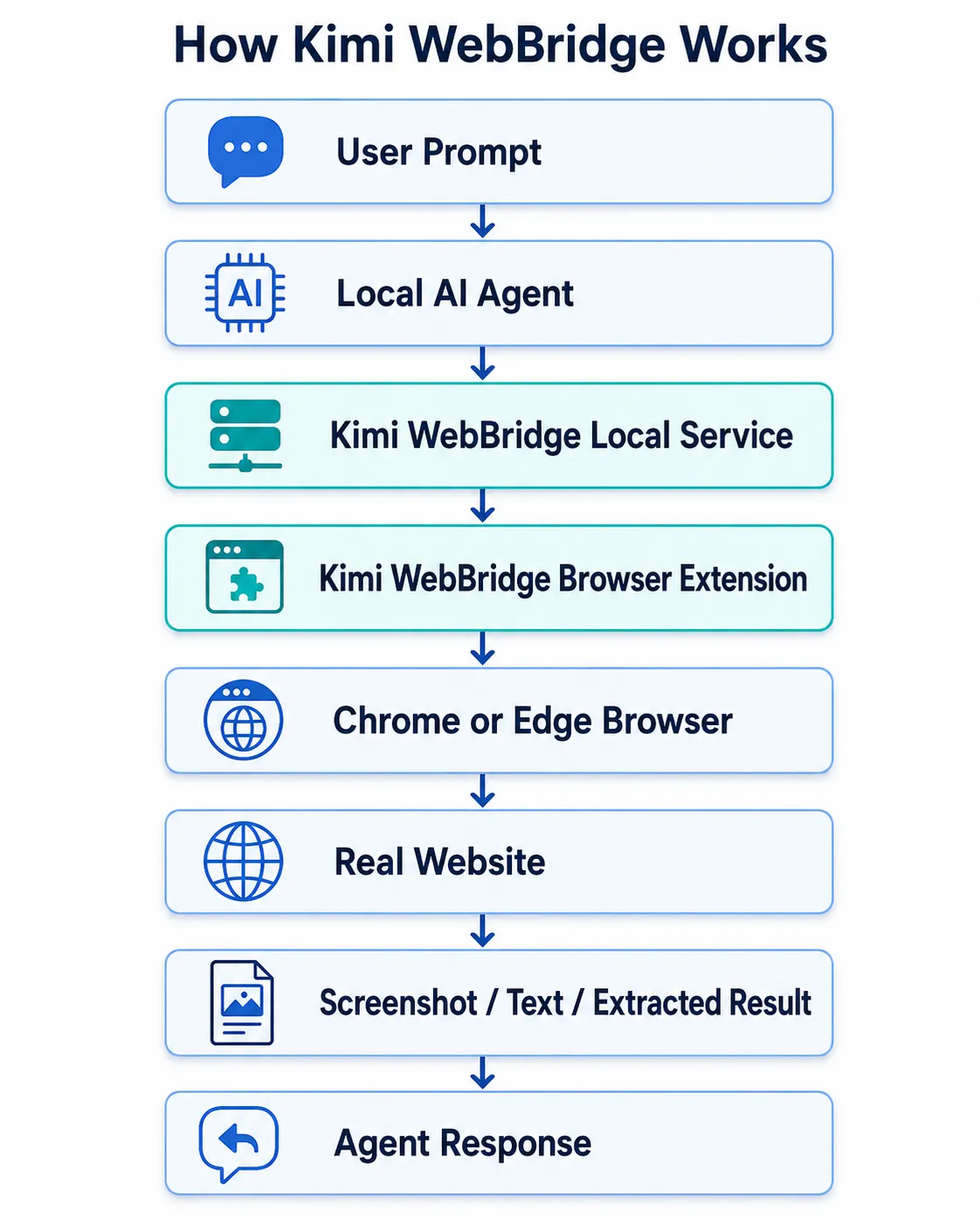
Kimi WebBridge is built on a “local-first” philosophy, prioritizing data sovereignty and low-latency execution. The system architecture comprises three primary components: a local bridge service, the browser extension, and a local security isolation layer.
At the heart of its operation is the Chrome DevTools Protocol (CDP). CDP is a low-level instrumentation protocol used to inspect, debug, and profile Chromium-based browsers. By utilizing CDP, Kimi WebBridge provides AI agents with granular control over the browser’s internal domains, including the Document Object Model (DOM), Network, Page, Runtime, and Input.
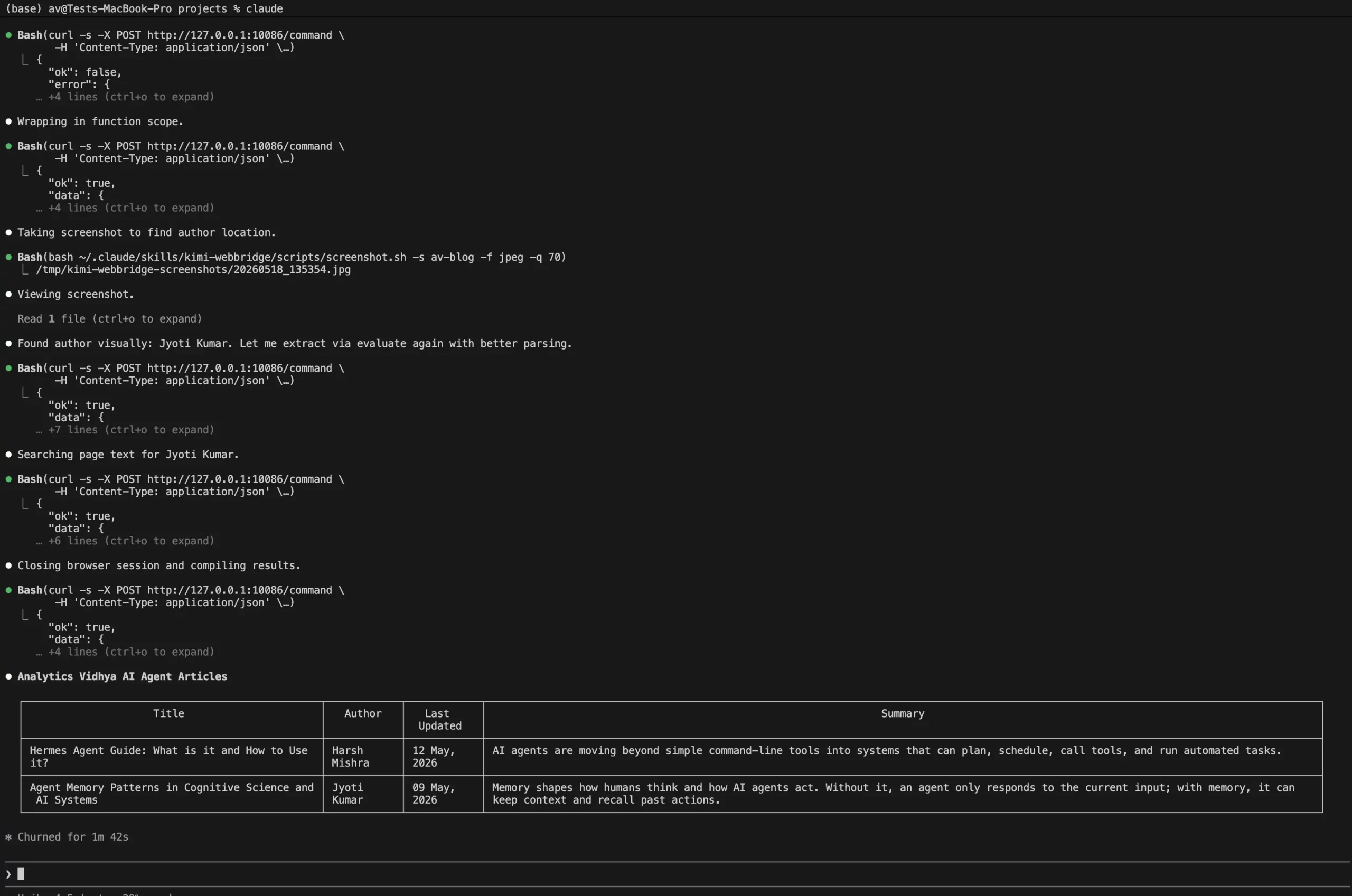
When an agent receives a command—such as “find the latest financial reports on this portal and summarize them”—the instructions flow from the agent to the local bridge service. The bridge then translates these high-level objectives into CDP commands, which the browser extension executes within the active window. This process allows the agent to:
- Navigate and Interact: Open new URLs, click buttons, and scroll through pages.
- Form Manipulation: Automatically fill out complex forms and submit data.
- Data Extraction: Parse HTML and extract specific data points into structured formats like JSON or Markdown.
- Visual Context: Take screenshots of specific elements or entire pages to provide the AI with visual “eyes” to understand layout and UI changes.
Installation and the Integration Timeline
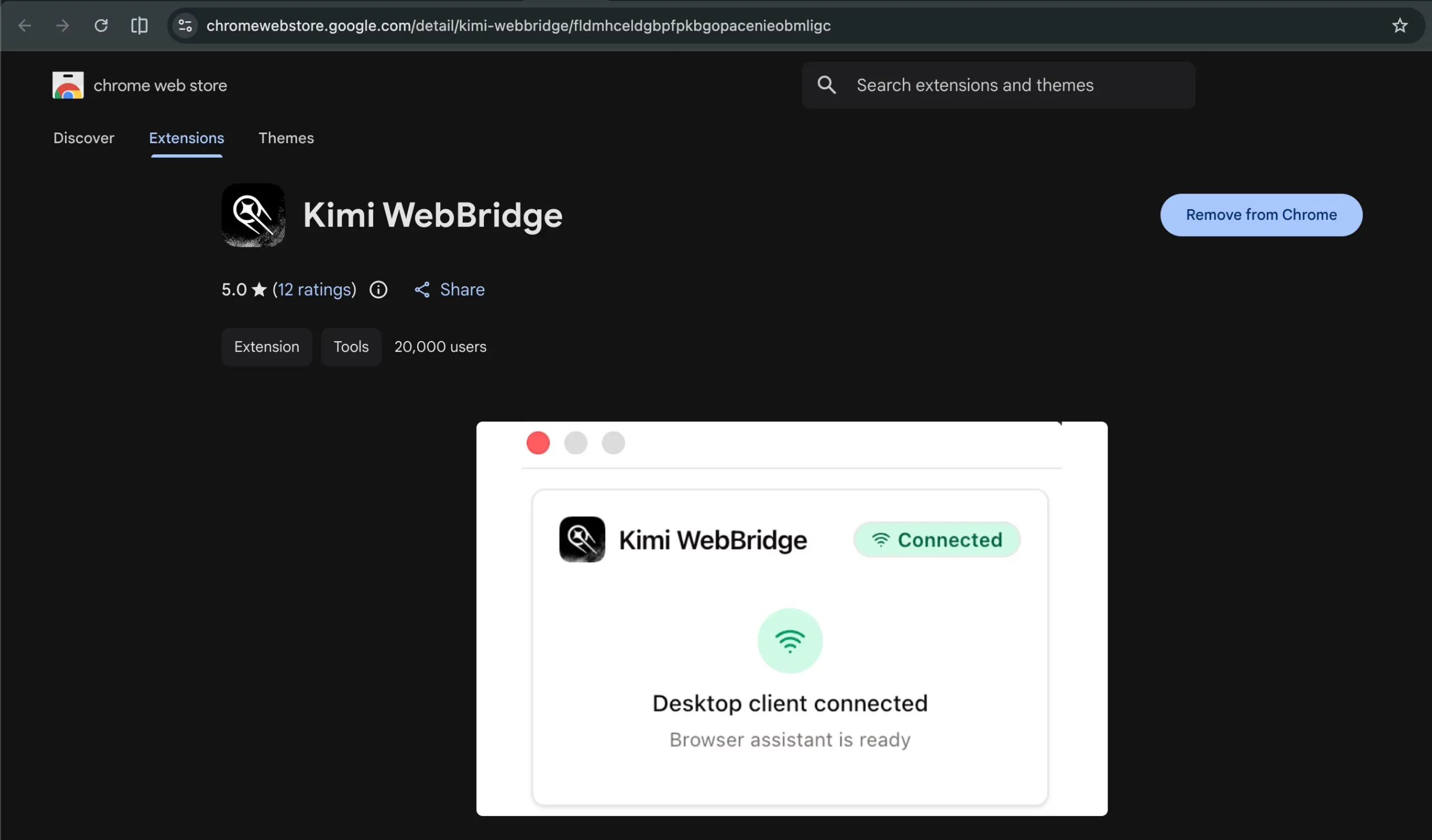
The release of Kimi WebBridge version 1.9.7 in May 2026 marks a period of rapid iteration for Moonshot AI. The installation process reflects the tool’s focus on developers and power users. To deploy the system, users must first install the extension via the Chrome Web Store or Edge Add-ons gallery.
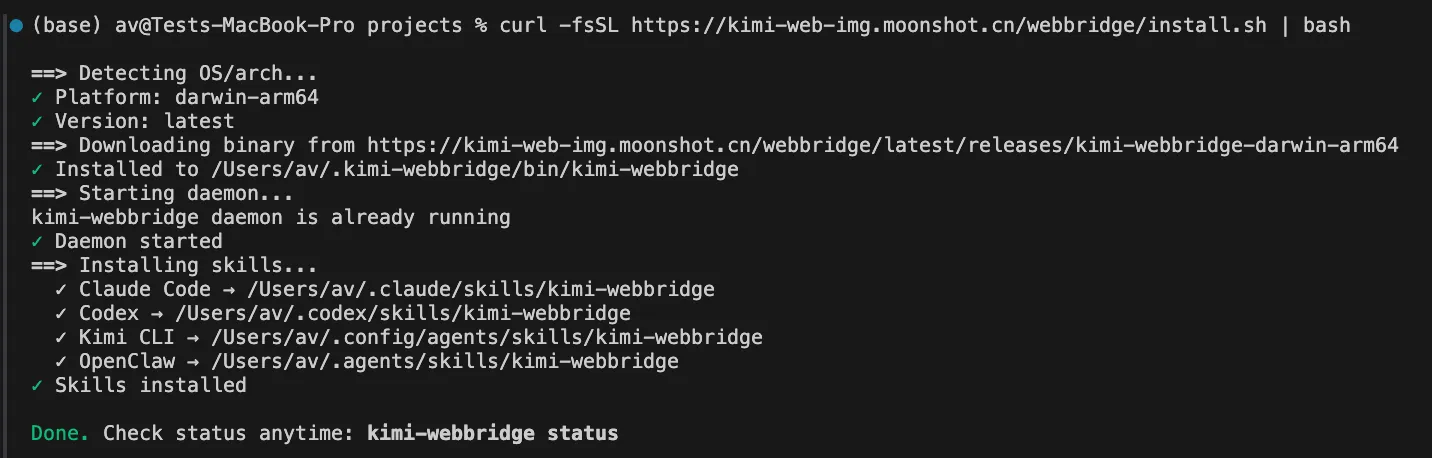
Following the extension setup, a local bridge must be established via a terminal command. The standard deployment involves a shell script:
curl -fsSL https://kimi-web-img.moonshot.cn/webbridge/install.sh | bash
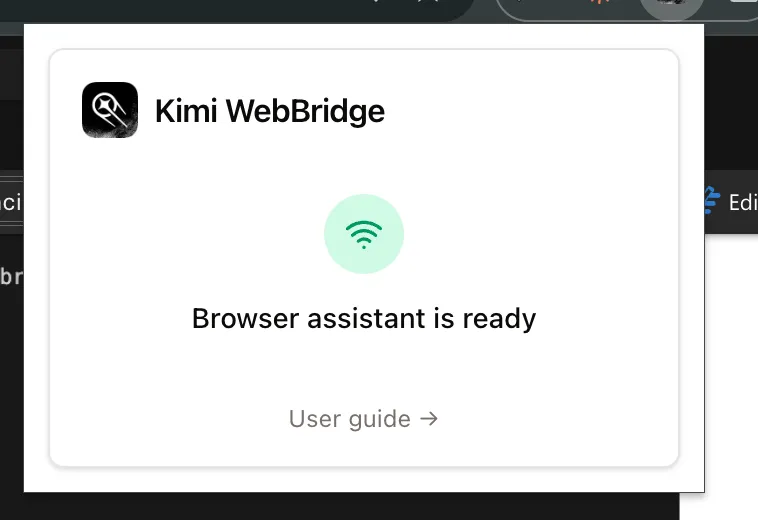
This script configures the local environment, ensuring that the AI agent can communicate with the browser via the designated port. Once the path is exported and the service is active, users can verify the connection status directly through the extension’s interface. A “Connected” status indicates that the agent now has full operational access to the browser’s active tabs.

The integration is designed to be agent-agnostic. While developed by Moonshot AI, WebBridge supports a wide array of popular coding and productivity agents, including:
- Claude Code: Anthropic’s developer-focused command-line tool.
- Cursor: An AI-native code editor.
- Codex and Hermes: Specialized agents for automated research and technical workflows.
- Kimi Code: Moonshot’s proprietary agent.
Research and Workflow Automation in Practice
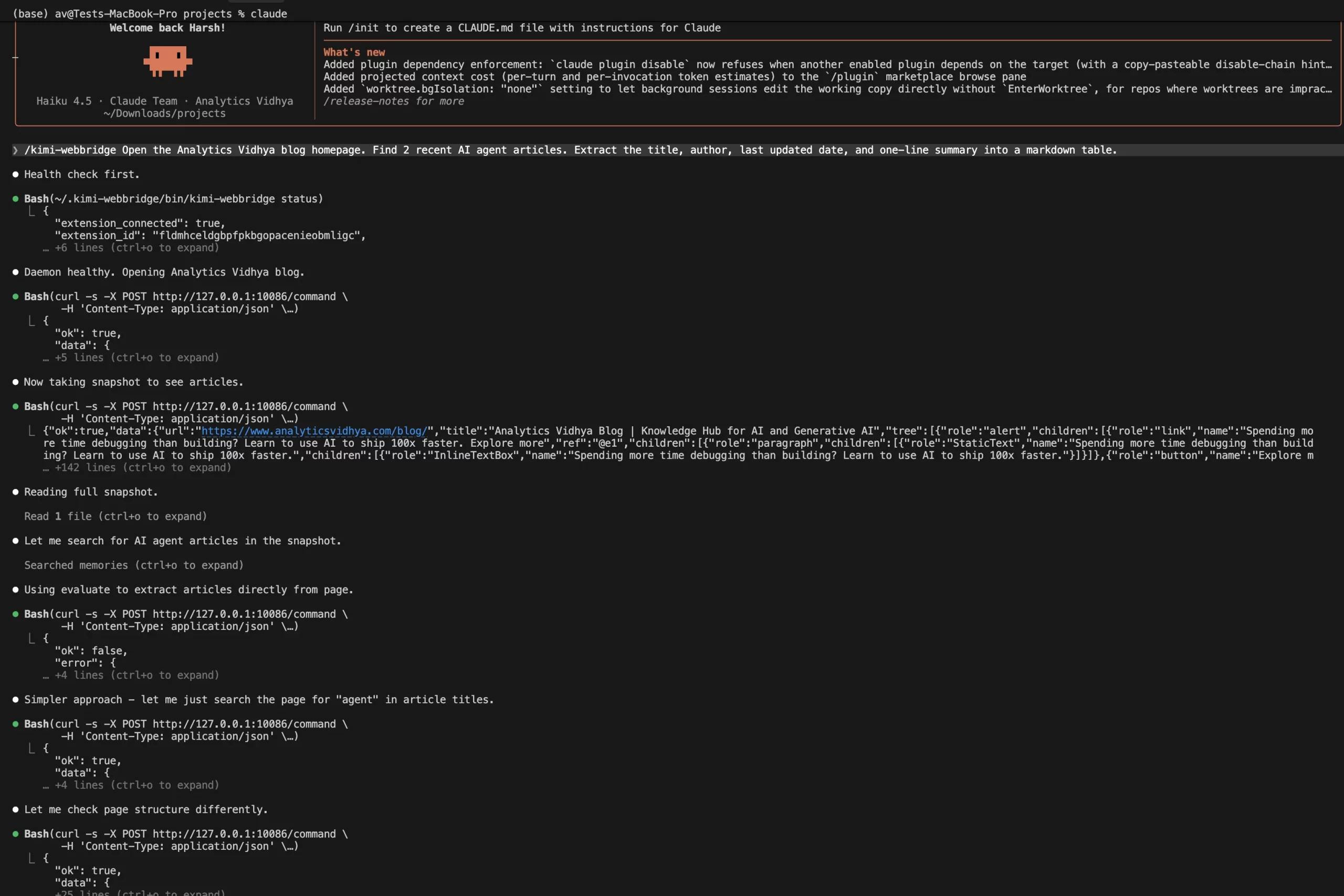
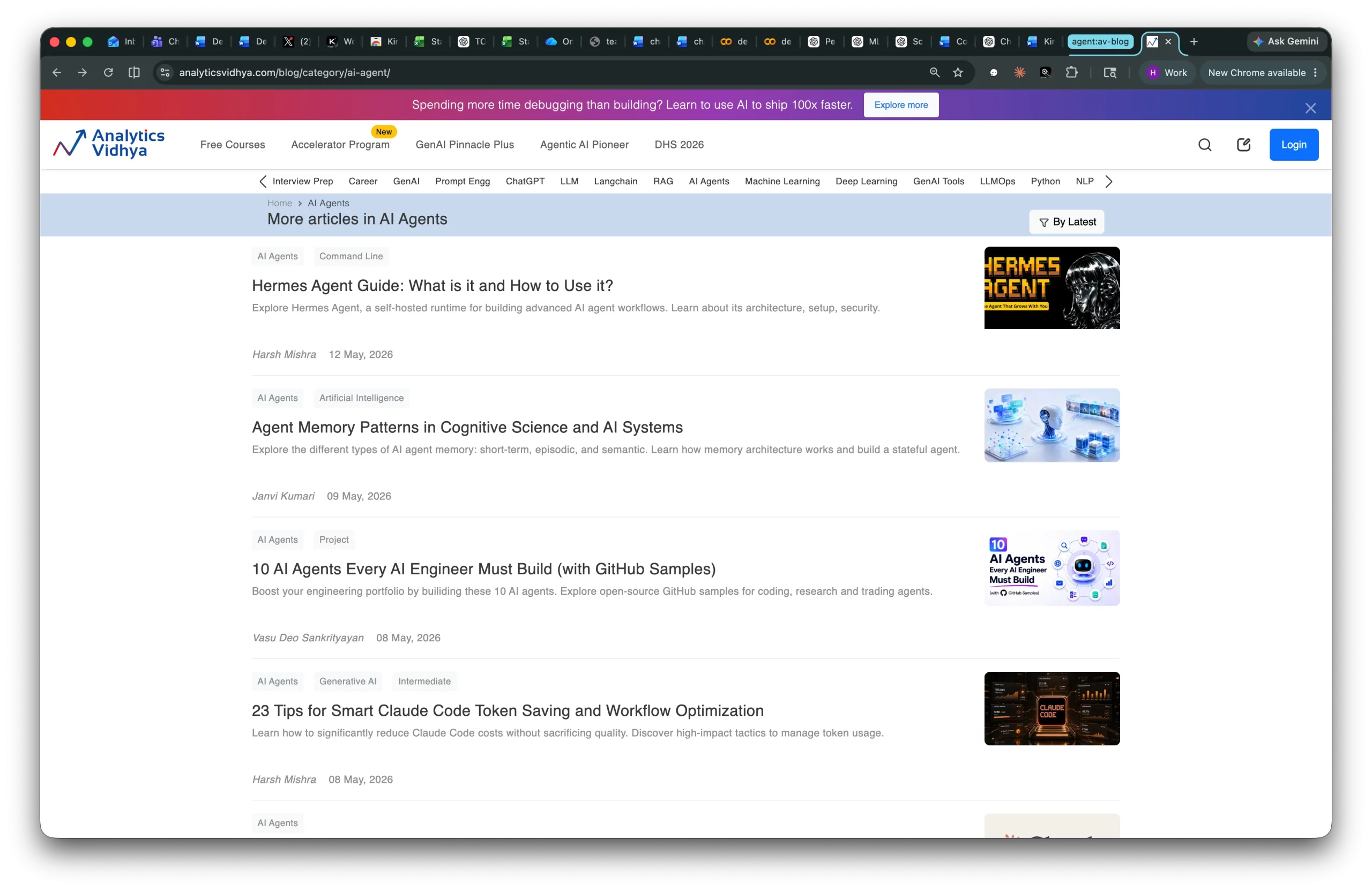
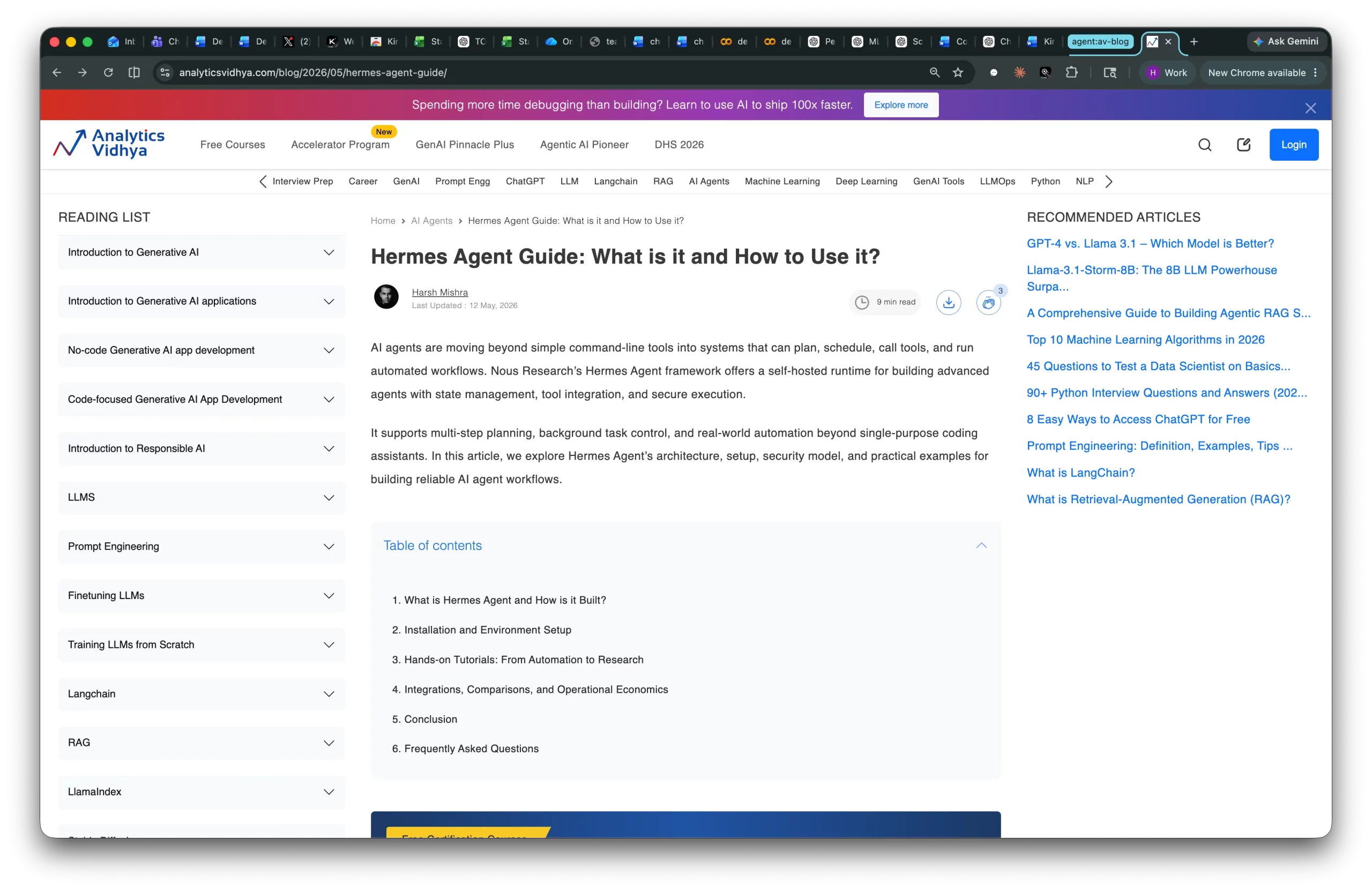
The practical value of Kimi WebBridge is best demonstrated through its ability to automate “human-in-the-loop” research. Traditional web scraping often fails when confronted with dynamic content, infinite scrolling, or bot-detection mechanisms. Because WebBridge operates through a real browser session, it bypasses many of these hurdles.
In a typical research workflow, a user might prompt an agent: “Go to LinkedIn, search for top AI engineers at major tech firms, and compile a CSV of their profiles.” Under the hood, WebBridge performs a sequence of actions:
- Search Execution: The agent navigates to LinkedIn and types the query into the search bar.
- Pagination and Loading: The agent scrolls through the results, ensuring dynamic content is fully rendered.
- Profile Inspection: It clicks on individual profiles to gather deep data.
- Structured Export: It extracts names, titles, and URLs, formatting them into a downloadable CSV file.
This capability reduces hours of manual “tab-hopping” into minutes of automated processing. For analysts and content creators, the tool can be used to monitor competitor blogs, extract pricing data from e-commerce sites, or summarize long-form documentation across multiple domains.
Competitive Landscape: WebBridge vs. Playwright and Browserbase
Kimi WebBridge enters a market with established players, yet it carves out a unique niche. Its primary competitors include Microsoft’s Playwright MCP and cloud-based solutions like Browserbase.
- Playwright MCP: This is a developer-centric tool that uses the Model Context Protocol (MCP) to allow LLMs to interact with web pages via accessibility snapshots. While powerful, it often requires more extensive configuration and is typically used for testing and development rather than as a personal productivity layer for existing browser sessions.
- Browserbase: As a cloud-based platform, Browserbase provides headless browser infrastructure at scale. It is ideal for enterprise-grade scraping and large-scale automation but introduces concerns regarding data privacy and the handling of authenticated sessions, as the browser exists on a remote server.
- Kimi WebBridge: Its strength lies in its “local-control” model. By using the user’s real, authenticated browser, it provides a level of convenience and privacy that cloud models cannot match. However, its limitation is its reliance on local hardware and its current lack of support for non-Chromium browsers like Safari or Firefox.
Security, Governance, and Ethical Considerations
The ability for an AI to “take action” in a browser introduces significant security risks. An agent with browser access could, in theory, initiate unauthorized financial transactions, change account passwords, or leak sensitive corporate data.
To mitigate these risks, Moonshot AI and security experts recommend a tiered approach to governance:
- Confirmation Gates: For high-risk actions, such as submitting a form or making a purchase, the system should require explicit human approval.
- Clean Profiles: For sensitive work, users are encouraged to use dedicated browser profiles with restricted access to personal accounts.
- Audit Logs: Maintaining a detailed log of every action taken by the agent—every click, every URL visited, and every piece of data extracted—is essential for enterprise compliance.
- Domain Allowlisting: Organizations can restrict agents to specific, trusted domains to prevent data exfiltration to malicious sites.
The industry consensus is that while the technology is ready for research and data extraction, “high-stakes” automation (such as production environment changes) should remain under strict human supervision.
Broader Impact and the Future of Work
The launch of Kimi WebBridge is a clear indicator that the “Chatbot Era” is transitioning into the “Agent Era.” As AI agents become more adept at navigating the web, the browser will likely evolve from a viewing tool into a workspace where the human provides the intent and the AI handles the execution.
For businesses, this means a massive increase in productivity for administrative and analytical roles. Tasks that once required specialized RPA (Robotic Process Automation) software can now be handled by natural language prompts. For developers, it means tools like Cursor and Claude Code become even more powerful, as they can now “see” the documentation and live previews of the web applications they are building.
Moonshot AI’s move to make WebBridge local and agent-agnostic suggests a future where AI tools are decentralized and deeply integrated into our existing digital habits. As the software matures, the focus will likely shift toward improving reliability on highly dynamic websites and expanding support to a broader range of browser architectures.
In conclusion, Kimi WebBridge represents a bridge not just between software components, but between the potential of AI and the practical reality of the modern web. By enabling local agents to act on our behalf within the browser, Moonshot AI is helping to define the next frontier of human-computer interaction.