rifanmuazin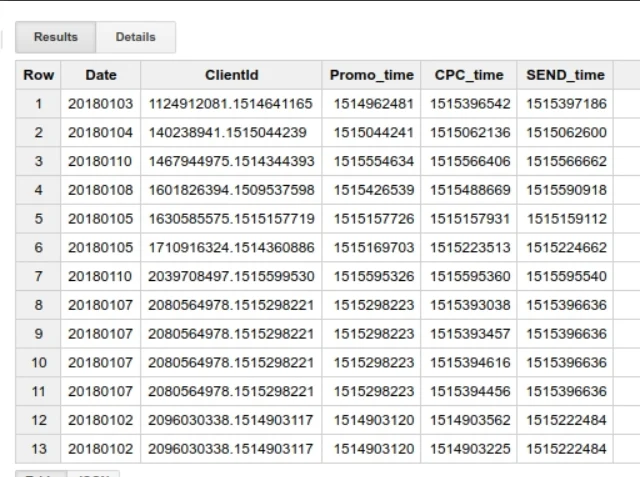
In an era where digital acquisition accounts for a significant portion of banking growth, Raiffeisen Bank’s Russian division recently identified a sophisticated pattern of affiliate marketing fraud that threatened the integrity of its marketing spend and customer data. By leveraging advanced data processing tools and partnering with web analytics firm OWOX BI, the financial institution successfully isolated fraudulent activities within its Cost Per Action (CPA) networks, uncovering a scheme where third-party affiliates were systematically hijacking traffic sources to claim unearned commissions. This discovery highlights a growing vulnerability in the digital advertising ecosystem, particularly within the competitive financial services sector, where high-value conversions make for attractive targets for bad actors.
The investigation began when Raiffeisen Bank’s marketing department noticed a troubling divergence in their performance metrics: while the costs associated with affiliate traffic were rising at an abnormal rate, the actual revenue and customer acquisition numbers remained stagnant. This discrepancy suggested that the bank was paying for “new” customers who were, in reality, already arriving at the site through organic searches or paid search campaigns. Furthermore, internal reports indicated that customers frequently experienced session breaks while completing application forms, a technical red flag that often points to external interference with the browser environment.
The Mechanics of Affiliate Hijacking and Cookie Stuffing
The core of the suspicion rested on a technique known as “source overwriting” or “cookie stuffing,” often facilitated by malicious or grey-area browser extensions. In this scenario, users might install a browser extension—frequently marketed as a tool for finding discounts or managing coupons. When a user navigates to a bank’s checkout or application page, the extension triggers a hidden script or a deceptive pop-up window offering a discount. If the user interacts with this prompt, the extension automatically rewrites the traffic source data stored in the user’s browser cookies.
From the perspective of standard web analytics, the original source of the traffic (such as a Google search or a direct visit) is replaced by the affiliate’s tracking ID. Consequently, when the user completes the application, the bank’s system attributes the conversion to the affiliate, triggering a commission payment for a customer the affiliate did not actually acquire. This practice not only inflates marketing costs but also disrupts the user experience, as the injection of new tracking parameters can cause the web session to reset, forcing the user to potentially restart a complex banking application.
A Data-Driven Chronology of the Investigation
The resolution of this challenge required a move beyond the limitations of standard web analytics. Raiffeisen Bank, which utilizes the standard version of Google Analytics, faced a significant hurdle: the platform’s standard reporting often uses sampled data and does not provide the granular, hit-level timestamps necessary to prove source substitution in real-time. To solve this, the bank collaborated with OWOX BI to implement a more robust data pipeline.
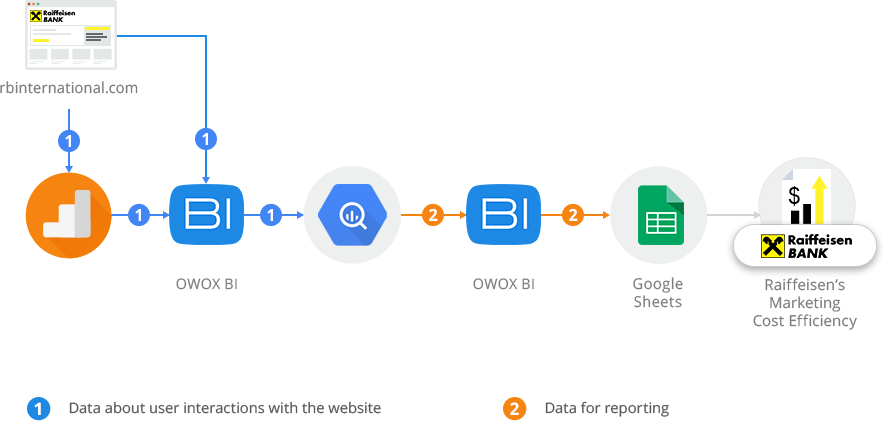
The chronology of the intervention followed a structured three-step process designed to move from suspicion to actionable evidence. First, the team established a data stream from the bank’s website directly into Google BigQuery via the OWOX BI Pipeline. This allowed for the collection of unsampled, raw data in near real-time. Unlike standard analytics, this approach captured the actual timestamp of every hit, enabling analysts to track the precise sequence of user actions across what the system perceived as different sessions.
Second, the analysts began processing this raw data to identify the “fingerprints” of fraud. They focused on a specific anomaly: users who appeared to start a new session on the exact same page where their previous session had just ended, with the transition occurring in less than 60 seconds. By filtering for instances where the traffic source changed from “Organic” or “CPC” (Cost Per Click) to a “CPA” affiliate ID during this brief window, the team could isolate the exact moments where the browser extensions were overwriting the attribution data.
Finally, the findings were synthesized into a pivot table that identified specific affiliate partners associated with these suspicious transitions. The report revealed not only the number of transactions with rewritten source values but also identified which legitimate channels—primarily organic search and paid search—were being “robbed” of their attributed conversions.
Supporting Data and Financial Implications
The implications of affiliate fraud in the banking sector are substantial. Industry benchmarks suggest that affiliate fraud can account for anywhere from 10% to 30% of total CPA budgets if left unmonitored. For a major institution like Raiffeisen, where digital marketing budgets can reach millions of dollars, the financial leakage is significant.
In the case of Raiffeisen Bank, the data revealed a clear pattern of “bad faith” among certain webmasters. By analyzing a cohort of customers, the bank found that a high proportion of “affiliate-driven” conversions were actually the result of two sessions recorded on the same page within a one-minute window. In these cases, the second session always bore the campaign tag of an affiliate partner. This granular evidence provided the bank with the legal and commercial grounds to terminate contracts with dishonest partners.
The technical analysis showed that the fraud was not just a matter of lost revenue but also a matter of data integrity. When traffic sources are falsified, the entire marketing mix modeling (MMM) of a bank becomes skewed. Overestimating the effectiveness of affiliate networks leads to a misallocation of future budgets, starving effective channels like SEO and PPC of the resources they need to grow.

Official Responses and Strategic Outcomes
Dmitriy Berezin, Head of Online Sales at Raiffeisen Bank and a veteran of digital marketing with over eight years of experience, emphasized the importance of engagement and retention strategies being built on a foundation of clean data. According to Berezin, the ability to monitor statistics on affiliates and bring CPA fraud to light was essential for optimizing the bank’s advertising budget. By ceasing cooperation with two specific dishonest partners who were found to be overbilling through source rewriting, the bank was able to immediately reallocate those funds toward more transparent and productive acquisition channels.
Victoriia Pashchenko, a Web Analyst at OWOX BI who spearheaded the technical side of the project, noted that the challenge for many companies is the “sampling” limitation of standard tools. By moving to a BigQuery-based environment, the bank gained the transparency needed to protect its interests. The use of a Google Sheets add-on to bridge the gap between complex SQL queries and actionable reports for marketing specialists was cited as a key factor in the project’s success.
Broader Impact on the Digital Marketing Landscape
The Raiffeisen Bank case serves as a cautionary tale for the broader financial services industry, particularly in regions like Russia and Eastern Europe where CPA networks are a dominant force in customer acquisition. As banks move more of their services online—from credit card applications to mortgage approvals—the value of a single conversion increases, making the incentive for affiliate fraud even greater.
This incident also underscores the shifting role of the web analyst from a reporter of trends to a guardian of the marketing budget. The move toward “Data-Driven Attribution” (DDA) is no longer just a luxury for high-end retail brands; it is a defensive necessity for any organization operating at scale. The ability to track a user’s path with millisecond precision is the only way to counteract the automated scripts used by modern fraudulent extensions.
Furthermore, the case highlights a growing tension between browser privacy features and fraud detection. As browsers move to limit third-party cookies, the methods used by both legitimate marketers and fraudsters will evolve. Institutions that invest in first-party data collection and server-side tracking, as Raiffeisen did via the BigQuery pipeline, will be better positioned to navigate this changing landscape.
In conclusion, the successful identification and mitigation of affiliate fraud at Raiffeisen Bank demonstrate that while digital fraud is becoming more sophisticated, it remains detectable through the rigorous application of big data analytics. By refusing to accept “black box” reporting from affiliate networks and instead insisting on hit-level transparency, Raiffeisen Bank has set a benchmark for digital accountability in the banking sector. The reallocation of the marketing budget away from fraudulent actors ensures that the bank’s resources are used to provide genuine value to its customers rather than subsidizing dishonest intermediaries.