rifanmuazin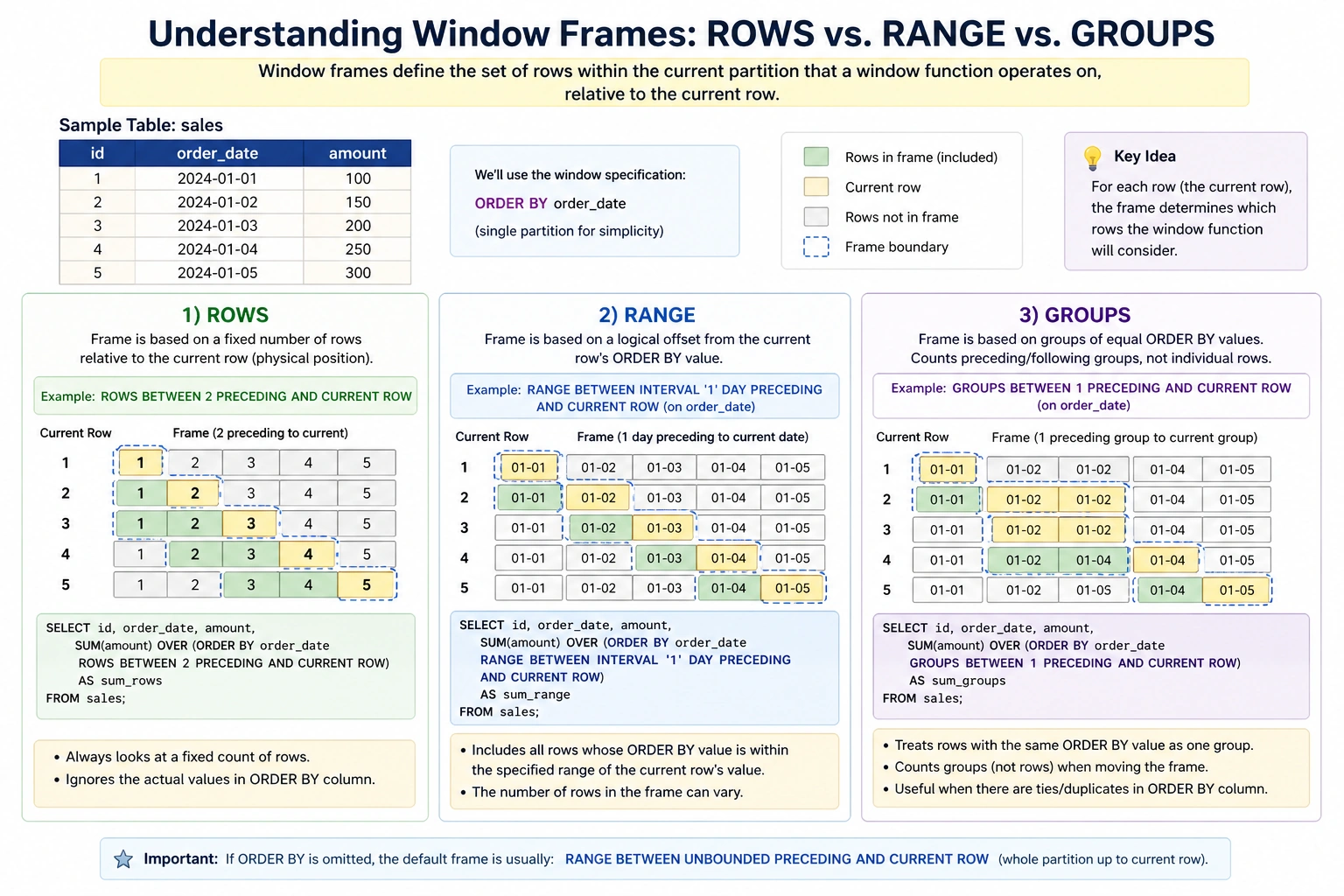
In the contemporary landscape of data science and enterprise analytics, Structured Query Language (SQL) remains the foundational pillar for data definition, manipulation, and analysis. While basic commands such as SELECT, FROM, and WHERE constitute the entry-level toolkit for data professionals, the increasing complexity of modern datasets necessitates more sophisticated analytical capabilities. Among these, SQL window functions have emerged as the most critical feature for performing complex row-level calculations while maintaining the integrity of the original dataset. These functions allow for advanced data transformations—such as running totals, moving averages, and ranking—without the computational overhead or structural limitations of traditional self-joins or subqueries.
The Evolution of Analytical SQL: From Aggregation to Windowing
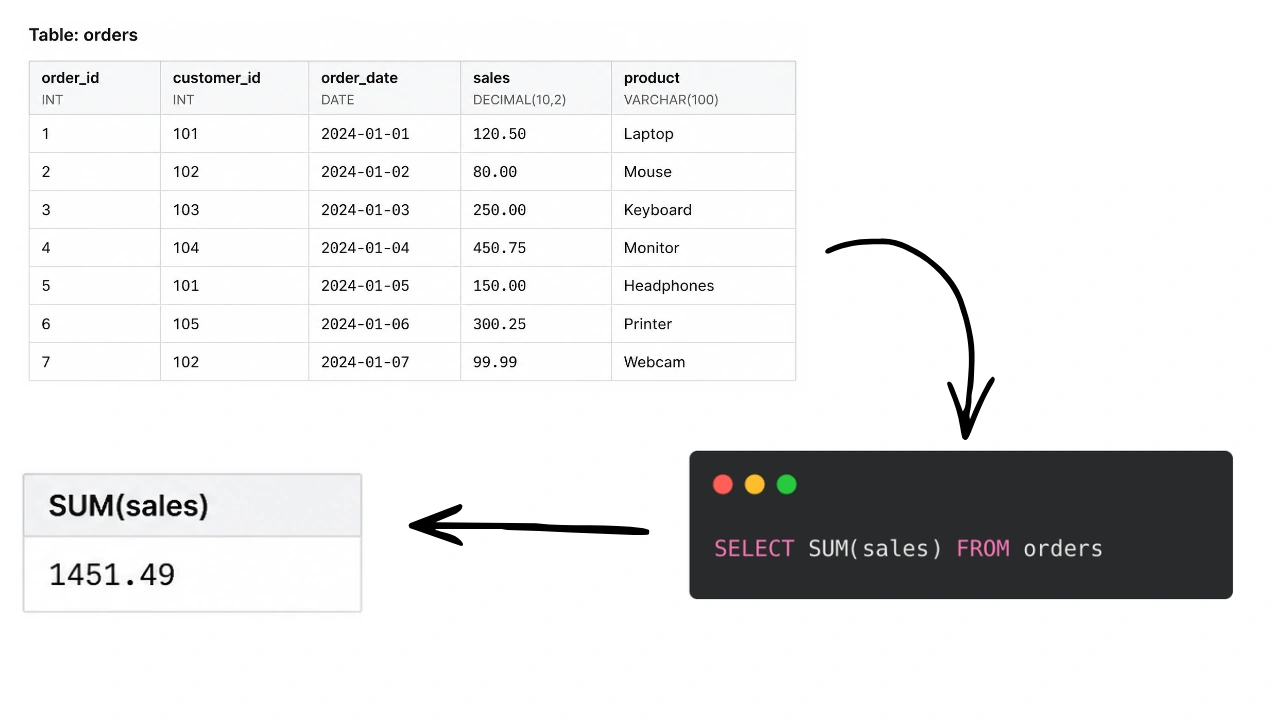
The development of the SQL:2003 standard marked a significant turning point in the language’s history with the formal introduction of window functions. Before this evolution, performing comparative analysis between individual rows and group-level statistics required cumbersome and inefficient operations. Traditional aggregate functions, such as SUM(), AVG(), and COUNT() without the OVER() clause, are designed to collapse multiple rows into a single summary row. While effective for high-level reporting, this “squishing” of data loses the granular detail required for sophisticated data science workflows.
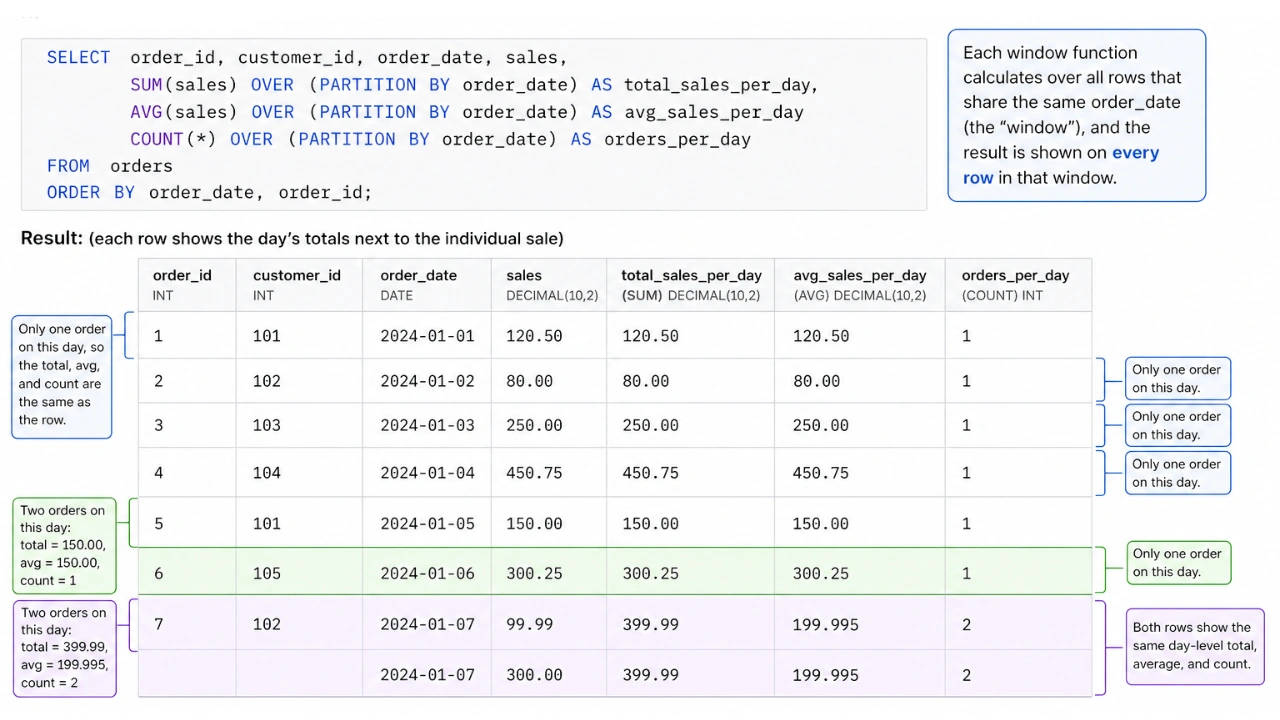
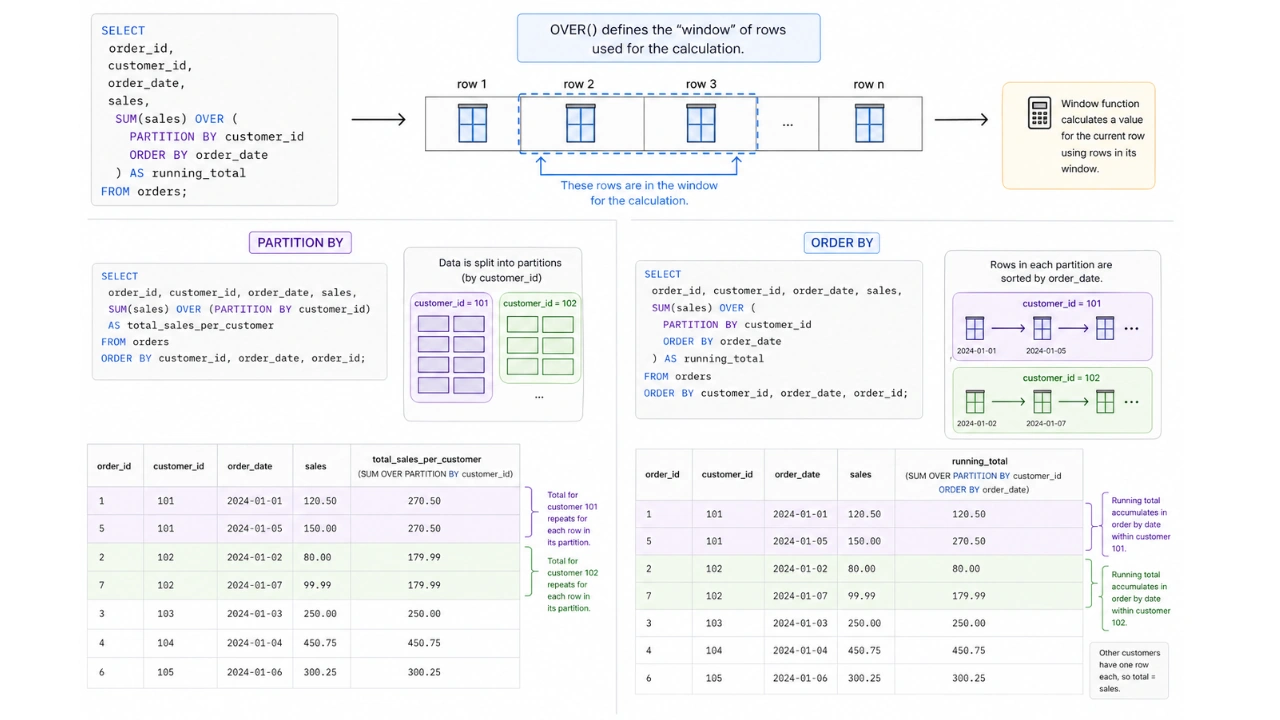
In contrast, window functions perform calculations across a set of table rows that are related to the current row, yet they do not cause the rows to become grouped into a single output row. This allows an analyst to see, for example, a specific day’s sales figure directly alongside the total sales for that entire month. This retention of row-level detail is what makes window functions indispensable for time-series analysis, financial forecasting, and behavioral tracking.
Core Syntax and the Mechanics of the OVER() Clause
The defining characteristic of a window function is the OVER() clause. This clause serves as the instruction manual for the SQL engine, defining the “window” or the subset of data upon which the calculation should be performed. The OVER() clause typically incorporates three primary components:
- PARTITION BY: This divides the result set into partitions. The window function is applied to each partition separately, and the computation restarts for each new group.
- ORDER BY: Within each partition, this defines the logical sequence of rows. This is essential for functions like running totals or identifying the “previous” row in a sequence.
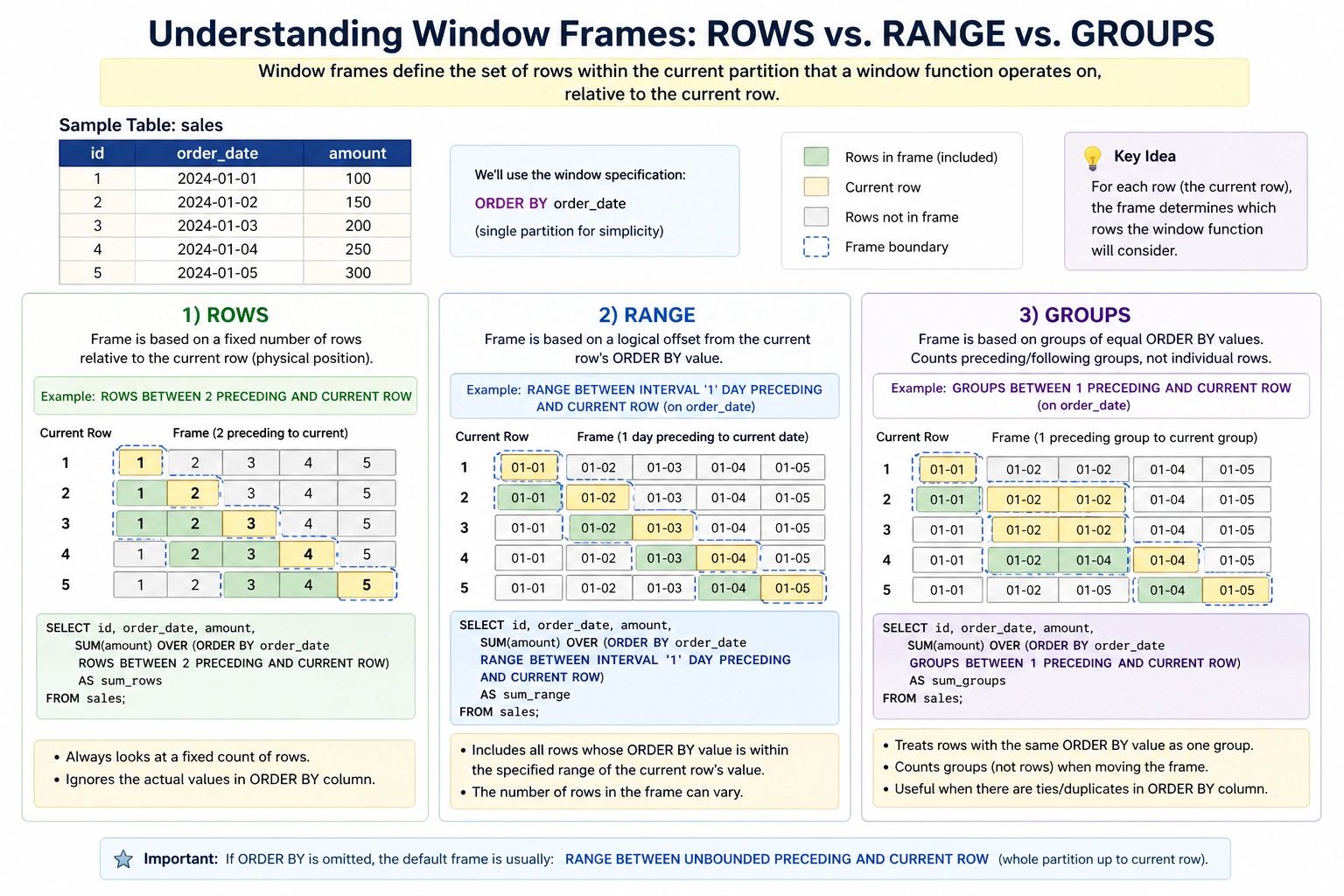
- Window Frame (ROWS vs. RANGE): This further refines the window by specifying a subset of rows relative to the current row. For instance, a frame can be defined as “the three rows preceding the current row and the current row itself,” which is the fundamental logic used to calculate a moving average.
The distinction between ROWS and RANGE is particularly technical. ROWS treats every row as a distinct entity based on its position, whereas RANGE treats rows with the same ORDER BY value as a single peer group. Understanding this distinction is vital for accurate financial reporting where multiple transactions might occur at the same timestamp.
The Essential Ranking and Numbering Hierarchy
Ranking functions are the most frequently utilized window functions in business intelligence. They provide a systematic way to assign scores or positions to items within a specific category.
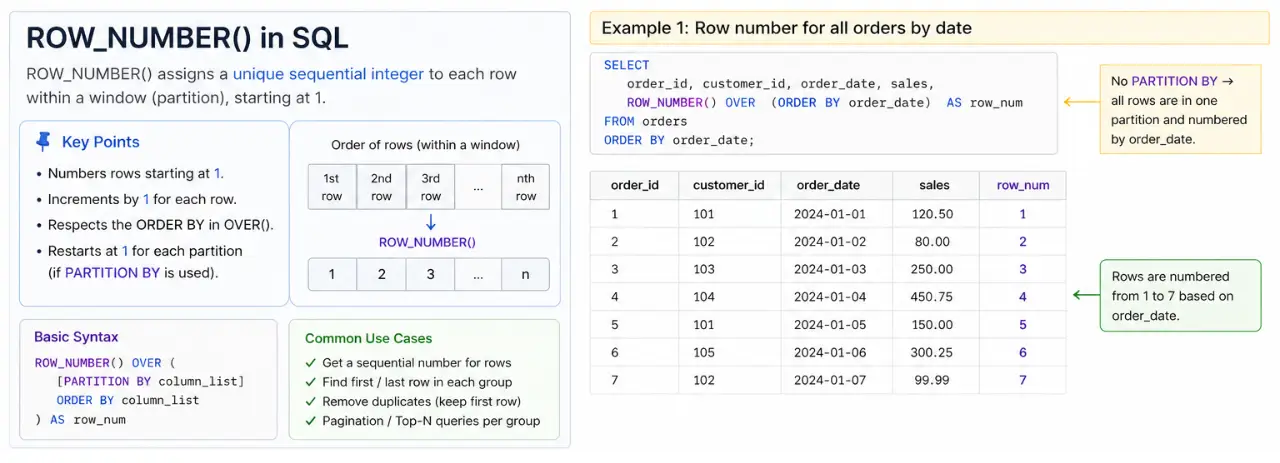
- ROW_NUMBER(): This function assigns a unique, sequential integer to each row. It is commonly used for pagination in web applications or to identify a single “best” record among duplicates.
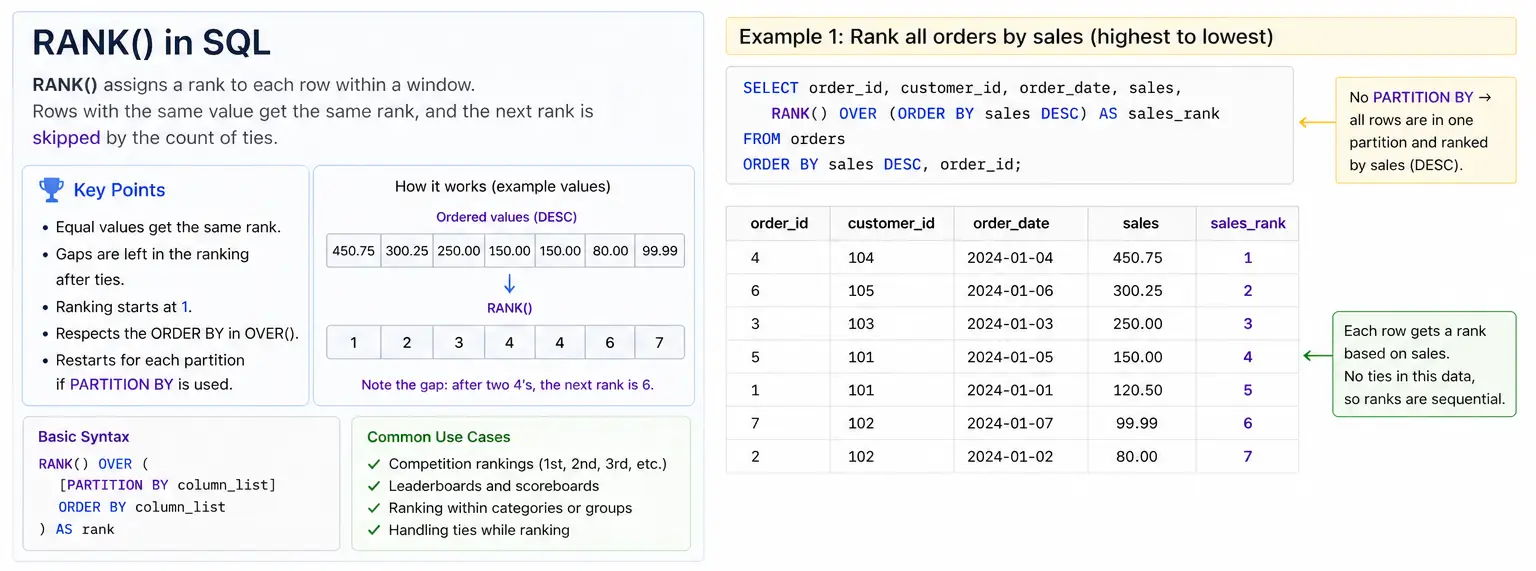
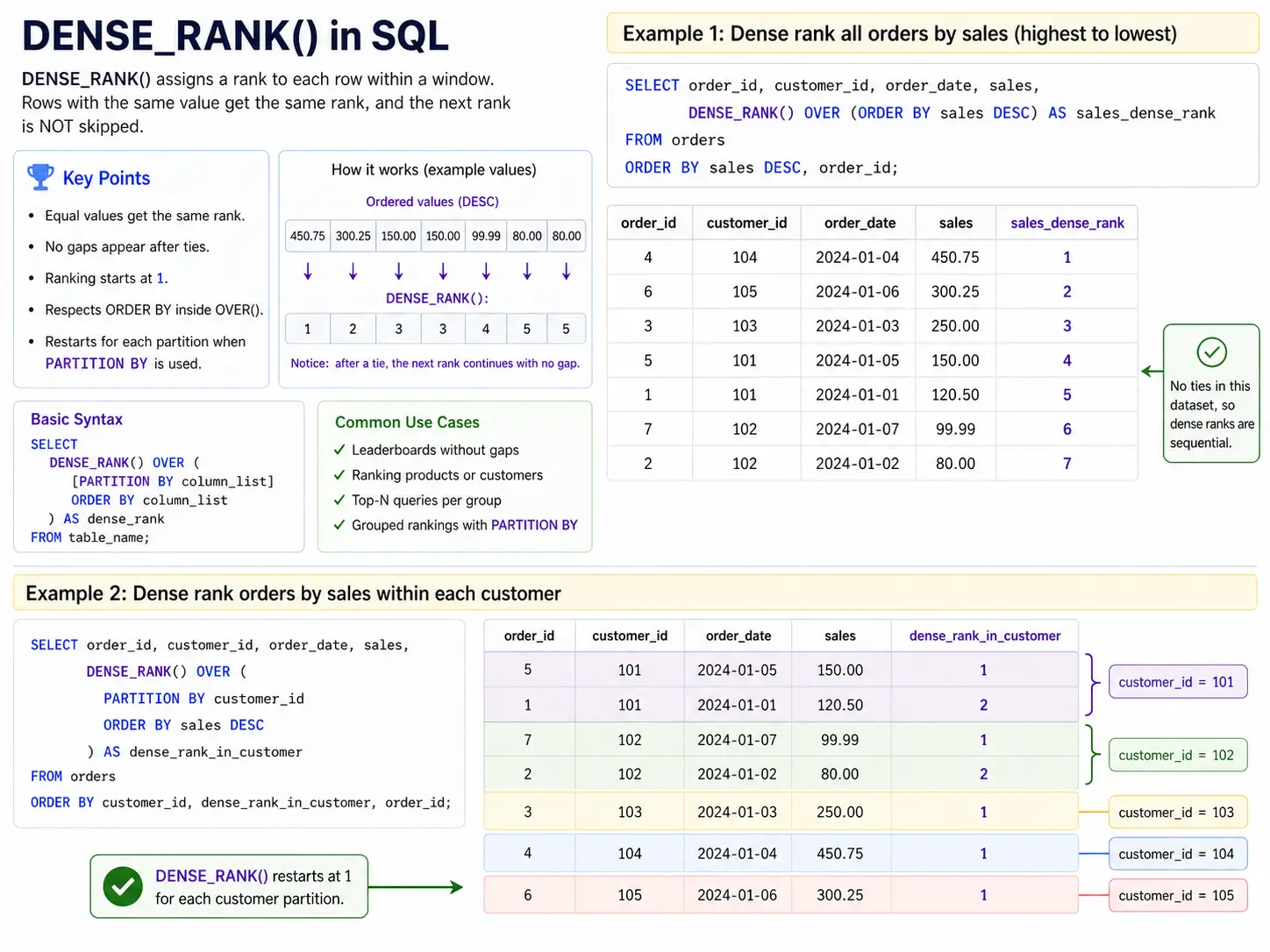
- RANK() vs. DENSE_RANK(): These functions address the issue of “ties.” If two employees have the same sales volume, both will receive the same rank. However, RANK() will skip the next number in the sequence (e.g., 1, 1, 3), whereas DENSE_RANK() will not (e.g., 1, 1, 2).
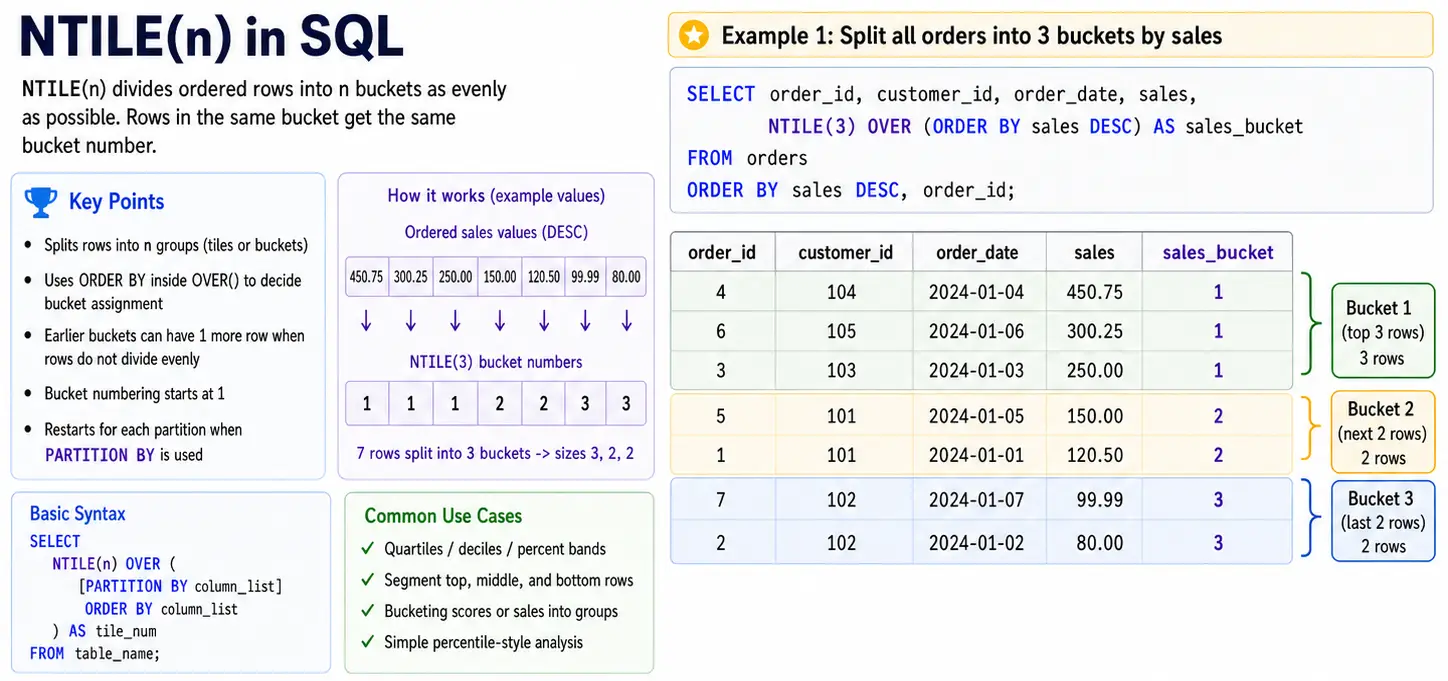
- NTILE(n): This is a powerful tool for segmentation. By dividing a dataset into “n” equal buckets, analysts can easily identify the top 25% of customers (quartiles) or top 10% of performers (deciles).
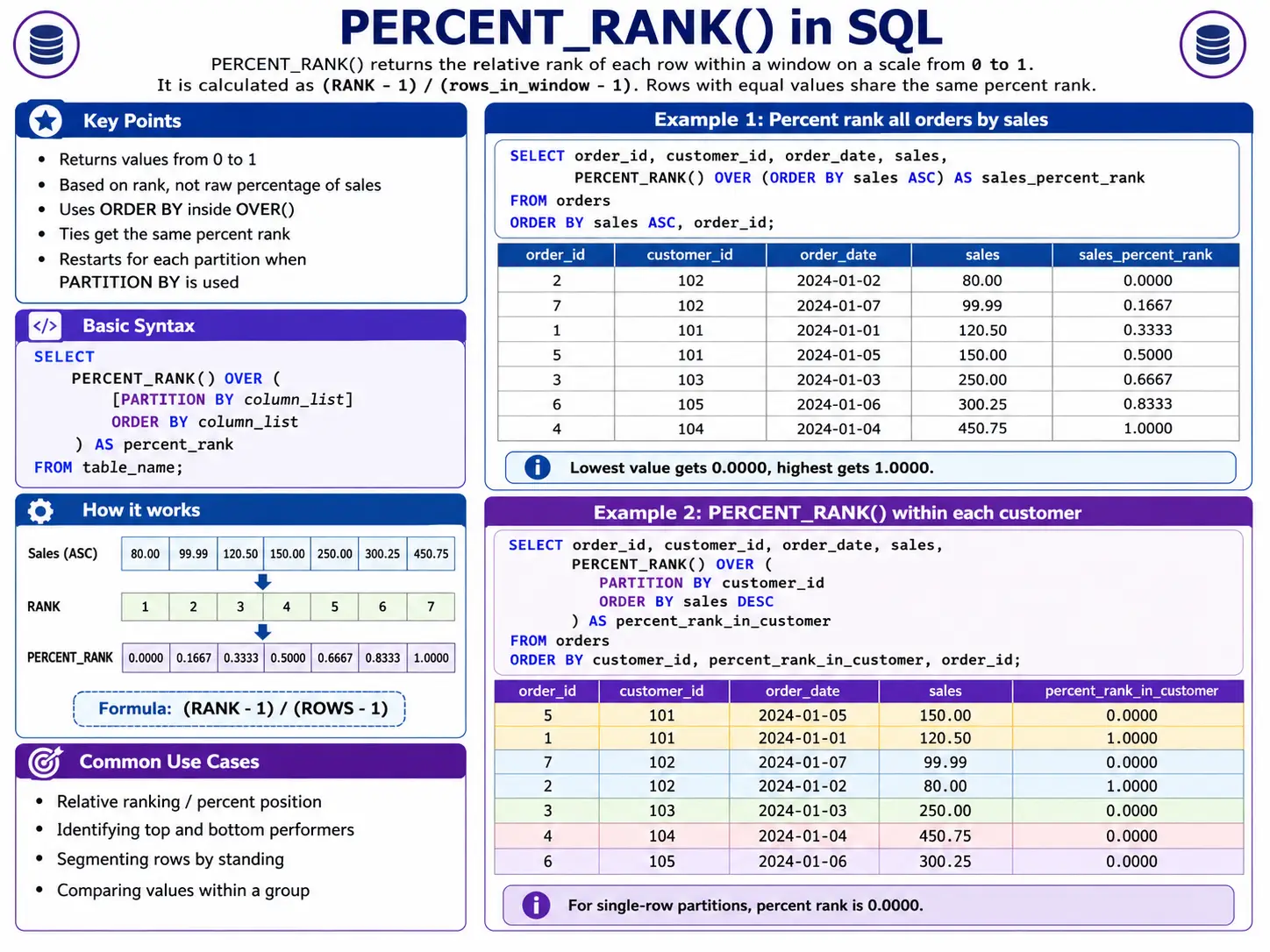
- PERCENT_RANK(): This provides the relative standing of a row as a percentage, which is essential for standardized testing scores and comparative performance metrics.
Positional and Navigational Functions: Temporal Data Analysis
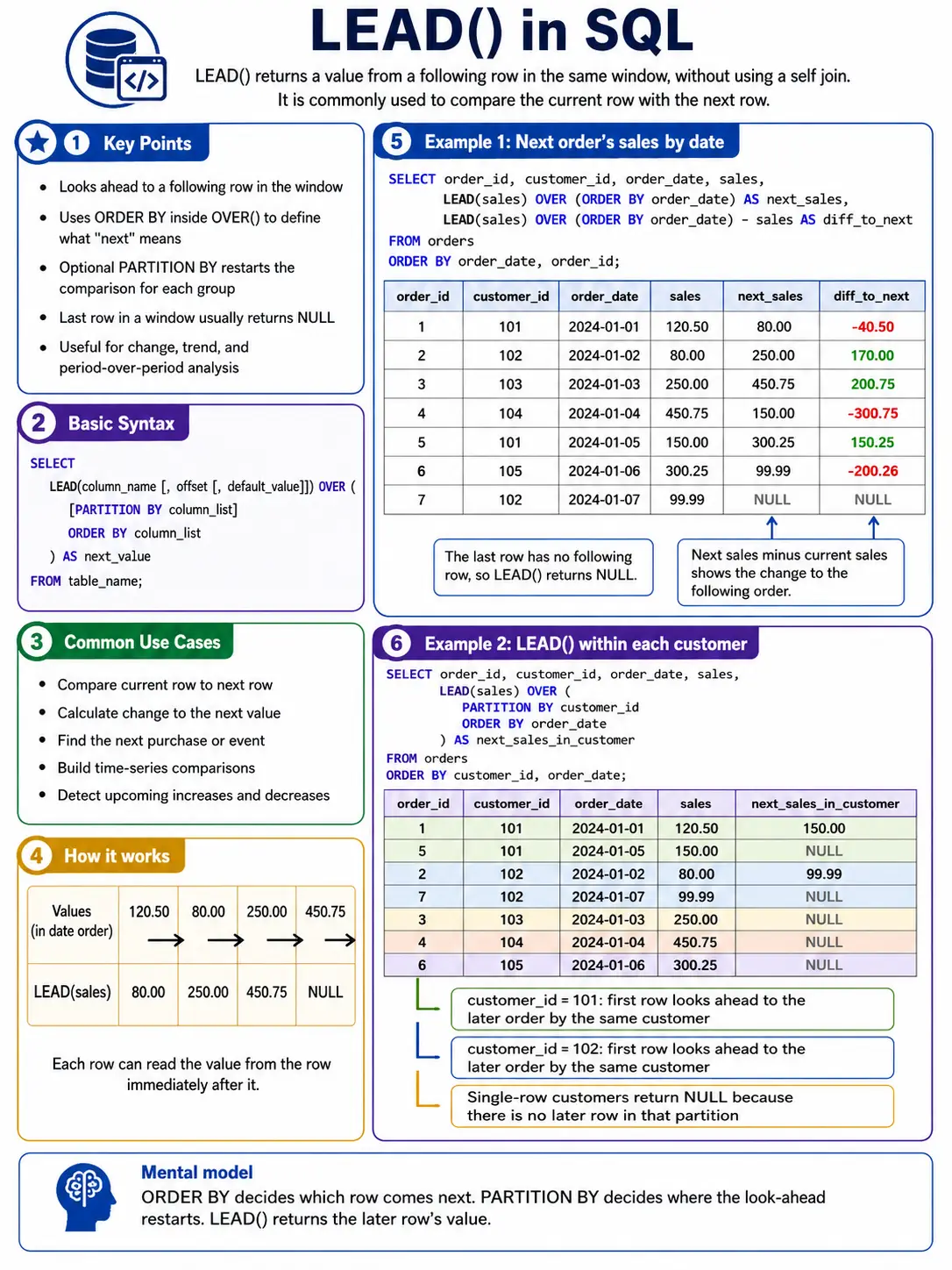
One of the most complex challenges in SQL is comparing a current value to a past or future value. Window functions solve this through “navigation” functions, which act as temporal bridges across the dataset.
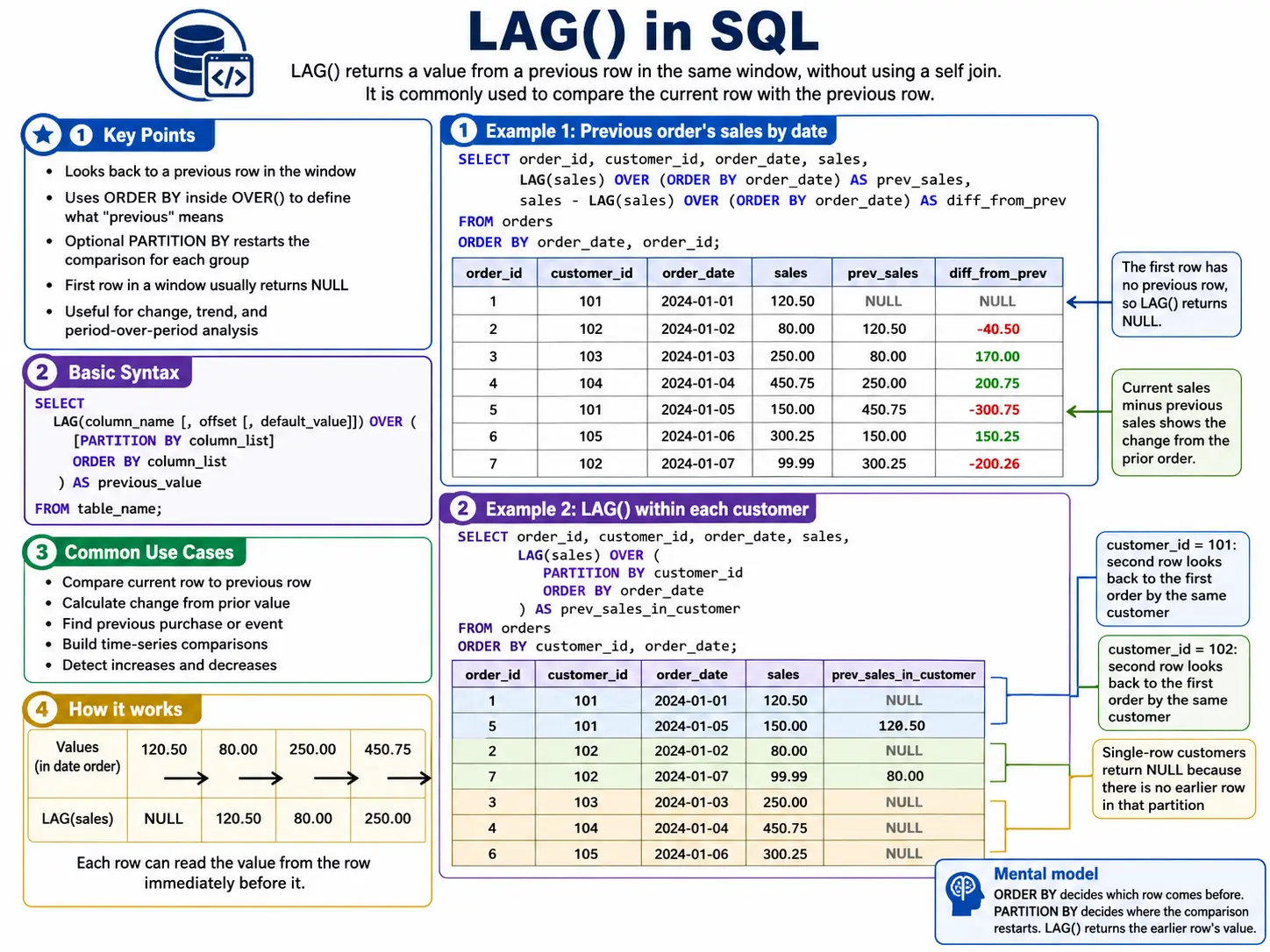
- LAG() and LEAD(): These functions allow analysts to look back at previous rows or peek ahead at future rows. LAG() is the industry standard for calculating Month-over-Month (MoM) growth, as it pulls the value from the preceding row into the current one for direct subtraction.
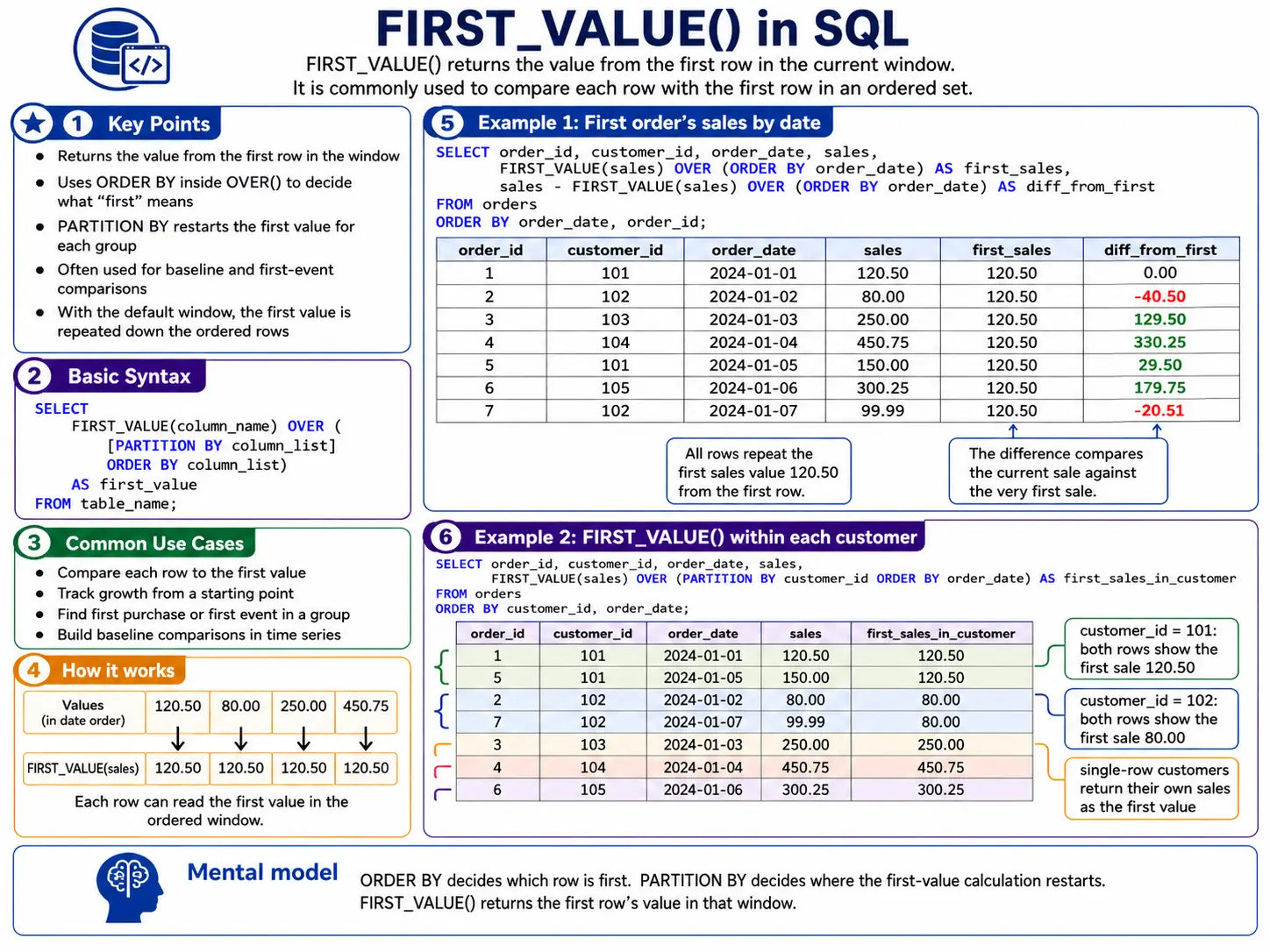
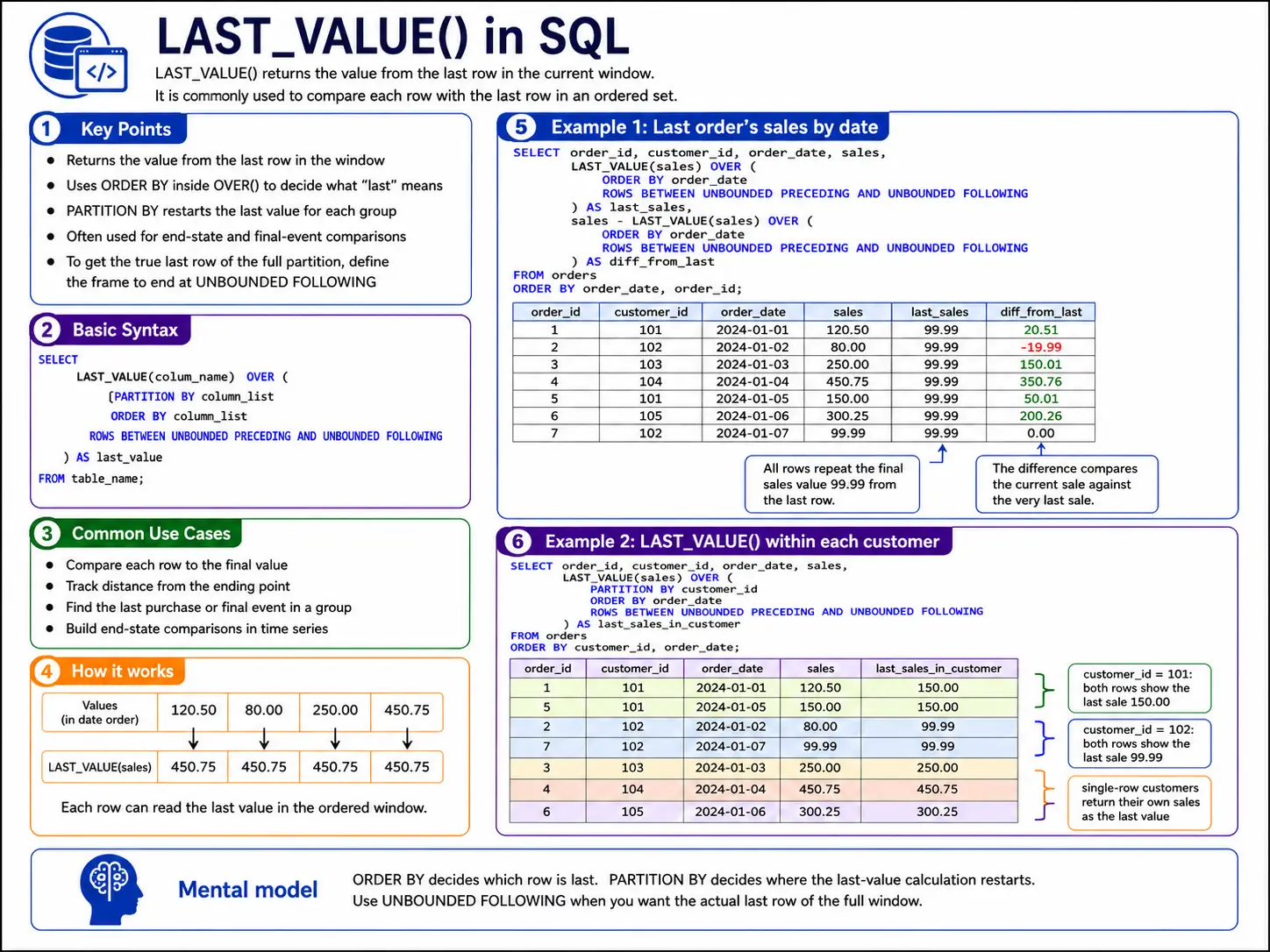
- FIRST_VALUE() and LAST_VALUE(): These identify the start and end points of a partition. In a customer journey analysis, FIRST_VALUE() can identify the original marketing channel that acquired a user, even if they have since interacted with dozens of other touchpoints.
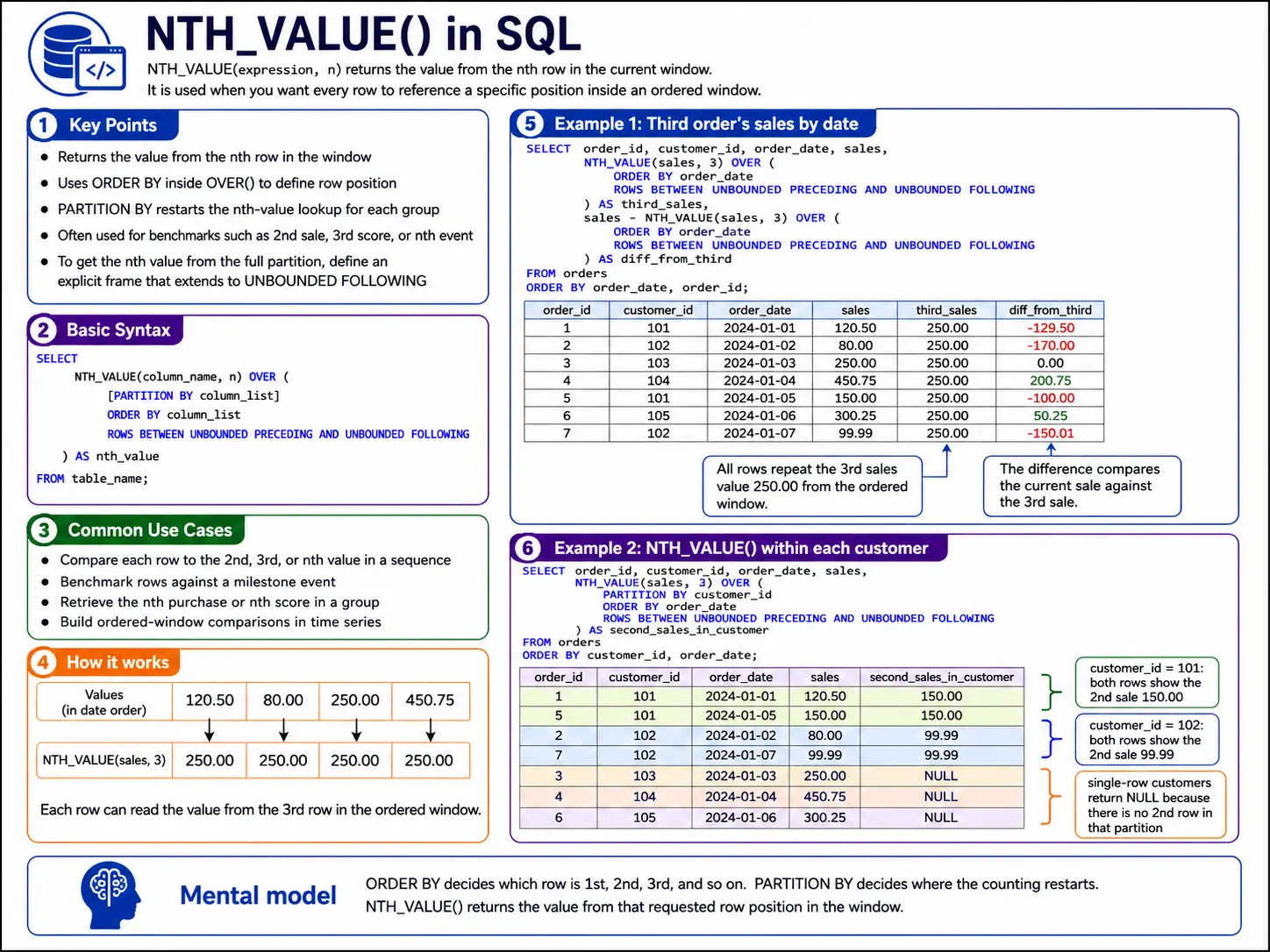
- NTH_VALUE(): This provides even greater granularity, allowing the retrieval of the second, third, or any specific row in a sorted sequence.
Advanced Statistical and Regression Analysis
Beyond simple arithmetic, modern SQL engines like PostgreSQL, BigQuery, and Snowflake have integrated advanced statistical functions that were once the exclusive domain of languages like R or Python.
- Standard Deviation and Variance (STDDEV_POP, VAR_SAMP): These functions measure the “spread” or volatility of data. In manufacturing, these are used for quality control to ensure product weights remain within a specific threshold.
- CORR() and COVAR_POP(): These functions measure the relationship between two variables. For example, a retailer might use CORR() to determine if there is a statistical correlation between local temperature and the sales of specific beverage categories.
- Linear Regression (REGR_SLOPE, REGR_INTERCEPT, REGR_R2): These functions allow for the creation of “best-fit” trend lines directly within a SQL query. REGR_SLOPE indicates the rate of growth, while REGR_R2 measures the reliability of that trend, providing a built-in mechanism for forecasting and predictive modeling.
Distributional Insights and Probability
Understanding the “shape” of data is critical for risk management and actuarial science. Functions like CUME_DIST() calculate the cumulative distribution of a value, helping analysts understand the probability of a value occurring within a specific range. PERCENTILE_CONT() and PERCENTILE_DISC() are used to find the median or other specific percentiles, with the former interpolating between values to provide a smooth statistical curve.
Platform-Specific Innovations and Performance Optimization
While the SQL standard provides a baseline, major cloud data warehouses have introduced specialized functions to handle petabyte-scale data.
- Approximate Functions (BigQuery): Functions like APPROX_QUANTILES() and APPROX_COUNT_DISTINCT() use probabilistic algorithms (like HyperLogLog) to provide nearly accurate results in a fraction of the time required for exact calculations. This is vital for real-time dashboards where speed is prioritized over 100% precision.
- QUALIFY Clause (Snowflake/BigQuery): A common frustration in SQL is that window functions cannot be used in a WHERE clause because of the logical order of execution. Snowflake and BigQuery solved this by introducing the QUALIFY clause, which filters the results of window functions directly, significantly cleaning up the code and reducing the need for Common Table Expressions (CTEs).
- Structured Data Functions: ARRAY_AGG() and LISTAGG() allow analysts to aggregate multiple rows of text or data into single arrays or strings, which is essential for preparing data for machine learning models or generating concatenated reports.
The Logical Execution Order: A Technical Constraint
A critical aspect of mastering window functions is understanding SQL’s logical execution order. The SQL engine processes clauses in the following sequence:
- FROM / JOIN
- WHERE
- GROUP BY
- HAVING
- SELECT (Window Functions are calculated here)
- DISTINCT
- ORDER BY
- LIMIT / OFFSET
Because window functions are evaluated during the SELECT phase (Step 5), they are computed after the WHERE clause (Step 2) has already filtered the data. Consequently, a query cannot filter by a window function result within the same block. This is why analysts frequently wrap window function queries in a subquery or a CTE to perform secondary filtering.
Broader Implications for Data Engineering and Science
The adoption of advanced window functions represents a shift toward “pushing the logic to the data.” By performing these complex transformations directly within the database engine, organizations can reduce data movement and leverage the massive parallel processing (MPP) capabilities of modern cloud warehouses.
For data scientists, these functions streamline the feature engineering process. Instead of exporting raw data to a Python environment to calculate rolling averages or lead-lag features, these can be generated at the source. This not only improves reproducibility but also ensures that the production environment—often running on SQL—matches the development environment.
Conclusion
SQL window functions are no longer an “extra” skill; they are a prerequisite for advanced data roles. From the foundational ranking of rows to the complex application of linear regression and approximate quantiles, these tools allow for a depth of analysis that traditional SQL simply cannot match. By mastering the 40+ functions discussed—and understanding the technical nuances of window frames and execution orders—data professionals can write more efficient code, derive deeper insights, and maintain a competitive edge in an increasingly data-driven economy. As datasets continue to grow in volume and velocity, the ability to perform row-level analytics at scale will remain the hallmark of a sophisticated data operation.