rifanmuazin
For new e-commerce ventures operating on the Shopify platform, Shopify Email, recently rebranded as Shopify Messaging, frequently serves as the initial, convenient, and cost-effective email marketing solution. Integrated directly within the Shopify admin dashboard, it offers a foundational suite of tools, including a generous 10,000 free emails per month, making it an accessible entry point for launching initial newsletters and basic automated sequences. However, as online stores mature and demand more sophisticated marketing capabilities, the inherent limitations of Shopify Messaging often necessitate a strategic transition to dedicated third-party platforms. This extensive guide delves into the top 10 alternatives poised to empower scaling businesses in 2026, providing a detailed analysis to aid in selecting the optimal solution for revenue growth and enhanced customer relationships.
The Evolution of E-commerce Marketing and Shopify’s Role
The digital commerce landscape has undergone a profound transformation in recent years, evolving from simple online storefronts to highly competitive ecosystems driven by personalized customer experiences and data-informed strategies. Shopify, as a leading e-commerce platform, has played a pivotal role in democratizing online selling, enabling millions of entrepreneurs to launch and manage their businesses with relative ease. Its native tools, including Shopify Messaging, are designed to provide a seamless, integrated experience, particularly for nascent brands.
Shopify Messaging, by combining email and SMS functionalities, represents Shopify’s effort to offer a more comprehensive communication tool. Its appeal lies in zero setup requirements and native integration, allowing merchants to manage marketing campaigns without leaving their primary administrative interface. The provision of 10,000 free emails monthly, along with free abandoned checkout automations, significantly reduces initial operational costs for startups, allowing them to allocate resources to product development and initial market penetration. Basic automations, such as welcome series and abandoned cart reminders, are adequately handled, forming the backbone of early customer engagement efforts.
Why Merchants Outgrow Shopify Messaging: The Imperative for Specialization
Despite its convenience and cost-effectiveness for beginners, Shopify Messaging presents distinct limitations that can impede the growth trajectory of scaling e-commerce businesses. The primary challenges revolve around depth of features, customization, and specialized support.
- Limited Automation Complexity: While basic automations are present, Shopify Messaging lacks the multi-step, conditional logic, and branching capabilities essential for creating highly nuanced customer journeys. Scaling businesses often require intricate workflows that adapt to specific user behaviors, product preferences, and engagement levels across various touchpoints.
- Basic Segmentation: Effective marketing in a competitive environment hinges on granular audience segmentation. Shopify Messaging offers rudimentary segmentation options, which quickly become insufficient for businesses aiming to target specific customer cohorts with tailored messages based on purchase history, browsing behavior, demographic data, or loyalty status.
- Absence of Omnichannel Depth: Modern e-commerce necessitates a unified omnichannel strategy. While Shopify Messaging incorporates SMS, it typically lacks integration with other critical channels like push notifications, social media advertising, or advanced loyalty programs within a single, cohesive platform. Managing these disparate channels separately can lead to fragmented customer experiences and inefficient resource allocation.
- Limited Customization and Templates: The range of pre-built email templates and customization options in Shopify Messaging is often restrictive. Brands striving for unique visual identities and highly branded communications may find themselves constrained, hindering their ability to stand out in crowded inboxes.
- Generic Support: Relying on general Shopify support for email marketing issues can be less efficient than accessing specialized support from dedicated Email Service Providers (ESPs). ESPs offer expert guidance on deliverability, campaign optimization, and advanced feature utilization, which is crucial for maximizing marketing ROI.
- Lack of Advanced Analytics and Reporting: While basic campaign metrics are available, Shopify Messaging typically falls short in providing the deep, actionable insights required for continuous optimization. Scaling stores need detailed revenue attribution, customer lifetime value (CLV) analysis, A/B testing capabilities for every element, and predictive analytics to inform strategic decisions.
These limitations collectively highlight a critical juncture where the cost of "free" or basic functionality begins to outweigh the potential revenue gains. An "Omnisend vs. Shopify Email" comparison, for instance, frequently underscores this gap, illustrating how purpose-built platforms unlock advanced capabilities that directly translate into measurable revenue.
The Critical Juncture: Six Signs It’s Time to Transition
For merchants contemplating a switch, recognizing the signs of outgrowing Shopify Messaging is paramount. These indicators typically signal a need for more robust, specialized tools:
- Demand for Multi-Step Automations: When your marketing strategy moves beyond simple welcome or abandoned cart emails to complex, branching workflows that respond dynamically to customer actions.
- Need for Advanced Segmentation: If your current segmentation limits your ability to personalize campaigns for specific customer groups based on granular behavioral or demographic data.
- Integration of SMS and Other Channels: When you aim to unify email, SMS, push notifications, and potentially other marketing channels into a single, cohesive customer journey.
- Requirement for Detailed Revenue Attribution: If you need precise data on which specific campaigns and channels are driving revenue to optimize marketing spend effectively.
- Desire for A/B Testing and Optimization: When you realize the need to systematically test different elements of your campaigns (subject lines, content, calls-to-action) to improve performance.
- Scaling Contact List and Email Volume: As your subscriber base expands beyond the free tier limits and your sending volume increases, the per-email cost of Shopify Messaging might become less competitive compared to dedicated platforms with more favorable pricing models for larger lists.
Evaluating Shopify Email Alternatives: A Methodical Approach
To provide trustworthy recommendations for 2026, a rigorous evaluation process was undertaken, analyzing platforms against seven critical criteria tailored to the needs of growing e-commerce stores:
- Deep Shopify Integration: Seamless data synchronization, ease of setup, and compatibility with the Shopify ecosystem.
- Robust Automation Capabilities: The ability to build complex, multi-step, and conditional workflows.
- Advanced Segmentation: Granular customer profiling based on various data points (behavioral, transactional, demographic).
- Omnichannel Support: Integration of email, SMS, push notifications, and other channels within a unified platform.
- Analytics and Reporting: Comprehensive dashboards, revenue attribution, and actionable insights.
- User-Friendliness and Learning Curve: Intuitive interfaces, drag-and-drop builders, and accessibility for marketing teams.
- Customer Support and Resources: Availability of specialized support, documentation, and community resources.
- Pricing and Scalability: Transparent pricing models that accommodate growth without prohibitive cost increases.
Top Shopify Email Alternatives for 2026: A Detailed Breakdown
The market for e-commerce marketing platforms is vibrant and competitive, with numerous providers offering specialized solutions. The following platforms represent the leading alternatives, each with distinct strengths and target audiences.
1. Omnisend: The E-commerce Omnichannel Powerhouse
G2 rating: 4.6
Shopify App Store rating: 4.8
Best for: E-commerce stores of all sizes, especially those prioritizing omnichannel marketing (email + SMS + push notifications) from a single, intuitive platform.
Omnisend consistently emerges as a top contender, particularly for Shopify merchants, due to its intuitive design, powerful feature set, and strong value proposition. Designed from the ground up for e-commerce, it offers seamless integration with Shopify and over 160 other marketing and e-commerce tools. The platform provides pre-built marketing automation workflows and advanced segmentation capabilities that empower merchants to target customers based on detailed shopping behavior, purchase history, and engagement patterns.
A significant differentiator for Omnisend is its comprehensive omnichannel approach, unifying email marketing, SMS marketing, and push notifications within a single, user-friendly dashboard. This allows for cohesive customer journeys across multiple touchpoints, a critical factor for maximizing engagement and conversions in 2026. With its Pro plan, Omnisend facilitates global SMS sending, expanding market reach beyond geographical limitations often imposed by competitors.

Economically, Omnisend offers a comparable feature set to its closest competitors, such as Klaviyo, often at a more accessible price point, particularly as businesses scale. This focus on delivering robust value translates into tangible results, with Omnisend merchants reporting an impressive average return of $79 for every dollar spent. Notable success stories include Kate Backdrop achieving a 1:300 ROI through omnichannel marketing and Vagari Bags realizing a 1:121 ROI with targeted SMS campaigns. The free plan is exceptionally generous, granting access to the full suite of e-commerce features—automation, segmentation, A/B testing, and reporting—a rarity among providers who typically gate advanced functionalities behind paid tiers. Furthermore, Omnisend provides award-winning 24/7 customer support via email and live chat across all plans, including the free tier, with dedicated Account Experts for higher-tier accounts.
Limitations: While highly capable, some users may find the sheer breadth of features initially overwhelming, requiring a brief learning period to master its full potential.
| Plan | Pricing |
|---|---|
| Free | $0/month (250 contacts, 500 emails/month) |
| Standard | From $16/month |
| Pro | From $59/month (unlimited emails) |
2. Klaviyo: The Data-Driven Marketer’s Choice
G2 rating: 4.6
Shopify App Store rating: 4.5
Best for: Data-driven e-commerce stores requiring deep analytics, highly granular data tools, and sophisticated automation.
Klaviyo stands out for its unparalleled data integration and advanced reporting capabilities, making it a favorite among businesses that prioritize data-led marketing strategies. Following a billing model change in February 2025, which shifted focus to active profiles rather than total contacts, Klaviyo has aimed to enhance its value proposition, though it remains a premium option.
The platform is renowned for its highly sophisticated automation triggers, allowing for incredibly precise mapping of the customer journey. Its visual automation builder supports complex branching and conditional-splitting logic, enabling marketers to craft intricate, hyper-personalized campaigns. This power, however, is accompanied by a steeper learning curve that might not be ideal for marketing beginners. For Shopify merchants, Klaviyo offers robust segmentation and predictive analytics, including forecasting customer lifetime value, which is invaluable for long-term strategic planning. While its feature set is extensive, the high price point, especially as subscriber lists grow, positions Klaviyo as a better fit for larger enterprises with substantial marketing budgets and dedicated teams of experts.
Limitations: The platform’s complexity and cost can be prohibitive for smaller businesses or those without specialized marketing personnel. Support on the free plan is limited to 60 days.
| Plan | Pricing |
|---|---|
| Free | $0/month (250 active profiles, 500 emails, 150 SMS credits) |
| Marketing | From $20/month (251-500 profiles) |
| Professional services | From $500/month |
3. Mailchimp: The All-in-One Marketing Suite
G2 rating: 4.3
Shopify App Store rating: 4.7
Best for: Brands seeking an all-in-one marketing suite that extends beyond email to include landing pages and social media management.
Mailchimp holds a prominent position in the marketing industry, recognized for its user-friendly interface and broad feature set. After a historical integration dispute, its native integration with Shopify is now stable, making it a viable option for merchants. Mailchimp offers a familiar environment, particularly for small business owners, for creating standard newsletters and basic campaigns.
However, Mailchimp’s tiered pricing structure can become a significant hurdle for scaling businesses. Many essential e-commerce features, such as advanced reporting, multi-step automations, and certain segmentation tools, are gated behind higher-tier paid plans. This means businesses might find themselves paying more for functionalities that are standard in competitor free or lower-tier plans. While it provides a comprehensive suite, its depth in specific e-commerce marketing automation might not match dedicated platforms.
Limitations: Essential e-commerce features are often locked behind higher-priced plans. The pricing structure can become expensive as contact lists grow. Support on the free plan is limited to 30 days.
| Plan | Pricing |
|---|---|
| Free | $0/month (500 contacts, 1,000 emails/month) |
| Essentials | From $13/month |
| Standard | From $20/month |
4. Brevo (formerly Sendinblue): The CRM-Integrated Solution
G2 rating: 4.5
Shopify App Store rating: 4.8
Best for: Stores requiring a built-in CRM, transactional email capabilities, and robust delivery infrastructure.
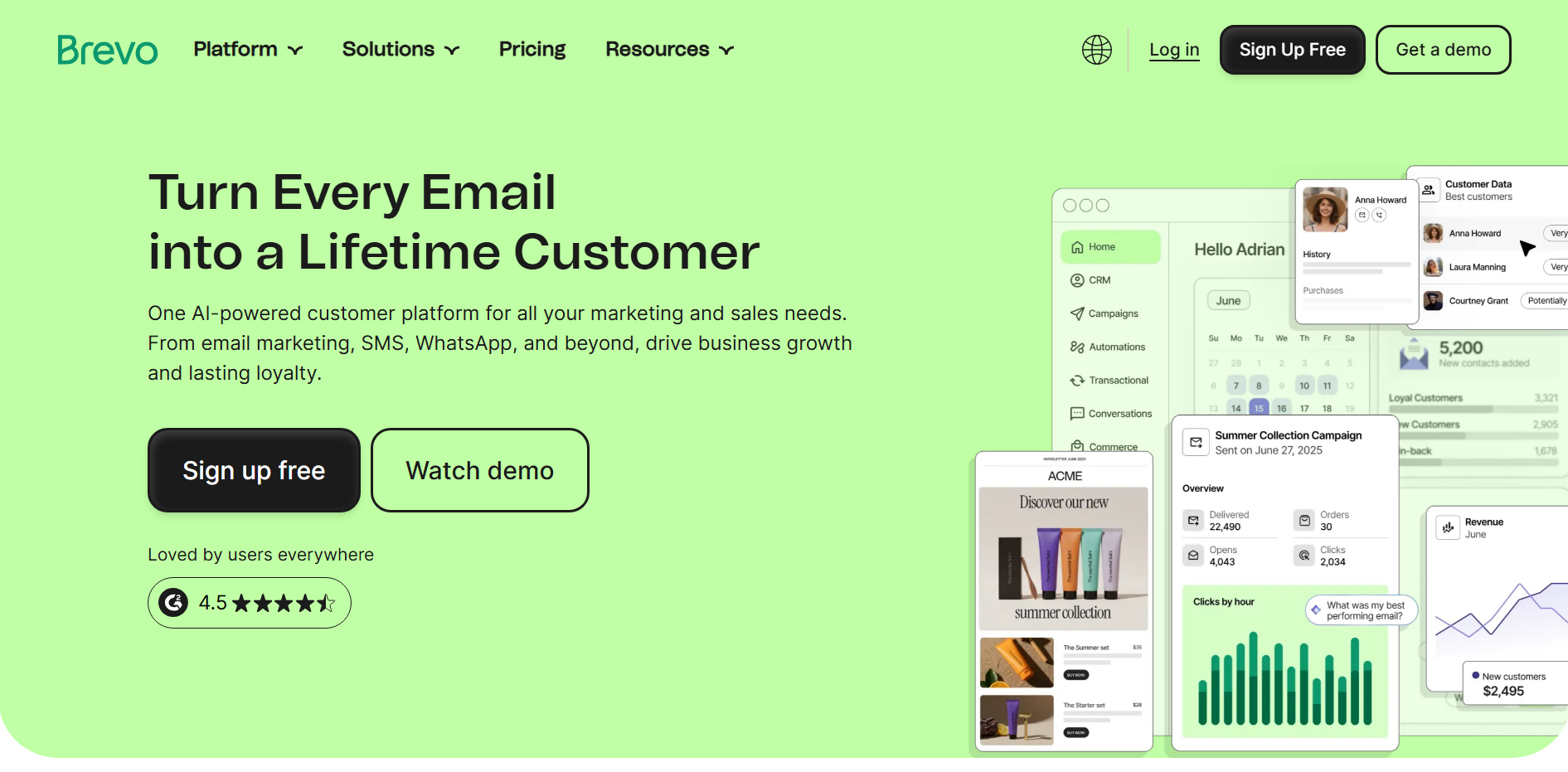
Brevo, formerly Sendinblue, distinguishes itself by offering an Email Service Provider (ESP) with a native CRM feature. Its recent merger with PushOwl has bolstered its web push notification capabilities, enhancing its omnichannel competitiveness. Brevo’s strong suit lies in its reliable delivery infrastructure, supporting not only marketing emails but also critical transactional emails and shipping updates, which are essential for a seamless customer experience.
While Brevo offers a robust feature set, its depth of Shopify integration may not be as profound as platforms specifically built for e-commerce. Its free plan, while generous with unlimited contacts, imposes a daily sending limit of 300 emails, which can be restrictive for larger marketing campaigns. Brevo is a strong option for businesses that need a combined CRM and email solution with excellent deliverability for operational communications.
Limitations: Shopify integration depth is not as extensive as e-commerce native platforms. The free plan has a daily email sending limit. Phone and chat support are reserved for higher tiers.
| Plan | Pricing |
|---|---|
| Free | $0/month (unlimited contacts, 300 emails/day) |
| Starter | From $9/month |
| Standard | From $18/month |
| Professional | From $499/month |
5. ActiveCampaign: The Automation Workflow Specialist
G2 rating: 4.4
Shopify App Store rating: 4.5
Best for: Stores demanding highly intricate automation workflows, complex logic building, and a bridge between email marketing and sales CRM.
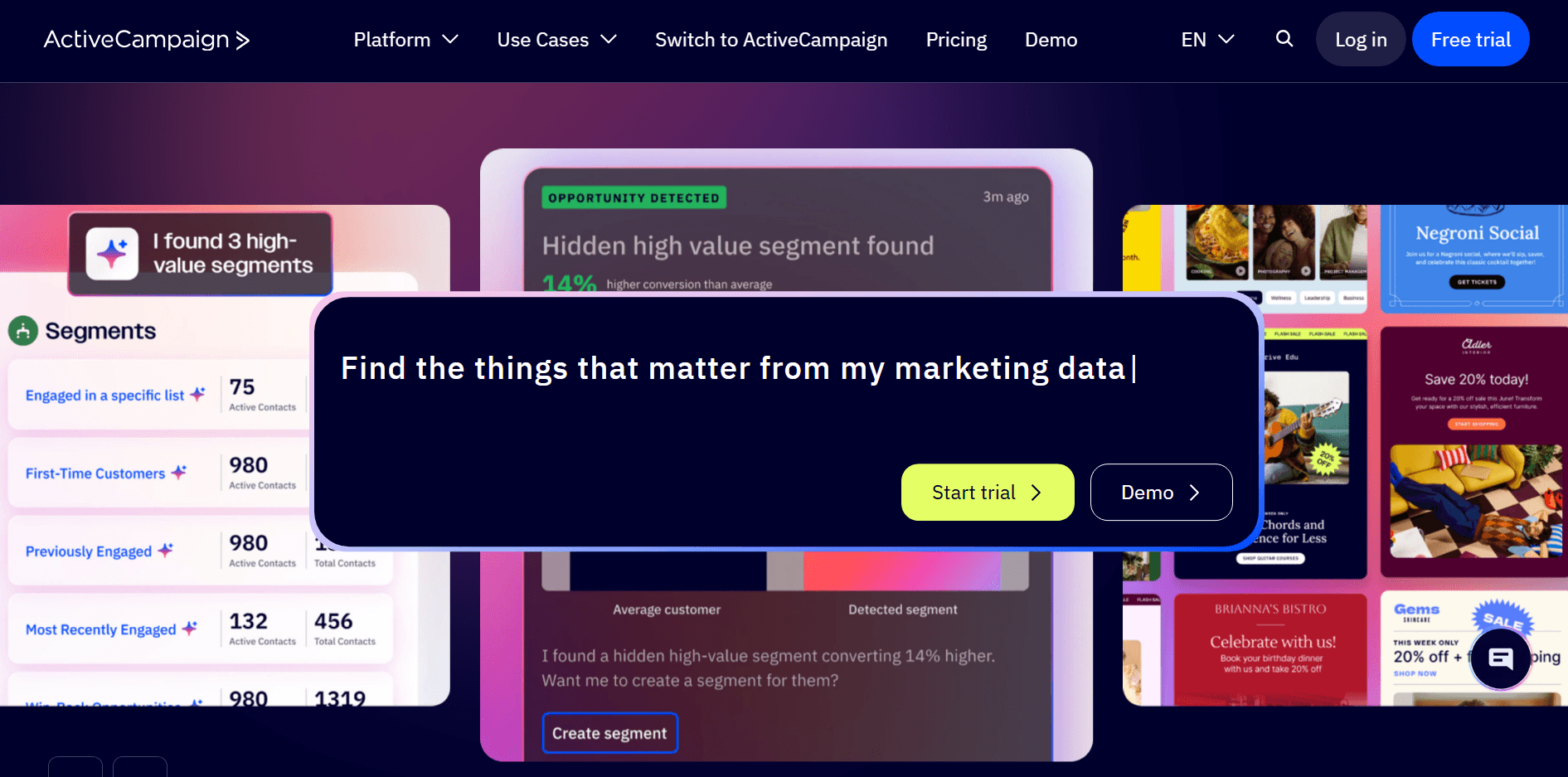
ActiveCampaign is renowned for its exceptional automation depth and powerful visual builder. It excels at facilitating complex split logic and multi-channel sequences, making it an ideal choice for businesses with sophisticated customer journeys or longer sales cycles. Functioning as both an advanced email marketing tool and a sales CRM, it enables comprehensive customer management.
The platform’s power comes with a significant learning curve, often requiring dedicated training or specialized personnel. Unlike many competitors, ActiveCampaign does not offer a free plan, only a 14-day trial. This limited trial period can be insufficient for users to fully grasp and test the platform’s extensive capabilities, particularly given its complexity. ActiveCampaign is generally better suited for established businesses with dedicated marketing teams capable of leveraging its advanced features.
Limitations: No free plan, only a 14-day trial. Steep learning curve due to advanced features. Priced higher for businesses just starting.
| Plan | Pricing |
|---|---|
| Starter | Starts at $15/month (billed annually) |
| Plus | Starts at $49/month (billed annually) |
| Pro | Starts at $79/month (billed annually) |
| Enterprise | Starts at $145/month (billed annually) |
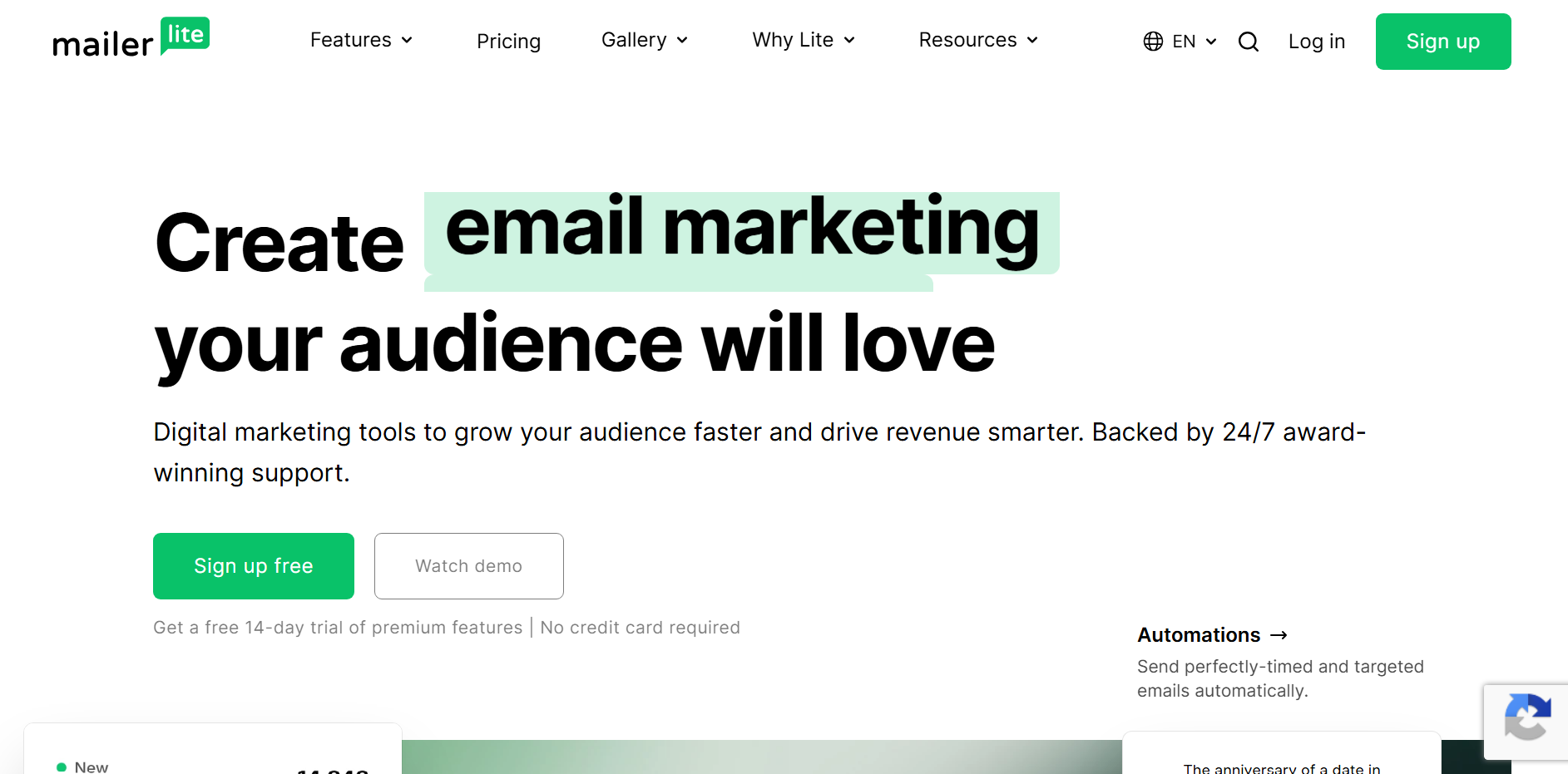
6. MailerLite: The Budget-Conscious Starter
G2 rating: 4.6
Shopify App Store rating: 2.6
Best for: Small stores or bloggers on a tight budget that require only basic email marketing features.
MailerLite is frequently lauded for its clean, intuitive interface and strong value proposition for essential email marketing needs. Its appeal lies in its focus on core features at a low price point. The free plan is notably generous, including 12,000 monthly emails, which is a substantial offering for very small businesses. It provides fundamental tools such as a drag-and-drop editor and simple automation sequences, making it an excellent entry point for those with minimal marketing complexity.
However, a significant drawback for Shopify users is the integration itself, which currently holds a low rating of 2.6/5 on the Shopify App Store. Merchants often report that setting up the integration can be less straightforward, sometimes requiring API keys, contrasting with the one-click setups of e-commerce-native tools. Furthermore, its automation and segmentation features are relatively basic compared to more specialized platforms, limiting scalability.
Limitations: Poor Shopify integration rating and potentially complex setup. Basic automation and segmentation features.
| Plan | Pricing |
|---|---|
| Free | $0/month (500 subscribers, 12,000 emails/month) |
| Growing Business | From $10/month |
| Advanced | From $20/month |
7. Constant Contact: For Straightforward Newsletters
G2 rating: 4.1
Shopify App Store rating: 3.1
Best for: Businesses focused on sending straightforward newsletters and basic list management without complex marketing workflows.
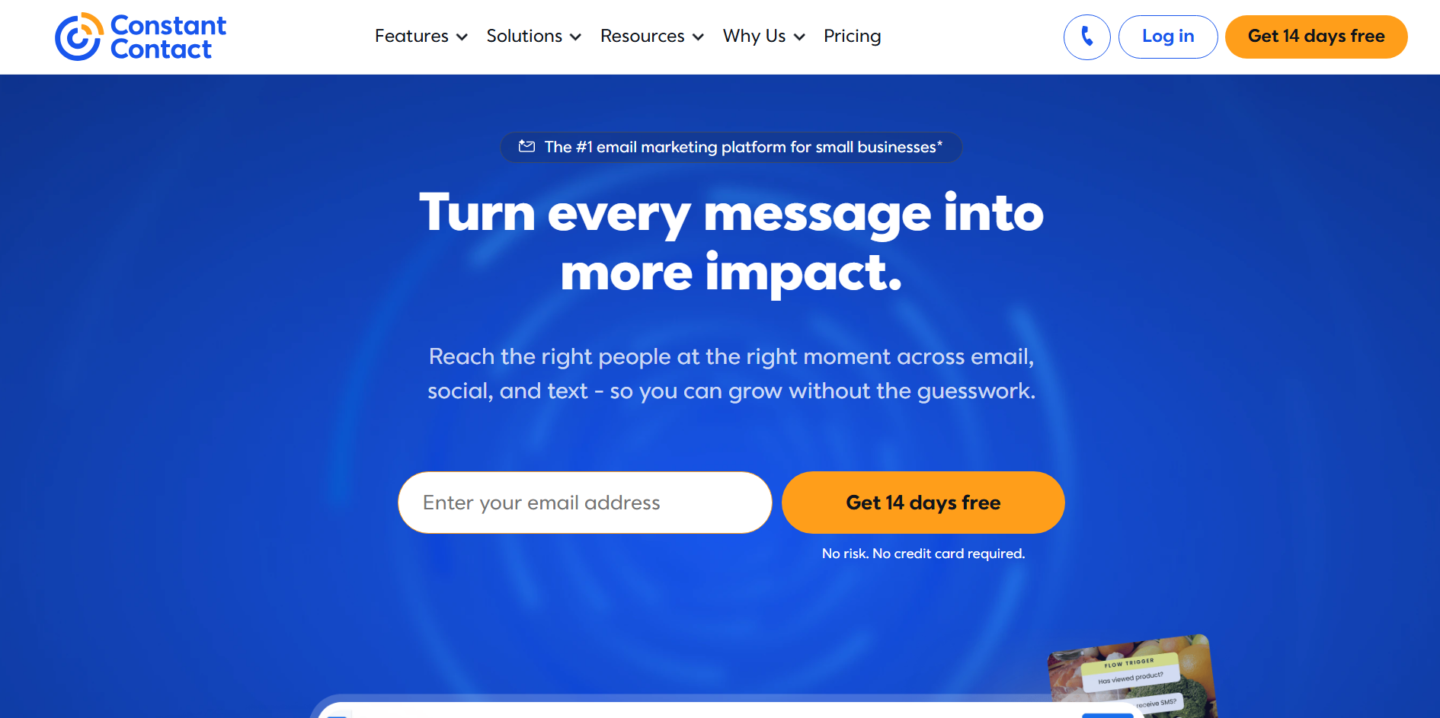
Constant Contact, a long-standing player in the email marketing space, is recognized for its ease of use and ability to manage email lists and send simple newsletters. It caters primarily to small business owners who prefer a less complex platform, prioritizing simplicity over advanced automation or deep data analysis.
Recent changes have seen the platform remove several features, including event management, and its automation capabilities remain fairly limited, making it less suitable for scaling e-commerce needs. The Shopify App Store rating of 3.1/5 suggests a less than ideal integration experience for merchants. A notable customer service concern often reported is the difficulty in canceling subscriptions, frequently requiring phone calls and account verification, which can be an inconvenience for users.
Limitations: Limited automation capabilities and feature set. Low Shopify App Store rating. Difficult subscription cancellation process.
| Plan | Pricing |
|---|---|
| Lite | From $12/month |
| Standard | From $35/month |
| Premium | From $80/month |
8. Drip: For Established Automation-Focused Stores
G2 rating: 4.4
Shopify App Store rating: 4.2
Best for: Established Shopify stores that require highly advanced automation, intricate customer journey mapping, and an integrated e-commerce CRM.
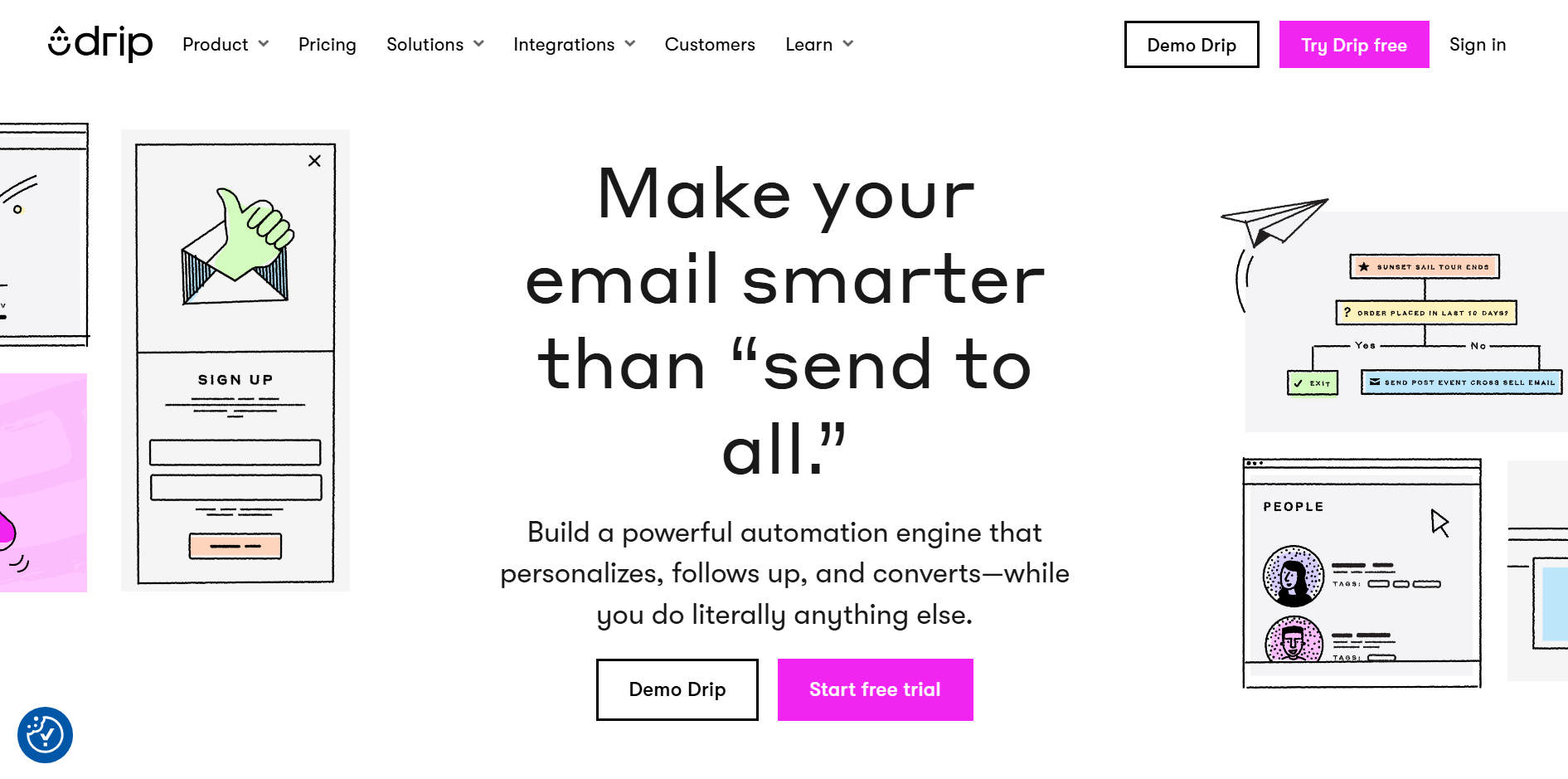
Drip is a sophisticated email marketing platform that includes an e-commerce CRM, allowing businesses to meticulously track shopper activity and create highly personalized campaigns. Its visual workflow builder offers advanced automation capabilities, empowering merchants to design complex customer journeys.
Unlike many competitors, Drip does not offer a free plan, providing only a 14-day free trial. While no credit card is required for the trial, it means immediate commitment to a paid plan thereafter. Drip is also one of the more expensive tools to start with. However, its pricing is justified by its granular e-commerce triggers, intuitive editors, and sophisticated customer journey mapping, making it ideal for larger stores with unique and complex automation needs that go beyond standard e-commerce marketing.
Limitations: No free plan, only a 14-day trial. One of the more expensive options. Support is limited during working hours, with live chat reserved for higher-paying customers.
| Plan | Pricing |
|---|---|
| Standard | From $39/month |
9. Sender: Generous Free Plan with Core E-commerce Automation
G2 rating: 4.7
Shopify App Store rating: 4.6
Best for: Stores seeking a generous free plan that still includes core e-commerce automation features.
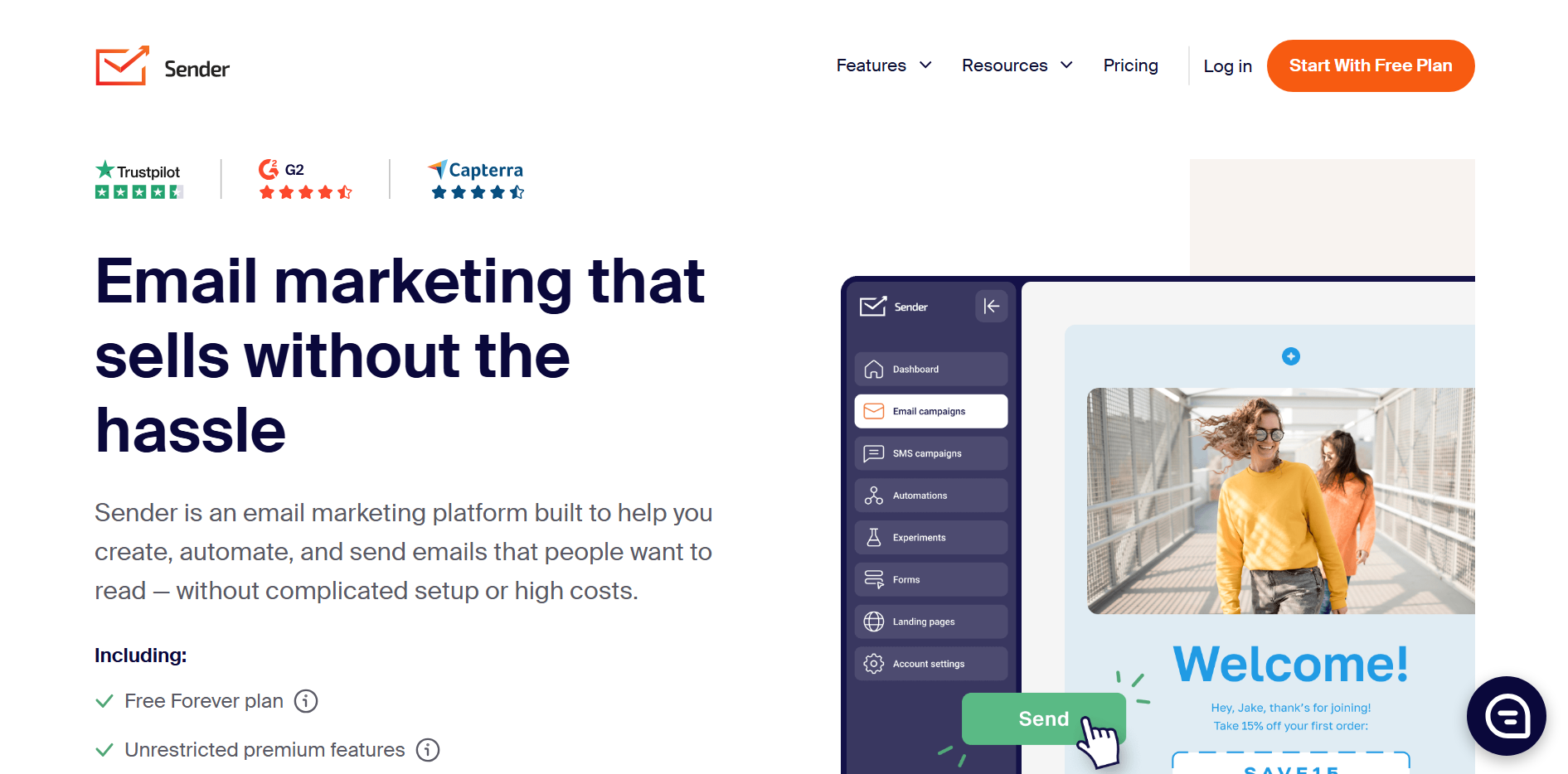
Sender offers a compelling option for businesses that prioritize a robust free plan with essential e-commerce automation. While not as widely known as some other platforms, Sender has a reputation for providing reliable services and an intuitive interface, resulting in a minimal learning curve. This ease of use allows new team members or individual entrepreneurs to launch campaigns quickly without extensive technical overhead.
However, while its free plan is generous (up to 2,500 subscribers and 15,000 emails/month), a critical comparison point is Omnisend, which offers its full feature set without restrictions on its free plan, providing greater scalability and advanced capabilities from the outset. Sender is a solid choice for those prioritizing cost-effective entry with basic automation.
Limitations: Automation depth and advanced features may not match more specialized e-commerce platforms like Omnisend.
| Plan | Pricing |
|---|---|
| Free | $0/month (Up to 2,500 subscribers and 15,000 emails/month) |
| Standard | $10/month |
| Professional | $20/month |
10. Privy: The List Growth and Popup Specialist
G2 rating: 4.6
Shopify App Store rating: 4.5
Best for: Shopify stores primarily focused on list growth, lead capture, and on-site conversion tools like popups.
Privy is a well-established tool within the Shopify ecosystem, boasting a high rating of 4.5 stars from over 18,000 reviews. Its one-click installation and automatic customer data synchronization make setup remarkably simple. Privy excels in lead capture and on-site conversion, offering features like spin-to-win wheels, coupon popups, and free shipping bars to effectively build subscriber lists and drive repeat purchases.
While Privy has expanded its offerings to include basic SMS and email marketing, these functionalities are not comparable to those of dedicated ESPs. It lacks multi-step workflows, deep segmentation capabilities, and advanced personalization features necessary for comprehensive e-commerce marketing. Many businesses find Privy most effective when used as a complementary lead-capture tool alongside a more dedicated email platform, allowing them to combine high-converting popups with advanced automation for customer nurturing.
Limitations: Email and SMS marketing features are basic compared to dedicated platforms. Lacks multi-step workflows and deep segmentation. Primarily a lead capture tool.
| Plan | Pricing |
|---|---|
| Starts from $30/month |
Strategic Considerations: Choosing the Right Shopify Email Alternative
Selecting the optimal email marketing platform extends beyond simply comparing feature lists; it involves a strategic alignment with your store’s current needs and future growth ambitions.
Understanding Pricing Dynamics and ROI
Merchants often ask, "Is Shopify Email free?" The answer is yes, up to 10,000 emails per month, with abandoned checkout automations always free. However, relying solely on the lowest starting price can be a misstep. It is crucial to evaluate the total return on investment (ROI) and the depth of features provided. For instance, Omnisend’s free plan includes its full feature set—automation, segmentation, A/B testing, and reporting—a rarity among competitors who often gate these essential tools behind paid tiers. The reported average return of $79 for every $1 spent by Omnisend users underscores the value of investing in a platform that truly drives revenue. As subscriber lists expand, costs scale dramatically across platforms, making a transparent pricing comparison calculator an invaluable tool for understanding true expenditure based on specific audience size and feature requirements.
Matching the Platform to Your Store’s Growth Stage
The ideal platform varies significantly depending on your business’s current size and growth trajectory:
- Startups and New Stores: Platforms like MailerLite or Sender, with generous free plans and basic features, provide an excellent entry point. Shopify Messaging also remains a viable starting option due to its native integration and initial cost-effectiveness.
- Growing SMEs (Small to Medium Enterprises): As businesses scale, the need for advanced features becomes critical. Omnisend stands out here, offering a comprehensive suite of omnichannel tools, advanced automation, and segmentation at a competitive price, designed specifically for e-commerce growth. Brevo, with its CRM integration, is also a strong contender for those needing a combined solution.
- Established and Enterprise-Level Stores: Businesses with large subscriber lists, complex sales funnels, and substantial marketing budgets will benefit from the deep analytics and highly sophisticated automation offered by platforms like Klaviyo and ActiveCampaign. Drip also caters to this segment with its granular e-commerce triggers and extensive customer journey mapping.
The Importance of Integration and Support
Seamless integration with Shopify is non-negotiable for any third-party tool, ensuring data accuracy and operational efficiency. Furthermore, specialized customer support is vital. When complex issues arise, access to experts who understand e-commerce marketing and platform intricacies can significantly reduce downtime and optimize campaign performance. Platforms offering 24/7 support across all tiers, like Omnisend, provide a distinct advantage.
Conclusion
The choice of an email marketing platform is a strategic decision that profoundly impacts an e-commerce store’s ability to engage customers, drive sales, and sustain growth. While Shopify Messaging offers a convenient starting point, scaling businesses inevitably require more robust, specialized solutions. The market offers a diverse array of alternatives, each with unique strengths tailored to different needs and growth stages.
For the vast majority of growing Shopify stores, Omnisend provides the most compelling combination of e-commerce-focused features, omnichannel capabilities (email, SMS, push), and exceptional value. Its strong Shopify integration, advanced automation, and commitment to customer support make it a powerful engine for revenue generation. For data-intensive enterprises, Klaviyo remains a formidable choice, while platforms like Mailchimp offer broader marketing suites. Ultimately, the right decision hinges on a careful assessment of current requirements, future ambitions, and a thorough understanding of each platform’s capabilities and cost-effectiveness.
FAQs
What is the best email marketing app for Shopify?
Omnisend is widely regarded as the overall top choice for e-commerce, consistently delivering high ROI for its users through comprehensive omnichannel marketing. Klaviyo excels for data-driven stores needing deep analytics and sophisticated segmentation. For new stores on a budget, MailerLite or Sender offer strong starting points with generous free plans.
Is Shopify Email free?
Yes, Shopify Email (now Shopify Messaging) offers 10,000 free emails per month. Beyond this limit, a charge of $1 for every additional 1,000 emails applies. Standard abandoned checkout automations are always free, regardless of sending volume.
When should I switch from Shopify Email to a third-party tool?
A switch is recommended when your business requires multi-step automations, integrated SMS and other marketing channels, advanced segmentation based on customer behavior, or precise revenue attribution. Dedicated platforms offer specialized tools essential for scaling e-commerce operations that Shopify Messaging cannot provide.
Can I use email and SMS marketing on Shopify?
Yes, both email and SMS marketing can be managed natively within Shopify Messaging or through third-party platforms. For a unified omnichannel strategy, platforms like Omnisend seamlessly integrate email, SMS, and push notifications into cohesive workflows, maximizing engagement and conversion potential.
How much does Shopify email marketing cost with a third-party app?
Costs for third-party apps vary significantly, ranging from $0 for fully-featured free plans to upwards of $20 or more per month for paid tiers, depending on your subscriber list size and required feature set. Utilizing a pricing comparison calculator is recommended to accurately estimate costs based on your specific audience and feature needs.