

The digital retail landscape has undergone a significant transformation over the last decade, shifting from simple product listings to complex, data-driven environments designed to mirror the intuitive flow of a physical store. At the heart of this evolution is the category page, a critical junction in the consumer journey that serves as the bridge between a homepage and a final purchase. Industry experts and digital marketing analysts now emphasize that the efficacy of these pages is not merely a matter of aesthetics but a rigorous application of psychological principles and technical optimization. As global e-commerce sales continue to climb, reaching trillions of dollars annually, the optimization of these "digital aisles" has become a priority for brands seeking to reduce bounce rates and maximize customer lifetime value.
The Current State of E-commerce Navigation
Category pages, often referred to as listing pages or gallery pages, act as the primary discovery tool for a significant portion of web traffic. According to recent industry benchmarks, nearly 50% of users navigate via category menus rather than search bars when they are in the initial "discovery" phase of shopping. Despite their importance, many brands struggle with high exit rates on these pages, suggesting a disconnect between what a user expects and what the interface provides. The challenge lies in balancing the need for information with the desire for a seamless, frictionless path to purchase.
A Chronology of E-commerce Design Evolution
To understand the current best practices, one must look at the historical progression of online retail interfaces. In the early 2000s, e-commerce sites were largely static, mimicking paper catalogs with long, paginated lists of items and minimal filtering options. By 2010, the rise of "faceted search"—the ability to filter by size, color, or price—revolutionized the way users interacted with category pages, allowing for a more personalized browsing experience.
By 2018, the focus shifted toward mobile-first design, forcing retailers to condense complex category structures into thumb-friendly interfaces. Today, the industry has entered the era of intent-based design. Rather than treating every visitor the same, modern category pages are increasingly dynamic, using data to determine whether a user is there to browse for inspiration, compare specific models, or make a quick repeat purchase.
Defining the Strategic Purpose of Category Pages
The first step in any optimization project is defining the primary objective of the page. Marketing analysts categorize the roles of category pages into three distinct functions: browsing, deciding, and buying. A failure to distinguish between these intents often leads to "decision conflict," a psychological state where the user is presented with too many or inappropriate choices, leading to abandonment.
For browsing-focused pages, the goal is to answer the user’s unspoken question: "What options exist here, and where should I look next?" On these pages, introducing high-commitment actions like an "Add to Cart" button can actually be counterproductive. Experts suggest that when an interface demands a higher level of commitment than the user is ready to provide, the result is friction. The user may feel pressured, leading them to backtrack or exit the site entirely. Instead, these pages should prioritize clear visual hierarchies and easy navigation to subcategories.
Data-Driven Design and the Role of Analytics
A rigorous evaluation of analytics data is essential for determining the health of a category page. A key metric is the exit rate. While some attrition is expected, an exit rate significantly higher than the site average usually indicates a structural flaw. If visitors are leaving the site directly from a category page rather than clicking through to a product detail page (PDP), the design is likely failing to facilitate the discovery process.
Heatmaps and click-tracking software have become indispensable tools in this regard. These technologies allow retailers to see exactly where users are clicking—and, perhaps more importantly, where they are not. In one documented case study, a major electronics retailer implemented a "needs-based" filter at the top of their category pages, designed to help users choose products based on use cases like "gaming" or "home office." Despite the design team’s confidence in the feature, heatmaps revealed that users were almost entirely ignoring it in favor of traditional technical specification filters. The feature was removed within two weeks, highlighting the importance of letting data, rather than internal preference, dictate design.
Structural Integrity: The Rule of Three Levels
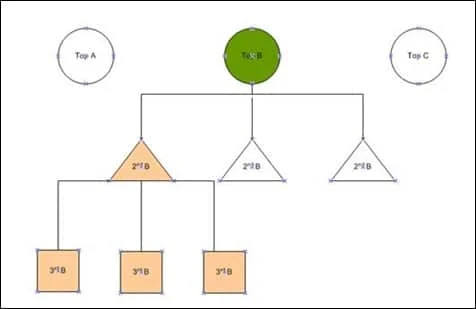
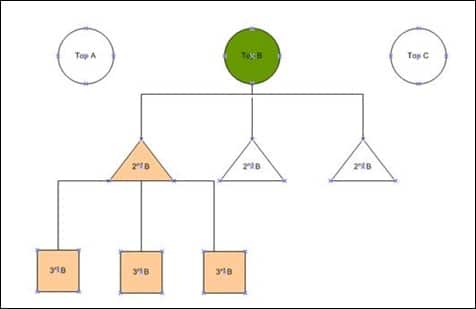
The architecture of an e-commerce site must be deep enough to be specific but shallow enough to remain navigable. General consensus among UX designers suggests that products should be grouped into top-level categories that are then broken down into subcategories. However, there is a limit to this hierarchy.
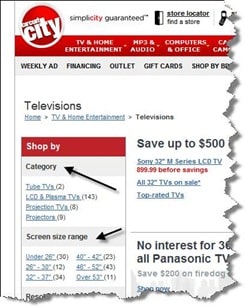
The "Three-Level Rule" is a widely accepted standard which suggests that a site should not have more than three levels of subcategories under any top-level heading. For instance, a category like "Electronics" is far too broad for a single page. It must be broken down into "Computers," which may further be divided into "Laptops." Going beyond a third level, such as "Laptops > 15-inch > Gaming > RGB Keyboard Models," often results in "over-categorization," which can frustrate users and complicate the site’s SEO structure. Effective designs often highlight "child" categories within the parent category page to guide the user deeper into the funnel without requiring multiple clicks.
Integrating Features and Consumer Needs
Successful category pages are those that anticipate the specific features a consumer cares about. This varies wildly by industry. In the consumer electronics sector, features like screen resolution, brand, and battery life are paramount. In the literary world, users may look for "New Releases" or "Award Winners."
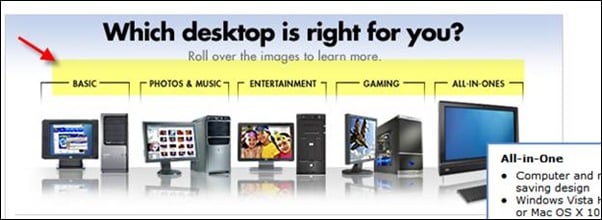
Retail giants like Best Buy have mastered the art of "needs-based" segmentation. Their desktop computer section, for example, allows visitors to identify their specific needs—such as "Photo & Music," "Entertainment," or "Basic Usage"—and filters the results accordingly. This approach bridges the gap between technical specifications and real-world utility, helping non-expert users make informed decisions.
Furthermore, for complex products, the category page should serve as an educational resource. Buying guides, comparison tools, and "wizards" (interactive questionnaires that recommend a product) are increasingly common. These tools help users who may feel overwhelmed by the sheer volume of choices, providing a curated experience that mimics the assistance of an in-store sales associate.
Expert Perspectives on User Intent
"The intersection of what a brand wants a visitor to do and what the visitor actually expects to do is where the most effective design lives," says a senior UX consultant at a leading digital agency. "Some users know exactly what they want and want an ‘Add to Cart’ button immediately to save time. Others are just starting their journey and need to be nurtured. A great category page accommodates both without cluttering the interface."
This sentiment is echoed by conversion rate optimization (CRO) specialists who argue that "friction" is not caused by the presence of a button, but by the interruption of a mental process. If a user is in "research mode," a prominent "Buy Now" button is a distraction. If they are in "replenishment mode," the absence of that button is a hurdle.
Broader Impact and Future Implications
The implications of optimized category pages extend beyond immediate sales. In an era of rising customer acquisition costs (CAC), the ability to retain a visitor once they land on a site is paramount. A well-organized category structure improves search engine rankings by creating a logical internal linking web, making it easier for search engine crawlers to index the site.
Looking forward, the integration of Artificial Intelligence (AI) is expected to further personalize the category page experience. Future interfaces may dynamically reorder products based on a user’s past browsing history or predicted preferences, effectively creating a unique "digital aisle" for every individual shopper.
In conclusion, the optimization of e-commerce category pages is a multifaceted discipline that requires a blend of psychological insight, architectural precision, and constant data-driven iteration. By defining clear purposes for each page, adhering to logical hierarchies, and respecting the user’s intent, retailers can transform these transitionary pages into powerful engines for growth and customer satisfaction. As the digital marketplace becomes increasingly crowded, those who master the art of the category page will likely find themselves at a significant competitive advantage.







