

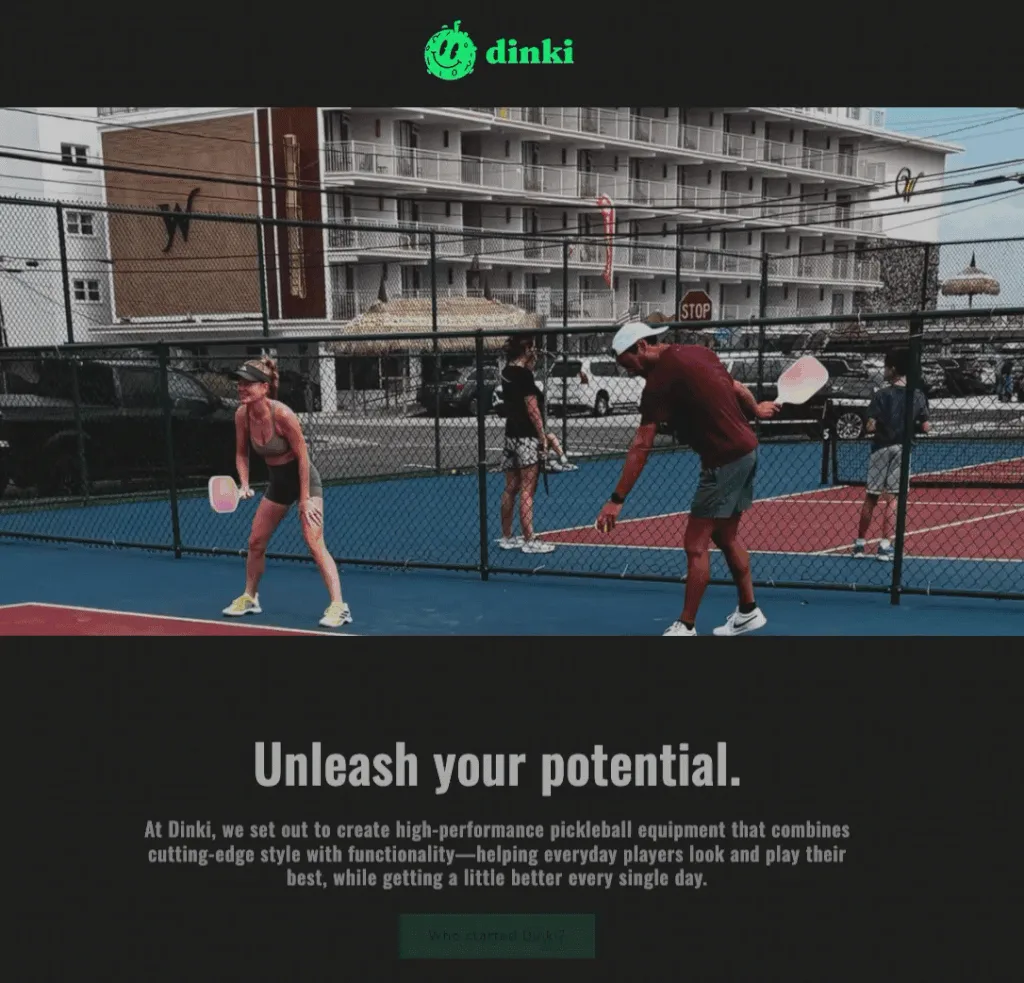
Popup forms, when executed with precision and user-centric design, represent one of the most effective tools for accelerating email list growth in the digital landscape, a critical component for businesses seeking sustained online engagement and conversion. However, their efficacy hinges entirely on a sophisticated understanding of timing, context, and user experience, moving beyond simplistic, intrusive interruptions to become valuable, well-timed offers. The introduction of advanced tools, such as AWeber’s AI Signup Form Builder, signifies a pivotal shift in how businesses approach this crucial aspect of digital marketing, empowering them to craft high-converting forms with unprecedented ease and intelligence.
The Paradigm Shift in Lead Generation: From Annoyance to Asset
For many years, popup forms carried a reputation for being intrusive and irritating, often appearing indiscriminately and disrupting the user’s browsing experience. Early iterations of popups were frequently employed without regard for user context, interrupting content consumption within seconds of a page load or appearing on every single pageview. This aggressive approach, while sometimes yielding short-term gains, ultimately contributed to high bounce rates, negative brand perception, and a general distrust among web users. The core issue wasn’t the popup itself, but the lack of strategic deployment. Visitors, still processing the initial content, were immediately confronted with a demand for their personal information, leading to frustration rather than engagement. This interruption-first mentality stood in stark contrast to the burgeoning principles of user experience (UX) design, which advocate for seamless, intuitive, and respectful interactions.
However, as digital marketing matured, so did the understanding of effective lead generation. Marketers recognized that the difference between a popup that converts and one that alienates lies in its ability to appear at the right moment, with the right offer, and in the right manner. This realization spurred a paradigm shift, moving popup strategy from a blunt instrument to a finely tuned mechanism, designed to complement the user’s journey rather than obstruct it. The goal evolved from merely capturing an email address to initiating a genuine, permission-based relationship, offering value precisely when a visitor is most receptive. This foundational understanding underpins modern best practices, emphasizing respect for the user on the other side of the screen.
Core Principles of High-Converting Popup Design: Crafting Persuasive Invitations

Building a popup that converts effectively while maintaining a positive user experience requires adherence to several fundamental design principles, meticulously refined over years of A/B testing and user behavior analysis. These principles transform a generic request into a compelling invitation.
-
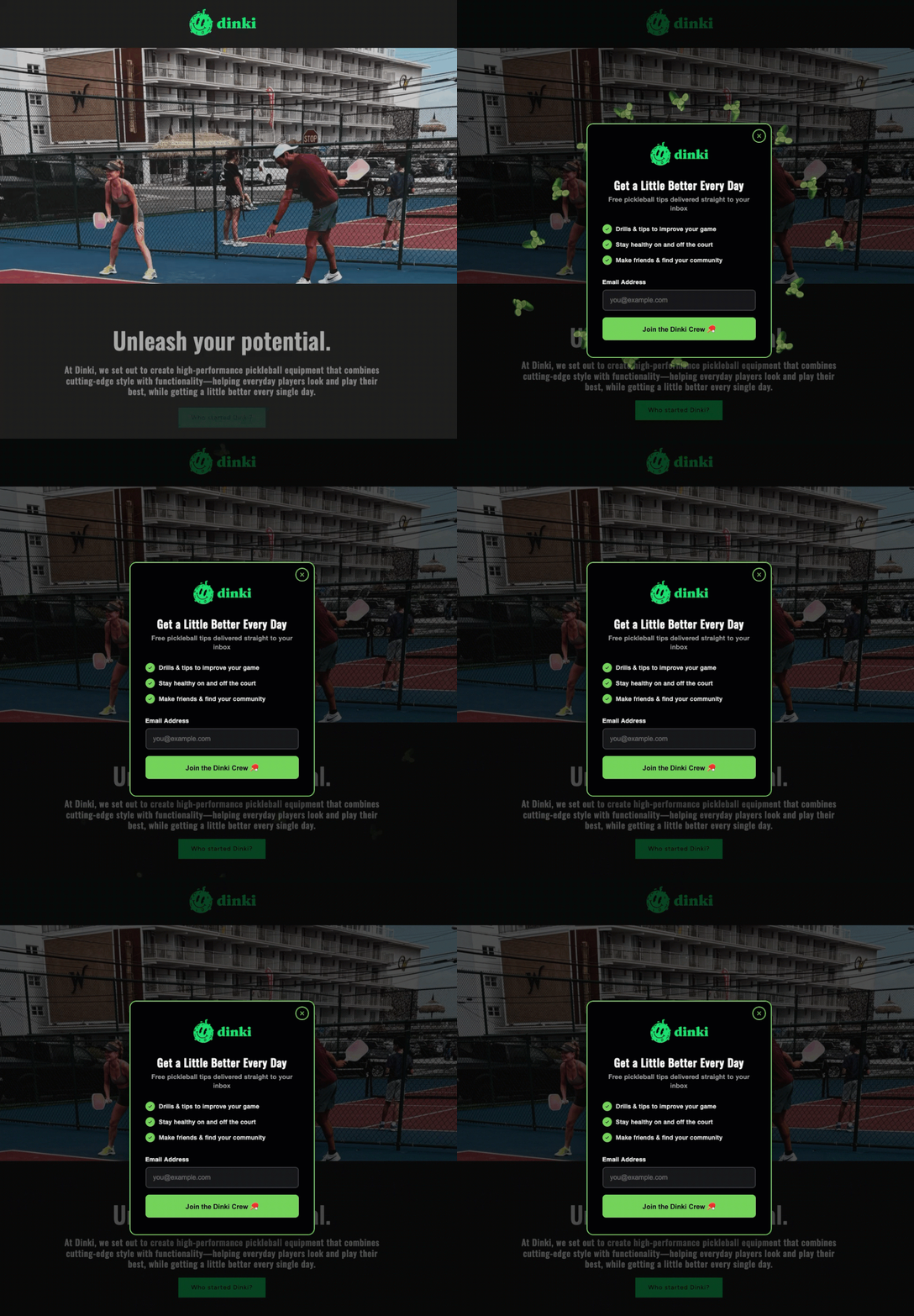
Specific and Value-Driven Headline: The headline is the cornerstone of any effective popup. It must communicate the immediate benefit to the visitor in fewer than ten words. Generic calls to action like “Subscribe to our newsletter” or “Join our list” perform significantly worse than specific offers. For instance, “Get the weekly marketing checklist” or “Download your free email marketing guide” immediately convey tangible value. Research consistently shows that clarity and specificity in headlines can boost conversion rates by upwards of 20-30%, as visitors instantly understand what they will receive in exchange for their email address. This directness eliminates ambiguity and appeals to the user’s self-interest.
-
Concise Value Statement (Optional): Below the headline, a single sentence can serve as a powerful enhancer, adding context, urgency, or credibility. Phrases such as “Sent to your inbox in 60 seconds” create a sense of immediacy, while “Used by 5,000+ small business owners” leverages social proof. This optional element should only be included if it genuinely strengthens the offer; otherwise, simplicity prevails. It acts as a micro-justification, solidifying the user’s decision to proceed.
-
Minimalist Form Fields: The cardinal rule for popup forms is brevity. Email is typically the only field truly necessary to initiate an email marketing relationship. While a name field can be added for personalization, two fields should be the absolute maximum for a popup. Every additional field introduces friction, directly correlating with a decrease in completion rates. Studies by various marketing analytics firms indicate that reducing form fields from three to two can increase conversion rates by 10-20%. Any further demographic or preference data can be collected later through welcome email sequences, preference centers, or progressive profiling, ensuring a low-barrier entry point.
-
Action-Oriented Call-to-Action (CTA) Button: The button text is the final persuasive element. Generic terms like “Submit” are significantly outperformed by action-oriented, benefit-driven language. “Send me the checklist,” “Get my free guide,” or “Claim my discount” clearly articulate the next step and the reward. Furthermore, employing first-person language (“Get my free guide”) often yields higher conversion rates than second-person (“Get your free guide”) in A/B tests, as it personalizes the action for the user.
-
Prominent and Unambiguous Close Button: Respecting the user’s choice is paramount. A clearly visible and easily clickable close option (e.g., a large ‘X’ icon or a ‘No, thanks’ link that isn’t guilt-tripping) is essential. Hiding the close button or using manipulative language to deter users from closing the popup (“No, I don’t want more customers”) erodes trust and negatively impacts brand perception. An easily dismissible popup ensures that visitors who are not ready to subscribe can continue browsing without frustration, fostering a more positive overall experience.
Strategic Timing: The Art of Non-Intrusive Engagement
The precise moment a popup appears is arguably the most critical factor determining its success. A popup that fires too early feels aggressive and disrespectful, while one that appears too late might miss a potential lead. Strategic timing transforms a potential interruption into a helpful, relevant offering. The three most effective timing triggers, often used in combination, are scroll depth, time on page, and exit intent.
-
Scroll-Based Triggers: These triggers activate the popup after a visitor has scrolled a predetermined percentage down the page. For content-rich pages like blog posts, a scroll depth of 40% to 60% is often ideal. At this point, the visitor has invested enough time to consume a significant portion of the content, indicating genuine interest and engagement. Presenting an offer related to the content at this stage feels natural and relevant, leveraging the user’s existing engagement.
-
Time-Based Triggers: Popups set to appear after a specific duration of time on a page are another effective method. A delay of 15 to 30 seconds allows most visitors sufficient time to engage with the content and determine its value. Anything less than 10 seconds typically feels premature and intrusive. This method ensures that only visitors who are genuinely absorbing the content are presented with the form, filtering out those who quickly bounce.
-
Exit-Intent Triggers: Widely regarded as the least intrusive and often the most effective trigger, exit-intent technology detects when a visitor’s cursor moves towards the browser’s close button, back button, or address bar, signaling their intention to leave the site. The popup then appears just before their departure, offering a final opportunity to capture their interest. Exit-intent popups consistently boast higher conversion rates than timed or scroll-based popups, sometimes by as much as 5-10%, precisely because they do not interrupt the active browsing experience. They convert visitors who were already on their way out, turning potential lost leads into subscribers.
Sophisticated platforms allow for combining these triggers, offering a multi-layered approach. For instance, a scroll-based popup could target highly engaged readers, while an exit-intent popup serves as a last-chance offer for those less engaged but still considering leaving. This tailored approach maximizes conversion opportunities while respecting user flow.
Frequency and Targeting: Personalization Over Annoyance
Beyond timing, how often and where a popup appears are equally critical for maintaining a positive user experience and maximizing conversion. Repeatedly showing the same popup to the same visitor, especially if they have already dismissed it, is a fast track to visitor annoyance and site abandonment.
-
Frequency Capping: Implementing a frequency cap is essential. This ensures that once a visitor closes a popup, it does not reappear for a specified period. Common practices include showing the popup once per session or setting a cookie for seven days. This respectful approach acknowledges the visitor’s decision and prevents a negative, repetitive experience that actively drives users away. Resistant visitors are not converted by persistence, but by improved relevance and timing on a subsequent visit.
-
Page Targeting: Not every page on a website warrants a popup, and certainly not the same generic one. Matching the popup’s offer to the specific content of the page significantly enhances its relevance and conversion potential. A popup offering a “blog writing checklist” makes perfect sense on a content marketing blog post but would be entirely out of place on a pricing page. Targeted offers, such as a resource on email automation offered on a page discussing email automation, resonate far more strongly than a generic “join our newsletter” message, leading to higher quality leads and better long-term engagement.
-
Device Targeting and Google’s Stance: The responsiveness of popups across different devices, particularly mobile, is paramount. A popup designed for a desktop screen can easily become an intrusive, full-screen obstruction on a mobile device. Since January 2017, Google has penalized websites using “intrusive mobile interstitials” as a negative ranking signal in its search algorithm. This specifically targets full-screen popups that cover content immediately upon mobile page load, hindering user access. Popups triggered by a time delay, scroll depth, or exit intent, which allow initial content consumption, are generally not penalized. Best practice dictates using smaller banners, slide-ins, or completely different, less intrusive forms for mobile users, ensuring the close button is easily accessible and tappable on any screen size. This adaptive approach safeguards search rankings and preserves the mobile user experience.
The AI Revolution in Form Building: AWeber’s Innovation
The complexity of designing, implementing, and optimizing high-converting popup forms has historically been a barrier for many small businesses and marketers lacking extensive technical skills or dedicated design resources. The introduction of AWeber’s AI Signup Form Builder, as highlighted in May 2026, marks a significant technological advancement aimed at democratizing this process. This AI-powered tool allows users to generate entire popup forms from simple text descriptions, streamlining a previously laborious task.
The process is remarkably straightforward: a user describes their business, the specific offer (e.g., a free email checklist), and the desired timing trigger (e.g., “Show the form after 30 seconds”). The AI then intelligently generates the copy, design, layout, and necessary fields. This eliminates the need for coding, separate design tools, or third-party plugins, making sophisticated form creation accessible to everyone. Once generated, the form seamlessly connects to the user’s AWeber email list, automatically adding new subscribers and initiating any pre-built automation sequences. This integration ensures a smooth workflow from lead capture to nurturing, representing a substantial leap in efficiency for marketing teams of all sizes. It empowers businesses to implement best practices without the typical technical hurdles, fostering a more competitive and innovative digital marketing landscape.
Beyond the Basic Popup: Advanced Formats for Enhanced Engagement
The evolution of popup technology, particularly with AI-driven builders, has enabled the creation of more dynamic and engaging form formats that move beyond the traditional static overlay. These advanced forms leverage psychological principles to boost interaction and conversion.
-
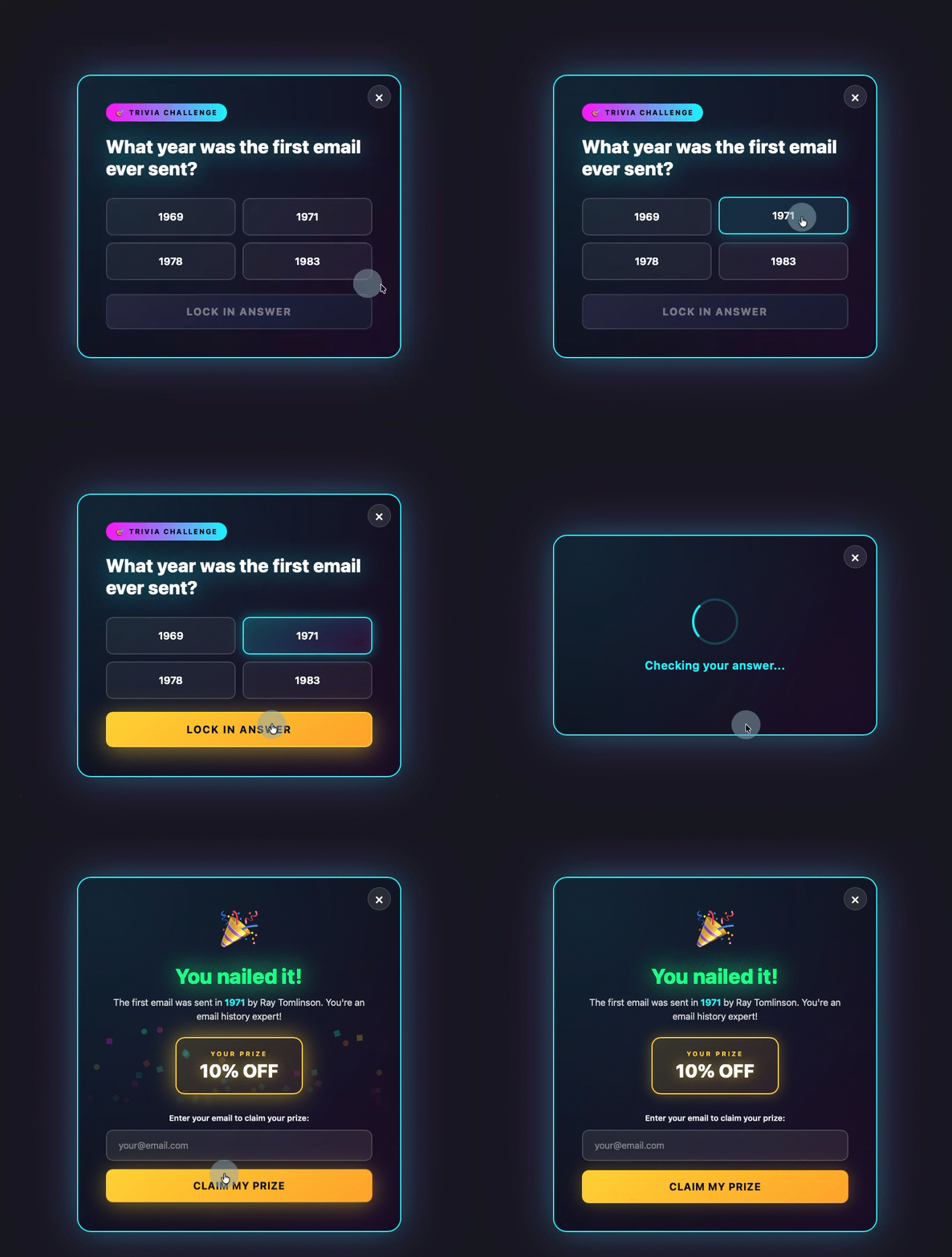
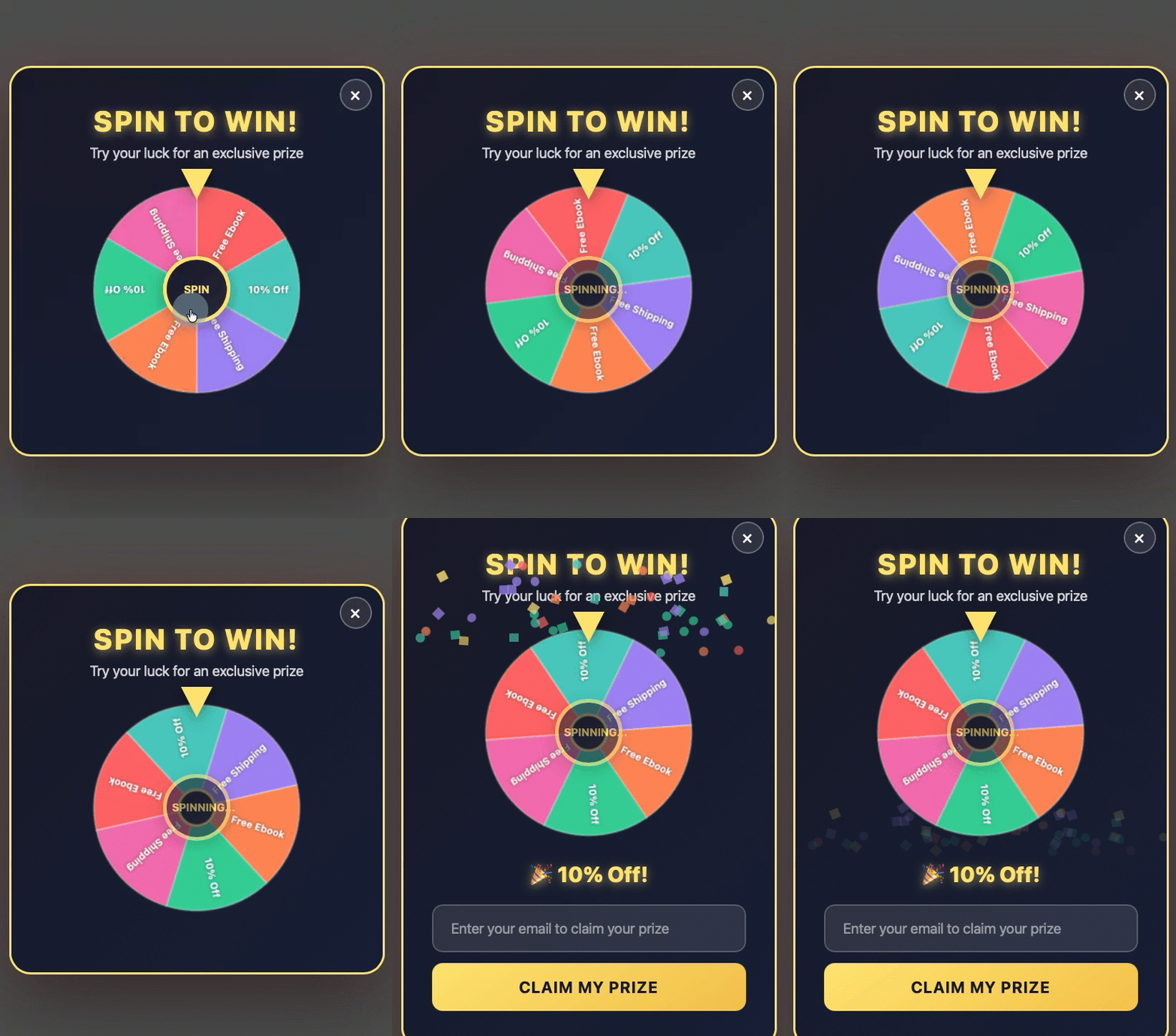
Gamified Forms: These transform the lead capture process into an interactive experience, such as a quiz, trivia question, or a “spin-to-win” wheel. Visitors engage with the game first, and upon completion, are prompted for their email address to claim a prize or result. This approach reduces the perceived friction of giving an email, as the user has already invested effort and anticipates a reward, leading to significantly higher engagement rates.
-
Discount Offer Popups: Often combined with exit-intent triggers, these forms present a coupon or discount code just as a visitor is about to leave a product or service page. The visitor enters their email to “claim” the prize, effectively turning an abandoned cart or a hesitant departure into a lead. This direct incentive provides immediate value, often preventing a lost sale and building the email list simultaneously.

-
Multi-Step Forms: These forms break down the commitment into smaller, less daunting steps. Instead of immediately asking for an email, the first step might be a simple question or a choice (e.g., “What are you looking for today?”). By the time the user reaches the email field in the second or third step, they have already made several low-commitment decisions, increasing their psychological investment and willingness to complete the form. This gradual engagement strategy can significantly boost completion rates compared to single-step forms for certain offers.
-
Sticky Bars (or Hello Bars): A less intrusive alternative to traditional popups, sticky bars are thin banners that remain fixed at the top or bottom of the page. They typically contain a brief offer, a form field, and a call-to-action button. Always visible but never blocking content, sticky bars offer a persistent lead capture opportunity without disrupting the user’s browsing experience. They are particularly effective for evergreen offers or sitewide promotions.
The AI Signup Form Builder from AWeber is capable of generating any of these sophisticated formats, allowing users to simply describe their desired outcome and deployment strategy, and the AI handles the design and integration, making advanced lead generation tactics accessible to a broader audience.
The Broader Implications for Digital Marketing: Ethical AI and User-Centric Growth
The strategic evolution of popup forms, particularly with the integration of AI, holds significant implications for the broader digital marketing landscape. This trend underscores a critical shift towards more intelligent, respectful, and permission-based marketing practices.
Firstly, AI-driven form builders democratize access to sophisticated marketing tools. Small businesses and individual content creators, who may lack the budget or expertise for custom development, can now leverage advanced techniques previously reserved for larger enterprises. This levels the playing field, fostering innovation and competitiveness across various sectors.
Secondly, the emphasis on strategic timing, frequency, and targeting, now easily configurable through AI, highlights the growing importance of user experience (UX) in conversion strategy. The days of aggressive, indiscriminate popups are waning, replaced by a nuanced approach that prioritizes user journey and relevance. This alignment between marketing objectives and user satisfaction is crucial for building long-term brand loyalty and trust in an increasingly discerning digital environment.
Thirdly, the ethical considerations surrounding data collection and user consent are becoming more prominent. The ability to create highly targeted and personalized offers through AI must be balanced with transparency and respect for user privacy. Smart popups, by offering clear value and easy dismissal options, exemplify an ethical approach to lead generation, ensuring that consent is freely given.
Finally, the continuous optimization facilitated by these tools means that marketing strategies are no longer static. Businesses can rapidly test different offers, designs, and triggers, learning from real-time data to refine their approach. This agile methodology, powered by AI, ensures that lead generation efforts remain dynamic, efficient, and maximally effective in an ever-changing digital ecosystem. The future of digital engagement lies in this intelligent synergy between technology, strategy, and a profound respect for the end-user, transforming popups from mere interruptions into powerful, personalized invitations for connection.








