

The back-to-school (BTS) shopping season stands as one of the most significant retail opportunities in the e-commerce calendar, rivaling major holiday periods in its economic impact. For 2026, industry projections underscore the critical role of digital channels, particularly email and SMS, as primary conduits for brands to engage with parents, students, and educators in the lead-up to the new academic year. This guide delves into effective back-to-school marketing strategies, drawing on real-world examples and offering practical insights for building high-impact campaigns amidst evolving consumer behaviors.
![Back-to-School Marketing: Best Practices & Examples [2026 ]](https://www.omnisend.com/blog/wp-content/uploads/2026/07/2-B-Wear-email.jpg)
The Economic Imperative of Back-to-School
Back-to-school marketing encompasses the strategic efforts by retailers and e-commerce brands to promote products and services tailored for the impending school year. This extends beyond traditional school supplies to include apparel, electronics, dorm essentials, beauty products, and even home goods. Brands leverage a multi-channel approach, integrating email, SMS, social media, paid advertising, product bundling, and seasonal discounts to capture the attention of a diverse shopper base.
![Back-to-School Marketing: Best Practices & Examples [2026 ]](https://www.omnisend.com/blog/wp-content/uploads/2026/07/3-Rachel-Riley-email.jpg)
For e-commerce businesses, the BTS season represents a unique mid-year convergence of seasonal intent, the appeal of gift-style bundling, and the potential for repeat purchases. The sheer volume of spending during this period makes it indispensable for revenue growth. Historically, the National Retail Federation (NRF) consistently reports back-to-school and back-to-college spending in the tens of billions of dollars annually, with projections for 2026 expected to maintain or even exceed these robust figures as digital commerce continues its ascent. This sustained growth is driven by a combination of necessity and the desire for newness that accompanies a fresh academic start.
A Strategic Timeline for the Back-to-School Season
![Back-to-School Marketing: Best Practices & Examples [2026 ]](https://www.omnisend.com/blog/wp-content/uploads/2026/07/4-INGLOT-Canada-email.jpg)
Understanding the chronological ebb and flow of consumer purchasing behavior is paramount for maximizing campaign effectiveness. The back-to-school season typically spans from June through September, characterized by distinct phases of shopper intensity:
- June: The Early Bird Shoppers and Browsing Phase: This initial period sees highly organized parents and budget-conscious shoppers beginning their research. Brands should focus on generating early interest, promoting new arrivals, and building their subscriber lists through opt-in forms and welcome series. Early engagement helps establish brand presence before the competitive surge.
- Mid-July: The Deal Hunters Emerge: As summer progresses, shoppers become more active in comparing prices and seeking out the best deals. This is the opportune moment for brands to launch discount emails, feature attractive product bundles, and consider running giveaways to create buzz and drive early conversions. The emphasis shifts from discovery to value.
- August: Peak Purchasing Activity: August represents the zenith of back-to-school shopping. Inboxes become saturated, making timely and highly relevant communication crucial. Brands should deploy sale reminders, implement robust cart recovery strategies for abandoned purchases, and send back-in-stock notifications for popular items. This is when the majority of purchases are finalized.
- Early September: The Last-Minute Rush: A final segment of shoppers, often driven by procrastination or unforeseen needs, makes purchases as school starts. "Last call" emails and urgent SMS messages can effectively capture this demographic. Following this, post-purchase follow-ups become essential for fostering customer loyalty and gathering feedback.
By aligning marketing efforts with these distinct shopping behaviors, brands can optimize their messaging, offers, and channel usage for maximum impact.
![Back-to-School Marketing: Best Practices & Examples [2026 ]](https://www.omnisend.com/blog/wp-content/uploads/2026/07/5-Converse-email.jpg)
Key Trends Shaping Back-to-School 2026
The back-to-school landscape is not static; it continually evolves with economic conditions, technological advancements, and shifts in consumer psychology. For 2026, several key trends are poised to influence marketing strategies:
![Back-to-School Marketing: Best Practices & Examples [2026 ]](https://www.omnisend.com/blog/wp-content/uploads/2026/07/6-Cuisinart-email.jpg)
- Value Trumps Brand Loyalty: Economic uncertainties often lead consumers to prioritize value above all else. The 2026 Deloitte Back-to-School Survey highlights that a significant majority of parents (71%) are willing to switch brands if it means greater savings. This underscores the need for clear, compelling discounts and value propositions. Brands must focus on transparent pricing, bundling core items, and prominently displaying savings in all communications to attract and retain these hyper-value seekers.
- Children’s Influence on Purchase Decisions: PwC’s 2026 back-to-school poll reveals that children play a substantial role in shaping purchasing decisions, with 58% of parents acknowledging their children’s influence. Furthermore, 61% of parents permit their children to add items to online shopping carts. This trend necessitates marketing materials that appeal to both parents and children, featuring simple layouts, clear visuals, and products that resonate with younger demographics while still addressing parental concerns like durability and cost.
- AI as a Shopping Assistant: The integration of artificial intelligence into the shopping journey is accelerating. PwC data indicates that 73% of families plan to use AI for school shopping in 2026, primarily for price comparison and deal discovery (23%). This implies that content must be easily scannable and optimized for AI processing, ensuring that product information, prices, and offers are readily accessible and digestible. Brands should consider how their digital assets appear in AI-driven search results and product recommendations.
- Social Media as a Discovery Engine: Social media platforms and influencer recommendations continue to be powerful discovery channels. PwC found that 23% of parents intend to shop via social media or through influencer endorsements. This mandates a cohesive multi-channel strategy where email and SMS campaigns are seamlessly integrated with social media efforts, featuring consistent offers, messaging, and visual branding across all platforms.
- Broadening Definition of "School Costs": The financial outlay for families during the back-to-school period extends far beyond just supplies. PwC’s research indicates that families anticipate spending approximately $635 per month on recurring costs post-school-start, including significant amounts on school fees, meals, and snacks. This expansive view of "school costs" creates opportunities for brands outside traditional school supply categories, such as food and beverage, home organization, or even personal care and beauty, to position their products as essential components of the back-to-school experience.
Implementing Effective Back-to-School Campaigns: A Practical Guide
Success in back-to-school marketing hinges on strategic planning and flawless execution. Leveraging marketing automation platforms like Omnisend can streamline campaign development and deployment.
![Back-to-School Marketing: Best Practices & Examples [2026 ]](https://www.omnisend.com/blog/wp-content/uploads/2026/07/7-Crocs-email.jpg)
1. Tailor Messages by Shopper Segment:
Recognizing that parents, teachers, and students have distinct needs is fundamental. Instead of a one-size-fits-all approach, segment your audience and customize your campaigns. For example, a sportswear brand like B-Wear can feature a "Buy 3 Get 3 Free" offer but divide the email into sections targeting "Teachers," "Pet Lovers," "Music Lovers," and "Country Life," showcasing products relevant to each group. Even better, employing advanced segmentation allows for entirely different campaigns to be sent to distinct audiences based on their past purchase history, browsing behavior, or declared interests. This level of personalization significantly boosts engagement and conversion rates.
2. Create Urgency with Clear Deadlines:
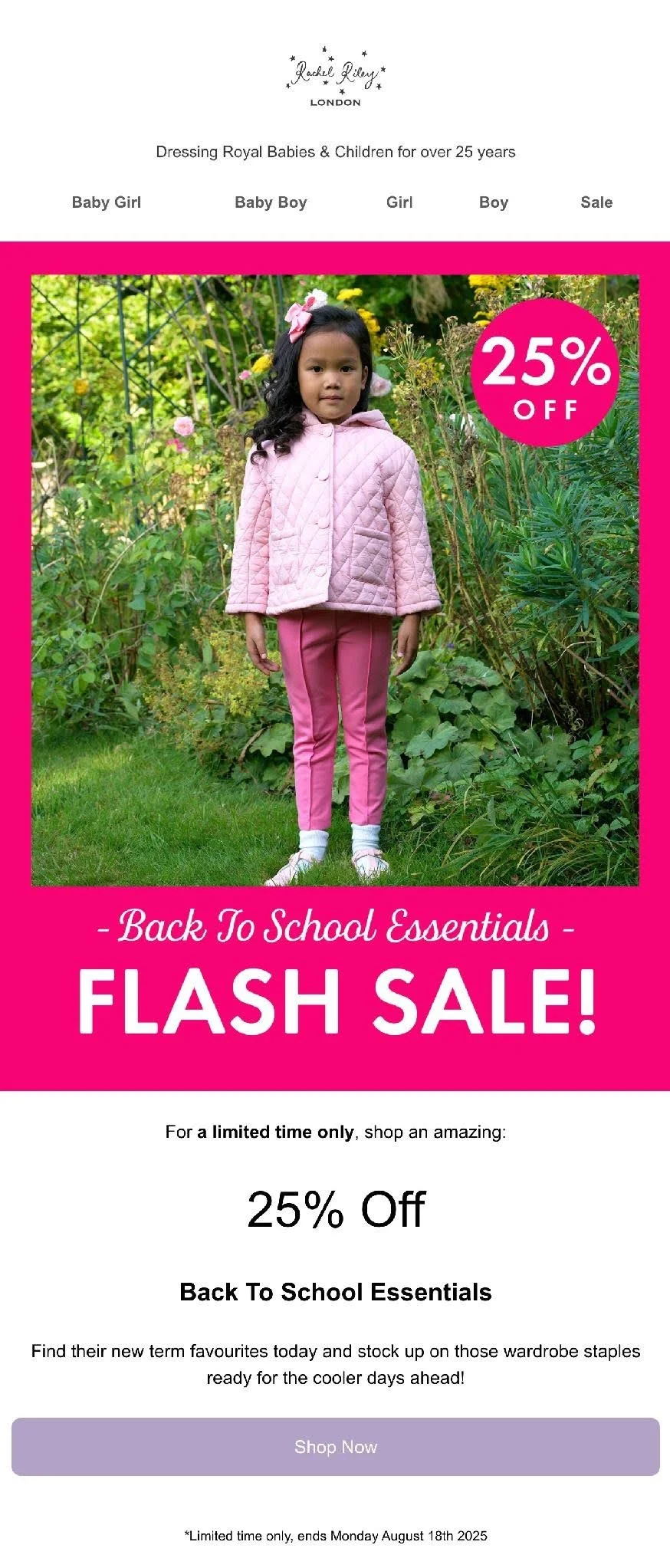
Limited-time offers are powerful motivators. A simple discount combined with a clearly stated end date provides a strong incentive for shoppers to act swiftly. Rachel Riley’s "Back to School Essentials Flash Sale," offering 25% off with a precise closing date, exemplifies this tactic. The clarity of the offer and the finite window of opportunity create a psychological push, preventing procrastination and encouraging immediate purchases. When implementing this, maintain brand consistency in design and messaging to ensure the promotion feels authentic.
![Back-to-School Marketing: Best Practices & Examples [2026 ]](https://www.omnisend.com/blog/wp-content/uploads/2026/07/8-Back-to-school-email-template-1.jpg)
3. Position Products as "Back-to-School Essentials":
The back-to-school season isn’t exclusively for academic supplies. Brands outside traditional categories can successfully participate by creatively positioning their products as "essentials." INGLOT Canada, a beauty brand, effectively ties its cosmetics to the season with a "Back to School Sale," framing beauty products as tools for feeling confident and ready for the new term. This requires crafting compelling narratives and visuals that connect products to the broader back-to-school lifestyle, making them relevant to a wider audience. Including clear offers, product details, and trust badges (e.g., free shipping, vegan, cruelty-free) further enhances appeal.
4. Bundle for Convenience and Value:
Product bundles simplify shopping for consumers while simultaneously increasing average order value for retailers. Converse’s "Back to School Bundle Up & Save" campaign, which groups shoes, backpacks, and socks with tiered discounts (e.g., "Spend $100, Save $20; Spend $150, Save $40"), is an excellent example. These bundles cater to the comprehensive needs of students, making it easier for parents to purchase multiple related items in a single transaction. Clearly highlighting the savings associated with bundles encourages customers to spend more.
![Back-to-School Marketing: Best Practices & Examples [2026 ]](https://www.omnisend.com/blog/wp-content/uploads/2026/07/9-Brand-assets-section.jpg)
5. Launch Campaigns Early:
Starting your back-to-school marketing campaign in June offers a significant competitive advantage. This early start allows brands to capture the attention of organized planners before inboxes become saturated later in the season. Cuisinart’s "Back-to-School Savings Start Now" campaign, launched early with an "after-school" theme and dollar-off deals, demonstrates this proactive approach. An early launch also provides ample time for shoppers to plan larger purchases and for brands to collect new subscriber data through SMS sign-up sections, expanding their marketing reach throughout the season.
6. Lead with Lifestyle Imagery:
Consumers are more likely to purchase products when they can visualize them fitting into their daily lives. Crocs’ "The Best Back to School Hack" campaign effectively uses lifestyle images depicting students on campus and engaging in everyday activities to showcase how their footwear integrates into the school experience. This approach sells an experience rather than just a product, fostering a more authentic and memorable connection with the brand. High-quality, relatable lifestyle imagery enhances emotional appeal and helps consumers envision the potential of their purchase.
![Back-to-School Marketing: Best Practices & Examples [2026 ]](https://www.omnisend.com/blog/wp-content/uploads/2026/07/10-drag-and-drop-editor.jpg)
Building a Back-to-School Email Campaign: Step-by-Step
For brands looking to launch their back-to-school campaigns efficiently, modern marketing platforms offer intuitive tools:
![Back-to-School Marketing: Best Practices & Examples [2026 ]](https://www.omnisend.com/blog/wp-content/uploads/2026/07/11-AI-popup-generator.jpg)
- Select a Back-to-School Template: Begin by choosing a pre-designed email template that aligns with the seasonal theme and your campaign’s objective. This significantly reduces design time, as the basic layout and structure are already established.
- Establish Brand Kit: Centralize your brand assets—logo, colors, fonts, and social media links. Platforms often automatically apply these elements to your chosen templates, ensuring visual consistency across all communications and reinforcing brand identity.
- Craft the Email Content: Utilize a drag-and-drop editor to populate your email with engaging content. Include a compelling seasonal banner, a clear offer, a prominent discount code, featured products, and a strong call-to-action button. Ensure the design is responsive and optimized for both desktop and mobile viewing.
- Plan the Season’s Campaign Flow: Develop a comprehensive content calendar outlining all back-to-school communications from June to September. This schedule should include different types of emails (new arrivals, discounts, reminders, cart recovery, post-purchase) timed to coincide with distinct shopper behaviors throughout the season.
- Capture Demand with Sign-Up Forms: Implement pop-ups and forms on your website to capture new email and SMS subscribers early in the season. Utilizing AI-powered form generators can simplify the creation of customized pop-ups that resonate with your target audience, such as "Back-to-School VIP Deals" for early access.
- Activate Core Automations: Set up essential automated workflows that will run continuously. This includes welcome series for new subscribers, abandoned cart recovery emails (potentially paired with SMS and push notifications for higher conversion, as seen with INGLOT Canada’s 117% higher conversion rate), and post-purchase follow-ups. Pre-built automation templates can be customized with your branding and content, then activated.
- Segment, Preview, and Schedule: Segment your audience to deliver highly targeted messages. Leverage pre-built segments (e.g., first-time buyers, repeat customers) or create custom segments (e.g., past back-to-school buyers, category interest) using filters or AI segment builders. Always preview your emails across different devices to ensure optimal display before scheduling them for deployment.
Broader Implications and Analysis
The back-to-school season serves as a litmus test for a brand’s agility, personalization capabilities, and multi-channel marketing prowess. The shifting consumer landscape, marked by a strong emphasis on value, the growing influence of children, the rise of AI in shopping, and the pervasive role of social media, demands a dynamic approach. Brands that succeed will be those that not only offer compelling products and discounts but also craft highly personalized, timely, and contextually relevant communications across their preferred channels.
![Back-to-School Marketing: Best Practices & Examples [2026 ]](https://www.omnisend.com/blog/wp-content/uploads/2026/07/12-Prebuilt-automation-workflow.png)
For smaller businesses, the focus on segmentation and automation allows them to compete effectively with larger retailers by delivering tailored experiences that foster deeper customer relationships. For larger enterprises, the challenge lies in maintaining brand consistency and message relevance across vast product catalogs and diverse customer bases. Ultimately, the back-to-school season of 2026 underscores the enduring power of strategic digital marketing in driving e-commerce growth and cementing customer loyalty.








