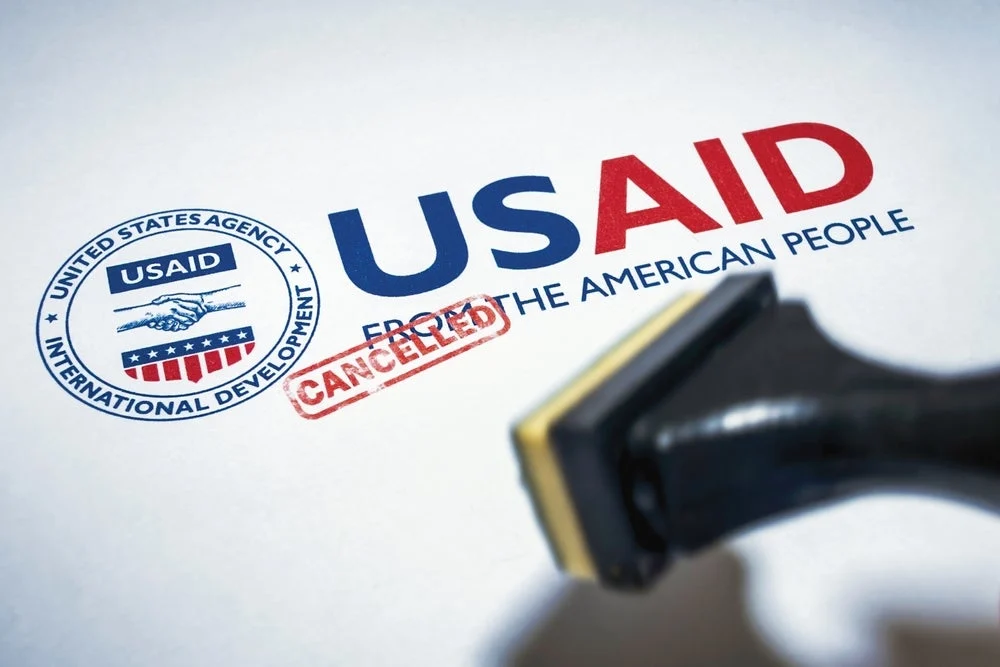
The landscape of international development and humanitarian aid is currently undergoing its most significant transformation since the mid-20th century. As the United States Agency for International Development (USAID)—historically the world’s largest single source of bilateral development assistance—undergoes a period of unprecedented dismantling and restructuring, the global health sector has been thrust into a volatile new reality. Non-profit organizations that for decades operated under the relative stability of multi-year government grants are now finding themselves in a fierce competition for the attention and wallets of individual donors. This shift is not merely a change in accounting; it is a fundamental disruption of how global crises are communicated, understood, and funded.
For decades, USAID served as the backbone of global health initiatives, providing billions of dollars annually to combat infectious diseases, improve maternal health, and strengthen surgical systems in low- and middle-income countries (LMICs). However, with the withdrawal of this institutional safety net, organizations are facing an urgent mandate to build new donor pipelines. The transition from institutional to individual fundraising has revealed a profound "perception gap" that threatens the efficacy of global relief efforts. As communications leaders within the sector are discovering, the primary obstacle to fundraising is often not a lack of empathy, but a fundamental misunderstanding of the issues at hand.
The Institutional Vacuum: Life After USAID
The dismantling of USAID represents a seismic shift in the "soft power" and humanitarian strategy of the United States. Established in 1961 by President John F. Kennedy, the agency was designed to provide economic and humanitarian assistance to support the foreign policy goals of the U.S. while uplifting developing nations. At its peak, USAID’s budget exceeded $27 billion, supporting programs in over 100 countries. For many NGOs, USAID was more than a donor; it was a primary architect of global health standards.
The sudden reduction in this funding has created a vacuum that private philanthropy is struggling to fill. According to recent economic analyses, the transition to individual donor models requires a 400% increase in marketing efficiency to maintain the same level of operational readiness previously provided by government grants. This pressure has forced non-profits to confront a difficult reality: the general public often lacks the context necessary to support complex global health interventions. Before an individual can be inspired to give, they must first navigate a thicket of misconceptions regarding what "help" actually looks like in a modern global context.
The Perception Gap: Beyond Awareness
In the traditional non-profit marketing model, the focus was often on "awareness"—the idea that if people simply knew a problem existed, they would donate to solve it. However, data from 2024 and 2025 suggest that awareness is rarely the bottleneck. A 2025 poll conducted by Oxfam found that 95% of respondents in the United States believed the country should maintain or increase its spending on global relief. The willingness to help is present, but the connection to specific medical and developmental needs is frequently severed by linguistic and cultural barriers.
This phenomenon is most visible in specialized medical fields. For example, in the palliative care sector, many potential donors associate the term "palliative" exclusively with "giving up" or end-of-life cessation of care. In reality, palliative medicine is a sophisticated discipline focused on improving quality of life and longevity for those with chronic illnesses. Because of this perception gap, these organizations struggle to secure funding despite the high societal value of their work.
A similar, and perhaps more acute, challenge exists in the realm of reconstructive surgery. ReSurge International, a non-profit dedicated to providing surgical care in low-income regions, found that the term "plastic surgery" has become culturally synonymous with elective cosmetic enhancements in high-income nations. This association creates a psychological barrier; donors are less likely to contribute to what they perceive as "luxury" procedures, unaware that in the Global South, reconstructive surgery is a life-saving necessity for victims of severe burns, industrial trauma, and congenital conditions.
Case Study: ReSurge International and the "Closing the Gap" Campaign
Facing the dual challenge of a dwindling institutional funding pool and a public that misunderstood its core mission, ReSurge International launched a strategic communications overhaul. The organization recognized that it could not simply ask for money; it had to first re-educate its audience on the definition of reconstructive surgery.
The "Closing the Gap" campaign, developed in pro bono partnership with Ogilvy Health and Papaya Films, was designed to dismantle these misconceptions head-on. The campaign moved away from the "poverty porn" tropes often found in traditional charity advertising, focusing instead on the technical complexity and the restorative power of surgical intervention. By highlighting real patient stories and the lived experience of local surgeons in LMICs, the campaign sought to redefine plastic surgery as a tool for restoring dignity, mobility, and economic independence.

The chronological rollout of the campaign followed a three-tier strategy:
- The Confrontation Phase: Directing the audience’s attention to the 5 billion people worldwide who lack access to safe and affordable surgical care.
- The Education Phase: Differentiating between "cosmetic" and "reconstructive" through visual storytelling that emphasized functional recovery.
- The Action Phase: Connecting the donor directly to the training of local medical professionals, ensuring long-term sustainability rather than just short-term missions.
The results of this shift in strategy were immediate and statistically significant. During the campaign period, ReSurge International reported a 227% increase in new donors and a 490% increase in revenue from new donors. Since the campaign’s conclusion, the growth rate for new donors has more than quadrupled compared to the pre-USAID era. The campaign’s effectiveness was further validated by the advertising industry, earning prestigious accolades at the Effie Awards and Clio Awards.
Data-Driven Insights: The Global Surgery Crisis
The success of the "Closing the Gap" campaign highlights a critical, data-supported need in global health. According to the Lancet Commission on Global Surgery, surgical conditions account for approximately 30% of the global burden of disease. Despite this, surgery has long been the "neglected stepchild" of global health, receiving only a fraction of the funding directed toward infectious diseases like HIV/AIDS or Malaria.
The economic implications are staggering. It is estimated that the lack of surgical care will result in a cumulative loss of $12.3 trillion in GDP for low- and middle-income countries by 2030. Reconstructive surgery, in particular, has a high return on investment. A single operation to repair a cleft lip or a contracture from a burn can return a child to school or an adult to the workforce, transforming a lifetime of dependency into a lifetime of productivity. When donors understand this "economic multiplier" effect, their propensity to give increases significantly.
Broader Implications for the Non-Profit Sector
The ReSurge International experience offers a blueprint for other organizations navigating the post-USAID landscape. The primary takeaway is that in an era of information overload, perception is a precondition for strategy. If the audience holds a flawed assumption about the nature of the work, no amount of traditional fundraising will bridge the gap.
Communications leaders are now being advised to measure behavior and sentiment rather than just "impressions." While digital metrics can show that a million people saw an advertisement, they do not indicate whether those viewers understood the message. The new mandate for non-profit marketing is to take a step back and analyze the "understanding deficit."
Key strategies identified for this new era include:
- Challenging Misconceptions Directly: Addressing the "elephant in the room"—such as the cosmetic surgery stigma—rather than ignoring it.
- Prioritizing Lived Experience: Moving the narrative focus from the "savior" (the donor/Western doctor) to the "expert" (the local surgeon) and the "resilient" (the patient).
- Creative Partnerships: Leveraging pro bono support from high-level creative agencies to achieve "big brand" impact on a non-profit budget.
- Long-term Perception Management: Recognizing that changing a public narrative takes longer than a single fundraising cycle and requires consistent messaging across all channels.
Conclusion: A New Philosophy of Giving
As the global health community adjusts to the absence of traditional government funding structures, the importance of strategic communications has never been higher. The dismantling of USAID, while a crisis for many, has also served as a catalyst for innovation in how humanitarian work is presented to the world.
By focusing on the perception gap, organizations like ReSurge International are proving that the public is willing to support complex, high-impact medical interventions—provided they are given the context to understand why those interventions matter. For the 5 billion people currently living without access to safe surgery, the success of these new communication strategies is not just a matter of marketing; it is a matter of survival. As Anna Santos, Chief Marketing Officer at ReSurge International, noted, when misunderstanding stands between an organization and its mission, changing perception is the most important investment a global health entity can make. The future of global health equity may well depend on the ability of NGOs to turn "awareness" into "understanding."