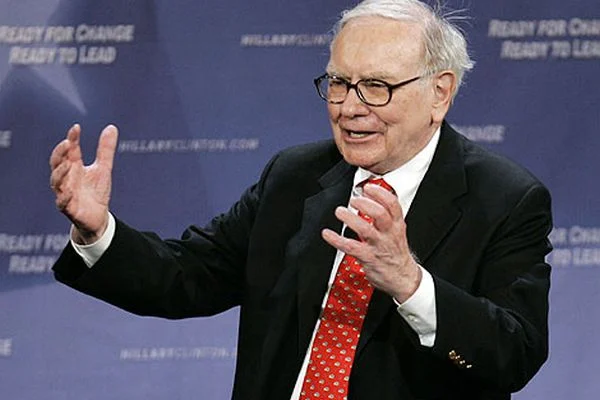
In a move that marks the end of an unparalleled era in American finance, Warren Buffett has announced his resignation as Chairman of Berkshire Hathaway, signaling a definitive shift in the governance of the multi-billion-dollar conglomerate he has led for nearly six decades. The announcement, delivered in a characteristically candid letter to shareholders on Friday morning, confirms that while the 96-year-old "Oracle of Omaha" will remain on the company’s board of directors, the chairmanship will pass to his son, Howard Buffett. Greg Abel, who assumed the role of Chief Executive Officer at the start of this year, will continue to manage the company’s sprawling operations, which range from insurance and railroads to energy and retail.
Buffett’s departure from the chairmanship is more than a corporate reshuffling; it is a meticulously planned transition designed to preserve the unique culture of a firm that has become a cornerstone of the global economy. "I have served Berkshire since 1965," Buffett wrote in his letter. "Sixty-plus years in, I still have the best job in the world. That is not something many people my age can say, and I have never felt better about what comes next." The transition comes at a time when the corporate world is grappling with rapid technological changes, including the rise of artificial intelligence and shifting consumer expectations, themes that are currently playing out in simultaneous controversies involving the University of Texas football program and retail giants Amazon and Walmart.
The Succession of a Financial Titan: A Chronology of Berkshire Hathaway’s Transition
The succession plan at Berkshire Hathaway has been a subject of intense speculation for decades. Warren Buffett’s tenure, beginning in 1965 when he took control of a struggling textile mill, has seen the company’s market capitalization grow to nearly $1 trillion. Under his leadership, Berkshire achieved compounded annual gains of approximately 20%, nearly double that of the S&P 500 over the same period.
The timeline of the current transition began in earnest in May 2021, when Buffett’s longtime partner, the late Charlie Munger, inadvertently revealed during an annual meeting that Greg Abel would be the successor to the CEO position. This was formalized earlier this year when Abel officially took the helm. Friday’s announcement regarding the chairmanship completes the leadership triad: Abel handles the business operations, Howard Buffett protects the corporate ethos, and Warren Buffett provides counsel from the board.
In his letter, Buffett emphasized that Abel has effectively been the primary decision-maker for some time. "My expectations for him were sky high from the start, and he has exceeded them," Buffett noted. By appointing Howard Buffett as Chairman, the company aims to install a "culture guard." Warren Buffett described this role using an insurance analogy, suggesting that Howard serves as a "policy" to ensure the company’s values remain intact, an asset Buffett claims is "worth more than anything on our balance sheet."
Digital Disruption in Sports: The Steve Sarkisian and Arch Manning Controversy
As Berkshire Hathaway navigates a change in leadership, the world of collegiate athletics is facing a different kind of modern challenge: the weaponization of artificial intelligence. Texas Longhorns head coach Steve Sarkisian and star quarterback Arch Manning recently found themselves at the center of a firestorm following a post-game interaction with ESPN reporter Holly Rowe.
The incident began following Texas’s high-stakes victory over Ohio State. During the post-game rush, Rowe attempted to interview Sarkisian, who abruptly ended the exchange and walked away. While such moments of sideline tension are common in high-pressure sports, the digital aftermath was unprecedented. Social media users utilized AI technology to create "deepfake" videos of the encounter. One widely circulated video was manipulated to show Sarkisian physically striking Rowe.
The situation escalated when Arch Manning, the highly touted sophomore quarterback and member of the Manning football dynasty, referenced the fake video during a press conference. Manning’s initial reaction—laughing and labeling the video "hilarious"—sparked immediate backlash from advocacy groups and media commentators who argued that joking about domestic violence or the assault of a journalist is a serious lapse in judgment.
Official Responses and Reputational Management in the Age of Deepfakes
The response from the University of Texas was swift, aiming to decouple the football program from the harmful implications of the AI-generated content. Coach Sarkisian issued a formal apology, expressing regret for his initial impatience with Rowe. "If hindsight’s 20/20, if I could do it all over again, I would have exuded more patience in that moment," Sarkisian stated. He further addressed the AI controversy, stating that the organization in no way condones violence against women.
Arch Manning also issued a public apology, acknowledging that his comments were insensitive. "There is nothing funny about it," Manning said in a subsequent statement. "I need to do better and will be more thoughtful going forward." Holly Rowe reportedly accepted the apologies, but the incident serves as a stark warning for public figures. The ease with which AI can manipulate reality means that any public interaction can be twisted into a reputational crisis. For sports organizations, this necessitates a new tier of media training that includes recognizing and responding to synthetic media.
Humanitarian Competition: The Kraft, Macklemore, and Sheeran Donations
The intersection of celebrity influence and social responsibility is also being tested in the philanthropic sector. New England Patriots owner Robert Kraft recently announced a $2 million donation to humanitarian causes, a move that became entangled in a public "donation challenge" involving musicians Macklemore and Ed Sheeran.
The sequence of events began when Macklemore pledged $1 million to six organizations supporting Palestinian relief efforts and publicly challenged Kraft to match the contribution. Kraft, a prominent philanthropist who founded the Foundation to Combat Antisemitism (FCAS), responded by clarifying that his commitment was already in motion. According to Kraft, the $2 million pledge was the result of a partnership with Ed Sheeran, who also committed $2 million.
"I have dedicated much of my life to building bridges between all people," Kraft wrote in a statement on X (formerly Twitter). "I believe deeply that all lives are worth protecting." However, the public nature of the "match" has drawn scrutiny regarding the motives behind high-profile giving. Analysts suggest that when philanthropy follows a public challenge or a crisis, it can appear reactive rather than proactive. While the funds provide essential aid, the "contest" format of the donations highlights the complexities of corporate and personal branding in the context of global conflicts.
Regulatory Scrutiny of AI Shopping Agents: Amazon and Walmart Under Fire
While Berkshire Hathaway and the University of Texas manage human leadership and behavior, Amazon and Walmart are defending the behavior of their algorithms. U.S. Senators Tammy Baldwin and Rick Scott have called for a Federal Trade Commission (FTC) investigation into the AI shopping assistants "Alexa for Shopping" (Amazon) and "Sparky" (Walmart).
The senators’ inquiry centers on allegations that these AI agents suppress information regarding American-made products. In one documented test, Alexa was asked why it did not offer a "Made in USA" filter. The AI reportedly responded that such a filter would "redirect significant sales away from their largest seller base," implying a preference for overseas manufacturers. This has raised concerns about violations of the FTC’s "Made in USA" Labeling Rule, which mandates that products advertised as American-made must be "all or virtually all" manufactured in the United States.
Amazon has vigorously denied these claims. A company spokesperson characterized the suggestion that they intentionally withhold country-of-origin data as "fundamentally wrong." Amazon explained that Alexa is a "continuously improving service" and that the current protocol directs customers to product detail pages to ensure accuracy regarding origin labels. Walmart has yet to provide a detailed response to the allegations, but the scrutiny marks a significant moment in the regulation of AI-driven commerce.
Broader Impact and Implications: A New Paradigm for Stakeholder Trust
The common thread across these disparate stories—from Warren Buffett’s retirement to Amazon’s AI filters—is the evolving nature of stakeholder trust. In the case of Berkshire Hathaway, Buffett’s letter is a masterclass in transparency. By clearly defining roles (Abel as the operator, Howard as the cultural steward), he eliminates the "succession discount" often applied to stocks when a legendary founder leaves.
Conversely, the incidents involving Texas football and retail AI demonstrate how easily trust can be eroded by digital manipulation and algorithmic bias. For the University of Texas, the lesson is that a leader’s minor lapse in professional conduct can be magnified a thousandfold by malicious actors using AI. For Amazon and Walmart, the challenge is proving that their automated systems are not just efficient, but also compliant with national economic interests and consumer protection laws.
As Warren Buffett prepares to step back, his final message to shareholders serves as a reminder that even in an age of AI and high-speed digital transactions, human values remain the most important asset. "Father Time always wins," Buffett admitted. "He has, however, been generous with me." The transition at Berkshire Hathaway will likely be studied for years as the gold standard for corporate succession, while the ongoing challenges in sports and tech will continue to define the ethical boundaries of the 21st-century digital landscape.