rifanmuazin
The digital marketing realm is in constant flux, with email marketing remaining a cornerstone for businesses of all sizes. Sender, a platform recognized for its generous send limits on free and lower-tier plans, has carved out a niche for entities primarily focused on high-volume email dissemination and basic automation. While its affordability and simplicity initially attract users seeking to grow their email lists with straightforward forms and run fundamental campaigns, the platform’s inherent limitations in advanced features often prompt businesses to explore more robust alternatives as their marketing needs mature and customer journeys become increasingly intricate. This analysis delves into the reasons behind this shift and provides a comprehensive overview of leading alternatives, categorizing them by their suitability for specific business models and marketing objectives.
The Evolution of Email Marketing: Beyond Basic Broadcasts
The landscape of email marketing has transformed dramatically over the past decade. What began as a tool for mass communication has evolved into a sophisticated channel for personalized engagement, customer relationship management (CRM), and multi-channel orchestration. Early email service providers (ESPs) primarily focused on deliverability and send volume. However, as consumers became more discerning and e-commerce boomed, the demand for deeper integration with sales data, behavioral analytics, and complementary communication channels like SMS and web push notifications grew exponentially. Modern marketing platforms are no longer just about sending emails; they are about understanding the customer lifecycle, predicting needs, and delivering contextually relevant messages across various touchpoints. The rise of artificial intelligence (AI) has further accelerated this trend, enabling features like predictive sending, automated content generation, and intelligent segmentation, moving marketing from reactive to proactive.
Sender’s Niche and Its Inherent Constraints
Sender’s primary appeal lies in its cost-effectiveness, particularly for businesses with large contact lists but modest budgets. Its free plan, offering a substantial 15,000 emails per month for up to 2,500 subscribers, stands out in a crowded market. This makes it an accessible entry point for startups, solopreneurs, and small businesses focused on growing an audience and sending general newsletters or promotional blasts. The platform efficiently handles basic automations, such as welcome series or simple follow-ups, and facilitates list building through integrated forms.
However, this generosity in send limits comes with a trade-off in functionality. Sender’s core limitations become apparent when businesses aim for more sophisticated engagement strategies. Critical features like multichannel capabilities (e.g., combining email with SMS or web push notifications), advanced automation triggers, granular segmentation, and comprehensive A/B testing are often restricted to its higher-tier plans, specifically the Professional plan costing at least $20 per month. At this price point, the value proposition begins to diminish when compared to alternatives that offer a broader feature set or a more specialized focus for a similar or marginally higher investment. The inability to craft complex, dynamic customer journeys, integrate seamlessly with diverse e-commerce platforms, or leverage predictive analytics for optimized outreach often leads scaling businesses to seek more comprehensive solutions.
Why Businesses Seek Alternatives: Beyond Basic Automation
The decision to transition from Sender typically arises when businesses realize their marketing strategy requires a deeper level of personalization and automation than the platform can natively support. Key drivers for switching include:
- Demand for Multichannel Engagement: Modern customers expect coherent communication across email, SMS, and potentially web push notifications. Sender’s restriction of true multichannel flows to its professional tier forces businesses to either upgrade or integrate separate tools, adding complexity and cost.
- Complex Customer Journeys: As businesses grow, their customer lifecycles become less linear. Needs for advanced automation triggers (e.g., browse abandonment, specific product views, loyalty program tiers), dynamic content, and sophisticated segmentation (e.g., based on purchase history, website behavior, engagement levels) quickly exceed Sender’s capabilities.
- E-commerce Specialization: Online stores require dedicated features like robust abandoned cart recovery sequences, personalized product recommendations, post-purchase follow-ups, and seamless integration with e-commerce platforms (Shopify, WooCommerce, etc.). Sender’s generalist approach often falls short here.
- Content Monetization: Creators—bloggers, podcasters, online educators—increasingly seek platforms that not only send emails but also facilitate the sale of digital products, courses, subscriptions, and host webinars, all within a unified ecosystem.
- CRM and Sales Integration: For businesses with longer sales cycles or a mixed B2B/B2C model, an integrated CRM, lead scoring, and sales pipeline management become indispensable, functionalities largely absent in Sender.
Leading Sender Alternatives: A Detailed Examination
The market offers a diverse array of email marketing platforms, each catering to distinct business needs and growth stages. Here, we explore seven prominent alternatives, highlighting their unique strengths and ideal use cases.
1. Omnisend: The E-commerce Powerhouse
Target Audience: E-commerce stores of all sizes, from startups to rapidly scaling enterprises.
Omnisend positions itself as an e-commerce-first omnichannel marketing automation platform. Its core strength lies in its native integration of email, SMS, and web push notifications, available across all plans, including its generous Free Forever tier. This seamless multichannel capability allows e-commerce businesses to create unified and highly effective customer journeys. Unlike Sender, Omnisend doesn’t gate essential features, offering A/B testing, unlimited email and popup templates, and robust automation workflows from the outset.
Key Differentiators: Omnisend excels in e-commerce-specific automations. Its pre-built workflows for cart abandonment, browse abandonment, welcome series, post-purchase follow-ups, and customer re-engagement are highly effective. The platform boasts an intuitive drag-and-drop editor, dynamic content blocks for product recommendations, and advanced segmentation based on purchase behavior, website activity, and customer demographics. Its Forms AI feature assists in optimizing signup forms for better conversion. In 2025, Omnisend customers reportedly achieved an impressive $79 ROI for every $1 spent across email, SMS, and push, with email alone generating a 76x ROI, underscoring its efficacy for revenue generation.

Pricing Philosophy: While its Standard plan for 1,000 contacts and 12,000 emails costs $16/month (comparable to Sender’s Professional plan), Omnisend provides significantly more e-commerce-specific features, advanced segmentation, and native multichannel functionality from its free and standard tiers.
2. Mailchimp: The Versatile Toolkit for Small Businesses
Target Audience: Small businesses, service providers, and individuals seeking a comprehensive marketing toolkit beyond just email.
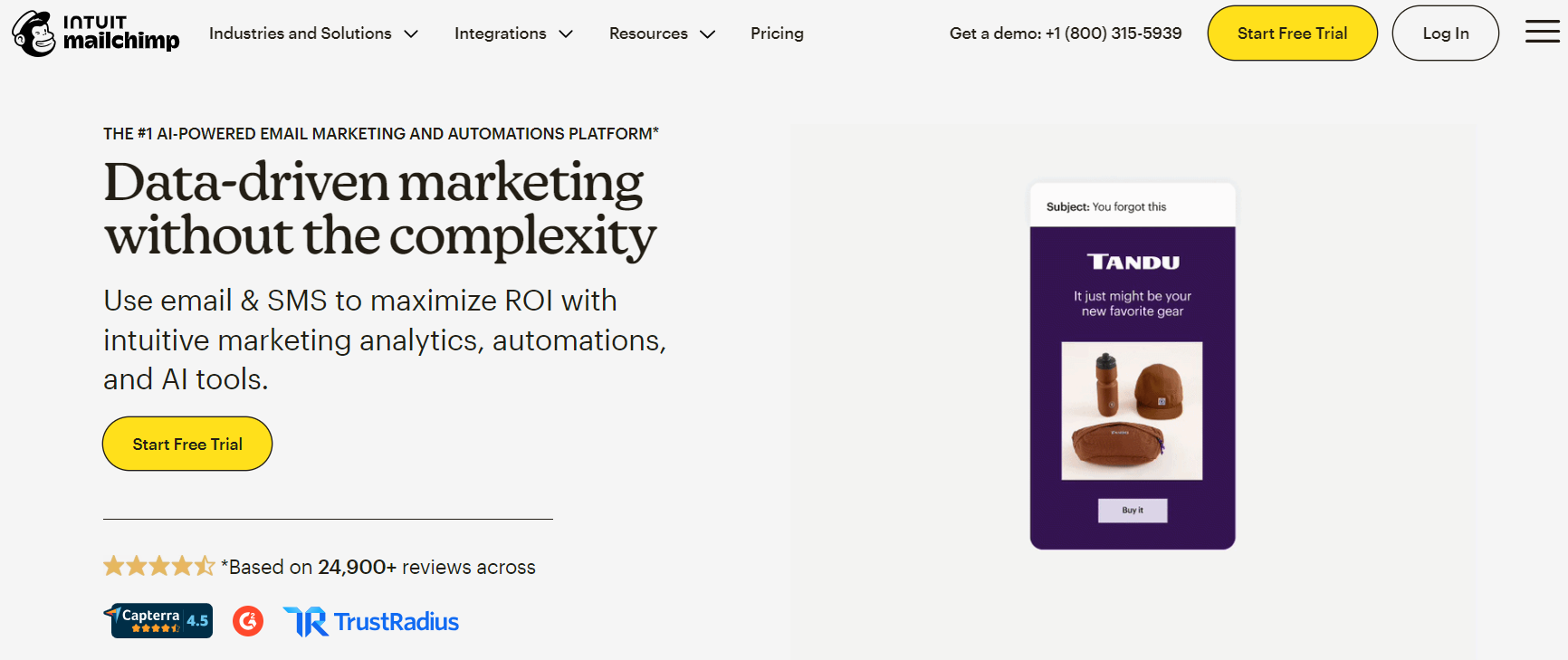
Mailchimp has long been a household name in email marketing, renowned for its user-friendly interface and a broad suite of marketing tools. It goes beyond email to offer landing pages, popups, surveys, social media posting, and even a built-in website builder. This makes it an excellent all-in-one solution for small businesses looking to consolidate various marketing efforts under one roof without needing deep e-commerce integration.
Key Differentiators: Mailchimp’s Content Studio acts as a centralized asset gallery, simplifying content management. Its drag-and-drop builder for emails, landing pages, and websites is intuitive, making it accessible for beginners. While it provides basic automation, it’s less focused on deep e-commerce behavioral triggers compared to Omnisend or Klaviyo. Its strength lies in offering a broad range of general marketing functionalities that Sender lacks, such as the ability to create and embed surveys directly into emails or build a simple website.
Pricing Philosophy: Mailchimp offers a free plan with limitations on contacts and features. Paid plans start around $13/month. While Sender offers higher email send limits across all plans, Mailchimp provides a wider array of general marketing tools, which might justify its cost for service-based businesses or those needing a diverse marketing presence.
3. Brevo (formerly Sendinblue): Value for Volume and CRM Integration
Target Audience: Mixed B2B/B2C businesses with longer sales cycles, companies needing integrated CRM and chat features, and those with large send volumes.
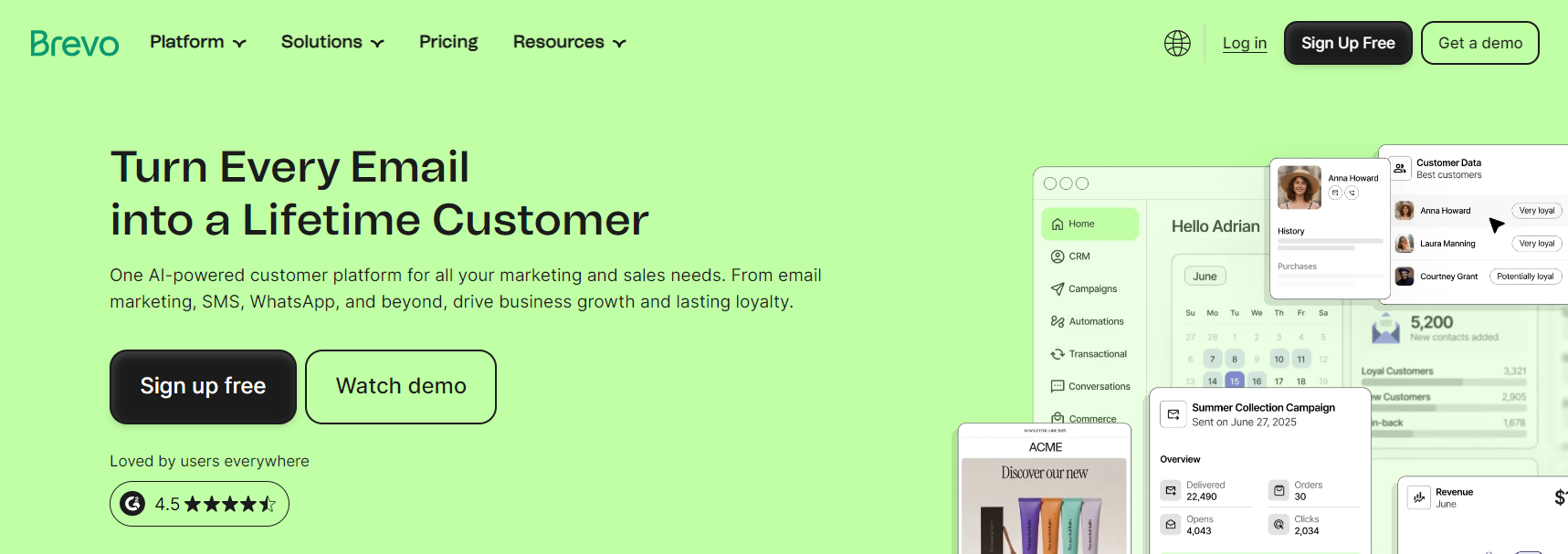
Brevo stands out by integrating email, SMS, live chat, and a robust CRM into a single platform. Its focus on sales features, including open deals, pipelines, and an online meeting scheduler, makes it particularly suitable for businesses that manage leads and customers through a sales funnel. It’s a strong contender for companies that need to separate contacts from companies within their CRM, a feature absent in many basic email marketing tools.
Key Differentiators: Brevo’s CRM is a significant advantage, allowing businesses to track customer interactions, manage sales pipelines, and schedule meetings. It offers multichannel automations across all plans, including email and SMS. Its Aura AI assists in optimizing email campaigns. Notably, Brevo supports syncing contacts to Google and Meta for retargeting, a powerful feature for enhancing advertising efficacy that Sender does not offer. Its generous daily send limits (300 emails/day on the free plan) also appeal to high-volume senders.
Pricing Philosophy: Starting from $9/month, Brevo offers competitive pricing, especially for its included CRM and sales functionalities. While Sender offers higher monthly email quotas on its free plan, Brevo’s integrated sales tools and retargeting capabilities offer significant added value for businesses with complex sales processes.
4. ActiveCampaign: Automation and AI for Complex Journeys
Target Audience: E-commerce businesses, SaaS companies, and service providers with complex sales cycles and intricate customer journeys.
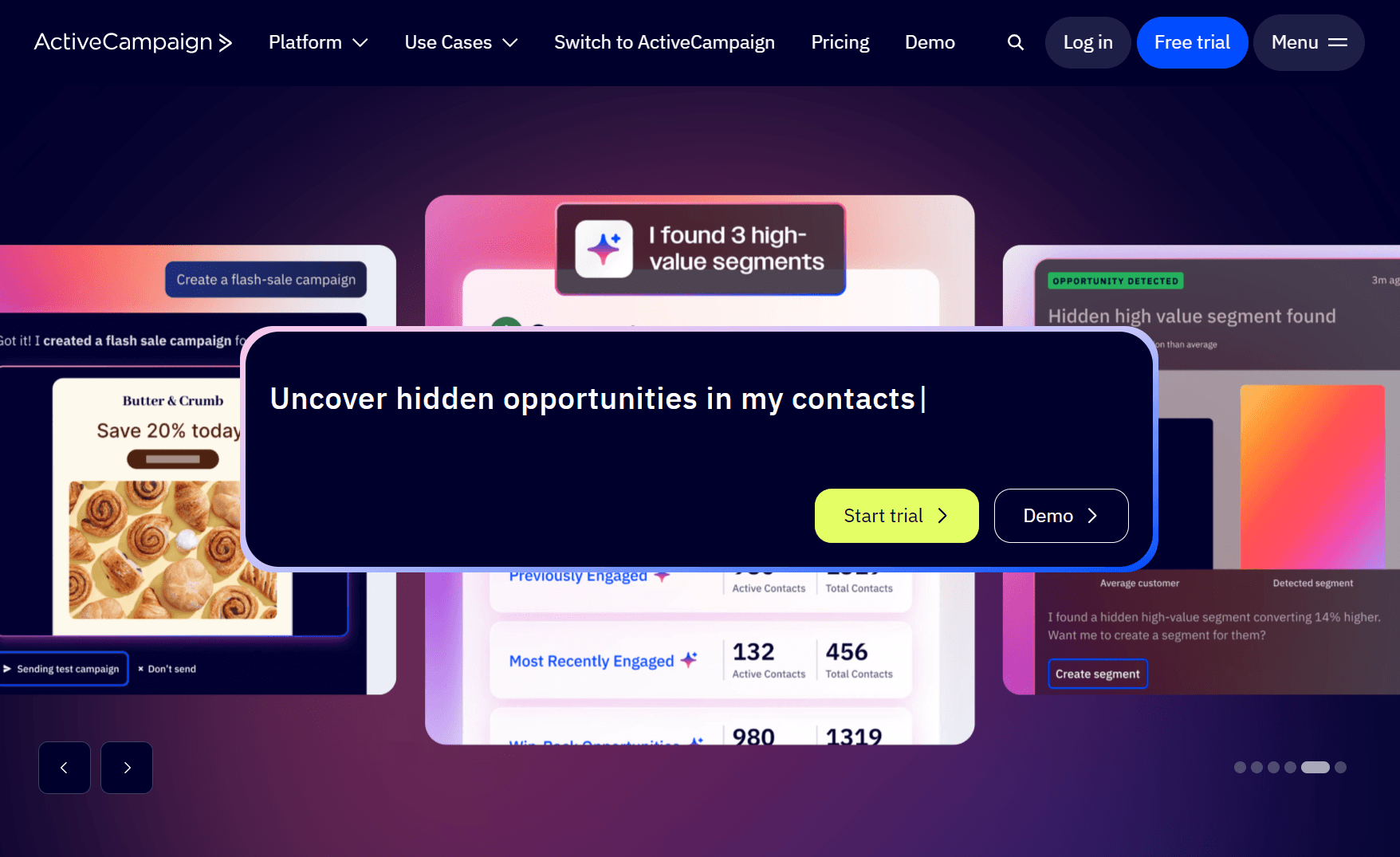
ActiveCampaign is a powerful marketing automation and CRM platform known for its highly granular automation capabilities and robust AI features. It allows for extremely sophisticated, multi-step customer journeys across email, SMS, and even WhatsApp, a channel not typically offered by other platforms in this comparison.
Key Differentiators: ActiveCampaign’s "Active Intelligence" AI platform provides predictive sending, identifying the optimal time to send emails for maximum engagement. Its automation builder is one of the most advanced on the market, allowing users to create intricate "recipes" based on virtually any customer behavior or data point. The platform’s CRM capabilities are extensive, enabling businesses to consolidate customer data, manage deals, and personalize interactions at a deep level. Its ability to integrate WhatsApp into automated flows is particularly compelling for businesses operating in regions where WhatsApp is a primary communication channel.
Pricing Philosophy: ActiveCampaign does not offer a free plan, with paid tiers starting from $15/month. This reflects its focus on advanced features and higher ROI for businesses with complex needs. While it has a steeper learning curve than Sender, the depth of its automation and AI features can significantly enhance marketing effectiveness and customer engagement.
5. Klaviyo: Data-Driven Marketing for Growing E-commerce
Target Audience: Mid-to-large and rapidly growing e-commerce stores that prioritize data analytics, personalization, and predictive insights.
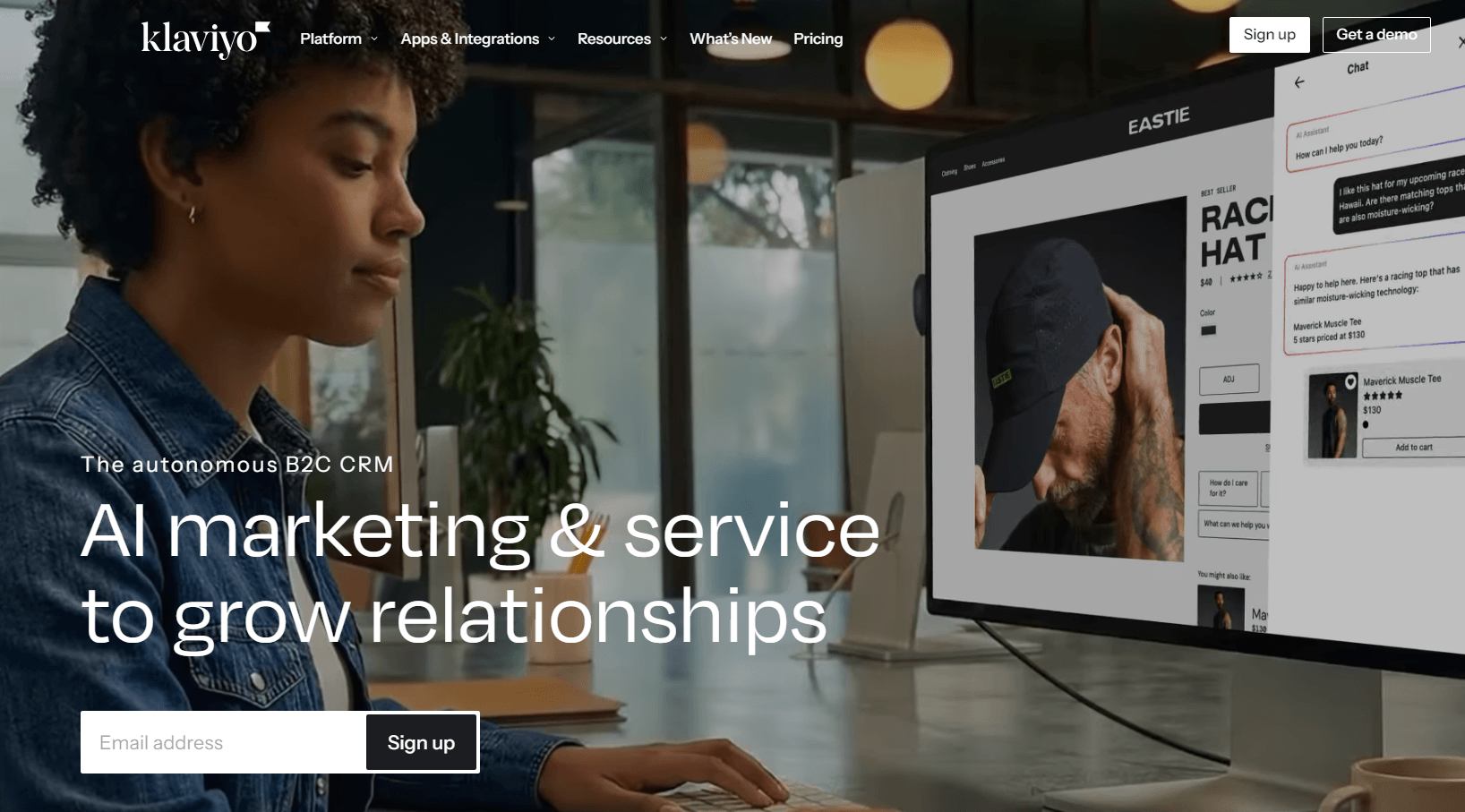
Klaviyo is a highly specialized e-commerce marketing platform renowned for its data-driven approach. It excels at leveraging customer data to create hyper-personalized experiences across email and SMS. Klaviyo offers a vast library of pre-built flows designed for various customer actions, from viewing products and abandoning carts to identifying churn risks.
Key Differentiators: Klaviyo’s predictive analytics are a standout feature, offering insights into customer lifetime value (CLV), churn risk, and even predicting the next order date. Its robust CRM provides detailed customer profiles, allowing businesses to access a wealth of behavioral and transactional data. The platform’s segmentation capabilities are incredibly powerful, enabling marketers to create highly specific audience groups for targeted campaigns. While it can be more complex than Omnisend for beginners, its depth of features makes it invaluable for scaling e-commerce businesses that rely heavily on data for strategic decision-making.
Pricing Philosophy: Klaviyo offers a free plan with limitations, and paid plans start from $20/month. Its pricing reflects its advanced analytics and specialized e-commerce features. For businesses with significant customer data, Klaviyo’s investment can yield substantial returns through optimized campaigns and improved customer retention.
6. GetResponse: The All-in-One Creator Platform
Target Audience: Content creators (bloggers, podcasters, YouTubers), online educators, and coaches looking to monetize their content and build a comprehensive online presence.
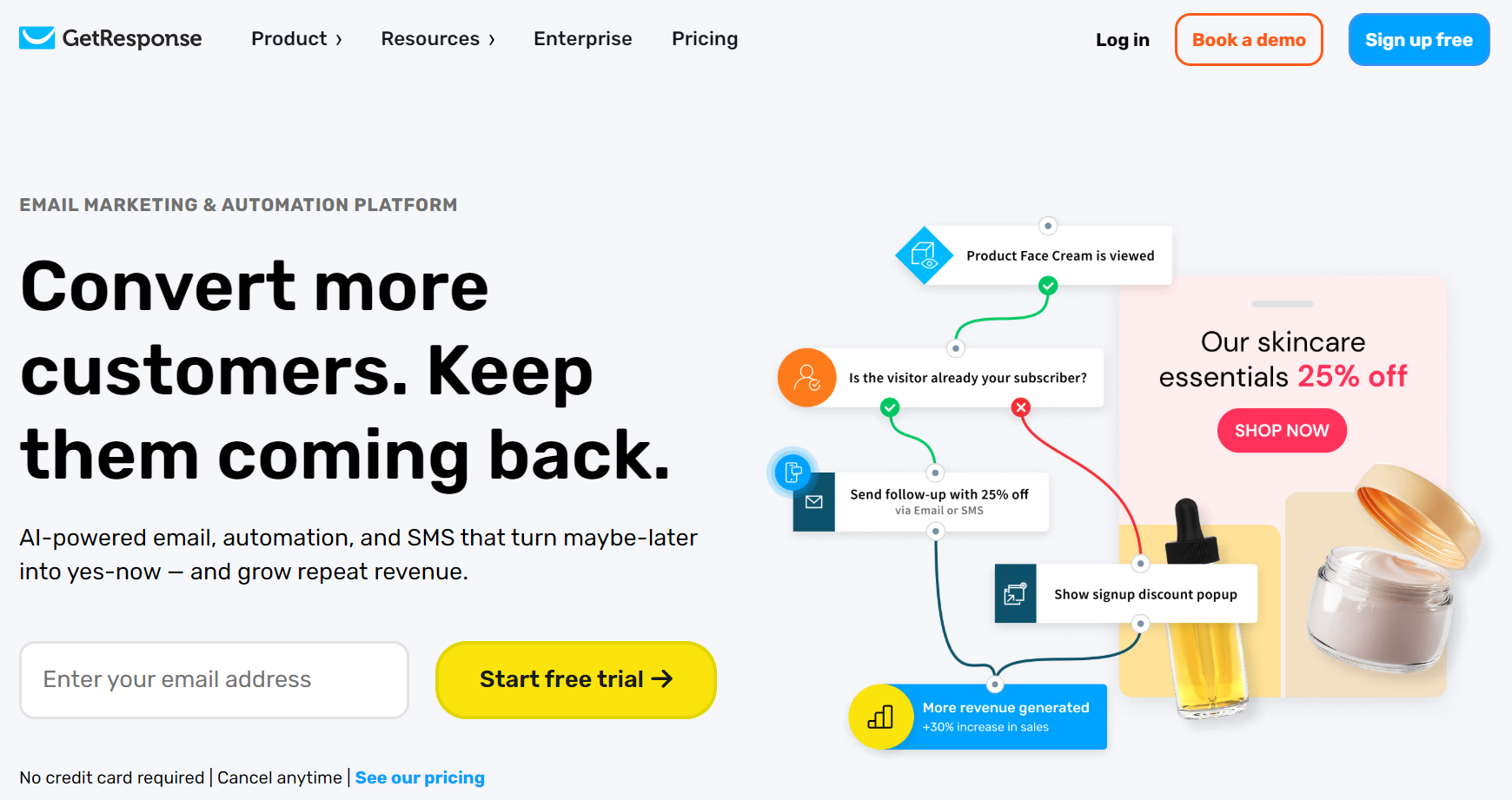
GetResponse distinguishes itself by integrating content monetization features alongside its email marketing and automation tools. It’s designed for creators who want to build a website, grow their audience, market their offerings, sell digital products or courses, and collect payments—all within a single platform.
Key Differentiators: GetResponse offers a built-in course creator, webinar hosting capabilities, and payment collection features, making it a unique "all-in-one" solution for content monetization. It also provides sales funnels, landing page builders, and robust email automation. While Sender is purely an email sending tool, GetResponse empowers creators to build an entire online ecosystem around their content, potentially saving costs on multiple subscriptions for different services. Its paid plans also offer unlimited send limits, surpassing Sender’s quotas.
Pricing Philosophy: GetResponse does not offer a free plan for its core marketing features, with paid plans starting from $19/month. This higher entry point is justified by its comprehensive suite of creator-centric tools that extend far beyond email marketing.
7. MailerLite: High-Volume Sends with Creator-Friendly Features
Target Audience: High-volume senders, content creators, and small businesses looking for an easy-to-use platform with digital product selling capabilities.
MailerLite serves as a direct competitor to Sender for high-volume email dissemination but significantly expands its utility with a suite of features tailored for creators and small businesses. It combines ease of use with powerful functionalities, making it a versatile choice.
Key Differentiators: MailerLite’s free plan is notably generous, allowing up to 12,000 emails per month for 1,000 subscribers, making it one of the closest matches to Sender’s free tier in terms of volume. Beyond email, MailerLite enables users to build websites, create landing pages, sell digital products, manage recurring subscriptions, send paid newsletters, and collect payments. It also integrates quizzes and surveys directly into emails, enhancing engagement. This blend of high-volume sending and creator-friendly monetization tools makes it a compelling alternative.
Pricing Philosophy: MailerLite offers a robust free plan, and its paid plans start from $15/month. It strikes a good balance between affordability, ease of use, and a feature set that supports both general email marketing and content monetization.
Choosing the Right Sender Alternative: A Strategic Approach
The selection of an email marketing platform is a critical business decision, impacting customer engagement, operational efficiency, and ultimately, revenue. The choice should be guided by a clear understanding of current needs, future growth aspirations, and budget constraints.
Based on Business Type:
- E-commerce Stores: For businesses selling physical or digital products online, platforms like Omnisend and Klaviyo are paramount. They offer deep e-commerce integrations, specialized automation flows (e.g., abandoned cart, browse abandonment, cross-sell/upsell), and robust segmentation based on purchase history and product interactions. ActiveCampaign also provides strong e-commerce capabilities, especially for those needing complex multi-channel flows.
- SaaS Companies: SaaS businesses often require sophisticated lead nurturing, onboarding sequences, feature adoption campaigns, and renewal reminders. ActiveCampaign with its advanced automation and CRM, and Brevo with its integrated sales pipeline, are excellent choices for managing longer sales cycles and customer success.
- Content Creators & Publishers: For bloggers, podcasters, YouTubers, and online educators aiming to monetize their content, GetResponse and MailerLite offer unique value. Their integrated tools for selling courses, subscriptions, digital products, and hosting webinars create a comprehensive ecosystem for content monetization, far exceeding Sender’s capabilities.
- Small Businesses & Service Providers: Businesses primarily offering services or having a broad, general marketing need will find Mailchimp and Brevo to be strong contenders. Mailchimp’s all-in-one marketing toolkit (website builder, surveys, social posting) provides a wide array of general marketing functionalities, while Brevo offers valuable CRM features for client management and mixed B2B/B2C interactions.
Based on Budget and Feature Set:
- Free Plan Requirements: While Sender’s free plan is generous in terms of send limits, it lacks advanced features. MailerLite offers comparable send limits (12,000 emails/month) on its free tier, coupled with more features. Omnisend’s free plan, though with lower send limits (500 emails/month), provides full access to multichannel automation, A/B testing, and segmentation, making it ideal for those prioritizing features over sheer volume at no cost. Brevo also offers a respectable 300 emails/day on its free plan with CRM access.
- Balancing Cost and ROI: It’s crucial to understand that the cheapest subscription fee doesn’t always equate to the best value. Platforms like Klaviyo, Omnisend, ActiveCampaign, and GetResponse, while potentially more expensive than Sender on paper, offer advanced features that can significantly boost ROI through better targeting, personalization, and automation. For example, Omnisend’s Standard plan at $16/month offers robust e-commerce features and multichannel capabilities that Sender’s $20/month Professional plan struggles to match. The added investment in these platforms often translates into higher conversions, increased customer lifetime value, and reduced churn.
Industry Outlook and Future Implications
The trajectory of email marketing points towards even greater personalization, automation, and integration. AI will continue to play a pivotal role in optimizing send times, generating compelling content, and predicting customer behavior. The ability to seamlessly integrate with CRM systems, e-commerce platforms, and other communication channels will become non-negotiable. Furthermore, data privacy regulations (like GDPR and CCPA) will continue to emphasize the importance of first-party data and transparent data practices, pushing platforms to offer more sophisticated data management and consent features.
In this evolving landscape, platforms that offer a holistic, data-driven approach to customer engagement across multiple channels are best positioned for future growth. While Sender remains a viable option for basic, high-volume email tasks, businesses aiming to thrive in a competitive digital environment will increasingly require the advanced functionalities, analytical insights, and integrated experiences offered by its leading alternatives.
Conclusion
The choice of an email marketing platform is a strategic decision that directly impacts a business’s ability to connect with its audience, nurture leads, and drive revenue. While Sender offers a cost-effective solution for basic email campaigns and list growth, its limitations in multichannel capabilities, advanced automations, and specialized features necessitate exploring alternatives as marketing strategies evolve.
For e-commerce stores seeking to maximize revenue through sophisticated, omnichannel automation, Omnisend stands out with its dedicated features and impressive ROI. Klaviyo offers unparalleled data-driven insights and predictive analytics for growing e-commerce businesses. For content creators aiming to monetize their offerings, GetResponse and MailerLite provide unique integrated tools for selling courses, subscriptions, and digital products. Small businesses and service providers looking for a comprehensive marketing toolkit will find Mailchimp user-friendly and versatile, while Brevo offers excellent value with its integrated CRM and sales features, particularly for mixed B2B/B2C models. Finally, ActiveCampaign is ideal for businesses with complex sales cycles requiring deep automation, AI, and multichannel reach including WhatsApp.
Ultimately, the best alternative aligns with a business’s specific needs, growth trajectory, and budget, ensuring that their email marketing efforts are not just about sending messages, but about building lasting customer relationships and driving measurable success.