rifanmuazin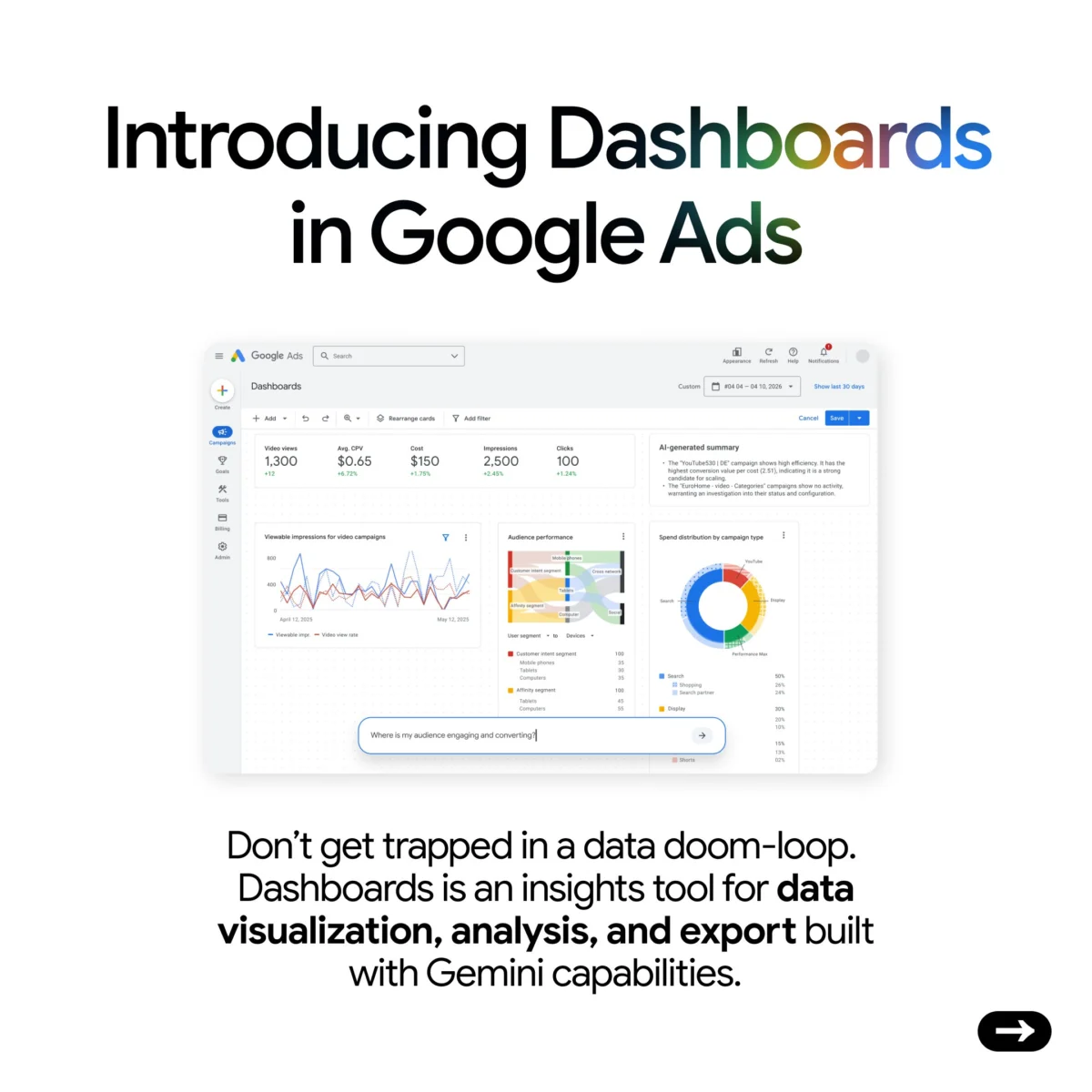
Google Ads, the cornerstone of digital advertising for countless businesses worldwide, has signaled a significant leap forward in its analytical capabilities with the imminent launch of new dashboards powered by its advanced artificial intelligence model, Gemini. This highly anticipated announcement, teased initially through the official Google Ads X (formerly Twitter) account, promises to revolutionize how advertisers interact with their campaign data, moving from laborious manual reporting to dynamic, AI-driven insights. The brief but impactful message on X declared, "Tired of manual reporting? Introducing Dashboards built with Gemini capabilities," immediately capturing the attention of the digital marketing community ahead of the crucial Google Marketing Live event.
The forthcoming Dashboards are described by Google as a sophisticated insights tool designed for comprehensive data visualization, analysis, and export. Leveraging Gemini’s capabilities, the new feature is set to offer an interactive and unified view of advertising data, presenting complex information through intuitive charts, graphs, tables, and other visual elements. A standout feature highlighted in the preliminary reveal is the ability for users to type natural language prompts directly into the dashboard, triggering real-time updates and analyses based on their specific queries. This represents a paradigm shift from traditional static reporting, offering unparalleled flexibility and immediate access to actionable intelligence. Visuals shared by Google provided a tantalizing glimpse into the sleek interface and dynamic reporting features, underscoring the platform’s commitment to enhanced user experience and data accessibility.
The Evolving Landscape of Digital Advertising and Data Overload
For over two decades, Google Ads, initially launched as AdWords in 2000, has remained at the forefront of the digital advertising ecosystem. It has consistently adapted to the internet’s rapid evolution, becoming an indispensable tool for businesses of all sizes to reach their target audiences across Google Search, YouTube, the Display Network, and more. However, as digital advertising grew in complexity, so did the volume and granularity of data generated by campaigns. Marketers and advertisers frequently grapple with an overwhelming influx of metrics, ranging from clicks, impressions, and conversions to return on ad spend (ROAS) and customer lifetime value.
The traditional process of extracting, compiling, and analyzing this data has often been a labor-intensive and time-consuming endeavor. Advertisers typically spend significant hours manually pulling reports, cross-referencing data points, and attempting to identify trends or anomalies. This process not only diverts valuable resources away from strategic planning and creative execution but also introduces potential for human error and delays in decision-making. In a fast-paced digital environment where campaign performance can fluctuate rapidly, the ability to derive timely and accurate insights is paramount to maintaining competitive advantage and optimizing ad spend effectively. This perennial challenge has fueled a growing demand for more automated, intelligent reporting and analysis tools within the ad tech industry.
Gemini’s Transformative Potential in Advertising Analytics

Google’s decision to integrate Gemini, its most advanced and capable large language model, into the core of Google Ads dashboards marks a strategic move to address these challenges head-on. Gemini is designed to be multimodal, capable of understanding and operating across text, code, audio, image, and video. In the context of advertising analytics, this means Gemini can go beyond simple keyword recognition, interpreting complex queries and discerning nuanced patterns within vast datasets that would be arduous for human analysts to uncover manually.
The application of Gemini capabilities is expected to manifest in several key areas:
-
Natural Language Querying: The ability to "type a prompt" fundamentally changes the user interface. Instead of navigating through multiple menus and applying filters, advertisers can simply ask questions in plain English, such as "Show me the performance of my YouTube campaigns in Q2 for audiences aged 25-34 in Europe," or "Identify campaigns with a negative trend in conversion rate over the last 30 days and suggest potential causes." This democratizes data analysis, making sophisticated insights accessible to a broader range of users regardless of their technical proficiency.
-
Automated Insight Generation: Beyond responding to direct queries, Gemini can proactively identify significant trends, outliers, and opportunities within the data. This could include flagging underperforming ad groups, highlighting emerging audience segments, or even predicting future performance based on historical data patterns. Such automated insights empower advertisers to react swiftly and make data-driven decisions that might otherwise be missed or discovered too late.
-
Personalized Recommendations: By understanding campaign objectives, historical performance, and industry benchmarks, Gemini-powered dashboards could offer tailored recommendations for optimizing bids, refining targeting, adjusting ad copy, or allocating budget more effectively. This moves the platform beyond mere reporting to becoming a strategic advisor.
-
Enhanced Data Visualization: While the core elements of charts and graphs remain, Gemini’s intelligence can drive more dynamic and contextually relevant visualizations. For instance, if a user asks about a specific anomaly, the dashboard could automatically generate a focused chart highlighting that anomaly against relevant benchmarks, making the insight immediately clear.
This integration is not Google’s first foray into AI within Google Ads. The platform has progressively adopted AI for smart bidding strategies, automated campaign types like Performance Max, and creative asset generation. However, embedding Gemini directly into the core reporting dashboards represents a deeper, more pervasive application of generative AI, aimed at transforming the very interaction model between advertisers and their data.

Anticipated User Experience and Features
The promise of an "interactive and unified view" suggests that these new dashboards will consolidate data from various Google Ads campaign types (Search, Display, Video, App) and potentially integrate with other Google marketing platforms, such as Google Analytics, to provide a holistic performance overview. This unification is critical for advertisers running complex, multi-channel campaigns who often struggle with fragmented data across different interfaces.
Consider the following hypothetical user interactions enabled by Gemini-powered dashboards:
- Query: "Analyze the conversion rate for my shopping campaigns in the APAC region last month, segmented by device type."
- Dashboard Response: Instantly generates a detailed table and a comparative bar chart showing conversion rates for desktop, mobile, and tablet devices in APAC, highlighting any significant disparities.
- Query: "Show me the top 5 keywords that drove the highest cost-per-conversion for my lead generation campaign in the past quarter, and suggest ways to reduce their cost."
- Dashboard Response: Displays the identified keywords, their respective CPCs, and then provides actionable recommendations such as adjusting bid strategies, refining match types, or pausing underperforming keywords, potentially even drafting new ad copy variations.
- Query: "Compare the performance of my new creative assets against the old ones for my display campaigns over the last two weeks."
- Dashboard Response: Presents a side-by-side comparison of key metrics (CTR, impressions, conversions) for both sets of assets, potentially indicating which creative themes resonate better with the target audience.
This level of intuitive interaction is poised to democratize sophisticated data analysis, making it accessible to a broader audience within marketing teams, from junior specialists to senior strategists, without requiring deep expertise in data science or complex SQL queries.
The Google Marketing Live Stage
The official unveiling of these Gemini-powered dashboards is slated for Google Marketing Live (GML), Google’s annual flagship event for advertisers, agencies, and partners. GML serves as the primary platform for Google to announce its latest innovations, product updates, and strategic visions for the future of digital advertising. Historically, major features like Performance Max, enhanced conversion tracking, and new privacy-centric tools have debuted at this event. By choosing GML for this announcement, Google underscores the significance of Gemini-powered dashboards as a pivotal development in its advertising roadmap. The event typically features keynotes from Google executives, deep-dive sessions, and practical demonstrations, offering attendees a comprehensive understanding of how new tools will impact their advertising efforts. Google has actively encouraged registration for the digital event, indicating that GML will provide the full spectrum of details, demonstrations, and insights into these new capabilities.
The initial report on this development was first published by Anu at Search Engine Land, a prominent industry publication known for its comprehensive coverage of search marketing news. This early reporting, coupled with discussions on social media platforms like X, amplified the anticipation within the digital advertising community, setting the stage for a major reveal at GML.

Broader Market Implications and Competitive Landscape
The introduction of Gemini-powered dashboards is not merely a product update; it represents a significant strategic move by Google in the highly competitive digital advertising and marketing technology (martech) landscape. The global digital advertising market continues to expand robustly, projected to reach hundreds of billions of dollars annually, with Google maintaining a substantial share. In this environment, efficiency and intelligent data utilization are paramount.
This development positions Google at the forefront of AI integration in advertising analytics, potentially setting a new industry standard. Competitors, including other major ad platforms (like Meta Ads, Microsoft Advertising, Amazon Ads) and specialized analytics providers, will likely feel pressure to accelerate their own AI initiatives to match or surpass Google’s offerings. The trend towards generative AI in martech is undeniable, with various companies exploring applications in content creation, campaign optimization, and customer service. Google’s move validates this direction and demonstrates a practical, impactful application of its leading AI technology.
For advertisers, the implications are profound:
- Enhanced Efficiency and Productivity: Reduced time spent on manual reporting translates directly into more time for strategic planning, creative development, and audience engagement.
- Improved Campaign Performance: Faster, more accurate insights derived from AI can lead to quicker optimizations, better budget allocation, and ultimately, higher return on investment (ROI).
- Democratization of Insights: Complex data analysis becomes accessible to a broader range of marketing professionals, empowering teams to make informed decisions without necessarily relying on dedicated data scientists.
- Evolution of the Marketer’s Role: The shift from data extraction to strategic interpretation will require marketers to develop new skills in prompt engineering, critical thinking, and leveraging AI-generated insights for actionable strategies.
While the benefits are considerable, it is also crucial for the industry to consider the broader implications. Issues such as data privacy, the transparency of AI algorithms, and potential biases in AI-driven recommendations will remain important considerations as these technologies become more deeply embedded in critical business functions. Google, as a leader in AI, will need to continue prioritizing ethical AI development and responsible deployment.
In conclusion, the impending launch of Google Ads dashboards powered by Gemini signifies a pivotal moment in the evolution of digital advertising analytics. By transforming how advertisers interact with their data through intuitive, AI-driven insights and real-time query capabilities, Google is poised to enhance efficiency, drive superior campaign performance, and reshape the role of the modern marketer. As the industry awaits the full details at Google Marketing Live, the anticipation for a new era of intelligent advertising management is palpable, promising a future where data analysis is not just faster, but fundamentally smarter.