rifanmuazin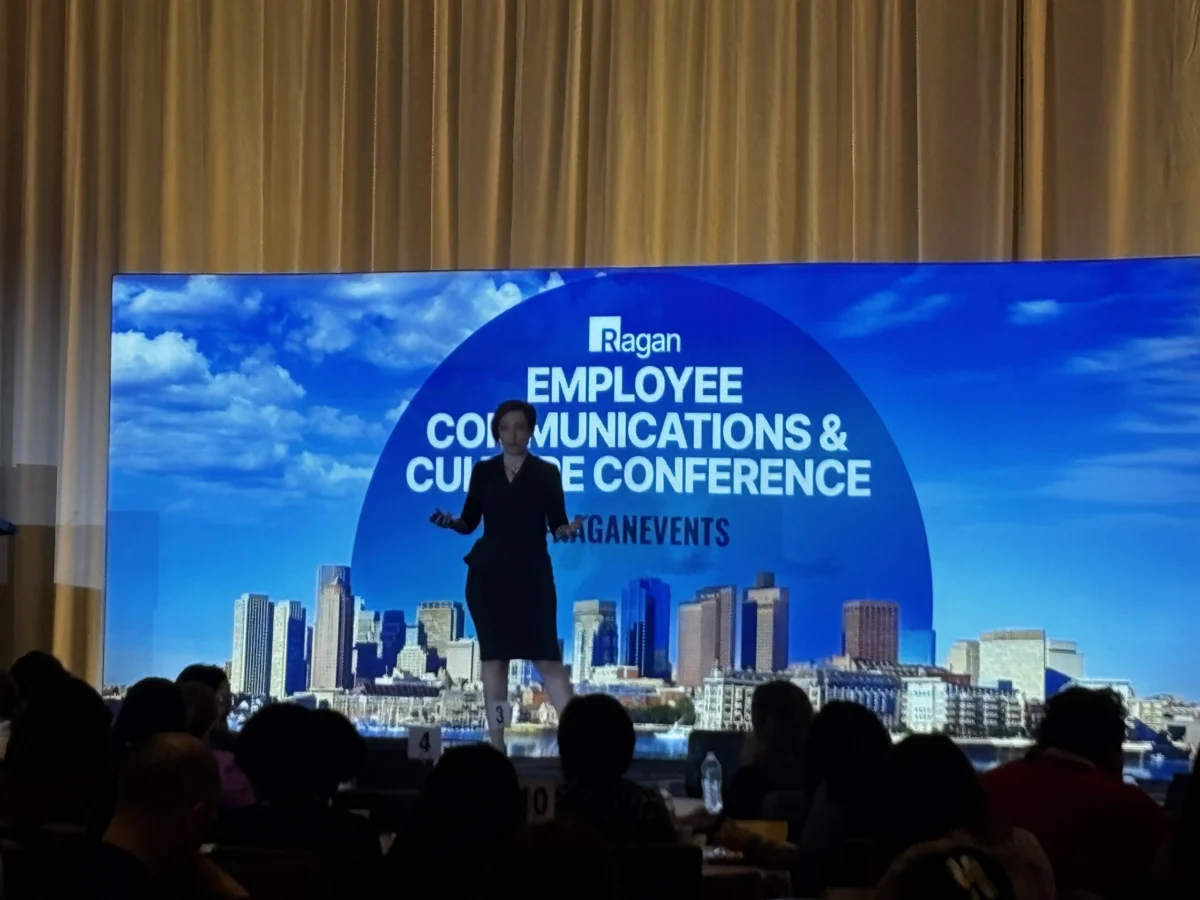
The modern workplace is often characterized by an aspirational pursuit of harmony, yet according to insights shared at Ragan’s Employee Communications and Culture Conference in Boston, the secret to a high-performing organization may actually lie in fostering more disagreement. Julia Minson, a professor of public policy at the Harvard Kennedy School of Government, delivered a closing keynote that challenged the traditional internal communications mandate of seeking total consensus. Instead, Minson argued that the distinction between healthy disagreement and destructive conflict is the pivot point upon which corporate culture succeeds or fails. By shifting the focus from "listening" as an internal process to "conversational receptiveness" as a visible behavior, organizations can leverage diverse perspectives to better predict the future and improve decision-making processes.
Defining the Boundary Between Disagreement and Conflict
A central theme of Minson’s address was the psychological anatomy of workplace friction. She defined disagreement simply as a difference in beliefs, preferences, or expertise. In a professional setting, these differences are not only inevitable but necessary for innovation. However, the transition from disagreement to conflict occurs when the interaction becomes personal or corrective. According to Minson, conflict begins the moment one party feels the need to "correct," "educate," or "improve" the other. This shift transforms a cognitive exercise—comparing different sets of data or ideas—into an emotional struggle for dominance, leading to mounting frustration and a breakdown in communication.
Internal communicators often feel pressured to resolve these tensions immediately, but Minson cautioned against the instinct for premature alignment. She noted that it is entirely possible, and often preferable, to understand a colleague’s perspective while still fundamentally disagreeing with it. The goal of a productive conversation is not necessarily to change minds, but to acknowledge that a "smart, reasonable, and moral person" can hold a contrary view. This acknowledgement preserves the relationship and the flow of information without requiring anyone to compromise their professional judgment or personal values.
The Context of Ragan’s Employee Communications and Culture Conference
The conference, held in the historic hub of Boston, brought together hundreds of internal communications professionals, HR leaders, and culture strategists. The event took place against a backdrop of significant shifts in the global labor market, including the complexities of hybrid work, the rise of "quiet quitting," and the increasing polarization of social and political discourse that inevitably bleeds into the office environment.
Ragan Communications, a leader in training for the PR and corporate communications industry, designed the conference to address the "human element" of the workplace. Minson’s keynote served as the capstone for these discussions, providing a scientific framework for the anecdotal challenges shared by attendees throughout the event. The focus on Harvard-led research provided a data-backed foundation for the attendees, who are increasingly tasked with managing the "vibe" of their organizations during periods of economic and social volatility.
Chronology of Communication Evolution in the Workplace
To understand why Minson’s message resonated so deeply, one must look at the timeline of how internal communication has evolved over the last several decades:
- The Era of Top-Down Instruction (1950s–1990s): Communication was primarily one-way, focused on disseminating directives from leadership to the workforce. Disagreement was often viewed as insubordination.
- The Rise of "Engagement" (2000s–2010s): The focus shifted toward two-way dialogue, employee surveys, and "open-door" policies. The goal was to make employees feel heard, though the power structures remained largely rigid.
- The Transparency and Inclusion Movement (2015–2020): Organizations began to prioritize transparency and diversity of thought. However, this period also saw the rise of "toxic positivity," where pressure to maintain a happy workplace culture often suppressed necessary critiques.
- The Post-Pandemic Reality (2021–Present): In a fragmented, remote, and highly polarized world, the "consensus" model has begun to crack. Minson’s research represents the latest stage in this evolution: the realization that organizations must learn to handle friction as a permanent feature of the landscape rather than a bug to be fixed.
Supporting Data: The Cost of Poorly Managed Conflict
The implications of Minson’s research are supported by broader industry data regarding workplace conflict. According to a study by CPP Global (the publishers of the Myers-Briggs assessment), employees in the United States spend approximately 2.8 hours per week dealing with conflict. This equates to roughly $359 billion in paid hours every year dedicated to unproductive friction rather than core business tasks.
Furthermore, Gallup’s State of the Global Workplace reports consistently show that "lack of feeling heard" is a primary driver of employee disengagement. When disagreements are suppressed or turn into personal conflicts, psychological safety plummets. Minson’s data suggests that organizations that encourage "receptive" disagreement see higher rates of retention and more accurate strategic forecasting, as employees feel safe enough to point out potential flaws in a plan before they become costly mistakes.
The HEAR Framework: A Tool for Conversational Receptiveness
The most actionable portion of Minson’s keynote was the introduction of the HEAR framework. This tool is designed to bridge the gap between "thinking" you are listening and "demonstrating" that you are receptive. Because listening is an internal cognitive process, it is invisible to the other party. Conversational receptiveness, however, relies on observable linguistic markers.
The HEAR framework consists of:
- H – Hedging: Using phrases like "I think," "perhaps," or "it’s possible that." This signals that you do not believe you have a monopoly on the truth and leaves room for the other person’s input.
- E – Emphasizing Agreement: Finding even a small sliver of common ground. Phrases like "I agree that we both want this project to succeed" or "We are aligned on the ultimate goal" create a sense of being on the same team.
- A – Acknowledging: Explicitly stating that you have heard the other person’s point. This involves paraphrasing their argument to prove you understood it, such as "What I’m hearing you say is that the timeline is the biggest risk factor."
- R – Rephrasing in Positive Terms: Avoiding "but" and instead using "and." It also involves framing the disagreement as a shared challenge to be solved rather than a battle to be won.
Minson noted that when one person adopts this receptive style, the other party tends to mimic it. This "conversational mirroring" gives communicators a high degree of control over the temperature of a meeting, turning a potential shouting match into a collaborative problem-solving session.
Official Responses and Professional Analysis
While the conference was a closed event for professionals, the reactions from attendees—many of whom are the primary architects of culture at Fortune 500 companies—suggested a paradigm shift. Several internal communications directors noted that the HEAR framework provides a tangible way to train managers, many of whom struggle with "difficult conversations" during performance reviews or strategy pivots.
From a journalistic perspective, Minson’s insights represent a critique of the "consensus at all costs" model that has dominated HR circles for years. The analysis suggests that the drive for total alignment actually creates an "echo chamber" effect. When people give significant consideration to perspectives that differ from their own, organizations become better at "predicting the future" because they have accounted for more variables and risks that a monoculture of thought would have missed.
Broader Impact and Implications for Corporate Culture
The long-term impact of adopting a "more disagreement, less conflict" mindset could be transformative for corporate America. As companies navigate the complexities of AI integration, climate change initiatives, and shifting economic cycles, the ability to debate these topics without damaging the social fabric of the company is a competitive advantage.
For internal communicators, the role is shifting from that of a "peacekeeper" to that of a "facilitator of friction." This requires a sophisticated understanding of linguistics and psychology. By utilizing frameworks like HEAR, communicators can draft executive scripts, design meeting protocols, and craft internal messaging that encourages employees to speak up—even when they have an unpopular opinion.
The ultimate takeaway from the Boston conference is that workplace culture is not defined by the absence of arguments, but by the quality of those arguments. As Julia Minson concluded, the goal for the future of work should be to create an environment where people feel safe enough to disagree, respected enough to be heard, and professional enough to move forward together regardless of consensus. In the high-stakes world of corporate strategy, the most dangerous thing an organization can have is a room full of people who all agree.