rifanmuazin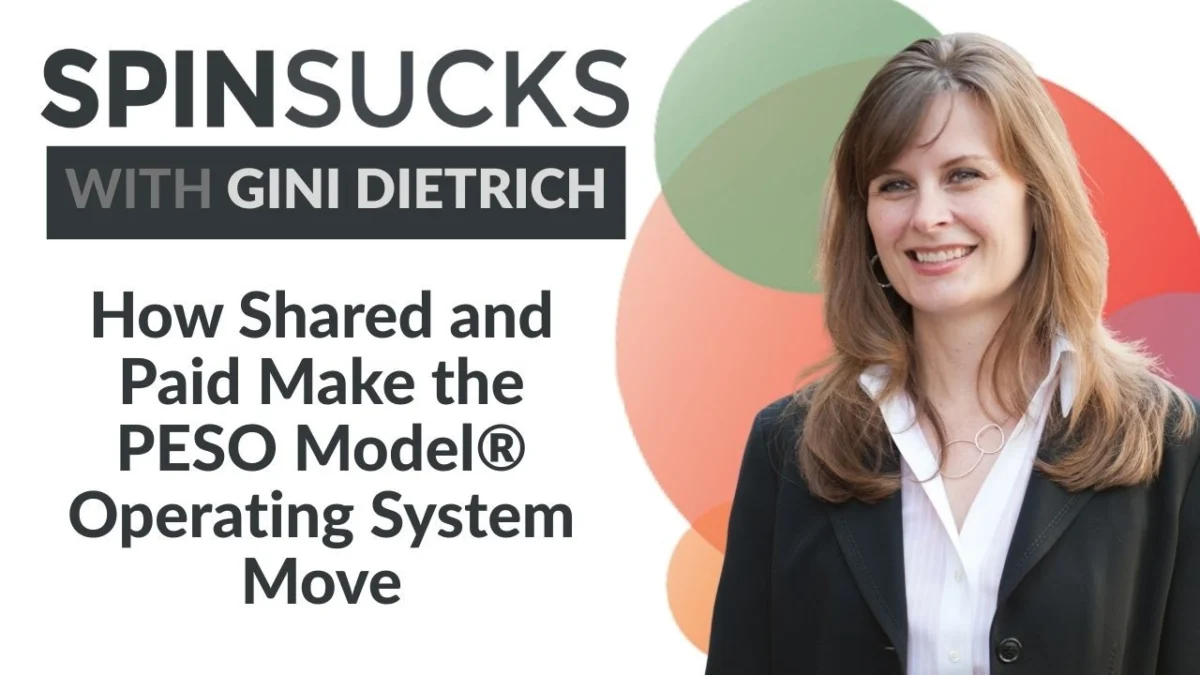
The traditional boundaries of digital marketing and public relations are undergoing a fundamental shift as the global media ecosystem becomes increasingly fragmented and influenced by artificial intelligence. Within this landscape, the PESO Model—an industry-standard framework comprising Paid, Earned, Shared, and Owned media—has evolved from a conceptual Venn diagram into a rigorous operating system for brand authority. While Owned and Earned media serve as the "visibility engine" of a brand, providing a foundation of controlled authority and third-party credibility, the roles of Shared and Paid media have been redefined as the critical layers of distribution and acceleration. In a world where attention is a scarce commodity, these elements are no longer optional "add-ons" but are essential for moving proof-backed messaging through decentralized networks where decisions are made.
The Evolution of the PESO Model in a Fragmented Landscape
The PESO Model, originally codified by Gini Dietrich of Spin Sucks over a decade ago, was designed to help communicators integrate various media types into a cohesive strategy. However, the 2024-2025 media environment has necessitated a rebuild of the framework. The rise of "12 distinct media realities," a concept popularized by Axios, highlights a world where audiences exist in silos ranging from traditional news consumers and social media "lurkers" to members of private Slack communities and niche industry forums.
In this distributed ecosystem, a brand’s website—its Owned media—is often the last place a prospect visits. Instead, information is consumed through screenshots, peer-to-peer recommendations, and creator-led recaps. Furthermore, the advent of AI-generated answers from platforms like Perplexity and Google’s Search Generative Experience (SGE) means that brand signals must be consistent and corroborated across multiple channels to be recognized as "objective truth" by machine learning algorithms. Consequently, the modern PESO Model prioritizes the movement of "proof" over the mere generation of "activity."
Shared Media: Transitioning from Social Posting to Systematic Distribution
Shared media has long been conflated with social media management, often resulting in a "hamster wheel" of content creation designed to satisfy platform algorithms. Under the revised PESO Model operating system, Shared media is redefined as the mechanism through which attention moves across a distributed network. It is not merely about "keeping the feeds warm" but about ensuring that a brand’s specific proof points are travel-ready.
Data indicates that the efficacy of generic social posting has plummeted as platforms prioritize high-engagement creators and paid placement. For organizations to achieve cumulative results, Shared media must answer three strategic questions: what specific proof is being moved, which networks are being utilized, and what format will facilitate the easiest sharing? When Shared media is treated as distribution, it moves beyond LinkedIn or X (formerly Twitter) to include private communities, trade newsletters, and subreddits.
The objective of this layer is to create "corroboration." When a brand’s point of view is repeated across various independent spaces, it reduces the friction of trust. For AI systems, this repetition serves as a verification signal. If a brand’s claims in its Owned media are echoed in Shared community discussions and Earned media coverage, the AI is more likely to surface that brand as a credible authority.
Paid Media: The Strategic Lever for Proven Signal Acceleration
Paid media within the PESO framework is frequently misunderstood as a "panic button" used to manufacture demand when sales pipelines are soft. However, in a professionalized operating system, Paid media serves as an accelerator for what has already been proven to work in the Owned, Earned, and Shared layers.
The transition from reactive "boosting" to strategic amplification involves using capital to extend the reach of high-performing assets. According to industry analysis, paid campaigns that amplify third-party validation (Earned media) or high-engagement community proof (Shared media) often see significantly higher conversion rates than those promoting cold brand advertisements.
The strategic roles of Paid media include:
- Audience Precision: Reaching specific segments that are not currently within the brand’s organic reach.
- Consistency: Ensuring that a core message is seen multiple times by the same decision-maker, overcoming the "noise" of a crowded market.
- Signal Testing: Rapidly determining which messages resonate before committing to long-term content strategies.
- Control: Managing the narrative during critical windows, such as product launches or industry events, where organic reach is too unpredictable.
Chronology of the PESO Model Transformation
The journey of the PESO Model from a marketing theory to a certified operating system follows a clear timeline of media evolution:
- 2014: The publication of Spin Sucks by Gini Dietrich officially introduces the PESO Model to the public relations and marketing industry.
- 2019-2020: The model is updated to reflect the dominance of influencer marketing and the integration of SEO with Earned media.
- 2022: The emergence of the "Media Reality Gap" identifies that audiences are moving away from centralized platforms toward fragmented, private communities.
- 2023-2024: The "AI Revolution" forces a total rebuild of the model. The focus shifts to "brand signals" and "corroboration" as AI agents become the primary gatekeepers of information.
- 2025: The PESO Model Certification® is established as a professional standard to prevent "slop"—low-quality, AI-generated content—from diluting brand authority.
Supporting Data: Why the "Post and Boost" Strategy Fails
Recent market research suggests that the "post and boost" mentality—creating content because the calendar demands it and boosting it when engagement is low—is a primary driver of marketing inefficiency. A study of B2B marketing performance found that 70% of social content receives zero engagement, largely because it lacks "proof" or a unique point of view.
Conversely, organizations that use the PESO Model to align their Shared and Paid efforts report a compounding effect on their visibility. By identifying a "signal" in Shared media (e.g., a post that generates significant discussion or saves), and then applying Paid budget to that specific signal, brands can reduce their cost-per-acquisition (CPA) by up to 30%. This systematic approach ensures that budget is spent on "proven" assets rather than speculative ones.
Professional Reactions and Industry Impact
Industry experts have noted that the integration of Shared and Paid media is the most difficult hurdle for traditional organizations. Often, Shared media is managed by a social media team, while Paid media is handled by a performance marketing agency, with little communication between the two.
"The siloed nature of these departments is the enemy of the PESO Model," says one marketing analyst. "When the social team is chasing likes and the paid team is chasing clicks, no one is building a cohesive narrative. The operating system approach forces these teams to speak the same language: the language of proof and distribution."
The PESO Model Certification® seeks to address this by providing a standardized set of decision rules. These rules dictate when an asset has "earned the right" to be amplified with paid budget, moving the organization away from reactive spending toward a predictable growth model.
Broader Implications: Navigating an AI-Driven Future
The broader implication of the PESO Model’s evolution is the shift from "volume" to "signal strength." In an era where AI can generate infinite amounts of content, the value of human-verified proof and strategic distribution increases.
For brands, this means that the goal of a communications program is no longer to be "everywhere" but to be "corroborated." If a brand’s message is found in its Owned articles, validated by Earned media journalists, discussed by Shared media communities, and accelerated by Paid media targeting, it creates an inescapable loop of authority.
As AI search engines become more sophisticated, they will prioritize brands that show a consistent "footprint" across all four media types. A brand that only exists in Paid ads will be viewed as biased; a brand that only exists in Owned media will be viewed as unverified. Only through the systematic integration of all four elements can a brand achieve the level of trust necessary to influence modern decision-makers.
In conclusion, the modern PESO Model operating system provides a roadmap for navigating a media environment that is increasingly complex and automated. By treating Shared media as a distribution network and Paid media as an acceleration lever, organizations can stop the cycle of "posting and boosting" and start building a repeatable, scalable engine for brand authority. The future of communication lies not in doing more, but in ensuring that what is done is backed by proof, distributed with intent, and accelerated with precision.