
 rifanmuazin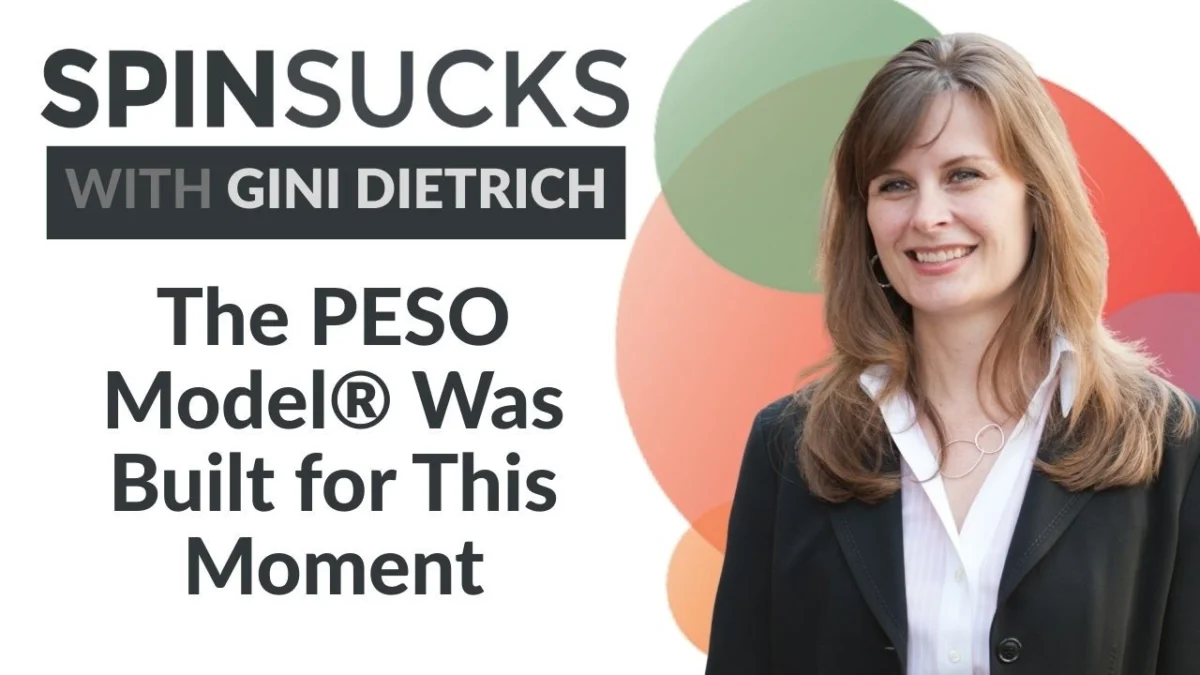
The PESO Model, a foundational framework for integrated communications, has undergone a significant transformation from a tactical checklist into a comprehensive strategic operating system designed to navigate a landscape dominated by artificial intelligence, zero-click discovery, and fragmented consumer trust. In an era where discovery frequently occurs via AI-generated summaries and platform-native content rather than traditional website visits, the integration of Paid, Earned, Shared, and Owned media has become a prerequisite for brand visibility and authority. This evolution marks a departure from disconnected marketing activities, repositioning the model as a necessary response to the systemic shifts in how information is synthesized by both machines and humans.
The Genesis and Transformation of the PESO Model
Originally introduced by Gini Dietrich in 2014 through the publication of her book Spin Sucks, the PESO Model was designed to provide a structure for the rapidly evolving public relations industry. At its inception, the model sought to break down the silos between traditional PR (earned media) and the burgeoning fields of digital marketing and social media. By categorizing media into four quadrants—Paid, Earned, Shared, and Owned—Dietrich provided a roadmap for communicators to demonstrate the business value of their efforts.
For nearly a decade, the model served as a industry standard. However, the rapid proliferation of generative artificial intelligence (AI) in 2023 and 2024 necessitated a fundamental update. The modern iteration of the PESO Model is no longer merely a method for organizing tactics; it is an integrated system designed to create "corroborated signals." In a digital environment where AI tools like ChatGPT, Claude, and Google’s Search Generative Experience (SGE) provide answers without requiring users to click through to a source, the model ensures that a brand’s message is consistent across all four pillars, thereby increasing the likelihood that AI models will recognize and cite the brand as an authority.
The Impact of AI and the Rise of Zero-Click Discovery
The primary driver for the PESO Model’s evolution is the shift in search behavior and content consumption. According to data from SparkToro and Similarweb, nearly 60% of Google searches now end without a click to a website. This "zero-click" phenomenon is exacerbated by AI-driven summaries that scrape web content to provide immediate answers.
In this environment, "bad marketing"—defined as siloed, repetitive, or low-value content—is more easily exposed. When an AI tool synthesizes information about a specific industry or product, it looks for patterns of authority and corroboration. If a brand’s owned media (its website and blog) makes a claim that is not supported by earned media (third-party news coverage) or shared media (community discussion and reviews), the AI is less likely to view that brand as a credible source.
The modern PESO Model addresses this by treating each pillar as a component of a "visibility engine." Owned media establishes the "source of truth," while earned media provides the external validation required by both human consumers and machine learning algorithms.
Chronology of Integration: From Framework to Operating System
The transition of the PESO Model can be mapped across several key milestones in the digital communication industry:
- 2014 – The Launch: The PESO Model is introduced to unify PR and marketing tactics under one umbrella.
- 2017-2019 – The Measurement Shift: The industry begins moving away from "Advertising Value Equivalency" (AVE) toward data-driven metrics. The PESO Model is updated to emphasize lead generation and SEO.
- 2020 – The Certification Program: In partnership with the Newhouse School of Public Communications at Syracuse University, the first PESO Model Certification is launched to standardize professional training.
- 2023 – The AI Inflection Point: The rise of Large Language Models (LLMs) forces a rethink of content distribution. The "fragmented trust" problem becomes central to the model’s application.
- 2024-2025 – The Operating System Rebuild: The model is officially repositioned as an operating system. This update focuses on "corroboration," ensuring that shared and paid media are used to amplify earned and owned content in a feedback loop.
Deconstructing the Four Pillars in a Modern Context
To understand why the PESO Model remains relevant, one must analyze how its components have been redefined to meet current technological demands.
Owned Media: The Source of Truth
In the current framework, owned media is the foundation. It includes the content over which a brand has total control, such as its website, proprietary research, and white papers. In the age of AI, owned media serves as the "training data" for the web. If a brand does not clearly articulate its expertise on its own platforms, it cannot expect AI models or search engines to accurately represent its point of view.
Earned Media: The Corroboration Factor
Earned media—traditional media relations and third-party mentions—has gained renewed importance. As AI-generated content floods the internet, the value of a "human-vetted" endorsement from a reputable news outlet has increased. Earned media provides the credibility that AI systems use to verify the claims made in a brand’s owned media.
Shared Media: The Signal Mover
Shared media encompasses social media, influencer partnerships, and community engagement. Its role in the modern PESO Model is to move the "signal" of the brand across networks. It serves as a proof of relevance, showing that real people are discussing and interacting with the brand’s core messages.
Paid Media: The Strategic Accelerator
Paid media is no longer just about top-of-funnel awareness. In the integrated system, paid media is used to amplify what is already working. For example, a successful earned media hit (a feature in a major trade publication) can be boosted via paid social or search to ensure it reaches a wider, targeted audience, thereby compounding the original success.
Supporting Data and Market Realities
The necessity of an integrated system is backed by shifting consumer trust levels. The 2024 Edelman Trust Barometer highlights a growing skepticism toward traditional advertising, while trust in "technical experts" and "peers" remains high. The PESO Model leverages this by prioritizing earned and shared media—the two pillars most associated with third-party validation.
Furthermore, content volume has reached a saturation point. Estimates suggest that over 7.5 million blog posts are published every day. Without a system like PESO to ensure that content is repurposed, distributed, and amplified, the vast majority of marketing output becomes "decorative filler"—content that exists but fails to drive business results.
Professional Standards and the Certification Movement
A significant portion of the recent discourse surrounding the PESO Model focuses on the gap between "knowing the acronym" and "executing the strategy." This has led to the rise of professional certifications. The PESO Model Certification® is designed to move practitioners away from "random acts of marketing" and toward a disciplined, systems-based approach.
Industry analysts suggest that as marketing budgets come under increased scrutiny, CMOs are looking for "capability" rather than just "familiarity." Certified professionals are trained to measure the model’s impact on business movement—such as shortened sales cycles or increased brand equity—rather than just platform activity like likes or impressions.
Industry Implications and Future Outlook
The evolution of the PESO Model suggests a broader shift in the communications industry. Agencies and in-house teams are moving away from specialized silos toward integrated "squads." The traditional PR professional is now expected to understand paid amplification, while the digital marketer must understand the nuances of earned media credibility.
The implications for the future are clear:
- AI as a Flashlight: AI will continue to expose brands that have inconsistent messaging or lack third-party validation.
- Efficiency over Volume: The focus will shift from creating more content to making existing content work harder across all four PESO pillars.
- Measurement Evolution: Success will be defined by how well a brand controls its narrative within AI summaries and zero-click search results.
As the digital landscape becomes increasingly fragmented, the PESO Model serves as a stabilizing framework. It is no longer a choice between different types of media; it is about how those media types work together to create a cohesive, authoritative presence. The question for modern communicators is not whether the model has evolved, but whether their internal systems have evolved to match the new reality of integrated, AI-influenced visibility. The PESO Model was built for this moment of technological disruption, providing a roadmap for brands to build trust in an era where trust is the most valuable currency.










