Meta has announced a significant update to its advertising ecosystem, rolling out embedded appointment bookings for Facebook lead ads. This new functionality is designed to seamlessly integrate third-party booking platforms directly into the lead ad unit, drastically streamlining the signup process for prospective customers. The update aims to bridge the historical gap between initial interest capture and concrete appointment scheduling, a long-standing challenge for service-based businesses utilizing digital advertising.
The core of this enhancement lies in its ability to eliminate friction within the customer journey. When a user interacts with a lead ad and chooses to submit their information, they are now immediately presented with an integrated booking interface, rather than being redirected to a separate website or waiting for a follow-up. This embedded experience leverages pre-filled fields within the booking form, drawing information already available from the user’s Facebook profile, further reducing manual input and accelerating the scheduling process. The overarching objective is to convert “warm leads” into confirmed appointments at the peak of their interest, thereby maximizing the efficiency and return on investment for advertisers.
The Evolution of Lead Generation on Facebook
For years, Facebook Lead Ads have served as a powerful tool for businesses to gather information from potential customers directly within the social media platform. Introduced to simplify lead capture, these ads allowed users to submit their details with just a few taps, bypassing the need to visit an external website. This feature proved invaluable for industries such as real estate, automotive, education, and professional services, where collecting contact information is the first critical step in the sales funnel. However, a persistent challenge remained: converting these collected leads into actionable outcomes, such as scheduled appointments or consultations.
Prior to this update, the typical workflow involved a multi-step process. A user would fill out a lead form on Facebook, and their information would then be passed to the advertiser. This often necessitated a manual follow-up via email or phone call, or a redirect to an external booking page. Each additional step introduced a potential point of friction where a prospective customer’s initial enthusiasm could wane. Industry data consistently shows that conversion rates drop significantly with every extra click or delay in the customer journey. A study by InsideSales.com, for instance, revealed that the odds of contacting a lead decrease by over 10 times if the first contact attempt occurs more than 5 minutes after the lead was submitted. While this particular study pertains to direct contact, the principle of diminishing intent over time holds true for any delayed follow-up or next step in the sales process.
Meta’s new embedded appointment booking directly addresses this “leakage” in the sales funnel. By integrating the booking experience immediately after form submission, the platform ensures that the lead’s interest is captured and acted upon at its highest point. This proactive approach not only benefits advertisers by improving conversion rates but also enhances the user experience by providing instant gratification and seamless progression.
How the Embedded Booking Feature Works
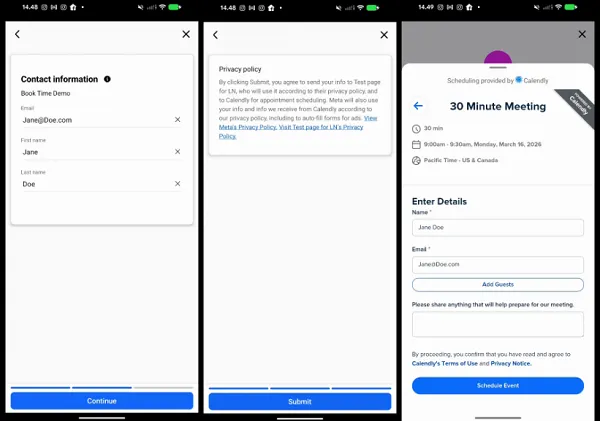
The operational mechanics of the new embedded booking feature are designed for simplicity and efficiency. When a user engages with a Facebook lead ad that has this feature enabled, they proceed through the standard lead form. Upon successful submission of their information, instead of a simple “thank you” message or a redirect link, a third-party booking interface automatically appears within the Facebook environment.
This integrated interface is pre-populated with the user’s details, such as their name and email address, pulled directly from their Facebook profile, eliminating the need for repetitive data entry. The user can then select an available date and time for an appointment, leveraging the advertiser’s integrated scheduling calendar. Once the booking is confirmed, both the user and the advertiser receive confirmation, and the appointment details are seamlessly added to the advertiser’s booking system.
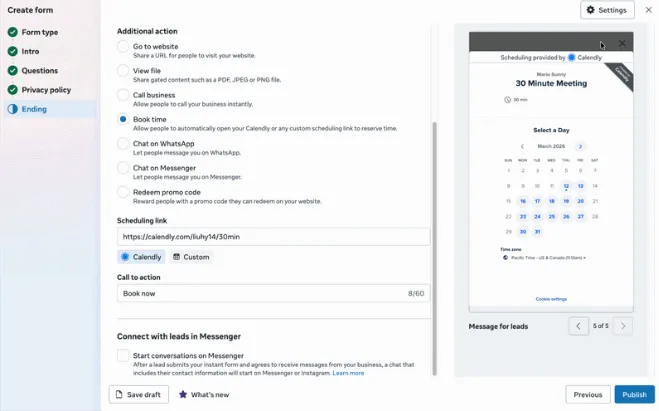
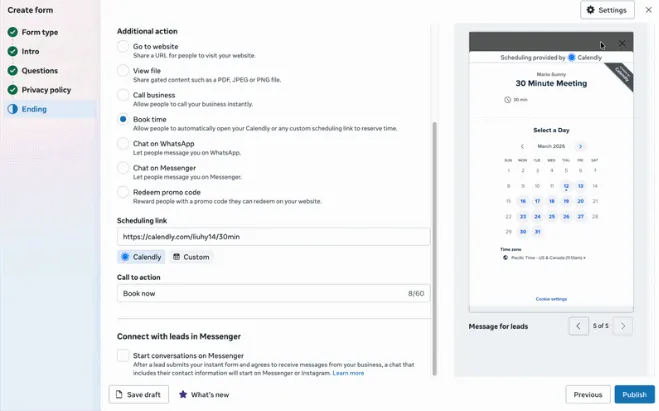
Meta emphasized that the setup process for advertisers requires no complex coding or technical expertise. Businesses can simply paste their existing scheduling link from a supported third-party booking platform into the ad setup interface. They then select “Book Time” as their call-to-action (CTA) button for the lead ad. The system is designed to intelligently auto-detect the calendar provider from the provided link and incorporate the corresponding booking tool. This user-friendly approach ensures that even small and medium-sized businesses (SMBs) with limited technical resources can easily implement and benefit from this advanced functionality.
Current and Future Integrations
At its initial launch, Meta’s embedded appointment booking feature supports integrations with two prominent third-party scheduling platforms: Calendly and HighLevel. Calendly is widely recognized for its user-friendly interface and extensive features, making it a popular choice for individuals and businesses across various sectors to manage appointments, meetings, and events. HighLevel, on the other hand, offers a more comprehensive marketing and sales platform, including CRM capabilities, funnel builders, and appointment scheduling, catering to agencies and businesses looking for an all-in-one solution.
Looking ahead, Meta has announced plans to expand its network of integrated partners. HubSpot support is slated to arrive in early August, a highly anticipated addition given HubSpot’s extensive reach as a leading CRM, marketing automation, and sales platform. The inclusion of HubSpot will significantly broaden the appeal and utility of this feature for a vast number of businesses already operating within the HubSpot ecosystem. Furthermore, Meta has stated its intention to continuously add more scheduling partners over time, signaling a long-term commitment to making this feature as widely accessible and versatile as possible. This phased rollout and continuous expansion strategy highlight Meta’s dedication to building a robust and interconnected advertising platform that meets the evolving needs of its diverse advertiser base.

Official Statements and Expected Reactions
Meta’s official announcement underscored the strategic importance of this update. As explained by Meta: “The gap between form submission and appointment booking has always been a challenge for service-based advertisers. A lead might fill out your form with genuine interest, but by the time they receive a follow-up email or navigate to your booking site hours later, that intent has cooled. With embedded appointment booking, you eliminate that gap entirely. The booking experience appears immediately after form submission, right when the lead’s interest is at its peak.” This statement encapsulates the core problem the feature aims to solve: capitalizing on peak intent.
Advertisers, particularly those in service-oriented industries such as healthcare, automotive sales, home services, beauty salons, fitness centers, and financial advisory, are expected to react positively to this development. The ability to directly convert interest into a scheduled appointment within the ad platform itself represents a significant operational improvement. It reduces the administrative burden of manual follow-ups, minimizes lead decay, and offers a clear pathway to increased conversion rates and ultimately, greater revenue. Businesses have long sought ways to shorten their sales cycles and improve the quality of leads generated through digital channels, and this feature directly addresses those needs.
Moreover, the integrated third-party booking platforms like Calendly, HighLevel, and soon HubSpot, stand to benefit significantly. Deeper integration with a massive advertising platform like Facebook provides them with increased visibility, potential for new user acquisition, and a stronger value proposition for their existing clients. It validates their role as essential tools in the digital marketing landscape and fosters a more cohesive ecosystem for businesses.
Broader Impact and Implications
The introduction of embedded appointment bookings has several far-reaching implications for the digital advertising landscape, businesses, and Meta itself.
For Advertisers:
- Increased Conversion Rates: The most immediate and significant benefit will be the expected increase in lead-to-appointment conversion rates. By removing friction and capitalizing on peak intent, businesses can expect a higher percentage of their leads to convert into actual bookings.
- Improved ROI on Ad Spend: Higher conversion rates translate directly into a better return on advertising spend (ROAS). Ad budgets will be more efficiently utilized as more leads progress further down the sales funnel.
- Reduced Operational Overhead: Automating the booking process reduces the need for manual follow-ups, freeing up sales and marketing teams to focus on nurturing qualified leads and delivering services.
- Enhanced Customer Experience: Users benefit from a quicker, more convenient, and less disruptive booking experience, leading to greater satisfaction.
- Competitive Advantage: Businesses that adopt this feature early may gain a competitive edge by offering a more seamless and efficient booking process compared to competitors who still rely on traditional, multi-step lead generation methods.
For Meta:
- Strengthened Value Proposition: This feature enhances Facebook’s appeal as a primary advertising platform, particularly for service-based businesses that rely heavily on appointments. It makes the platform more “full-stack” by moving beyond just lead generation to direct conversion.
- Increased Advertiser Loyalty and Spend: By demonstrating tangible value and improved ROAS, Meta can foster greater loyalty among its existing advertisers and attract new ones, potentially leading to increased ad spend on the platform.
- Data and Insights: Deeper integration into the conversion funnel could provide Meta with more comprehensive data on lead quality and conversion performance, allowing for further optimization of its ad delivery algorithms and targeting capabilities.
- Competitive Positioning: This move positions Meta favorably against other digital advertising platforms by offering a unique and highly effective solution for appointment-driven businesses. It could spur similar innovations from competitors like Google Ads or LinkedIn Ads.
For the Digital Marketing Ecosystem:
- Acceleration of Integration Trends: This development underscores a broader trend towards deeper integration across various marketing technologies. The future of digital marketing lies in interconnected platforms that minimize friction and maximize efficiency.
- Emphasis on User Journey Optimization: It highlights the critical importance of optimizing the entire user journey, from initial ad impression to final conversion, rather than focusing on isolated touchpoints.
- Demand for Robust Scheduling Tools: The increased reliance on integrated scheduling platforms will likely drive innovation and adoption within the scheduling software industry.
Challenges and Considerations
While the benefits are substantial, some considerations remain. Advertisers will need to ensure their integrated booking systems are robust enough to handle the potential increase in direct bookings. They must also maintain accurate and up-to-date availability to avoid frustrating customers with canceled or rescheduled appointments. Furthermore, while Meta simplifies the setup, businesses will still need a clear strategy for managing these new leads and ensuring their service delivery aligns with the increased demand. Data privacy and compliance, especially with sensitive customer information, will also remain a paramount concern, requiring advertisers to ensure their chosen booking platforms adhere to relevant regulations.
Rollout Timeline
The embedded appointment booking feature is currently being rolled out specifically for Facebook ads. Meta anticipates achieving full global availability for this feature by October. This phased deployment allows Meta to monitor performance, gather feedback, and make any necessary adjustments before a complete worldwide launch. The focus on Facebook first indicates a strategic decision to perfect the integration within its largest advertising platform before potentially expanding to other Meta properties like Instagram in the future, although no specific timeline for such expansion has been announced.
In conclusion, Meta’s embedded appointment booking update represents a significant leap forward in optimizing the lead generation and conversion process for service-based businesses. By seamlessly integrating third-party scheduling tools directly into Facebook lead ads, Meta is empowering advertisers to capture customer intent at its peak, reduce friction, and drive more direct bookings. This strategic enhancement is poised to deliver substantial benefits in terms of improved conversion rates, greater ROI on ad spend, and a more streamlined experience for both businesses and their prospective clients, solidifying Facebook’s position as an indispensable platform for digital advertising.