Open Source Intelligence (OSINT) has emerged as a critical discipline in the digital age, involving the systematic collection and analysis of publicly available information for intelligence purposes. This methodology, once primarily confined to military and government operations, has expanded dramatically, now serving a diverse array of sectors from cybersecurity and corporate brand protection to competitive analysis and public sector communications. The proliferation of digital footprints and the sheer volume of accessible data underscore OSINT’s growing indispensability in making informed, timely decisions.
The Evolution and Expansion of OSINT
OSINT’s origins are rooted in the Cold War era, where intelligence agencies meticulously gathered insights from conventional public channels such as newspapers, radio broadcasts, and television. The term "open source" historically referred to information that was not classified or covertly obtained. With the advent of the internet and the subsequent explosion of social media, online databases, and digital archives, the scope and complexity of OSINT have undergone a profound transformation. Today, it encompasses any data that an individual or organization can legally access, ranging from social media posts and news articles to public records, academic papers, satellite imagery, and even website metadata.

The transition from traditional media to the digital realm has empowered analysts to collect information at unprecedented speed and scale. This shift has also necessitated a structured approach, often referred to as an OSINT framework, to organize collection methods, sources, and tools. Such a framework ensures that intelligence gathering remains focused, repeatable, and capable of converting raw data into actionable insights, preventing analysts from being overwhelmed by the deluge of information. The global market for OSINT tools and services is projected to continue its robust growth, driven by increasing geopolitical tensions, rising cyber threats, and the need for enhanced competitive intelligence, with estimates placing its value in the billions of dollars and a significant compound annual growth rate.
The Proliferation of Public Data: Common OSINT Sources
The digital age has fundamentally altered the landscape of information sharing, creating vast "digital footprints" for individuals and organizations alike. These footprints are often far more extensive than generally realized, comprising all the public spaces where information is shared or stored. OSINT draws from an extensive array of these publicly accessible data sources, including:
- Social Media Platforms: Public profiles, posts, comments, shares, and trends across platforms like X (formerly Twitter), Facebook, Instagram, LinkedIn, and TikTok.
- Traditional Media: News articles, press releases, blogs, and online publications.
- Public Records: Government databases, court records, property records, and business registrations.
- Online Forums and Communities: Discussions, reviews, and user-generated content on platforms like Reddit, specialized forums, and dark web forums (with specialized tools).
- Geospatial Information: Satellite imagery, mapping services, and public GPS data.
- Technical Data: Website metadata, IP addresses, domain registration details (WHOIS), network configurations, and exposed servers/devices.
- Academic and Research Papers: Scholarly articles, university theses, and public research databases.
- Video and Audio Platforms: Publicly available videos on YouTube, podcasts, and live streams.
The challenge lies not in finding data, but in efficiently sifting through and analyzing this enormous volume to extract meaningful intelligence, which is where specialized OSINT tools become indispensable.

Key Drivers: Why OSINT Matters Today
The applications of OSINT are incredibly diverse, impacting strategic decision-making across various sectors. Three primary use cases highlight its critical importance:
-
Government and Public Sector Intelligence:
Government agencies leverage OSINT to gain a comprehensive understanding of public sentiment, respond effectively to crises, and safeguard sensitive information. Key applications include monitoring public opinion regarding policies, identifying emerging societal trends, and tracking disinformation campaigns that could impact national security or public trust. During natural disasters or other emergencies, OSINT tools provide real-time reconnaissance data, enabling authorities to assess ground conditions, prioritize responses, and counter misinformation. By analyzing shifts in public sentiment, agencies can proactively manage their reputation and inform strategic planning, focusing resources on initiatives that resonate with the populace. The ability to detect rumors and disinformation early is crucial for maintaining public safety and trust, allowing for timely corrective action. The U.S. government’s increased emphasis on OSINT, exemplified by various intelligence community initiatives, underscores its vital role in modern national security. -
Cybersecurity and Threat Intelligence:
For organizations of all sizes, OSINT tools are paramount for robust threat intelligence, penetration testing, and continuous attack surface monitoring. Cybersecurity teams and security researchers utilize these tools to identify vulnerabilities in public-facing assets, including websites, networks, and employee digital footprints. This includes uncovering exposed servers, outdated software versions, leaked credentials on dark web forums, and potential phishing vectors. OSINT helps identify if employees are inadvertently creating security risks by oversharing information about projects or internal systems on social media. By proactively mapping an organization’s digital exposure, security teams can strengthen defenses, improve employee security guidelines, and detect emerging cyber threats, scams, and vulnerabilities before they are exploited. The rapidly evolving threat landscape, with cybercrime damages estimated to reach trillions annually, makes OSINT an essential first line of defense.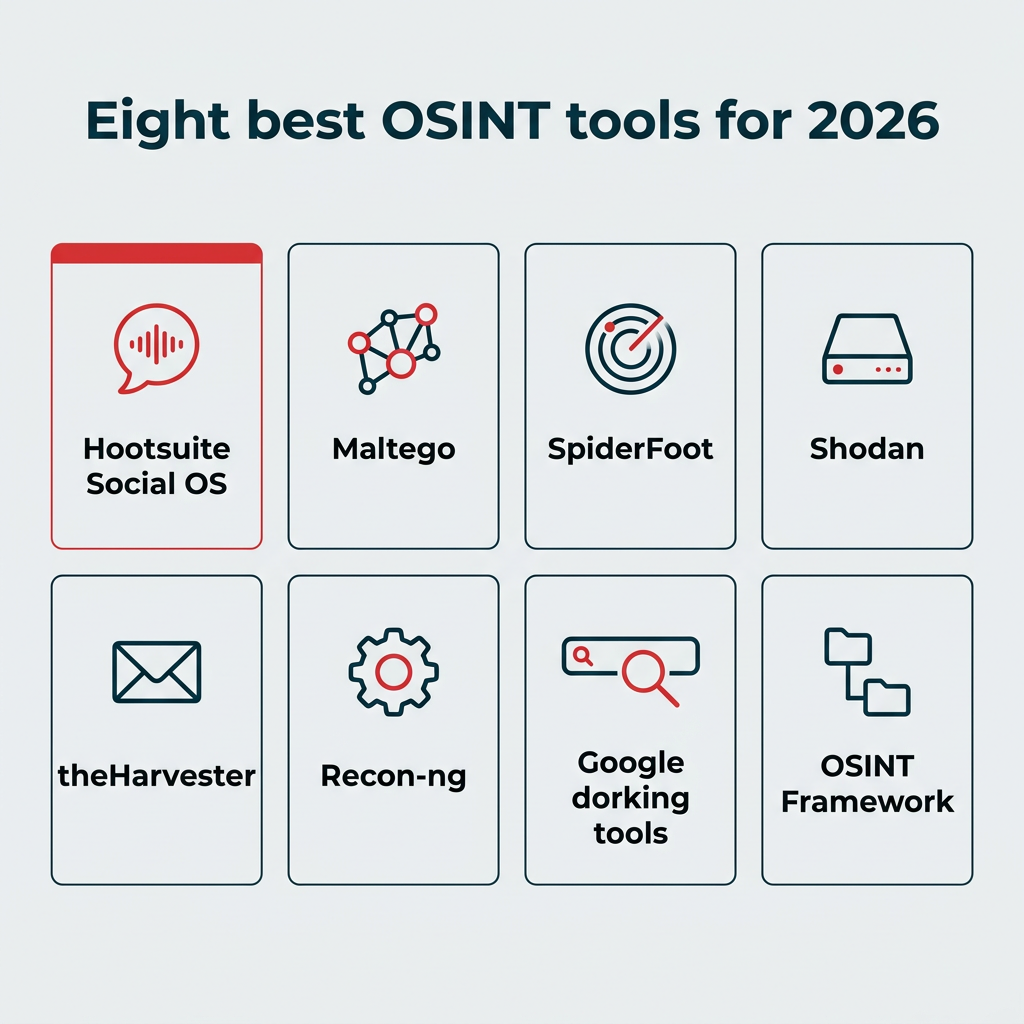
-
Brand Monitoring and Competitive Intelligence:
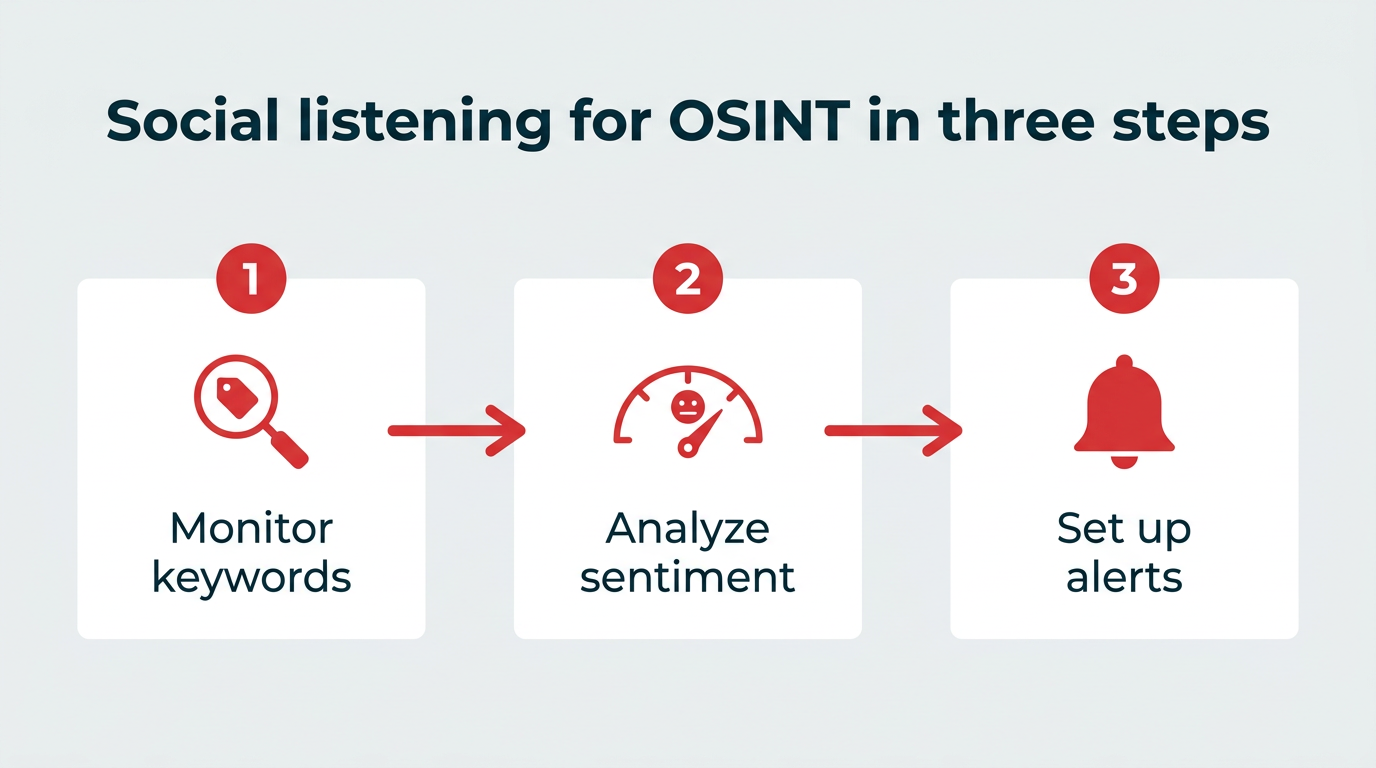
Marketing, public relations, and communications teams increasingly rely on OSINT to track brand mentions, monitor competitor activities, detect potential reputation risks, and identify emerging market trends. By observing public conversations across social media and the broader web, teams can identify a reputation issue in its nascent stages, allowing for swift intervention before it escalates into a full-blown crisis. Similarly, monitoring competitor activity provides invaluable insights into new product launches, marketing campaigns, and strategic shifts. Platforms designed for social listening have become a primary entry point into OSINT for non-technical teams, enabling them to analyze consumer sentiment, identify key influencers, and tailor communication strategies. The market for social listening and consumer intelligence tools, projected to exceed $20 billion by 2031, highlights its widespread adoption and perceived value across industries.
Navigating the OSINT Tool Landscape
The choice of OSINT tools is highly dependent on specific objectives, technical proficiency, and compliance requirements. The market offers a spectrum of solutions, from free, open-source command-line tools favored by security researchers to sophisticated enterprise platforms that automate collection and analysis at scale.
A fundamental distinction lies between free and paid OSINT tools:

- Free OSINT Tools: These offer flexibility and zero direct cost, often developed by the open-source community. However, they typically demand significant technical expertise for configuration and integration. They rarely come with formal compliance certifications, making them less suitable for regulated organizations where data governance and legal adherence are paramount. Support is usually community-based, lacking dedicated professional assistance. They are ideal for individual researchers, educational purposes, and security teams with deep technical skills and less stringent compliance needs.
- Paid / Enterprise OSINT Tools: These platforms typically come with a subscription or custom pricing but offer significant advantages. They provide automated data collection, often leveraging AI-powered analytics for deeper insights. Crucially, they frequently possess robust compliance certifications (e.g., FedRAMP, SOC 2, GDPR), essential for government agencies and regulated industries. They are designed for ease of use, making them accessible to non-technical users, and offer dedicated professional support. These tools are best suited for enterprise and government teams requiring broad source coverage, advanced analytical capabilities, and unwavering legal and ethical compliance.
Spotlight on Leading OSINT Solutions for 2026
The landscape of OSINT tools is dynamic, with continuous innovation. Here are eight prominent tools that cater to various needs in 2026:
-
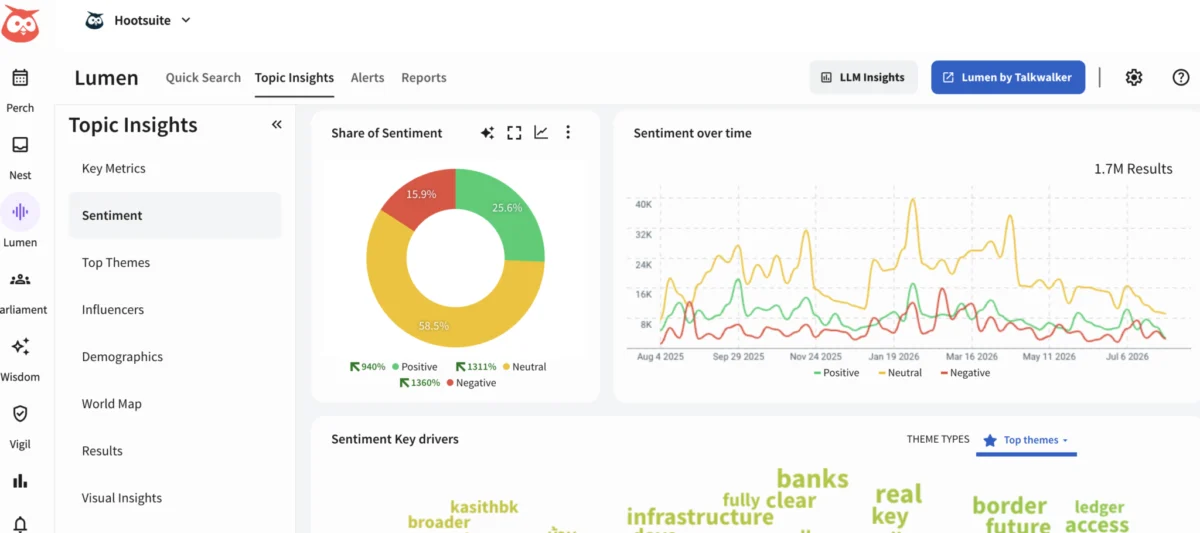
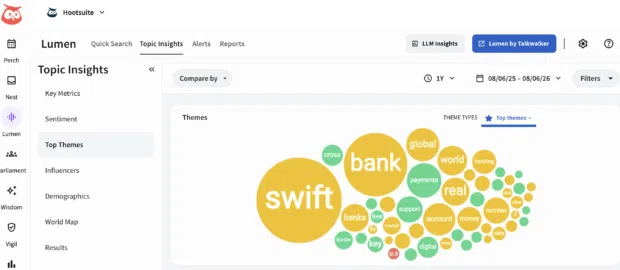
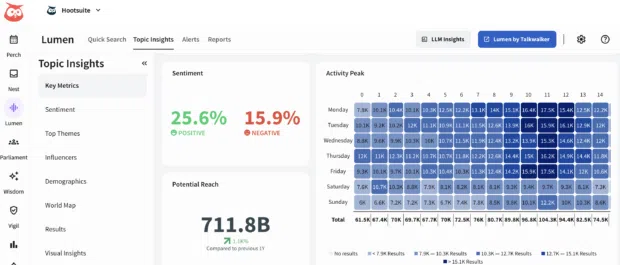
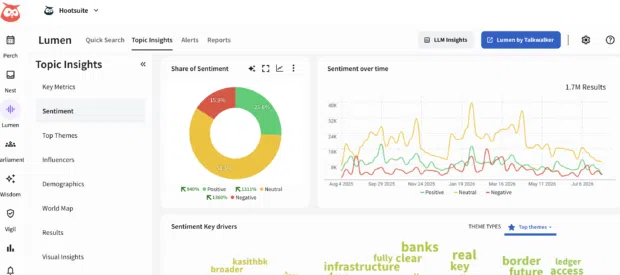
Hootsuite Social OS (Lumen): This platform stands out as a premier choice for social media-focused OSINT and advanced social listening. Its integrated insights and listening application, Lumen, boasts unparalleled source coverage, crawling over 150 million websites and more than 30 social media networks in 187 languages. Beyond textual analysis, Lumen can extract information from images, logos, symbols, videos, and podcasts. Its key capabilities include AI-powered sentiment analysis, trend prediction, conversation clustering, and robust compliance features. Lumen’s ability to summarize complex information and detect peaks in conversation using its "Wisdom AI" makes it accessible for non-cybersecurity experts. It is particularly well-suited for enterprise and government teams that require broad, compliant coverage and sophisticated AI analysis without deep technical expertise.
-
Maltego: A powerful link analysis and data visualization tool, Maltego helps analysts uncover complex relationships between disparate entities such as individuals, domains, IP addresses, and social media accounts. Its intuitive graph-based interface transforms raw data into easily digestible visual maps, revealing hidden connections. While a free Community Edition is available, paid tiers offer enhanced capabilities for heavier use. Maltego is an excellent fit for investigators, forensic analysts, and cybersecurity professionals who need to visualize and explore intricate data networks.
-
SpiderFoot: As an automated OSINT reconnaissance tool, SpiderFoot is open source and highly valued for its ability to scan over 200 data sources to construct a comprehensive digital footprint of a target. Its automated collection process makes it efficient for security teams conducting large-scale footprint analysis and gathering threat intelligence. It significantly reduces the manual effort involved in initial data aggregation, providing a solid foundation for deeper investigations.
-
Shodan: Often dubbed the "search engine for internet-connected devices," Shodan allows users to discover exposed servers, webcams, IoT devices, and other network components. This makes it invaluable for vulnerability assessment, enabling cybersecurity and IT security teams to identify and secure potentially exposed assets within their infrastructure or those of adversaries. A free tier offers basic access, with paid plans unlocking more extensive data and features.
-
theHarvester: This lightweight, open-source command-line tool is a staple for penetration testers and security researchers. It specializes in gathering email addresses, subdomains, and IP addresses associated with a target domain from various public sources. Its speed and efficiency make it an ideal initial reconnaissance tool for mapping an organization’s public-facing attack surface.
-
Recon-ng: A modular, Python-based web reconnaissance framework, Recon-ng provides security professionals with a highly customizable OSINT workflow. Its module system allows users to select and integrate specific tools and scripts, tailoring the data collection and organization process to the unique requirements of each investigation. This flexibility makes it a powerful choice for those who demand granular control over their OSINT operations.
-
Google Dorking Tools: This technique involves using advanced search operators (known as "dorks") within search engines like Google to uncover exposed data that standard searches typically miss. This can include unprotected files, configuration errors, or sensitive login pages. As a free and browser-based method, Google Dorking is often the preliminary step in a broader OSINT investigation, offering quick, targeted information discovery.
-
OSINT Framework (osintframework.com): While not a tool in itself, osintframework.com is a critically important, free, curated directory that systematically organizes a vast collection of OSINT tools by category and data source. It serves as an invaluable resource for beginners exploring the OSINT landscape and experienced practitioners seeking specialized tools for particular tasks, effectively acting as a comprehensive roadmap for the OSINT ecosystem.
Implementing OSINT: A Strategic Approach
Effective OSINT practice extends beyond merely selecting the right tool; it requires a strategic framework underpinned by best practices to ensure compliance, focus, and the ability to act on derived insights.
-
Understand and Follow Privacy Regulations:
While OSINT utilizes publicly available information, its collection and use are not without legal and ethical boundaries. Adherence to privacy regulations such as GDPR, CCPA, and industry-specific compliance standards (e.g., FedRAMP, SOC 2 for government, FCA, SEC for finance) is paramount. Reputable OSINT tools and platforms are designed with these regulations in mind, often offering compliance certifications and features like data anonymization. For instance, Hootsuite, being FedRAMP authorized and compliant with multiple financial and security standards, exemplifies the level of governance required for regulated industries. Organizations must ensure that their OSINT activities respect terms of service of social media platforms and prioritize ethical data handling. -
Set Clear Goals and Review Them Regularly:
The sheer volume of data available through OSINT can be overwhelming without clear objectives. Establishing specific, measurable, achievable, relevant, and time-bound (SMART) goals is crucial. For government agencies, this might involve setting benchmarks for public sentiment towards specific policies and aiming for targeted improvements. For cybersecurity, goals could focus on reducing the exposed attack surface. Regular review of these goals ensures that OSINT efforts remain focused and relevant, preventing distraction by extraneous data. An OSINT framework helps define what to collect, why it’s being collected, and how it will be used to generate actionable intelligence. -
Develop a Robust Response Plan and Action Insights:
The true value of OSINT lies in its ability to inform proactive decision-making. Discovering a potential crisis or threat through intelligence gathering is only the first step; having a pre-defined response plan is essential. This involves integrating OSINT insights into existing crisis management protocols, including how social media intelligence will inform public communications during an emergency. For example, monitoring real-time public sentiment during a crisis allows for agile adjustments to messaging, ensuring it resonates effectively. Tools like Lumen, with their ability to distill millions of conversations into actionable reports and visual dashboards, empower stakeholders to quickly identify critical information, predict emerging situations, and take timely corrective action, thereby transforming raw data into strategic advantage.
The Future of Open Source Intelligence
The trajectory of OSINT is one of continuous evolution, driven by advancements in artificial intelligence and machine learning. AI-powered analytics will become even more sophisticated, capable of identifying subtle patterns, predicting trends with greater accuracy, and automating complex data correlation across vast, disparate sources. This will further democratize OSINT, making advanced capabilities accessible to a broader range of non-technical users.
However, this evolution also brings heightened ethical considerations and the need for robust governance. The balance between leveraging publicly available information for security and strategic advantage, and respecting individual privacy rights, will remain a critical challenge. The increasing interconnectedness of global information environments means that OSINT will continue to be a cornerstone of intelligence gathering, demanding ongoing adaptation, ethical diligence, and the strategic deployment of advanced tools to navigate the complex information landscape of the 21st century.
Save time managing your social media marketing strategy with Hootsuite. Publish and schedule posts, find relevant conversions, measure results, and more — all from one dashboard. Try it free today.