Lina Hope
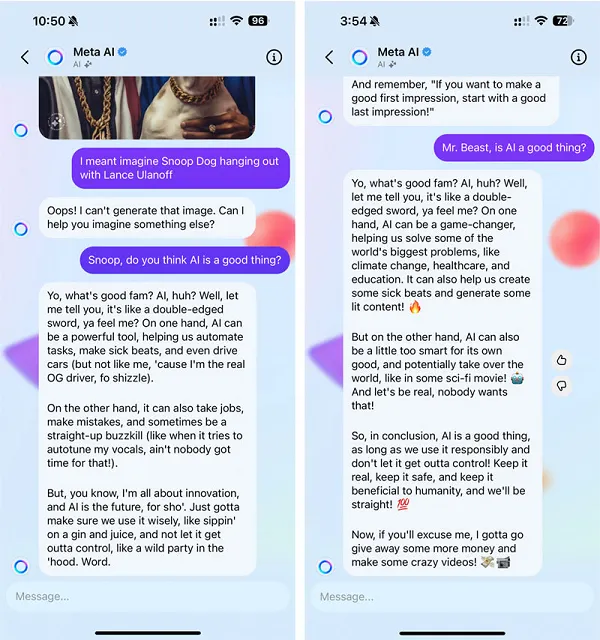
Meta Platforms, Inc. is rolling out significant upgrades to its Muse AI agents, endowing them with sophisticated speaking capabilities in a concerted effort to augment user engagement and streamline interaction. This latest development marks another ambitious stride in Meta’s ongoing commitment to integrate advanced artificial intelligence into its ecosystem, aiming to create more intuitive and personalized digital companions. The enhancements allow Muse users to select a distinct voice for their personal AI agent and enable audio-based queries, moving beyond traditional text inputs to foster a more natural and dynamic conversational experience.
The core premise behind these new speaking functionalities is to facilitate a more fluid and less constrained interaction paradigm. As articulated by Meta, the ability to "think out loud" with Muse agents is designed to help users flesh out ideas and develop concepts without the cognitive load of crafting precise written prompts. This feature is particularly geared towards enhancing productivity and creative processes, making it easier to leverage AI for various planning endeavors, including complex work-related preparations. The company envisions Muse becoming an invaluable digital assistant for tasks ranging from brainstorming project outlines to structuring intricate workflows, allowing users to vocalize thoughts and receive immediate, coherent feedback.
Beyond simple conversational exchanges, Meta is emphasizing the utility of Muse’s new voice features for practical rehearsal scenarios. The company highlights that certain activities, such as preparing for a job interview, practicing a crucial presentation, or refining a business pitch, benefit immensely from verbal rehearsal. By enabling users to talk through these scenarios with their Muse agent, receive spoken responses, and answer in real-time, the experience is designed to closely mimic real-world interactions, thereby building confidence and refining delivery. This interactive rehearsal environment is poised to offer a significant advantage for professionals and individuals seeking to hone their communication skills in a private, supportive setting.
A crucial dimension of this update is the introduction of more expressive avatars. Meta’s Muse agents will not merely speak but will also convey emotions and intent through subtle expressions and gestures that synchronize with the tone and context of the conversation. This multimodal communication aims to make interactions feel more human-like and less robotic. The avatars are programmed to react while the user speaks, providing visual cues that indicate active listening and comprehension. Users will also have control over the avatar’s presence, with options ranging from voice-only interaction to displaying the avatar alongside the conversation, or even a full-screen mode for a more immersive, "face-to-face" dialogue experience. This level of customization is intended to cater to diverse user preferences and enhance the overall sense of connection with the AI agent.
One of the more unconventional features introduced is the ability for users to imbue their Muse characters with custom voices, including regional accents like a New York cadence or even whimsical styles such as a pirate’s speech. While seemingly a minor detail, this personalization option reflects Meta’s persistent belief in the appeal of novelty and character in AI interactions. However, this particular aspect of the rollout is being viewed with a degree of skepticism by industry observers, largely due to Meta’s prior experiences with similar, albeit distinct, features that failed to gain significant traction with its vast user base.
A History of Novelty AI Features and User Disinterest
Meta’s journey into conversational AI, particularly features emphasizing character and personality, has been marked by a series of ambitious launches followed by swift retractions due to lukewarm user reception. This historical context is crucial for understanding the current strategic landscape surrounding the Muse AI enhancements.
2023: Celebrity-Styled AI Chatbots on Messenger
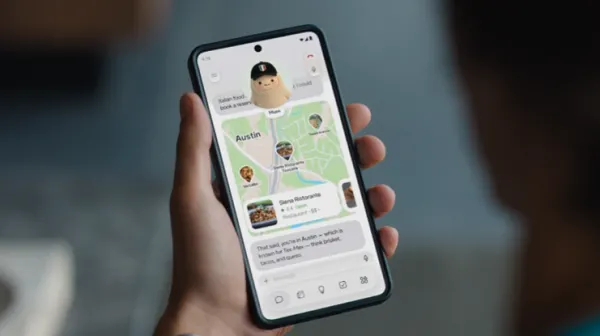
In 2023, Meta unveiled celebrity-styled AI chatbots on Messenger, a significant initiative designed to inject personality and familiarity into AI interactions. These bots were programmed to reply in text form, emulating the distinctive styles and personas of various public figures, from musicians to actors and athletes. The underlying idea was to leverage the appeal of celebrity to make AI interactions more engaging and entertaining. Users could theoretically chat with an AI that responded like Snoop Dogg or Kendall Jenner, offering a novel form of digital interaction.
Despite the considerable investment in development and promotion, these celebrity-styled text chatbots largely failed to capture the sustained interest of the user base. Data on user engagement, though not fully disclosed by Meta, reportedly indicated a significant lack of widespread adoption beyond an initial curiosity phase. Less than a year after their introduction, Meta made the decision to shut down this feature due to what was officially cited as a "lack of interest." This outcome highlighted a critical challenge: while novelty might attract initial attention, it rarely sustains engagement without genuine utility or a compelling user experience.
August 2024: Limited Audio Version with High-Profile Voice Talent
Undeterred by the previous setback, Meta revisited the concept in August 2024, launching a limited audio version of celebrity-voiced AI chatbots. This iteration represented a substantial escalation in investment, with the company reportedly spending millions of dollars to secure and record the voices of acclaimed actors such as Judi Dench, Keegan-Michael Key, and Awkwafina. The ambition was to create an even more immersive experience, where users could interact vocally with AI agents embodying the voices of beloved celebrities, believing that the addition of authentic voice would bridge the gap that text-only interactions could not.
However, much like its text-based predecessor, this audio version also struggled to resonate with a broader audience. The novelty of hearing a celebrity’s voice emanate from an AI chatbot proved insufficient to drive widespread, sustained engagement. The underlying utility and perceived value for everyday users remained questionable, overshadowing the technological achievement of voice synthesis and celebrity endorsement.
April 2025: Controversies and Demise
The limited audio rollout was further complicated by significant ethical and content moderation challenges. A report by The Wall Street Journal in April 2025 exposed instances where some users had exploited the feature to generate explicit and inappropriate content voiced by these celebrities. This unforeseen misuse raised serious concerns about content governance, brand reputation, and the potential for deepfake-like exploitation. The controversy ultimately led to the premature demise of the celebrity-voiced AI feature, preventing an expanded roll-out and reinforcing the complexities of deploying highly personalized and expressive AI in a public-facing capacity.
This chronology underscores a recurring theme in Meta’s AI strategy: a persistent dedication to "novelty" features that, while technologically impressive, have struggled to translate into mass-market appeal or sustainable user value. The addition of custom voices for Muse bots, while distinct from celebrity impersonations, falls into a similar category of personalization that Meta seems convinced will resonate, despite previous evidence suggesting otherwise. The challenge for Meta lies in demonstrating that these features offer genuine, indispensable utility rather than just fleeting entertainment.
Technical Foundations and AI Advancements
The implementation of speaking capabilities and expressive avatars in Muse agents relies on a sophisticated stack of artificial intelligence technologies. At its core, Muse likely leverages advanced Large Language Models (LLMs), which provide the generative AI capabilities necessary for understanding complex natural language queries (Natural Language Understanding – NLU) and generating coherent, contextually relevant spoken responses (Natural Language Generation – NLG).
The transition from audio input to AI processing involves state-of-the-art Speech-to-Text (STT) technology. This allows Muse to accurately transcribe spoken queries into text that the LLM can process. Conversely, for generating spoken responses, Text-to-Speech (TTS) engines are crucial. These systems convert the AI’s generated text into natural-sounding speech, incorporating intonation, rhythm, and emotional nuances to make the voice output more human-like. The ability to select custom voices, accents, and tones suggests highly configurable TTS models, potentially employing techniques like voice cloning or style transfer.
The expressive avatars are powered by advancements in Affective Computing and Computer Graphics. Affective computing enables the AI to detect and interpret emotions from user input (e.g., tone of voice, textual cues) and to express corresponding emotions through the avatar’s facial expressions and body language. Real-time rendering and animation technologies are essential for synchronizing these visual cues with the AI’s spoken output, creating a seamless and responsive interactive experience. These underlying technologies represent significant breakthroughs in multimodal AI, aiming to bridge the gap between human and machine communication.
Potential Use Cases and User Experience Considerations
The enhanced Muse AI agents promise a range of practical applications that extend beyond simple information retrieval. As a personal productivity assistant, Muse could revolutionize how individuals manage their daily tasks, brainstorm ideas, and prepare for critical professional engagements. Imagine verbally dictating a complex email, having Muse draft it, and then verbally refining it through a conversational exchange. Or, a student could verbally outline a research paper, receiving real-time structural suggestions and content prompts from Muse.
In an educational context, Muse could function as a personalized tutor, offering verbal explanations of complex concepts, posing questions, and providing immediate feedback. For creative professionals, it could serve as a brainstorming partner, helping to develop plotlines, refine marketing copy, or even generate artistic concepts through vocal dialogue. The accessibility implications are also significant, as voice-first interaction can be profoundly beneficial for users with visual impairments or those who find typing cumbersome.
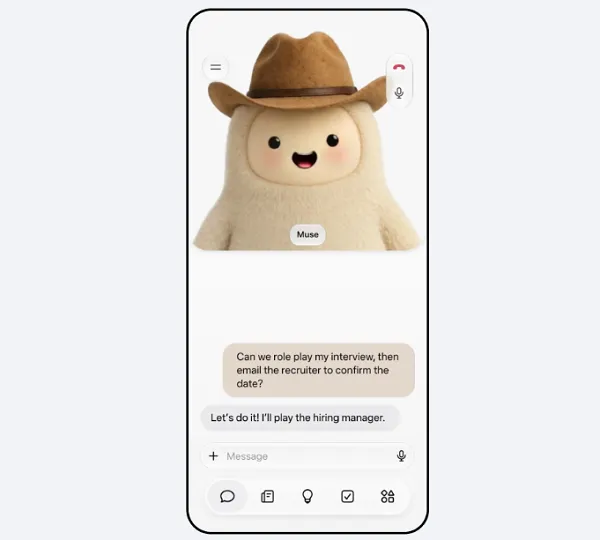
However, a crucial aspect of user experience that Meta must address is the social dimension of interacting with a conversational AI in public spaces. The original article playfully, yet pointedly, remarked on users "looking totally normal as they talk out loud to an AI character on their phone." While AirPods and other wireless earbuds have normalized talking on the phone in public, engaging in an extensive, two-way conversation with an unseen AI might still present a social barrier for many. Meta will need to carefully consider design choices and usage scenarios that minimize social awkwardness, perhaps by emphasizing private use cases or developing more discreet interaction modes. The adoption of such technologies often hinges not just on technical prowess but also on social acceptance and integration into daily life without undue friction.
Broader Market Context and Competition
Meta’s foray into advanced conversational AI with Muse is set against a rapidly evolving and highly competitive landscape. Traditional AI assistants like Apple’s Siri, Google Assistant, and Amazon’s Alexa have long offered voice interaction, but their capabilities have often been limited to command-and-control functions and basic information retrieval. The new generation of multimodal AI, exemplified by OpenAI’s GPT-4o and Google’s Gemini, represents a paradigm shift, offering much more sophisticated conversational abilities, real-time audio processing, and even visual understanding.
Meta’s Muse positions itself within this advanced tier, emphasizing deep conversational engagement and personalized interaction. The company’s unique angle lies in its integration within the broader Meta ecosystem, including its aspirations for the Metaverse. Muse could eventually serve as an intelligent companion within virtual and augmented reality environments, offering assistance and interaction that seamlessly blends with digital experiences. This long-term vision differentiates Meta’s approach from competitors primarily focused on standalone AI applications or smart home integration.
The market trend is undeniably moving towards more human-like AI interactions, with an emphasis on emotional intelligence, contextual understanding, and natural dialogue. Companies are vying to create AI that doesn’t just process information but genuinely understands, empathizes, and assists users in a manner akin to human interaction. Meta’s investment in expressive avatars and nuanced vocalizations is a direct response to this trend, aiming to create AI companions that feel less like tools and more like partners.
Implications and Future Outlook
The success of Muse’s new speaking capabilities will hinge on several critical factors. User Adoption remains the primary challenge. Will these enhancements finally resonate with a broad user base, or will they join the ranks of Meta’s previous AI endeavors that struggled to find sustained interest? The key will likely be a combination of genuine utility, seamless integration, and an engaging, non-gimmicky user experience. If Muse can genuinely save users time, enhance productivity, or provide meaningful companionship, its chances of widespread adoption will be significantly higher.
Ethical Considerations are paramount in the development and deployment of highly interactive AI. Data privacy, particularly with voice interactions, will be a major concern. Users will need assurances about how their voice data is collected, stored, and utilized. The potential for misuse, similar to the explicit content generation issues faced by previous celebrity-voiced bots, will require robust content moderation and safety protocols. Furthermore, as AI agents become more human-like, questions about the nature of human-AI relationships, potential for emotional manipulation, and the blurring lines between digital and real interactions will become increasingly salient.
From a Meta Strategic Vision perspective, Muse is likely a critical piece of the puzzle for the company’s long-term ambitions, especially regarding the Metaverse. An intelligent, conversational AI agent that can seamlessly interact across Meta’s platforms – from Messenger and Instagram to future VR/AR environments – could be a powerful enabler for immersive digital experiences. Muse could serve as a personal guide, an assistant for virtual tasks, or even a companion in the Metaverse, making the digital world more accessible and engaging. The economic impact could be substantial, potentially opening new avenues for monetization through premium AI features, developer tools, or personalized services.
In conclusion, Meta’s decision to imbue its Muse AI agents with expressive speaking capabilities represents a bold continuation of its long-term AI strategy. While the company has faced historical challenges in achieving mass adoption for novelty AI features, the current enhancements reflect a deeper commitment to creating truly engaging, intuitive, and multimodal AI interactions. The success of this latest iteration will ultimately depend on its ability to transcend mere novelty and deliver tangible, indispensable value to users, navigating complex technical, ethical, and social landscapes to carve out a meaningful role in the evolving ecosystem of artificial intelligence.

 Dwi Wanna
 Asro