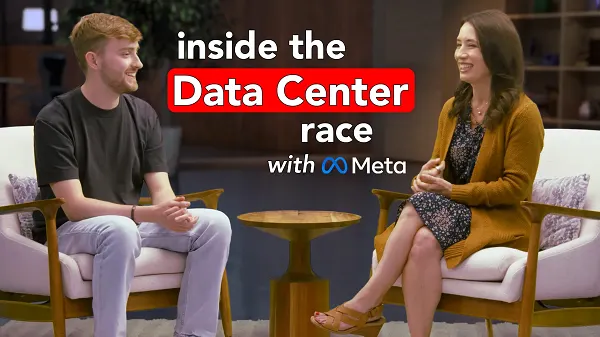
Meta, the technology giant behind Facebook, Instagram, and WhatsApp, has intensified its public relations efforts to counter mounting criticism regarding the environmental and community impacts of its rapidly expanding data center infrastructure across the United States. In a strategic move, the company on Thursday published an interview with Rachel Peterson, its Vice President of Data Centers, who outlined Meta’s strategic rationale for the massive build-out and sought to underscore the benefits these facilities bring to local economies. This comes amid a period of unprecedented expansion for AI infrastructure, which has, in turn, triggered significant grassroots opposition and calls for greater regulatory oversight.
Meta’s Vision for "Personal Superintelligence" and the AI Imperative
At the core of Meta’s aggressive data center expansion is its ambitious pursuit of "personal superintelligence" for every user. Peterson articulated this vision in the 16-minute interview, describing it as the provision of "the utmost experts who understand your unique preferences, your unique ways of wanting to operate, that is personalized to you, that makes you the most effective and efficient person that you can be." This highly personalized and efficient artificial intelligence, Peterson explained, demands colossal data processing capabilities to facilitate its intricate algorithms and real-time responsiveness at a global scale. The burgeoning field of generative AI, exemplified by large language models (LLMs) and advanced machine learning, requires an immense amount of computational power for both training and inference, necessitating a corresponding increase in physical infrastructure.
Meta’s commitment to this future is evident in its staggering financial outlay. The company has pledged over $600 billion towards U.S. data center projects over the next three years, a significant portion of which has been initiated within the past two years as the company accelerated its AI development programs. This investment underscores the company’s belief that owning and operating its data centers provides critical advantages in terms of control, customization, security, and efficiency, allowing Meta to tailor its infrastructure precisely to its unique and evolving AI workloads. These hyperscale facilities are not merely server farms; they are complex ecosystems of advanced computing hardware, sophisticated cooling systems, and robust power infrastructure, all designed to operate continuously and at peak performance.
A Chronology of Escalating Concerns and Public Resistance
While Meta champions the technological progress and economic potential of its data centers, their rapid proliferation has not been without significant controversy. The timeline of public backlash has steadily intensified, mirroring the acceleration of data center construction across the nation.
- Early 2020s: As the demand for cloud computing and AI capabilities surged, tech giants like Meta, Amazon Web Services, Google Cloud, and Microsoft Azure began a period of unprecedented data center construction. Many states and localities, eager to attract investment and create jobs, offered substantial tax incentives and other benefits, often overlooking potential long-term environmental consequences.
- 2023-2024: Reports of localized environmental impacts began to surface more frequently. In Morgan County, Georgia, Meta’s data center operations were linked to water contamination and significant strain on local utilities. These issues caught the attention of federal lawmakers, with Rep. Alexandria Ocasio-Cortez calling for intervention to limit such developments.
- May 2026 (Politico Report): A Politico investigation revealed that an AI infrastructure project in Fayetteville, Georgia, had reportedly drained an astonishing 30 million gallons of unmetered water, severely impacting local residents and raising serious questions about resource management and transparency.
- Mid-2026 (The Bulletin of Atomic Scientists): Further alarming data emerged from Northern Virginia, a region often dubbed "Data Center Alley" due to its high concentration of facilities. Data center projects in Loudoun and Fairfax counties collectively consumed nearly 2 billion gallons of water in 2023 alone. This massive consumption forced local water authorities to increasingly rely on potable water for cooling systems, rather than reclaimed water, raising concerns about the long-term sustainability of the region’s water supply.
- July 2026 (Time Magazine Report & National Protests): A report by Time Magazine highlighted the growing national discontent, indicating that only a third of Americans approve of the current pace of data center development. This public sentiment translated into tangible action: over 300 cities, towns, and counties across the U.S. have enacted bans or moratoriums on the construction of new hyperscale data centers. The apex of this resistance was observed on July 18, a national day of protest against data centers, which saw 142 separate demonstrations across 42 states, signaling a widespread and organized opposition movement.
This chronology reveals a consistent pattern: as the scale of data center operations expands, so too does the public’s awareness of and concern over their environmental footprint.
Environmental Impact: The Triple Threat of Water, Energy, and Land
The environmental impact of hyperscale data centers, particularly those optimized for AI workloads, presents a complex challenge, primarily revolving around their immense consumption of water, energy, and land.
- Water Consumption: Data centers require vast quantities of water, predominantly for cooling their thousands of heat-generating servers. Most facilities rely on evaporative cooling systems, where water is used to absorb heat and then evaporates into the atmosphere. While efficient, this process leads to significant water loss. An average hyperscale data center can consume millions of gallons of water annually, sometimes rivaling the consumption of a small town. The specific incidents in Georgia and Virginia illustrate the severity of this issue, where local water tables are strained, potable water supplies are diverted, and agricultural communities face increased competition for a vital resource, especially in drought-prone regions of the U.S. The shift to potable water for cooling in Northern Virginia is particularly concerning, as it directly impacts the availability of drinking water for human consumption.
- Energy Demand: Perhaps the most substantial environmental footprint of data centers is their insatiable demand for electricity. AI computations are notoriously energy-intensive, and the sheer volume of servers and cooling equipment in a hyperscale facility can consume as much electricity as tens of thousands of homes. This massive energy draw places immense strain on local and regional power grids, often necessitating upgrades to existing infrastructure or the construction of new power plants and transmission lines. While many tech companies, including Meta, have committed to powering their operations with 100% renewable energy, the reality is more nuanced. Often, this means purchasing renewable energy credits (RECs) from projects elsewhere on the grid, rather than the data center itself being directly powered by local, newly built renewable sources. Furthermore, the sheer scale of demand can still indirectly contribute to the overall carbon footprint by increasing the baseline load on a grid that may still rely heavily on fossil fuels.
- Land Use: Hyperscale data centers are physically enormous structures, often sprawling across hundreds of acres. This necessitates the acquisition and development of large tracts of land, frequently converting agricultural land, green spaces, or even wetlands into industrial sites. The construction itself involves significant earthmoving and material use, and the associated infrastructure, such as substations, transmission lines, and access roads, further expands the overall footprint. This land conversion can lead to habitat fragmentation, loss of biodiversity, and changes to local ecosystems.
Beyond these primary concerns, data centers can also contribute to localized issues such as noise pollution from cooling towers and backup generators, and visual blight due to their large, windowless industrial appearance.
Economic Promises Versus Local Realities
Meta, like other tech giants, consistently highlights the economic benefits data centers bring to host communities, primarily in the form of job creation and increased tax revenue. Rachel Peterson reiterated this, emphasizing Meta’s commitment to "put our roots down for 20 years" and become "part of the community."
- Job Creation: The construction phase of a data center certainly generates a significant number of temporary jobs for skilled tradespeople. However, once operational, hyperscale data centers are highly automated, requiring a relatively small permanent workforce compared to the scale of the investment or the initial promises. These operational jobs are often specialized and may not always benefit the immediate local population without specific training programs.
- Tax Revenue: Data centers can contribute to local tax bases through property taxes and sometimes sales taxes on equipment. However, many localities offer substantial tax abatements and incentives to attract these facilities, which can significantly reduce the net revenue for the community. Critics argue that these tax breaks often mean that the data centers don’t pay their "fair share" for the public services (roads, emergency services, water infrastructure) they utilize, effectively shifting the burden to existing residents and businesses.
- Utility Cost Claims: Peterson specifically addressed the "misconception" that data centers "take more than their fair share" and "pass on costs." She argued that Meta’s investments "are oftentimes helping the electric grid bring reliability and consuming costs that otherwise would have been passed onto everyday residential consumers." This claim is based on the idea that data center investments in grid upgrades and long-term power purchase agreements can stabilize and even improve local energy infrastructure. However, residents in impacted areas often report the opposite, experiencing increased utility bills due to the strain on resources or the costs associated with new infrastructure development needed to accommodate the data center’s demand.
Official Responses and Meta’s Mitigation Efforts
In response to the escalating public outcry, Meta has launched a multi-faceted public relations campaign, with Rachel Peterson’s interview serving as a key component. The company aims to proactively address concerns and demonstrate its commitment to responsible development.
- Peterson’s Reassurances: Peterson’s interview emphasized Meta’s rigorous assessment process for data center locations, which includes evaluating requirements for power, water, and labor availability to ensure efficient construction and operation. She stated that Meta "works to restore more water than it’s actually consuming" and collaborates with utility providers to minimize impacts on local residents. She also claimed that Meta’s data centers are designed as "closed-loop systems," meaning they do not discharge waste, and their water usage is "pretty minimal."
- "America’s Workforce Academy": As part of its broader PR push, Meta launched "America’s Workforce Academy" in June. This initiative partners with various construction-related organizations to provide training and placement opportunities for individuals in regions where Meta is developing its data processing infrastructure. The goal is to address local employment needs, demonstrate community investment, and build a skilled workforce for future projects, thereby softening community resistance.
- Sustainability Pledges: Meta, like its peers, has aggressive sustainability targets, including powering its operations with 100% renewable energy. While these pledges are important, environmental advocates often point out the distinction between purchasing renewable energy credits and directly sourcing renewable energy from local, new-build projects that genuinely offset the data center’s specific energy draw. The effectiveness of "restoring more water than consumed" is also subject to scrutiny, with questions often arising about the specific projects undertaken and the verifiable metrics used to demonstrate this net positive impact.
Despite these efforts, the gap between Meta’s narrative and the lived experiences of affected communities remains significant. The claims of "minimal" water usage often clash with the sheer volume of water reported to be consumed, and the benefits to the electric grid are frequently overshadowed by concerns about increased strain and costs.
Broader Industry Context and Future Implications
The challenges faced by Meta are not unique; they are symptomatic of a broader industry-wide dilemma. Google, Amazon, Microsoft, and other cloud providers are all engaged in similar hyperscale data center expansions, driven by the relentless "AI race" and the ever-increasing demand for digital services. As AI capabilities become more sophisticated and integrated into daily life, the infrastructure required to support them will only grow.
This trajectory points to several critical future implications:
- Increased Regulatory Scrutiny: The growing public backlash and the involvement of federal lawmakers like Rep. Ocasio-Cortez suggest a future with potentially stricter regulatory frameworks. These could include more rigorous environmental impact assessments, mandatory water metering and reporting, limits on water consumption, and stronger requirements for local renewable energy sourcing rather than just credit purchases. States and localities may also revise or eliminate tax incentives for data centers if the perceived environmental and social costs outweigh the economic benefits.
- Technological Innovation: The pressure to reduce environmental impact will likely accelerate innovation in data center design and cooling technologies. This could include wider adoption of liquid cooling systems (e.g., immersion cooling, direct-to-chip liquid cooling), which are significantly more water and energy-efficient than traditional evaporative cooling. Research into heat reuse, where waste heat from data centers is captured and used to heat nearby homes or businesses, could also gain traction. Locating data centers in colder climates or leveraging natural cooling could also become more prevalent.
- Redefining "Sustainable Growth": The current situation forces a critical re-evaluation of what constitutes "sustainable growth" in the technology sector. The immense power and water demands of AI infrastructure highlight a fundamental tension between rapid technological advancement and environmental stewardship. Striking a balance will require not only corporate responsibility but also proactive governmental policies and informed community engagement.
In conclusion, while Meta continues to champion its vision of "personal superintelligence" and its efforts to integrate positively within communities, the escalating public backlash against its data center expansion signals a critical juncture. The company’s ability to alleviate these concerns, beyond public relations campaigns, will depend on transparent reporting, demonstrable environmental responsibility, and a genuine commitment to equitable resource sharing, ultimately shaping the future landscape of AI infrastructure development in the United States.