rifanmuazin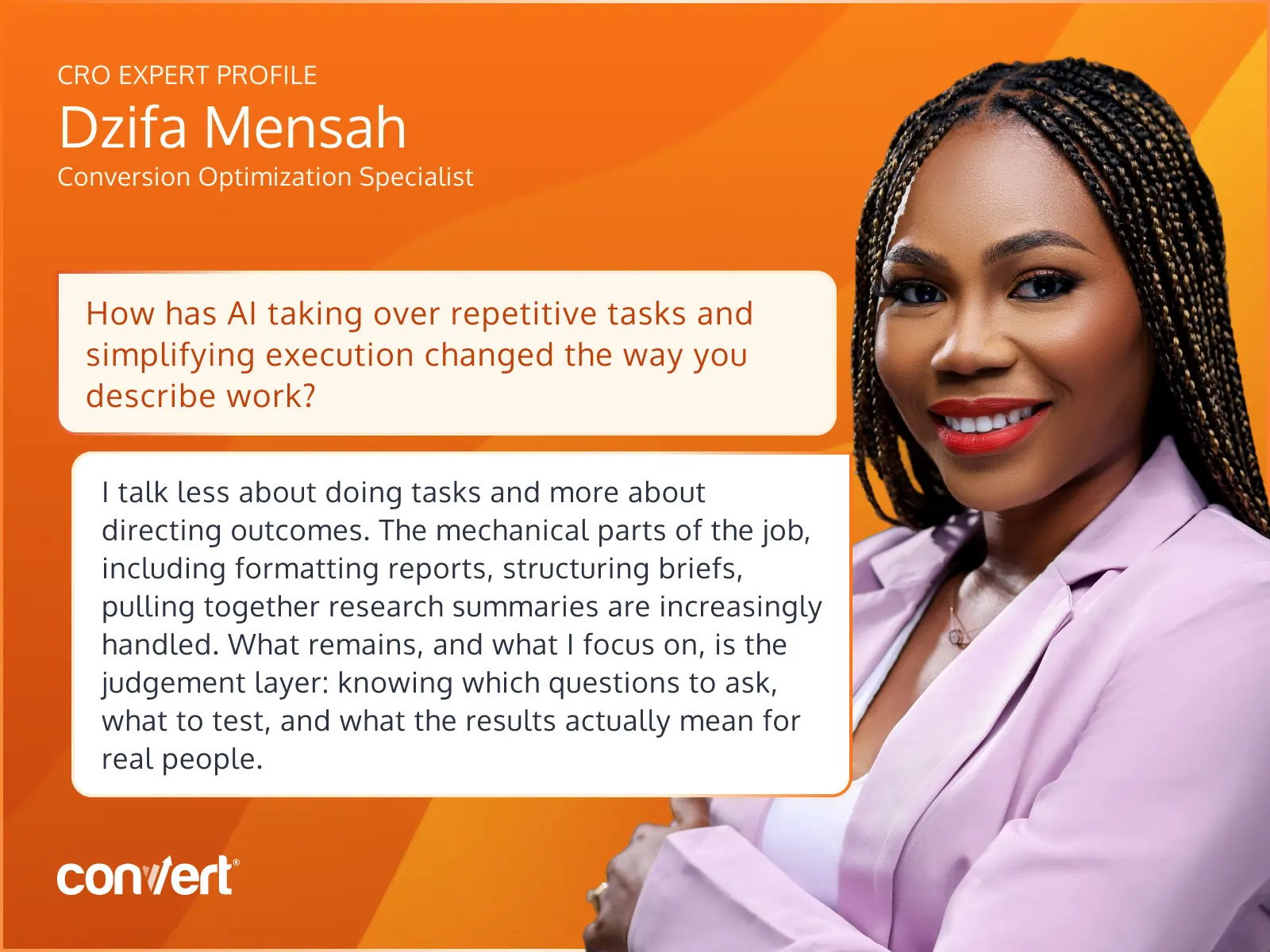
The digital landscape has undergone a seismic shift over the last decade, transitioning from a focus on mere traffic acquisition to a sophisticated discipline centered on the user experience and data-driven decision-making. At the forefront of this evolution is Conversion Rate Optimization (CRO), a field that combines psychological insight, statistical rigor, and technical expertise. Dzifa Mensah, a Conversion Optimization Specialist with over ten years of experience, represents the modern practitioner in this space—someone whose career has traversed web development, growth marketing, and experimentation across multiple continents and industries. In a recent detailed exploration of her methodology and outlook, Mensah highlighted the critical intersection of artificial intelligence and human intuition, suggesting that while tools are becoming more advanced, the “judgment layer” remains the ultimate competitive advantage for businesses.
The Professional Trajectory of an Experimentation Specialist
Dzifa Mensah’s entry into the world of optimization was not a linear path but rather a convergence of various technical and creative disciplines. With a background rooted in web development, she initially viewed the digital space through the lens of code and functionality. However, her inherent curiosity regarding human behavior and routine led her toward growth marketing and, eventually, specialized experimentation. Over the past decade, she has applied her skills within three distinct and often conflicting sectors: Software as a Service (SaaS), e-commerce, and the non-profit (charity) sector.
According to industry data, the global conversion rate optimization software market was valued at approximately $771 million in 2022 and is projected to reach over $1.9 billion by 2030. This growth reflects a broader corporate realization that acquiring new customers is often significantly more expensive than optimizing the experience for existing visitors. Mensah’s work aligns with this trend, focusing on the scientific method—observation, hypothesis, testing, and learning—to bridge the gap between what businesses assume their users want and what those users actually demonstrate through their digital behavior.
Defining Optimization in a Saturated Market
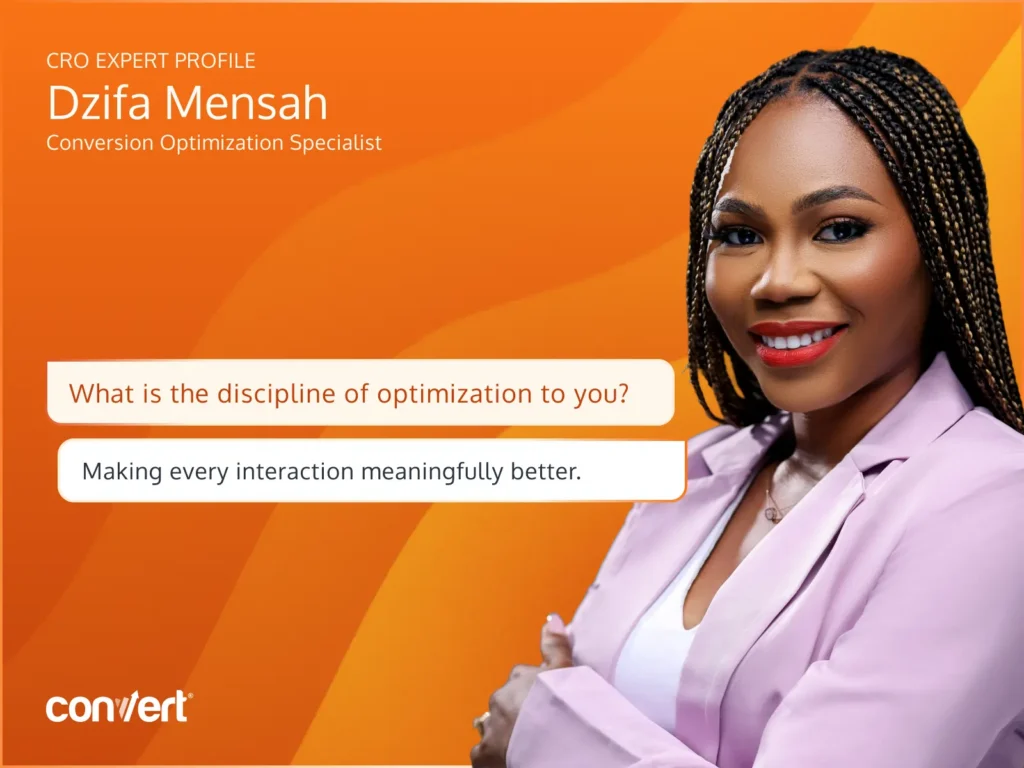
When asked to define the core of her discipline, Mensah summarizes it as “making every interaction meaningfully better.” This definition moves away from the traditional view of CRO as a series of “hacks” or cosmetic changes, such as changing button colors or font sizes. Instead, it positions optimization as a holistic endeavor aimed at reducing friction and increasing value at every touchpoint of the customer journey.
In the current economic climate, where consumer spending is under pressure and digital privacy regulations (such as GDPR and the phasing out of third-party cookies) make tracking more difficult, “meaningful” interactions have become a necessity for survival. Businesses are no longer just competing on price; they are competing on the ease and relevance of their digital interfaces. Mensah’s philosophy suggests that the most successful optimization programs are those that prioritize long-term user satisfaction over short-term metric spikes.

The Role of Artificial Intelligence in Modern Workflows
The integration of Artificial Intelligence (AI) has become a focal point of discussion within the marketing and technology sectors. For Mensah, AI is not a replacement for the specialist but a “reliable thinking partner.” The traditional workflow of an experimentation specialist involved hours of manual data consolidation—sifting through quantitative analytics from platforms like Google Analytics and qualitative feedback from user recordings or surveys.
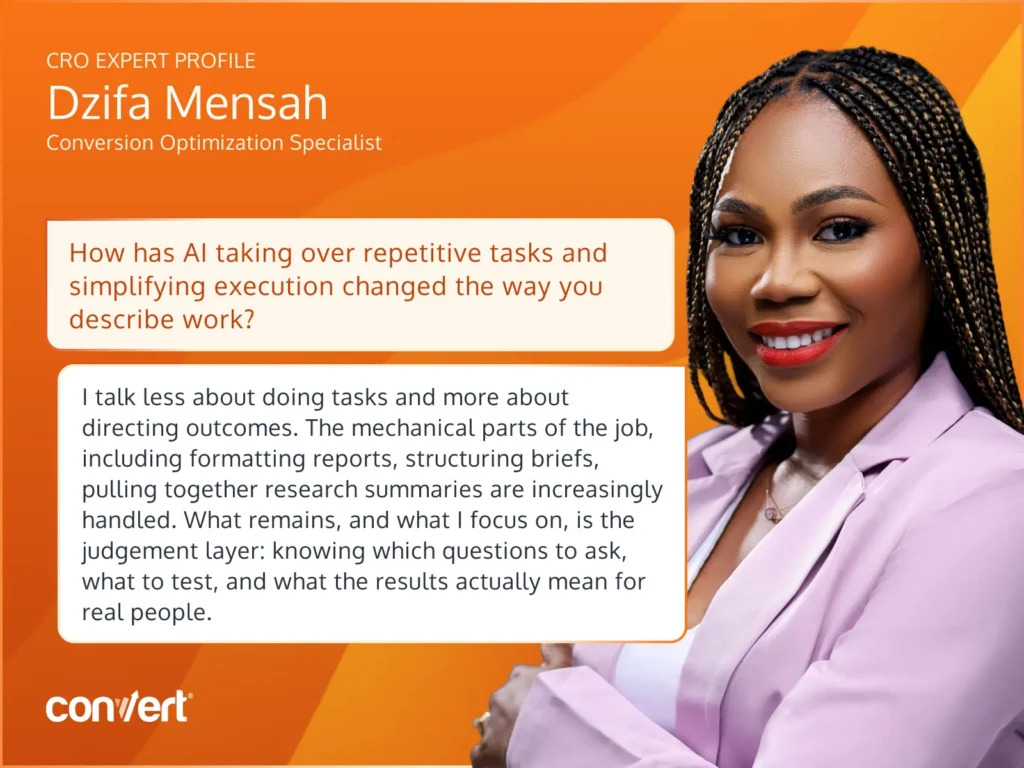
Mensah has restructured her workflow to leverage AI in the pre-test phase. By using Large Language Models (LLMs) and data processing tools, she can surface patterns and contradictions in user data at a much higher velocity. This allows for the development of sharper hypotheses. Furthermore, AI has streamlined the administrative and communicative aspects of the role. Stakeholder management—often cited as one of the most challenging parts of a CRO specialist’s job—is now supported by AI-generated reports that translate complex statistical results into readable, actionable insights for non-technical executives.
The objective of this integration is clear: to minimize time spent on formatting and repetitive tasks, thereby maximizing time spent on high-level strategic thinking. As AI continues to automate the “mechanical” parts of the job, the value of the practitioner shifts from the ability to execute a test to the ability to interpret why a test succeeded or failed.
Localization vs. Translation: A Case Study in Cultural Context
One of the most significant insights shared by Mensah involves the complexity of international experimentation. In a multivariate experiment conducted across French, English, and German versions of a website, the team operated under the assumption that because the product proposition was identical, the results across the three regions would be consistent.
The outcome proved otherwise. Only the English-language version of the site reached statistical significance, while the French and German versions showed entirely different user responses. This experiment serves as a critical reminder that localization is not synonymous with translation. Cultural context shapes how users interpret information, how they perceive trust signals, and what motivates them to act.
Supporting research in international marketing suggests that “high-context” cultures (where communication is often implicit) and “low-context” cultures (where communication is explicit) interact with digital interfaces in fundamentally different ways. Mensah’s experience reinforces the necessity for global brands to move away from a “one-size-fits-all” approach and instead invest in region-specific experimentation that accounts for local psychological nuances.
The Psychology of Giving: Optimization in the Charity Sector
Perhaps the most unique aspect of Mensah’s portfolio is her work within the charity sector. Unlike SaaS or e-commerce, where the goal is often to provide convenience or utility in exchange for money, the charity sector operates at the intersection of emotion, empathy, and altruism.
In this context, the definition of “conversion” changes. The user is not receiving a physical product; they are “purchasing” the feeling of making a difference or fulfilling a moral obligation. Mensah notes that optimizing for donations requires a fundamental rethinking of standard UX principles. For example, while “frictionless” checkout is a gold standard in e-commerce, some friction in the donation process—such as a story about the impact of the gift—can actually increase the average donation value by strengthening the emotional connection between the donor and the cause.
The Future of Experimentation: The Judgment Layer
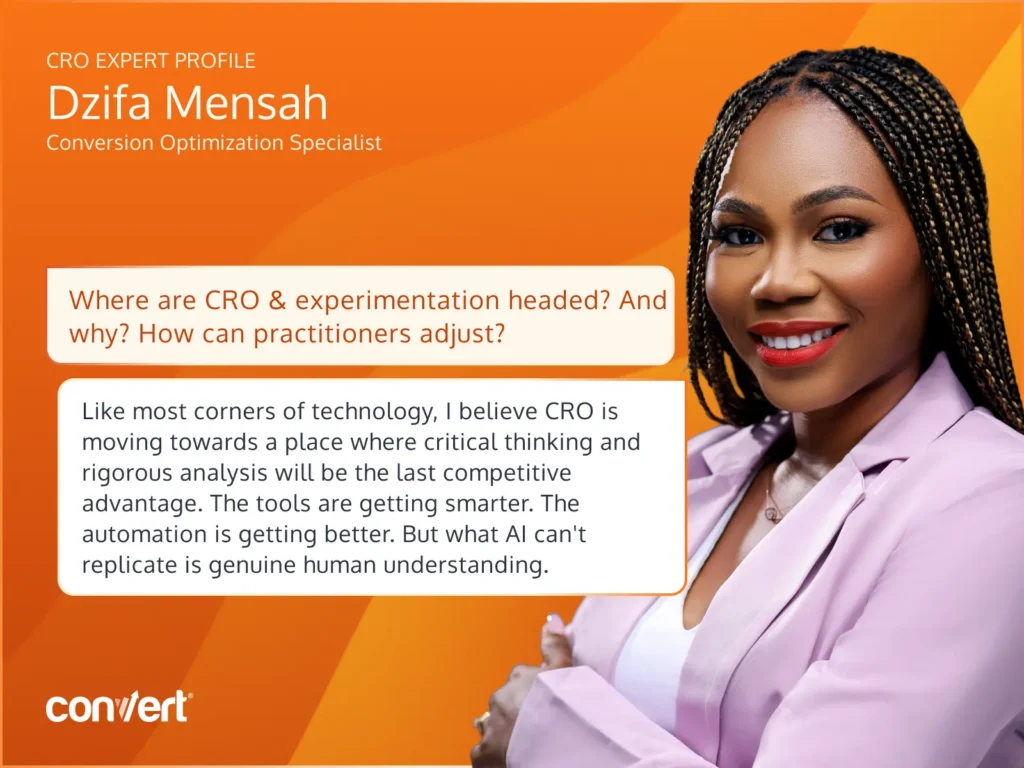
As the tools for A/B testing and data analysis become increasingly democratized and automated, the question arises: what is the future of the human CRO practitioner? Mensah argues that critical thinking and rigorous analysis will become the last remaining competitive advantages.
While AI can identify a drop-off in a conversion funnel, it cannot yet replicate the nuance of a human researcher sitting with a user and noticing a slight hesitation in their voice or a subtle expression of confusion that doesn’t manifest as a mouse click. The future of the discipline, according to Mensah, lies in the “judgment layer”—the ability to know which questions to ask and which results are truly meaningful for the long-term health of a brand.
Strategic Implications for Businesses and Practitioners
The insights provided by Mensah’s decade of experience suggest a several key takeaways for organizations looking to scale their experimentation efforts:
- Invest in Strategy Over Tools: Having the most expensive testing platform is useless without a practitioner who understands user psychology and the scientific method.
- Embrace AI for Efficiency, Not Replacement: Use AI to handle the heavy lifting of data cleaning and report drafting, but keep human oversight on hypothesis generation and final decision-making.
- Prioritize Cultural Nuance: For companies operating in multiple markets, translation is only the first step. True optimization requires understanding the cultural “why” behind user actions.
- Redefine Metrics for Your Industry: Success in one sector (like e-commerce) does not always translate to another (like non-profits). Metrics must be aligned with the core emotional and practical drivers of the user.
As digital competition continues to intensify, the work of specialists like Dzifa Mensah highlights that the most effective way to improve a business’s bottom line is to start by improving the human experience. The shift from “doing tasks” to “directing outcomes” marks a new era in digital marketing—one where the craft of thinking is valued above the mechanics of execution. For practitioners, the message is clear: stay curious, double down on analytical instincts, and never lose sight of the real person behind the data point.


 Asro
Asro
 Dwi Wanna