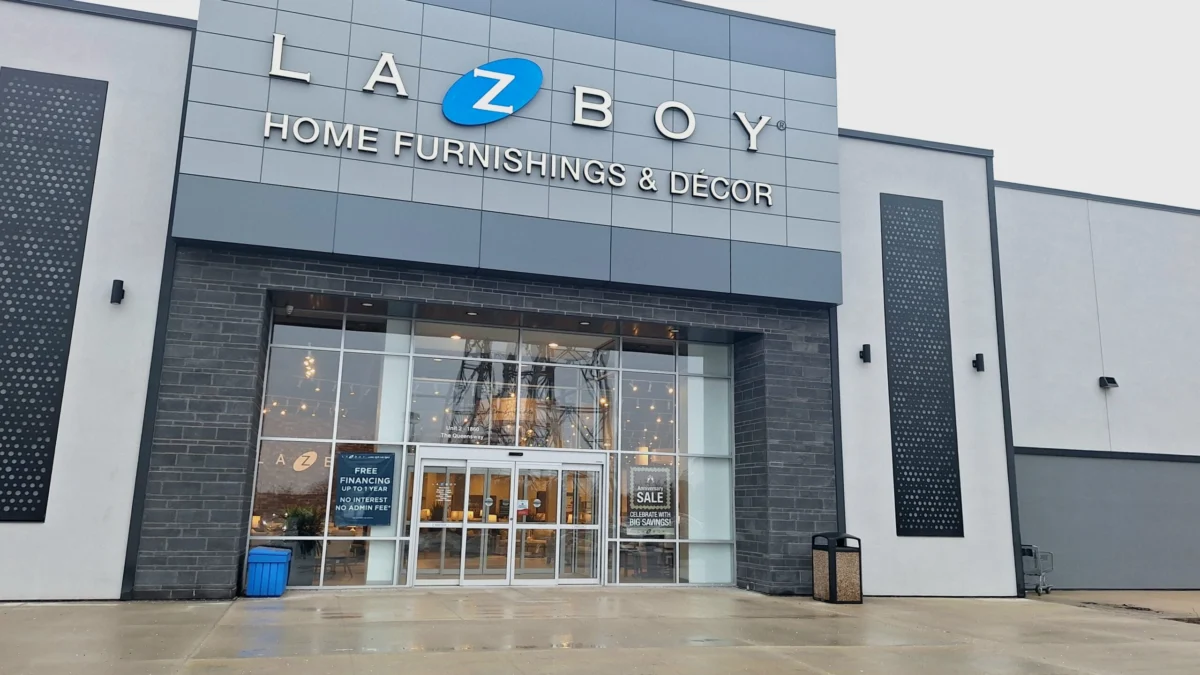
La-Z-Boy Incorporated, a stalwart in the furniture manufacturing and retail sector, announced its fiscal year 2026 results, concluding on April 25th. The company reported consolidated sales that remained flat, holding steady at $2.13 billion for the full fiscal year, a modest 1% increase from the prior year. While top-line growth was subdued, the company demonstrated considerable operational efficiency, with its operating margin expanding to 7.2% in the fourth quarter of fiscal year 2026, a notable improvement from the 5.2% recorded in the same period of the previous fiscal year. This surge in profitability, despite stagnant sales, signals a strategic focus on cost management and operational excellence.
The fiscal fourth quarter closed with consolidated sales of $570 million. The improved operating margin in Q4 was attributed by the company to strong execution across its diverse business segments. Melinda Whittington, President and CEO of La-Z-Boy, expressed optimism about the company’s performance, stating in a press release, “We are pleased with the strong finish to the fiscal year as our fourth quarter margin performance exceeded expectations driven by strong execution across our businesses. We continue to drive our own momentum and are playing offense, led by our Retail business expansion through new stores, acquisition of independent stores, and delighting consumers across our network.” This “playing offense” strategy appears to be multifaceted, encompassing both physical expansion and a consumer-centric approach.
La-Z-Boy holds a significant position in the digital commerce landscape, ranking No. 288 in Digital Commerce 360’s Top 2000 Database. This database meticulously tracks and ranks North America’s largest e-commerce retailers based on their annual web sales, underscoring the company’s engagement with online consumers.
Segmented Performance: Retail Strength Bolsters Wholesale Challenges
A deeper dive into La-Z-Boy’s Q4 performance reveals a bifurcated picture across its business segments. The company’s retail segment, encompassing its 230 company-owned stores, experienced robust growth, with written sales increasing by an impressive 11% during the quarter. This expansion was fueled in part by the strategic addition of four new stores, a combination of new openings and acquisitions of independent retailers. This move aligns with Whittington’s stated strategy of “Retail business expansion through new stores, acquisition of independent stores.”
However, within the retail segment, same-store sales saw a marginal decrease of 2% year-over-year. Despite this decline, La-Z-Boy highlighted this as a sequential improvement compared to previous quarters. The company attributed the reduced store traffic to broader economic factors, but this was partially offset by enhanced conversion rates and a higher average ticket value, indicating that while fewer customers might have been browsing, those who purchased spent more. Delivered sales within the retail segment showed a more positive trend, increasing by 9%.
In stark contrast, the wholesale segment faced headwinds, with Q4 sales declining by 2% to $393 million. This downturn was attributed by Chief Financial Officer Taylor Luebke to a general softening of demand across the furniture industry. Luebke acknowledged the volatility in demand, particularly on the business-to-business (B2B) side, but expressed confidence that the company has strategies in place to mitigate these challenges. He further projected that the impact of this lowered demand would be short-term.
Joybird’s Volatile Landscape and Commitment to Long-Term Success
Joybird, La-Z-Boy’s direct-to-consumer (DTC) subsidiary specializing in mid-century modern furniture, acquired in 2018, presented a mixed performance. While written sales saw a 2% increase in the fourth quarter, delivered sales experienced a significant 10% decline, totaling $32 million. Whittington addressed this by noting that Joybird’s core consumer base has been particularly susceptible to the current economic environment, leading to volatility. Despite these challenges, La-Z-Boy reaffirmed its commitment to making “disciplined investments in the business to position the brand for sustainable long-term success.” This suggests a strategic approach to nurturing Joybird, focusing on long-term market positioning rather than short-term sales fluctuations.
Century Vision Initiative: A Strategic Blueprint for Growth
La-Z-Boy’s strategic roadmap, dubbed “Century Vision,” a brand growth initiative first unveiled in 2022, continues to guide the company’s operations. The company reported strong execution across this strategy, with an increasing focus on its core, vertically integrated North American upholstery business. Whittington emphasized this focus, stating, “We continue to execute well across our Century Vision strategy and are increasingly focused on our core, vertically integrated North American upholstery business, where we have a clear right to win with consumers.” This strategic emphasis aims to leverage La-Z-Boy’s established strengths and market position in upholstery.
A key tenet of Century Vision is to achieve sales and market share growth at double the broader industry rate. To this end, fiscal year 2026 marked a significant period of expansion for La-Z-Boy’s physical retail footprint. The company opened 15 new La-Z-Boy stores and acquired an additional 15, bringing the total number of company-owned stores to 61% of its overall store portfolio. This aggressive expansion strategy reflects a belief in the enduring appeal of physical retail, particularly for large furniture purchases, and a desire to capture greater market share.
The expansion of Joybird’s physical presence has also proven to be a successful tactic, particularly given the brand’s origins in DTC. Whittington highlighted the data-driven approach to store placement for Joybird, stating, “Every time we open a store, and because that consumer is so digitally native and that brand started online, we know where to open those stores. When we do open a store, they’re almost immediately accretive to the overall Joybird portfolio.” This indicates a sophisticated understanding of Joybird’s customer base and a strategic integration of its online and offline channels.
La-Z-Boy remains committed to its expansion targets, projecting the opening of 10 new stores annually, with the aim of increasing its total store count from the current 380 to 450 locations. The company anticipates that the majority of this growth will be driven by company-owned stores, further consolidating its retail presence.
Navigating Tariffs and Trade Policy
In an era of evolving global trade dynamics, La-Z-Boy, like many of its industry peers, is closely monitoring changes in tariffs and trade policies. The company is actively adjusting its strategies to mitigate potential impacts. A significant factor contributing to La-Z-Boy’s relative resilience to tariff fluctuations is its substantial domestic manufacturing base. Approximately 90% of its upholstery production is located in the United States. This strong domestic presence significantly reduces its exposure to international trade disputes and associated costs. As a part of its strategic realignments, La-Z-Boy also closed a UK manufacturing operation during fiscal year 2026, further streamlining its global production footprint.
Looking Ahead: A Focus on Operational Excellence and Strategic Expansion
The fiscal year 2026 results for La-Z-Boy painted a picture of a company navigating a challenging sales environment with a strong emphasis on profitability and strategic growth. While overall sales remained flat, the significant improvement in operating margins is a testament to effective cost management and operational efficiency. The company’s aggressive expansion of its retail footprint, particularly through company-owned stores and strategic acquisitions, underscores its commitment to capturing market share and enhancing its direct consumer engagement. The continued investment in both its core La-Z-Boy brand and its DTC subsidiary, Joybird, albeit with differing performance trajectories, signals a diversified approach to market penetration. As La-Z-Boy moves forward, its ability to adapt to shifting consumer demand, manage operational complexities, and leverage its domestic manufacturing capabilities will be crucial in sustaining its trajectory of profitable growth. The company’s proactive stance on trade policies and its data-driven expansion strategies position it to weather future economic uncertainties and capitalize on opportunities within the dynamic furniture market.