rifanmuazin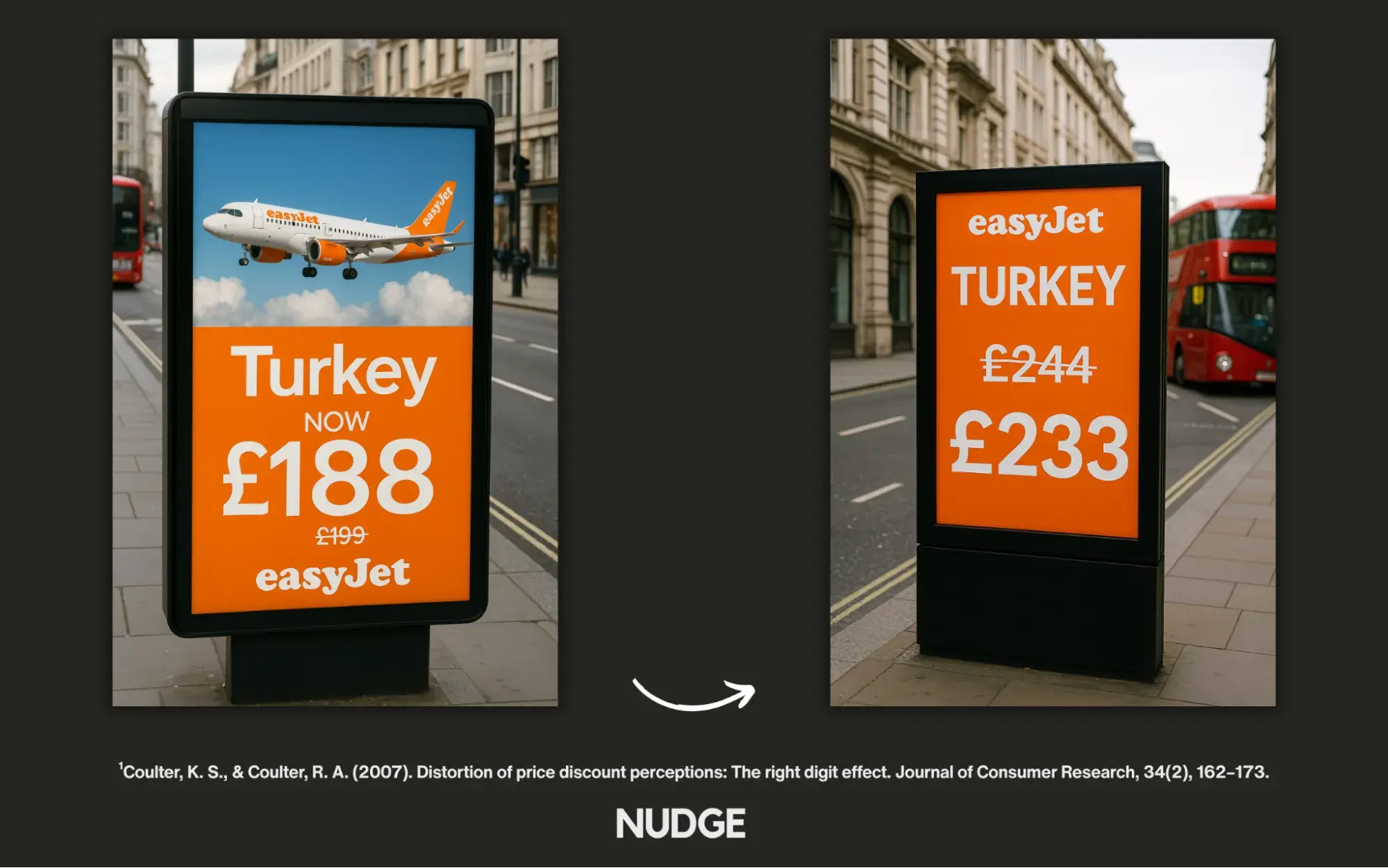
A deep dive into the burgeoning field of behavioral economics reveals that the manner in which prices are presented can dramatically influence consumer purchasing decisions, often more than the actual price point itself. This principle, explored through various academic studies over the past two decades, offers invaluable insights for businesses seeking to optimize their pricing strategies and enhance sales performance. From the seemingly trivial difference in a price’s last digit to the transparency of cost breakdowns, these psychological "nudges" demonstrate the profound impact of cognitive biases on economic behavior.
The Early Insights: Cognitive Fluency and the Power of Small Digits (Coulter & Coulter, 2007)
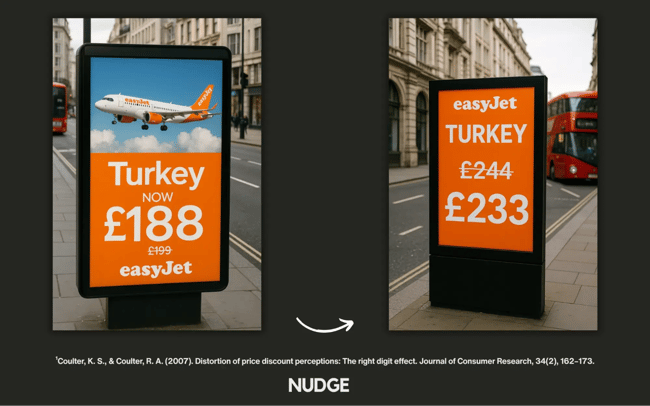
One of the foundational studies illustrating the subtle yet potent effects of price presentation was conducted by Coulter and Coulter in 2007. Their research delved into how consumers perceive discounted prices, specifically examining the role of numerical magnitude in value assessment. The experiment involved two distinct advertisements for flights to Turkey, both offering a £10 discount. Crucially, the advertised base prices differed: one presented tickets at £188, while the other displayed a higher price of £233. Common intuition might suggest that the lower initial price of £188 would inherently be perceived as a better deal, even with the same £10 discount applied. However, the study yielded a counter-intuitive finding: customers found the cheaper tickets at £188 to feel like a worse value.
The researchers attributed this surprising outcome to a principle known as cognitive fluency, specifically related to how individuals process and differentiate numbers. Their analysis suggested that people more readily discern and process smaller numerical differences than larger ones. For instance, the perceived gap between ‘4’ and ‘3’ feels more distinct and significant to the human mind than the difference between ‘9’ and ‘8’, even though both represent a numerical difference of one. Applying this to pricing, consumers were more inclined to purchase when the discounted prices ended in smaller digits (ee.g., a discount from £244 to £233) compared to those ending in higher digits (e.g., a discount from £199 to £188). In the case of the Turkey flights, the £188 price (ending in 8) likely felt less "discounted" than if it had ended in a lower digit, despite the actual saving being identical.
This phenomenon highlights the sophisticated interplay between raw numerical data and human psychological processing. It suggests that when designing promotional offers, marketers should consider not just the monetary value of the discount, but also the visual and cognitive impact of the resulting price. A strategic implication drawn from this research is that businesses offering discounts should aim for sale prices that conclude with digits below five, leveraging the inherent human tendency to perceive smaller numbers as more distinct and therefore, the discount as more significant. This finding has permeated various retail sectors, influencing everything from sale tags in clothing stores to online travel booking platforms, where optimizing the perceived value of a deal is paramount. A marketing strategist commenting on this might emphasize, "It’s not just about the absolute saving; it’s about making that saving feel impactful. The human brain is wired to respond to subtle cues, and the last digit of a price is a powerful, often overlooked, one."
Deconstructing Value: The Impact of Unit Pricing on Perception
Beyond the final digits of a discounted price, the way a total cost is presented can also profoundly shape consumer perception of value. Research consistently demonstrates that breaking down a larger sum into smaller, more manageable units can make a product appear significantly more affordable and appealing. This strategy taps into cognitive biases related to mental accounting and the ease of processing smaller numbers.

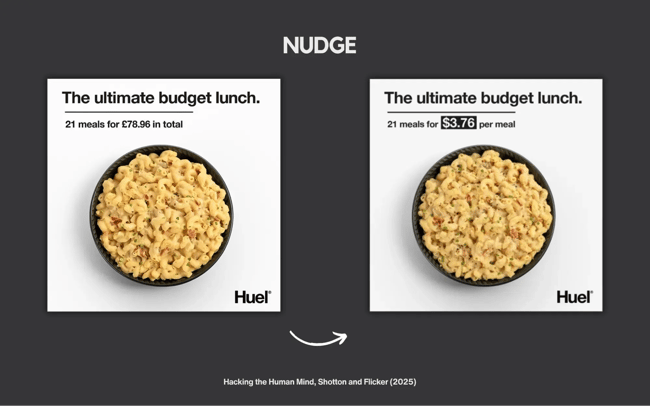
A practical illustration of this comes from a comparison of advertisements for a budget lunch from Huel. One advertisement displayed the total cost for 21 meals at £78.96. The alternative advertisement, however, presented the price on a per-lunch basis: $3.76 per meal. The studies conducted by researchers like Richard Shotton and Michael Aaron Flicker, documented in their influential book Hacking the Human Mind, found that advertisements featuring the price broken down per unit consistently outperformed those showing only the aggregate cost. The lower, per-unit price led shoppers to perceive a superior deal.
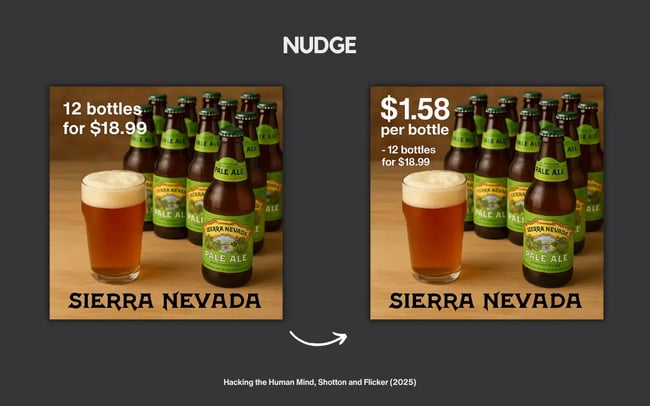
To validate this, Shotton and Flicker conducted a study involving 282 shoppers. Participants were divided into groups and presented with different pricing frames for Sierra Nevada Pale Ale. Half of the group saw the price as $18.99 for 12 bottles, representing the total cost. The other half was informed of the price per unit: $1.58 per bottle. The results were striking: among those who viewed the per-bottle price, 28.6% rated the value as "good" or "very good." This was more than double the 13.7% who held the same positive perception when only shown the total price.
This disparity underscores a fundamental psychological principle: large numbers can be intimidating and trigger a sense of expense, whereas smaller, unit-based figures feel more approachable and justifiable on an individual basis. By framing the cost per unit, businesses effectively reduce the cognitive load on the consumer, making the purchase decision feel less significant and more reasonable. This strategy is particularly effective for subscription services, bulk purchases, or any product sold in multi-packs, where the aggregate cost might seem high, but the individual unit cost is quite low. An economist might explain this as mitigating the "pain of paying" by segmenting the perceived expenditure, making each individual unit’s cost seem negligible in isolation. The implication for businesses is clear: when selling in quantity, highlight the attractive per-unit price to make the overall offer irresistible.
Strategic Upselling: Leveraging Differential Price Framing (Hardisty, 2019)
For companies aiming to encourage customers to opt for premium versions of their products or services, the framing of incremental costs is paramount. Research suggests that presenting the difference in price as an add-on, rather than a new total, significantly increases the likelihood of an upgrade. This technique, known as differential price framing, skillfully exploits how consumers evaluate choices and costs.
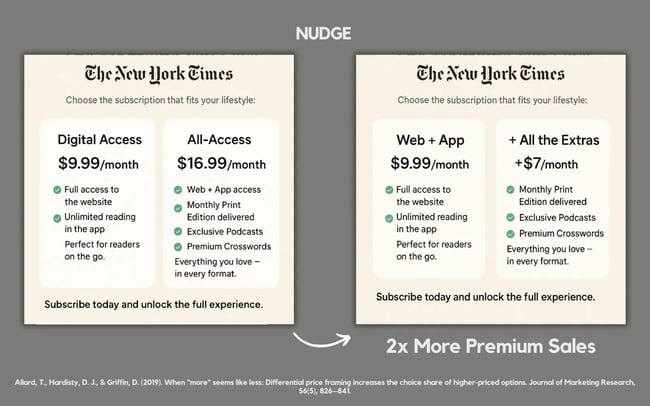
A compelling 2019 experiment by David Hardisty at the University of British Columbia demonstrated this effect using New York Times subscriptions. Two groups of potential subscribers were presented with different pricing structures for the same two subscription plans:
- Group A: Saw two distinct plans. The "Web + App" subscription was priced at $9.99 per month, and the "All Access" plan (which included additional features) was priced at $17 per month. Here, consumers had to compare two absolute price points.
- Group B: Was presented with the same "Web + App" subscription at $9.99 per month. However, the "All Access" plan was framed differently, labeled as "+ All the Extras" available for an additional $7 per month. In this scenario, the premium option was presented as a small surcharge on the base plan, rather than a standalone, higher-priced alternative.
Despite the total price for the "All Access" plan remaining identical ($9.99 + $7 = $16.99, effectively $17), Group B chose the premium plan twice as often as Group A. The psychological rationale behind this outcome is that an additional $7 feels considerably easier to justify and integrate into one’s budget than committing to a new total price of $17. The human mind tends to anchor on the initial lower price and perceive the increment as a smaller, more digestible cost, rather than re-evaluating the entire expenditure. This minimizes the perceived "loss" associated with choosing the more expensive option.
This finding has profound implications for any business with tiered product offerings, upgrades, or add-on services. Instead of presenting a premium package as a completely separate, higher-priced item, marketers can significantly boost adoption rates by framing it as a modest "surcharge" or an "upgrade fee" on a more basic option. This strategy is widely employed in software subscriptions, airline seat upgrades, and various service industries, demonstrating its versatility. A consumer psychologist might explain that this taps into our innate tendency to seek incremental gains while minimizing perceived losses, making the "extra" feel like a value-added bonus rather than a steeper financial commitment.
Building Trust Through Transparency: The Harvard Soup Study (2020)
In an era where consumers increasingly demand authenticity and ethical practices from brands, price transparency has emerged as a powerful tool for building trust and justifying value. A groundbreaking study conducted at Harvard in 2020 highlighted how openly revealing the costs associated with a product can significantly boost sales, even for everyday items.
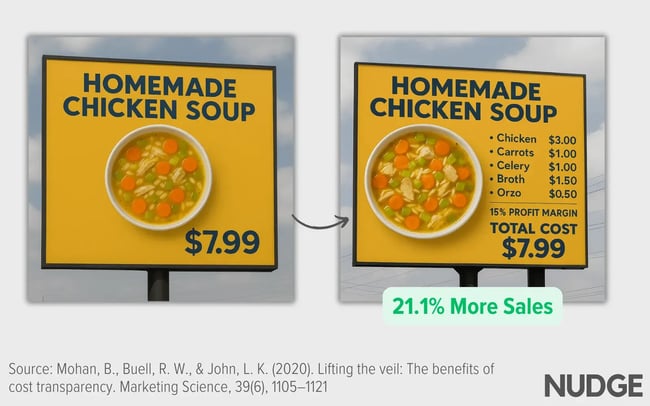
The experiment, which famously gained traction after being shared by marketing expert Phill Agnew, centered around a simple bowl of chicken soup. Two advertisements were tested: one displayed the soup at a straightforward price of $7.99. The second, however, adopted a radical approach to transparency. It presented a detailed breakdown of all the ingredients used in the soup, their individual costs, the operational overheads, and the profit margin, before finally arriving at the $7.99 selling price. The surprising results of this experiment challenged conventional wisdom about pricing.
The initial study was conducted in a Harvard canteen, where researchers meticulously tracked actual soup purchases. The findings were unequivocal: when the costs and profit margins were made visible to customers, soup sales increased by a remarkable 21%. This substantial boost suggests that transparency doesn’t just foster goodwill; it directly translates into tangible commercial benefits. By demystifying the pricing structure, the vendor effectively invited customers into the production process, allowing them to understand and appreciate the value proposition. This reduces perceived exploitation and cultivates a sense of fairness.
The takeaway from the Harvard study is that price transparency can be a potent differentiator. In industries where the perceived value of a product might not be immediately obvious, or where consumers are often skeptical of pricing, revealing the underlying costs can transform how a product is viewed. This approach resonates strongly with modern consumers who prioritize ethical sourcing, fair labor practices, and sustainable production—all aspects that can be implicitly communicated through transparent pricing. A business ethics commentator might note that this strategy aligns with a broader societal shift towards corporate accountability, where companies are rewarded for openness and honesty, rather than obfuscation. It transforms a mere transaction into an act of informed consent, deepening the customer-brand relationship.
Overcoming Indecision: The Necessity of Visible Differentiation (South Korean Study)
One of the most insidious barriers to consumer purchasing is decision paralysis, a phenomenon where an abundance of choice or a lack of clear differentiation between options leads to inaction. A fascinating South Korean study illuminated how even minuscule differences in price can dramatically alleviate this paralysis and spur purchases.
The experiment involved participants being given the equivalent of $1 (₩1,000) and presented with a choice between two identical packs of gum. Both packs were of the same flavor, brand, and were initially priced identically at ₩630. In this scenario, only 46% of the participants made a purchase, meaning more than half walked away without buying anything, despite having sufficient funds and a clear need (implied by the experimental setup). This outcome underscores the crippling effect of having no discernible reason to choose one option over another, even for a low-cost item.
The researchers then introduced a minor but crucial alteration. They adjusted the prices slightly: one pack was priced at ₩620, while the other was priced at ₩640. This created a tiny 20-won difference between the two identical products. The impact was extraordinary: the purchase rate soared to 77%, representing a substantial 31-point jump in sales.
This dramatic shift highlights the human aversion to making arbitrary choices. When options are indistinguishable, the decision-making process becomes cognitively burdensome and unsatisfying. The slight price difference, however inconsequential in monetary terms, provided a rational basis for choice. It offered a ‘reason’ to pick one over the other, even if that reason was simply "it’s slightly cheaper." This phenomenon relates to the broader concept of the "paradox of choice," where too many identical options can be overwhelming, but too few (or perfectly identical) can also lead to inertia.
For businesses, the lesson is clear: avoid presenting truly identical options without any distinguishing factor. Even if products are fundamentally very similar, finding or creating differentiating elements—be it a marginal price difference, a subtle feature variation, or even a different packaging color—can significantly enhance conversion rates. This applies across diverse product categories, from consumer electronics with slightly varied specifications to service plans with marginal differences in benefits. A product designer or marketer should constantly seek to articulate and highlight these differentiators, no matter how small, to guide consumers towards a confident purchase.
The Cumulative Impact of Small Nudges on Modern Marketing
The series of studies discussed—from the 2007 findings on small digit pricing to the 2020 Harvard transparency experiment and the South Korean gum study—collectively underscore a powerful truth in consumer psychology: the effectiveness of pricing strategies often lies not in radical overhauls, but in subtle, psychologically informed "nudges." None of the tactics explored involved changing the inherent quality, functionality, or core offering of the products themselves. Instead, each approach meticulously manipulated the presentation of the price, demonstrating how minor shifts in framing can dramatically alter consumer perception and purchasing behavior.
These insights are a cornerstone of modern behavioral economics and provide a robust framework for businesses across all sectors. They emphasize that consumers are not purely rational actors; their decisions are heavily influenced by cognitive biases, emotional responses, and the context in which information is presented. By understanding these underlying psychological mechanisms, marketers can craft more effective pricing strategies that resonate deeply with consumer instincts.
The implications for contemporary marketing and sales are vast. Businesses are encouraged to move beyond simplistic cost-plus or competitor-based pricing models and embrace a more nuanced, psychology-driven approach. This involves:
- A/B Testing and Data Analytics: Continuously experimenting with different price presentations and analyzing consumer responses to identify the most effective "nudges" for specific products and target audiences.
- Holistic Customer Journey Consideration: Integrating these pricing insights at every touchpoint where price is displayed, from initial advertisements and product pages to checkout and post-purchase communications.
- Ethical Considerations: While these tactics are powerful, businesses must employ them responsibly, ensuring transparency and avoiding manipulative practices that could erode long-term customer trust. The Harvard soup study, for example, shows that transparency, when genuine, can be a powerful trust-builder.
- Adaptability: Consumer perceptions and market dynamics evolve, necessitating continuous research and adaptation of pricing strategies. What works today might need refinement tomorrow.
In conclusion, the journey through these psychological pricing studies reveals that the human mind is a complex landscape, and navigating it successfully requires more than just competitive pricing. It demands an understanding of how value is perceived, how choices are made, and how subtle cues can trigger powerful behavioral responses. By strategically employing small, psychology-backed nudges in price presentation, businesses can significantly enhance product appeal, overcome consumer hesitation, and ultimately drive sales, proving that sometimes, the smallest changes yield the biggest impact.