rifanmuazin
Generating compelling and effective Public Relations (PR) campaign ideas stands as a significant challenge for marketers and communicators. Beyond the initial spark of creativity, the arduous tasks of validating potential concepts, securing the necessary time for development, and confidently predicting success often test even the most seasoned professionals. However, a rigorous, research-led methodology can drastically elevate the probability of a PR campaign achieving its objectives, transforming speculative ideation into a strategic, evidence-based process. This article outlines a comprehensive two-step framework designed to foster successful campaigns, leveraging robust research, content analysis tools like BuzzSumo, and insights gleaned from exemplary industry efforts. The ultimate goal is to move beyond intuition, grounding creative endeavors in verifiable audience interest and emotional resonance.
Phase 1: Unearthing Resonant Themes and Emotional Triggers
The foundational step in crafting a high-impact PR campaign involves a deep dive into understanding content themes and the emotional responses they consistently elicit. Campaign success, in this context, is primarily measured by securing media coverage and high-quality backlinks from authoritative publications, with social engagement serving as a crucial secondary Key Performance Indicator (KPI). This initial phase does not necessitate a fully formed campaign idea; rather, it’s about identifying fertile ground for ideation. The pressure to devise an immediate answer should be eschewed in favor of exploratory research.
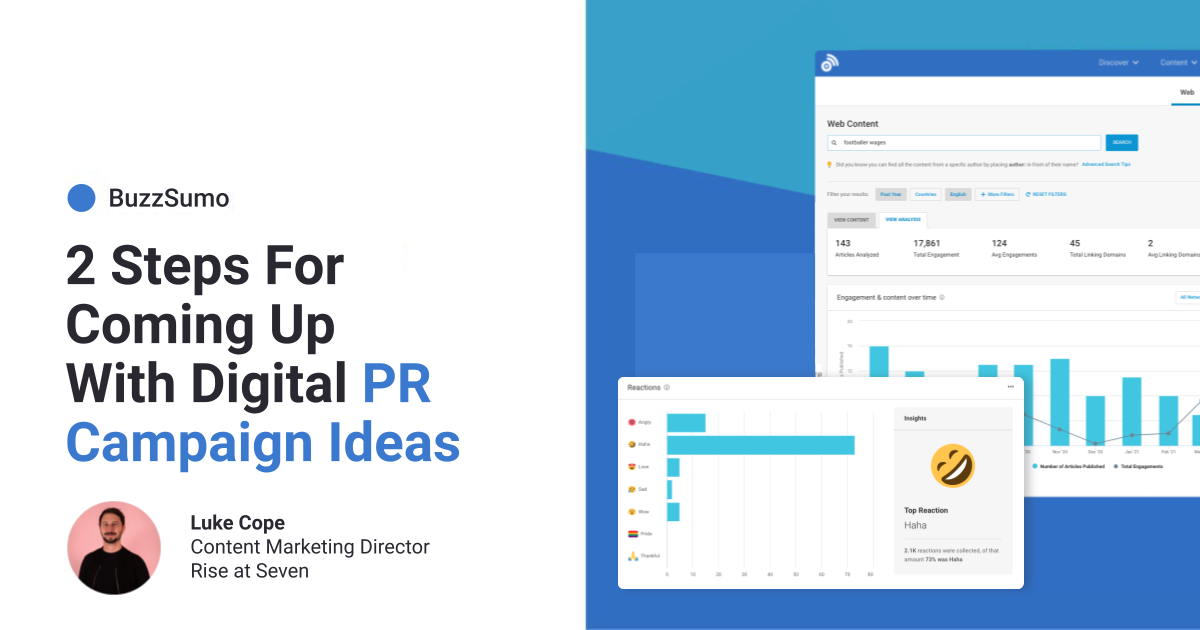
The process begins by systematically utilizing content analysis tools, such as BuzzSumo’s Content Analysis Report. For a brand specializing in honeymoon packages, for example, the research would logically commence with the core product term, "Honeymoons." This initial query would then expand outward to related yet broader concepts, like "Engagement rings" or "Weddings," until the thematic scope becomes too far removed from the client’s core offering. This iterative exploration is critical for identifying a spectrum of topics that resonate with the target audience and media.
The objective is to discern themes that demonstrate two key characteristics: consistent discussion and consistent sharing/linking. These indicators reveal not only what content is being produced but, more importantly, what content captures public and journalistic attention, thereby earning valuable organic reach and credibility. The BuzzSumo tool, through its analysis of article publication trends over time and engagement metrics, allows strategists to identify opportunities where content volume meets significant reader interaction.
Beyond mere thematic relevance, understanding the emotional undercurrents of popular content is paramount. Emotional responses are powerful drivers of sharing and engagement. Content that evokes strong emotions—be it joy, anger, sadness, awe, or surprise—tends to perform exceptionally well in PR. By analyzing the sentiment and reactions associated with articles on various themes, PR professionals can strategically align their campaigns with emotions proven to resonate with their audience. Research into consumer psychology consistently demonstrates that content eliciting high-arousal emotions (both positive and negative) is significantly more likely to be shared and discussed, thereby increasing its PR potential.
Case Study: A World Without Light Pollution
Consider a campaign developed for a client specializing in star maps. The initial product theme, "Star maps," while relevant, was deemed insufficient in isolation to generate a broad-reaching PR campaign. This necessitated branching out into secondary themes. The research progression was methodical:
- Product Theme: Star maps (limited scope for broad PR).
- Secondary Theme 1: Supermoons (high social engagement, regular occurrence for reactive PR).
- Secondary Theme 2: Night sky (significant social engagement).
- Secondary Theme 3: Light pollution (high social engagement, current relevance, broad scope for ideas).
The "light pollution" theme emerged as particularly compelling. Data indicated it was consistently discussed, and importantly, its popularity was surging at the time of the research. Several external factors contributed to this heightened interest: SpaceX’s satellite launches were drawing attention to increasing light pollution, and the global COVID-19 pandemic had sparked widespread discussions about environmental pollution in general. This confluence of sustained interest and timely relevance signaled an opportune moment for a campaign launch.
Further analysis of public reactions to articles concerning light pollution revealed two dominant emotional responses: sadness and a profound sense of "wow" or awe. This emotional insight proved invaluable, guiding the campaign’s creative direction. It became clear that the campaign needed to be highly visual to evoke the "wow factor" and intellectually stimulating to make people contemplate the ramifications of light pollution. The resulting campaign, which visually depicted major cities without light pollution, powerfully tapped into these identified emotions, offering both a lament for what has been lost and an awe-inspiring glimpse of what could be. The timing was critical; launching a visually stunning campaign on light pollution amidst public discourse on environmental issues amplified its resonance and media appeal.
Case Study: The Footballer Car Cost Calculator
Another illustrative example involved a client focused on private number plates. Initial research into the "Private number plates" theme revealed some humorous content but not enough depth for a robust campaign. The strategy then shifted to exploring aspirational lifestyle themes.
- Product Theme: Private number plates (some content, but limited for broad appeal).
- Secondary Theme 1: Celebrity cars (numerous articles published).
- Secondary Theme 2: Footballers’ cars (abundant content, notable public reactions in comments sections).
A deeper dive into the comments section of articles about footballers’ cars unveiled a potent emotional landscape: strong reactions characterized by anger, competitiveness, and a tendency for readers to compare their own financial situations with those of elite athletes. This direct insight into reader psychology was a pivotal discovery. The observation that people automatically engaged in literal comparisons inspired the concept of an interactive calculator. This tool would allow users to directly compare their earnings and time required to afford the luxury vehicles owned by footballers, transforming a passive reading experience into an active, emotionally charged interaction. The inferred public sentiment from these comments provided a direct mandate for a campaign that would tap into these feelings of aspiration, envy, and perhaps even resentment, ensuring high engagement.
The success of both these campaigns underscores a critical lesson: a well-researched understanding of prevailing content themes and the specific emotions they evoke among the target audience is a powerful precursor to a winning PR strategy. This data-driven approach removes much of the guesswork, allowing strategists to confidently pursue ideas that are inherently aligned with public interest and emotional drivers.
Phase 2: Optimizing Format and Adding Strategic Depth
The second crucial step in developing a successful PR campaign involves selecting the optimal format for the idea and imbuing it with significant depth. An inherently strong concept can falter if presented in an inappropriate medium. The format must amplify the campaign’s core message and emotional appeal. For instance, the "light pollution" campaign, designed to evoke a "wow factor," would have been significantly diluted if presented merely as a text-heavy blog post. Different campaign objectives and emotional targets necessitate varied formats, ranging from interactive data visualizations and calculators to static infographics or immersive multimedia experiences.
Format Innovation: The Light Pollution Campaign Revisited
For the light pollution campaign, a simple visual representation of redesigned skylines was a good start. However, the integration of a "before-and-after" slider, allowing users to interactively compare polluted cityscapes with their imagined pristine, star-filled counterparts, elevated the experience. This interactive element was not merely a stylistic choice; it directly enhanced the emotional impact, transforming static imagery into an engaging, thought-provoking experience. The user became an active participant in witnessing the potential beauty, thus deepening the emotional connection.
Beyond format, adding depth is paramount. This involves exploring multiple angles, incorporating diverse data points, and considering broader applicability. For the light pollution campaign, the initial strong angle was the statistic that 85% of Americans had never seen the Milky Way. To deepen this, data from the Bortle scale (a measure of sky darkness) was integrated, illustrating the stark contrast between the most light-polluted cities (Bortle 10) and their potential appearance under optimal conditions (Bortle 1). Furthermore, while the primary focus was the USA, the campaign was expanded to a global scale, acknowledging light pollution as a universal issue. This multi-layered approach provided a richer narrative and multiple hooks for media outreach, ensuring broader relevance and appeal. Journalists could cover it from an environmental perspective, a travel angle, or a scientific one, maximizing media pickup.
The "Touch the Germs" Campaign: Interactivity and Societal Impact
Another compelling example of format and depth working in concert is the "Touch the Germs" campaign (from Staveley Heads). While the specifics of its initial research themes are not detailed, the campaign’s success hinged on its innovative format. What could have been a straightforward graphic or a simple data list showcasing germ distribution was transformed into an interactive experience featuring a "microscope function." This interactive element allowed users to explore the unseen world of microbes in a highly engaging manner, making the abstract concept of germs tangible and impactful. The campaign effectively translated complex scientific data into an accessible and captivating user experience, which is crucial for public health messaging.
This campaign’s depth and chosen format resulted in a high volume of media links and, notably, garnered direct commentary from public figures, including the Mayor of London, underscoring its significant societal impact. The interactive nature and the ability to visualize an otherwise invisible threat provided a powerful platform for public education and engagement, demonstrating how an expertly crafted format can amplify a critical message to a broad audience and even influence policy discussions. The Mayor’s reaction inferred a recognition of the campaign’s ability to raise public awareness on a critical urban health issue.
The "Space Junk" Visualization: A Case for More Depth
The "Who owns all the space junk?" piece from Aira serves as an instructive example of a campaign with a strong theme that, while visually appealing, could have benefited from even greater depth. The visualization of space junk broken down by country was commendable, yet the vastness of the subject matter presented opportunities for further expansion. The piece effectively highlighted a pressing global issue, but its potential for sustained media interest could have been amplified.
Potential avenues for added depth could have included:
- Types of Space Junk: Categorizing and visualizing different forms of orbital debris (e.g., defunct satellites, rocket stages, mission-related debris), offering a more granular understanding of the problem.
- Historical Comparison: Illustrating the growth of space junk from the 1960s to the present, highlighting the accelerating problem and demonstrating a chronological context.
- Future Projections: Modeling potential scenarios for space junk accumulation over the next century and its implications for future space exploration, emphasizing the urgency of the issue.
- Environmental Impact: Discussing the risks of orbital collisions and their potential to create more debris (Kessler Syndrome), linking the abstract concept to tangible dangers.
- Solutions and Innovations: Presenting current and future initiatives to mitigate space junk, offering a forward-looking and constructive dimension to the campaign.
Despite its merits, this example highlights that even a strong visual concept on a pertinent topic can be enriched further by exploring additional data layers and narrative angles, maximizing its potential for media pickup and public engagement. A comprehensive approach to data visualization and storytelling often yields superior long-term results.
Simplicity in Design: iPods Visualized as Vinyl
Not all effective formats need to be technologically complex. Mark Johnstone’s "iPods visualized as vinyl" campaign exemplifies the power of elegant simplicity. This idea leveraged a clever visual juxtaposition, merging two iconic forms of music consumption. The simplicity of the concept, combined with its immediate visual appeal and nostalgic resonance, made it highly shareable and memorable. It demonstrates that the "best" format is not always the most intricate but the one that most effectively communicates the core idea and evokes the desired emotional response with clarity and impact. The fusion of past and present technology, rendered visually, created an instant connection with audiences across generations, tapping into both nostalgia and technological appreciation. This campaign proved that sometimes, a simple, well-executed visual concept can outperform more complex interactive experiences if it perfectly aligns with audience sentiment.
The Footballer Car Calculator: Depth Through Data Angles
Revisiting the footballer car calculator campaign, its depth was further enhanced by developing numerous outreach angles derived from simple data comparisons. These angles included:
- The number of years it would take an average person to afford a footballer’s car, highlighting economic disparity.
- Comparison of weekly wages versus car costs, illustrating the stark financial realities.
- Regional variations in affordability, adding a localized dimension.
- The most expensive cars owned by footballers versus their average salaries, fueling debate and discussion.
- The overall collective value of cars owned by a specific football team or league, providing a striking aggregate statistic.
These data-driven angles provided multiple entry points for journalists, allowing the campaign to be framed in various contexts, from financial news to lifestyle and sports reporting. This strategic layering of data ensured that the campaign appealed to a wide range of publications and audiences, maximizing its media coverage. The calculated angles transformed raw data into relatable narratives, making the campaign not just informative but emotionally impactful.
Ultimately, the confluence of a well-chosen format and rich, multi-faceted depth is critical for a campaign to truly make a splash. When an idea is presented in a way that is not only engaging but also provides ample material for diverse narratives, its chances of securing widespread media coverage and resonating deeply with the public are significantly enhanced. This strategic synergy between concept, presentation, and data-driven depth is the hallmark of successful PR.
Strategic Outreach and Validation
Beyond ideation and execution, effective outreach and internal validation are crucial for campaign success.
Re-using Initial Research for Targeted Seeding Lists
The initial research conducted to identify resonant themes and emotional triggers offers a strategic advantage in the outreach phase. By revisiting the BuzzSumo Content Analysis Report, PR professionals can easily export lists of journalists and publications that have previously covered the identified campaign subjects. This creates a pre-qualified seeding list, ensuring that pitches are sent to highly relevant contacts who have already demonstrated an interest in the topic. BuzzSumo’s outreach tools facilitate this by allowing users to save journalists to projects and export their contact details, streamlining the targeting process. This targeted approach significantly increases the likelihood of a journalist opening and considering a pitch, as it aligns directly with their established beat and editorial interests. Further guidance on crafting effective PR pitches and securing media coverage can be found in specialized studies, such as BuzzSumo’s analysis of 600,000 journalist interactions, which provides actionable insights into successful pitching strategies, emphasizing personalization and relevance.
Gaining Internal Sign-off with Data-Backed Confidence
One of the often-overlooked benefits of a data-driven approach to campaign ideation is its power in securing internal buy-in. Campaign ideas are frequently subjective, leading to internal debates among team members, clients, and management. By presenting a campaign concept supported by robust research into themes, audience engagement, and emotional resonance, PR professionals can remove much of this subjectivity. Demonstrating that an idea is built upon verifiable data—showing consistent media coverage, high social shares, and strong emotional responses to related topics—instills confidence.
The BuzzSumo Content Analysis Report, for instance, allows for quick reporting on engagement and emotion across multiple themes and publishers. This tangible evidence can be packaged into a compelling pitch to stakeholders, illustrating why a particular idea is not merely creative but strategically sound and likely to succeed. This data-informed approach transforms a subjective proposal into an objective business case, significantly increasing the probability of gaining swift and enthusiastic approval for campaign development. This analytical validation is particularly potent in corporate environments where decisions are increasingly driven by metrics and proven efficacy.
Key Takeaways and Future Outlook
The landscape of Public Relations is continuously evolving, yet the core principles of captivating an audience and securing media attention remain. The framework outlined herein emphasizes a strategic, research-first approach to campaign ideation, moving away