The landscape of search engine optimization (SEO) and artificial intelligence (AI) underwent significant transformations in April 2026, as highlighted in the latest monthly SEO update featuring experts Carolyn Shelby and Alex Moss. This period marked a critical pivot point, with Google introducing advanced AI agent signals, refining its core and spam algorithms, and reaffirming the paramount importance of high-quality, authoritative content. The overarching message from these developments is clear: simply increasing content volume is not only ineffective but can actively hinder online visibility in an increasingly AI-driven web. The shift signals a deeper integration of AI into the very fabric of search, moving towards an era where AI agents manage and interpret information, demanding a strategic re-evaluation from publishers and marketers alike.
The Emergence of AI Agents in Search and Web Interaction
April 2026 brought forth concrete indicators of Google’s strategic move towards an AI-agent-centric web. A notable development was the introduction of a new “Google-agent” user agent. This technical update signals a more explicit and sophisticated support for AI-driven crawling and interaction, moving beyond traditional web crawling performed by Googlebot. The Google-agent user agent suggests that Google’s AI entities will soon, or already do, interact with websites in more dynamic and agentic ways, potentially performing complex tasks, engaging with interactive elements, and extracting information with a higher degree of contextual understanding. This evolution necessitates webmasters and developers to consider how their sites are structured not just for human users and traditional crawlers, but for intelligent agents capable of more nuanced engagement.
Parallel to Google’s internal developments, proposals such as WebMCP (Web Machine Comprehension Protocol) gained traction. WebMCP aims to standardize how AI agents interact with websites, providing a framework for ethical and efficient machine-to-website communication. This protocol could define rules for data access, rate limiting, and content interpretation specifically tailored for AI agents, similar to how robots.txt guides traditional crawlers. The initiative reflects a growing industry-wide recognition that as AI agents become more prevalent, a standardized approach is essential to maintain web integrity, prevent misuse, and ensure equitable access to information.
Further emphasizing this directional shift, Google leadership, including CEO Sundar Pichai, articulated a vision where search is evolving into an “AI agent manager.” This prediction implies a future where search engines do not merely provide lists of links but act as orchestrators of various AI agents, deploying them to fulfill complex user queries or tasks. For instance, a user might ask Google to “plan a trip to Paris,” and the AI agent manager would then coordinate specialized agents to find flights, accommodations, local attractions, and even generate a personalized itinerary. This profound transformation fundamentally redefines the role of search, moving it from an information retrieval tool to a proactive task completion platform. The implications for content creators are immense: optimizing for visibility will increasingly mean optimizing for how AI agents can understand, synthesize, and utilize content to fulfill user tasks, rather than solely ranking for keywords.
Google’s Continued AI Advancement and Efficiency
Beyond the architectural shift towards AI agents, Google continued to push the boundaries of AI capabilities and efficiency in April 2026. A significant technical breakthrough was the introduction of TurboQuant, a novel approach to AI model compression. TurboQuant promises to drastically improve the efficiency of AI models, making them faster, less resource-intensive, and more scalable. In an era where AI models are growing exponentially in size and computational demands, such innovations are crucial. Increased efficiency translates to lower operational costs for Google, faster response times for users, and the ability to deploy more sophisticated AI capabilities across a wider range of services. For web users, this means quicker, more seamless interactions with AI-powered search features, while for developers, it hints at the potential for integrating more complex AI into web services without prohibitive resource requirements.
Concurrently, Google expanded its “task-based features in AI Mode,” refining how users interact with AI-driven search experiences. These features aim to streamline complex multi-step tasks by leveraging AI to understand user intent more deeply and provide actionable outcomes rather than just information. Examples might include AI-powered itinerary planning, comparative shopping guides that consider user preferences, or interactive problem-solving interfaces. This expansion signifies Google’s commitment to making AI a practical, integral part of daily search activities. The shift from a query-response paradigm to a task-completion model demands that website content is not only informative but also structured in a way that AI can easily parse and utilize it for specific actions or recommendations. This could involve clearer calls to action, well-defined product specifications, and structured data that explicitly outlines capabilities or services.
Adapting Web Standards for AI Content and Interpretation
The rise of AI-generated content (AIGC) has presented new challenges and opportunities for search engines, prompting Google to adapt its systems for better interpretation and labeling. In April, Google added AI bot labels to forum and Q&A structured data. This move is critical for distinguishing between contributions made by human users and those generated by AI. In online communities, the proliferation of AI-generated responses, while potentially helpful, can dilute genuine human interaction, spread misinformation, or be used for spamming. By labeling AI contributions, Google aims to provide greater transparency to users and help maintain the integrity of community-driven content. For site owners, this implies a need to implement these labels accurately, ensuring that search engines can correctly categorize and present content, thereby fostering trust with their audience.
Furthermore, Google updated its documentation with “read more” deep link best practices. These guidelines encourage developers to use clear, descriptive deep links within their content that accurately reflect the destination of the link. In an AI-first search environment, where AI agents might synthesize information from various sources or provide direct answers, precise deep linking helps AI models understand the hierarchical structure and relationships within a website’s content. It enables AI to accurately cite sources, provide specific snippets, and guide users to the most relevant sections of a page for further reading. Adherence to these best practices is vital for improving content discoverability and ensuring that AI-powered summaries or direct answers correctly attribute and link back to the original source material, thus driving traffic and maintaining content authority.
Heightened Enforcement and Content Integrity
April 2026 was also marked by Google’s ongoing commitment to refining its algorithms and combating manipulative tactics, underscoring the enduring importance of content integrity. The month saw the completion of Google’s March 2026 spam update and core update. The spam update targeted specific manipulative practices designed to artificially inflate rankings, such as cloaking, doorway pages, and scraped content. These updates are a continuous effort by Google to purify search results and ensure that users are presented with high-quality, relevant information rather than deceptive or low-value content. The core update, on the other hand, typically involves broader changes to Google’s ranking algorithms, affecting how it assesses overall content quality, relevance, and user experience. Such updates often lead to significant shifts in search rankings, rewarding websites that genuinely deliver value and penalizing those that fall short of evolving quality standards.

In a specific crackdown on manipulative tactics, Google introduced updates to its spam policies addressing “back button hijacking.” This malicious practice involves websites altering the browser’s back button functionality to prevent users from returning to the previous page, often redirecting them to unwanted or spammy content. Google’s explicit policy against this tactic, coupled with improved spam reporting tools, signals a zero-tolerance approach to practices that degrade user experience and violate trust. The enhanced reporting mechanisms empower users and webmasters to report such violations more effectively, contributing to a cleaner and safer web environment. For website owners, these updates serve as a strong reminder that technical manipulation, regardless of its sophistication, will ultimately be identified and penalized, reinforcing the need for ethical SEO practices centered on user value.
AI Integration Across Platforms and Tools
The pervasive influence of AI was also evident in the expansion of AI-driven workflows across various platforms and tools, indicating a broader industry adoption trend. Elementor, a popular WordPress website builder, launched “Angie,” an agentic AI designed to assist WordPress users. Angie aims to streamline content creation, design processes, and website management by leveraging AI to generate text, suggest layouts, and optimize elements, empowering users with sophisticated AI capabilities directly within their familiar content management system. This move reflects a growing trend of embedding AI assistance directly into the tools content creators use daily, democratizing access to advanced AI functionalities.
Similarly, Cloudflare introduced “EmDash” as a WordPress alternative, while simultaneously continuing its work on agent readiness standards. EmDash likely offers a different approach to website development and management, potentially with built-in AI optimizations or a focus on performance and security tailored for the AI-first web. Cloudflare’s emphasis on “agent readiness” standards further underscores the industry’s preparation for a web dominated by AI agent interactions, focusing on protocols and infrastructure that facilitate efficient and secure communication between AI agents and web resources.
In the competitive AI model landscape, Anthropic released “Claude Design” and previewed “Mythos.” Claude Design suggests a focus on AI-powered creative applications, potentially assisting with design generation, ideation, or optimization. Mythos, likely an advanced iteration or new foundational model, indicates Anthropic’s continued innovation in developing powerful, ethical AI systems, further intensifying the race among AI developers. Not to be outdone, OpenAI tested an “AdsBot” and introduced a ChatGPT ad manager interface. These developments signal OpenAI’s foray into AI-driven advertising, where AI models could potentially create, optimize, and manage ad campaigns with unprecedented efficiency and personalization. This integration of AI into monetization systems has profound implications for digital marketing, potentially leading to more targeted and effective advertising strategies while also raising questions about AI’s role in influencing consumer behavior.
The Enduring Value of Quality and Trust
Amidst these technological advancements, Google consistently reinforced that foundational principles of content quality and authority remain paramount, especially in an AI-driven search environment. Google explicitly stated that “commodity content does not perform well.” Commodity content refers to easily replicable, generic, or low-effort content that offers little unique value or perspective. This includes much of the hastily generated, unedited AI content or repurposed material that lacks depth and originality. As AI systems become more adept at synthesizing information, they increasingly rely on genuinely authoritative, differentiated sources to construct comprehensive and accurate answers. Content that merely rehashes existing information or lacks original insight will struggle to gain visibility, as AI models can often generate similar information more efficiently.
Broader analysis and Google’s communications consistently highlight the critical importance of authority, freshness, and first-party signals. Authority refers to the credibility and trustworthiness of the content creator and the website itself, often built through expertise, reputation, and reliable sourcing. Freshness pertains to the timeliness and up-to-dateness of information, crucial in rapidly evolving fields. First-party signals, such as direct user engagement, brand mentions, and proprietary data, provide strong indicators of a site’s real-world relevance and value. As AI systems synthesize answers, they place a heavier reliance on these trusted, differentiated sources. For publishers, this means investing in original research, expert contributions, unique perspectives, and building a strong brand reputation are more critical than ever. The principle of E-E-A-T (Experience, Expertise, Authoritativeness, Trustworthiness) continues to be the bedrock of successful SEO, ensuring content stands out in an ocean of AI-generated information.
Evolving Metrics for AI Visibility
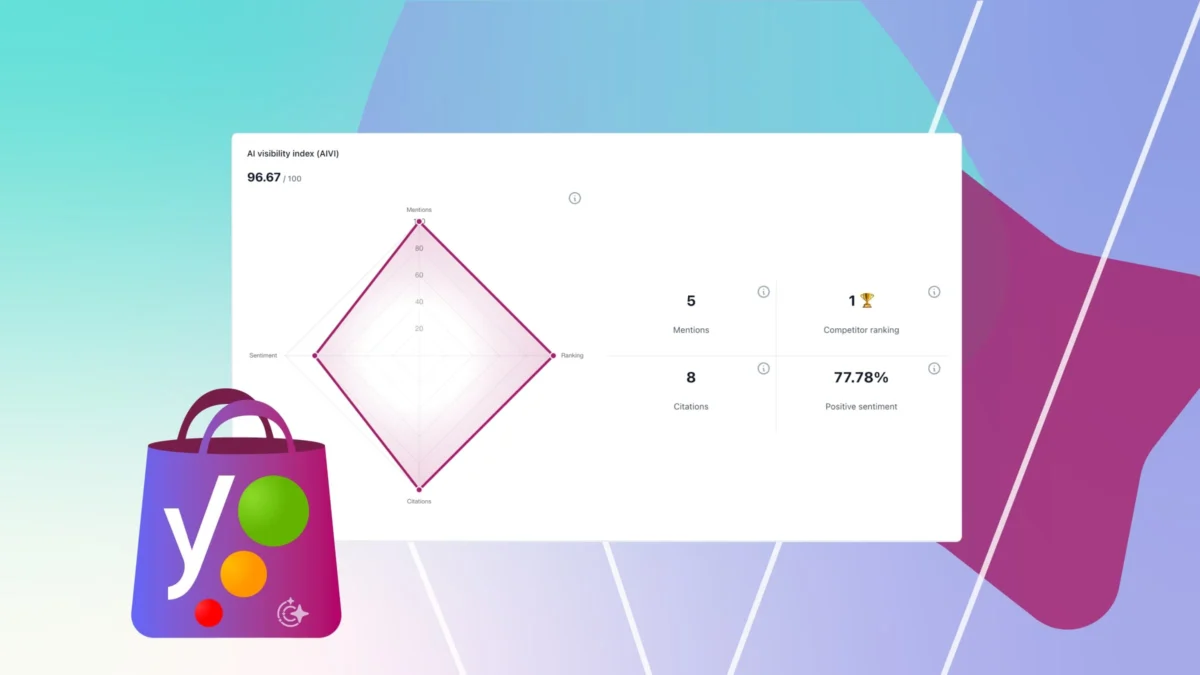
The shift towards an AI-first search paradigm is also beginning to reshape how online visibility is measured and reported. The traditional focus on keyword rankings, while still relevant, is being augmented by new metrics centered around “citation, inclusion, and influence within AI-generated responses.” This means that simply ranking #1 for a specific keyword might become less significant if AI-powered summaries or direct answers synthesize information from multiple sources, potentially without directing users to a single organic result. Instead, the goal shifts to ensuring content is frequently cited, included as a source in AI-generated answers, or demonstrably influences the AI’s understanding and presentation of information.
This evolution necessitates new analytical approaches. Publishers will need to track how often their content is referenced in AI summaries, whether it contributes to AI-driven insights, and its overall impact on user journeys initiated by AI agents. The challenge lies in developing tools and methodologies to accurately measure this “AI visibility,” which extends beyond traditional organic search metrics. It implies a future where SEO professionals will not only optimize for search engine algorithms but also for the interpretability and utility of their content by various AI models, requiring a deeper understanding of natural language processing and knowledge graph integration.
Broader Industry Developments
Beyond Google’s specific updates, April 2026 also saw a continuation of several broader industry trends. Discussions around AI ethics and regulation intensified globally, with governments and international bodies debating frameworks for responsible AI development and deployment. Concerns about deepfakes, copyright infringement related to AI training data, and the societal impact of widespread AI adoption remained prominent. The competitive landscape among AI developers continued to heat up, with new models and capabilities being announced by various players, pushing the boundaries of what AI can achieve. Furthermore, the demand for AI talent across all sectors surged, highlighting a growing skills gap and the need for continuous education in AI and related fields. These overarching trends provide a critical context for understanding the rapid evolution of SEO and the web as a whole.
In conclusion, April 2026 underscored a pivotal moment in the convergence of SEO and AI. The explicit move towards an AI agent-driven web, coupled with tightened content quality standards and the integration of AI into creation and monetization tools, demands a proactive and sophisticated approach from anyone seeking online visibility. The message from Google is unequivocal: focus on creating genuinely valuable, authoritative, and trustworthy content that is structured for both human and AI comprehension. As AI systems continue to evolve, adaptability and a deep understanding of these shifts will be crucial for navigating the future of search.