In today’s rapidly shifting digital marketing ecosystem, a persistent question echoes in boardrooms and client meetings: "What is the role and purpose of SEO now, and why should we continue investing in it, particularly with an agency?" This inquiry, far from being a sign of skepticism, represents a crucial moment of introspection for businesses and a call to action for SEO professionals. The traditional understanding of Search Engine Optimization is undergoing a profound transformation, driven primarily by the integration of artificial intelligence into search engines and the emergence of generative AI technologies. To navigate this new terrain effectively, a clear, data-driven understanding of SEO’s current relevance and future trajectory is paramount. This analysis delves into the most pressing questions surrounding SEO, offering straightforward answers backed by current industry data and expert insights, as articulated by a decade-long veteran of the SEO field.
The Enduring, Yet Evolving, Relevance of SEO
Is SEO Dead? A Nuanced Perspective
The notion that SEO is "dead" is a persistent, yet fundamentally flawed, assertion. While the methods and tactics that constituted effective SEO five years ago may indeed be obsolete, the core objective of improving visibility in search engines remains as vital as ever. Data from the past year indicates a modest overall decline in organic traffic from Google across the top 40,000 websites in the U.S., approximately 2.5% in 2025 compared to the previous year. However, this figure masks significant variations across different sectors and user intents. Publishers, for instance, have reported more substantial drops, largely attributed to their heavy reliance on informational queries that are now directly answered by AI Overviews.
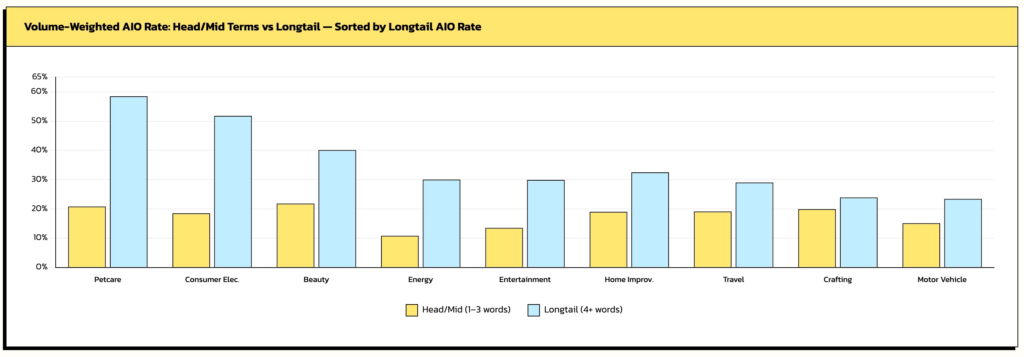
Conversely, the volume of Google searches and queries continues to grow, with an increasing emphasis on longer-tail, conversational queries. This trend is a natural consequence of user acclimatization to AI-driven search interfaces and Google’s own promotion of AI-powered search modes, such as Gemini. This burgeoning trend exacerbates the "zero-click" challenge, where longer, more conversational searches are more likely to trigger AI Overviews, thereby reducing direct traffic to websites.
Despite these shifts, the business of SEO is far from diminished; it is arguably more critical than ever. The more pertinent question for businesses is not whether SEO is dead, but whether their current SEO strategies are effective for their specific business objectives. Organic search continues to be a dominant source of website traffic across most industries, often surpassing paid search. When executed optimally, SEO can deliver superior long-term return on investment (ROI) compared to paid media, or even serve as a more cost-efficient component of a holistic search strategy. The channel itself is not broken; rather, certain approaches to it have become outdated.
The fundamental change lies in the nature of digital visibility. While ranking in the top position for a query now answered by an AI Overview may hold diminished value, being cited within that AI Overview can be significantly more impactful. Brands featured in AI-generated answers experience a substantial increase in organic clicks – reportedly 35% more – and a staggering 91% more paid clicks compared to those not included. This presents a new competitive arena and a paradigm shift for SEO professionals and businesses alike. The critical strategic question now is to understand the extent to which users are migrating to AI search platforms and how this migration compensates for any loss in traditional organic traffic. Predicting these trends over the next 12 to 24 months will be crucial for sustained success.
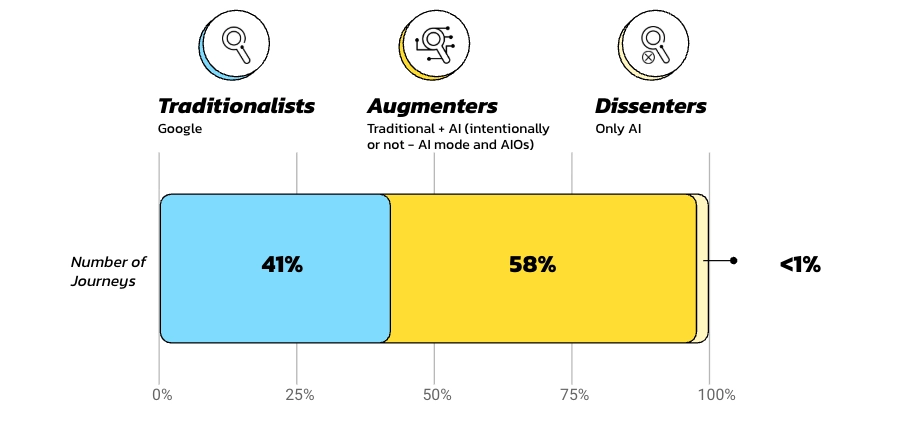
Current data suggests a significant exposure to AI in search results. Approximately 30% of UK consumers already utilize AI for product research. Considering that the remaining 70% predominantly use platforms like Google or Amazon, with only a small fraction exclusively relying on AI, and with AI Overviews appearing on an estimated 40% of Google Search Engine Results Pages (SERPs), it’s reasonable to infer that around 60% of searchers are encountering AI-driven results, regardless of their initial search intent. Projections indicate this figure could rise to 80% within the next year, underscoring the imperative to adapt SEO strategies to this evolving landscape.
Navigating New Frontiers: AEO and GEO
Should We Be Doing AEO and GEO Instead? Understanding the New Acronyms
The emergence of new terminology like AEO (Answer Engine Optimization) and GEO (Generative Engine Optimization) prompts a crucial question for businesses: should these new strategies supersede traditional SEO, and what exactly do they entail? The consensus among leading SEO professionals is that while these areas require significant attention, they do not necessitate entirely new teams or a complete abandonment of existing SEO practices.

Inquiries about AI search optimization have surged dramatically. Analysis of new business briefs over the past three years reveals a clear trend: whereas less than 50% of requests explicitly mentioned AI search a year prior to ChatGPT’s widespread adoption, today, virtually every SEO RFP includes these as core requirements. Existing clients are also actively engaging in AI search strategy development and testing.
AEO and GEO are essentially new designations for the practice of optimizing content to appear within AI-generated answers across various platforms, including Google AI Overviews, ChatGPT, Perplexity, and others. A survey of over 250 enterprise CMOs and digital leaders at the beginning of 2026 by Conductor indicated that 94% of enterprises planned to increase their investment in AEO/GEO that year, with those already investing reporting measurable business impact. Notably, Conductor’s findings suggest that visitors arriving from LLM-generated responses convert at approximately twice the rate of standard organic visitors, albeit in fewer sessions, indicating a potentially smaller but higher-quality audience.
The good news for SEO professionals is that much of traditional SEO work continues to benefit AI visibility. Ranking within the top 10-20 results on Google remains advantageous, as AI Overviews frequently draw information from these positions. Furthermore, traditional Google SERPs continue to be a primary resource for consumer purchase research. Elements like clear, authoritative content, robust structured data, and in-depth subject matter expertise serve both traditional SEO and newer AI optimization efforts. The pitfall for many teams lies in treating SEO and GEO as entirely separate workstreams with distinct budgets and strategies, when the current reality often demands an integrated approach.
However, the divergence between traditional SEO and AI optimization is accelerating and cannot be ignored. Data from Ahrefs indicates that the overlap between Google AI Overviews and Google’s top 10 results has halved in just one year, dropping from 76% in 2025 to 38% currently. Google’s own Gemini product shows only a 15% overlap with Google’s top 10 rankings, and Perplexity’s overlap with Google’s top 20 is a mere 10%. These platforms are not simply replicating Google’s ranking signals; they are developing their own models for what constitutes a valuable answer, leading to increasingly distinct optimization requirements.
The practical implication is that strategies effective for Google rankings and those effective for LLM citations are becoming distinct challenges, though not yet entirely separate. Businesses and teams poised for future success will be those that develop the capability to understand and test both, rather than assuming a single strategy will suffice indefinitely. This transitional period, where both approaches are critical, underscores the importance of taking these new optimization paradigms seriously.
The Role of AI in Content Creation
Can We Just Use AI to Create All Our Content Now?
The rapid advancement of generative AI in content creation has led to a surge in inquiries about its potential to automate content production. A recent scenario involved a CMO questioning the feasibility of programmatically generating thousands of pages across a brand portfolio using AI-generated content, meticulously tweaked to match brand voice, with the aim of dominating global SERPs.
While technically feasible, this approach is ill-advised without a thorough understanding of the actual bottlenecks in content strategy. The primary misunderstanding often lies in misinterpreting Google’s stance on AI-generated content. Google does not penalize content simply because it is AI-generated. Instead, it penalizes content that is shallow, generic, mass-produced, and lacks value. Most AI-generated content, when deployed without significant human oversight and input, falls precisely into this category. The issue is not AI itself, but the absence of substance.
Rankability’s 2025 data indicates that 17% of top 20 search results are now AI-generated. However, these are outliers that leveraged AI to produce genuinely valuable content, not to churn out low-quality articles at scale. The audience’s discerning eye also plays a role. Readers can often detect generic AI content not through detection tools, but through its inherent lack of unique perspective, proprietary information, or insights not readily available through a basic search.
Leading digital marketing agencies, including Brainlabs, have conducted internal experiments with AI content. By integrating AI content generation with human expertise—drawing from client conversations, pain points identified in pitches, and channel expert reviews—their AI visibility content program saw a 35% increase in AI Share of Voice and a 42% growth in Mention Rate within three months. This success stemmed not from volume, but from the strategic infusion of human insight and substance into AI-driven production.

This mirrors the argument made by Chief Data Strategy Officers regarding generative AI in ad creative. AI has effectively removed the production bottleneck, enabling the creation of infinite creative variations at minimal cost. However, this shifts the challenge to selection: identifying which creative to test and why. Similarly, in content creation, AI eliminates the production barrier but does not dictate what is worth saying.
The most effective use of AI in content production is to treat it as a highly efficient first drafter, augmented by substantial human expertise. This includes incorporating real data, proprietary insights, expert opinions, and business-specific examples. This combination produces high-quality content efficiently. Conversely, using AI to replace these elements results in an abundance of words, but little of substance. While testing the limits of AI content generation is encouraged, it is crucial to acknowledge the severe risks associated with approaches that prioritize volume over value and substance.
Measuring SEO’s Impact and Justifying Investment
Why Can’t I See the ROI from SEO? The Measurement Challenge
The difficulty in attributing SEO ROI is often a result of measurement methodologies rather than a lack of performance. Unlike paid search, where a direct link can be drawn from a click to a conversion and its associated cost, SEO involves longer lag times, multi-touch customer journeys, and significant value that manifests in indirect channels, such as increased brand search volume, reduced Cost Per Click (CPC) on branded terms, and assisted conversions. Standard attribution models often fail to capture these nuances effectively.
In an environment where 59% of CMOs report insufficient budgets to execute their strategies, as indicated by the Gartner 2025 CMO Spend Survey, there is immense pressure to demonstrate immediate, quantifiable returns. This often leads to attempts to force SEO into a paid search-like performance model, which is fundamentally misaligned with SEO’s nature. SEO is a compounding asset that builds value over time, unlike paid search, where visibility ceases the moment investment stops.
A significant portion of the ROI challenge is a reporting issue, not necessarily a performance deficit. When SEO teams report on metrics like rankings and traffic, while finance departments focus on revenue and pipeline, the disconnect is inevitable. The solution lies in developing reporting frameworks that directly link organic performance to business outcomes. This involves tracking assisted revenue from organic search, comparing Cost Per Acquisition (CPA) against paid channels, and quantifying the share of qualified pipeline that interacted with organic search at any point in the customer journey. These metrics paint a far more compelling picture than simple traffic charts.
The rise of AI search has further complicated measurement and attribution. The potential for discovery, consideration, and conversion to occur within seconds or minutes on a single platform (like Gemini or ChatGPT) poses profound questions for attribution models in a "collapsed" funnel. Furthermore, access to data on these micro-interactions within AI conversations is limited, creating an "AI dark funnel."
However, this challenge is not entirely new for SEO. Historically, complete keyword-level conversion data from Google has been unavailable, necessitating reliance on correlation analysis, incrementality testing, and other inferential methods to demonstrate impact. The evolving landscape demands a shift in approach: greater emphasis on tracking prompts due to the variability of AI responses, and innovative methods for connecting impressions within AI answers to on-site actions, potentially through holdout tests with AI crawlers.
Why Does SEO Take So Long? The Asset-Building Perspective
The perception that SEO "takes too long" stems from viewing it as a short-term tactic rather than the long-term asset it truly is. The lag between SEO investment and tangible results, particularly for websites with limited authority in competitive sectors, can range from six to twelve months to manifest as revenue. This can be frustrating when compared to the near-instantaneous visibility offered by paid campaigns.
However, the "slowness" of SEO is intrinsically linked to its superior long-term return. A well-crafted piece of content that earns backlinks and achieves high rankings can drive traffic for years, a stark contrast to paid campaigns that cease to generate traffic the moment their budget is exhausted. The time investment in SEO is the investment in building something durable and sustainable, rather than renting temporary visibility.
Within an SEO program, there are elements that yield results more rapidly. Technical SEO fixes can have immediate impacts, and "quick wins" on existing content—pages that already rank but can be improved—can often deliver results within weeks. A well-prioritized SEO program balances these quick wins, which build credibility and fund long-term investments, with the strategic initiatives that require more time to mature.
The honest answer to the question of SEO’s timeline is often that the initiative may not have started early enough, or the roadmap was not adequately prioritized. This is not a critique but a reflection of the strategic nature of SEO. The solution is not to abandon SEO, but to initiate or recommit to it with realistic expectations about the timeframe for realizing its full impact.
Is Our Organic Traffic Down? The Impact of AI Overviews
A decline in organic traffic is a common concern, and while it can sometimes be attributed to internal SEO shortcomings, the most prevalent cause in the current landscape is the escalating presence of AI Overviews. These AI-generated summaries at the top of Google search results appeared on approximately 30% of queries in 2025, leading to a significant reduction in click-through rates. Studies indicate CTR reductions ranging from around 35% to as high as 61% for queries featuring AI Overviews. If traffic has decreased while rankings remain stable, AI Overviews are a highly probable culprit, especially when coupled with an increase in longer-tail searches that tend to trigger these AI responses.
The distinction is critical because the appropriate response varies. A traffic decline due to a technical issue, a penalty, or a competitor’s ascent requires SEO remediation. However, a decline driven by Google’s direct answering of queries necessitates a strategic repositioning: creating content designed to be cited within AI answers, rather than solely optimizing for traditional click-through rates.
Before concluding that SEO is failing, it’s essential to assess whether conversion tracking aligns proportionally with the traffic decline. Often, the traffic displaced by AI Overviews consists of low-intent informational queries. If revenue from organic search has not declined as dramatically as traffic, it suggests the channel may be delivering less volume but retaining its value. Furthermore, integrating AI search traffic and conversions into the overall analysis can reveal a less alarming picture than initially perceived.
Why Invest in SEO When Paid Search Offers Instant Results?
The question of why businesses continue to invest in SEO when paid search provides immediate results is becoming less frequent as C-suite understanding of organic search matures. However, the underlying principle remains critical: paid and organic search are not substitutes; they serve distinct strategic purposes.
Paid search offers visibility contingent on continuous financial outlay. The moment budget is depleted or costs escalate, that visibility vanishes. SEO, conversely, aims to build a sustainable asset—content that ranks, attracts backlinks, and earns trust over time. While the investment-to-return timeline differs, so does the permanence of the achieved visibility.
Data from Gartner’s 2025 CMO Spend Survey indicates that paid search typically accounts for approximately 14% of digital marketing budgets, while SEO garners around 8%. Sophisticated marketing organizations employ both channels because they address different stages of the customer journey. Paid search excels at capturing high-intent demand rapidly and with precise targeting. Organic search is more effective for building brand authority, engaging potential customers earlier in their decision-making process, and generating returns that do not require ongoing expenditure to maintain.
The instinct to reduce SEO investment during budget constraints is understandable but often counterproductive. Cutting SEO funding not only halts progress but also erodes existing assets. Content rankings can decay, competitors can advance, and technical debt can accumulate. Reinstating SEO efforts after a hiatus requires starting from a weaker baseline, not simply resuming where efforts were paused. The compounding effect applies to both gains and losses.
The rationale for investing in both channels lies in long-term strategic advantage. In three years, businesses that prioritized building owned assets through SEO will likely benefit from a more resilient and cost-effective visibility strategy, rather than solely relying on paid platforms whose pricing models are subject to external forces.
What Truly Drives SEO Success
The persistent questions surrounding SEO, particularly in the age of AI, highlight its inherent complexity. It’s easy to misjudge SEO as either a short-term tactic requiring immediate returns or a background function needing minimal active engagement. Neither approach yields optimal results.
Organizations currently achieving the most from their SEO investments share common characteristics:
- Business Outcome Alignment: They connect SEO performance to tangible business objectives, moving beyond mere traffic metrics.
- Quality Over Quantity: They shift content investment from volume-based strategies to genuine quality and depth.
- AI-First Integration: They proactively build for AI visibility alongside traditional ranking strategies, rather than treating them as competing priorities.
- Consistent Investment: They maintain consistent investment, understanding that SEO builds a durable asset, even when short-term results are challenging to interpret.
These principles are not esoteric secrets but require diligent execution, which can be particularly challenging within large organizations where SEO responsibilities often span content, development, and marketing departments, with no single team holding complete ownership.
For leaders asking these critical questions about their SEO programs, it signifies a serious engagement with the function’s importance. The next crucial step is to ensure they receive honest, specific answers grounded in strategic analysis, rather than superficial dashboard updates. The future of organic search is being redefined by AI, and adapting proactively is key to sustained digital success. The forthcoming analysis on "The New Organic: What SEO Looks Like When AI Answers First" will further explore these critical shifts.