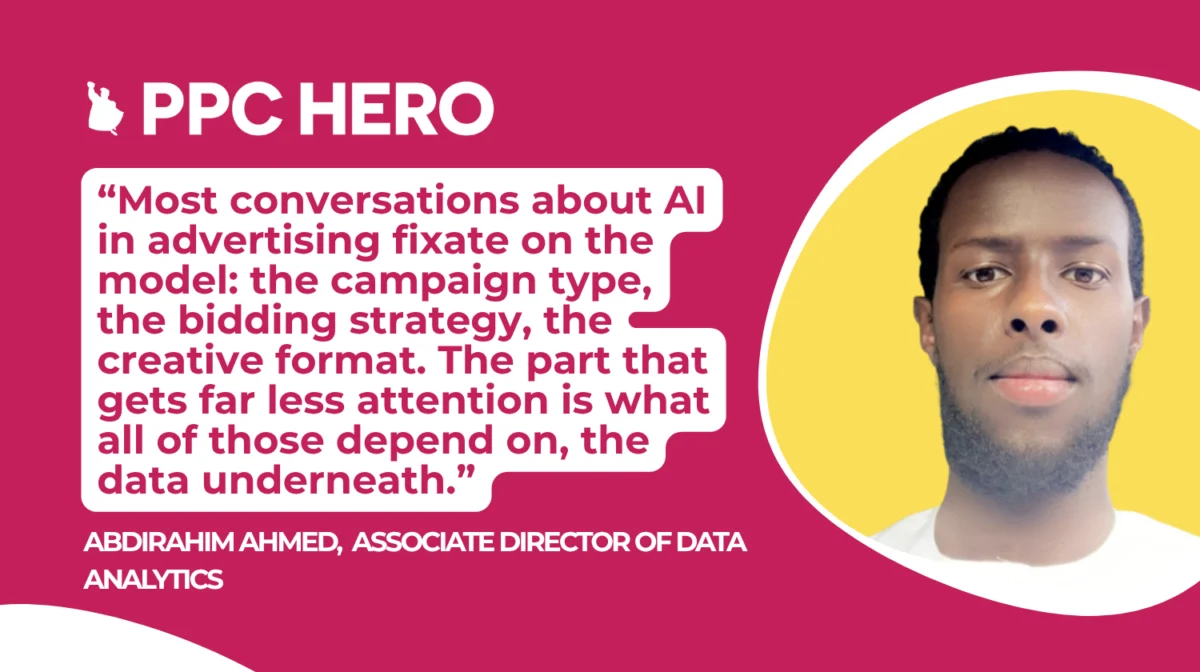
In the rapidly evolving landscape of digital advertising, the conversation often centers on the sophisticated algorithms and advanced models driving campaigns. From the intricacies of bidding strategies and the nuances of creative formats to the selection of campaign types, artificial intelligence (AI) has become the undeniable engine of modern advertising. However, beneath this gleaming technological facade lies a critical dependency that is frequently overlooked: the quality and completeness of the data fueling these AI systems. Google’s own automated advertising solutions, including Smart Bidding, Performance Max, and Demand Gen, are entirely reliant on conversion signals. When these signals are weak or incomplete, the AI is not only handicapped in its ability to optimize effectively but can also be steered toward incorrect objectives, ultimately hindering campaign performance and wasting valuable ad spend. This pervasive "measurement gap" is a silent but significant threat to advertisers worldwide, impacting their ability to accurately assess performance and achieve desired outcomes.
The insidious nature of this measurement gap lies in its gradual onset. Over the past few years, significant shifts in user privacy and browser technologies have systematically eroded the reliability of traditional tracking methods. The clampdown on third-party cookies by browsers like Safari and Firefox, which collectively represent a substantial portion of global internet traffic (approximately 21%), has rendered a significant slice of user data far less accurate and comprehensive than it was just a few years ago. This is further compounded by Apple’s App Tracking Transparency (ATT) framework, launched in April 2021. Despite initial fanfare, ATT saw opt-in rates for ad tracking hover between a mere 15% and 25% for most users, effectively rendering the majority of iPhone and iPad users invisible to standard in-app tracking mechanisms.
Adding to this complex web of data erosion are prevalent ad blockers. These tools, designed to enhance user privacy and prevent intrusive advertising, often strip tracking tags before they can even fire, thereby preventing the collection of crucial conversion data. Furthermore, the default Google Tag, a cornerstone of many tracking implementations, is often served from a third-party domain. This makes it a prime target for privacy-enhancing tools and browser settings that are specifically designed to intercept and block such requests, further widening the data collection deficit.
The consequences of this widening gap extend far beyond mere reporting inaccuracies. When the conversion data that AI-powered bidding systems rely on is incomplete, the AI struggles to make informed decisions. It cannot accurately discern which clicks, audience segments, or placements are genuinely driving results. This forces the AI to operate "in the dark," making suboptimal bidding decisions that can lead to underperforming campaigns. Budgets allocated to sophisticated automation tools are then misdirected, failing to achieve their full potential and delivering a diminished return on investment.
Defining Data Strength: The Fuel for AI Advertising
Google has been increasingly vocal about the importance of robust data inputs, frequently referencing concepts encapsulated in acronyms such as GTG (Google Tag Gateway), ECW (Enhanced Conversions for Web), ECL (Enhanced Conversions for Leads), and Customer Match. The company’s overarching framework for addressing this challenge is known as "Data Strength." This concept is best understood through an analogy: if AI-driven automation is the engine of a vehicle, then conversion signals are the fuel. The stronger and more complete the fuel, the more efficiently and powerfully the engine can perform.
Data Strength distinguishes itself from earlier iterations of first-party data strategies by emphasizing completeness and interconnectedness. The efficacy of a single data product is limited; the true power lies in the ability to connect every available data source – both online and offline – into a unified stream of information. This comprehensive input provides Google’s AI with the most holistic possible view of the customer journey, from initial interaction to final conversion.

Beyond mere performance enhancement, there is a significant competitive advantage to be gained from superior data measurement. Google’s automation systems are designed to optimize for the advertisers who provide them with the highest quality data. Consequently, if a competitor possesses stronger measurement capabilities, their campaigns will learn faster, adapt more effectively, and ultimately pull ahead over time. In this context, an advertiser’s proprietary data acts as a protective "moat," shielding their insights and performance from rivals who cannot access or understand it. Google’s own figures suggest that advertisers who invest in building strong data foundations can observe between 10% to 20% more conversions, a substantial uplift in a competitive market.
The Pillars of Data Strength: Components and Their Roles
Google’s Data Strength framework is built upon a series of interconnected components that work in synergy to bolster measurement capabilities. These components are designed to address specific points of data loss and to aggregate information from diverse sources.
The Foundation: Google Tag and Its Evolution
The fundamental element of this framework is the Google Tag. However, the standard implementation of the Google Tag carries a structural vulnerability: it is often served from a third-party domain. In an era where browsers and privacy tools are increasingly vigilant about third-party requests, this makes the tag susceptible to blocking.
To overcome this limitation, Google Tag Gateway (GTG) was introduced. GTG serves the Google Tag from the advertiser’s own domain. This shift makes the tag request appear as a first-party interaction to the browser, significantly increasing its likelihood of loading successfully. Google estimates that this simple change can lead to an average uplift of 14% in observed conversions. For businesses utilizing platforms like Cloudflare, implementing GTG can be a remarkably straightforward process, often achievable in just a few steps without the need for extensive re-tagging.
Bridging the Online Conversion Gap: Enhanced Conversions for Web
The next critical challenge addressed by Data Strength is the scenario where a conversion event occurs, but no persistent cookie is available to identify the user. Enhanced Conversions for Web (ECW) tackles this by capturing consented first-party data at the point of conversion. Typically, this involves collecting a hashed email address, which can then be used to attribute the conversion when a traditional cookie match fails. Crucially, the data is hashed directly within the user’s browser before it is transmitted, ensuring that Google only ever receives an encrypted and anonymized identifier, thereby respecting user privacy. Google reports that ECW can lead to an 8.5% uplift in Search conversions and a more substantial 15% uplift on YouTube, a platform historically more challenging to attribute conversions accurately due to its video-centric nature and complex user journeys.
Capturing Offline Value: Enhanced Conversions for Leads
For businesses that rely heavily on lead generation, particularly those with significant offline conversion points, Enhanced Conversions for Leads (ECL) is indispensable. The traditional method of offline conversion import relied heavily on the Google Click ID (GCLID) and was strictly click-based. This approach is also vulnerable to future deprecations, such as link decoration changes, which could further disrupt its reliability. ECL enhances this process by allowing advertisers to upload hashed first-party data alongside the GCLID when importing offline conversions. This provides Google with multiple identifiers for matching, significantly improving the accuracy of attribution. Google’s figures indicate a 10% lift in Search conversions and an impressive 22% lift on YouTube for ECL compared to standard offline conversion imports. This underscores the immense value of integrating offline customer interactions with online campaign performance.
From Measurement to Activation: Customer Match
While the preceding components focus on improving measurement accuracy, Customer Match shifts the paradigm towards audience activation. This feature allows advertisers to upload consented customer data, again in a hashed and privacy-safe format. Google then matches this data to signed-in users across its vast network, including Search, Shopping, YouTube, Gmail, and Display. This enables advertisers to effectively target their existing customer base, exclude them from prospecting campaigns to avoid wasted spend, or build highly relevant lookalike audiences based on their most valuable customers.

Orchestrating the Data Flow: Data Manager
Bringing all these disparate data streams together is Data Manager. This platform serves as Google’s central hub for integrating website, app, store, and CRM data into a single, unified view. Advertisers who leverage Data Manager to connect their offline and app data report an average lift of 26% in incremental Return on Ad Spend (ROAS). A significant update in 2026 expanded Data Manager’s availability across Google Ads, Search Ads 360, and Campaign Manager 360, with Analytics integration slated to follow. Furthermore, new integrations with popular platforms such as Mailchimp, Klaviyo, and TripleWhale have been introduced, broadening the scope of data sources that can feed into this powerful aggregation tool.
Real-World Impact: A Case Study in Recovery
The effectiveness of the Data Strength framework is not merely theoretical; it is being demonstrated in practical applications by advertisers facing the immediate challenges of signal loss. One notable example involved a home improvement retailer experiencing a significant decline in lead volume attributed directly to the erosion of conversion signals.
In a phased rollout of Data Strength solutions, the retailer was able to recover an astonishing 27% of previously lost conversions. The process began with the implementation of a simple, one-click integration of the Google Tag Gateway via Cloudflare. This initial step alone, even before the full suite of Data Strength components was in place, delivered a 15% uplift in observed conversions. Subsequent additions of Consent Mode and Enhanced Conversions further bolstered their measurement capabilities, demonstrating a layered approach that progressively closes the data gap. This case highlights that tangible results can be achieved through strategic implementation, even with incremental steps.
The Bottom Line: Building a Foundation for Future Success
The ongoing discourse surrounding AI in advertising often gets sidetracked by discussions of the model itself, overlooking the foundational element that dictates its effectiveness: data. For a vast number of advertisers, this data is currently "leaking" – conversion signals are being blocked, conversions are going un-attributed, and AI systems are operating with an incomplete and often skewed picture of reality.
The critical challenge is that this data deficit rarely manifests in obvious ways on standard dashboards. The missing data, by its very definition, is not present to be seen, which is precisely why it often goes unaddressed for extended periods. This creates a silent performance drag that can significantly impact an advertiser’s competitive standing.
Data Strength offers a clear path to closing this pervasive gap. It is not a solution that can be implemented in a single sprint or through the adoption of just one product. Instead, it is a layered approach, where each component builds upon the last, progressively recovering more of the vital signals that AI needs to learn, optimize, and bid effectively.
The advertisers who proactively invest in building robust Data Strength foundations now will gain a compounding advantage over those who delay. In an increasingly automated advertising ecosystem, where AI dictates a larger share of campaign outcomes with each passing quarter, this foundational data infrastructure is not just beneficial; it is the bedrock upon which all future performance rests. As privacy regulations continue to evolve and user tracking methods become more constrained, the ability to accurately measure and leverage first-party data will become the ultimate differentiator for success in digital advertising.