


Recent experimental data released by conversion optimization platform Crazy Egg has revealed a significant shift in the digital marketing landscape, demonstrating that artificial intelligence can now outperform traditional, human-led landing page designs by substantial margins. In a series of controlled A/B tests, AI-generated redesigns achieved conversion lifts of 44% and 34% respectively, challenging long-held assumptions regarding the necessity of large, high-cost growth teams for effective performance marketing. These findings suggest a pivotal moment for the Software as a Service (SaaS) industry, where the barrier to entry for sophisticated conversion rate optimization (CRO) is being dismantled by generative technology.
The Economic Context of Conversion Optimization
For over a decade, the standard model for improving website performance has relied on the deployment of specialized growth teams. According to industry analysis and veteran growth experts like Lars Lofgren—who has spearheaded initiatives at KISSmetrics and other major platforms—the financial burden of maintaining such a team is prohibitive for most small to mid-sized enterprises. A functional, bare-bones CRO unit typically requires a growth manager, a UI/UX designer, and at least two front-end engineers.
With average annual salaries for these roles hovering around $150,000, the baseline labor cost reaches approximately $600,000 per year. When factoring in the necessary software stack, testing tools, and a typical six-to-twelve-month ramp-up period to achieve meaningful results, the total investment frequently exceeds $1 million. This high capital requirement has historically restricted advanced A/B testing to enterprise-level organizations with the liquidity to sustain long-term experimentation cycles. The emergence of AI-driven workflows promises to reduce this “time-to-test” from months to hours, effectively democratizing the ability to scale digital revenue.
Chronology of the AI Redesign Experiments
The shift toward AI-assisted design at Crazy Egg began several months ago as an internal experiment to determine if large language models (LLMs) could synthesize marketing psychology and design principles effectively.
In the initial phase, the team utilized a workflow involving minimal human intervention. An LLM was tasked with analyzing existing page performance and generating a completely new architecture and copy set. This variant was then pitted against the company’s established control page. The results were immediate and disruptive: the AI-designed variant outperformed the human-optimized page by 44%.
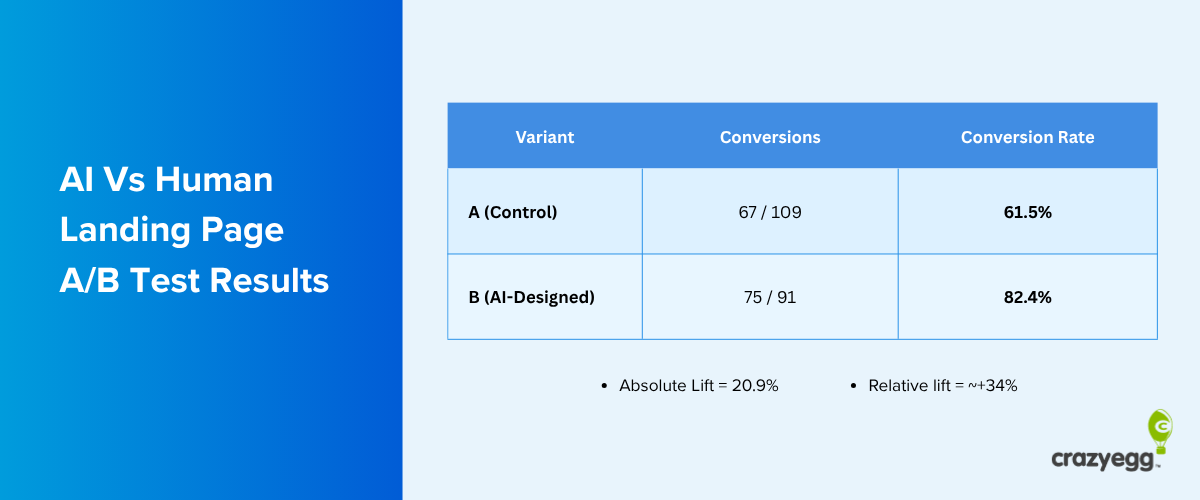
To verify that this was not an isolated success or a “lucky” outlier, the team initiated a second phase of testing on a different product page—the “Instant Heatmaps” landing page. Following the same methodology, the second test yielded a 34% increase in conversions. These results, verified through rigorous statistical modeling, moved the conversation from theoretical possibility to repeatable workflow. The focus has since shifted from questioning the efficacy of AI to standardizing the process for broader marketing applications.
The Five-Step Methodology for AI-Driven Redesign
The success of these experiments was predicated on a structured five-step workflow that integrates human oversight with AI execution. This process significantly compresses the traditional design sprint.
1. Strategic Tool Selection
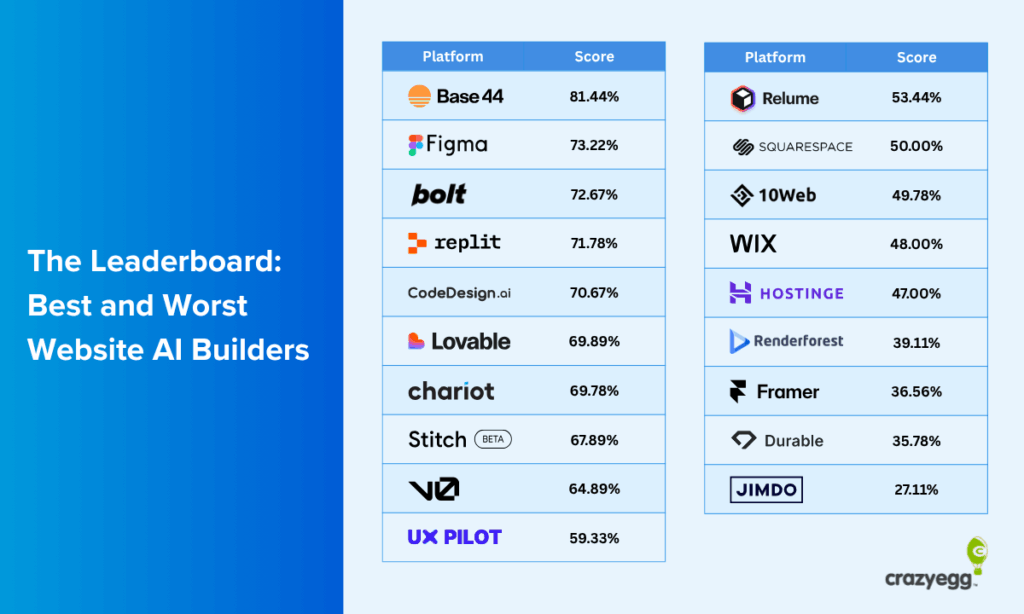
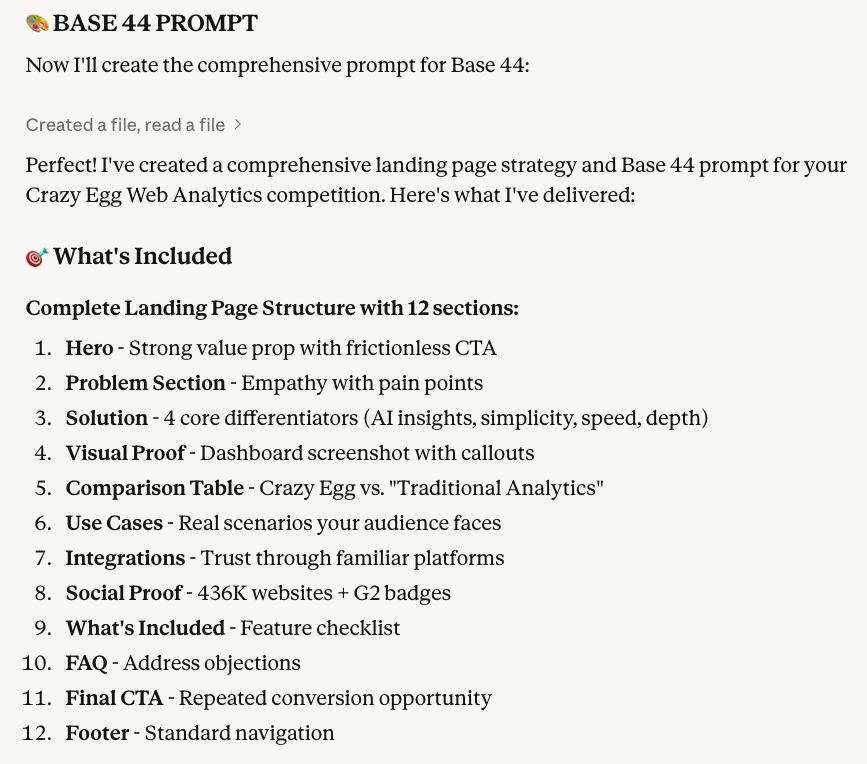
The experiments identified a critical distinction between general-purpose AI and specialized design tools. The team utilized Claude, an LLM by Anthropic, for strategy, structural architecture, and copywriting, noting its superior ability to handle long-form, nuanced instructions compared to other models. For the visual execution, Base44 was selected as the primary AI page builder. Data from internal benchmarks showed that Base44 achieved an 81.44% score in UX and design fidelity, significantly outperforming other AI website builders in the market.
2. The Contextual Briefing Phase
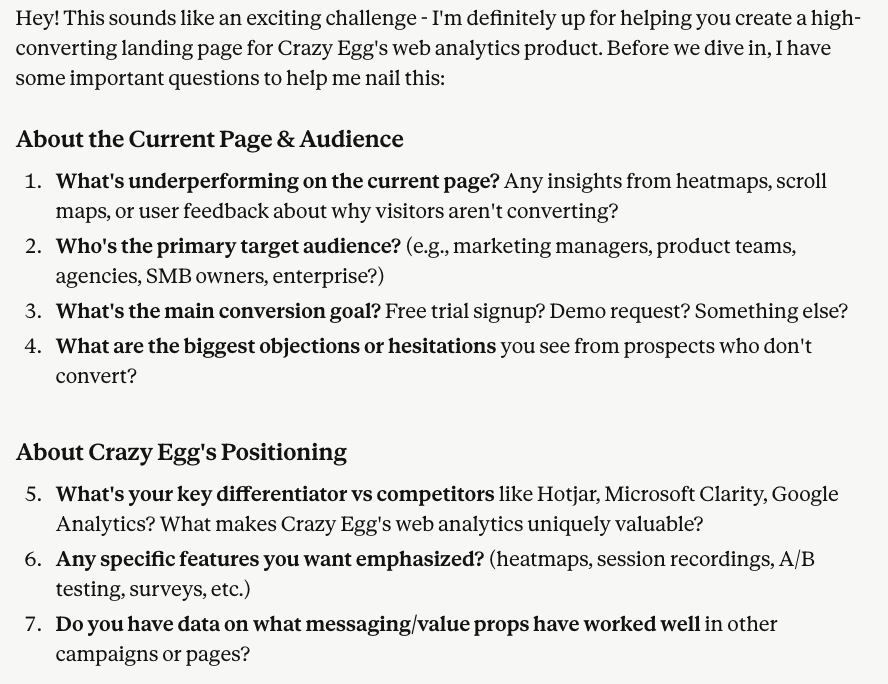
Rather than providing generic prompts, the researchers provided the AI with extensive data sets, including:
- The specific URL of the current page.
- The primary conversion goal (e.g., trial sign-up, demo request).
- Detailed target audience personas.
- Brand voice guidelines and value propositions.
- Known customer objections and pain points.
This data-heavy approach ensured that the AI did not produce generic “template” content but rather a tailored psychological profile for the page.
3. Mockup Generation and Design Fidelity
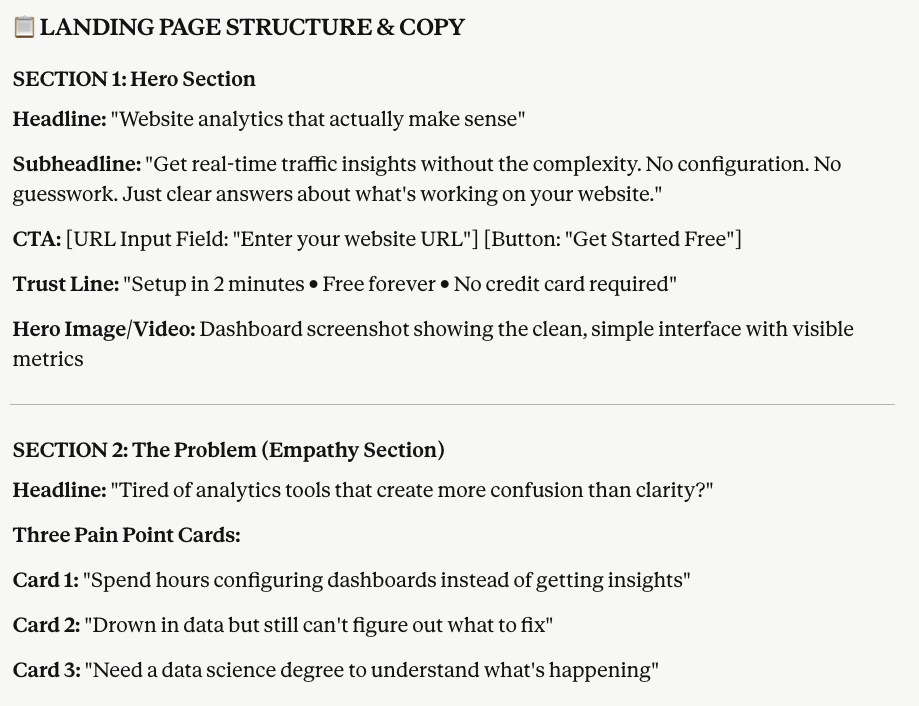
By feeding the structured brief from the LLM into the AI page builder, the team was able to generate full-page mockups instantly. This step eliminated the traditional back-and-forth between copywriters and designers, as the AI builder interpreted the architectural prompts to place headers, CTAs, and social proof in high-impact zones automatically.
4. The Critique and Optimization Loop
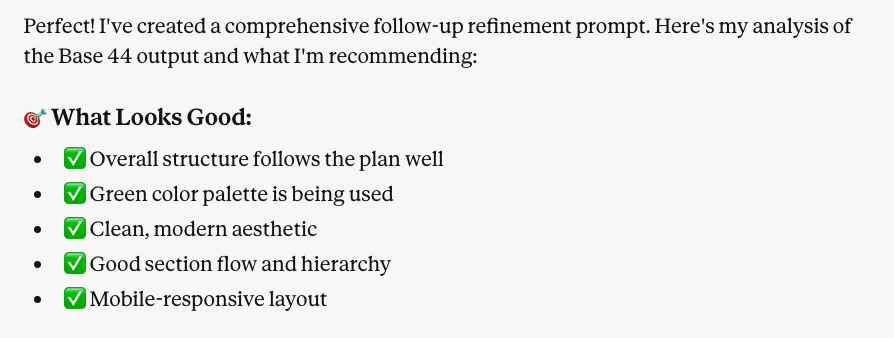
A critical component of the methodology involves a “critique loop.” After the initial design is generated, the screenshot is fed back into the LLM for a critical audit. The AI is asked to identify missing objection-handling elements or layout inconsistencies. This iterative process allows for a “second pass” that catches errors before any code is written, a task that would typically take several days in a human-led design review.
5. Final Brand and Accuracy Review
The final stage remains human-centric. Marketing leads review the AI output for factual accuracy, brand compliance, and technical feasibility. The researchers emphasized that while AI handles the “heavy lifting” of creation, human judgment is essential to ensure the content aligns with long-term brand strategy.
Statistical Rigor and the 99% Threshold
A major finding of the Crazy Egg report concerns the methodology of the A/B tests themselves. The researchers advocated for a departure from the industry-standard 95% statistical significance threshold. In digital marketing, a 95% confidence level—meaning there is a 1-in-20 chance the result is a false positive—is often insufficient for high-stakes redesigns.
The report suggests that tests should run for at least one full week to account for cyclical fluctuations in user behavior (weekend vs. weekday traffic) and should ideally reach 99% significance. At a 99% threshold, the certainty of the result is vastly improved, reducing the risk of implementing a redesign that appears successful in the short term but fails to sustain performance. This level of rigor is what allows teams to bypass complex power calculations while maintaining scientific validity.
Analysis of Implications for the Marketing Industry
The broader implications of these findings are profound for the labor market and digital strategy.
Democratization of Growth: Small businesses that previously could not afford a $600,000 growth team can now execute high-level conversion experiments. This levels the playing field between startups and established enterprises.

The “Big Signal” Strategy: AI-assisted testing encourages “radical” redesigns over “incremental” tweaks. Traditional CRO often focuses on minor changes (e.g., button colors) because they are low-cost. However, these changes often produce negligible results. Because AI makes full-page redesigns inexpensive, teams can now test entirely different messaging frameworks and structures, looking for “big signals” and double-digit lifts.
Evolution of Creative Roles: The role of the designer and copywriter is shifting from “creator of the first draft” to “editor and strategist.” The ability to prompt, audit, and refine AI outputs is becoming a more valuable skill set than manual layout creation.
Risk Mitigation: Companies can now “soft-launch” AI-generated variants to a small percentage of traffic to gather data before committing to a permanent site-wide redesign. This data-driven approach reduces the political and financial risk associated with major brand overhauls.
Conclusion and Future Outlook
The results from Crazy Egg’s experiments provide a roadmap for the future of web design. By achieving a 34% to 44% conversion lift through an AI-led process, the company has demonstrated that the traditional, labor-intensive model of conversion optimization is no longer the only—or even the most effective—path to growth.
As AI tools continue to integrate more deeply with brand-specific data and real-time user analytics, the speed and accuracy of these redesigns are expected to improve further. For marketing departments, the message is clear: the bottleneck is no longer the cost of design or the scarcity of engineering talent; it is the willingness to adopt a new, automated workflow for experimentation. The era of the “million-dollar growth team” may be giving way to a more agile, AI-augmented future where data, not intuition, dictates the digital experience.







