

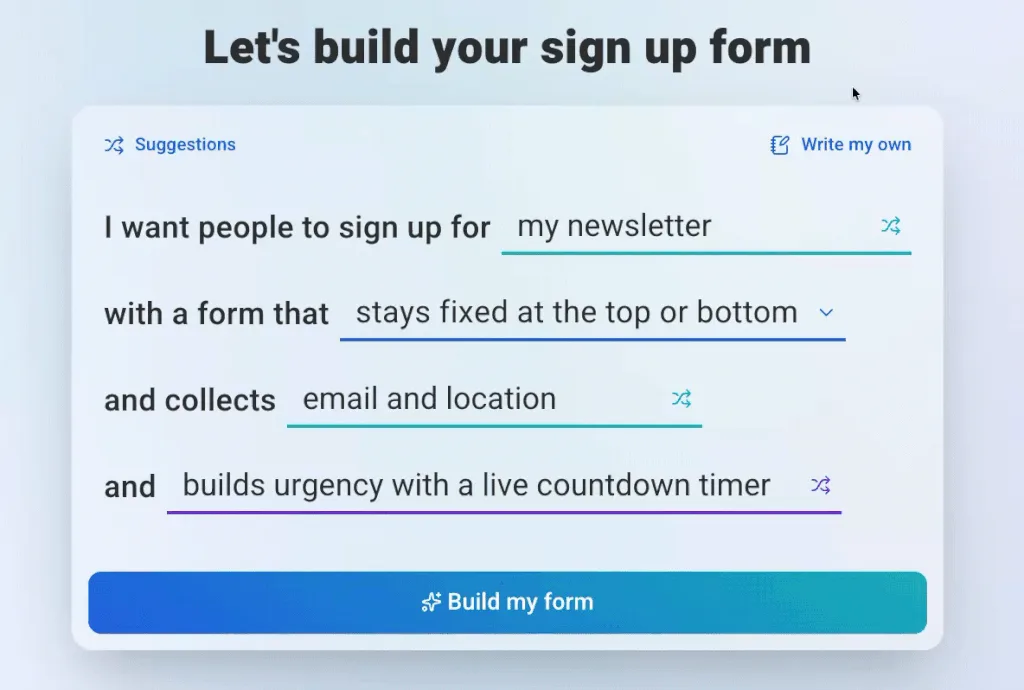
In a significant advancement for digital marketing and small business operations, AWeber has introduced its AI Signup Form Builder, signaling a definitive shift away from the traditional, often cumbersome, template-based approach to lead generation. Launched on June 3, 2026, this innovative tool promises to redefine how businesses create and deploy forms, moving from a reactive customization process to a proactive, AI-driven generation of tailored subscriber interfaces. The core premise is simple yet transformative: instead of browsing a gallery of pre-designed forms and laboriously adjusting them to fit a specific brand, users can now describe their needs, upload a design inspiration, or answer a few guided prompts, receiving a fully customized form from the outset. This development marks a pivotal moment in the ongoing integration of artificial intelligence into everyday business tools, promising unprecedented efficiency and personalization in the critical realm of audience acquisition.
The End of the Template Treadmill: Why Generic Forms Fall Short
For years, signup form templates have been marketed as shortcuts, a quick solution for businesses to collect leads. However, the reality often diverges sharply from this promise. While ostensibly offering a head start, templates are inherently designed for broad applicability, striving to work for as many users as possible. This universality, paradoxically, is precisely what makes them a poor fit for any specific business. The customization process, far from being a time-saver, frequently devolves into a time-consuming and frustrating endeavor.
A typical scenario involves selecting a template that appears "close enough," only to spend an hour or more painstakingly adjusting fields, rewriting generic headlines, swapping out colors to match brand guidelines, and rearranging layouts. The initial convenience quickly evaporates as marketers find themselves working backward, adapting someone else’s design to their unique business instead of building from a clear vision. This process often begins with generic calls to action like "Subscribe to our newsletter" when the actual offer is a niche, high-value asset, such as a "free five-day email course on dog training." Similarly, a template might present three fields when only one is necessary for a streamlined user experience, or a two-column layout when a minimalist brand aesthetic demands simplicity.
The gap between a generic template and a truly effective, on-brand form requires substantial manual effort. This includes intricate copywriting to align with the brand voice and specific offer, making numerous design decisions to reflect visual identity, and implementing complex field logic for optimal data collection. By the time the form finally looks and functions correctly, the total time invested in customization often surpasses what it would have taken to start from scratch with a clear, specific brief. Furthermore, templates impose an unconscious "anchoring bias" on the creative process. Users are subtly influenced by the template’s existing structure, leading them to adapt around it rather than building a form organically from the ground up, optimized solely for their target audience and offer. This limits genuine innovation and often results in forms that feel unauthentic or less effective than they could be. Industry data consistently shows that highly personalized and relevant forms achieve significantly higher conversion rates, often exceeding generic counterparts by 20-30%. The friction introduced by irrelevant fields or off-brand messaging directly impacts subscriber acquisition and overall campaign performance.
A New Paradigm: AI-Powered Form Generation
AWeber’s AI Signup Form Builder directly addresses these limitations by fundamentally altering the form creation workflow. Instead of starting with a pre-existing template, the process begins with the user’s specific requirements, leveraging advanced artificial intelligence to generate a bespoke form. The platform offers three distinct yet interconnected methods for creating forms, each designed to maximize efficiency and personalization:

-
Describe It in Plain Language: This method taps into sophisticated Natural Language Processing (NLP) capabilities. Users can simply type out what they need in conversational language. For instance, a prompt like "A simple one-field form for a free guide on meal planning for busy parents" instructs the AI to generate a form with a relevant headline (e.g., "Unlock Stress-Free Meal Planning!"), appropriate fields (likely just an email address), and copy that resonates with the specific offer and target audience. The AI interprets the intent and constructs the form’s elements dynamically, ensuring immediate relevance. This capability significantly reduces the time spent on initial setup and copywriting, allowing marketers to focus on their core message.
-
Upload a Screenshot for Inspiration: Recognizing that visual inspiration often sparks creative ideas, this feature utilizes advanced computer vision technology. If a user encounters an appealing form online, they can capture a screenshot and upload it to the AI builder. The AI then analyzes the design, extracting structural cues, layout patterns, and even stylistic elements. Crucially, the builder doesn’t merely copy the form; instead, it uses the screenshot as "creative inspiration" to produce a version customized to the user’s specific brand and offer. This allows businesses to leverage effective designs they admire without the tedious manual reconstruction, ensuring that the final output is unique and aligned with their brand identity rather than a direct imitation.
-
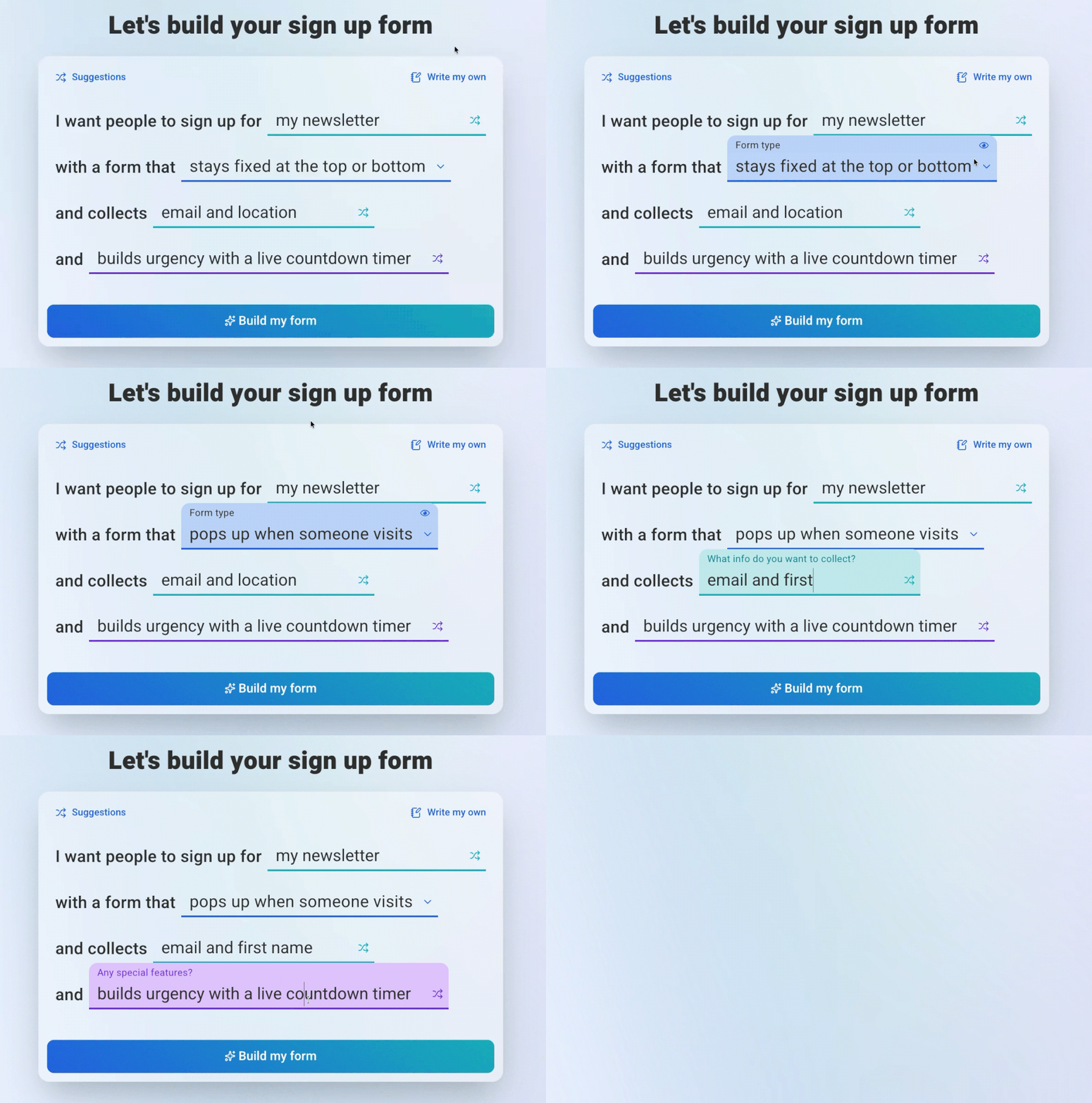
Use Guided Prompts: For users who prefer a more structured approach, the guided prompts feature offers a step-by-step questionnaire. By answering a series of targeted questions about their audience, the specific offer, and their overarching goals, the AI system progressively assembles a form. Each specific input directly influences the output, ensuring that the generated form is meticulously tailored to the user’s strategic objectives. This method is particularly useful for those who might not have a clear visual idea but can articulate their marketing strategy effectively.
Once the initial form is generated through any of these methods, the AI builder facilitates refinement through natural language conversation. Users can instruct the system to "shorten the headline," "add a checkbox for terms and conditions," or "change the button text to ‘Get My Guide Now!’" The form updates instantaneously, eliminating the need to navigate complex settings panels or field editors. This conversational interface streamlines the iteration process, making design and content adjustments remarkably intuitive and fast. This level of interaction represents a significant leap from traditional drag-and-drop builders, which, while offering flexibility, still require manual manipulation of elements.
The Evolution of Digital Forms: A Historical Context
The journey of digital signup forms has been one of continuous evolution, driven by the increasing demands of online marketing and user experience. In the early days of the internet, forms were rudimentary HTML constructs, requiring coding knowledge to implement. The advent of Content Management Systems (CMS) and dedicated form builders brought graphical interfaces, allowing non-developers to create forms using visual editors. Drag-and-drop builders, which became prevalent in the 2010s, offered unprecedented ease of use, enabling marketers to assemble forms by visually placing elements. However, even these sophisticated tools largely operated on a template-first model, requiring users to customize pre-existing structures.
The rise of email marketing as a cornerstone of digital strategy further amplified the importance of effective signup forms. As businesses realized the value of building direct audience relationships, the pressure to optimize conversion rates intensified. This led to a focus on A/B testing, psychological triggers, and persuasive copywriting. Yet, the foundational challenge remained: how to efficiently create unique, high-performing forms that genuinely reflect a brand’s identity and specific campaign goals. This historical trajectory sets the stage for AI form builders, which represent the next logical leap. By automating the design and content generation process, AI bypasses the limitations of previous generations of tools, offering a truly bespoke solution at scale.
Broader Impact and Implications for the Marketing Landscape
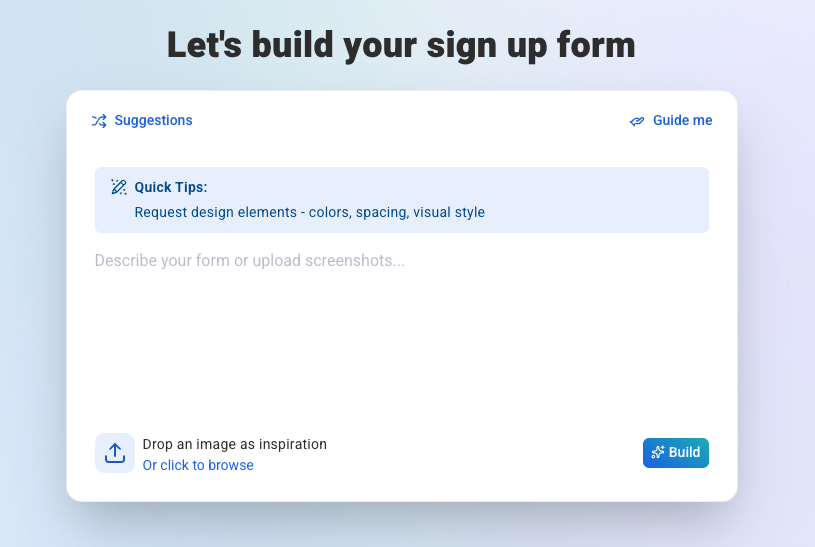
The introduction of AI-powered form builders like AWeber’s carries significant implications across various facets of the marketing and business ecosystem:
-
Enhanced Efficiency and Resource Allocation: For small businesses, startups, and even larger marketing teams, the AI builder dramatically reduces the time and resources traditionally allocated to form creation. What once took hours of design, copywriting, and technical adjustments can now be accomplished in minutes. This allows marketers to reallocate their valuable time from tactical execution to more strategic activities, such as audience research, offer development, and campaign analysis. The cost savings associated with reduced design and development hours can be substantial, particularly for companies operating on tight budgets.
-
Democratization of High-Quality Design: One of the most profound impacts is the democratization of professional-grade form design and copywriting. Businesses without dedicated graphic designers or professional copywriters can now generate aesthetically pleasing and highly persuasive forms that compete with those created by larger, better-resourced organizations. This levels the playing field, empowering entrepreneurs and small businesses to present a more polished and credible online presence, which is crucial for building trust and attracting subscribers.
-
Significant Uplift in Conversion Rates: Personalized content and design are proven drivers of higher conversion rates. By generating forms that precisely match the offer, brand voice, and target audience, AI builders inherently create a more compelling user experience. Users are more likely to complete a form that feels relevant and speaks directly to their needs. Industry averages suggest that personalized calls-to-action can outperform generic ones by as much as 42%, and forms optimized for specific offers see similar gains. The AI builder facilitates this level of optimization without requiring extensive manual testing or expert knowledge, making high conversion rates more attainable for all users.
-
Strategic Shift for Marketers: Rather than focusing on the mechanics of form building, marketers can now elevate their role to that of strategic architects. Their focus shifts from how to build the form to what the form should achieve. This involves deeper thinking about the value proposition, understanding customer pain points, and defining the precise audience for each offer. The AI becomes a powerful assistant, translating these strategic inputs into tangible, high-performing assets.
-
Future of Human-AI Collaboration: The conversational interface of AWeber’s AI builder exemplifies the growing trend of human-AI collaboration. The AI handles the heavy lifting of design and content generation, while the human provides the strategic direction and refines the output. This partnership is likely to evolve, with AI tools becoming even more intuitive and anticipatory, learning from user preferences and performance data to proactively suggest optimizations. This heralds a future where marketing tools are not just automation platforms but intelligent partners in achieving business goals.
When Templates Still Hold Value: Inspiration, Not Imitation
Despite the revolutionary capabilities of AI form builders, templates are not entirely rendered obsolete. Their utility, however, shifts from being a starting point for direct customization to serving as a source of inspiration. If a marketer encounters a form that effectively captures attention, exhibits an innovative layout, or features a compelling call-to-action, that design is worth noting. The value lies not in copying it directly, but in understanding what elements made it effective.
This is precisely where AWeber’s screenshot feature becomes invaluable. Users can capture the essence of an inspiring form – its layout, field structure, visual hierarchy – and upload it to the AI Signup Form Builder. By then describing their own business and specific offer, the AI can intelligently extract the structural cues and design principles from the uploaded image and apply them to a brand-new form that is entirely unique but functionally inspired. This approach allows marketers to harness creative shortcuts without falling into the trap of brand mismatch or generic imitation. It enables the fusion of external inspiration with internal brand identity, creating something truly bespoke and highly effective.
Building the Future of Lead Generation, Today
The launch of AWeber’s AI Signup Form Builder marks a significant milestone in the ongoing evolution of digital marketing tools. It represents a clear departure from the limitations of traditional templates, offering a path to unparalleled efficiency, personalization, and conversion optimization. By leveraging advanced AI, businesses can now generate custom, high-performing signup forms in minutes, freeing up valuable time and resources.
The process is remarkably straightforward: users simply open AWeber, select the AI Signup Form Builder, and articulate their offer in a single sentence. This direct, intent-driven approach eliminates the tedious browsing of template galleries, the compromises on layout, and the necessity to overwrite generic copy. The form is ready when the business is, poised to collect subscribers who will immediately receive their tailored welcome emails, initiating a personalized customer journey from the very first interaction.
This innovation underscores a broader trend in the software industry: the move towards intelligent, generative tools that empower users to create sophisticated assets without deep technical expertise. AWeber’s commitment to leveraging AI to simplify complex marketing tasks positions it at the forefront of this transformation, offering a glimpse into a future where marketing automation is not just about efficiency, but about intelligent, adaptive creation. Businesses eager to experience this paradigm shift can try AWeber free for 14 days, building their first AI-generated signup form and witnessing the future of lead generation firsthand.








