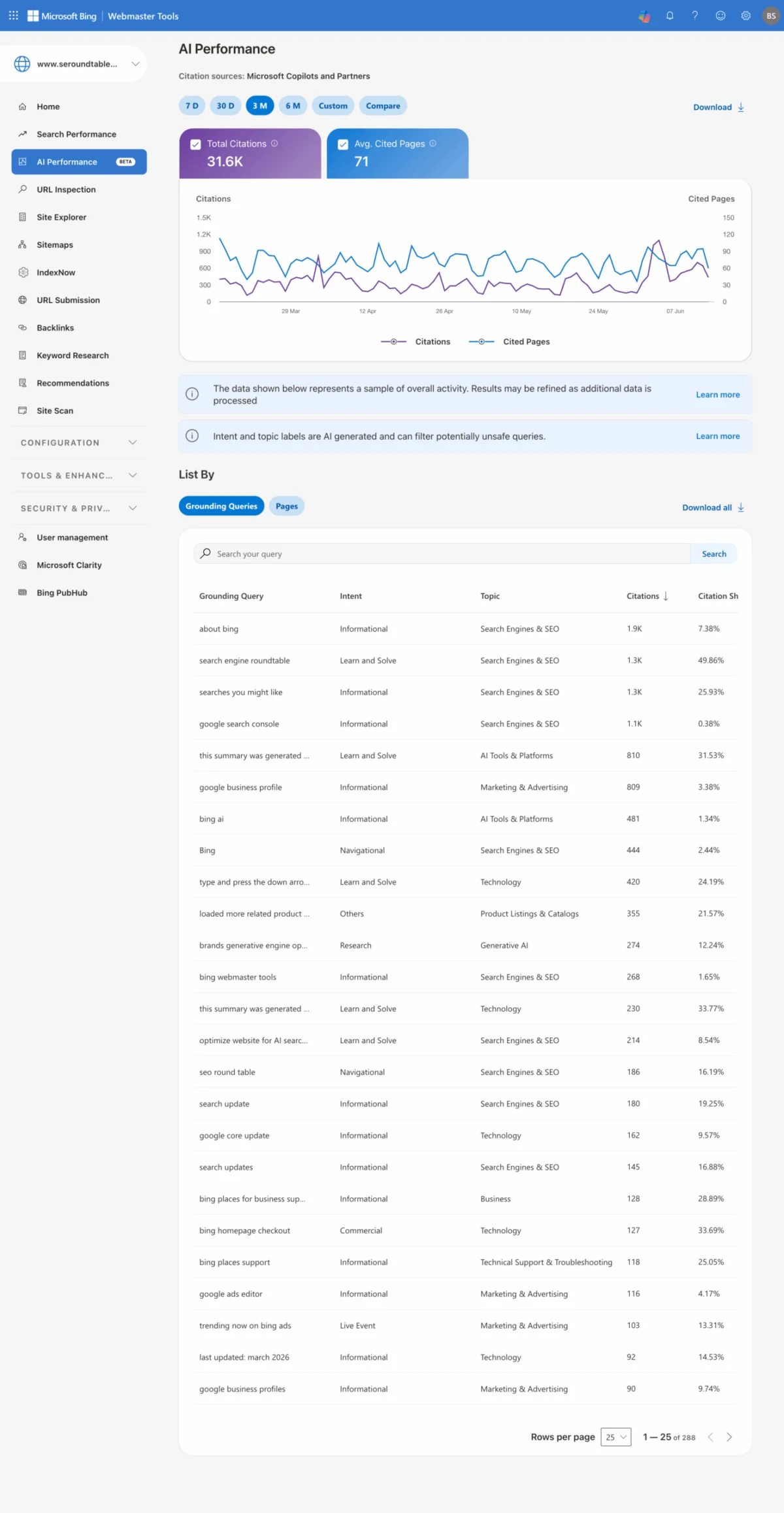
In a significant stride towards enhancing transparency and offering deeper insights into the performance of online content within the burgeoning landscape of AI-powered search, Bing Webmaster Tools has initiated a global preview rollout of its new AI reporting features. These advanced functionalities, which include ‘Intents,’ ‘Topics,’ ‘Citation Share,’ and a ‘Compare’ tool, were first demonstrated to industry professionals at SEO Week in late April, generating considerable anticipation among webmasters and search engine optimization (SEO) specialists. The official rollout commenced yesterday, as announced by Krishna Madhavan of Microsoft, confirming earlier hints from Fabrice Canel, also from Microsoft, that these innovations were “coming soon.”
The Genesis of AI Visibility Insights
The integration of artificial intelligence into search engine results has fundamentally altered how users interact with information and how content creators measure their online presence. Traditionally, SEO has revolved around optimizing for organic rankings, aiming for the coveted top positions in the “10 blue links.” However, with the advent of generative AI capabilities within search, such as Bing’s AI-powered answers and Google’s AI Overviews, content is increasingly being synthesized and presented directly to users in summarized, AI-generated formats. This paradigm shift necessitated new metrics and tools for publishers to understand not just if their content is found, but how it is being used and attributed within these AI responses.
The initial unveiling of these features at SEO Week served as a critical precursor, signaling Microsoft’s commitment to providing webmasters with the necessary tools to navigate this evolving digital environment. The industry recognized the urgent need for clarity regarding how AI models source information and attribute content, moving beyond traditional impression and click data to a more granular understanding of AI visibility. Fabrice Canel’s earlier statements had built excitement, and the swift global release underscores Bing’s proactive approach in addressing these emergent industry demands.
Deconstructing the New AI Reporting Features

The new suite of tools within Bing Webmaster Tools is meticulously designed to offer webmasters unprecedented insights into their content’s interaction with AI systems. Each feature addresses a specific aspect of AI visibility, collectively providing a holistic view of performance in this new era of search.
1. Intents:
The ‘Intents’ feature provides a crucial lens into the purpose behind the AI’s citation of a piece of content. In the context of search, user intent can vary widely – from seeking quick answers (informational intent) to looking for product comparisons (commercial intent) or desiring to perform an action (transactional intent). When an AI model synthesizes an answer, it does so to fulfill a specific user intent. The ‘Intents’ report helps publishers understand which user intents their content is serving when cited by Bing’s AI. For example, a travel blog might find its content cited primarily for “planning a trip” or “finding destination information” intents, rather than “booking a flight” intent. This insight is invaluable for refining content strategy, ensuring that content aligns more closely with the specific needs and queries that AI models are designed to address, thereby maximizing its potential for citation. Understanding these intents allows content creators to tailor their articles, guides, and pages to be more directly relevant and useful for specific AI-driven queries, moving beyond broad keyword targeting to nuanced intent fulfillment.
2. Topics:
The ‘Topics’ feature categorizes the subject matter associated with content that is being cited by AI. Rather than relying solely on keywords, which can be fragmented and numerous, ‘Topics’ provides a higher-level, thematic understanding of the content’s relevance. For a news site, this might mean seeing citations related to “current events,” “political analysis,” or “technological advancements.” For an e-commerce site, it could involve topics like “product reviews,” “buying guides,” or “sustainable practices.” This thematic aggregation helps webmasters identify which overarching themes their content is considered authoritative for by AI. It can highlight areas of strength, where their content consistently contributes to AI answers, as well as potential gaps in their content strategy where they might want to develop more material to cover relevant topics. This feature is particularly useful for content strategists looking to build comprehensive topical authority and establish their site as a go-to source for specific knowledge domains in the eyes of AI.
3. Citation Share:
Perhaps one of the most directly competitive and performance-oriented metrics, ‘Citation Share’ measures the relative presence of a webmaster’s content within AI-generated answers compared to competing sources. This metric moves beyond traditional market share or organic search visibility to specifically assess influence within the AI information ecosystem. If multiple sources contribute to an AI-generated answer, ‘Citation Share’ would indicate the proportion of that answer that can be attributed to a specific publisher’s content. This allows webmasters to benchmark their authority and influence against rivals, identifying opportunities to enhance their content’s prominence. A higher citation share implies greater trust and relevance ascribed by the AI model, suggesting that the content is perceived as a primary, authoritative source for a given query. This data can inform efforts to improve content quality, factual accuracy, and overall authority, which are increasingly critical factors for AI models.
4. Compare Feature:
The ‘Compare’ feature is a powerful analytical tool that allows webmasters to track changes in their AI visibility metrics over time or compare the performance of different segments of their content. This could involve comparing AI citation trends week-over-week or month-over-month to assess the impact of recent content updates or algorithm changes. Alternatively, it could be used to compare the AI visibility of different content categories (e.g., blog posts vs. product pages) or different sections of a website. This comparative analysis is essential for identifying trends, understanding the efficacy of specific SEO or content strategies aimed at AI, and making data-driven decisions to optimize for the AI web. It provides a dynamic view of performance, enabling agile adjustments to content and technical SEO efforts in response to observed changes.
Microsoft’s Vision for Transparency and Empowerment
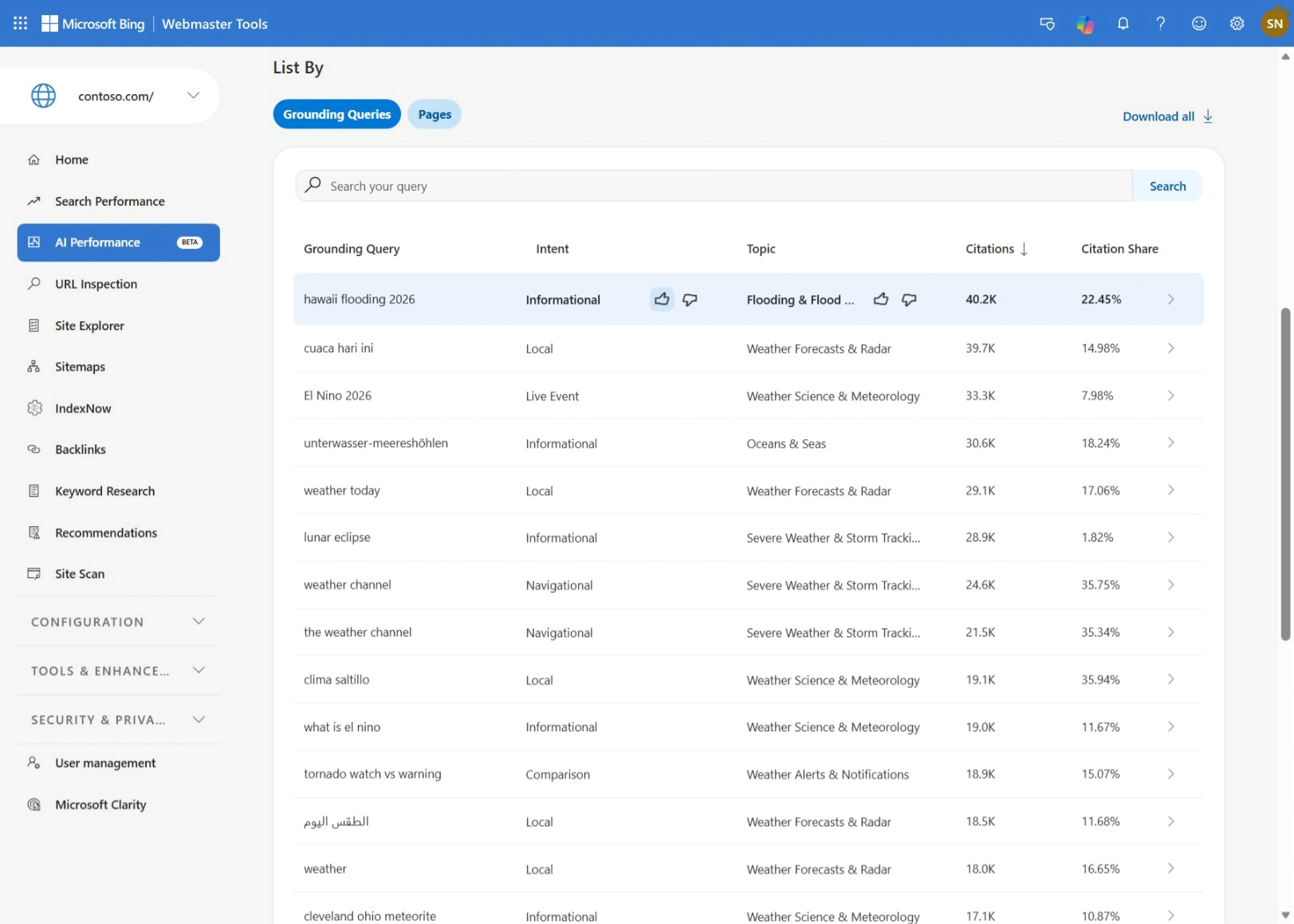
Krishna Madhavan, in his announcement on LinkedIn, articulated Microsoft’s overarching philosophy behind these new features: “These features are designed to help the community gain a deeper understanding of where their content is cited in AI-generated answers, along with the context behind those citations.” He further elaborated on the capabilities users would gain: “Users will be able to explore: The intent behind citations, The topics associated with their content, The relative citation presence, How visibility changes over time.”
This statement underscores a commitment to fostering greater transparency, a sentiment echoed in the concluding remark: “This represents another significant step towards providing the community with greater transparency regarding how their content is represented across the AI web.” In an era where the inner workings of AI models can often feel like a black box, Bing’s initiative to demystify AI citations is a welcome development. It empowers webmasters not just to react to AI changes but to proactively shape their content strategy to thrive within this new environment. By offering context and specific metrics, Bing is positioning itself as a partner to the webmaster community, helping them adapt to the challenges and opportunities presented by generative AI in search.
To further support users in understanding and utilizing these new capabilities, Bing has also comprehensively updated its help documentation for the AI performance report. This ensures that webmasters have readily accessible resources to fully leverage the power of these advanced insights.
The Evolving Landscape of Search and SEO
Bing’s rollout of these advanced AI reporting features is not an isolated event but a crucial development within the broader, rapidly evolving landscape of search engines. The competition among search giants to integrate AI effectively and provide superior user experiences is intense. Google, Bing’s primary competitor, has also been aggressively pursuing AI integration, most notably with its Search Generative Experience (SGE), now referred to as AI Overviews. These AI Overviews also synthesize information from various sources to provide direct answers, posing similar challenges for content creators regarding visibility and attribution.
The implicit challenge issued by the original article – “Google – your turn” – highlights the competitive pressure in this space. While Google has introduced its own AI Performance Report and blocking controls, the specific granularity and types of insights offered by Bing’s new features, particularly around ‘Intents’ and ‘Citation Share,’ could set a new benchmark for transparency.
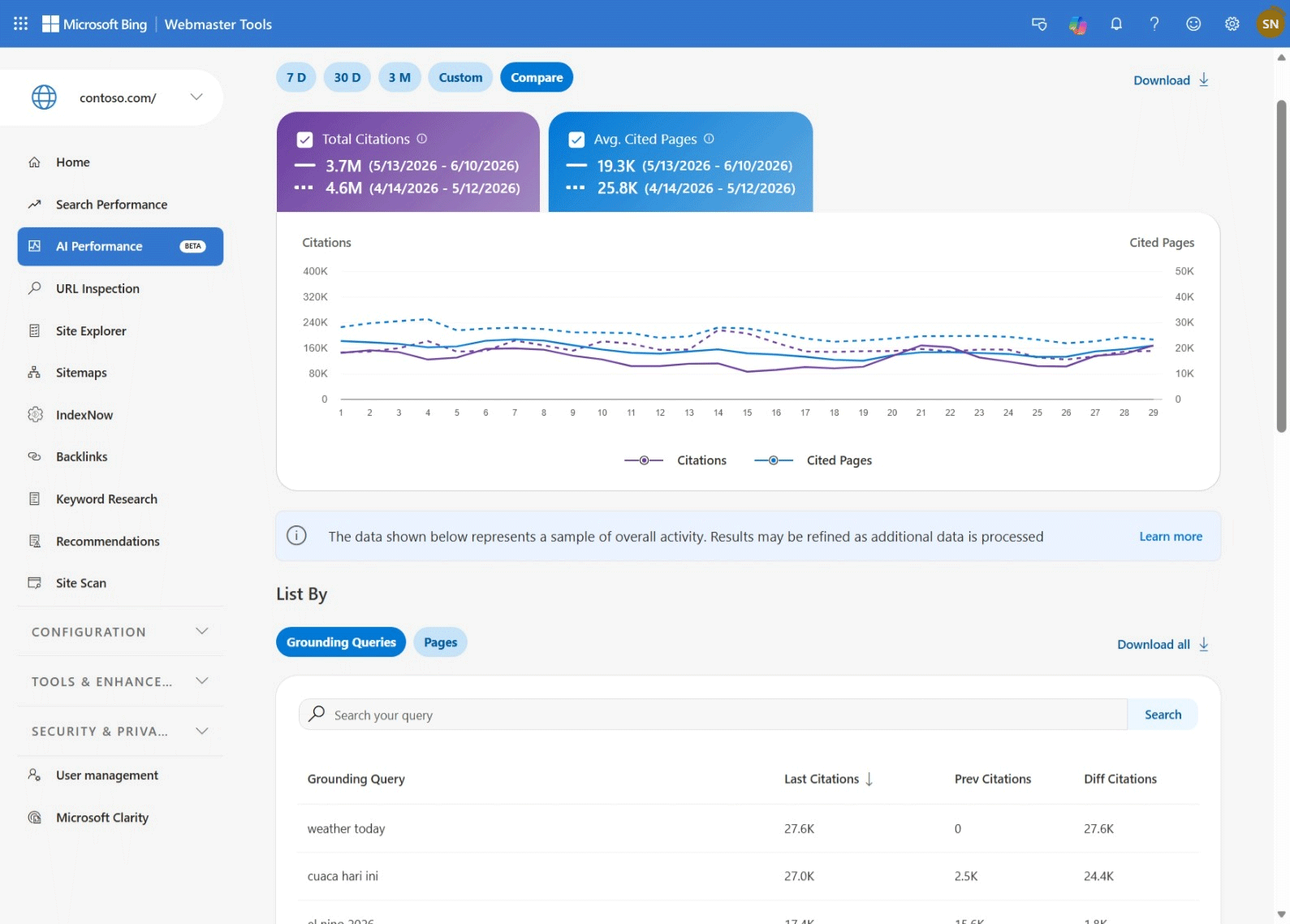
For SEO professionals and content strategists, these new Bing Webmaster Tools capabilities signify a fundamental shift in optimization priorities:
- Beyond Keywords: While keywords remain important for initial indexing, the focus is increasingly shifting towards entity-based SEO, topical authority, and intent fulfillment to be favored by AI models.
- Emphasis on Authority and Trust: AI models are designed to provide accurate and reliable information. Consequently, content that demonstrates clear expertise, authoritativeness, and trustworthiness (E-E-A-T) will be more likely to be cited. ‘Citation Share’ directly measures this influence.
- Structured Data and Clarity: Presenting information in a clear, concise, and structured manner, potentially leveraging schema markup, can make content more digestible and citable for AI systems.
- The “AI Web” as a New Frontier: The concept of an “AI web” or “AI layer” over the traditional web suggests that optimizing for AI answers is becoming a distinct discipline alongside traditional organic search. Success in this domain requires understanding how AI interprets, synthesizes, and attributes information.
- New Performance Metrics: The traditional metrics of clicks and impressions will still be relevant, but AI visibility metrics will become equally, if not more, critical for understanding true content performance in an AI-dominated search future.
The implications for publishers are profound. Those who proactively engage with these new tools and adapt their content strategies will be better positioned to maintain and grow their visibility in a search ecosystem increasingly mediated by artificial intelligence. It forces a re-evaluation of content creation, emphasizing not just attracting traffic, but establishing a foundational layer of trust and authority that AI models can reliably draw upon.
In conclusion, Bing’s introduction of Intents, Topics, Citation Share, and Compare within its AI reporting marks a pivotal moment in the evolution of search engine optimization. It provides webmasters with unprecedented clarity and actionable data to understand and optimize for the “AI web.” As search engines continue their rapid integration of generative AI, such tools are indispensable for maintaining relevance, measuring impact, and ensuring that valuable content continues to reach users, regardless of whether it’s through a traditional blue link or a sophisticated AI-generated answer. The industry will undoubtedly watch closely to see how Google and other search providers respond to this significant move towards greater AI transparency.