For years, the business world operated under a predictable model of competition. Dentists vied with other dentists, and HVAC companies competed against their local counterparts. This familiar landscape allowed businesses to easily identify rivals and strategize based on direct comparisons within their own industry. However, the advent of Artificial Intelligence (AI) in search engines has fundamentally altered this dynamic, presenting a more complex and often unexpected competitive environment. AI search engines no longer simply present curated lists of direct competitors; instead, they synthesize information, offering comprehensive solutions that may extend far beyond a user’s initial query.
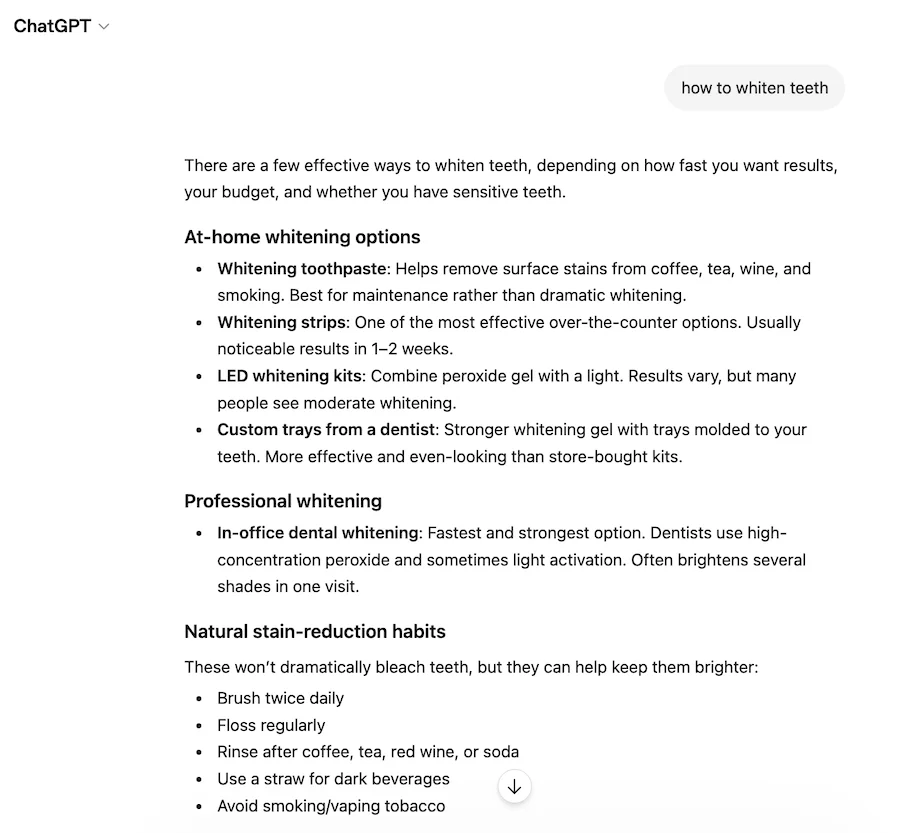
This seismic shift means that businesses are now encountering competition from an array of “substitute solutions” – products, services, or approaches that address the same core problem but through entirely different means. A query about teeth whitening, for instance, might now yield results that include professional dental treatments alongside over-the-counter whitening kits, specialized toothpaste, and even lifestyle advice. This broadens the competitive arena dramatically, forcing businesses to re-evaluate their positioning and marketing strategies in a world where a local dentist might find themselves implicitly competing with a drugstore aisle product or a popular YouTube tutorial.

The Expanding Frontier of Competition: How AI Search Redefines Rivals
The traditional approach to competitive analysis, focused on identifying businesses within the same sector, is becoming increasingly insufficient. Pre-AI search engines provided users with categorized results, making it straightforward for businesses to understand their direct rivals and craft targeted marketing messages. A local HVAC company, for example, would primarily benchmark itself against other local HVAC providers, aiming to differentiate through service quality, pricing, or specialized offerings. Websites and advertising campaigns were often designed with these direct competitors in mind, allowing businesses to control their narrative within a relatively confined market.
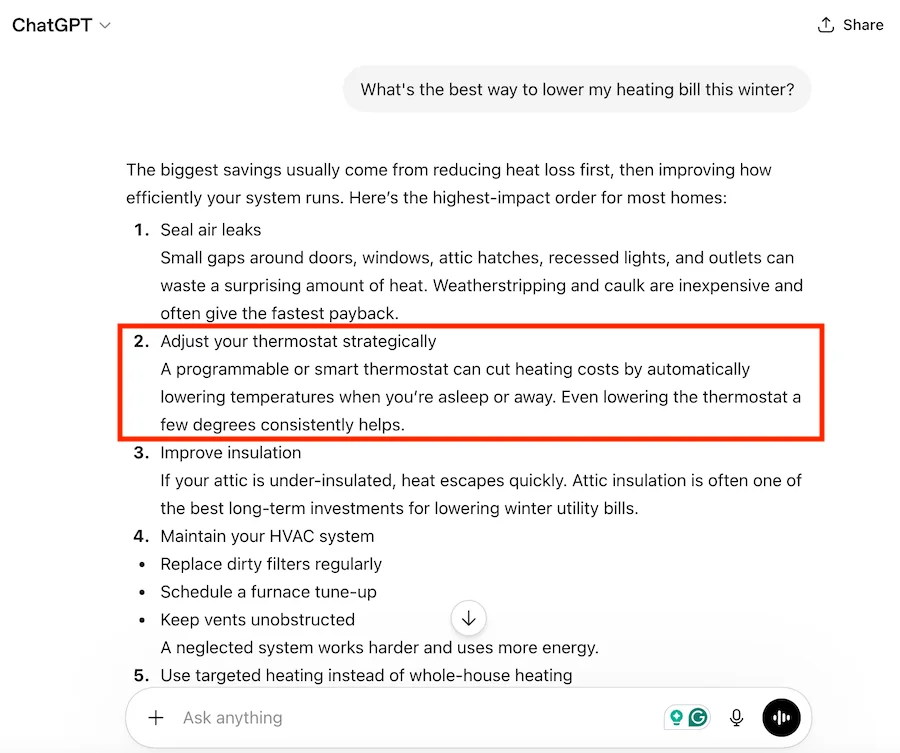
AI search, however, operates on a different principle. It aims to provide comprehensive answers to user problems rather than simply listing service providers. When a user searches for the “best way to lower heating bills,” an AI engine might surface not only HVAC companies offering furnace maintenance and repair but also smart thermostats, insulation services, and even energy-saving tips for appliance usage. This means that an HVAC company, once solely focused on its direct peers, now finds itself in an indirect competition with technology providers and energy consultants.
The implication for businesses is profound. If an HVAC company’s website content focuses solely on “furnace repair and maintenance,” it offers little value to an AI looking to address the broader problem of high heating bills. However, by providing content that explains the intricate reasons behind escalating energy costs – such as duct leakage, airflow imbalances, or neglected equipment – an HVAC business can position itself as a knowledgeable authority. This approach transforms the business from a mere service vendor into a trusted resource that can analyze system-level issues and guide customers on when a professional diagnosis is necessary, potentially differentiating them from a simple device-based solution like a smart thermostat. This nuanced content strategy is crucial for gaining visibility in the evolving AI-driven search landscape.
Substitute Solutions Emerge as Key Competitors
The concept of “substitute solutions” is not new in economics; it refers to alternatives that satisfy the same consumer need through different means. However, AI search has amplified the visibility of these substitutes, bringing them to the forefront of consumer consideration. The dental industry serves as a prime example. A user seeking to whiten their teeth might encounter a comprehensive AI-generated answer that includes professional dental procedures, at-home whitening kits, and even DIY remedies like activated charcoal toothpaste.
This means a local dental practice, historically competing with other clinics, now faces an implicit comparison with consumer products that promise similar outcomes. If a dental practice’s online presence merely states, “We offer professional teeth whitening treatments,” this message lacks the depth needed to resonate with an AI synthesizing diverse information. A more effective approach would involve content that elaborates on the nuances of teeth whitening, such as the different types of professional treatments available, their efficacy compared to at-home options, the potential risks and benefits of each, and the specific factors that contribute to tooth discoloration.
By detailing the advantages of professional whitening—such as personalized treatment plans, the use of stronger yet safer agents, and expert oversight to prevent damage—a dental practice can effectively present its value proposition. This kind of content serves a dual purpose: it educates potential patients about their options and provides AI systems with structured, comparative information that can be readily integrated into synthesized answers. This strategy ensures that the business is not just a name on a list but a considered solution within a broader problem-solving framework.
The Rise of DIY and its Impact on Professional Services
A significant trend emerging from AI-driven search is the prominence of do-it-yourself (DIY) solutions. The vast amount of how-to content, tutorials, and explainer videos available online means that AI systems often present DIY options prominently, sometimes even before professional services. For instance, a homeowner searching for ways to fix patchy grass might receive an AI-generated overview that heavily features DIY lawn care advice before suggesting local lawn service companies.
While this doesn’t automatically mean DIY solutions are superior, it highlights that they are frequently introduced first in the user’s decision-making journey. Many small and medium-sized businesses (SMBs) make the mistake of assuming that a user searching for a solution has already decided to hire a professional. In reality, users are often in an exploratory phase, weighing various options. A lawn care company, for example, should not only advertise its professional services but also provide content that addresses the effectiveness and limitations of DIY lawn care. This could include detailed explanations of common DIY mistakes, the potential long-term costs associated with ineffective DIY treatments, and the specific scenarios where professional intervention is indispensable for achieving optimal results.
By directly addressing the user’s indecision and providing a clear comparison between DIY and professional approaches, businesses can effectively guide customers through their decision-making process. This proactive positioning helps businesses remain visible and relevant by meeting the customer where they are – in the midst of evaluating their choices.

Industry Boundaries Blur as AI Identifies Cross-Industry Solutions
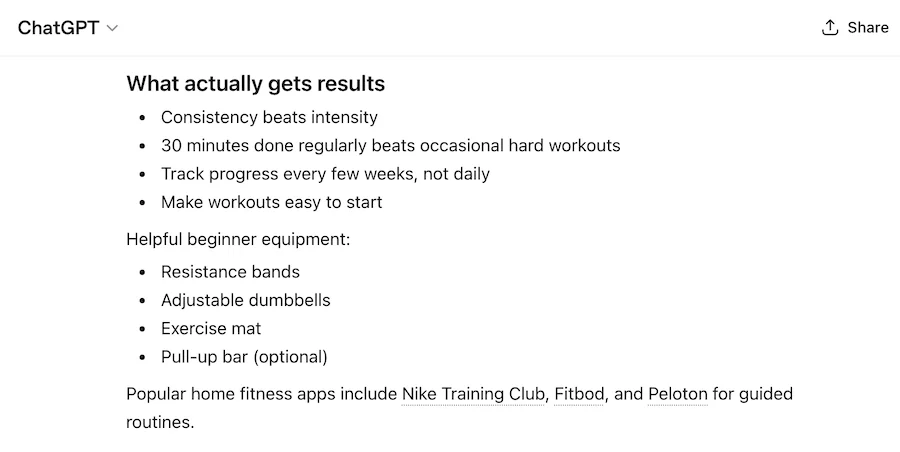
One of the less obvious but significant impacts of AI search is its ability to dissolve traditional industry boundaries when the end goal is the same. Personal training offers a compelling illustration. Previously, personal trainers primarily competed with other trainers or local gyms. Today, they also face competition from fitness apps, digital coaching platforms, and online fitness influencers.
An app like Freeletics, for instance, markets itself as a personalized training program powered by an AI coach that tailors plans based on user goals, feedback, and fitness levels. When someone searches for “how to get fit at home,” both a personal trainer and a fitness app like Freeletics can be considered legitimate answers to the same problem by an AI engine. This forces personal trainers to move beyond generic claims of “customized workouts,” as virtually all digital alternatives will make similar assertions.
A more effective positioning strategy for personal trainers would involve highlighting aspects that AI-driven apps struggle to replicate. This includes the tangible benefits of in-person accountability, the personalized form correction and injury prevention provided by a human expert, the motivational support derived from a direct trainer-client relationship, and the ability to adapt training dynamically based on real-time physical cues. These are not mere marketing embellishments but critical decision criteria for consumers. By clearly articulating these unique advantages and mapping them to real-world scenarios, personal trainers can increase their chances of being recommended by AI systems.
The Challenge for SMBs: Navigating AI’s Impact on Visibility
Many small and medium-sized businesses (SMBs) built their online presence for a previous era of search engine optimization (SEO). Their websites typically describe services, mention geographical areas, and display customer reviews. While this structure remains effective for local search results and branded queries, it often falls short in the context of AI-mediated discovery. These older website architectures assume that the competitive comparison begins within a specific service category, an assumption that is increasingly disproven by AI’s broader approach.
The buyer’s journey now begins earlier and encompasses a wider range of potential solutions. Many SMB websites fail to address the fundamental questions behind user queries, instead focusing solely on naming the services they offer. For example, a website might simply list “HVAC services,” whereas a more effective approach would be to provide content explaining why heating bills are high, detailing the potential causes, and outlining various solutions. This includes contrasting the benefits of professional HVAC system checks with the limitations of simply installing a smart thermostat.
This difference in content strategy is crucial. A website that merely describes an offer misses the opportunity to engage with the customer’s actual decision-making process, which AI is attempting to emulate. This is why many businesses feel overlooked by AI search. It’s not always a matter of domain authority or advertising budget; often, the content simply lacks the depth and comparative analysis that AI models require to extract useful information. AI needs tangible data and explanations that address the user’s underlying problem and potential solutions, including alternatives. If a website doesn’t answer these critical questions, AI has little incentive to include it in its synthesized responses.

Strategies for Positioning in an AI-Expanded Competitive Arena
To effectively navigate the expanded competitive landscape shaped by AI, businesses must shift their positioning strategy from one of avoidance to direct engagement with alternatives. This involves openly acknowledging and addressing substitute solutions rather than treating them as irrelevant.
1. Openly Acknowledge Alternatives: Many businesses hesitate to name competing alternatives, fearing they might inadvertently promote them. However, silence often creates ambiguity, which AI systems then fill with information from elsewhere. A more effective strategy involves creating content that directly compares a business’s offerings with alternatives. For instance, a lawn care company could publish a blog post titled “DIY Lawn Care vs. Professional Services: What’s Right for You?” This article would compare the costs, time investment, and expected results of both approaches, clearly outlining the benefits of professional services for complex issues or long-term lawn health. Such content not only aids buyers in making informed decisions but also provides AI with structured, comparative data that can be easily integrated into search results.
2. Articulate the Limitations of DIY: DIY content often gains traction due to its perceived affordability, immediacy, and empowering nature, making it a frequent feature in AI-generated answers. The crucial task for businesses is to clearly explain the failure points and limitations of DIY solutions. This involves creating content such as “When to Call a Professional Plumber Instead of DIYing a Leak,” “The Hidden Costs of DIY Home Repairs,” or “Why Smart Thermostats Aren’t Always the Answer to Your Heating Bill.” Such content should not disparage DIY options but rather provide a balanced perspective, explaining the scenarios where professional expertise is essential for safety, efficacy, and long-term value.

3. Focus on Outcomes, Not Just Service Labels: Consumers are primarily driven by the outcomes they seek. They want lower utility bills, brighter smiles, healthier lawns, reduced pain, better sleep, increased leads, enhanced security, or faster recovery. Business websites should reflect this focus on results. While service pages remain important, outcome-oriented pages often make it easier for both AI systems and potential customers to understand the value proposition. A dentist, for example, could create content titled “Achieve a Brighter, Healthier Smile: Your Options for Teeth Whitening,” detailing the specific benefits and results of different whitening procedures. This outcome-centric approach aligns better with how consumers frame their needs and how AI synthesizes information to provide relevant solutions.
4. Develop Extractable Comparison Content: AI systems favor content that is easily parsed and summarized. Clear headings, structured comparisons, and concise explanations significantly increase the likelihood of a business’s content appearing in AI-generated answers. This includes employing formats similar to those used in featured snippets and AI Overviews, such as frequently asked questions (FAQs), comparison tables, and step-by-step guides. By structuring content in a way that AI can readily extract and synthesize, businesses can enhance their search visibility.
A Framework for AI-Optimized Competitive Positioning
To consistently apply these principles to content strategy, businesses can adopt a simple three-question framework when developing new content:

1. What problem does the customer actually have? This question shifts the focus from the service offered to the underlying issue the customer is trying to resolve. For an HVAC company, the problem isn’t just needing a furnace repair; it’s experiencing discomfort due to a faulty heating system or worrying about high energy bills. For a dentist, it’s not just wanting teeth whitening; it’s desiring a more confident and aesthetically pleasing smile. By starting with the problem, businesses can think more like their customers and, crucially, like an AI searching for comprehensive solutions.
2. What substitute solutions exist? A realistic and thorough list of substitute solutions is essential. This list should include not only direct competitors but also products, apps, DIY guides, online tutorials, and adjacent services that address the same problem through different means. If unsure about existing substitutes, posing the customer’s problem to an AI search engine can reveal what the AI is already recommending.
3. Why is your solution better for certain situations? This is where a business earns its place in AI-generated answers. Specificity is key. Businesses should clearly articulate the situations where their approach excels, such as handling complex issues, performing safety-critical work, delivering long-term results, or providing guaranteed outcomes that justify a premium price. This is not about being defensive but about providing genuine utility to individuals making important decisions.

By positioning around the problem and clearly articulating the advantages of their solution in specific contexts, businesses enable AI to understand when and why to recommend them. This approach moves beyond traditional SEO tactics and ensures businesses appear in relevant conversations, even those they might not have previously been aware of.
Concluding Thoughts: Embracing the Evolving Competitive Landscape
AI search has fundamentally expanded the definition of “competition.” Dentists now contend with at-home whitening kits, HVAC companies with smart thermostats, lawn care businesses with instructional videos, and personal trainers with subscription-based apps. The businesses that are successfully appearing in AI-generated answers are not necessarily those with the most robust traditional SEO or the largest advertising budgets. Instead, they are the ones that have most clearly positioned themselves against the full spectrum of solutions a customer might consider.
Winning in the age of AI search is not solely about optimizing for keywords or climbing search rankings. It is about recognizing that when a user turns to AI for assistance, the real competition encompasses every plausible answer to the same question, not just the businesses located down the street. The most effective strategy is to engage directly with this expanded competitive landscape: acknowledge alternatives, explain trade-offs, and make a clear, honest case for why a particular solution is the right choice. Businesses that embrace this paradigm shift early will gain a significant advantage, while those that continue to optimize for an outdated competitive model risk becoming invisible in the new digital marketplace.

 Basiran
 Lina Irawan