LinkedIn, the world’s leading professional networking platform, has announced a significant expansion of its profile skills display through a groundbreaking “connected apps element,” designed to empower its vast member base to more credibly showcase their technical proficiencies. This innovative update, detailed in a recent announcement, moves beyond self-attestation and traditional endorsements by integrating directly with various third-party applications and service providers, thereby validating user claims through real-world product usage. The initiative marks a pivotal moment in the evolution of professional identity, shifting the paradigm towards demonstrable expertise in an increasingly skill-centric global job market.
The integration allows users to link their LinkedIn profiles to a growing ecosystem of professional tools, which then generate dynamic, verifiable statements about their specific capabilities. This advancement builds upon LinkedIn’s ongoing commitment to enhancing skill validation, a critical need identified by both professionals seeking to stand out and recruiters striving to identify top talent. The new feature is expected to provide a more robust and trustworthy representation of an individual’s technical toolkit, offering a granular view of their operational skills rather than broad, unverified claims.
The Evolving Landscape of Professional Credibility
The demand for verifiable skills has never been higher. In a rapidly transforming global economy, the traditional resume, often filled with subjective self-assessments, is increasingly insufficient for employers grappling with persistent skill gaps. A 2023 LinkedIn Workplace Learning Report indicated that 89% of talent professionals believe that skills-based hiring will become more important in the next five years, underscoring a fundamental shift away from purely degree-based qualifications towards demonstrable competencies.
The “Skills Gap” Dilemma
Businesses worldwide consistently report difficulties in finding candidates with the specific skills required to fill critical roles. This “skills gap” is particularly acute in technical domains, where rapid technological advancements necessitate continuous learning and adaptation. Recruiters often face the challenge of sifting through numerous applications where candidates claim proficiency in various software and tools, yet lack tangible proof of their expertise. This leads to inefficient hiring processes, increased recruitment costs, and potentially poor hiring decisions. LinkedIn’s connected apps feature directly addresses this pain point by introducing an objective layer of verification. By showcasing actual engagement with industry-standard tools, professionals can provide concrete evidence of their capabilities, making their profiles more compelling and trustworthy to potential employers.
Beyond Endorsements: The Need for Verifiable Expertise
For years, LinkedIn’s skill endorsement feature allowed connections to vouch for a peer’s proficiency in a given area. While helpful for social validation, endorsements often lacked the specificity and rigorous verification that modern hiring demands. Similarly, LinkedIn’s skill assessments, while a step in the right direction, rely on standardized tests that may not always reflect real-world application or deep engagement with a tool. The “connected apps” initiative represents a significant leap forward, offering a dynamic, real-time validation directly from the applications themselves. This moves beyond simple affirmations to concrete, usage-based evidence, aligning with the broader trend towards micro-credentials and digital badges that certify specific skills acquired through practical experience. This shift enhances the credibility of the LinkedIn profile, transforming it into a living portfolio of verified competencies.
A Phased Rollout: From AI Proficiency to Broad Technical Skills
The introduction of the connected apps feature is not an isolated development but rather an extension of LinkedIn’s strategic focus on skill validation. The platform has been systematically enhancing its tools to meet the evolving demands of the labor market, particularly in high-growth areas.
Initial Focus: AI Qualifications
The groundwork for this expanded skill verification system was laid in January, when LinkedIn first launched its skill qualifications feature with a primary focus on artificial intelligence proficiency. This initial rollout allowed users to demonstrate their expertise in AI-related tools and concepts, a timely response to the skyrocketing demand for AI skills across virtually every industry. Data from LinkedIn’s own reports indicated that job postings mentioning AI skills had more than doubled year-over-year, highlighting the urgent need for professionals to validate these critical capabilities. The success and insights gained from this initial phase undoubtedly informed the broader expansion to a wider array of technical skills.
Current Expansion: A Diverse Range of Technical Tools
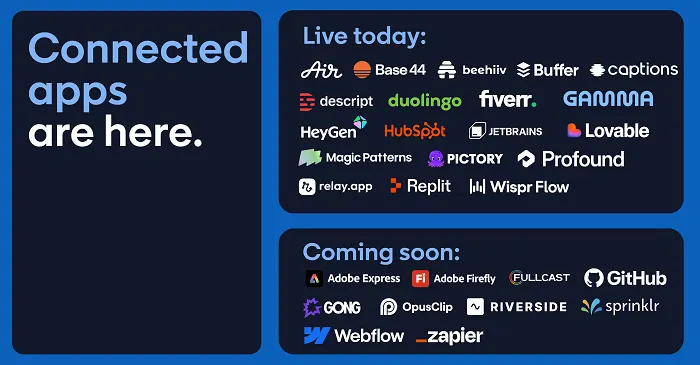
Building on the early collaborations that included applications like Descript (audio/video editing), Duolingo (language learning, often used for professional development in global roles), Lovable, Relay.app, and Replit (coding/development environments), LinkedIn has now significantly broadened the scope of verifiable skills. As of the current rollout, LinkedIn users are able to list skills validated by an impressive and diverse roster of applications. These include:
- Content Creation & Marketing: Air, Beehiv, Buffer, Gamma, HeyGen, Pictory AI, Mirage/Captions.
- Business & Sales: Base44, HubSpot, Profound.
- Freelance & Gig Economy: Fiverr.
- Development & IT: JetBrains, Magic Patterns.
- Productivity & Workflow: Wispr Flow.
This expanded list covers a wide spectrum of technical and operational skills, from marketing automation and content generation to software development and project management, reflecting the multifaceted demands of modern professional roles. The inclusion of platforms like Fiverr also acknowledges the growing importance of the gig economy and freelance talent, where verifiable skills are paramount for securing work.
Future Integrations: Anticipated Partners
LinkedIn has also outlined an ambitious roadmap for future integrations, signaling its long-term commitment to this initiative. The platform plans to add skills supported by additional industry-leading applications, further solidifying its position as the central hub for professional skill validation. Upcoming partners include:
- Creative & Design: Adobe (likely covering Photoshop, Illustrator, Premiere Pro, etc.).
- Sales & CRM: Fullcast, Gong.
- Development & AI: GitHub Copilot.
- Audio/Video Production: OpusClip, Riverside.
- Marketing & Customer Service: Sprinklr.
- Web Development: Webflow.
- Automation: Zapier.
The strategic choice of these future partners underscores LinkedIn’s focus on areas of high professional demand, particularly in creative industries, sales technology, software development, and workflow automation. The addition of giants like Adobe and GitHub Copilot will provide robust verification for skills central to many creative and technical professions, further enhancing the depth and breadth of verifiable expertise on the platform.
How “Connected Apps” Elevates Professional Profiles
The mechanics of the connected apps feature are designed for simplicity, accuracy, and dynamic relevance. This innovative approach offers a tangible upgrade to how professionals present their capabilities and how recruiters evaluate them.
Dynamic Skill Descriptions
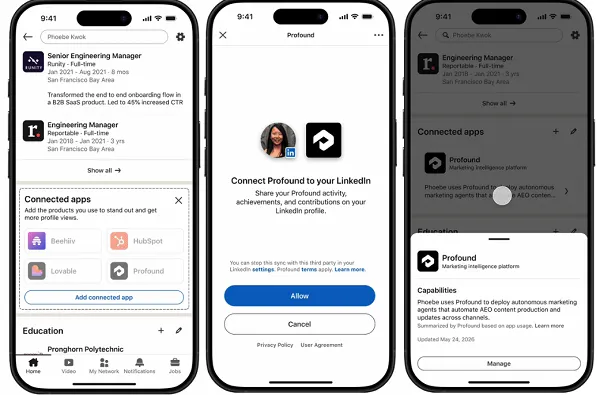
The core of the connected apps feature lies in its ability to generate specific, activity-based statements directly from the linked applications. As LinkedIn articulates, “You can now connect the apps you use every day directly from your LinkedIn profile. Once connected, each app generates a simple statement based on your real activity — a simple, specific description of how you actually use it.” This moves beyond generic claims to concrete examples. For instance, instead of merely stating “uses HubSpot,” a connected HubSpot account might automatically display “creates and sends segmented email campaigns in HubSpot’s Marketing Hub” or “uses HubSpot’s marketing automation application to engage customers.”
Crucially, these descriptions are not static. LinkedIn emphasizes that “While this is provided by the app and cannot be edited, the description is dynamic, so as your capabilities evolve, the description of your usage will update in real time.” This real-time dynamism ensures that a professional’s profile always reflects their most current and relevant skills, adapting as they gain new experience or master advanced features within a given application. This continuous update mechanism is a significant improvement over traditional static skill lists, which often become outdated quickly.
The “Top User” Distinction
Adding another layer of credibility and distinction, LinkedIn will also introduce a “Top User” signal. “If you’re among an app’s most engaged users, a ‘Top User’ signal will appear on your profile too,” LinkedIn states. This badge serves as a powerful visual indicator of exceptional proficiency and deep engagement with a particular tool. For recruiters, a “Top User” badge can instantly highlight candidates who are not just familiar with a software but are power users, potentially leading to more efficient shortlisting and higher confidence in a candidate’s practical abilities. This gamification element also incentivizes professionals to further hone their skills and actively utilize the tools relevant to their careers.
Seamless Integration and Data Flow
The technical infrastructure behind this feature relies on secure API integrations between LinkedIn and its partner applications. When a user chooses to connect an app, they grant permission for specific, anonymized usage data to be shared back to LinkedIn, which then translates into the verifiable skill statement. This process is designed to be transparent, with users maintaining control over which apps they connect and the visibility of these statements. Data privacy and security are paramount, and LinkedIn is expected to adhere to stringent protocols to protect user information. The seamless flow of this data, from application usage to profile display, underscores the sophistication of this integration and its potential to create a more accurate and dynamic professional identity.
Strategic Partnerships Driving Skill Validation
The success of the “connected apps” initiative hinges on robust collaborations with a diverse array of software providers. These partnerships are mutually beneficial, enhancing LinkedIn’s value proposition while providing app developers with increased visibility and validation for their tools.
Empowering Users Through Ecosystem Collaboration
By partnering with leading and emerging software providers, LinkedIn is effectively creating a vast ecosystem of verifiable skills. This collaboration empowers users by giving them a standardized and credible way to showcase the specific tools they master. For many professionals, proficiency in specialized software is a core competency, and being able to demonstrate this through real-world usage data is far more impactful than a simple listing. This collaborative model also encourages continuous learning, as professionals are incentivized to engage deeply with the tools that drive their industries. The breadth of partners, from creative suites to marketing automation platforms and coding environments, ensures that a wide spectrum of professional skills can be authentically validated.
Mutual Benefits for LinkedIn and App Providers
For LinkedIn, these partnerships solidify its position as the definitive platform for professional identity and career development. It adds a unique, high-value feature that differentiates it from other job boards and networking sites. For the partner applications, the benefits are equally compelling. Being featured on LinkedIn’s profile skills display offers significant exposure to millions of professionals and potential new users. It also validates the importance and utility of their software within various industries. When a user receives a “Top User” badge, it not only boosts their professional credibility but also acts as an implicit endorsement for the app itself, potentially driving wider adoption and deeper engagement with the software. This symbiotic relationship creates a virtuous cycle where skill validation, professional development, and software adoption mutually reinforce each other.
Impact on the Job Market and Career Development
The introduction of connected apps is poised to have a profound impact on various stakeholders within the professional ecosystem, from individual job seekers to large corporations.
For Job Seekers: Enhanced Visibility and Trust
For individuals actively seeking employment or career advancement, the connected apps feature offers an unparalleled opportunity to stand out. In a competitive job market, a profile with verifiable, dynamic skill statements backed by real application usage will undoubtedly capture the attention of recruiters more effectively than those relying solely on self-reported skills. This feature provides a tangible differentiator, building immediate trust and credibility. It allows job seekers to showcase not just what they know, but what they do, demonstrating practical experience and operational readiness. This can significantly reduce the time spent in initial screening phases, leading to more relevant interviews and a higher likelihood of securing desired roles.
For Recruiters: Streamlined Assessment and Reduced Risk
Recruiters and hiring managers stand to gain immensely from this development. The ability to quickly identify candidates with proven proficiency in specific software tools streamlines the entire talent acquisition process. It reduces the guesswork involved in assessing technical skills, allowing recruiters to move beyond basic keyword matching to a deeper understanding of a candidate’s capabilities. The “Top User” signal, in particular, acts as a powerful pre-vetting mechanism, highlighting individuals with exceptional expertise. This leads to more efficient candidate sourcing, reduced time-to-hire, and ultimately, better hiring outcomes by minimizing the risk of misjudging a candidate’s true skill level. A more accurate skills assessment also helps in reducing employee turnover, as new hires are more likely to possess the exact technical skills required for the role.
For Companies: Informing Talent Strategy
Beyond individual hiring, the aggregate data from connected apps could offer companies invaluable insights into broader talent trends and skill availability. Employers can gain a clearer picture of the prevalence of certain skills within their existing workforce or among potential candidates, informing their talent development and acquisition strategies. For instance, if a company observes a high number of “Top Users” for a particular project management software among its employees, it can leverage that internal expertise for training or mentorship. Conversely, if a critical skill shows low verified proficiency in the external market, it can guide decisions on upskilling initiatives or targeted recruitment campaigns. This data-driven approach to talent management can lead to more strategic workforce planning and enhanced organizational competitiveness.
Broader Implications for the Future of Work
The connected apps feature is more than just a profile enhancement; it represents a significant step towards a more transparent, skills-based future of work.
Shifting Paradigms in Hiring
This initiative reinforces the ongoing shift towards skills-based hiring, where demonstrable competencies take precedence over traditional credentials like degrees or years of experience. As automation and AI reshape job roles, the ability to adapt and master new tools becomes paramount. LinkedIn’s move provides a practical framework for validating these evolving skills, making it easier for companies to identify adaptable talent and for individuals to pivot their careers. It challenges the conventional resume-centric approach, advocating for a dynamic portfolio of proven abilities. This paradigm shift will likely accelerate the adoption of alternative credentialing methods and increase the importance of continuous skill development.
Fostering Continuous Learning and Upskilling
By providing a direct link between software usage and professional credibility, LinkedIn incentivizes continuous learning and upskilling. Professionals are now given a clear, tangible benefit for mastering new tools and deepening their expertise in existing ones. The dynamic nature of skill descriptions means that ongoing engagement and improvement are rewarded, fostering a culture of lifelong learning. This is particularly relevant in fast-paced industries where staying current with the latest software and platforms is crucial for career longevity and success. The “Top User” badge could also serve as a powerful motivator for individuals to strive for mastery.
LinkedIn’s Position in the Professional Ecosystem
This strategic move further entrenches LinkedIn’s indispensable role in the professional ecosystem. By becoming the authoritative source for verifiable skills, LinkedIn enhances its value proposition for both individuals and organizations. It moves beyond being just a networking site or a job board to a comprehensive platform for professional identity management, skill development, and talent intelligence. This strengthens its competitive advantage and reinforces its status as the go-to platform for all aspects of career and talent management. The feature could also drive deeper engagement on the platform as users actively manage and update their skill validations.
Considerations for Data Privacy and Accessibility
While the benefits are substantial, it is also important to consider implications for data privacy and accessibility. LinkedIn has a responsibility to ensure robust data security and transparent privacy policies for the data shared between connected apps and user profiles. Users must be fully informed about what data is being shared and how it is being used. Furthermore, accessibility to these tools might be a consideration; while many are widely used, some specialized or premium software might create an advantage for those with access, potentially widening a digital divide. However, by focusing on a wide range of tools, including some free or freemium options, LinkedIn aims to provide broad utility.
Conclusion: A New Era for Professional Identity
The expansion of LinkedIn’s profile skills display with the “connected apps element” marks a seminal moment in the journey towards a more transparent and skills-centric professional world. By enabling real-world product usage to translate into credible, visible expertise, LinkedIn is not merely enhancing profiles; it is fundamentally redefining professional credibility. This innovation promises to empower individuals to showcase their true capabilities, streamline hiring processes for recruiters, and provide businesses with unprecedented insights into the global talent pool. As the demands of the modern workforce continue to evolve, LinkedIn’s commitment to verifiable skills will undoubtedly play a crucial role in shaping the future of professional identity and career development for millions worldwide.